Project planning guide
Before you build
Use the reference image and planning notes as a starting point. Confirm dimensions, loads, materials, local codes, and site conditions before purchasing or cutting.
- Garden Projects
- 1 reference image
- Print-friendly guide
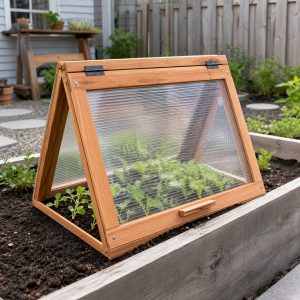
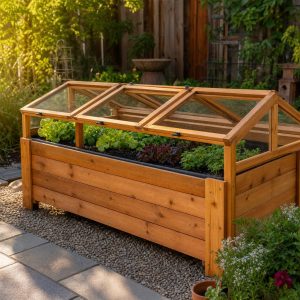
Quick answer: A cold frame is a low, unheated box with a transparent sloped lid that captures solar warmth and protects plants from wind and light frost. Build a rot-resistant frame sized to safe glazing, face the slope toward the best winter sun, place it on well-drained soil, and include a secure way to vent the lid before plants overheat.
Choose the glazing before cutting the box
A salvaged window can dictate the footprint, but old glass may be fragile, heavy, or coated with lead paint. Twin-wall polycarbonate is lighter and less likely to shatter when installed according to its edge-sealing and expansion requirements. Whatever material you choose, keep edges protected and confirm the lid, hinges, and frame can support it safely.
Pick a sunny, drainable location
In much of the United States, a south-facing slope captures useful winter light, but buildings, trees, snow, and local heat can change placement. Avoid roof snow-shedding zones and low soil that floods. The lid must open without striking a fence, and the gardener needs room to kneel across the front.
Use a sloped rectangular frame
A compact frame about 3 feet deep and 4 feet wide is reachable from the front and compatible with many glazing panels. Make the back wall several inches taller than the front so rain drains and low-angle sunlight enters. Treat those dimensions as a starting point; size the box around the safe lid and crop height.
Build in a logical order
- Cut the front, back, and tapered side panels from durable exterior material.
- Assemble the box square and reinforce corners without leaving sharp hardware inside.
- Seal or finish surfaces as appropriate before attaching glazing.
- Build or prepare the lid, protecting every glazing edge.
- Install exterior-rated hinges along the high back edge.
- Add a positive prop that cannot slip in wind.
- Anchor the box where wind can lift the lid or move the whole frame.
Vent before the sun cooks seedlings
A cold frame can become hot even on a cool clear day. Check it daily, use a thermometer, and open the lid as crop needs and weather require. Automatic vent openers can help but still need inspection. Close the lid before a cold night, and add an insulating cover only when it will not damage the glazing or block needed morning ventilation.
Use it for the right tasks
- Harden off transplants gradually.
- Start cool-season greens earlier in spring.
- Protect established greens later into fall.
- Shelter young plants from wind and light frost.
- Do not treat an unheated frame as protection from every freeze.
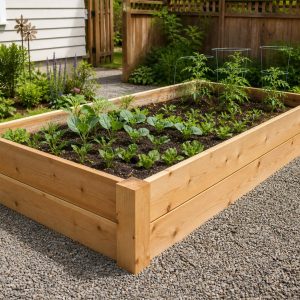
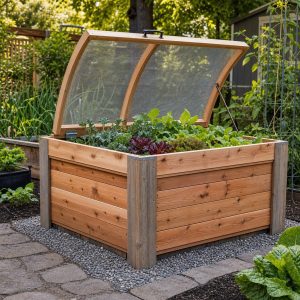
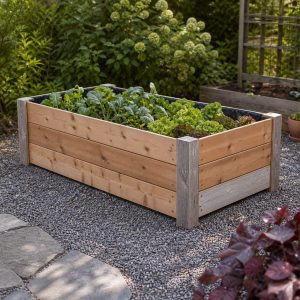
Position the frame beside the raised garden bed or size it as a removable topper. Use the wildlife fence guide if rabbits or deer can reach the protected plants when the lid is open.
Common questions
Does a cold frame need a bottom?
Many cold frames sit directly over garden soil. A bottom is unnecessary for in-ground growing and can impede drainage, but burrowing pests may justify a safely attached wire barrier.
Is a cold frame the same as a greenhouse?
No. A cold frame is smaller, lower, and usually unheated. It provides limited passive protection and demands active ventilation.