Project planning guide
Before you build
Use the reference image and planning notes as a starting point. Confirm dimensions, loads, materials, local codes, and site conditions before purchasing or cutting.
- Kitchen Design
- 8 reference images
- Print-friendly guide
Outdoor kitchen lighting should make knives, food, controls, steps, and faces easy to see without turning the yard into a floodlit stage. A layered plan combines focused task light with gentle circulation and dining light, while exterior-rated fixtures, protected wiring, and appropriate controls support long-term safety.
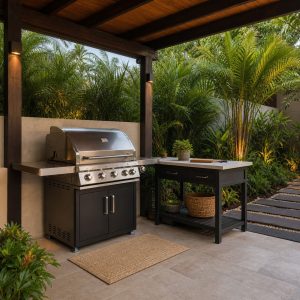
Roof-Mounted Task Lights
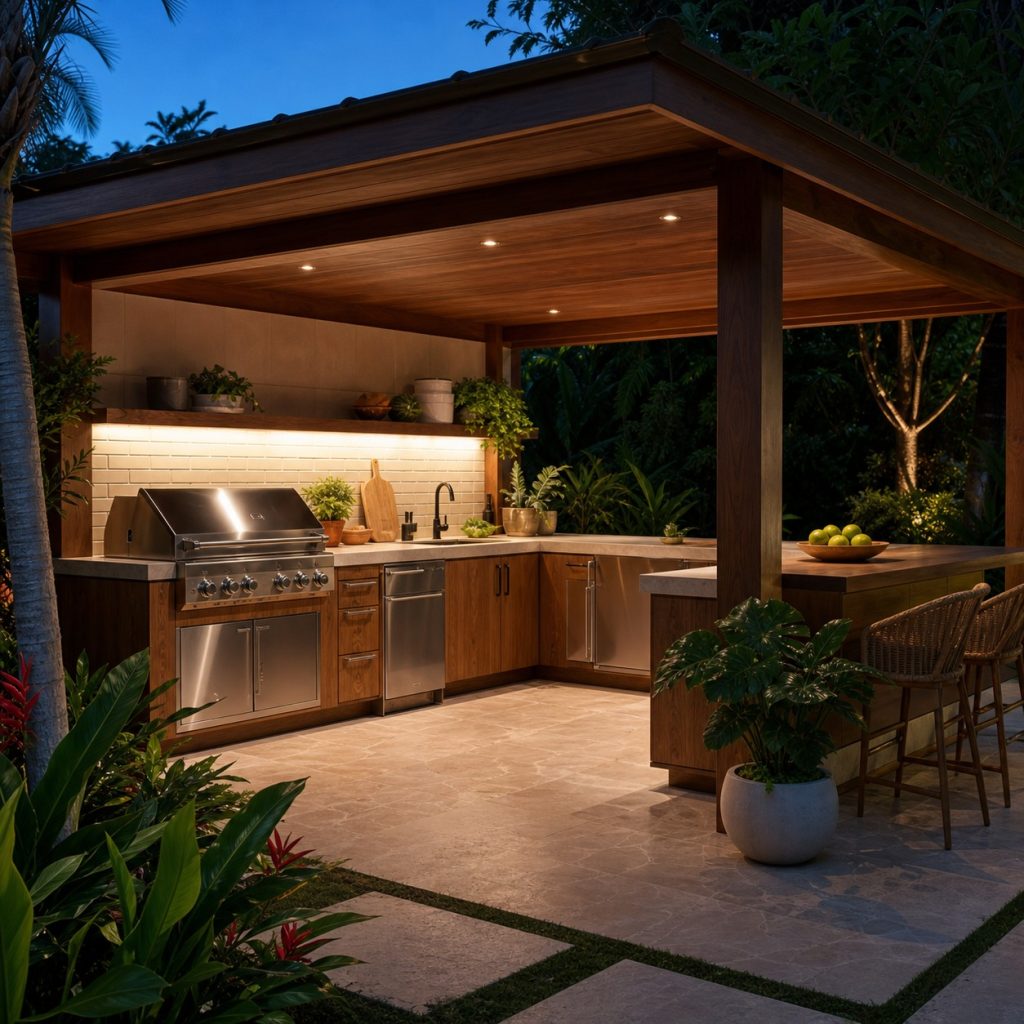
Downlights work well when the roof is high enough for broad, even coverage. Position them slightly in front of the cook rather than directly behind, which reduces body shadows on the counter. Use exterior-rated, serviceable fixtures and confirm their trim and wiring suit the ceiling’s exposure.
Warm Pendants Above the Serving Counter
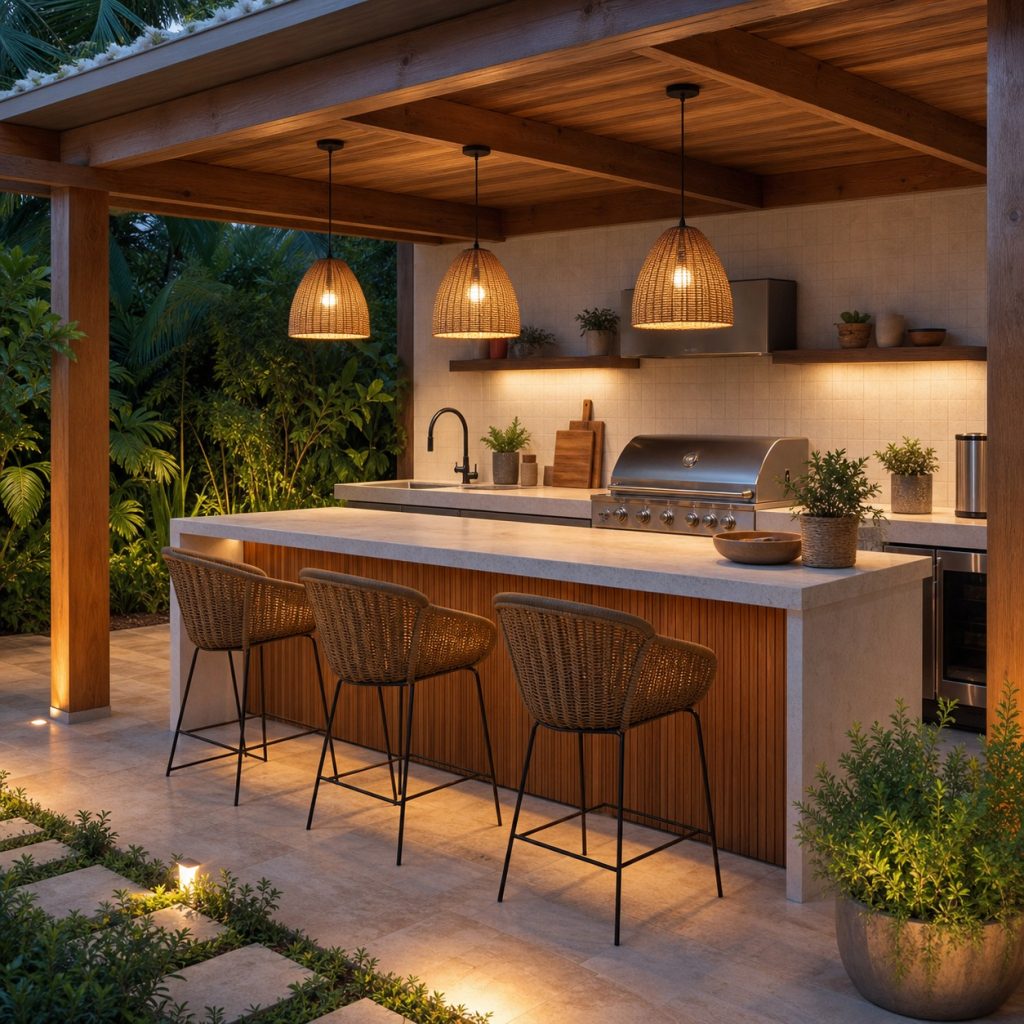
Pendants can define a serving or seating edge and add a residential scale. Keep them away from grill heat and prevailing wind, select fixtures approved for outdoor damp or wet locations, and hang them where they do not block views. Shielded bulbs reduce glare at eye level.
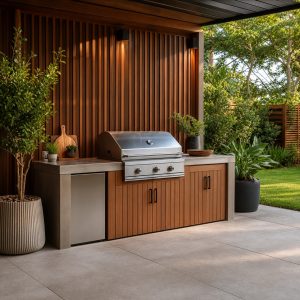
Shielded Wall Sconces
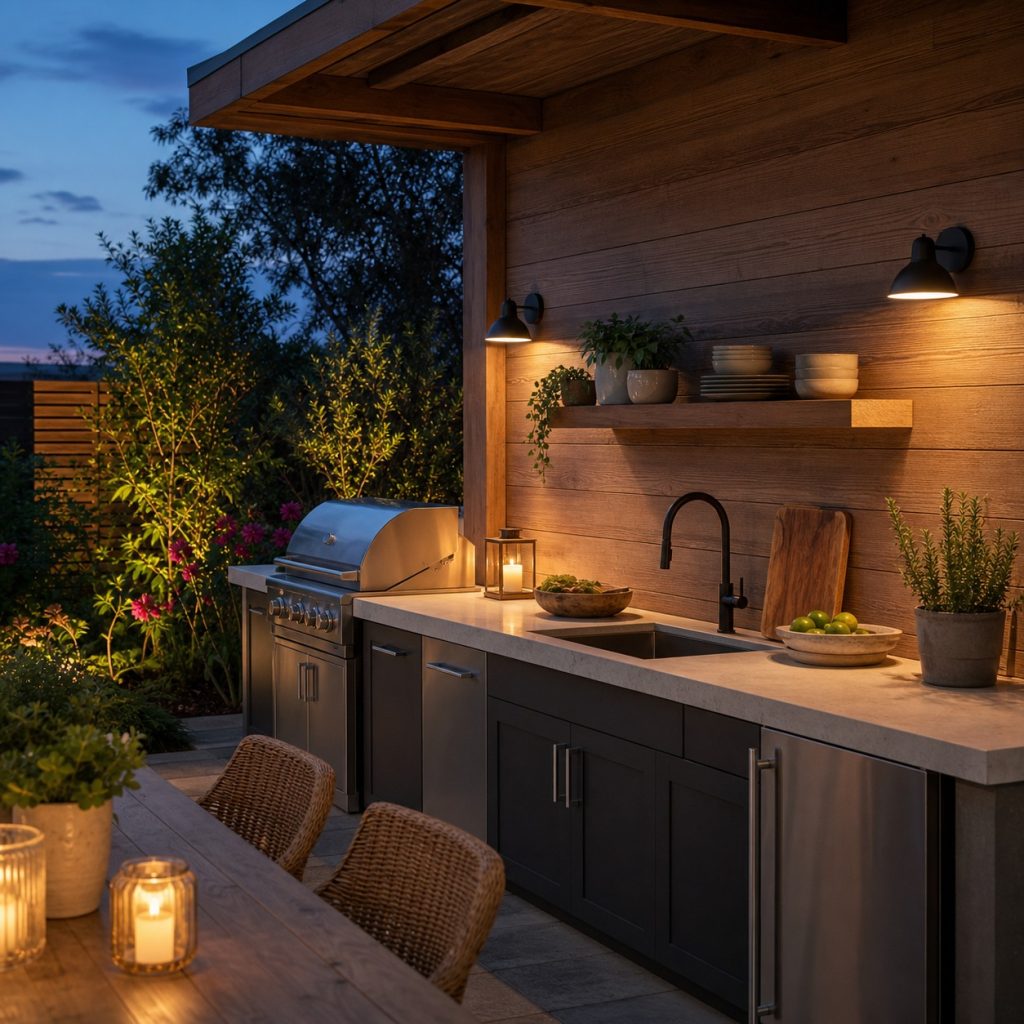
Wall sconces are useful for vertical surfaces, doors, and secondary counters. A shielded downward distribution limits spill into neighboring yards and keeps bright lamps out of sight. Coordinate mounting height with shelves, cabinet doors, and appliance lids before the electrical boxes are placed.
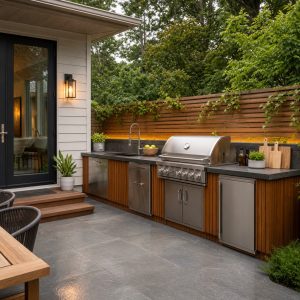
Under-Counter Path Lighting
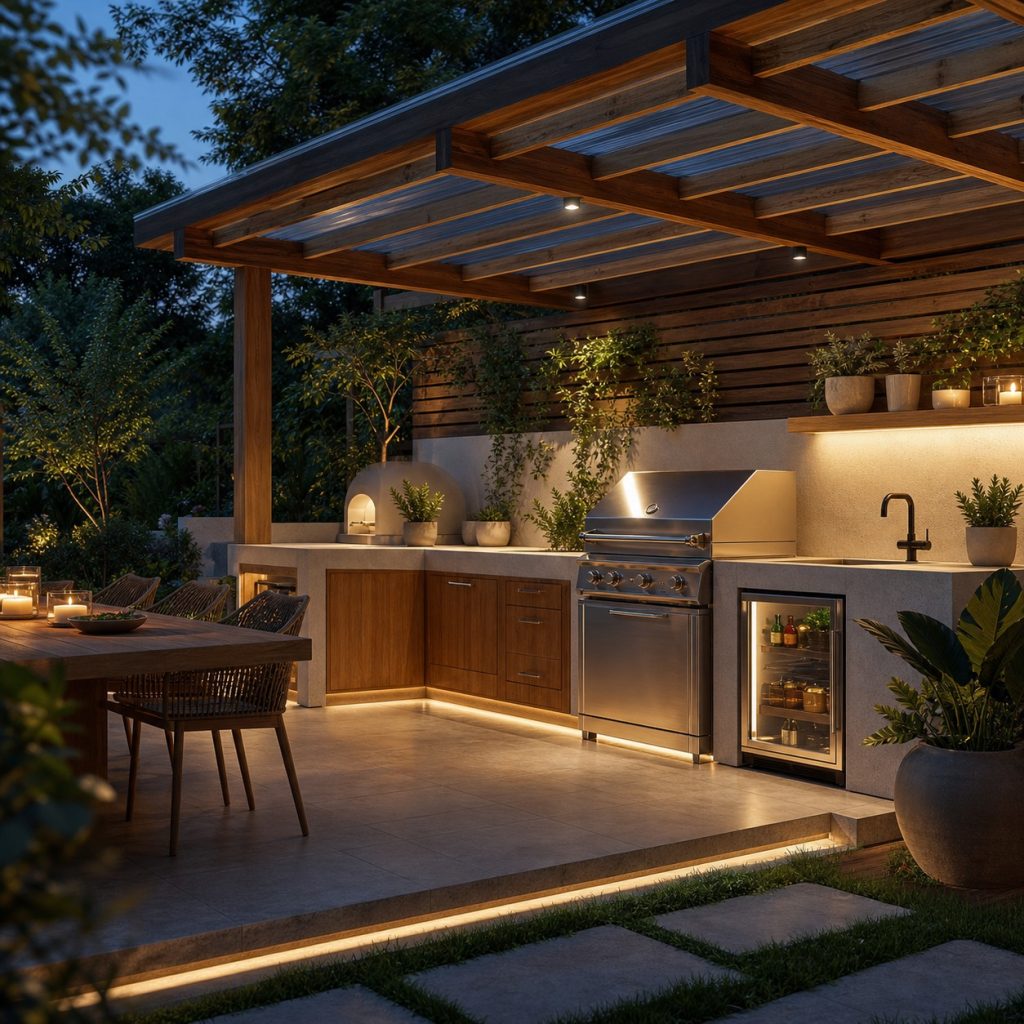
Low-level light beneath a counter or toe kick can reveal edges without competing with the cooking surface. It should be subtle, continuous enough to avoid confusing bright spots, and installed where cleaning equipment cannot easily damage it. Use listed exterior components rather than indoor tape in an improvised channel.
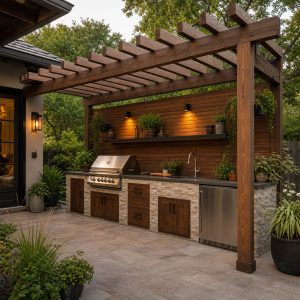
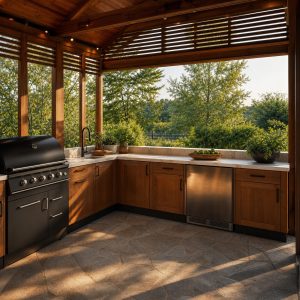
Pergola Downlights
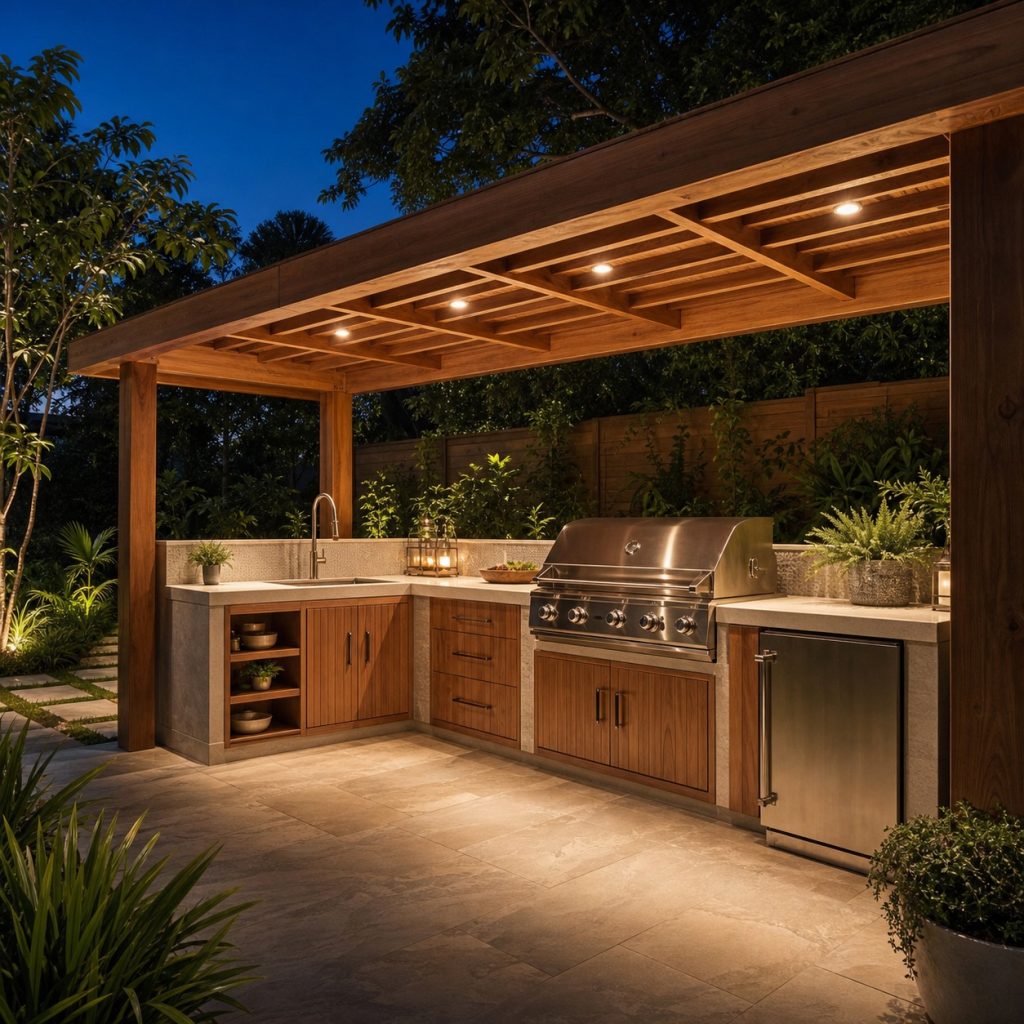
Pergola lighting needs early coordination because open slats offer limited places to conceal cable and drivers. Small shielded fixtures can highlight counters while preserving the night sky. Any routing through timber or metal should respect structural members, water entry, and electrical requirements.
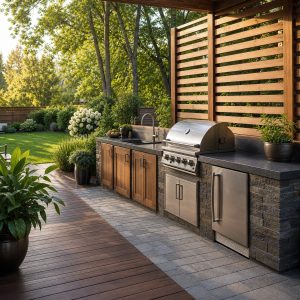
Focused Grill Task Light
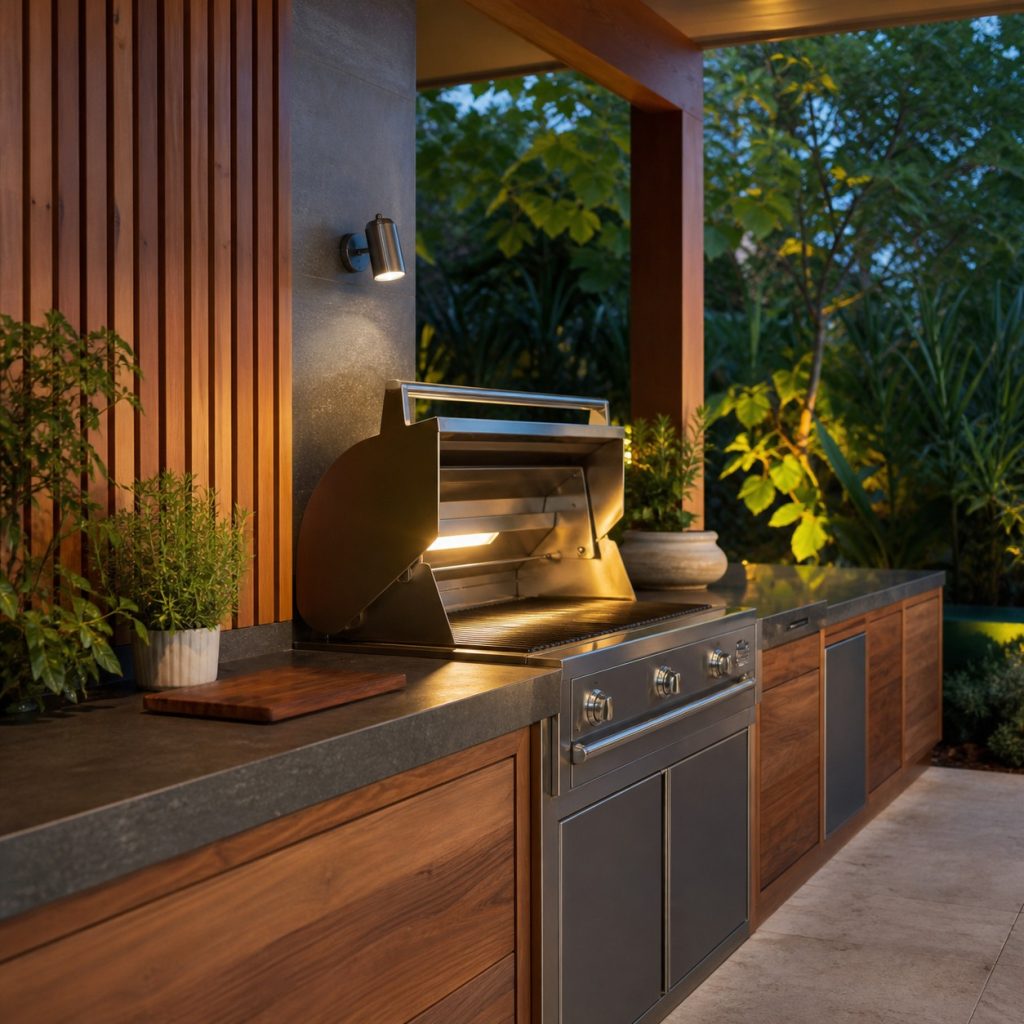
The grill surface needs direct light that does not blind the cook or distort food color. Place a heat-tolerant, exterior-rated fixture outside the appliance clearance zone and aim it to cover controls and the cooking grate. Avoid relying on a tiny light built into the handle as the only source.
Step and Pathway Lighting
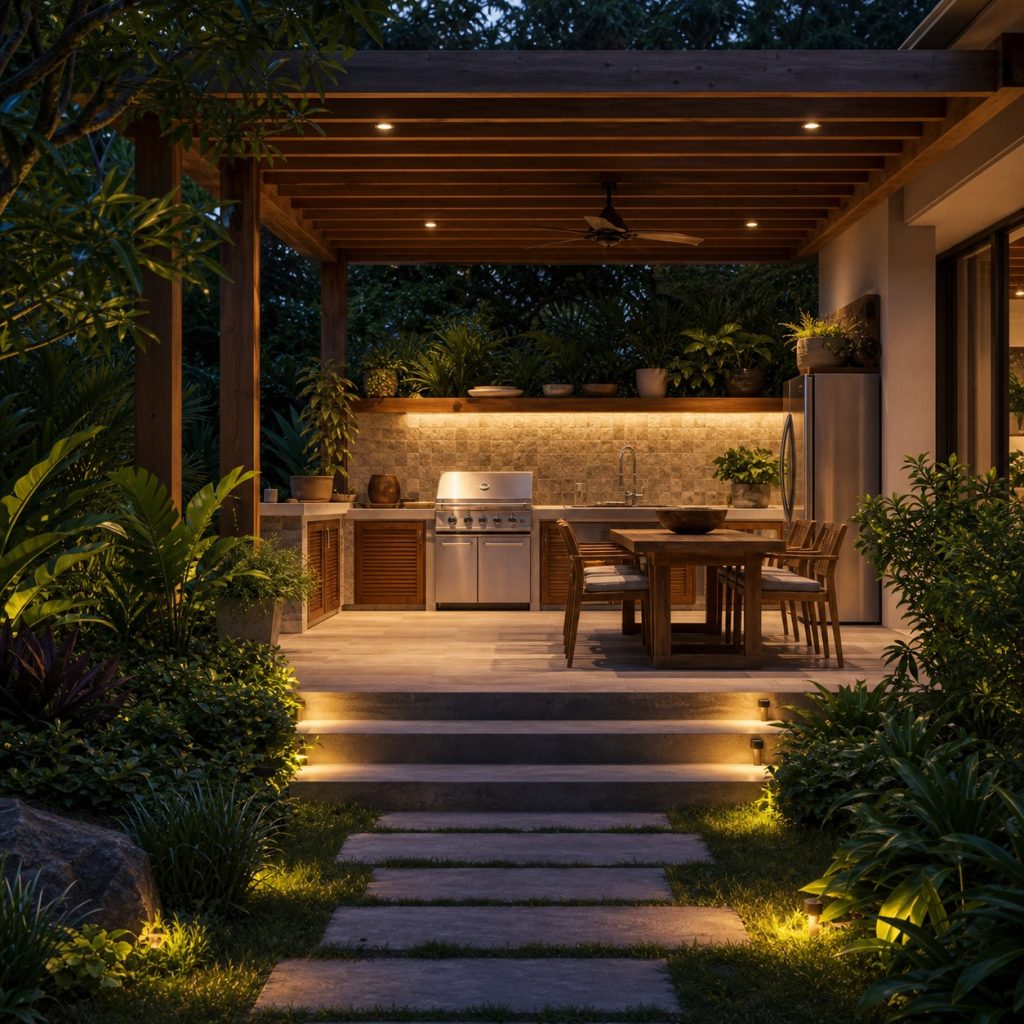
People carry trays and move between bright indoor rooms and a dark yard, so level changes deserve deliberate light. Shielded step and path fixtures should reveal edges without creating a runway effect. Keep fixtures outside trip zones and coordinate them with drainage and landscape maintenance.
Layered Kitchen and Dining Lighting
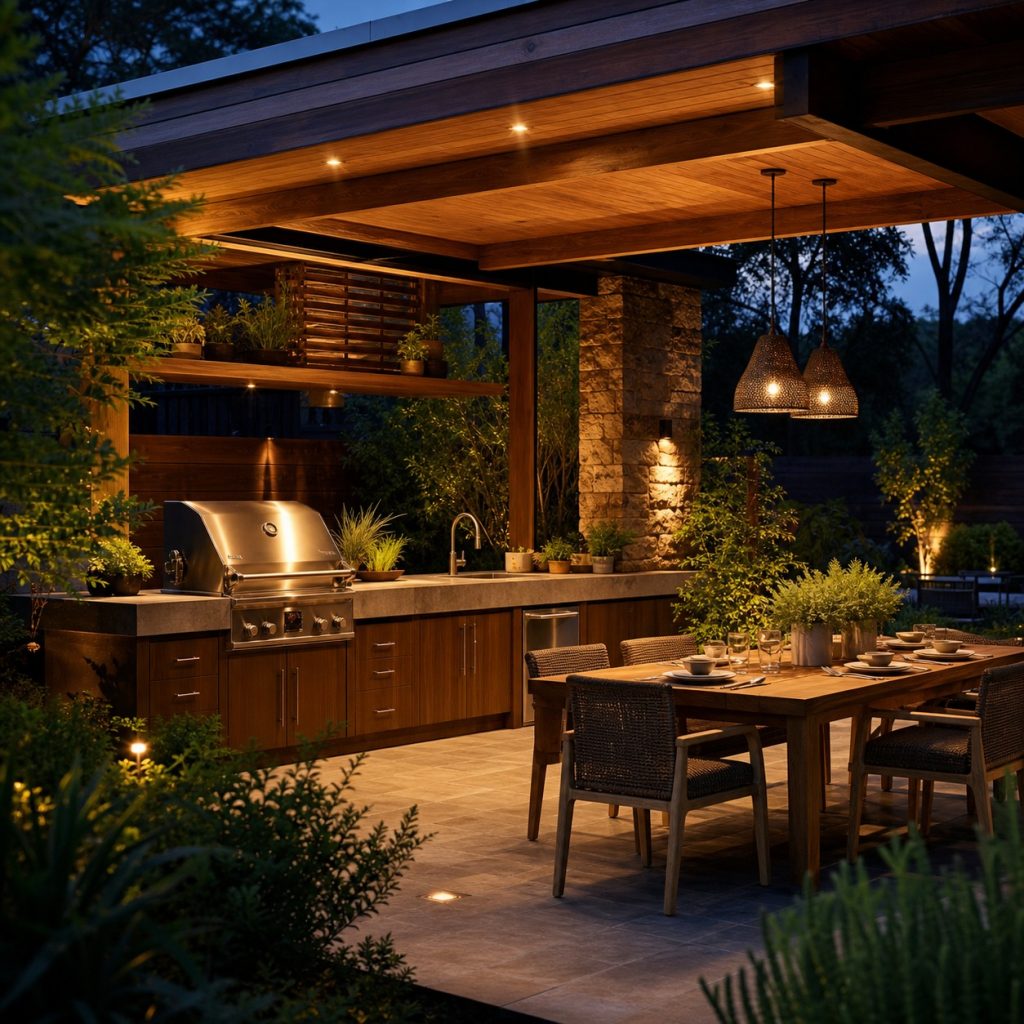
The most comfortable result uses separate layers and controls. Brighter task lights can operate during prep, while pendants, sconces, and path lights remain at a lower level for dining. Dimming and zoning give flexibility, provided all devices and controls are suitable for the location and load.
Planning checklist
- Map grill, prep, sink, steps, paths, and dining tasks before choosing fixtures.
- Keep bright sources out of direct view and prevent the cook from casting shadows.
- Use fixtures, drivers, boxes, and controls rated for their exact exposure.
- Put task, dining, and path layers on useful separate controls.
- Have exterior electrical work designed and installed to local requirements.
These ideas are general planning guidance. Verify appliance clearances, ventilation, weather exposure, drainage, structural loads, fuel and electrical work, permits, and local fire, pool, and building requirements with manufacturers and qualified local professionals.
Frequently asked questions
What color temperature works for an outdoor kitchen?
Warm white light is often comfortable, while accurate color rendering helps with food prep. Coordinate all fixtures with samples rather than mixing visibly different whites.
Do outdoor kitchen lights need to be wet rated?
The required listing depends on the fixture’s exact exposure. Covered locations may still be damp, while fixtures exposed to rain or washdown generally need appropriate wet-location approval.
Where should lights go over a grill?
Aim for even light on the controls and cooking surface without placing fixtures in heat, grease, or clearance zones. The appliance and fixture instructions should guide final placement.