Project planning guide
Before you build
Use the reference image and planning notes as a starting point. Confirm dimensions, loads, materials, local codes, and site conditions before purchasing or cutting.
- Garden Projects
- 8 reference images
- Print-friendly guide
Screening finished, cured compost separates usable fine material from twigs and pieces that can return to the active pile. A practical sifter has a rigid wooden frame, supported galvanized mesh, covered cut-wire edges, comfortable handles, and a size the user can move without excessive lifting.
Handheld Rectangular Sifter
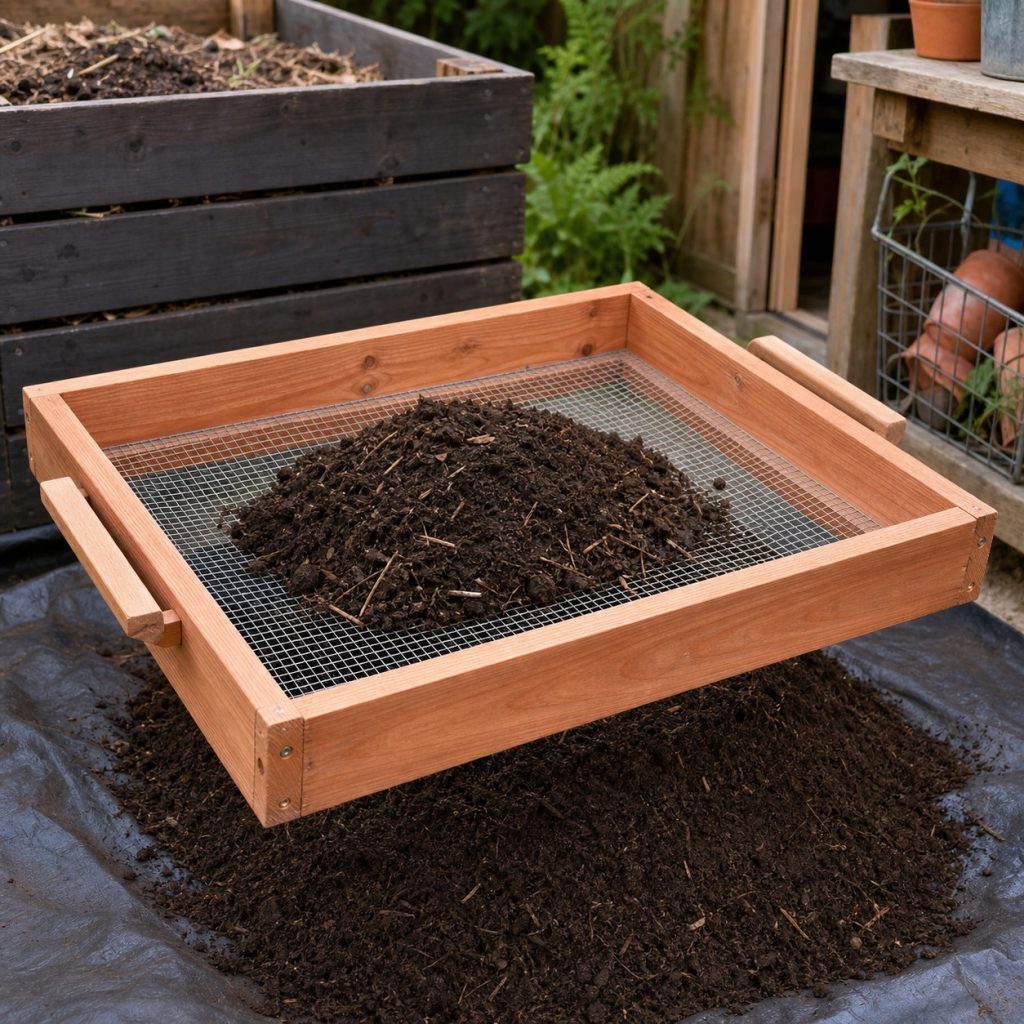
A shallow box frame is easy to shake over a tarp. Keep the width within a comfortable two-hand reach, reinforce corners, and limit each load. Handles should align with the center of the compost so the frame does not twist while screening.
Wheelbarrow-Fit Sifter
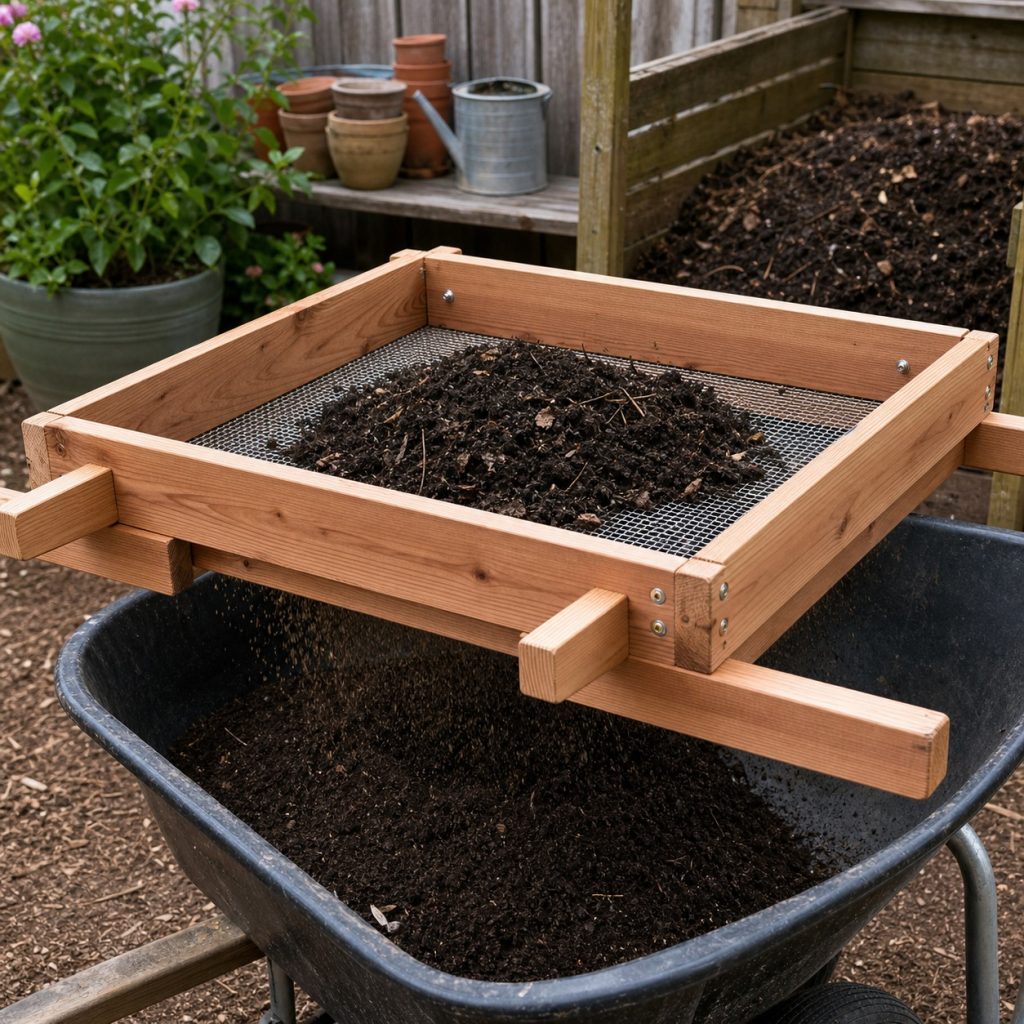
Stop cleats beneath the frame keep it from sliding off the wheelbarrow rim. Measure the specific tray before building and leave clearance for handles and dumping. Finished compost falls directly into the barrow while oversized material remains accessible.
Rocking Rail Sifter
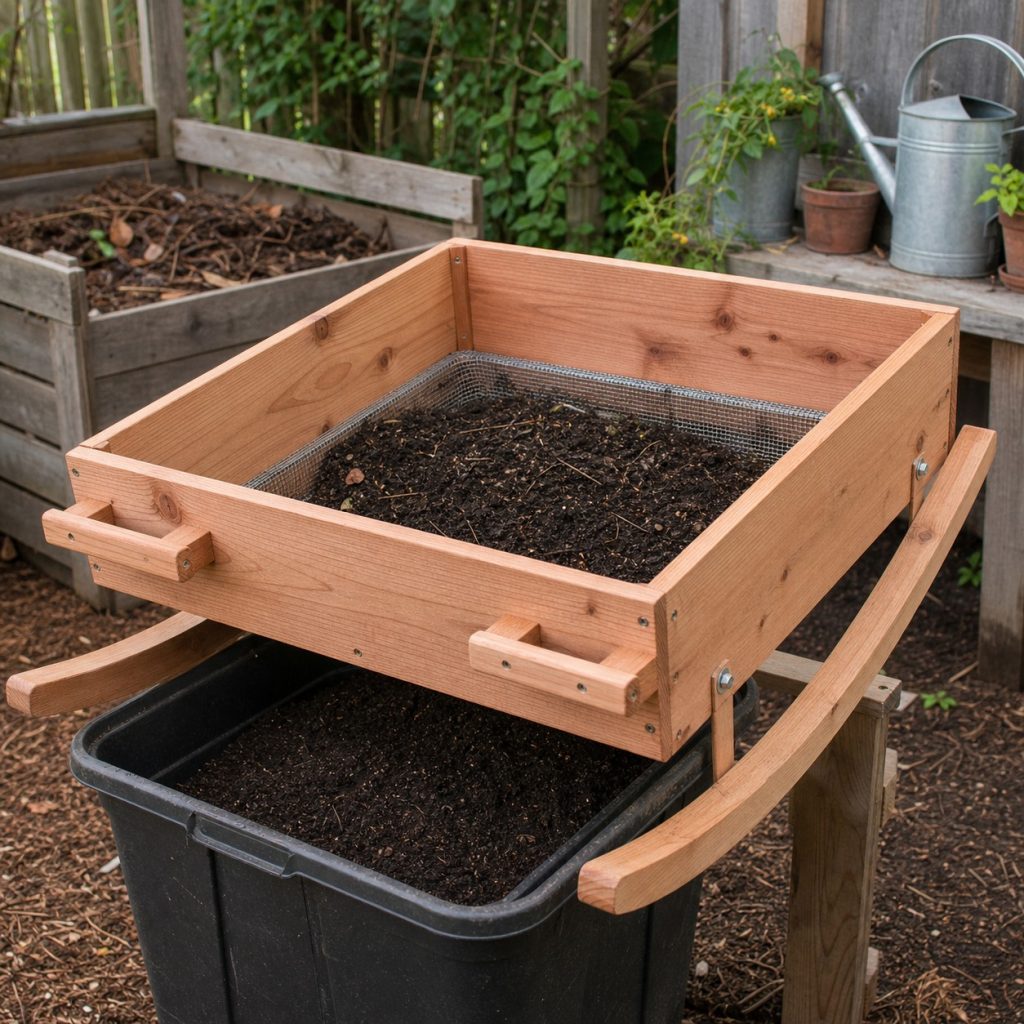
Curved wooden rails let the user rock a screened box without lifting the full load. Keep the travel short, add stops so the unit cannot roll away, and put hand grips outside the mesh area. Use small loads and a stable collection bin.
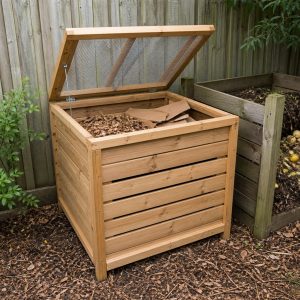
Hinged Bin-Top Screen
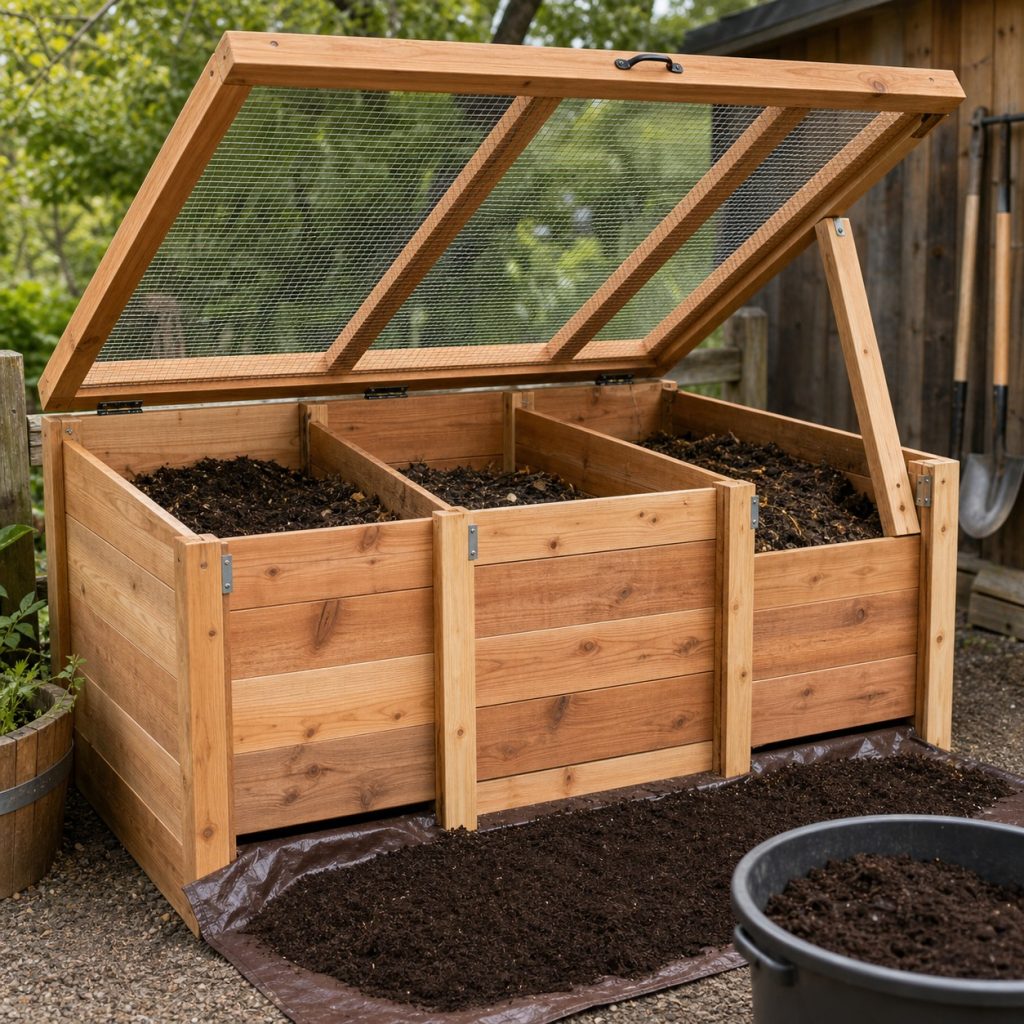
A hinged screen can sit over the finished bay or a separate collection area. Use strong pivots, a positive prop or stay, and a handle that keeps fingers from the hinge. The bin structure must be verified for the added moving load.
Stackable Mesh Sizes
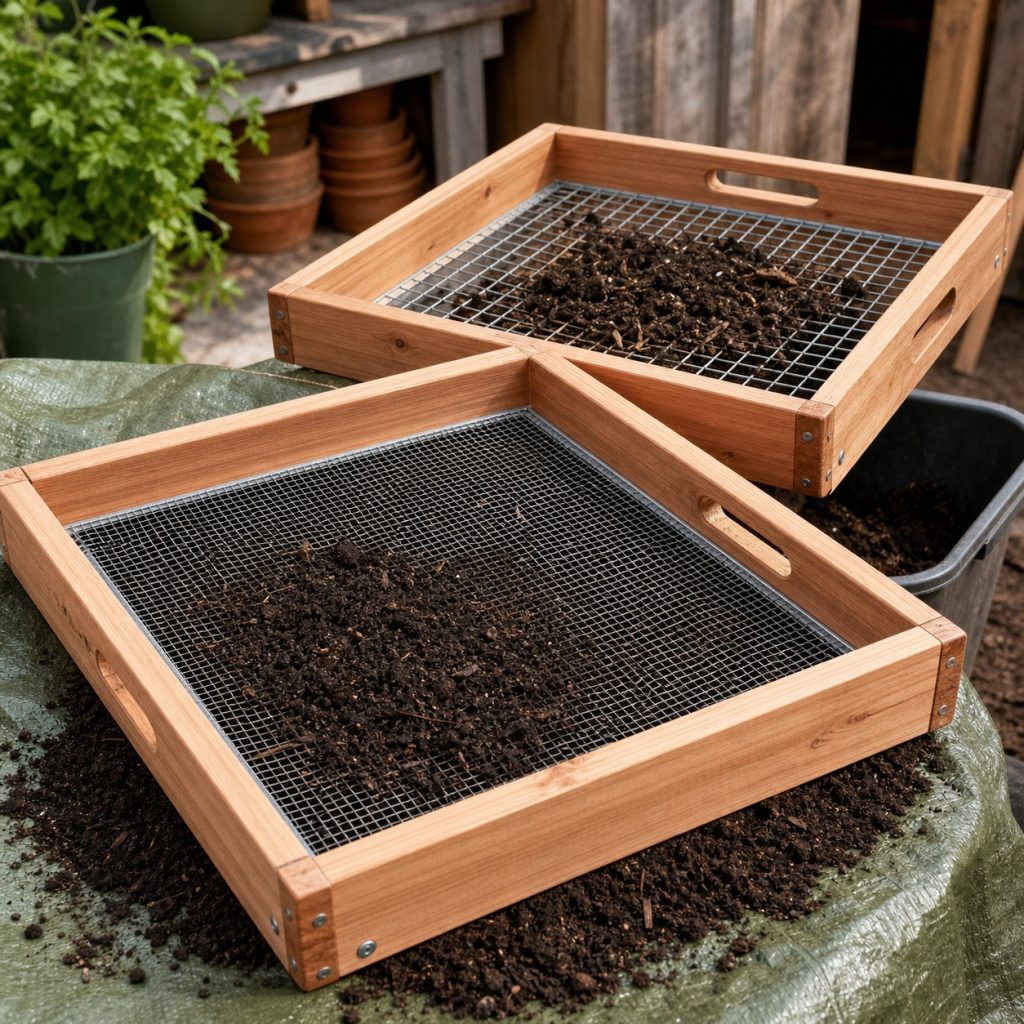
Two independent screens can separate coarse material first and finer material second. Labeling is optional, but the physical mesh should be obvious and each frame should stack without trapping fingers. Use only the fineness actually needed for the garden task.
Build a Rigid Frame
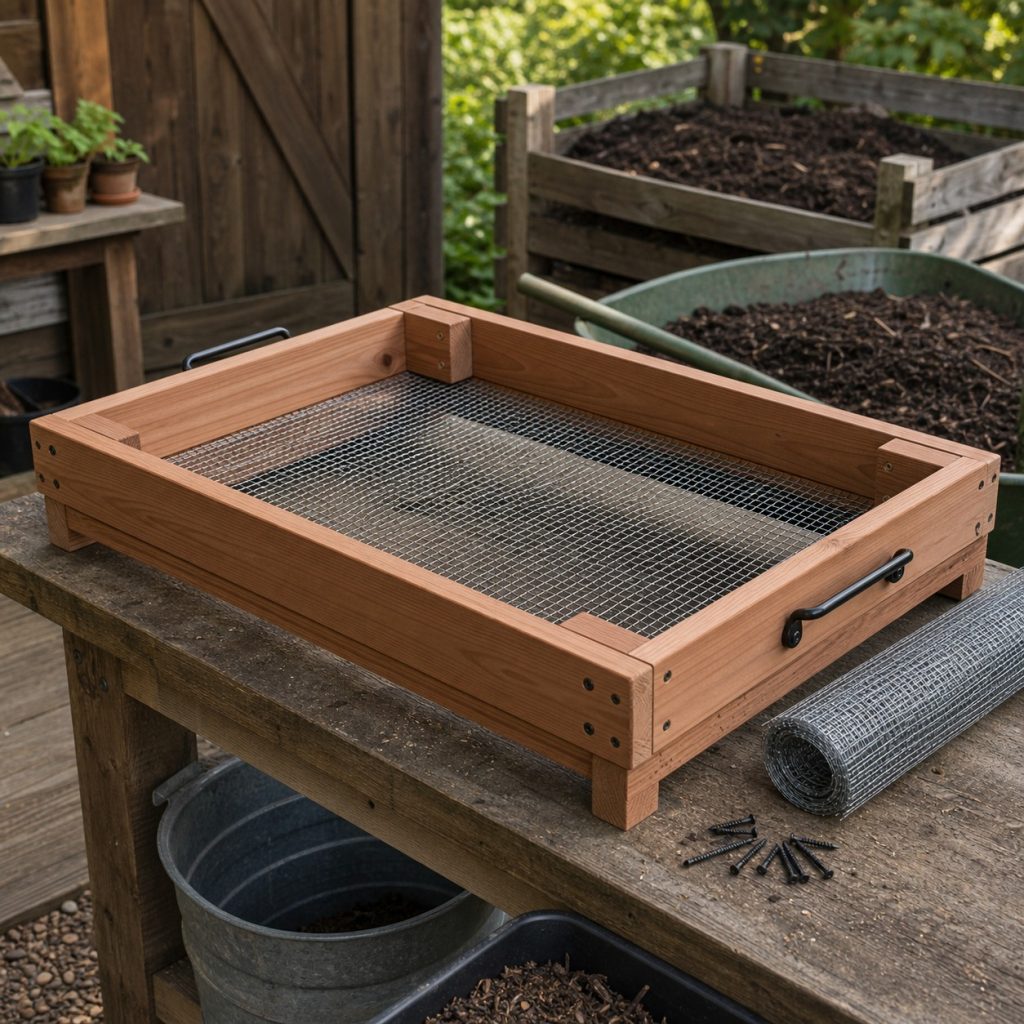
Simple butt-jointed rails become more durable with corner blocks, screws, and a second clamping frame. Assemble on a flat surface, compare diagonals, and finish the wood before installing mesh when practical. Keep all staples or screws away from hand paths.
Capture and Cover Mesh Edges
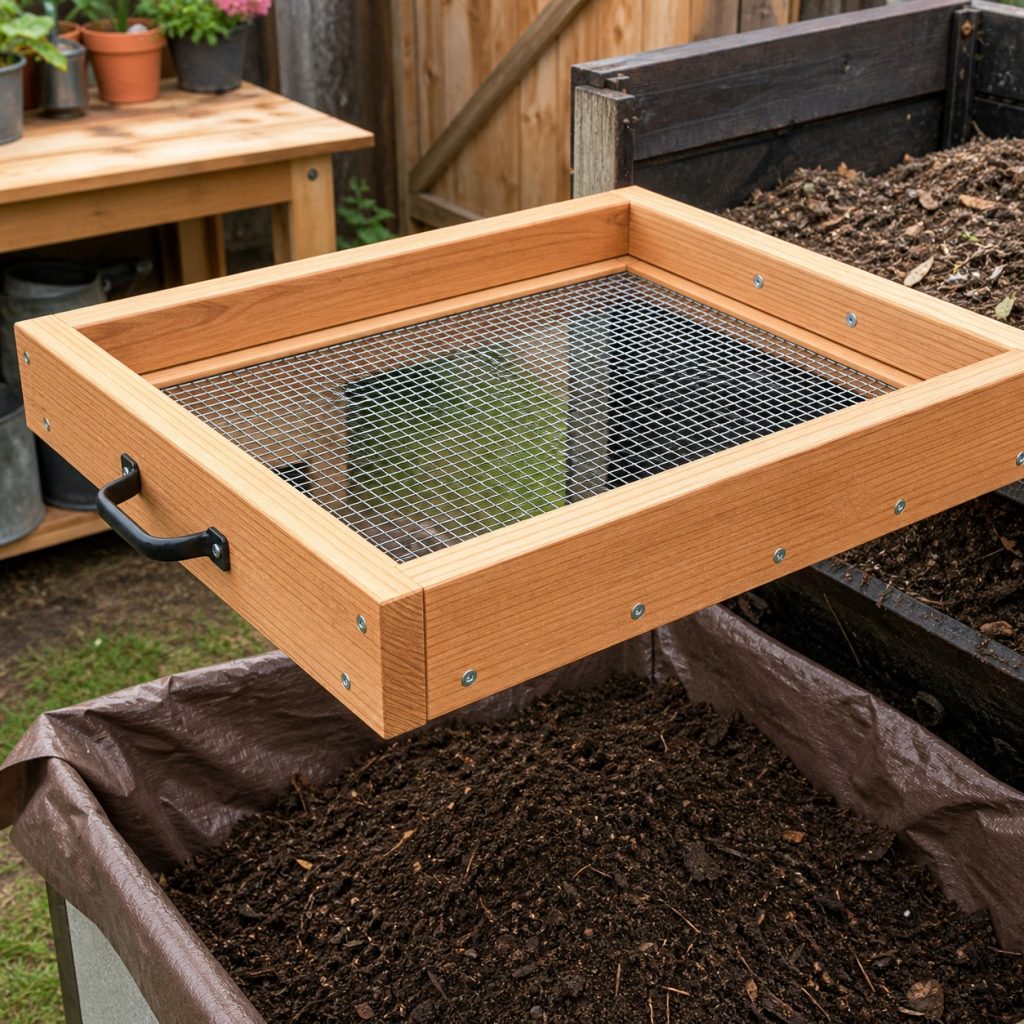
Cut hardware cloth leaves sharp wire ends. Sandwich it between two wooden frames or continuous cover strips, fasten it at close regular intervals, and inspect for lifted wires. Gloves and eye protection are appropriate during cutting and replacement.
Clean and Store the Sifter Dry
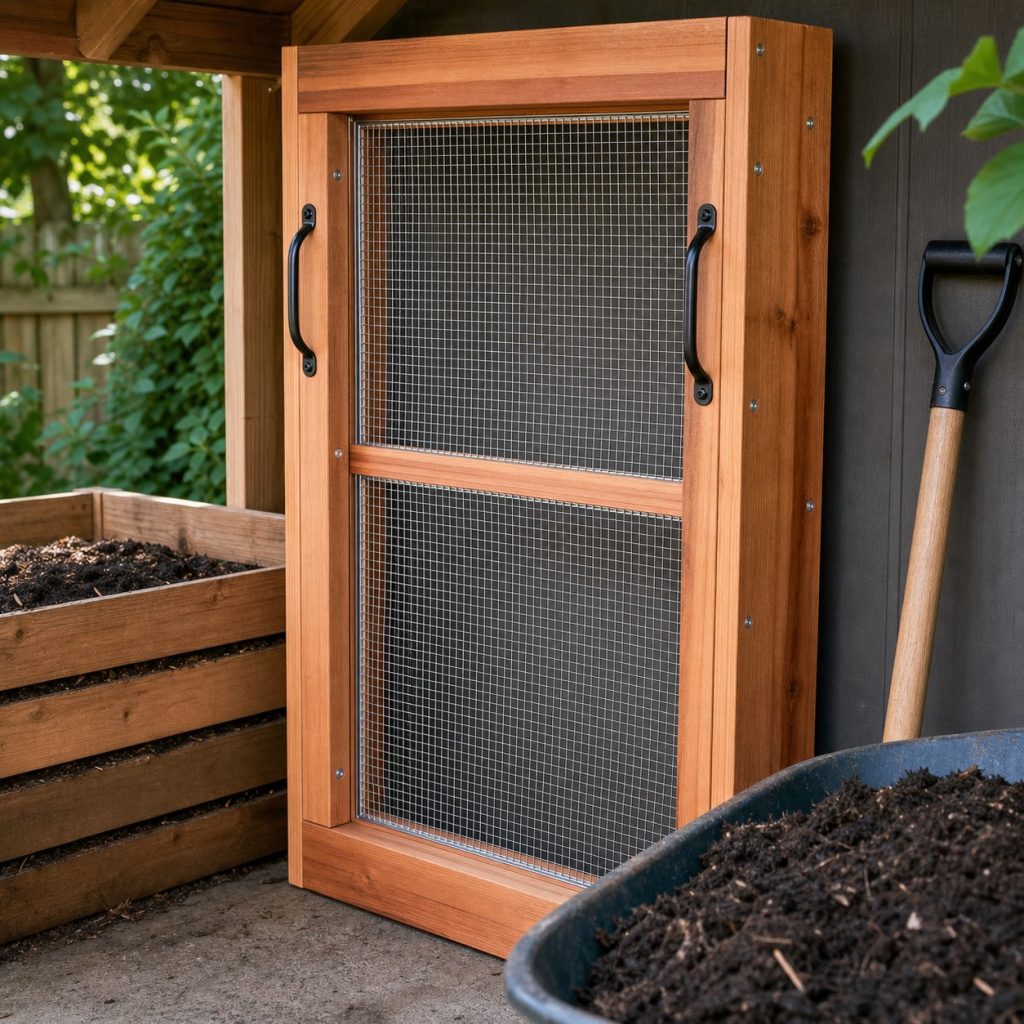
Brush away compost and let the frame and mesh dry before storage. Hang or stand it where the mesh cannot snag clothing or tools. Replace corroded mesh, loose cover strips, cracked handles, or racked corners before the next screening session.
Planning checklist
- Screen only finished cured compost, not active food scraps.
- Match screen size to the user and collection container.
- Clamp galvanized mesh securely and cover every cut wire edge.
- Use stop cleats, props, or rails that prevent unintended movement.
- Work in small loads and clean, dry, and inspect the frame after use.
These concepts are general planning guidance, not engineering drawings or tested load-rated plans. Verify dimensions, ergonomics, lumber grade and treatment, structural loads, fasteners, coatings, food-contact use, wildlife and compost guidance, accessibility, utility locations, property rules, permits, and local building requirements for the actual project. Use qualified professionals where structural, electrical, plumbing, refrigeration, fall, or entrapment hazards apply.
Frequently asked questions
What mesh size works for compost?
It depends on the intended use. A coarse screen removes larger pieces quickly, while finer screening takes more effort and may be unnecessary.
Should wet compost be sifted?
Finished compost is easier to screen when crumbly rather than wet and clumped. Active or unfinished material should continue curing.
What happens to pieces that do not pass through?
Return appropriate undecomposed organic pieces to the active pile and remove contaminants such as produce stickers or plastic.