Project planning guide
Before you build
Use the reference image and planning notes as a starting point. Confirm dimensions, loads, materials, local codes, and site conditions before purchasing or cutting.
- Garden Projects
- 8 reference images
- Print-friendly guide
A dry creek bed can make a shallow drainage route look intentional, but it must not be treated as a decorative trench that sends water toward a neighbor or foundation. These concepts begin with runoff observation, stable grades, erosion protection, and a lawful discharge or infiltration destination.
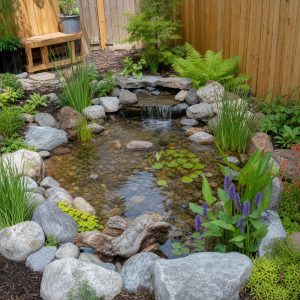
Natural Meandering Creek Bed
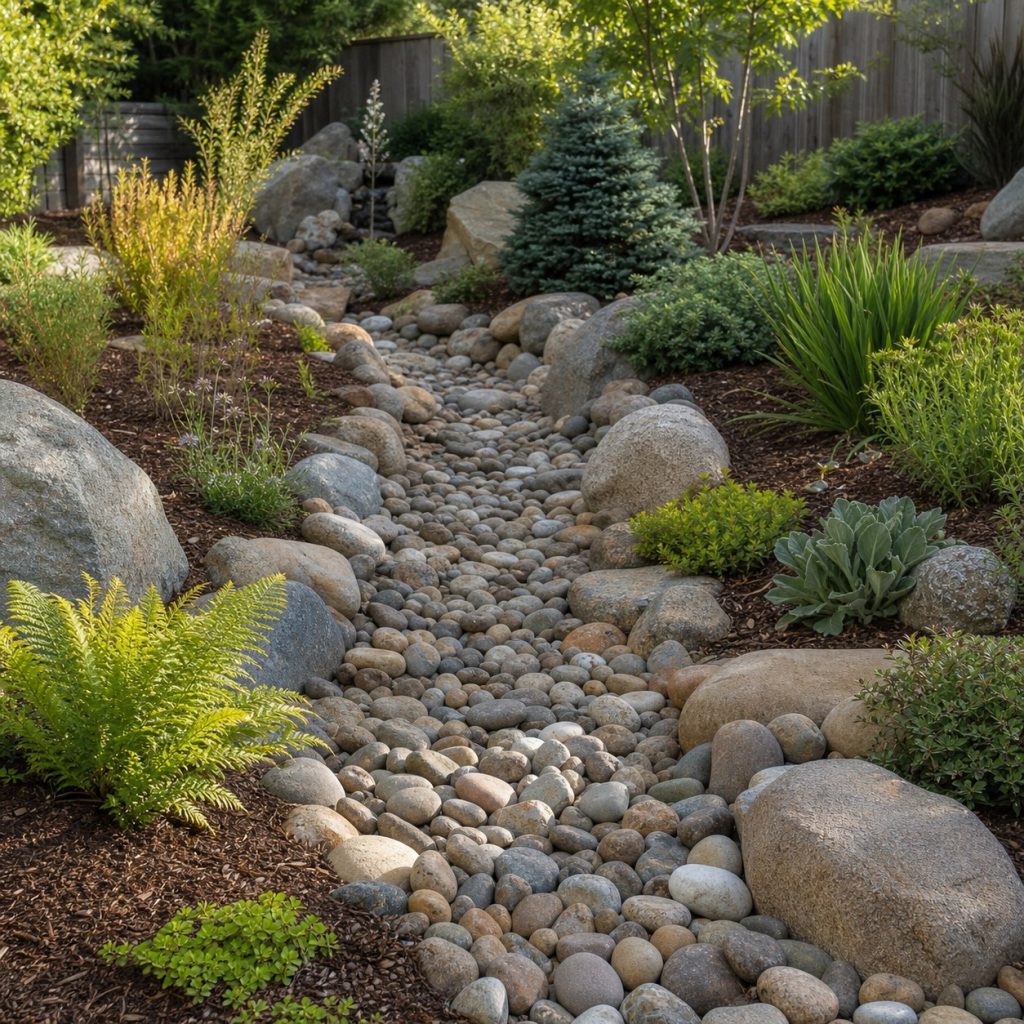
A gentle meander looks natural and can lengthen the runoff path, but bends need room and erosion-resistant shaping. Keep the channel broad and shallow, use larger anchor stones at turns, and never redirect water across property lines without approval.
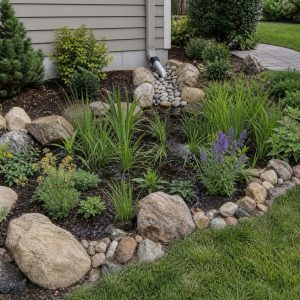
Downspout-to-Rain-Garden Creek
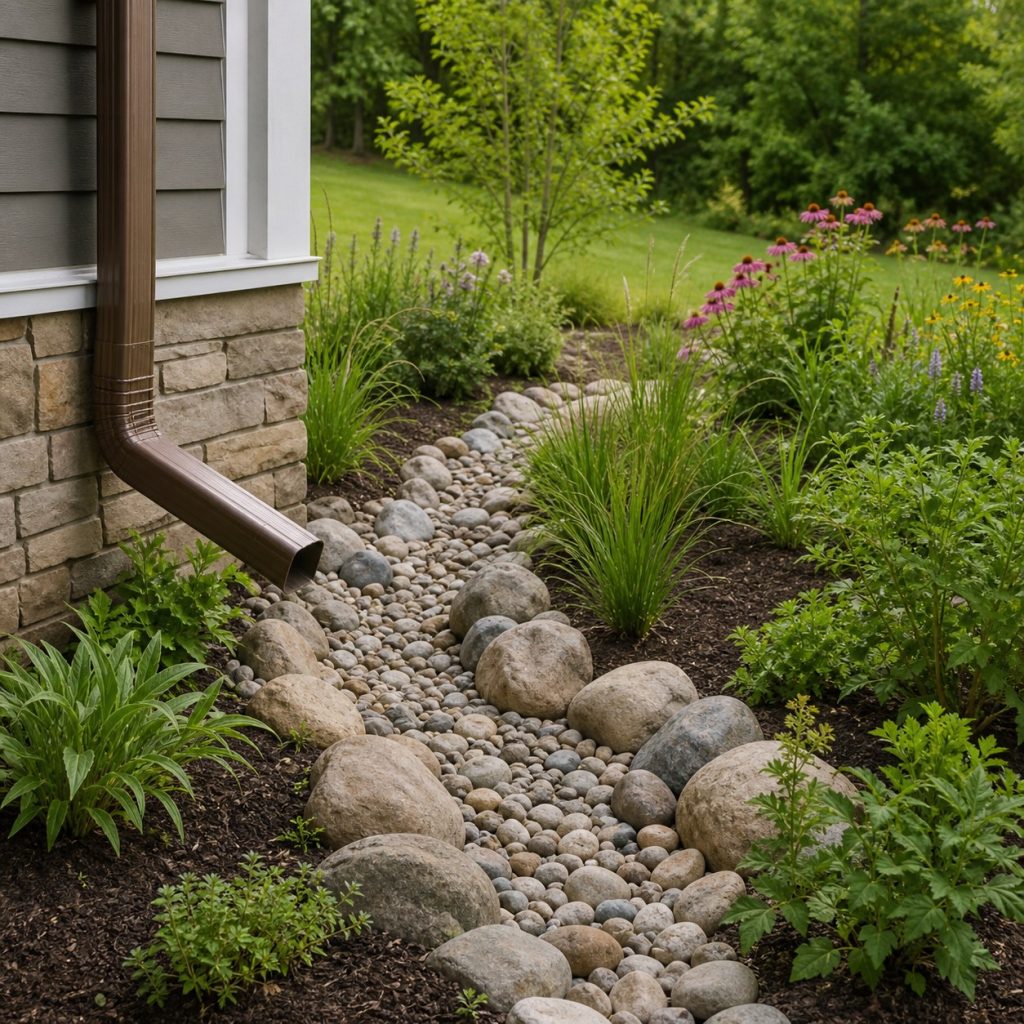
A stone swale can connect an approved downspout outlet to a suitable rain garden. Verify foundation setbacks, overflow, soil infiltration, and buried utilities, and use a splash block or armored inlet to prevent scour.
Narrow Side-Yard Stone Swale
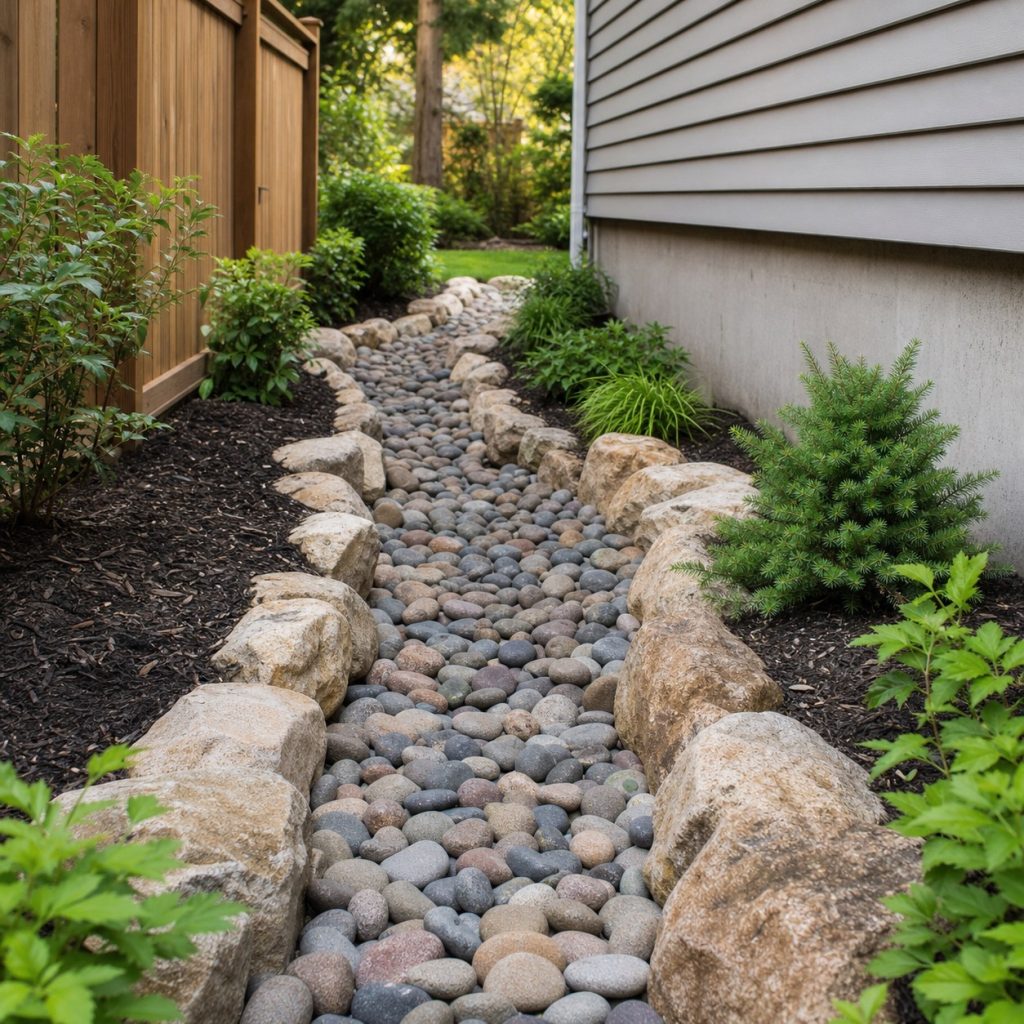
Side yards often contain utilities, gates, and foundation drainage, so space is constrained. Maintain required access and positive grade away from buildings; consult a drainage professional where the available corridor cannot safely carry design flows.
Bridge Crossing Over Creek Bed
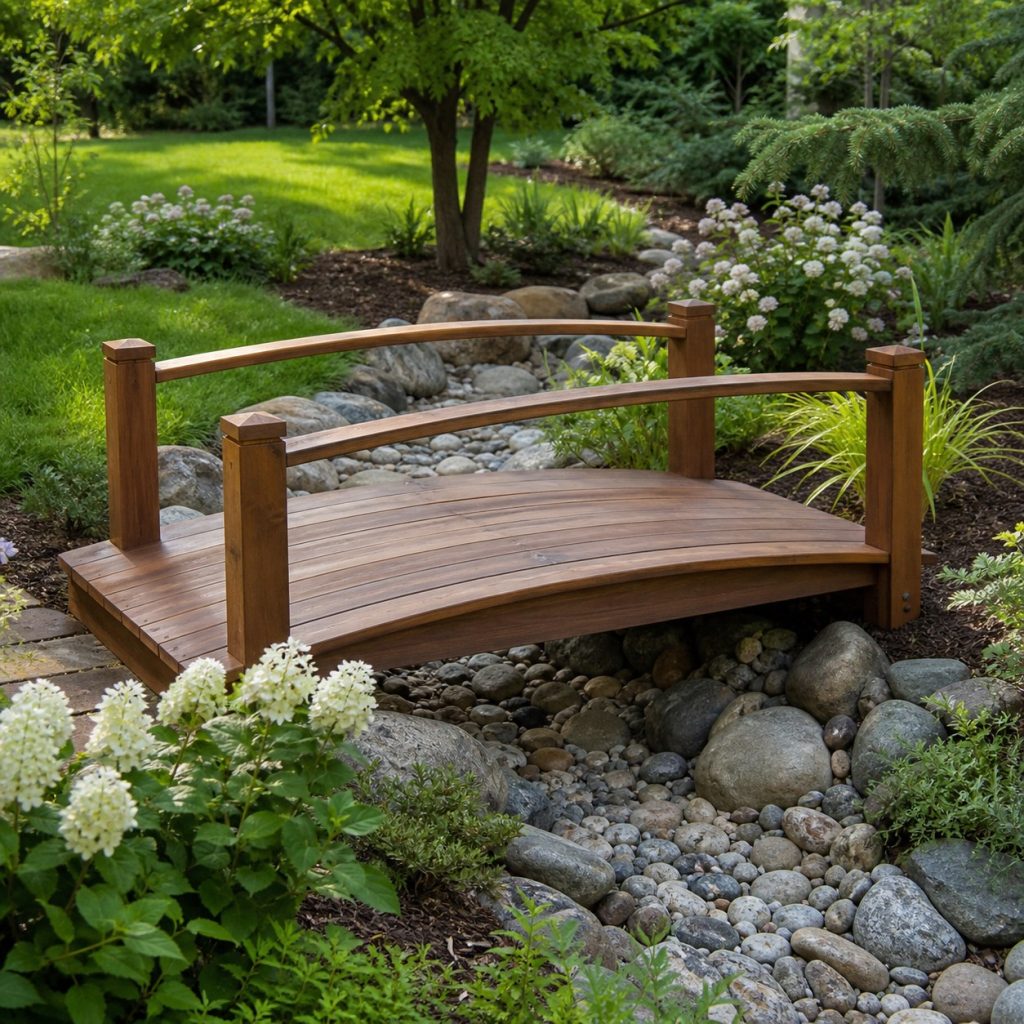
A crossing should span the drainage route without narrowing it or resting supports in the flow path. Use a load-rated, slip-resistant bridge design with stable approaches and railings where height or local rules require them.
Boulder-Cascade Erosion Check
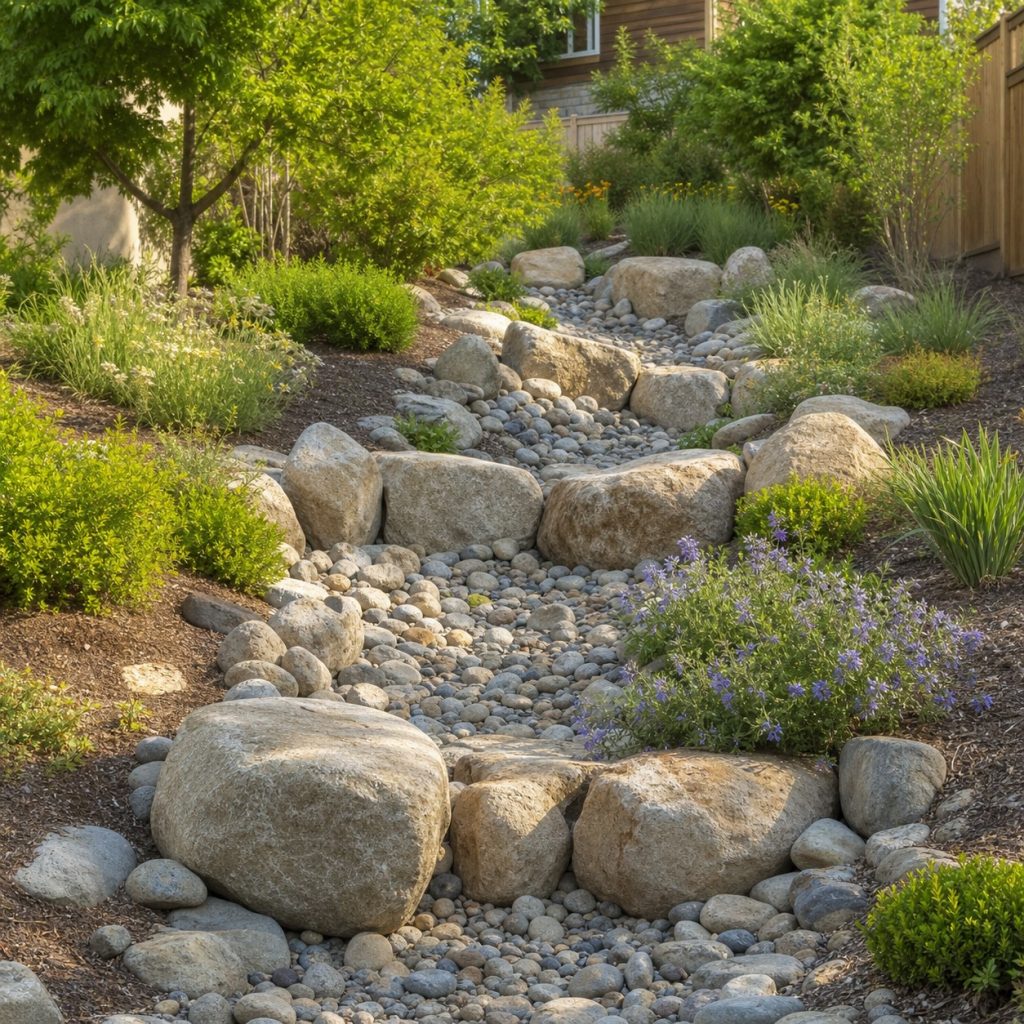
Large stones can break up a grade and slow visible flow, but random dams may force water out of the channel. Key stones securely into the profile and obtain engineered guidance for steep slopes, concentrated runoff, or erosion-prone soils.
Planted Dry Creek Margins
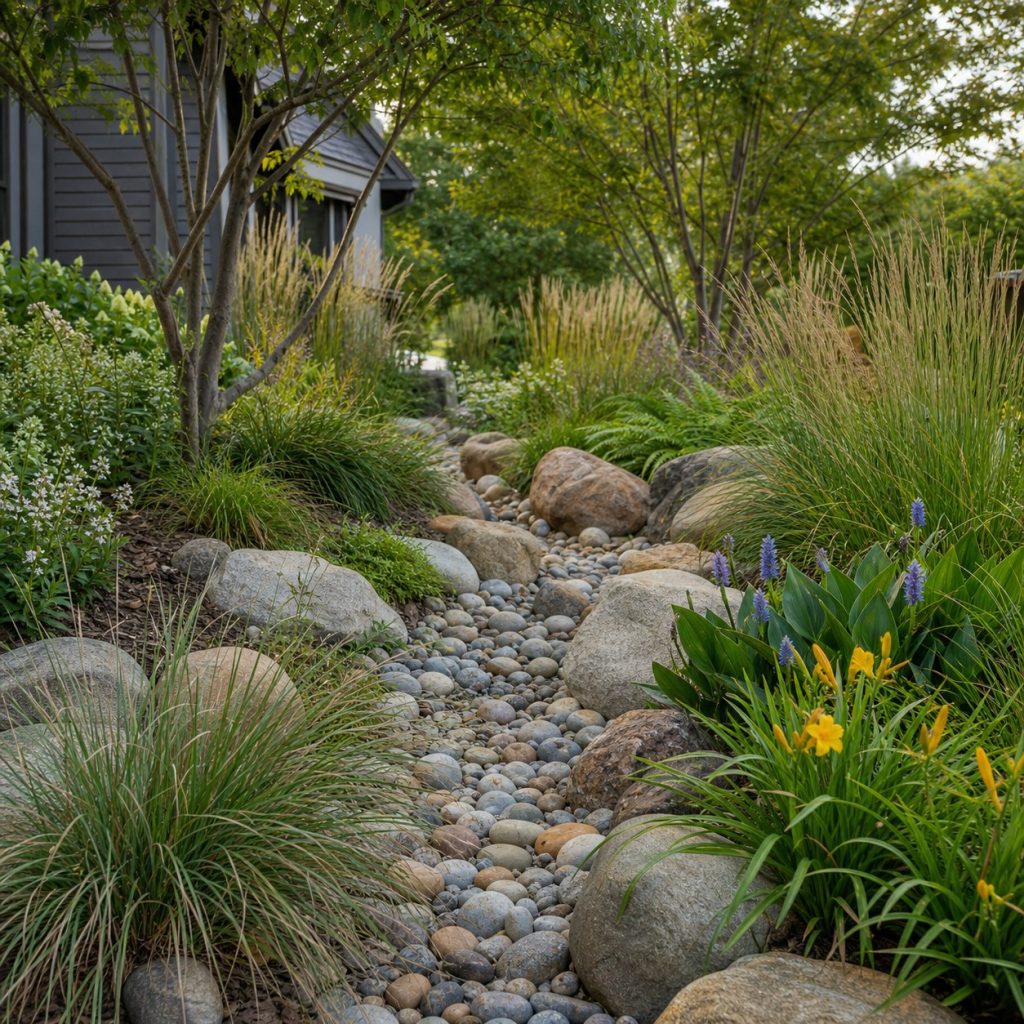
Plants along the upper margins can stabilize soil and blend the feature into the garden. Select region-appropriate species for alternating wet and dry conditions without filling the main conveyance path or hiding maintenance problems.
Dry Well or Approved Outlet
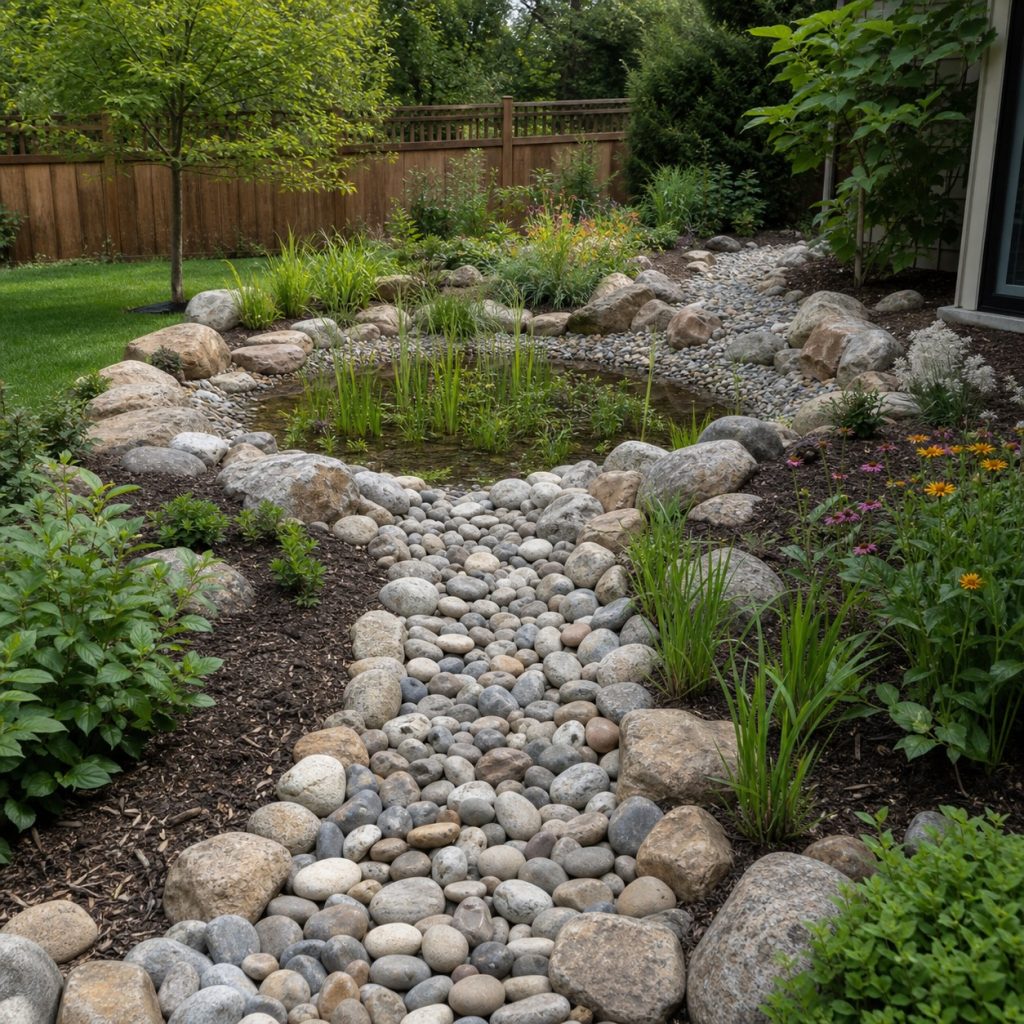
Every creek bed needs a safe destination and overflow plan. Soil, groundwater, wells, septic systems, slopes, and local rules determine whether infiltration is suitable; never assume a decorative rock pit can absorb unlimited runoff.
Maintenance After Storms
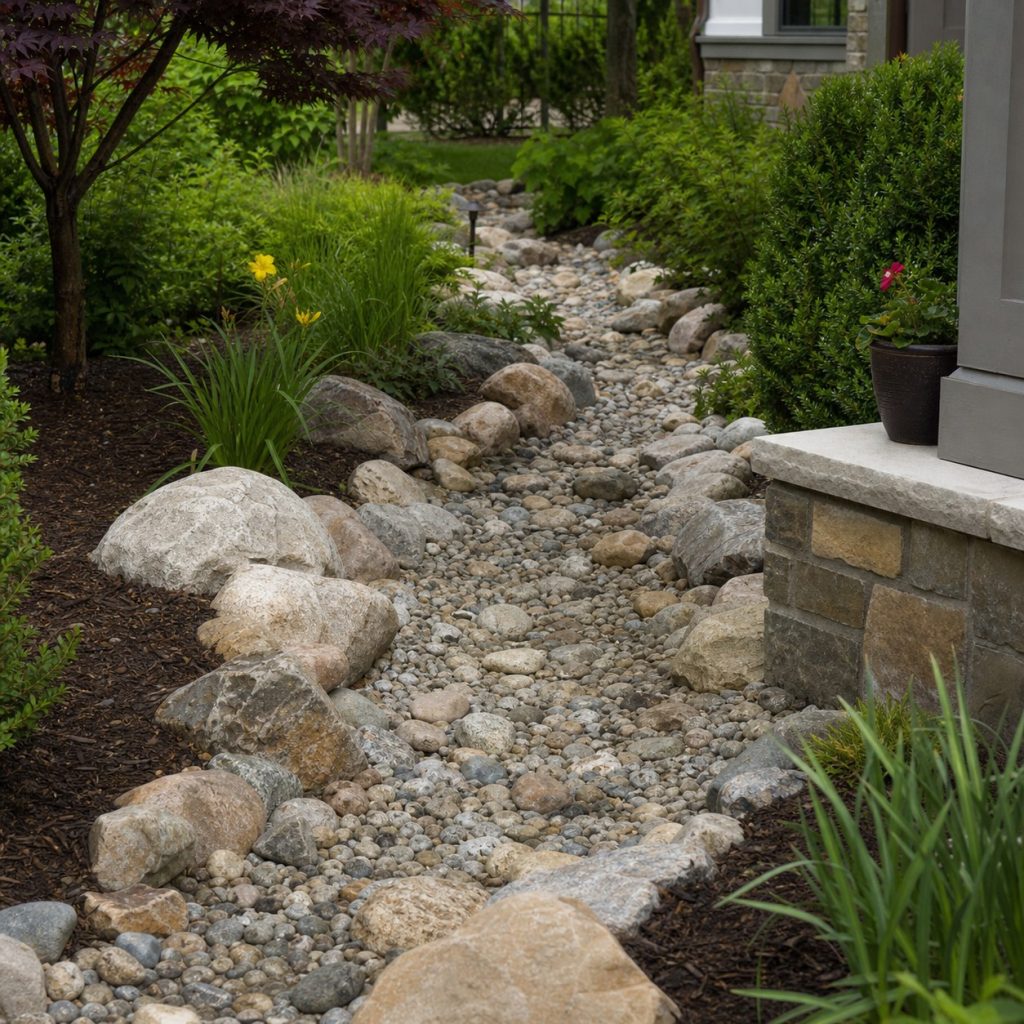
Inspect after major storms for sediment, displaced rock, undercut edges, blocked inlets, standing water, and new erosion. Correct the water source or hydraulic problem rather than repeatedly replacing decorative stone.
Planning checklist
- Observe runoff during rain and identify the full drainage area.
- Confirm utilities, easements, setbacks, and discharge rules.
- Keep water away from foundations and neighboring property.
- Use a broad shallow profile with protected inlets and outlets.
- Select stone sizes for expected flow and slope.
- Inspect and repair erosion after major storms.
These concepts and generated images are general planning inspiration, not measured drawings, drainage calculations, equipment-clearance instructions, accessibility designs, engineered plans, or tested load-rated structures. Verify dimensions, soil and drainage, roots and utilities, lumber and hardware, structural and wind loads, equipment manuals, service access, electrical and plumbing work, water and chemical safety, accessibility, permits, and local requirements for the actual project. Use qualified arborists, engineers, HVAC and pool technicians, electricians, plumbers, drainage professionals, and other licensed trades where those hazards or systems apply.
Frequently asked questions
Does a dry creek bed need landscape fabric?
It depends on soil, flow, stone system, and maintenance goals. Fabric can separate aggregate but may clog or become exposed; follow a site-specific drainage design.
Where should the water end?
At a lawful, stable outlet or suitable infiltration area with a defined overflow route. Verify local rules and site constraints before changing drainage.
Can I build one beside a foundation?
Only with a design that maintains positive drainage away from the building and protects the foundation. Get professional advice when runoff is concentrated or existing moisture problems are present.