Project planning guide
Before you build
Use the reference image and planning notes as a starting point. Confirm dimensions, loads, materials, local codes, and site conditions before purchasing or cutting.
- Garden Projects
- 8 reference images
- Print-friendly guide
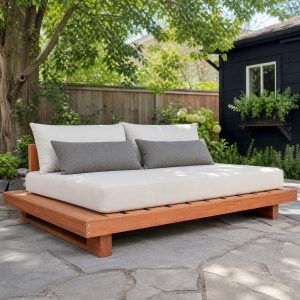
An outdoor sofa carries several people across a longer frame than a chair, often beneath cushions that hide water and connection movement. The design needs continuous seat rails, intermediate supports, rigid side frames, a stable back, smooth contact surfaces, and a cushion strategy that allows the whole assembly to dry.
Straight Three-Seat Sofa
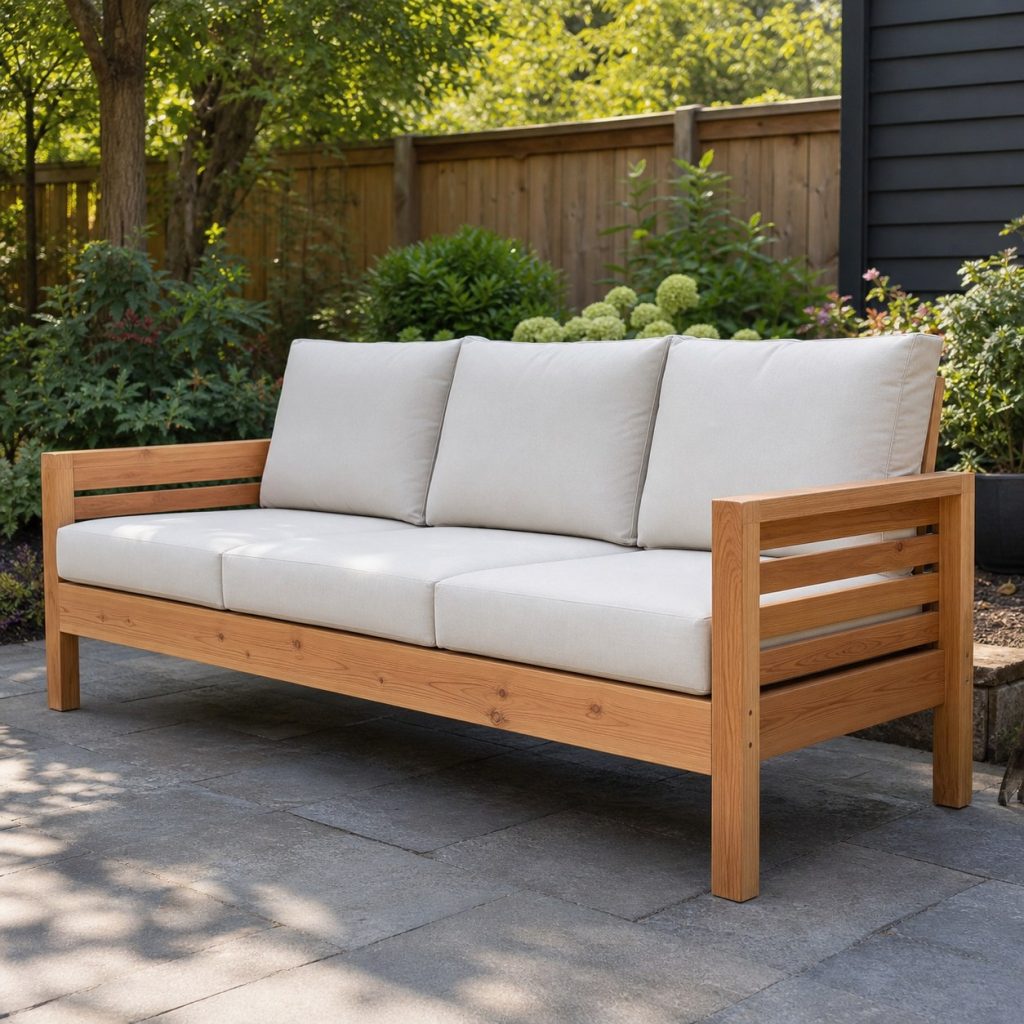
A straight sofa is easiest to brace and place against a patio edge. Let the frame, not the cushions, define safe support: continuous front and rear rails, a rear stretcher, intermediate seat supports, and securely tied back posts create the core structure.
Modular Two-Piece Sofa
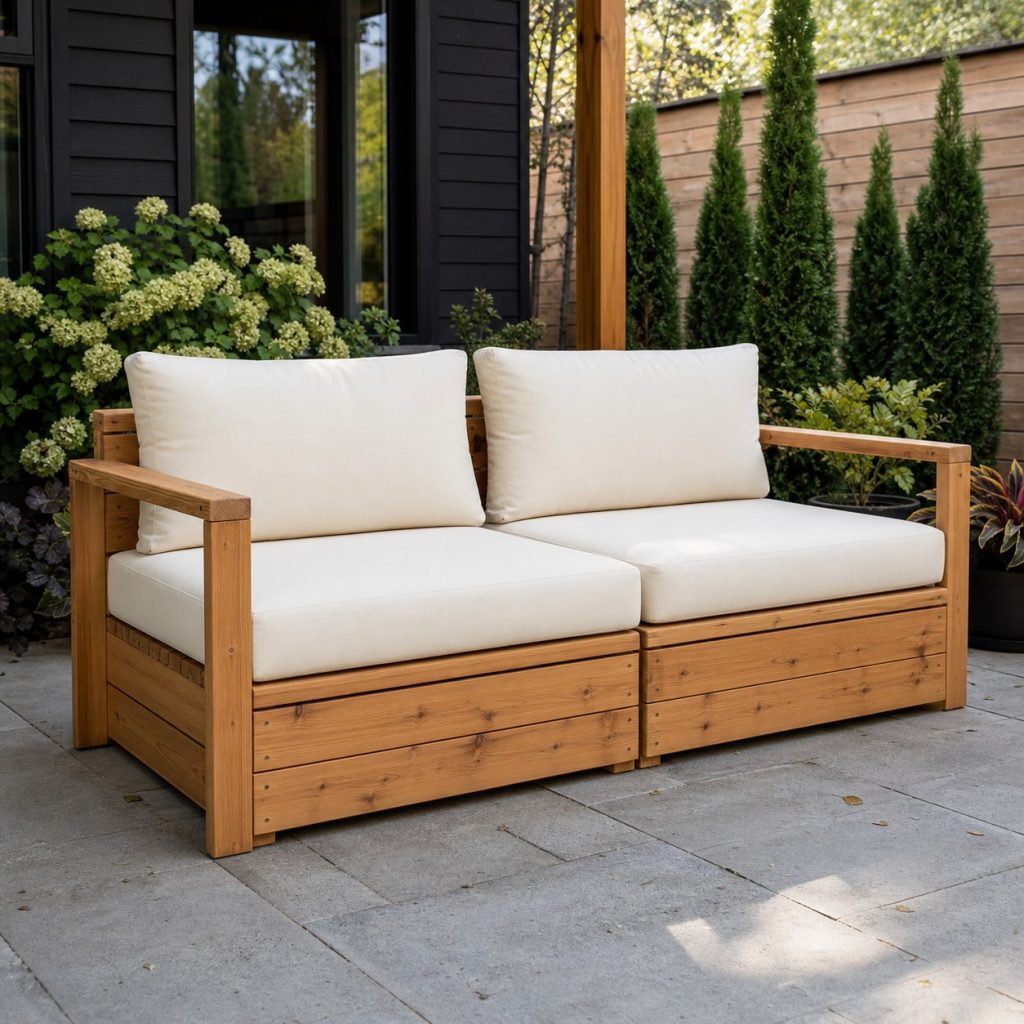
Separate modules are easier to move and can form a long sofa or corner arrangement. Each module must remain stable on its own, with compatible seat heights and a method that limits unintended sliding without creating a foot or finger trap.
Deep Lounge Sofa
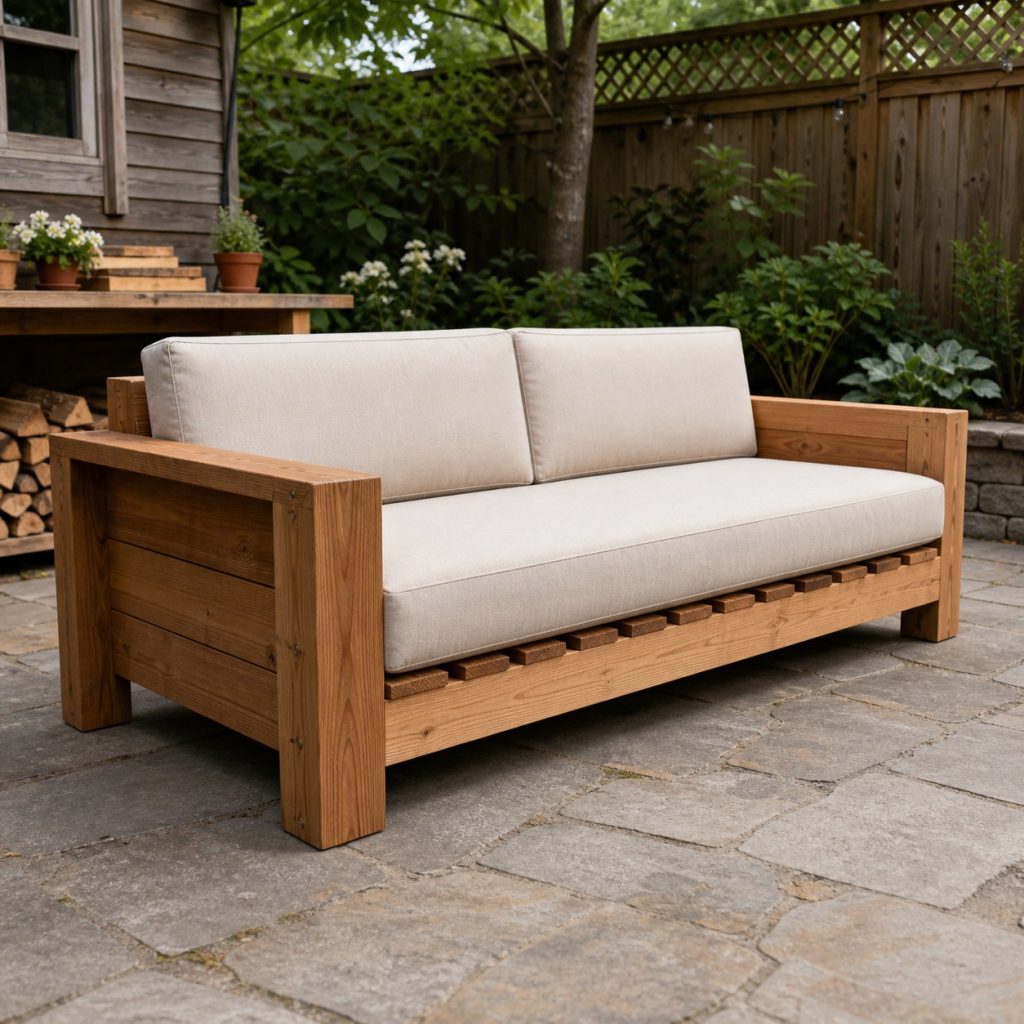
A deep lounge posture needs more rearward support and can be harder to stand from. Mock up cushion compression, seat height, depth, and back angle with the intended users before cutting. Keep the footprint broad enough to resist tipping.
Compact Armless Sofa
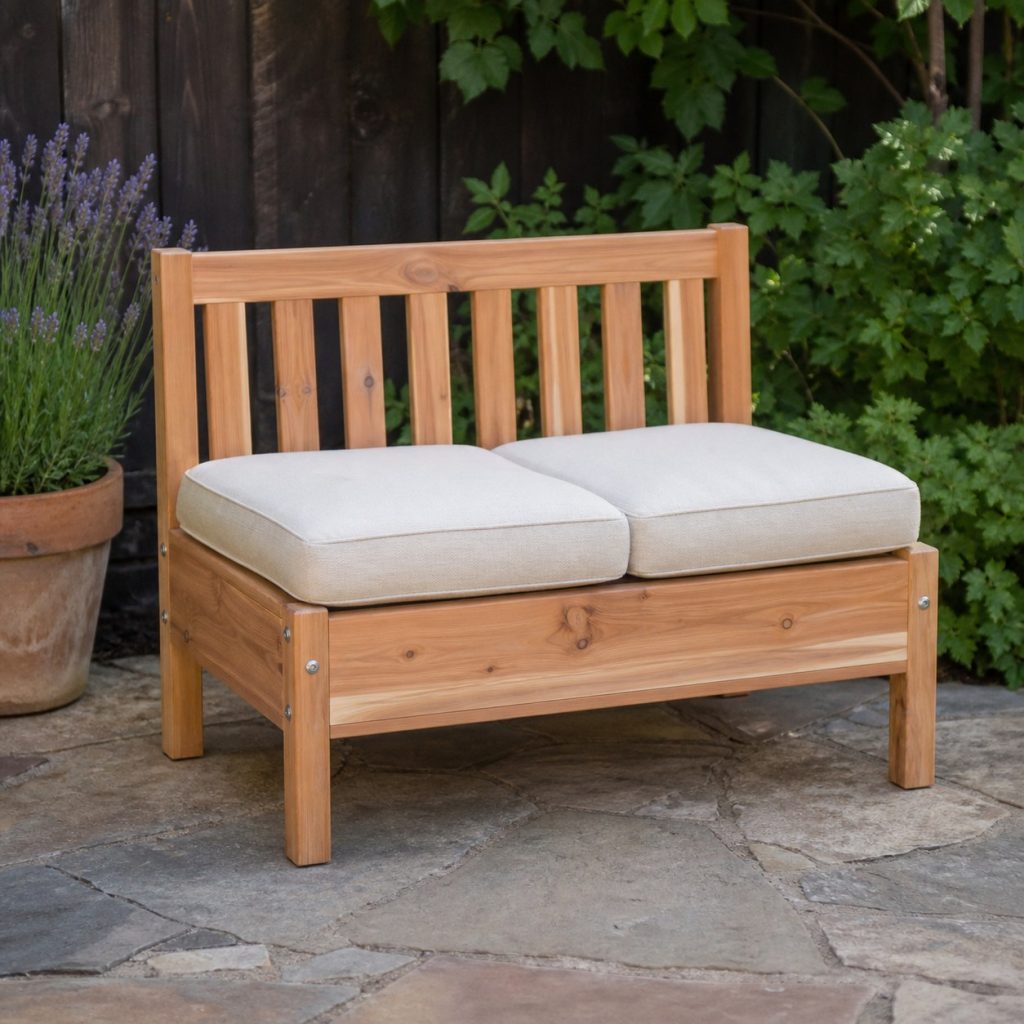
Removing arms saves width but also removes useful side structure. Build rigid end frames, reinforce the seat-to-back connection, and keep exposed side edges smooth. Confirm the sofa cannot rack when users sit near one end.
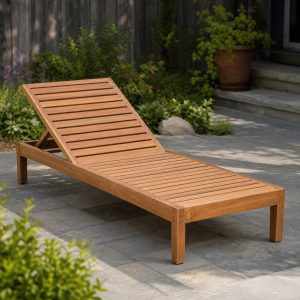
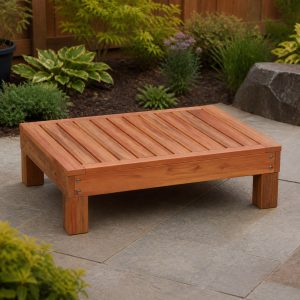
Open-Slat Cushion Platform
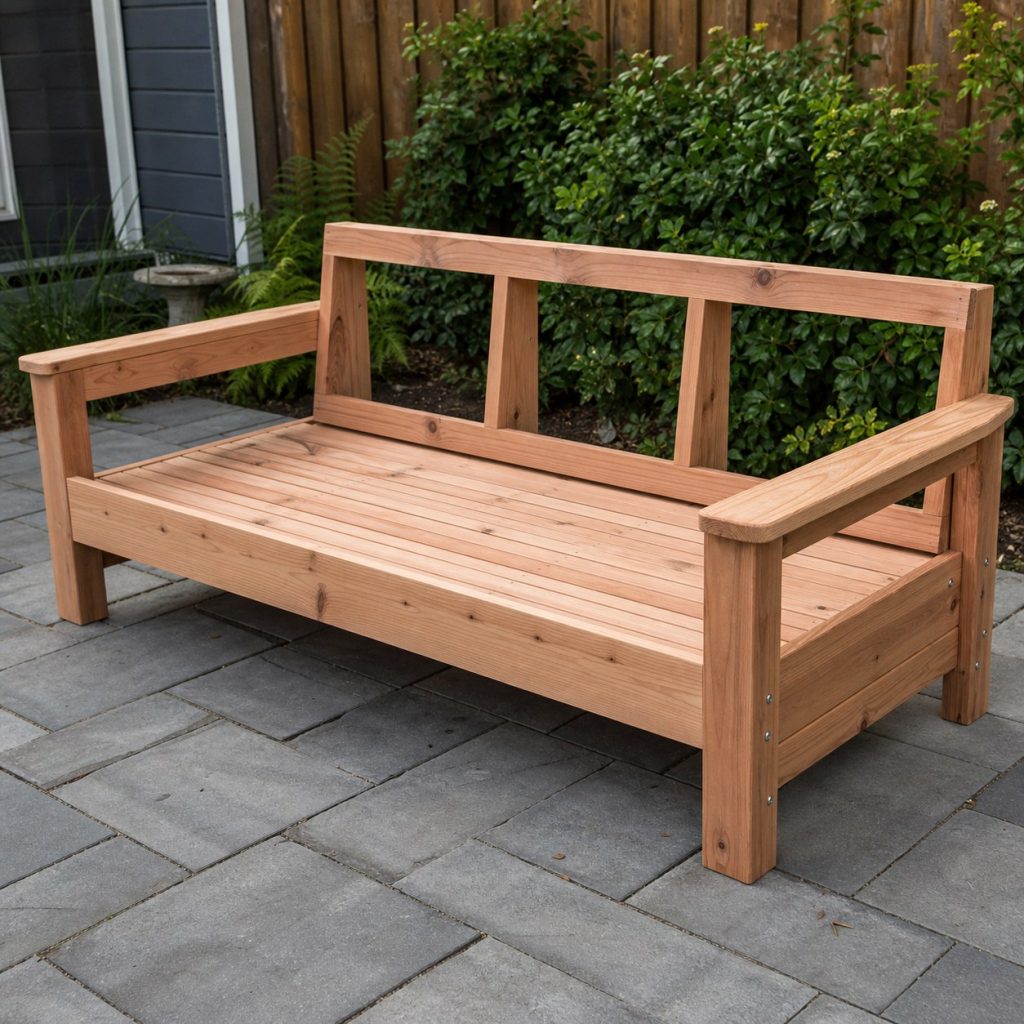
Cushions need broad, even support without a solid deck that traps water. Space smooth slats consistently, support their spans, and make them replaceable. Follow the cushion maker instructions and store cushions dry when weather or season requires it.
Frame Side Assemblies and Rails
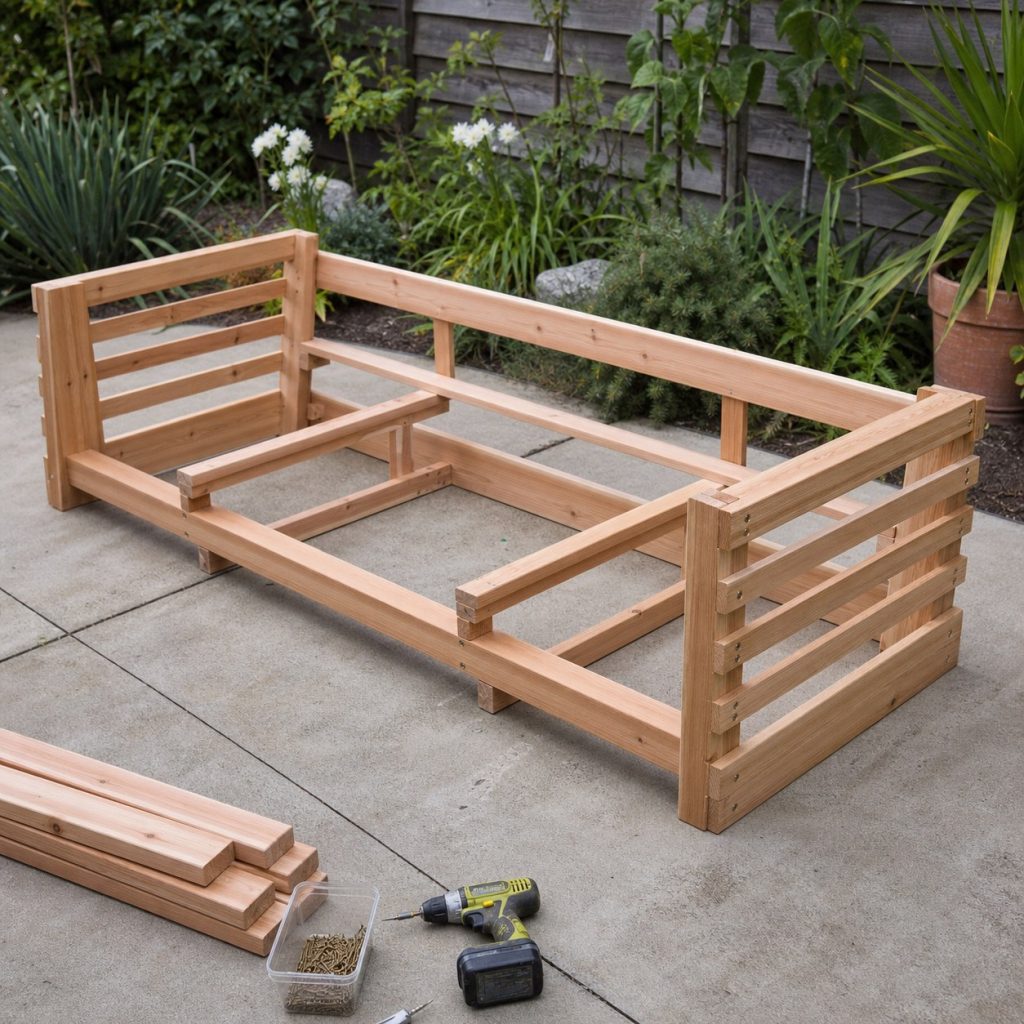
Build identical side assemblies, connect them with full-length rails, and add center supports before seat slats hide the frame. Compare diagonals and use temporary bracing. Long members and high-stress joints may require verified connection design.
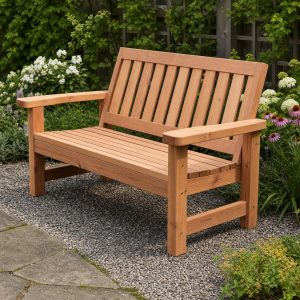
Reinforce Back and Arm Joints
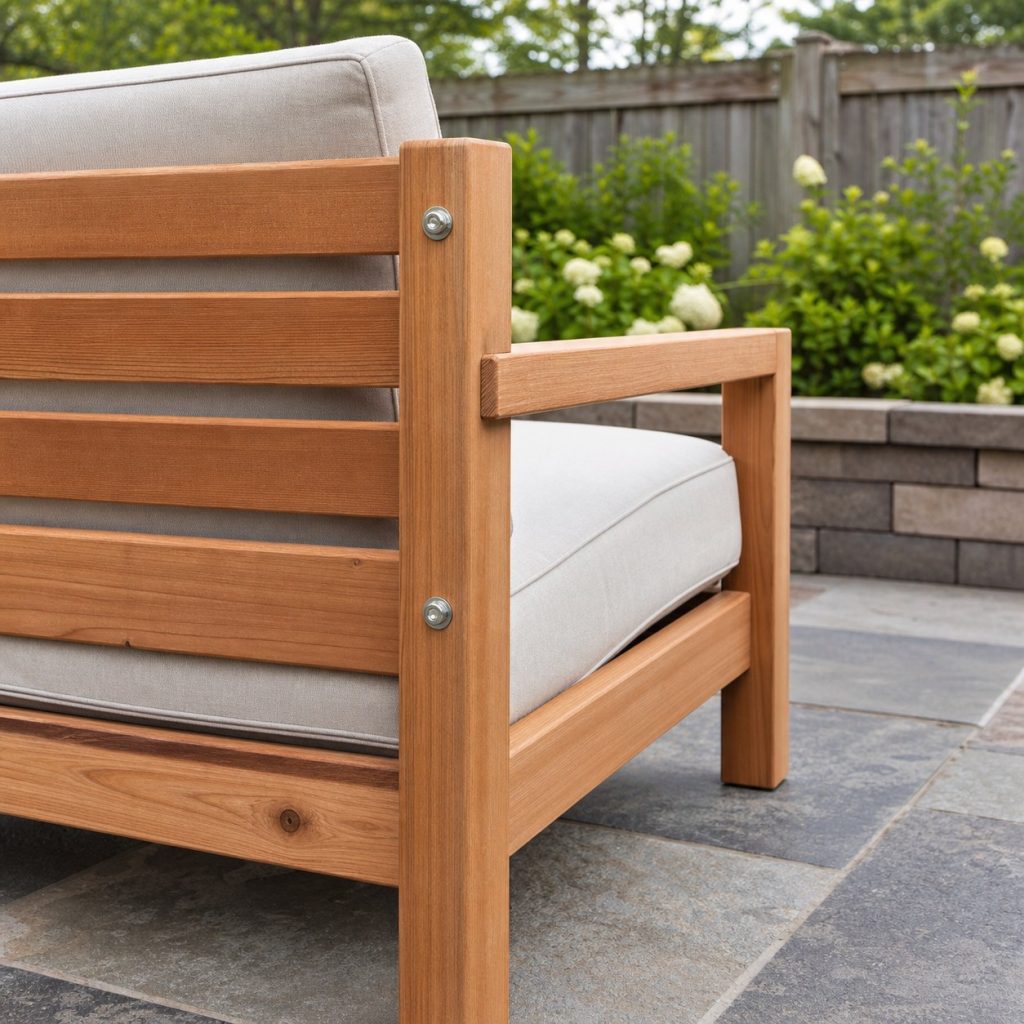
Back posts and arms often help users sit and stand, so their joints deserve more than decorative screws. Use verified connections, maintain edge distances, and round every hand-contact surface. Keep bolt recesses shallow and drainable.
Dry, Store, and Inspect
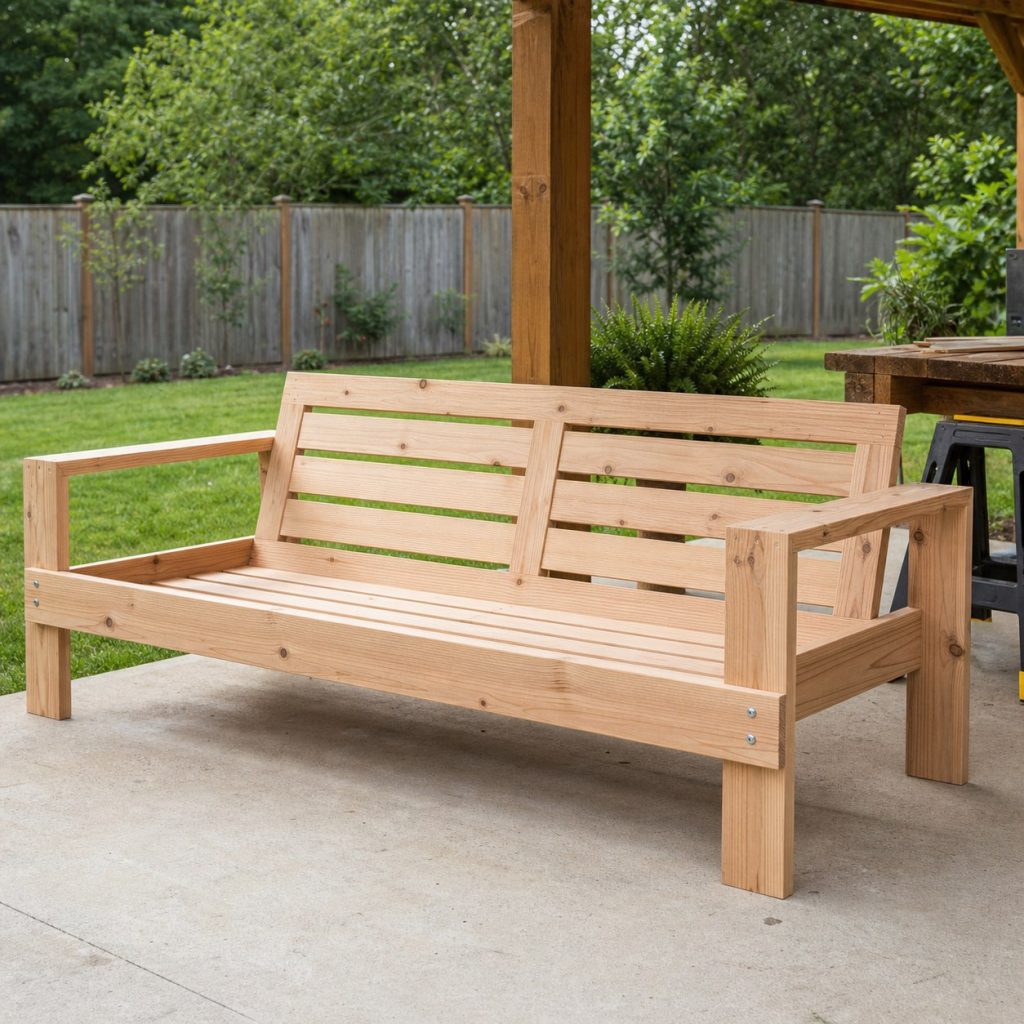
Remove cushions so the slats and seams can dry. Check frame movement, fasteners, support rails, back joints, feet, finish, and trapped leaves. Stop use when a rail splits or the sofa rocks; finish alone cannot repair structure.
Planning checklist
- Buy or select cushions before finalizing dimensions.
- Mock up posture, cushion compression, and standing effort.
- Use continuous rails, braces, and intermediate supports.
- Keep slats drainable and feet clear of standing water.
- Remove cushions and inspect hidden structure regularly.
These concepts and generated images are general planning inspiration, not measured drawings, wildlife-box specifications, engineered plans, or tested load-rated designs. Verify dimensions, lumber grade and treatment, structural loads, fasteners, coatings, accessibility, utility locations, wildlife and public-health guidance, property rules, permits, and local building requirements for the actual project. Use current species- and region-specific plans for wildlife habitat, and qualified professionals where structural, electrical, plumbing, fall, or entrapment hazards apply.
Frequently asked questions
Should cushions be purchased before building?
Yes. Actual cushion width, depth, thickness, compression, and care requirements should guide the frame and back geometry.
Can an outdoor sofa use a solid plywood seat?
A solid surface may trap water and edges can deteriorate outdoors. A supported, drainable slat system is generally easier to dry and inspect.
How do modular sofa sections stay together?
Use a purpose-designed connector compatible with the frames and site, while preserving a safe gap and the ability to separate modules for maintenance.