Project planning guide
Before you build
Use the reference image and planning notes as a starting point. Confirm dimensions, loads, materials, local codes, and site conditions before purchasing or cutting.
- Garden Projects
- 8 reference images
- Print-friendly guide
A porch rocker is an advanced outdoor woodworking project because the curved runners must work with the seat height, back angle, and center of gravity. These concepts emphasize full-size templates, matched runners, braced chair frames, controlled motion, and moisture-shedding details.
Classic Slat-Back Rocker
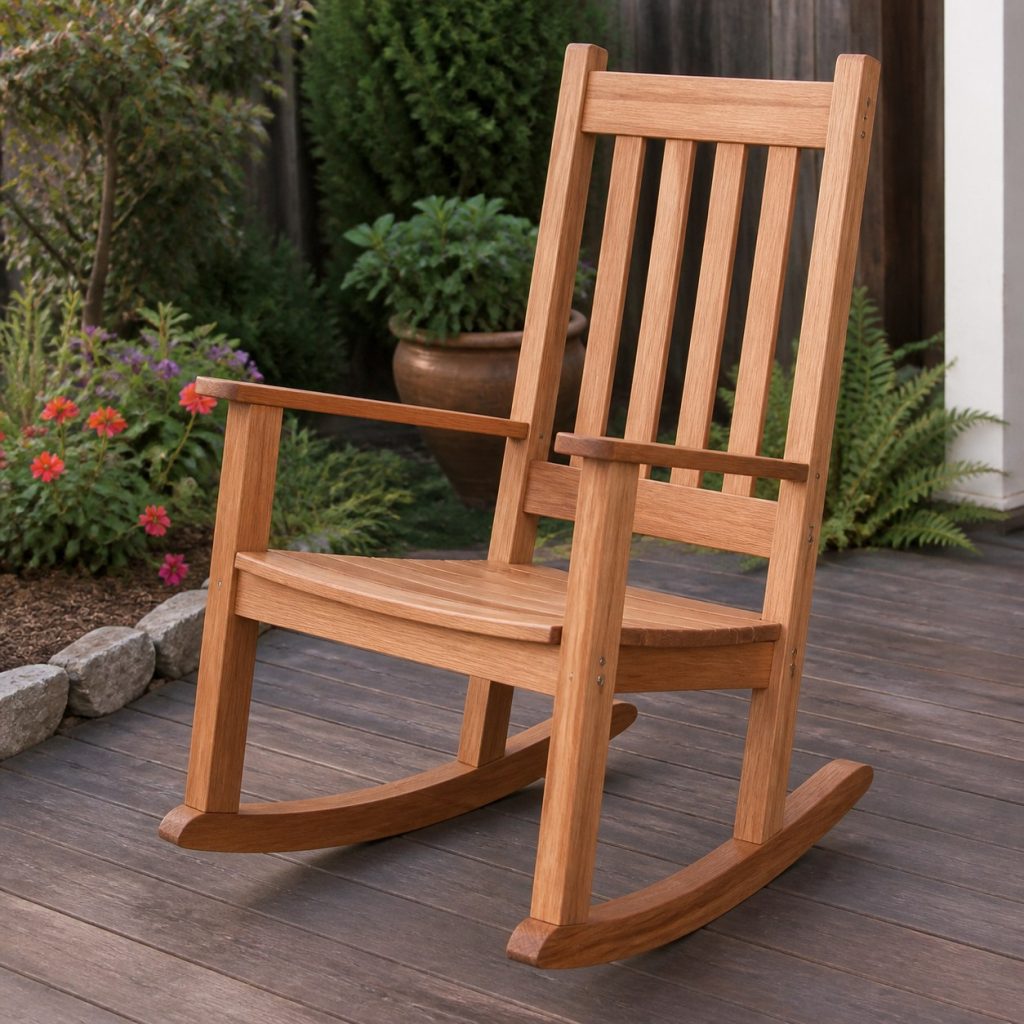
A rigid chair frame and identical runners provide the foundation for predictable rocking motion. Generated images are concepts rather than tested furniture plans; verify rocker geometry, load paths, joint strength, rearward travel, tip resistance, floor clearance, user fit, lumber, fasteners, and finish before use.
Fan-Back Garden Rocker
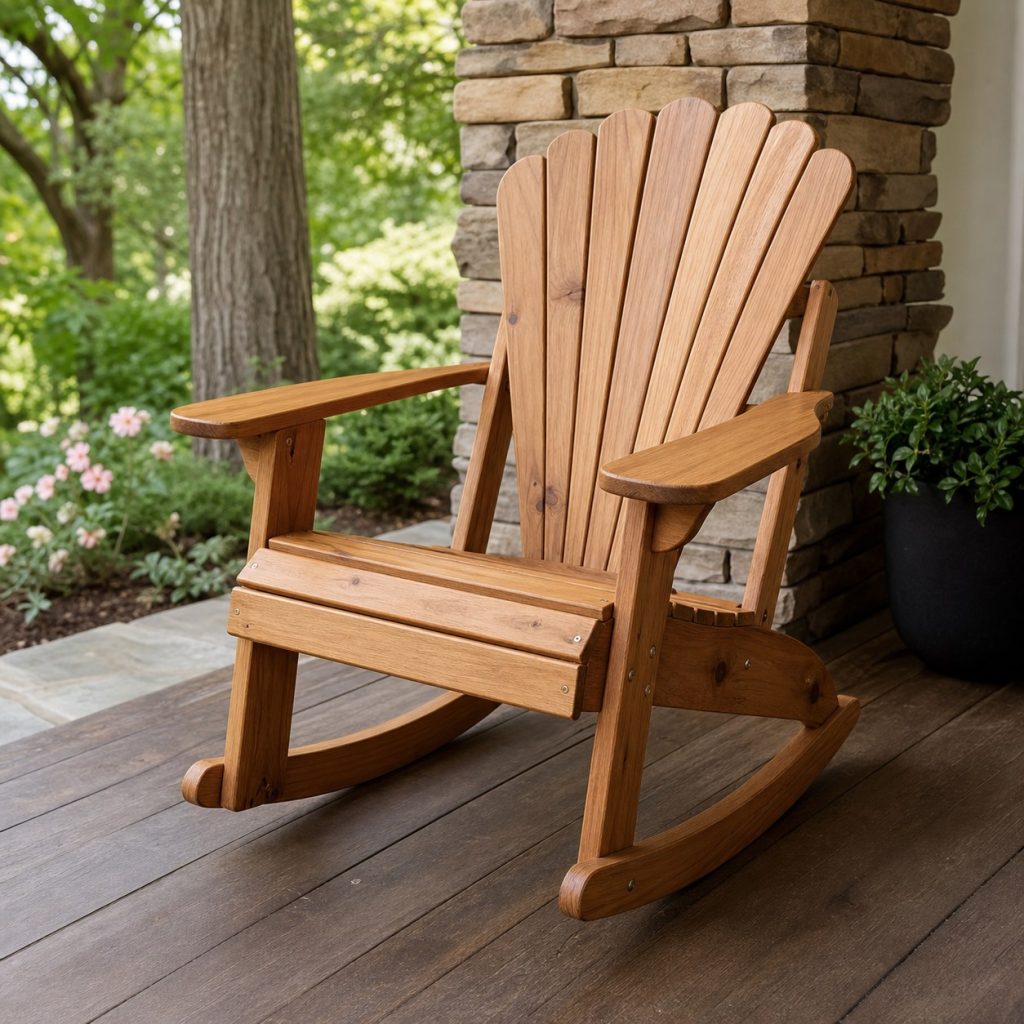
A shaped back needs a strong lower rail and even slat spacing before the runner layout is finalized.
Upright Easy-Exit Rocker
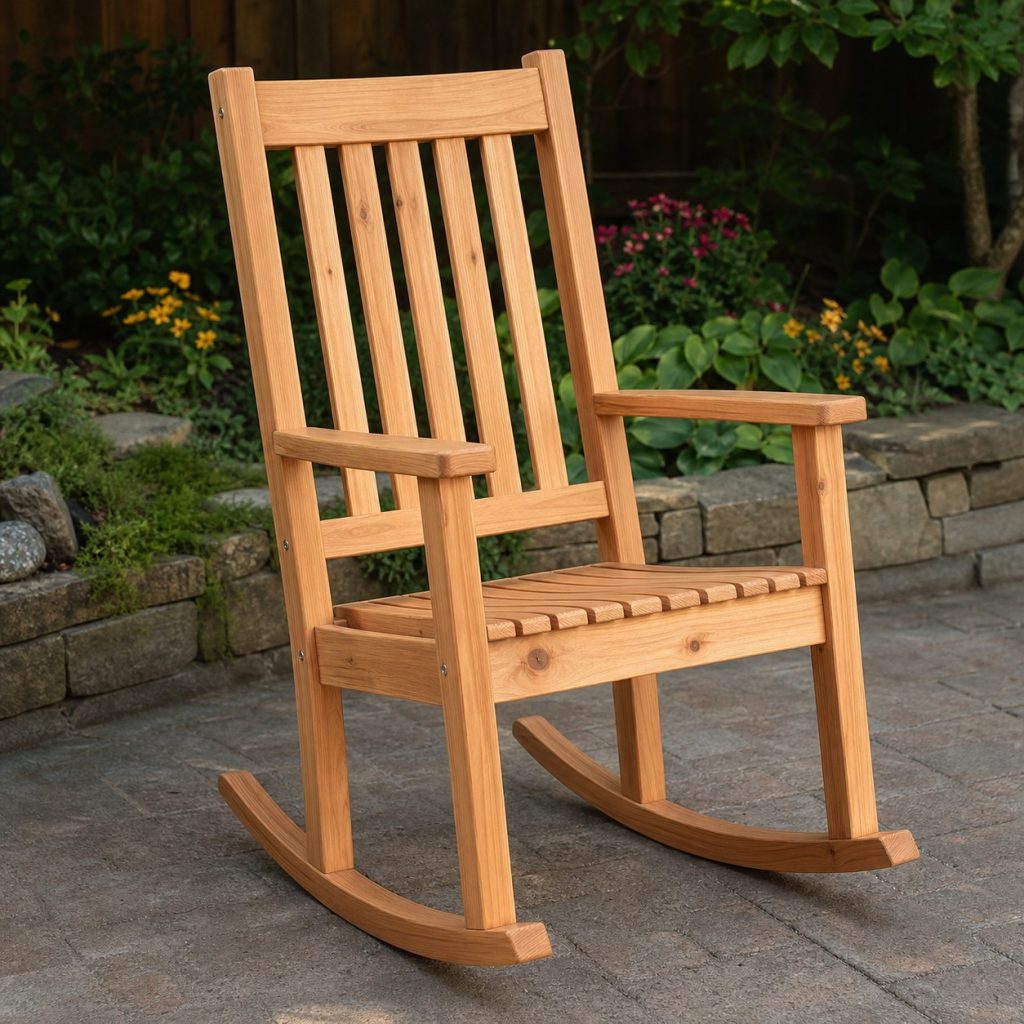
Reduced recline and restrained runner curves can support easier entry while still requiring stability testing.
Wide-Arm Reading Rocker
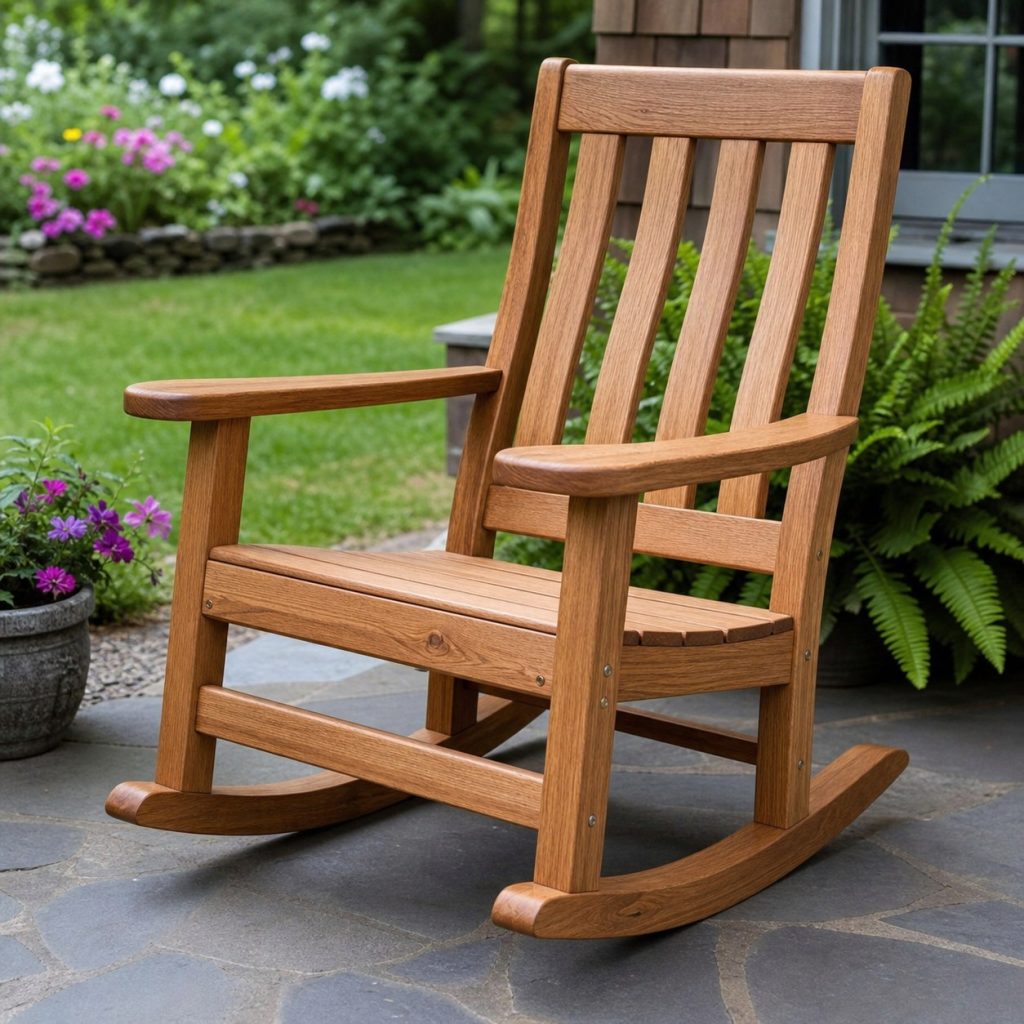
Wide arms need secure blocking and must remain clear of the user's hands throughout the rocking arc.
Mission-Style Rocker
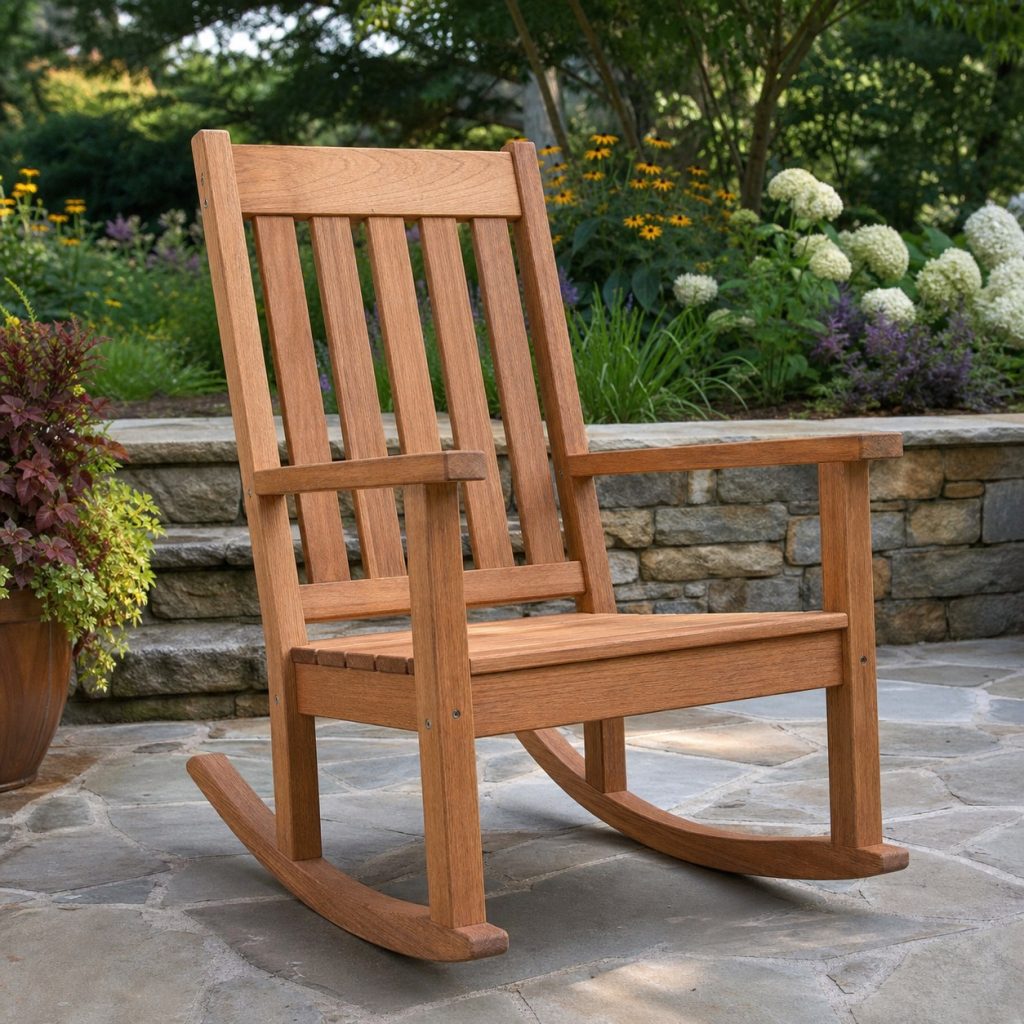
Straight rails simplify joinery, but the runner-to-leg connections still carry repeated dynamic loads.
Painted Coastal Rocker
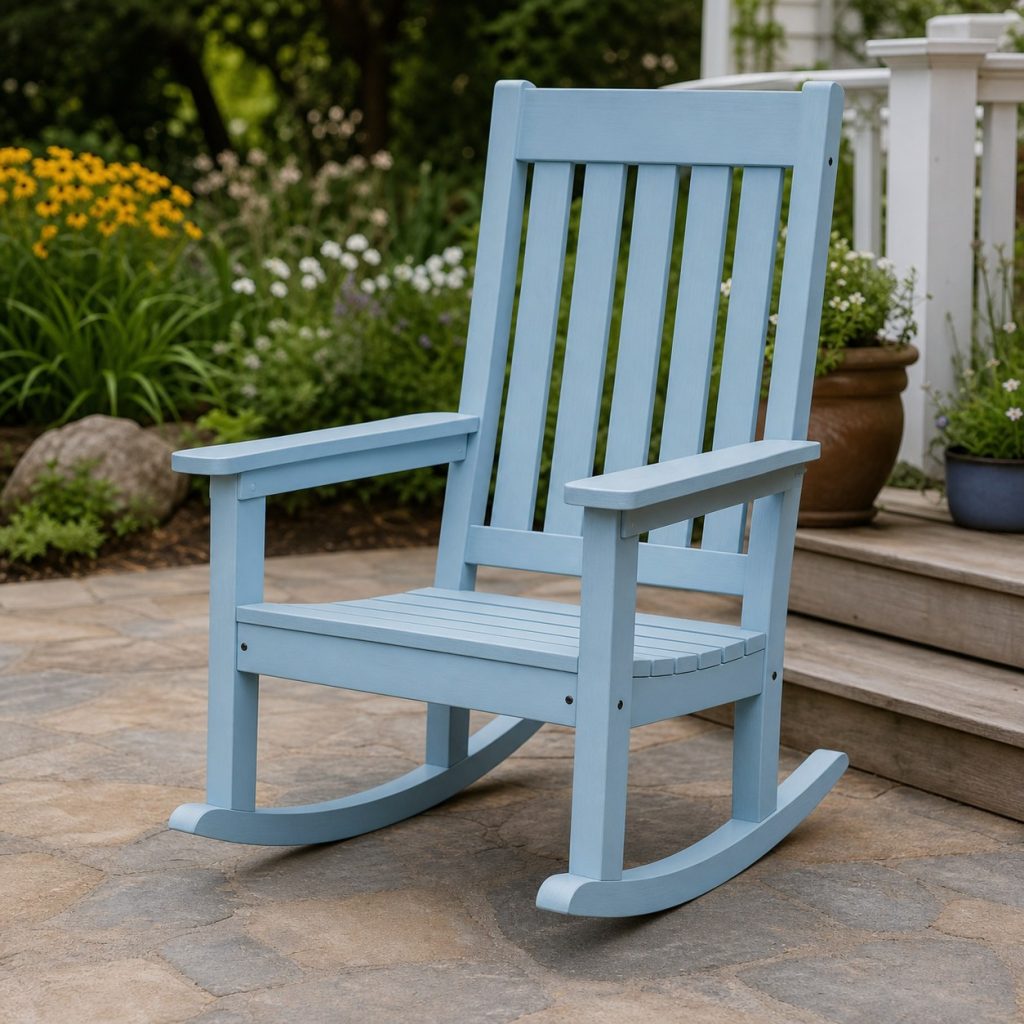
Paint performs best when end grain, joints, and eased edges are prepared before assembly and recoated as needed.
Compact Armless Rocker
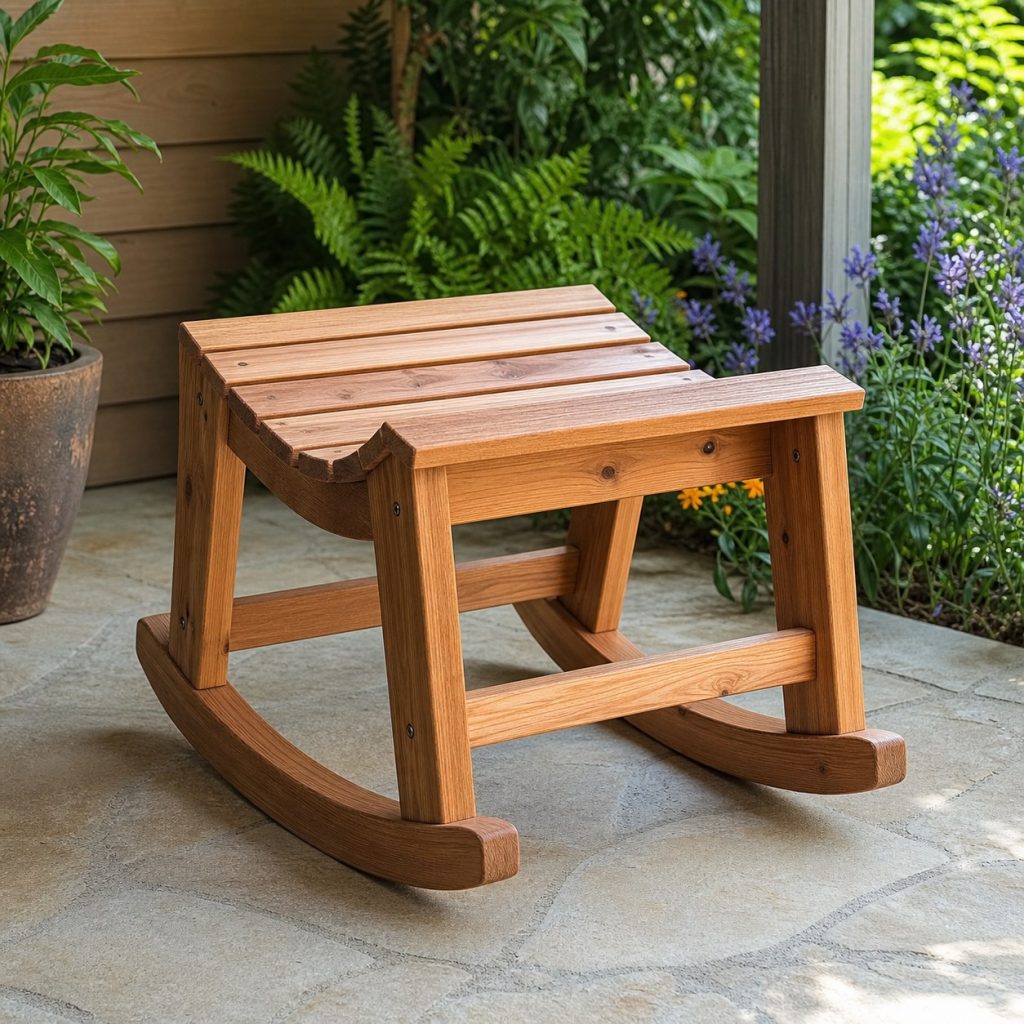
Removing arms reduces width but also removes hand support, so intended users and stability need careful evaluation.
Runner and Joint Details
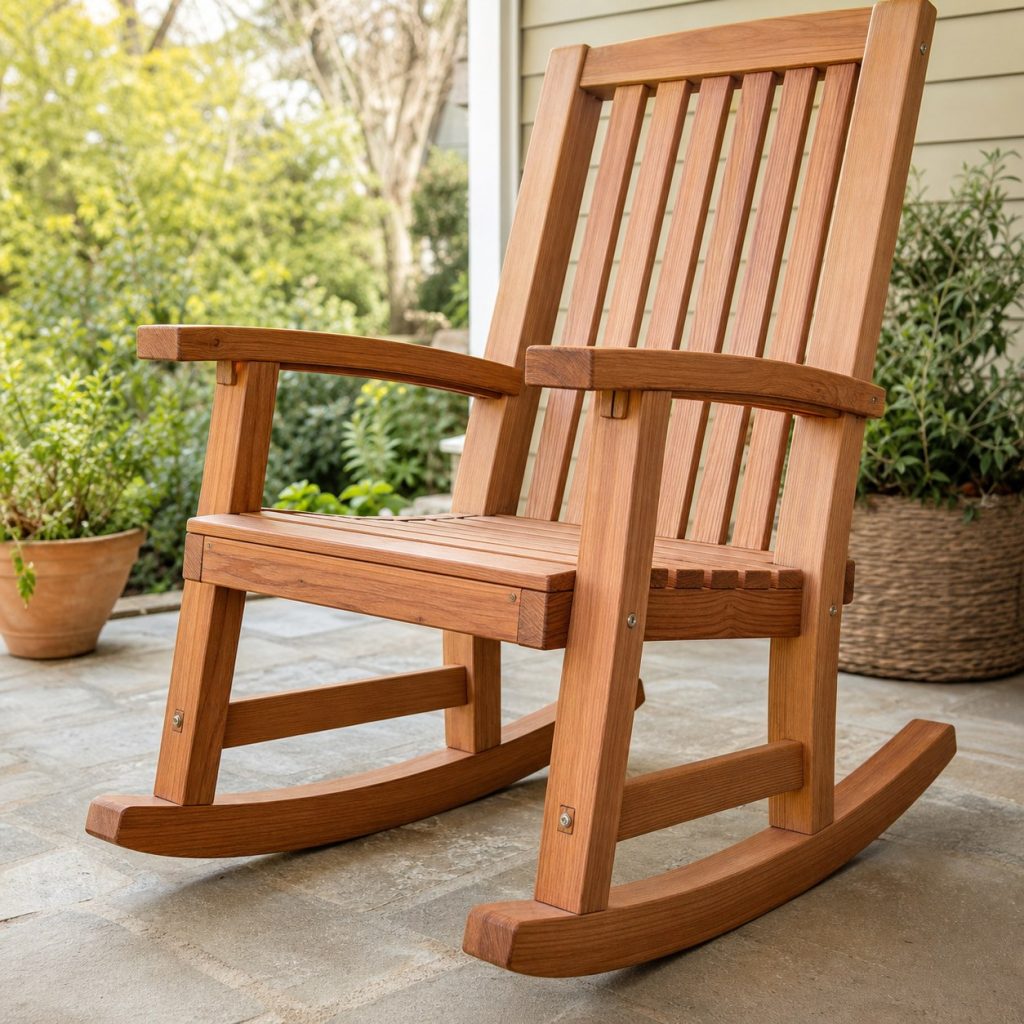
A full-size runner template, cross-grain reinforcement, and cautious dry testing can expose steering or tipping problems.
Planning checklist
- Use sound straight-grained exterior-suitable lumber.
- Make both runners from one verified full-size template.
- Build and brace the chair frame before attaching runners.
- Round hand-contact edges and keep hardware flush.
- Test rocking range and stability cautiously on a clear level floor.
These woodworking concepts and generated images are planning inspiration, not measured drawings, cut lists, tested furniture plans, load ratings, engineered structures, accessibility designs, playground certifications, or utility instructions. Verify dimensions, ergonomics, lumber grade and treatment, grain direction, joint design, fastener and preservative compatibility, structural and wind loads, stability, sharp and pinch hazards, finish labels, equipment instructions, accessibility, permits, and local requirements for the actual project. Use appropriate personal protective equipment and qualified engineers, electricians, plumbers, accessibility specialists, and other licensed professionals where the work or hazards require them.
Frequently asked questions
Can I copy runner curves from a photograph?
No. Use a proven measured design or develop and test a full-size profile; small geometry changes can alter stability and motion.
Should runners be solid wood or laminated?
Either may work in a properly designed build. Grain direction, laminating adhesive, moisture exposure, thickness, and joint design all matter.
Where should I test the rocker?
Use a hard level nonslip surface with generous clearance and assistance available; inspect every joint before cautious loading.