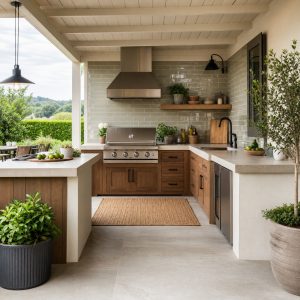
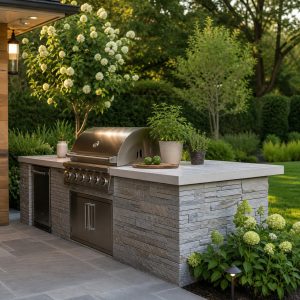
Project planning guide
Before you build
Use the reference image and planning notes as a starting point. Confirm dimensions, loads, materials, local codes, and site conditions before purchasing or cutting.
- Kitchen Design
- 8 reference images
- Print-friendly guide
An outdoor countertop has to handle sun, temperature swings, rain, pollen, grease, food acids, and repeated cleaning while still supporting the way you cook. These eight outdoor kitchen countertop ideas show different material directions, but the right choice depends on climate, installation, maintenance, and the appliance details beneath it.
Speckled Granite Worktop
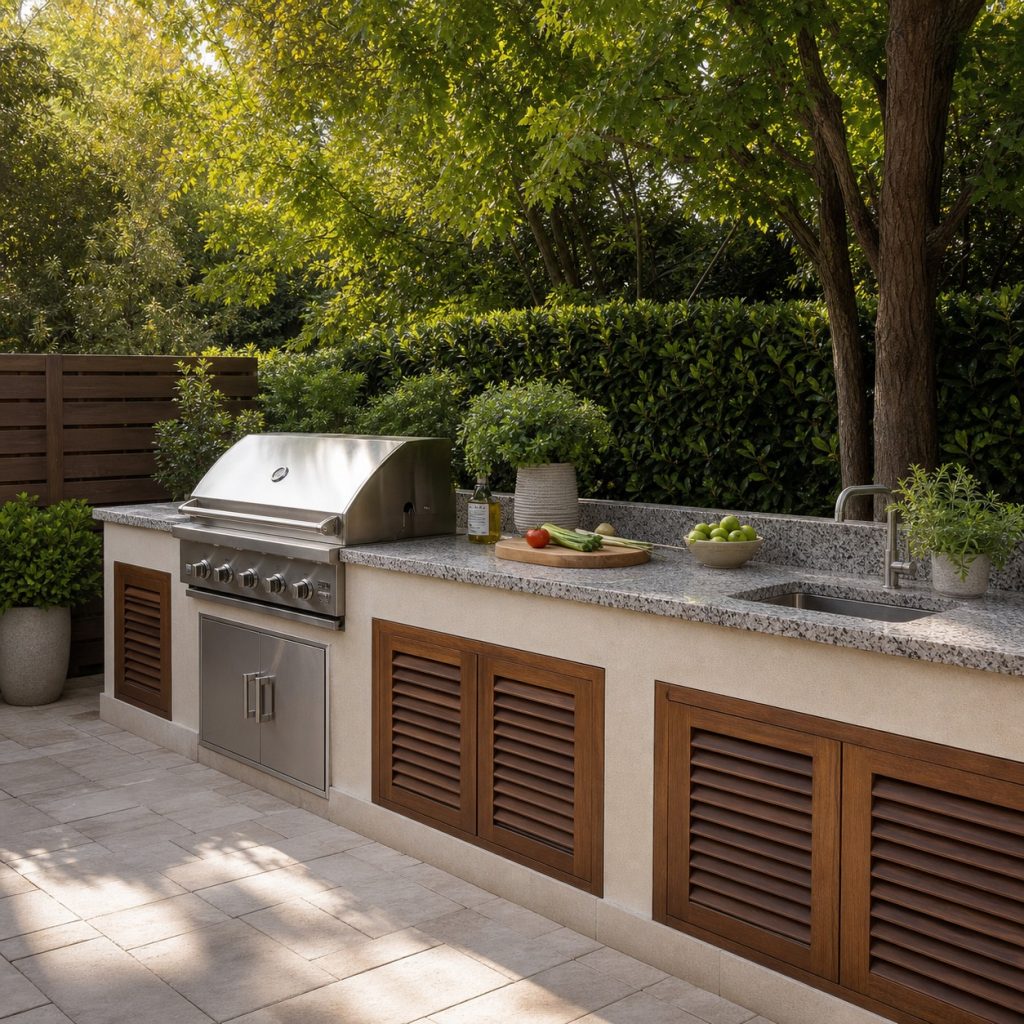
Granite is widely used outdoors because many varieties tolerate heat and weather well, but performance varies by stone. Review porosity, resin content, finish, sealing, and local freeze-thaw conditions with the supplier. Place seams and cutouts where the slab has adequate support and the grill enclosure retains required ventilation.
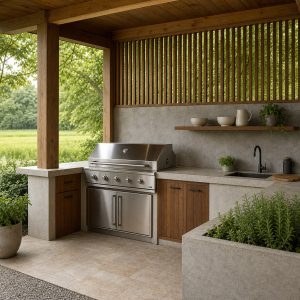
Pale Honed-Stone Island
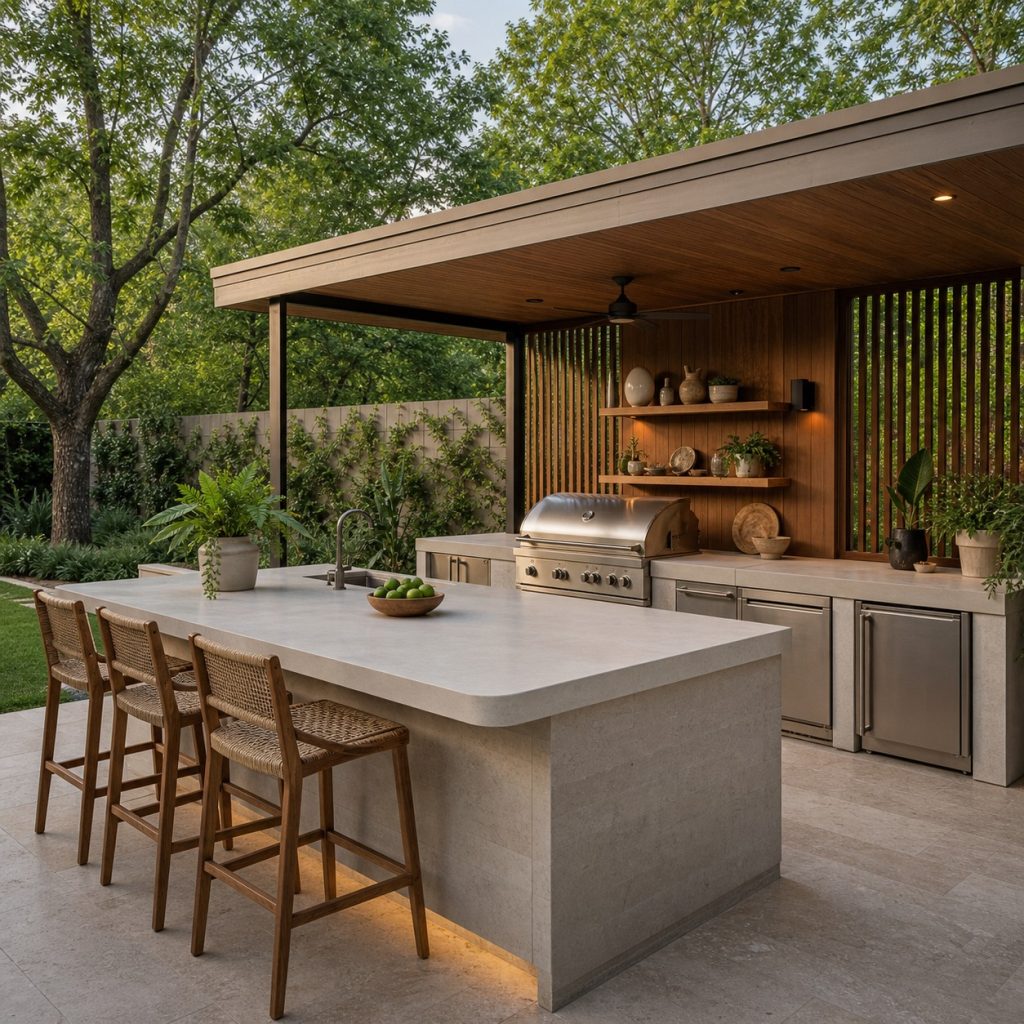
A pale honed surface can reduce glare and keep a large island visually light. Honed finishes may show oils or fingerprints differently from polished stone, so test a sample with cooking ingredients and the intended sealer. Use an eased edge where guests sit and keep the seating overhang separate from hot appliances.
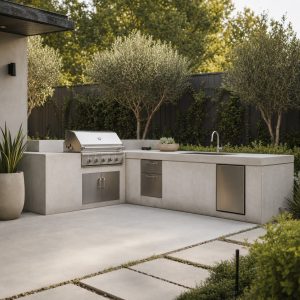
Large-Format Porcelain Slab
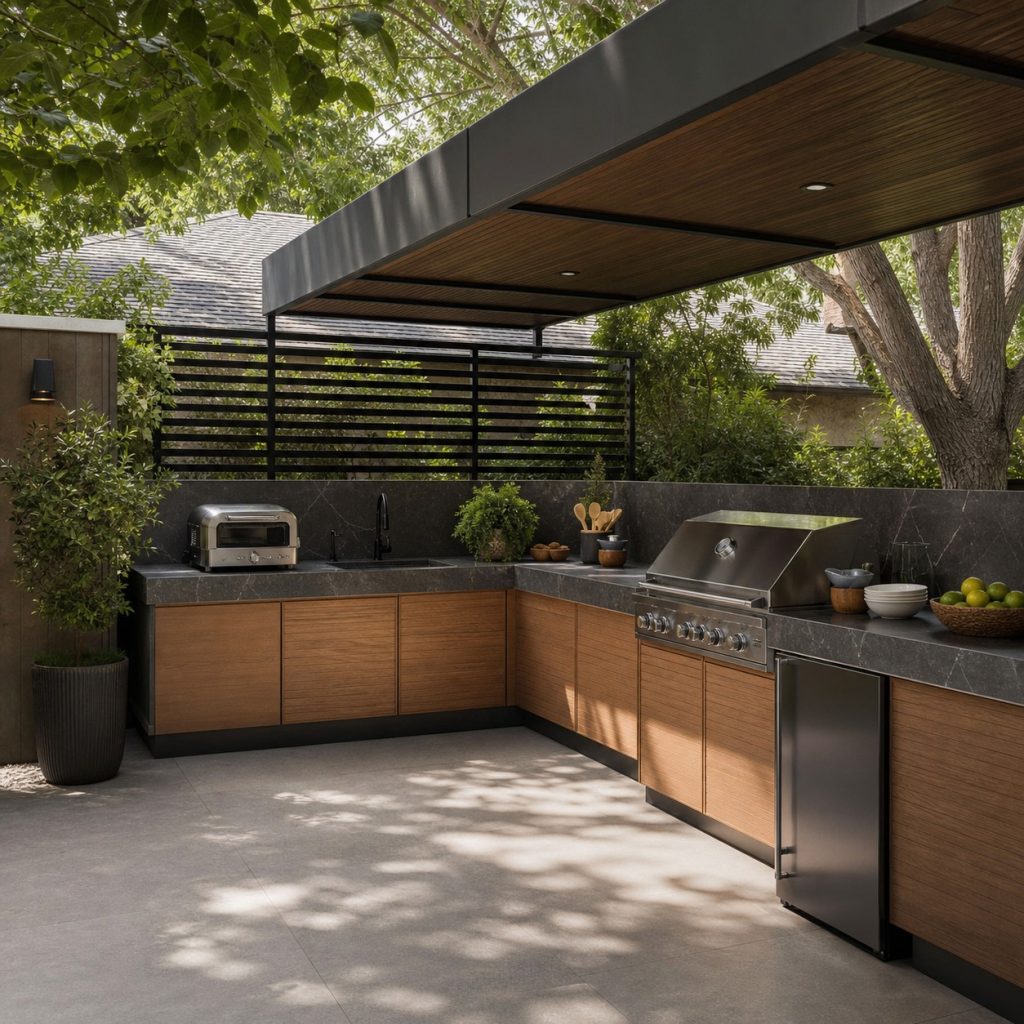
Exterior-rated porcelain slab offers a consistent surface and minimal joints, but thin material requires correct fabrication, support, and edge treatment. Cutouts and corners are stress points that need an experienced fabricator. Confirm the specific product, adhesive, and substrate suit outdoor temperature and moisture exposure.
Tiled Outdoor Counter
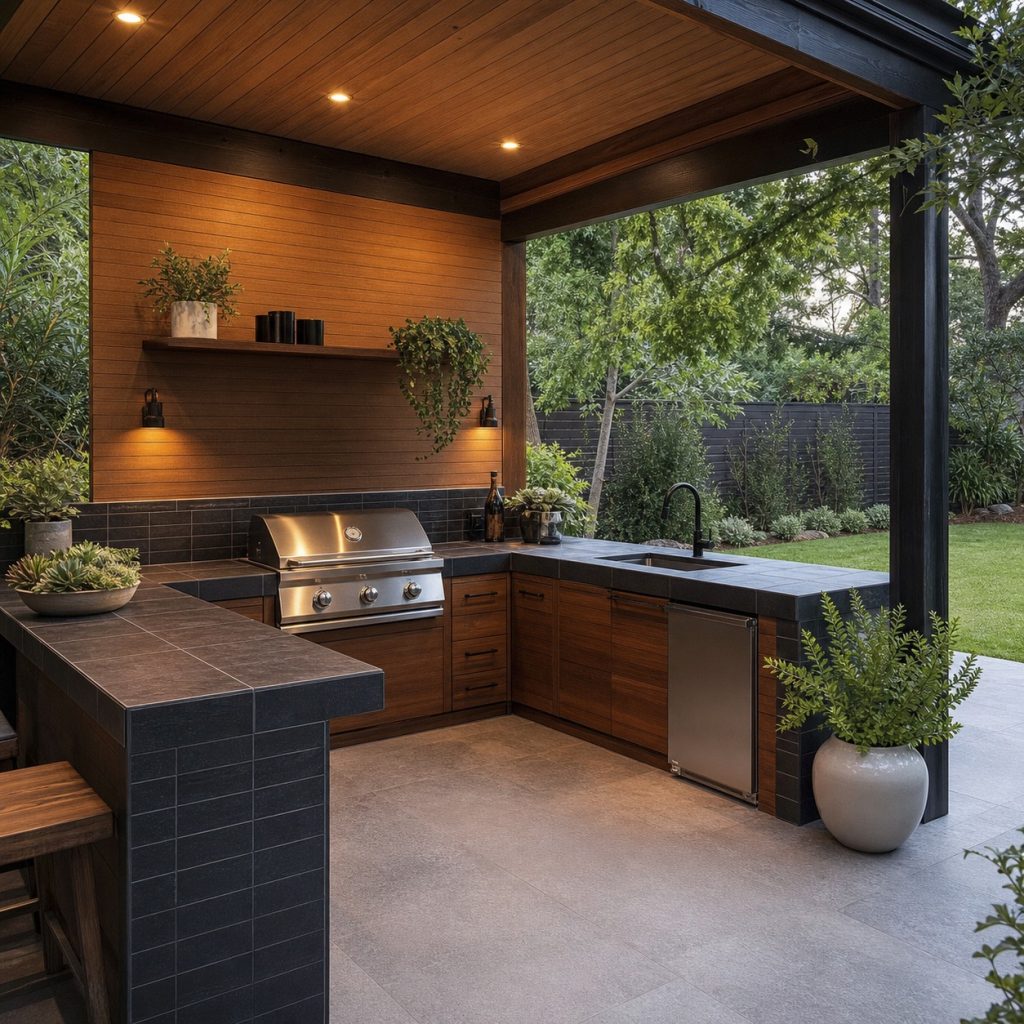
Tile can create an attainable custom counter and makes localized repair possible. Grout joints add texture and maintenance, so choose an exterior-rated tile system and joint width that can be cleaned easily. Movement joints, waterproofing, edge trim, and the substrate matter as much as the tile itself.
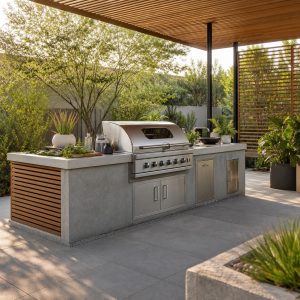
Sealed Concrete Countertop
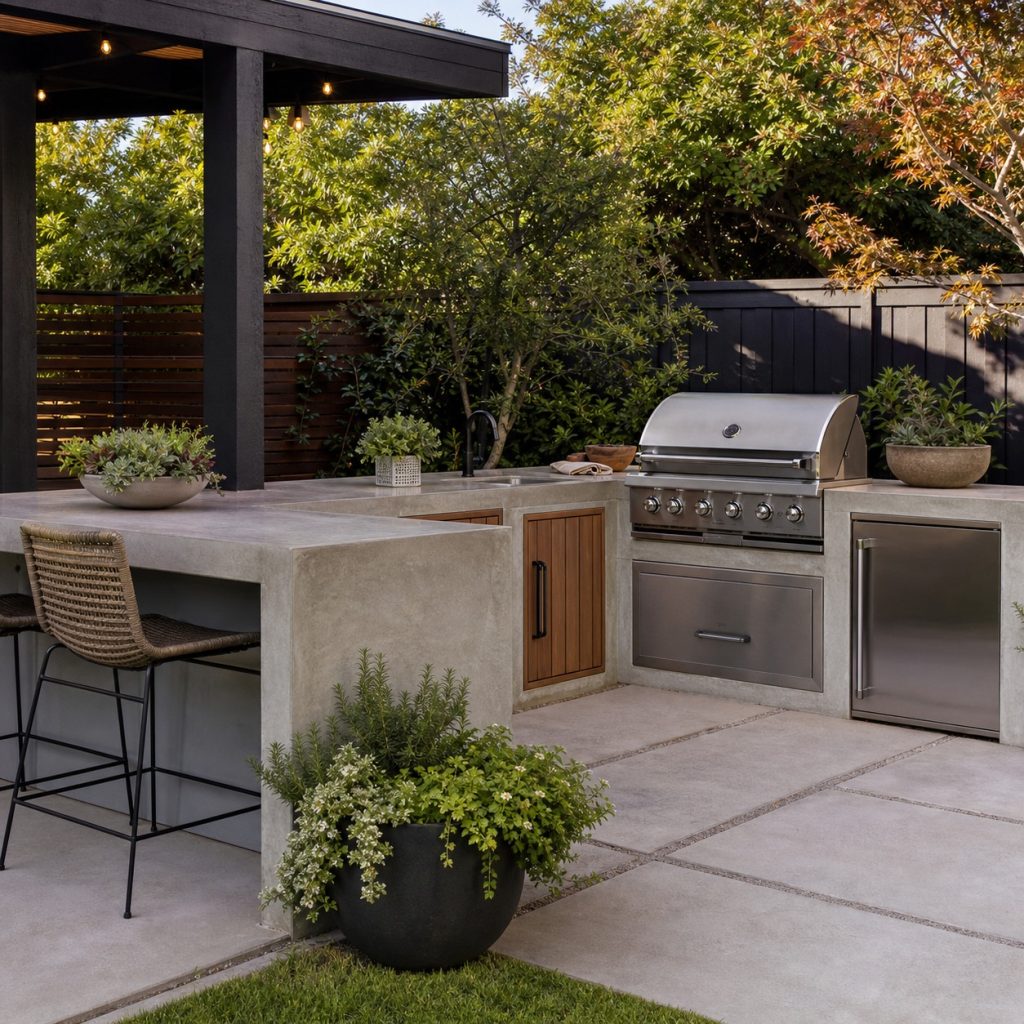
Concrete provides a monolithic look and can be formed around unusual layouts. It can still crack, stain, and change color, so discuss reinforcement, curing, control joints, sealer, and seasonal movement before pouring. Keep expectations realistic: small visual changes are part of the material rather than always a failure.
Sintered-Stone Serving Edge
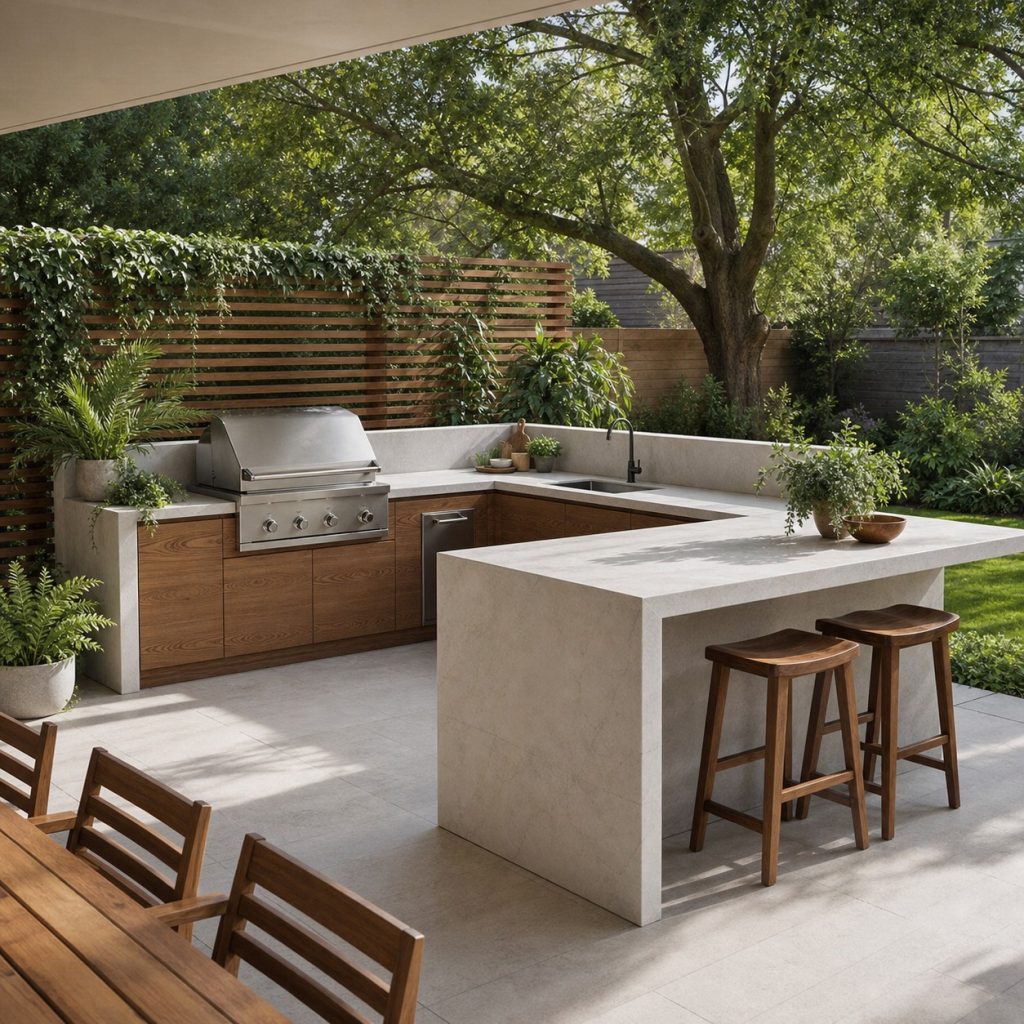
Sintered surfaces can provide consistent color and low porosity when the product is approved for exterior use. Waterfall ends need precise support and protected corners, especially beside a traffic route. Verify UV suitability, fabrication requirements, warranty limits, and compatibility with heat-producing appliances.
Stainless Prep Worktop
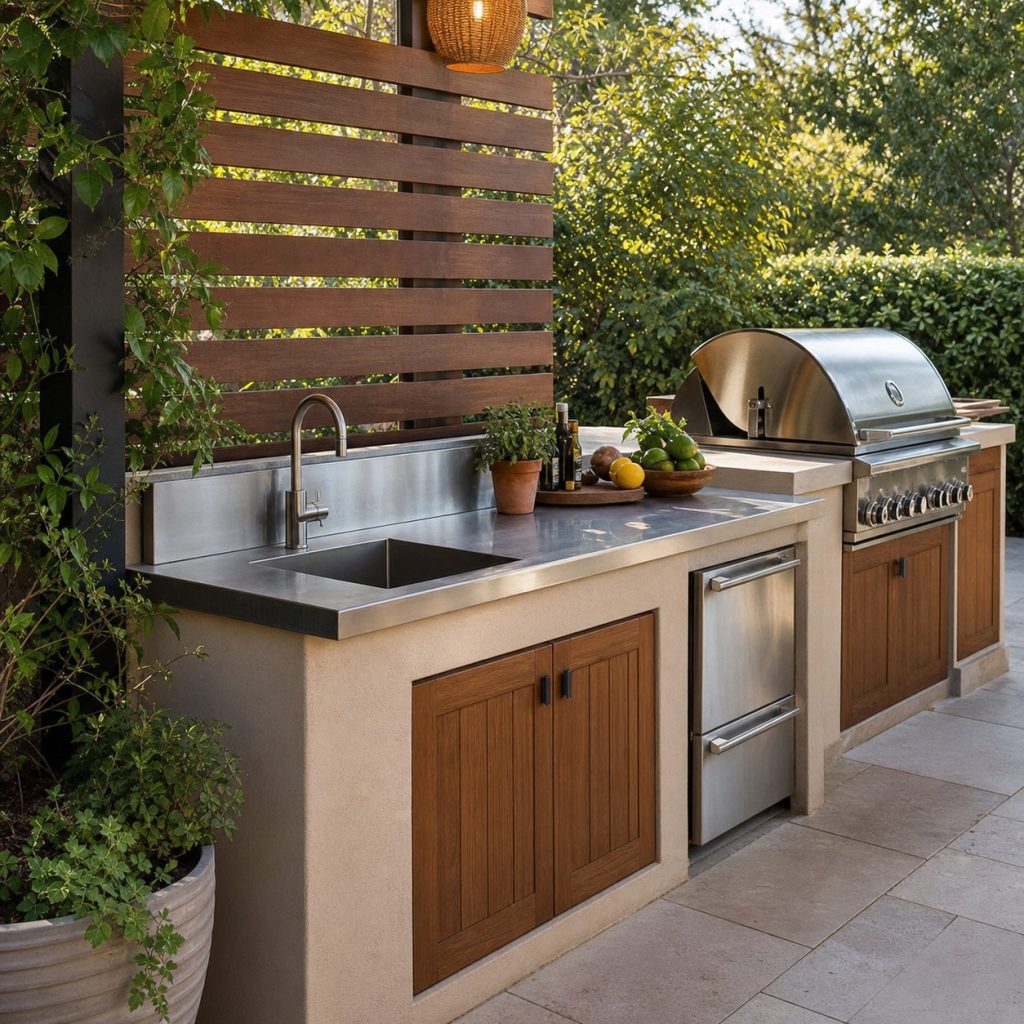
Stainless steel is hygienic and familiar in food-prep settings. It will show scratches and can reflect heat or sun, so a brushed finish and sensible placement improve daily use. Specify an outdoor-appropriate grade and backing, isolate incompatible metals, and provide drainage so water does not sit against seams.
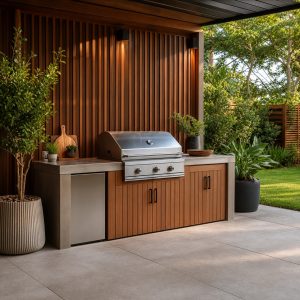
Mixed-Material Prep and Serving Surfaces
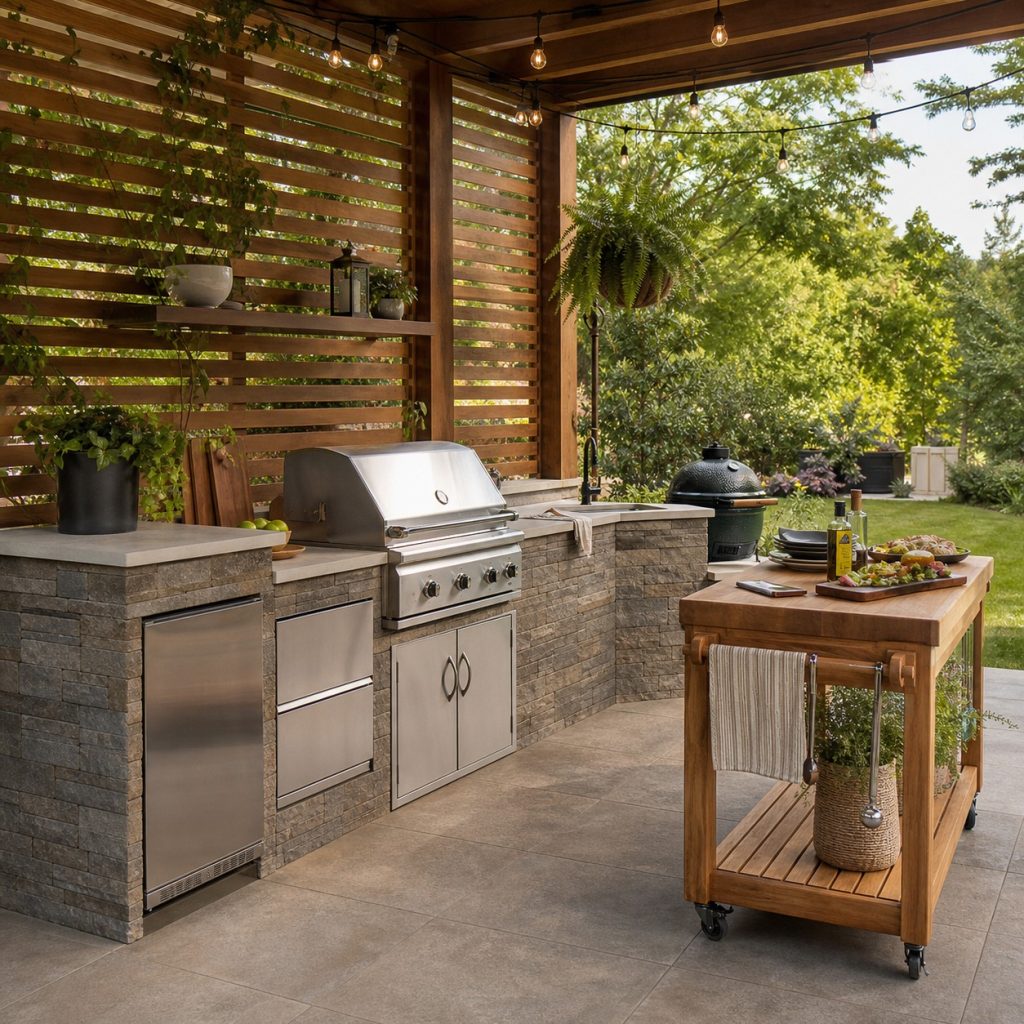
Using one durable fixed surface near appliances and a separate movable serving surface can balance performance and warmth. Keep wood or wood-look pieces out of heat and weather when their manufacturer requires it. Repeating edge thickness or color helps the two elements feel intentional rather than leftover.
Planning checklist
- Confirm the exact product is approved for exterior exposure in the local climate.
- Coordinate support, seams, movement joints, cutouts, drainage, and edge details.
- Test samples for glare, staining, heat response, texture, and cleaning.
- Preserve appliance ventilation, insulated-jacket needs, and service access.
- Use qualified fabricators and verify structural, utility, and permit requirements.
These ideas are general planning guidance. Verify appliance clearances, ventilation, weather exposure, drainage, structural loads, fuel, plumbing and electrical work, permits, and local fire, pool, deck, and building requirements with manufacturers and qualified local professionals.
Frequently asked questions
What is the best countertop for an outdoor kitchen?
There is no universal best material. Climate, exposure, maintenance, appliance heat, fabrication quality, budget, and the specific product determine suitability.
Can an indoor countertop be used outdoors?
Only when the manufacturer approves that exact product and installation system for exterior UV, moisture, and temperature exposure.
Do outdoor countertops need sealing?
Some stones and concrete systems do, while porcelain, sintered materials, and stainless may not. Follow the product and fabricator guidance rather than a generic schedule.