Project planning guide
Before you build
Use the reference image and planning notes as a starting point. Confirm dimensions, loads, materials, local codes, and site conditions before purchasing or cutting.
- Garden Projects
- 8 reference images
- Print-friendly guide
A putting green is a precision landscape surface rather than ordinary lawn. These concepts compare compact, multi-cup, sloped, synthetic, and natural-turf layouts while emphasizing drainage, realistic maintenance, and safe surrounding grades.
Compact Kidney-Shaped Green
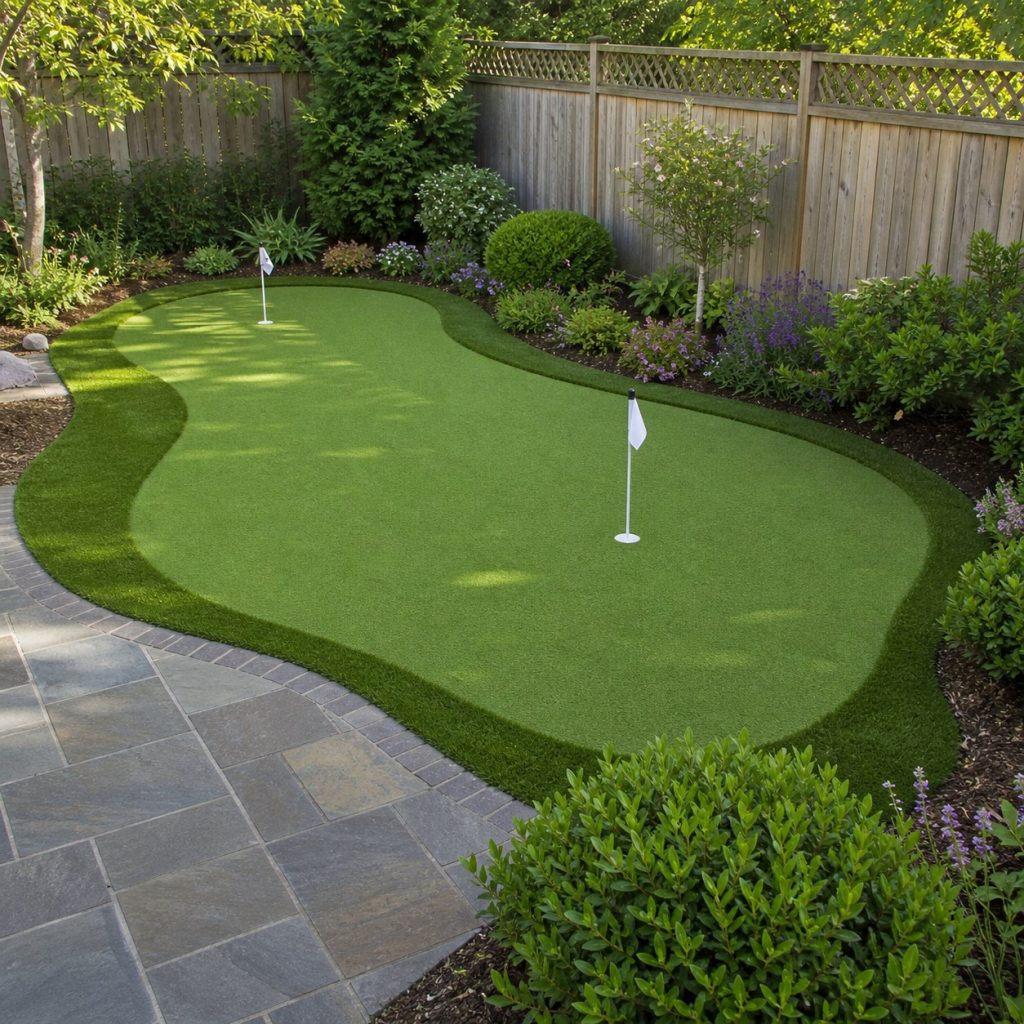
A compact curved green fits a garden while leaving room for stance, drainage, and maintenance access. Follow current USGA guidance for natural turf expectations, manufacturer systems for synthetic turf, and local drainage, pesticide, irrigation, accessibility, and excavation rules.
Rectangular Practice Green
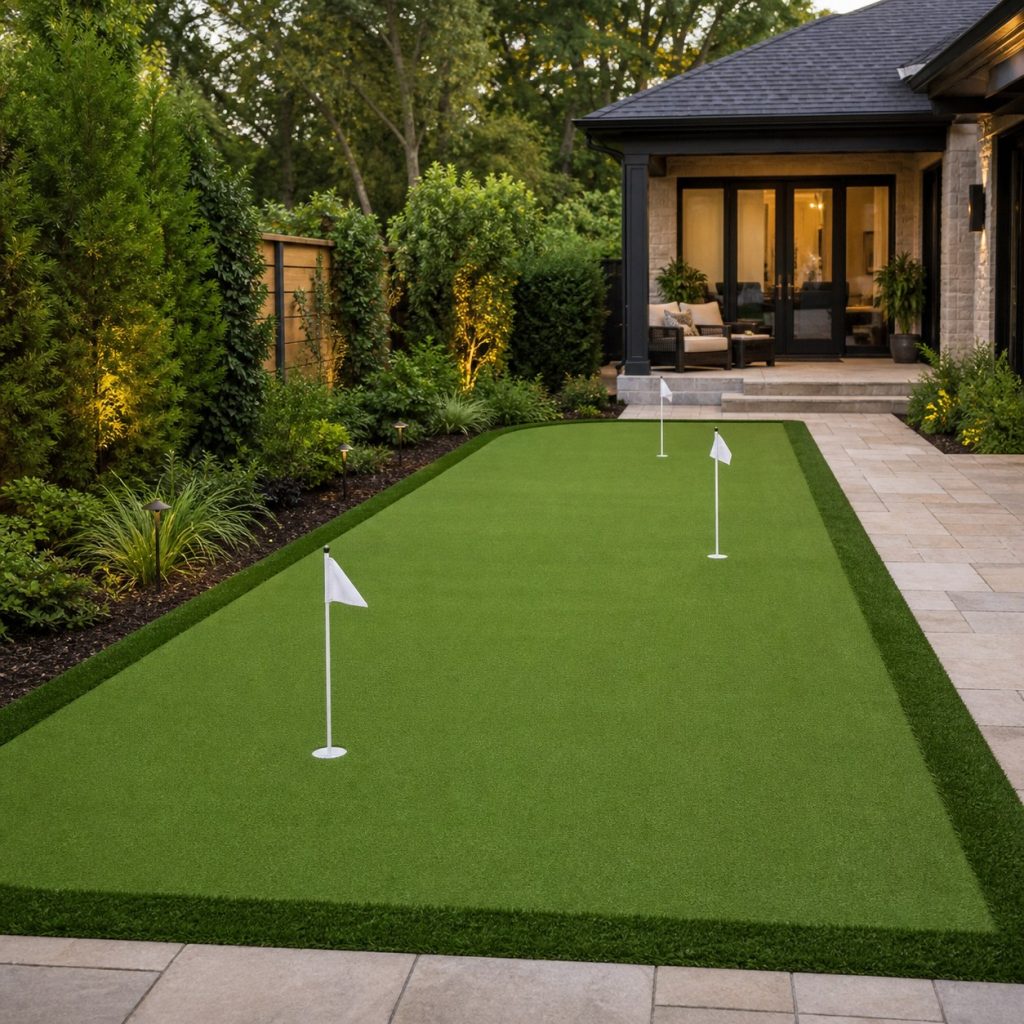
A rectangular surface supports repeatable practice lines and simpler edging without pretending to be tournament construction.
Multi-Cup Contoured Green
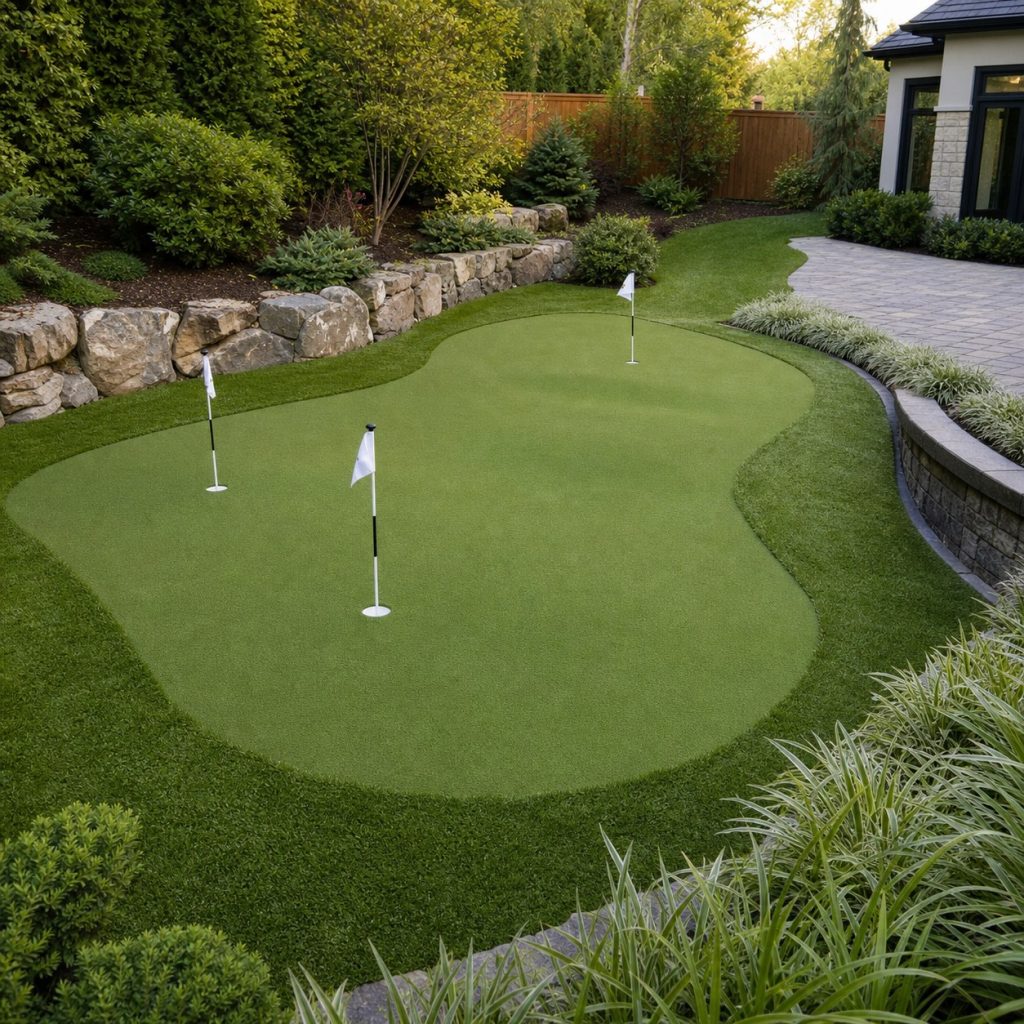
Broad gentle contours create varied putts when professionally graded without abrupt ridges or low puddling areas.
Synthetic Turf Putting Green
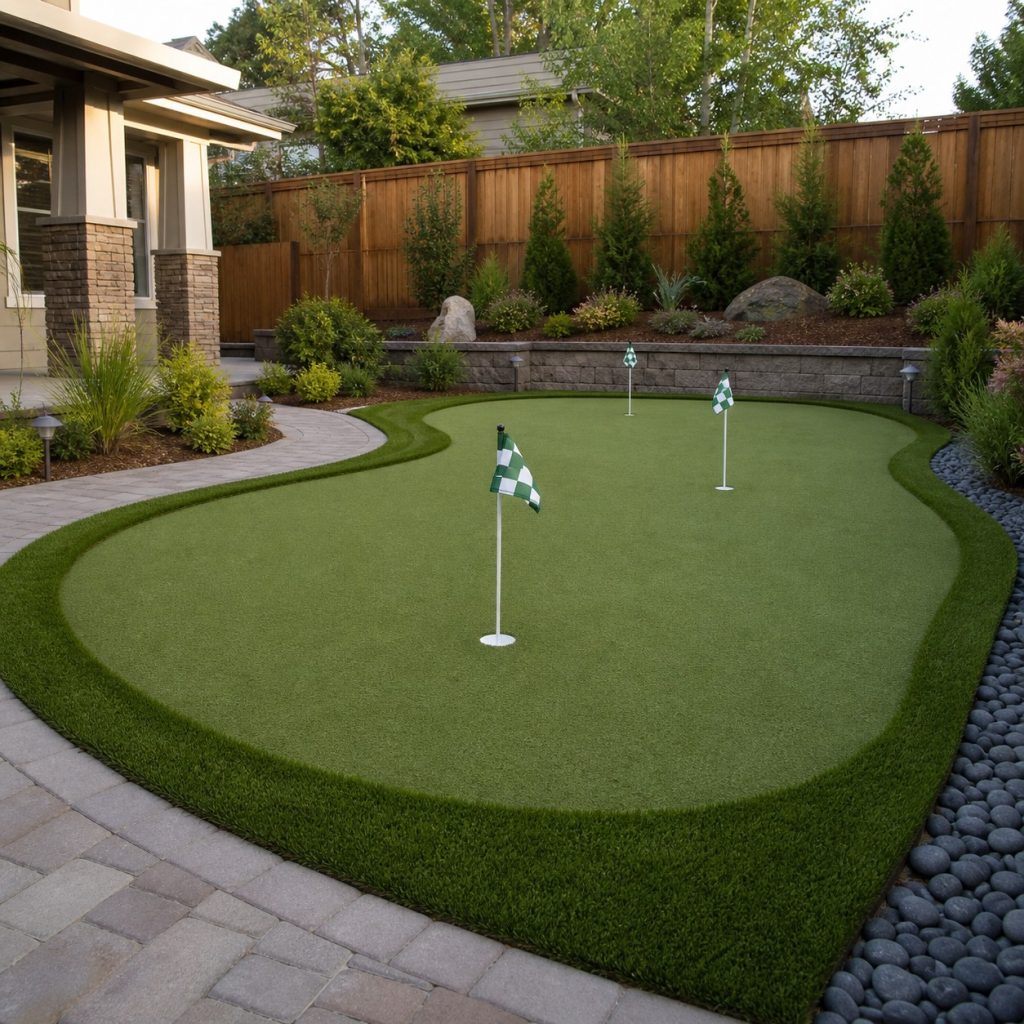
A complete synthetic system needs a prepared base, drainage, secure seams, compatible infill, and manufacturer installation.
Natural Turf Putting Green
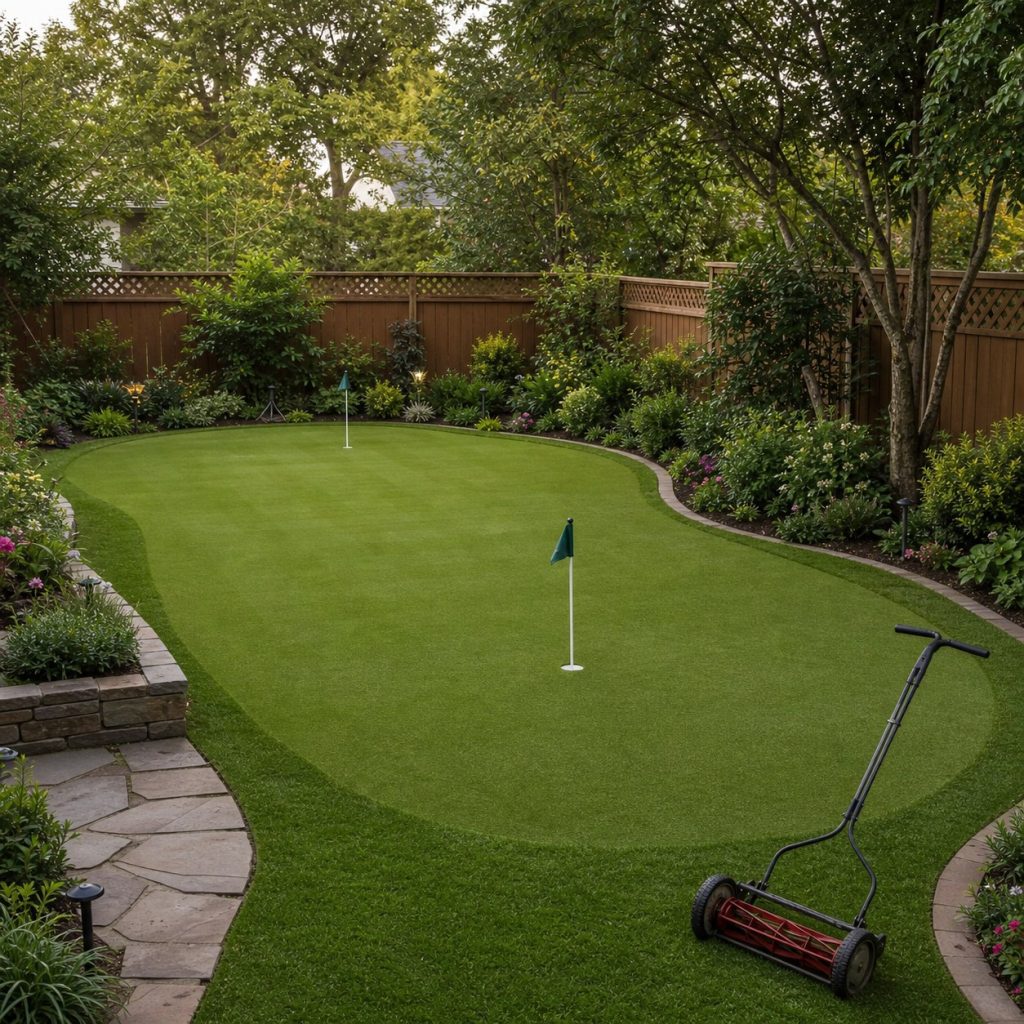
Natural putting turf demands suitable grass, sun, irrigation, fertility, aeration, disease care, and frequent specialized mowing.
Green With Chipping Fringe
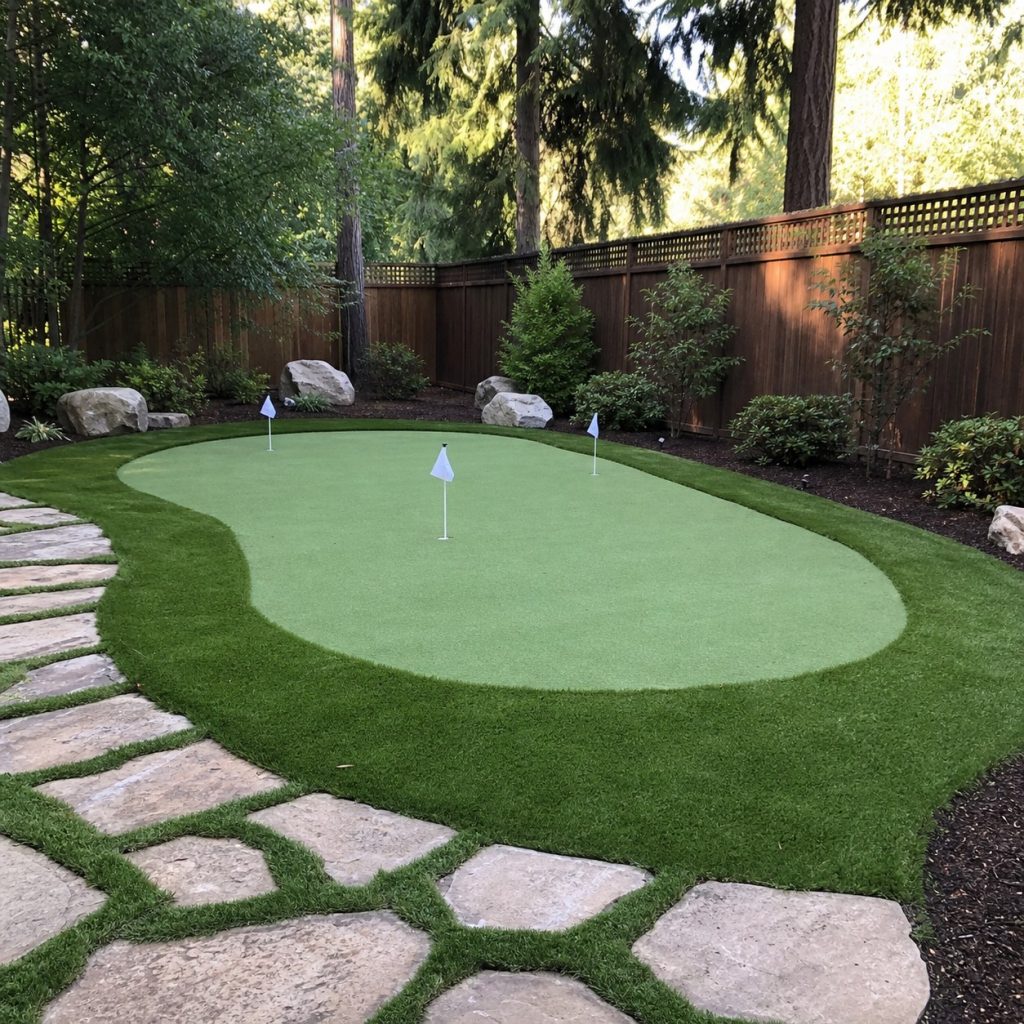
A contained fringe adds practice options while protecting nearby windows, people, and property from errant balls.
Accessible Firm Approach
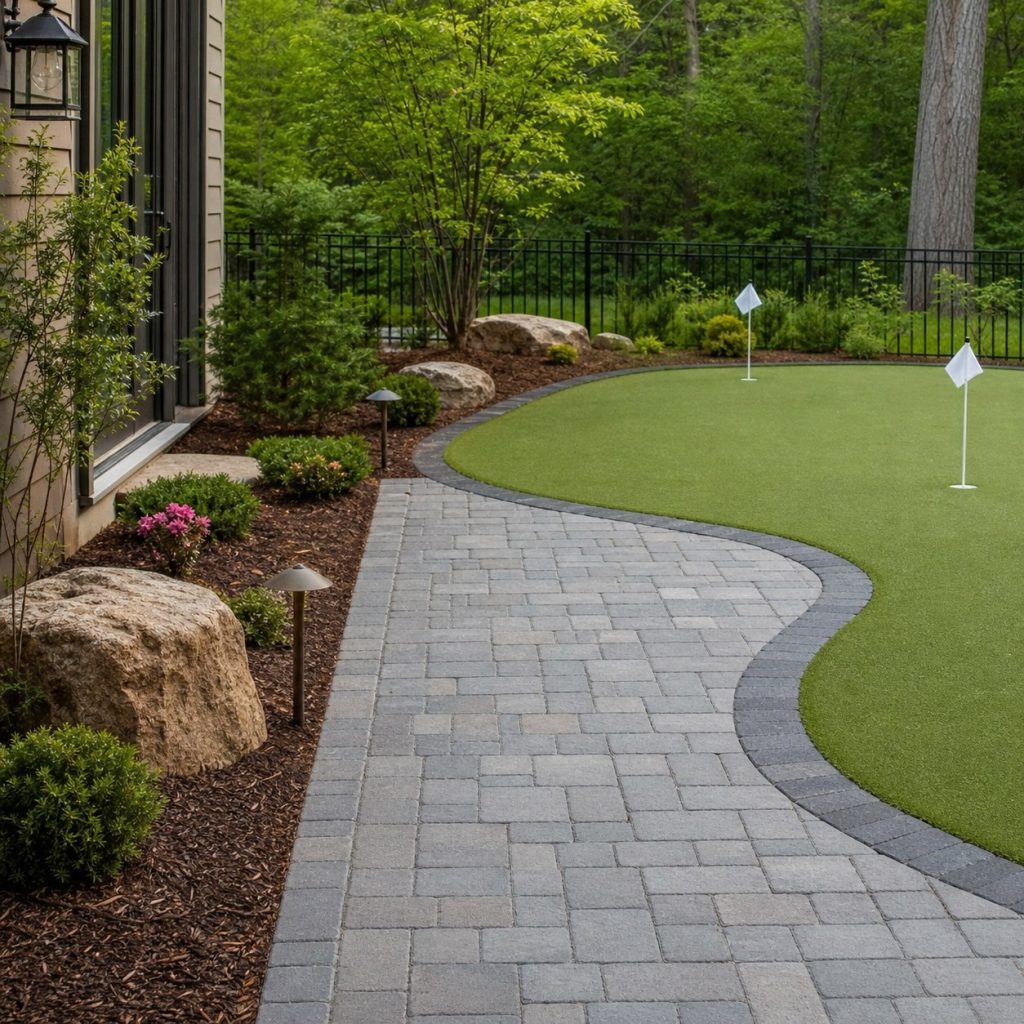
A stable level approach and clear standing area improve access without interfering with drainage or play.
Drainage and Maintenance Check
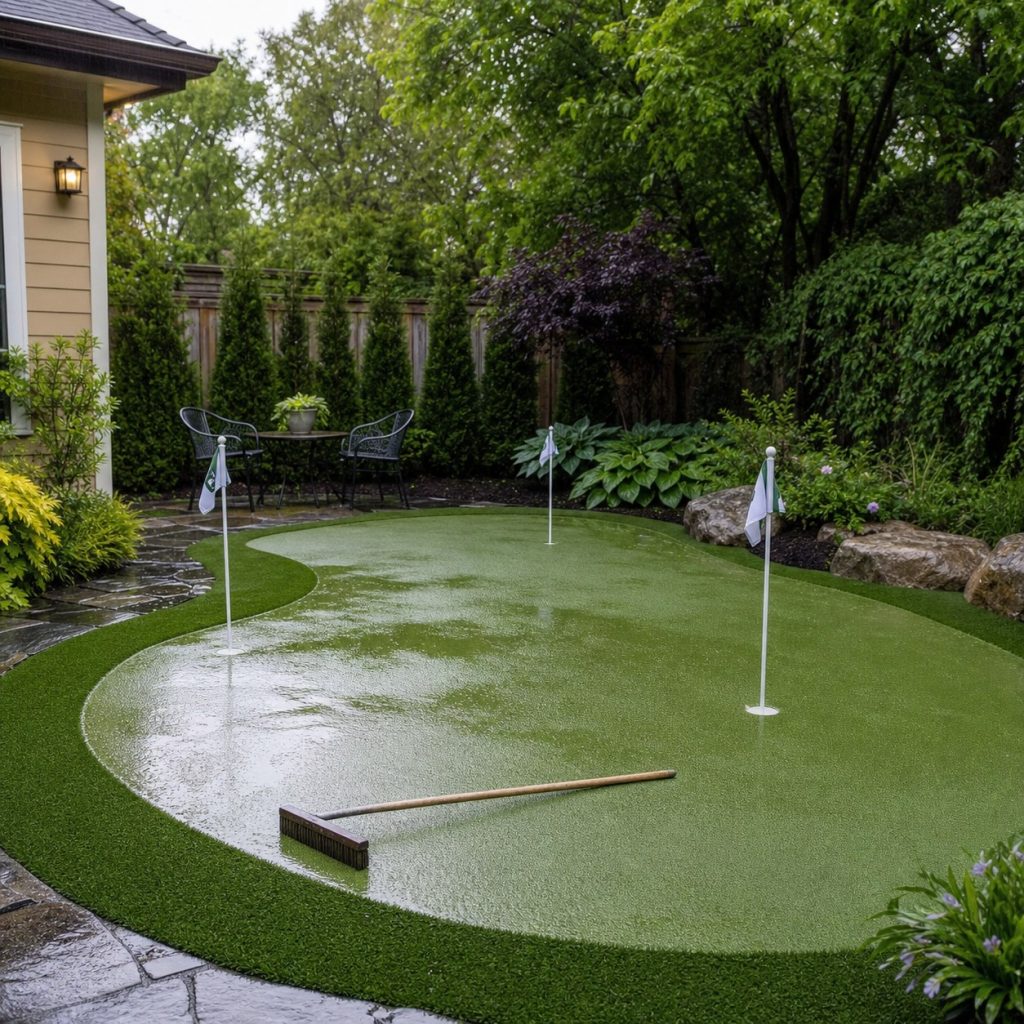
Inspect cups, seams, settlement, organic buildup, edges, and outlets so water and ball roll remain consistent.
Planning checklist
- Choose natural or synthetic turf deliberately.
- Assess sun, soil, utilities, grade, and drainage.
- Provide safe clear zones for putts and chips.
- Build stable edges and accessible approaches.
- Budget for realistic long-term maintenance.
These concepts and generated images are general planning inspiration, not measured drawings, drainage calculations, equipment-clearance instructions, accessibility designs, engineered plans, or tested load-rated structures. Verify dimensions, soil and drainage, roots and utilities, lumber and hardware, structural and wind loads, equipment manuals, service access, electrical and plumbing work, water and chemical safety, accessibility, permits, and local requirements for the actual project. Use qualified arborists, engineers, HVAC and pool technicians, electricians, plumbers, drainage professionals, and other licensed trades where those hazards or systems apply.
Frequently asked questions
Is natural grass practical?
It can be, but USGA guidance emphasizes the specialized mowing and maintenance commitment. Climate, turf species, sun, and irrigation are decisive.
Does synthetic turf need drainage?
Yes. The base, turf, seams, cups, and perimeter must form a compatible drainable system installed to product requirements.
Can I grade it myself?
Minor recreational projects may be manageable, but small errors strongly affect drainage and ball roll. Professional grading is valuable.