Project planning guide
Before you build
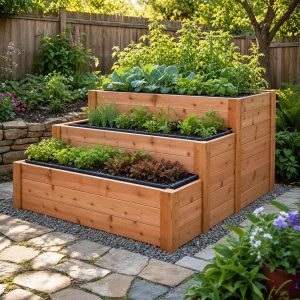
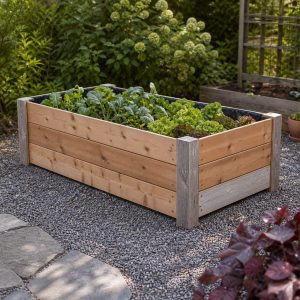
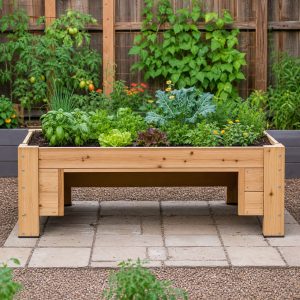
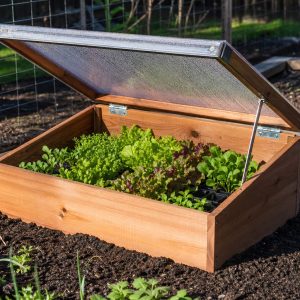
Use the reference image and planning notes as a starting point. Confirm dimensions, loads, materials, local codes, and site conditions before purchasing or cutting.
- Garden Projects
- 1 reference image
- Print-friendly guide
Quick answer: A 4-by-8-foot raised bed is a useful starting size because an adult can reach the center from either long side without stepping on the soil. Build the box from decay-resistant boards, brace the corners, level the base, and plan the paths and soil delivery before assembly. If the bed can be reached from only one side, make it narrower to match a comfortable arm’s reach.
Choose the location before choosing lumber
Watch the proposed area through a clear day and note direct sun, shade from buildings, roof runoff, irrigation access, tree roots, and the route from the driveway to the garden. Most fruiting vegetables benefit from a sunny site, but local climate and crop needs should guide the final location. Avoid low spots that hold water and do not build over buried utilities without locating them first.
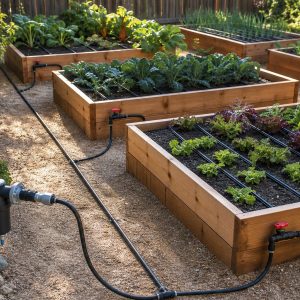
Leave room to work around the box. A 36-inch path handles ordinary foot traffic; a wider route is more comfortable for a wheelbarrow, garden cart, or mobility device. University of Delaware Extension suggests planning generous access paths, including about 4 feet where broader navigation is needed.
Use dimensions you can reach
| Bed condition | Useful starting dimension |
|---|---|
| Accessible from both long sides | Up to about 4 ft. wide |
| Accessible from one side | About 18 to 24 in. wide |
| General vegetable-bed length | 6 to 8 ft. |
| Typical wood-side height | 11 to 22 in., depending on boards and needs |
Height is a comfort and soil-volume decision, not automatically a plant requirement. Taller beds require more material and lateral bracing. Confirm that the finished height works for the primary gardener before buying soil.
Select garden-appropriate materials
Cedar, redwood, cypress, and other locally available decay-resistant woods are common choices. If you consider treated lumber, verify that the specific current product is approved for the intended residential garden use and follow its handling directions. Avoid salvaged boards with unknown coatings, industrial treatments, oil, or lead paint.
For a straightforward 4×8 box, use corner posts inside the box, two 8-foot side boards, two 4-foot end assemblies, and corrosion-resistant exterior fasteners at each course. Add a center brace across tall long sides if they can bow outward under wet soil pressure.
Build and level the box
- Remove sod and organic debris beneath the wall footprint.
- Set the four corner posts and lower boards on a level reference plane.
- Check both diagonals; equal measurements indicate a square rectangle.
- Fasten upper boards and any center brace without pulling the box out of square.
- Use hardware cloth at the bottom only where burrowing pests justify it; overlap and secure edges so they cannot become sharp hazards.
- Place plain cardboard over existing grass if desired, avoiding glossy coatings and plastic tape.
Calculate soil before delivery
Multiply length by width by the planned soil depth in feet to estimate cubic feet. A 4×8 bed filled 12 inches deep needs about 32 cubic feet before allowing for settling. Do not assume the full wall height must be premium bagged mix. Use a locally appropriate raised-bed blend with mineral soil, stable compost, and aeration rather than filling with uncomposted woody debris that will settle rapidly.
Add a DIY garden trellis on the north side of the bed when appropriate so climbing crops do not shade shorter plants. A nearby gravel garden path keeps access usable after rain.
Maintenance that extends bed life
- Keep soil and mulch slightly below the board tops.
- Check corner fasteners and side bowing each spring.
- Redirect roof or downspout runoff that erodes paths or overloads the bed.
- Top-dress with finished compost instead of repeatedly overfilling.
- Repair a damaged board before soil pressure opens the joint further.
Common questions
Does a raised bed need a liner?
Usually not. A permeable bottom preserves drainage and soil biology. A side liner can slow soil contact with wood, but it must not trap water against the boards or introduce an unsuitable plastic into the garden.
Should landscape fabric go under a raised bed?
Fabric may impede future digging and can become tangled with roots. Plain cardboard is a simpler temporary grass barrier in many situations; pest mesh and local weed pressure are separate decisions.