Project planning guide
Before you build
Use the reference image and planning notes as a starting point. Confirm dimensions, loads, materials, local codes, and site conditions before purchasing or cutting.
- Garden Projects
- 1 reference image
- Print-friendly guide
Quick answer: Rabbits and deer require different fence details. Iowa State University Extension describes a roughly 2-foot barrier with 1-inch-or-smaller mesh as effective for cottontail rabbits when the bottom is pinned tightly or buried slightly. Deer usually require a much taller or specialized design. Combine fine lower mesh with an appropriately designed deer barrier, then eliminate gaps at the gate.
Identify the animal from the damage
Rabbit browsing tends to leave clean cuts close to the ground. Deer can reach much higher and often tear foliage, leaving rough edges. Groundhogs, raccoons, birds, and rodents need different details. Tracks, droppings, camera observations, and local extension resources can prevent building an expensive fence for the wrong animal.
Plan rabbit exclusion at ground level
Use galvanized poultry wire or hardware cloth with openings no larger than about 1 inch for the lower zone. A height of about 2 feet can exclude cottontail rabbits where snow does not create a raised platform. Pin the lower edge tightly or bury it 1 to 2 inches according to Iowa State guidance. Local rabbit species and digging pressure may require a deeper apron or different design.
Choose a deer strategy for the site
Deer fencing is not simply rabbit mesh made taller. University extension guidance discusses tall single barriers, angled barriers, and spaced double-fence systems. The best choice depends on herd pressure, garden size, visibility, snow, wind, local code, and whether deer can see a safe landing area. A commonly discussed tall-fence starting point is around 8 feet, but verify the design and permitted height locally.
| Pressure | Key fence feature |
|---|---|
| Rabbits | Fine lower mesh and no gap at soil |
| Deer | Appropriate height, tension, and visible top line |
| Both | Tall deer barrier plus fine mesh across the lower 2 ft. |
| Digging animals | Species-specific buried edge or outward apron |
Lay out posts, corners, and gate
- Confirm the property line, setbacks, HOA rules, and underground utilities.
- Mark a perimeter that leaves working room outside the beds.
- Place strong end, corner, and gate posts first.
- Use line posts at spacing appropriate to the selected mesh and wind exposure.
- Tension the tall barrier according to its system instructions.
- Attach lower fine mesh with the bottom pinned or buried and overlaps secured.
- Build the gate threshold and sides with the same exclusion detail as the fence.
Make the gate the strongest detail
Most wildlife fences fail at the gate. Use a rigid frame, diagonal brace, durable hinges, and a latch that closes every time. Keep the lower gap within the rabbit-exclusion strategy and prevent soil erosion from opening a tunnel. A wheel or drop rod may help a wide gate, but should not create a trip hazard.
Keep the fence visible and maintainable
Dark deer mesh can be hard for people and wildlife to see. Use a visible top line, flags during installation, or a system designed for visibility. Walk the perimeter after storms, mowing, snow, and animal pressure. Repair loose mesh immediately and control weeds that hide gaps.
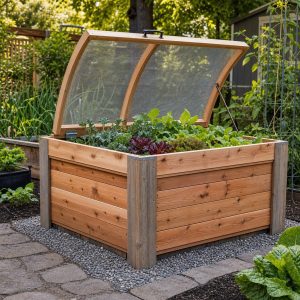
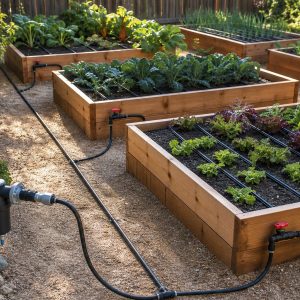
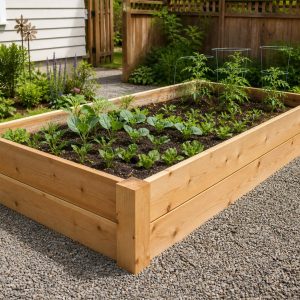
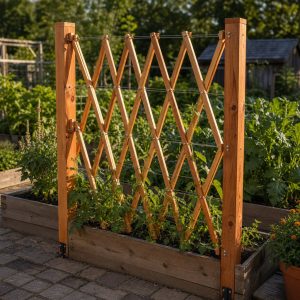
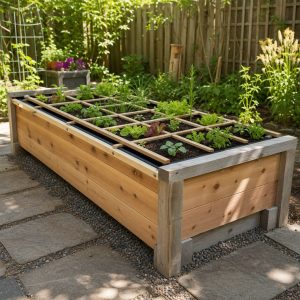
Use the fence around the 4×8 raised bed and garden trellis. For poultry protection, the existing backyard chicken coop planning guide requires a separate predator and husbandry assessment.
Common questions
Will a 4-foot fence stop deer?
Not reliably where deer are motivated and have room to jump. Use extension guidance and a deer-specific system suited to the site rather than guessing from garden-fence appearance.
Can plastic netting keep rabbits out?
Only if the mesh size, ground attachment, durability, and chewing resistance work for the local pressure. Fine galvanized wire is a common durable lower barrier.