Project planning guide
Before you build
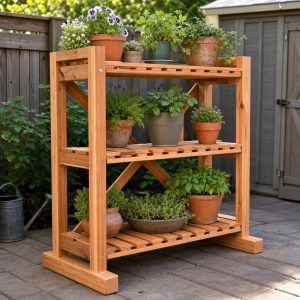
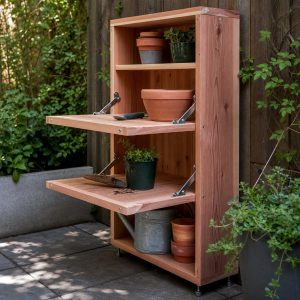
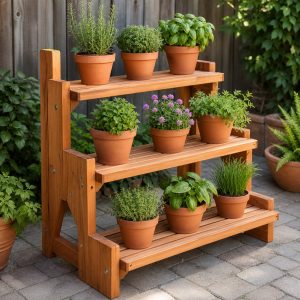
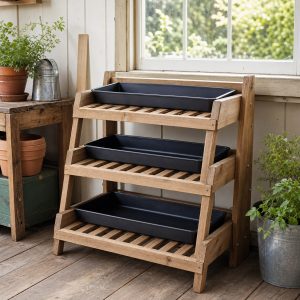
Use the reference image and planning notes as a starting point. Confirm dimensions, loads, materials, local codes, and site conditions before purchasing or cutting.
- Garden Projects
- 1 reference image
- Print-friendly guide
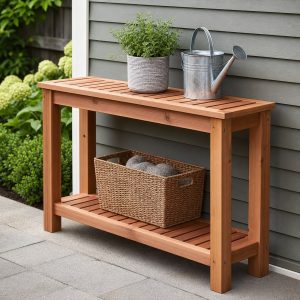
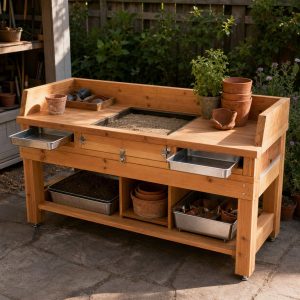
Quick answer: A practical potting bench is about 60 inches wide, 24 inches deep, and 36 inches high, with a durable worktop, a narrow upper shelf, a slatted lower shelf, and a protected bay for a lidded soil container. Test the height, adapt the width to the patio, and use weather-resistant materials and fasteners.
Fit the bench to the gardener and site
Simulate the worktop with a folding table or boxes. The user should be able to fill pots without hunching, reach the back edge, and sweep soil toward a container. Place the bench on a level surface near water but outside roof runoff. Preserve required clearance around exterior outlets, meters, vents, and doors.
Plan functional storage, not decorative clutter
- Worktop: keep at least two-thirds open for trays and pots.
- Upper shelf: lightweight empty pots and frequently used small supplies.
- Back rail: a few hooks for trowels, scissors, and a brush.
- Lower shelf: watering cans, trays, and sealed containers.
- Soil bay: a removable lidded bin protected from rain and animals.
A deep upper hutch can shade the work and catch wind. Keep shelves shallow and brace the back frame against racking.
Build two rigid end frames
- Cut four legs and matching side rails from straight exterior-suitable lumber.
- Assemble two identical end frames and verify each is square.
- Join them with front and rear stretchers at the worktop and lower-shelf elevations.
- Add back posts and a crossrail for the upper shelf.
- Install diagonal bracing or a structural back panel.
- Fit slatted lower shelving with gaps for drainage and cleanup.
- Attach the worktop so damaged boards can be replaced later.
Choose a cleanable work surface
Closely spaced cedar boards are repairable and drain well. Exterior plywood needs sealed edges and full support. Metal flashing can create a wipeable surface, but every edge must be hemmed or covered and dissimilar-metal corrosion considered. Do not create an uncovered recessed soil well that fills with rain and becomes difficult to clean.
Protect the bench outdoors
Use corrosion-resistant fasteners, keep leg ends out of standing water, and apply a finish approved for exterior furniture. Recoat according to the product directions. Anchor a tall-backed bench where wind or uneven loading could tip it, especially on an exposed patio.
Store long-handled equipment on the garden tool storage rack. Put finished compost from the three-bin system into a labeled, lidded container rather than piling loose material under the bench.
Plan a clean soil-handling sequence
Set the bench where bags or bins can arrive without crossing delicate planting areas. The user should be able to scoop mix, fill containers, water lightly, and move finished pots without repeatedly turning or carrying them across the work surface. A removable tray or smooth sacrificial top makes spilled soil easier to collect and keeps it out of shelf joints.
- Store dense soil low and within the structural footprint.
- Keep fertilizers and treatments labeled, dry, and away from children or pets.
- Provide hooks only where tools cannot snag clothing.
- Leave airflow beneath bins and around damp surfaces.
Observe sun, rain, prevailing wind, and roof runoff before choosing the final position. Recoat exposed end grain and horizontal surfaces as needed, and inspect tall back panels or shelves for wind movement.
Common questions
Should a potting bench have a sink?
A removable dry basin is easy to clean. A plumbed sink introduces drainage, freeze protection, backflow, and code questions that should be handled under local requirements.
What is the best height for a potting bench?
About 34 to 38 inches suits many adults, but body height and task matter. Test before building and raise the lower shelf enough for comfortable cleanup beneath it.