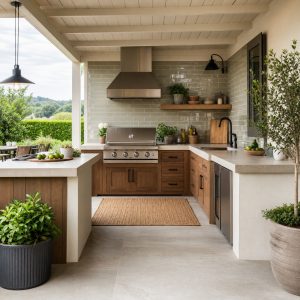
Project planning guide
Before you build
Use the reference image and planning notes as a starting point. Confirm dimensions, loads, materials, local codes, and site conditions before purchasing or cutting.
- Kitchen Design
- 8 reference images
- Print-friendly guide
Outdoor kitchen garden ideas shorten the route from harvest to washing, preparation, and the table. The kitchen should support the garden without shading crops, compacting soil, or sending roof runoff into the wrong place. Plan planting, paths, water, compost, storage, and food preparation together.
Kitchen beside raised beds
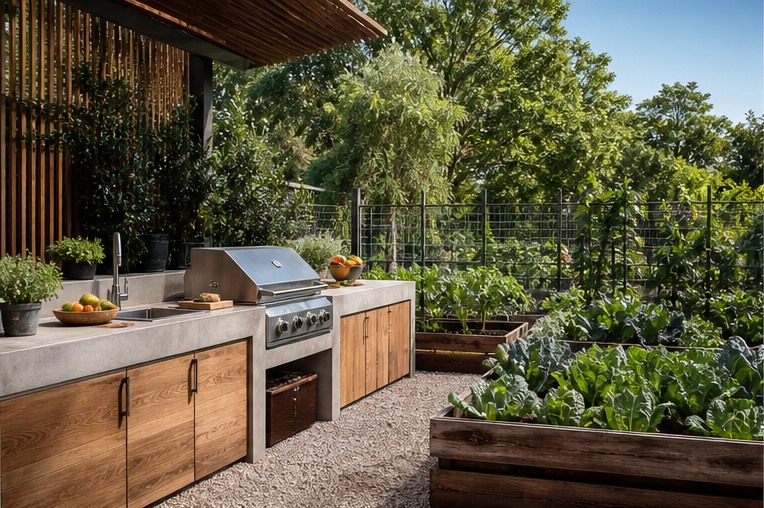
Raised beds near the kitchen make herbs and vegetables easy to collect, but preserve a wide, firm route for baskets, carts, and maintenance. Keep soil splash away from food-prep counters and place the hottest appliance where heat and smoke will not stress crops.
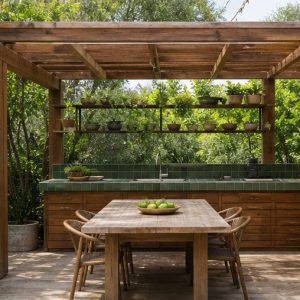
Vertical herb wall
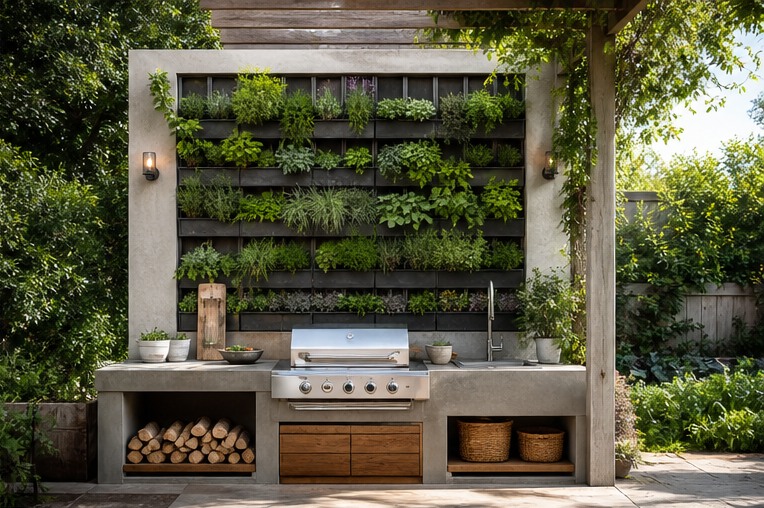
A herb wall places small harvests within reach and adds green texture to a simple structure. Use a dedicated planting system with controlled drainage, keep irrigation away from outlets and cabinet interiors, and choose herbs that suit the available sun rather than treating the wall as decoration.
Potager kitchen
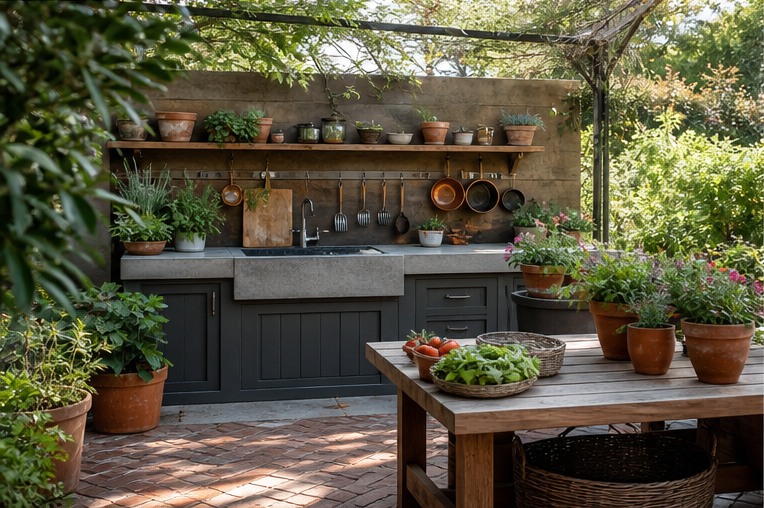
A potager organizes edible plants, flowers, and paths into a productive composition. Align the kitchen opening with the main path, provide a place for harvest baskets, and use gravel or paving that remains stable when wet. Avoid loose material immediately beneath stools or appliance doors.
Greenhouse-adjacent kitchen
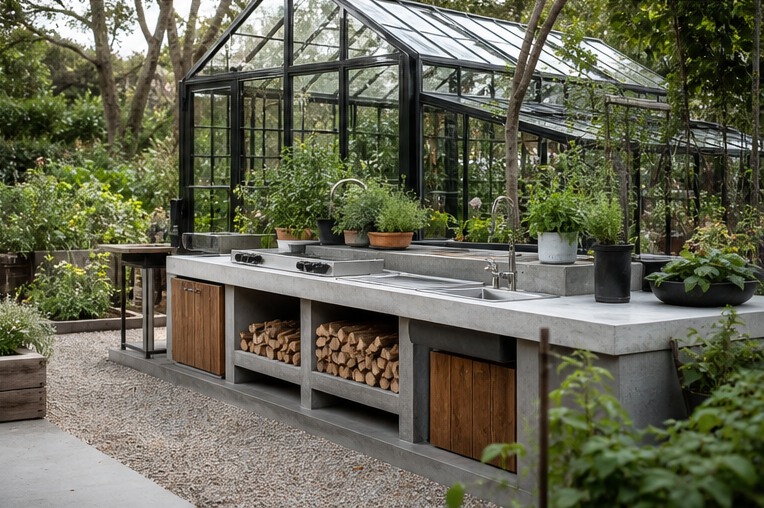
A kitchen near a greenhouse can support seedling work and harvest preparation, but the two spaces have different heat and moisture needs. Preserve greenhouse ventilation, keep cooking emissions away from glazing vents, and avoid routing busy meal traffic through active growing space.
Orchard-edge kitchen
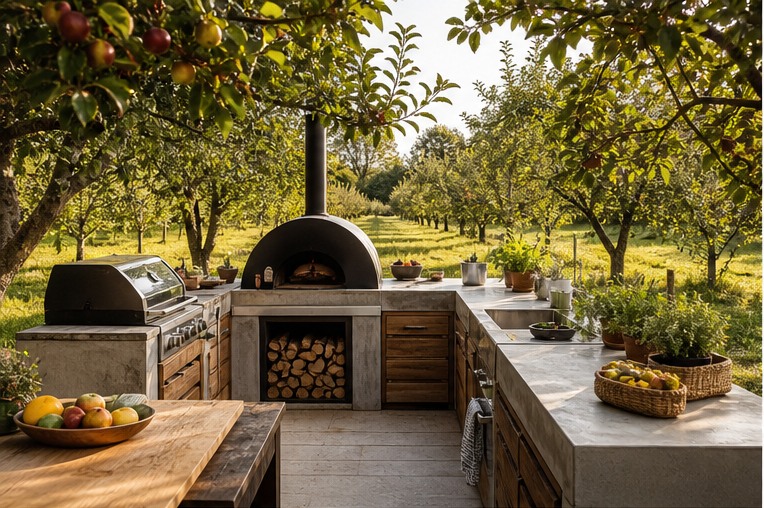
An orchard provides filtered shade and a strong seasonal connection, yet roots, falling fruit, insects, and leaf debris affect placement. Keep foundations outside protected root zones, allow equipment service access, and choose a roof and gutters that are easy to clean.
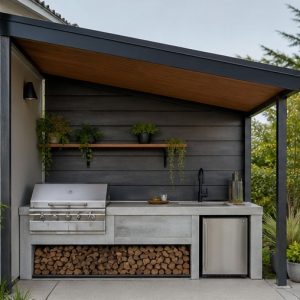
Compact edible-yard kitchen
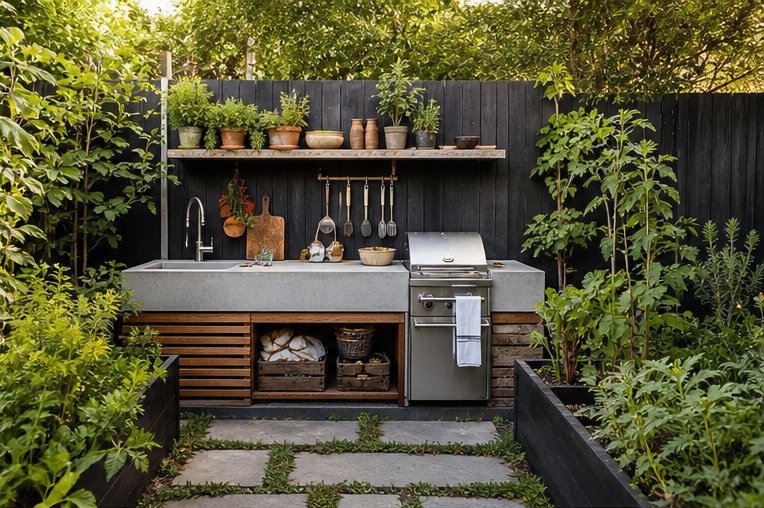
A small edible yard benefits from a simple counter run that leaves most ground area for growing. Use wall storage instead of expanding the footprint, provide a contained trash and compost route, and keep food scraps from attracting pests beside the cooking zone.
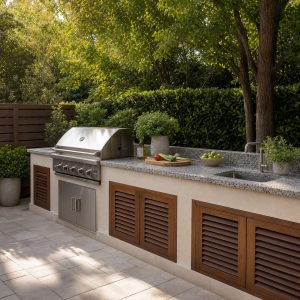
Harvest sink and wash counter
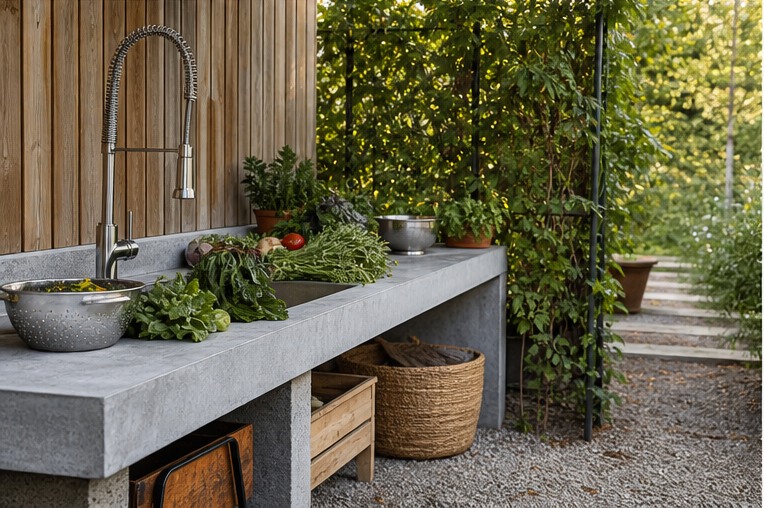
A dedicated wash counter is useful for muddy roots and leafy produce. Plan potable water and approved drainage rather than letting wash water pool in paths or beds. Keep garden chemicals, tools, and soil containers separate from food-preparation storage.
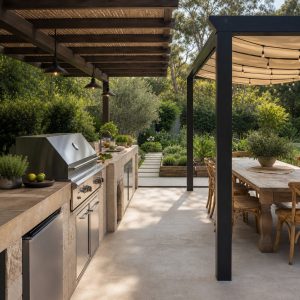
Dining table among planters
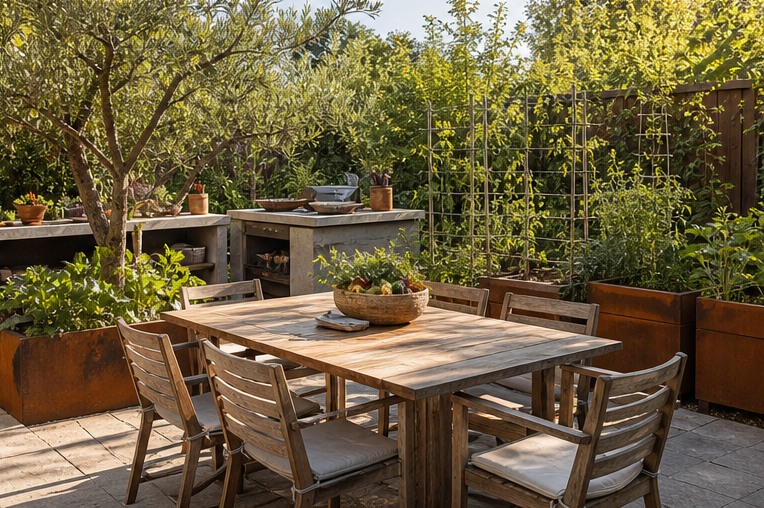
A table near the garden makes the kitchen feel like a destination. Set it beyond the cook’s work route, preserve an accessible firm surface around chairs, and choose planting that does not crowd diners or attract excessive insects beside serving dishes.
Planning checklist
- Map sun, roots, irrigation, roof runoff, and crop access.
- Create a clean harvest route from beds to wash counter.
- Separate food tools from soil, chemicals, and garden equipment.
- Use stable paths that drain and remain usable in wet weather.
- Plan compost and waste without inviting pests into the kitchen.
These ideas are general planning guidance. Verify appliance clearances, ventilation, weather exposure, drainage, structural loads, fuel and electrical work, permits, and local fire and building requirements with manufacturers and qualified local professionals.
Frequently asked questions
What should I plant near an outdoor kitchen?
Choose herbs and edible plants suited to the site’s sun, water, climate, and maintenance. Keep plants away from hot equipment, grease, smoke, and high-traffic edges.
Can roof water irrigate the kitchen garden?
It may be possible with an appropriately designed collection and distribution system. Consider roof material, first-flush treatment, overflow, local rules, and food-garden water quality.
Where should a garden sink drain?
Use a legal, approved drainage method that protects foundations, paths, plants, and water quality. Local plumbing and environmental rules vary.