Project planning guide
Before you build
Use the reference image and planning notes as a starting point. Confirm dimensions, loads, materials, local codes, and site conditions before purchasing or cutting.
- Kitchen Design
- 8 reference images
- Print-friendly guide
An outdoor island can hold cooking, prep, washing, serving, storage, or seating—but asking one island to do everything often creates conflicts. These eight ideas begin with a clear primary job, then add only the appliances and overhangs that preserve landing space, ventilation, service access, and circulation.
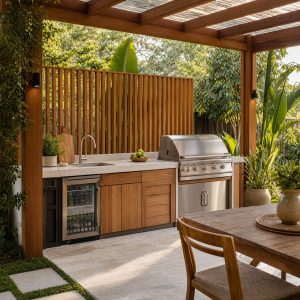
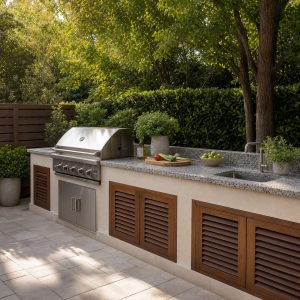
Linear Grill Island
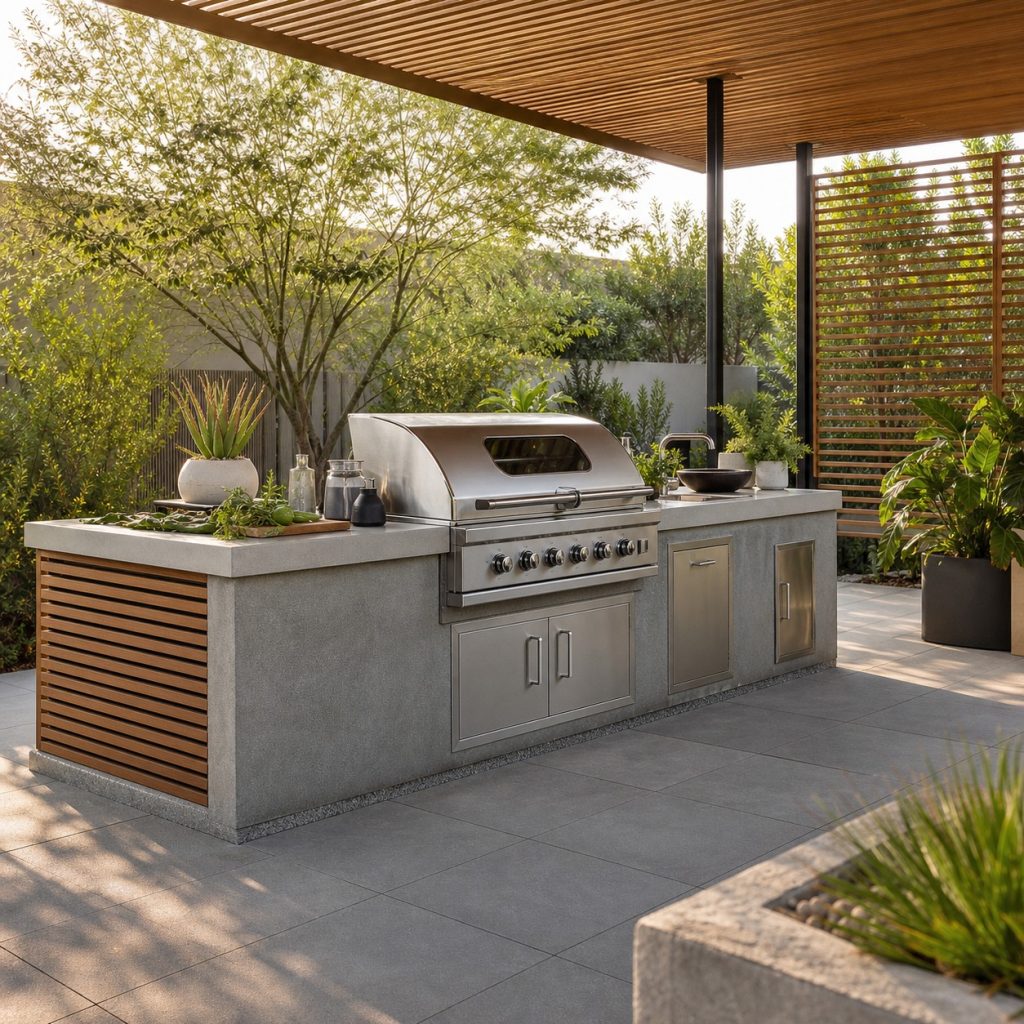
A straight grill island is easy to understand and can work as a single cooking line. Keep landing counter on both sides where possible and place doors, drawers, vents, and shutoffs where they remain accessible. Guests should approach from the cool side rather than entering the cook’s aisle.
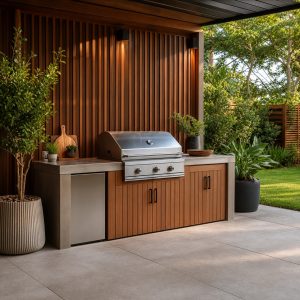
Prep-Only Island
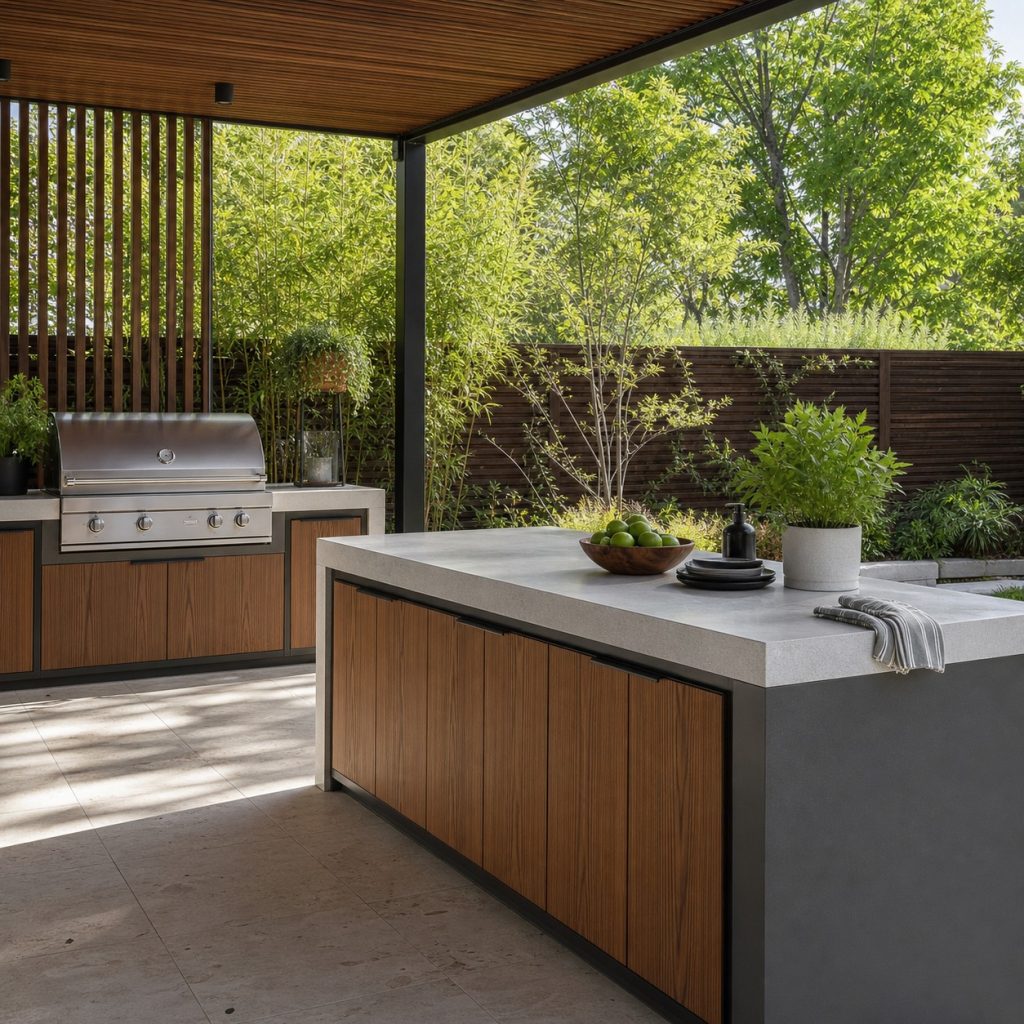
A prep-only island avoids heat and ventilation complications while adding a large work surface. It can hold drawers, trash, and serving pieces without competing with a grill opening. Keep the gap to the cooking counter comfortable when doors are open and people pass through.
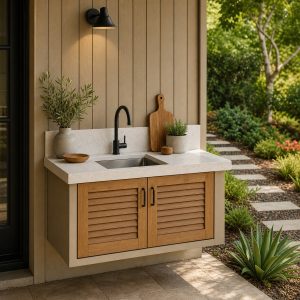
Sink Island
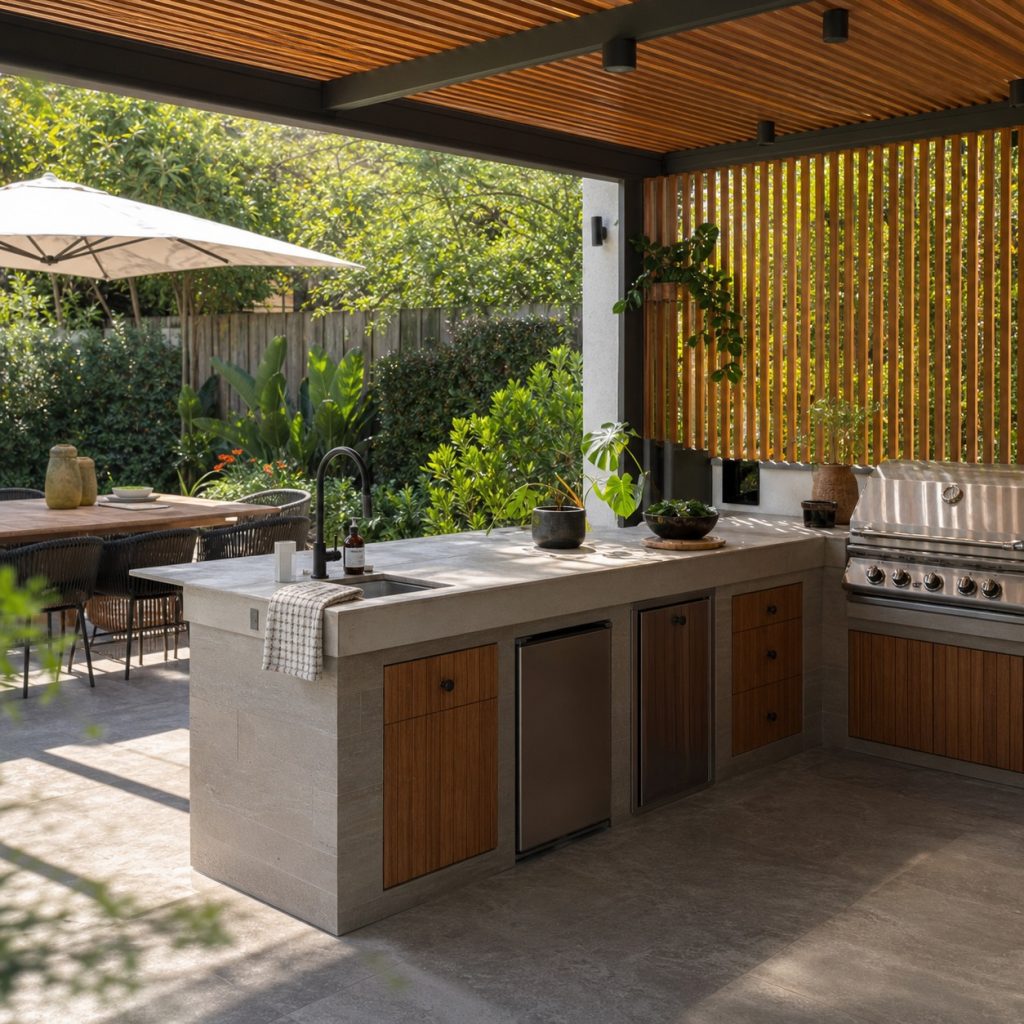
A sink island centralizes produce washing and cleanup but brings water, drainage, winterization, and electrical separation into the floor. Preserve dry landing space beside the basin and make shutoffs and traps easy to service. Local plumbing rules should determine how supply and wastewater are handled.
Serving and Refrigeration Island
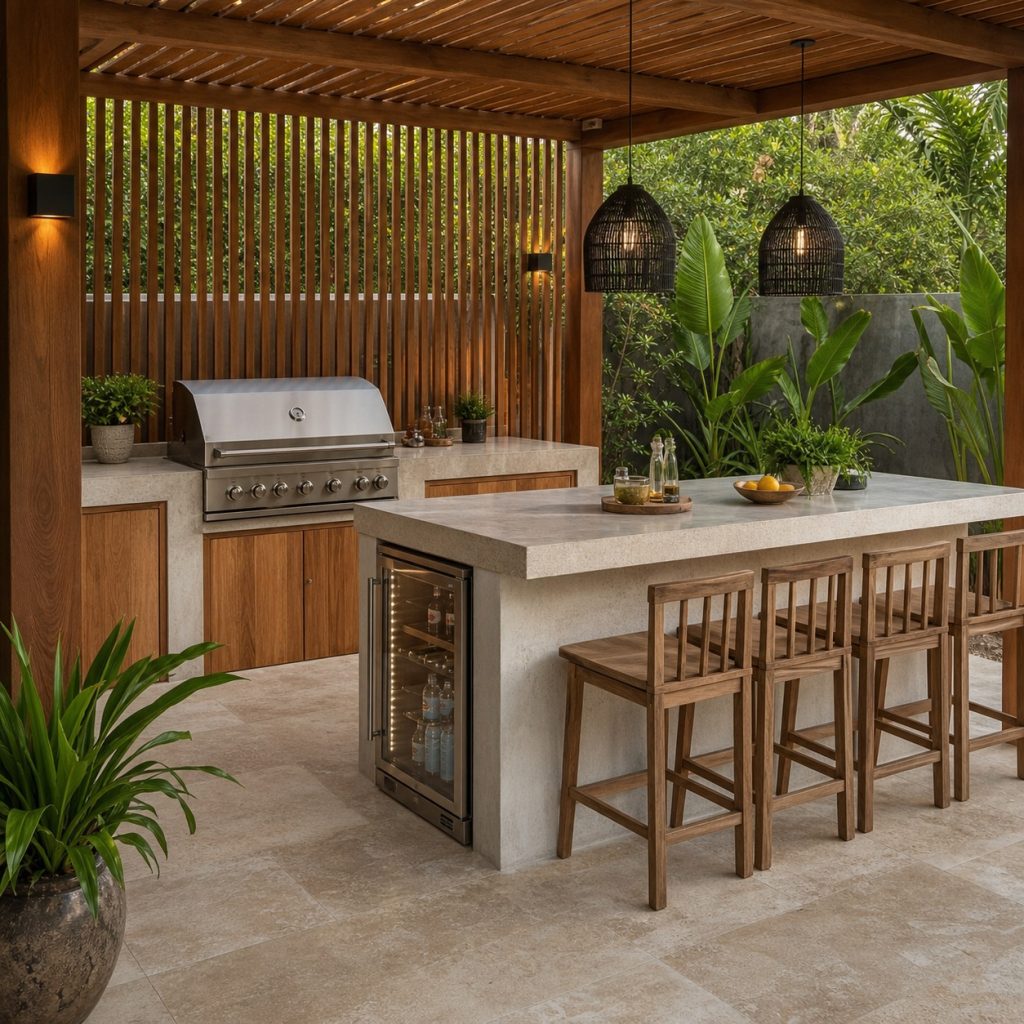
A cool serving island can face dining while the grill stays on another wall. Use outdoor-rated refrigeration only in an approved enclosure with required ventilation. Keep glassware and drinks away from raw-food prep, and provide a shaded landing surface where practical.
Mobile Prep Island
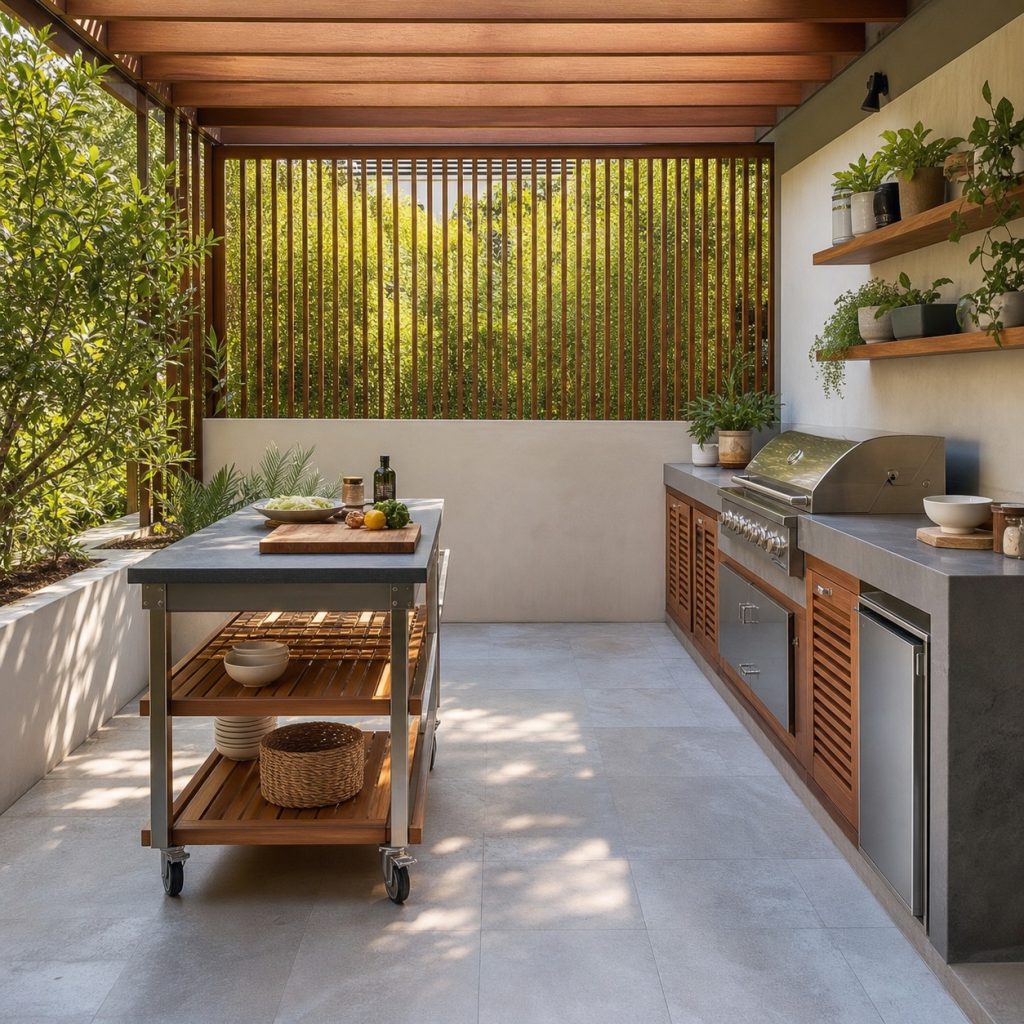
A mobile island adds flexibility without a new foundation or utility route. Choose locking casters, weather-ready materials, and a size one person can move safely when empty. It still needs a storage location and must remain outside appliance clearances during use.
Two-Level Island
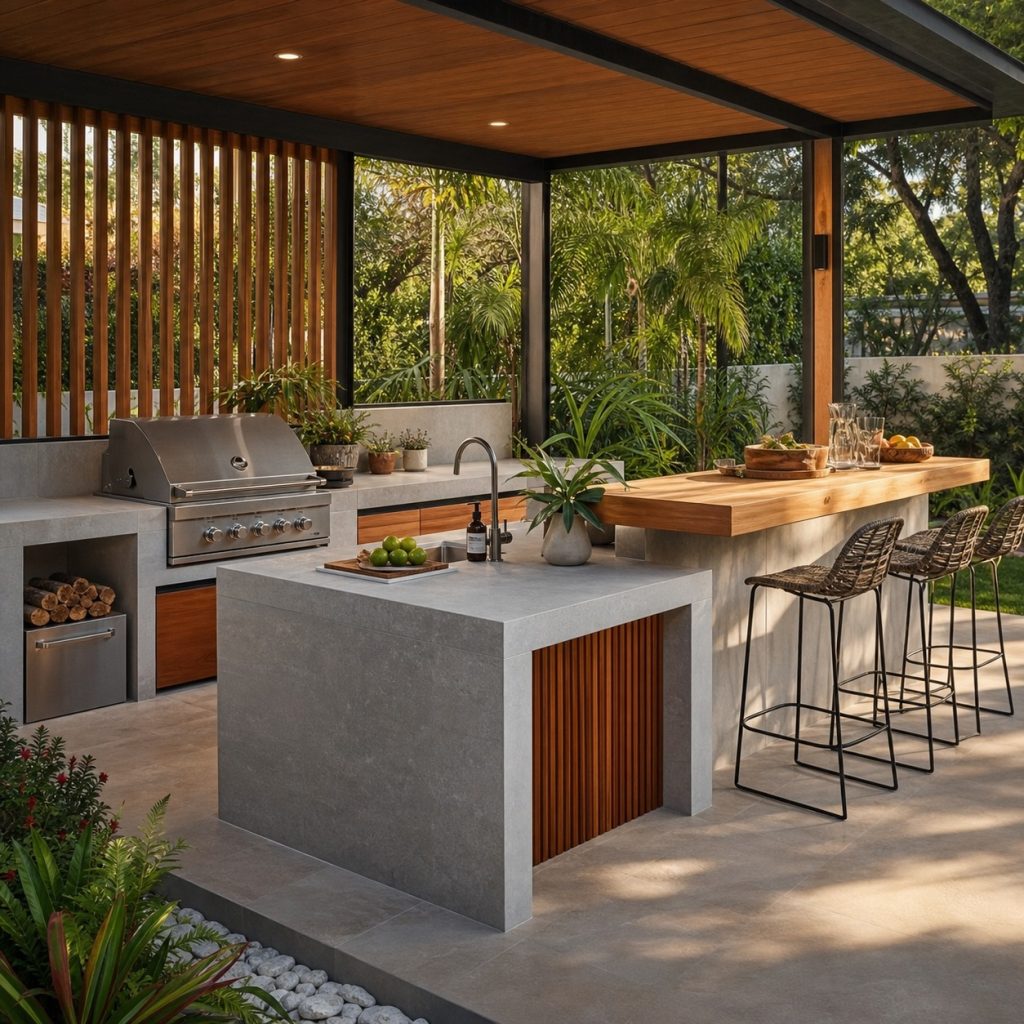
Two levels can separate prep from guest items and create a finished serving edge. They also reduce continuous worktop and introduce harder-to-clean corners. Use the higher ledge only when it supports the way the household serves and entertains.
L-Shaped Island
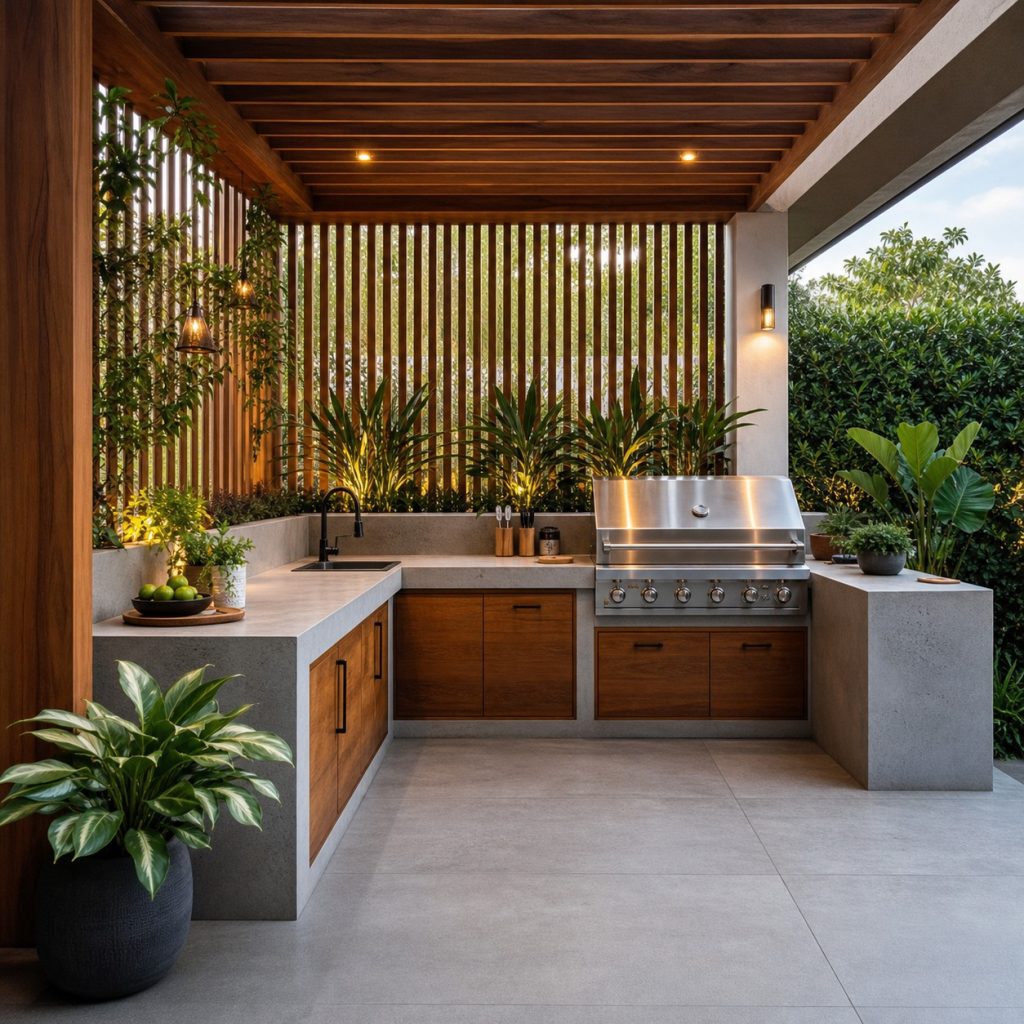
An L shape can protect the inner work zone and direct guests toward the outer edge. Avoid filling the short return with another appliance; uninterrupted prep counter is often more useful. Test inner-corner access and every door swing before construction.
Compact Standalone Island
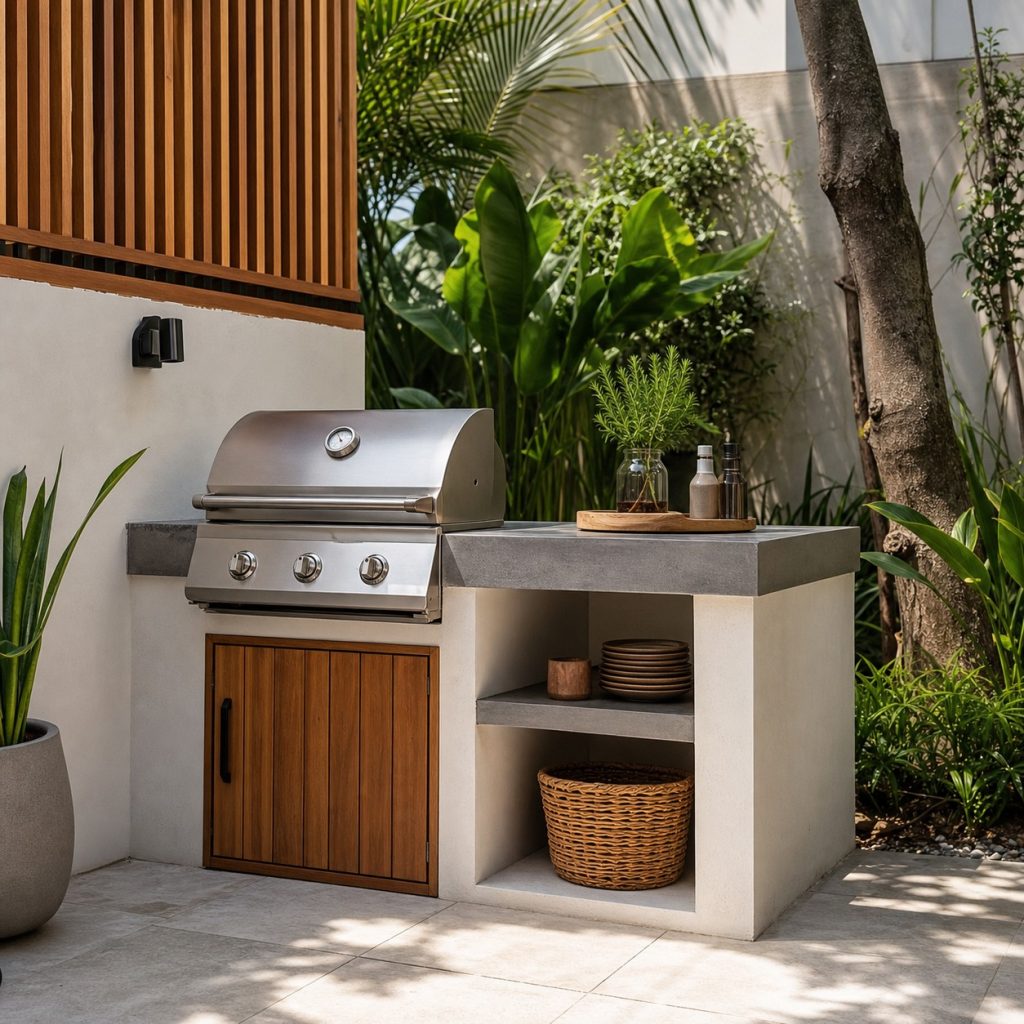
A small island can serve a courtyard when it focuses on one appliance and one useful landing area. Skip narrow decorative wings that cannot hold a platter. Keep the base ventilated as required and preserve enough space to walk around the island with the grill lid open.
Planning checklist
- Choose one primary function: cook, prep, wash, serve, cool, or seat.
- Mock up appliances, doors, drawers, overhangs, and circulation full scale.
- Reserve uninterrupted landing and prep counter before adding features.
- Coordinate foundation, drainage, ventilation, utilities, and service access.
- Verify clearances, structure, licensed work, and permits locally.
These ideas are general planning guidance. Verify appliance clearances, ventilation, weather exposure, drainage, structural loads, fuel, plumbing and electrical work, permits, and local fire, pool, deck, and building requirements with manufacturers and qualified local professionals.
Frequently asked questions
Should an outdoor island include a grill?
Only if cooking is its main job and the layout can provide safe clearances, ventilation, landing space, fuel access, and guest separation.
Can an outdoor kitchen island be movable?
A prep or serving island can be mobile. Appliances and utilities make movement more complex and should follow the equipment listing and professional guidance.
Is an L-shaped island better than a straight island?
An L shape can separate work and serving, while a straight island is simpler and may preserve more circulation. The site and tasks decide which is better.