Project planning guide
Before you build
Use the reference image and planning notes as a starting point. Confirm dimensions, loads, materials, local codes, and site conditions before purchasing or cutting.
- Garden Projects
- 8 reference images
- Print-friendly guide
A compost tumbler needs more than a barrel on an axle: the frame must resist a heavy shifting load while the vessel provides controlled airflow and drainage. These concepts compare single and dual chambers, cranks, rollers, and wheelbarrow-friendly stands.
Single-Barrel A-Frame Tumbler
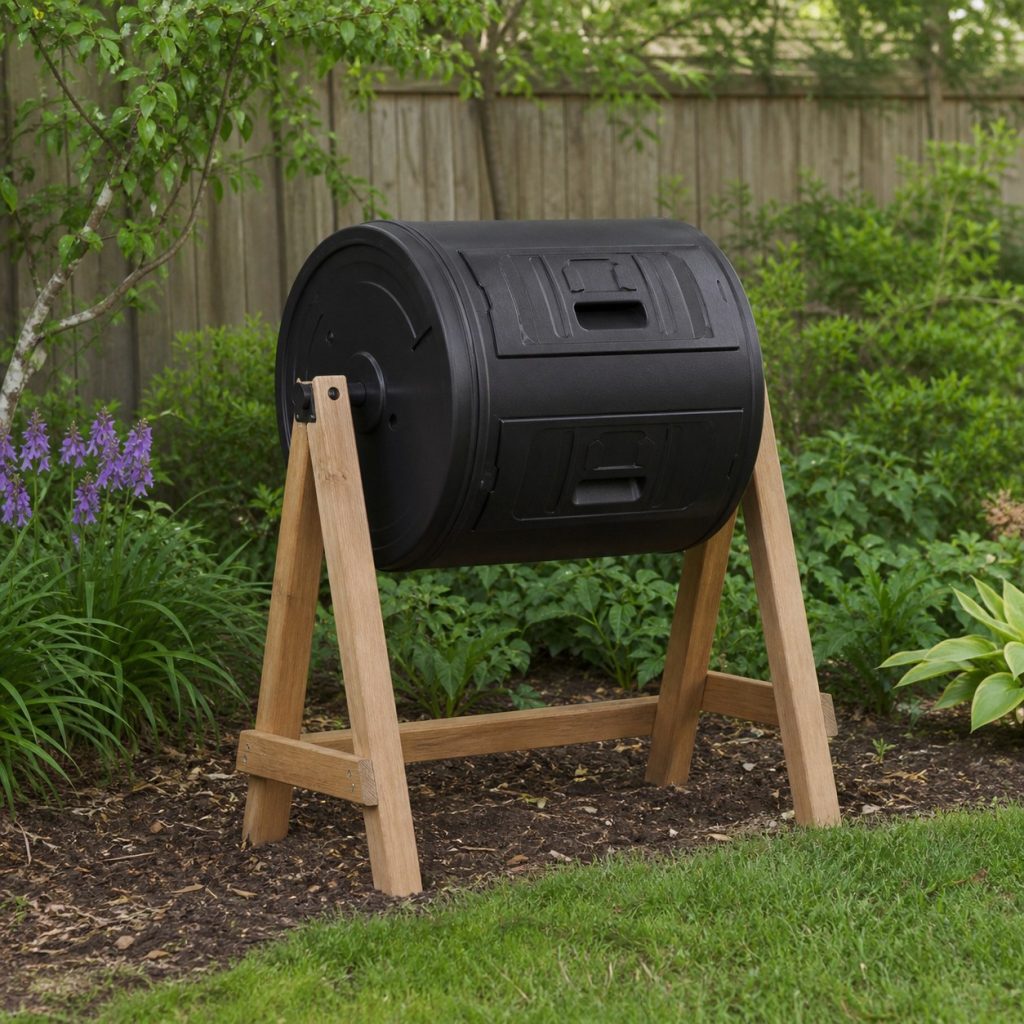
An A-frame directs the wet compost load into a wide footprint and leaves room beneath the hatch. Through-bolt the structural joints, use a corrosion-resistant axle system, and confirm the container was never used for hazardous material.
Dual-Chamber Batch Tumbler
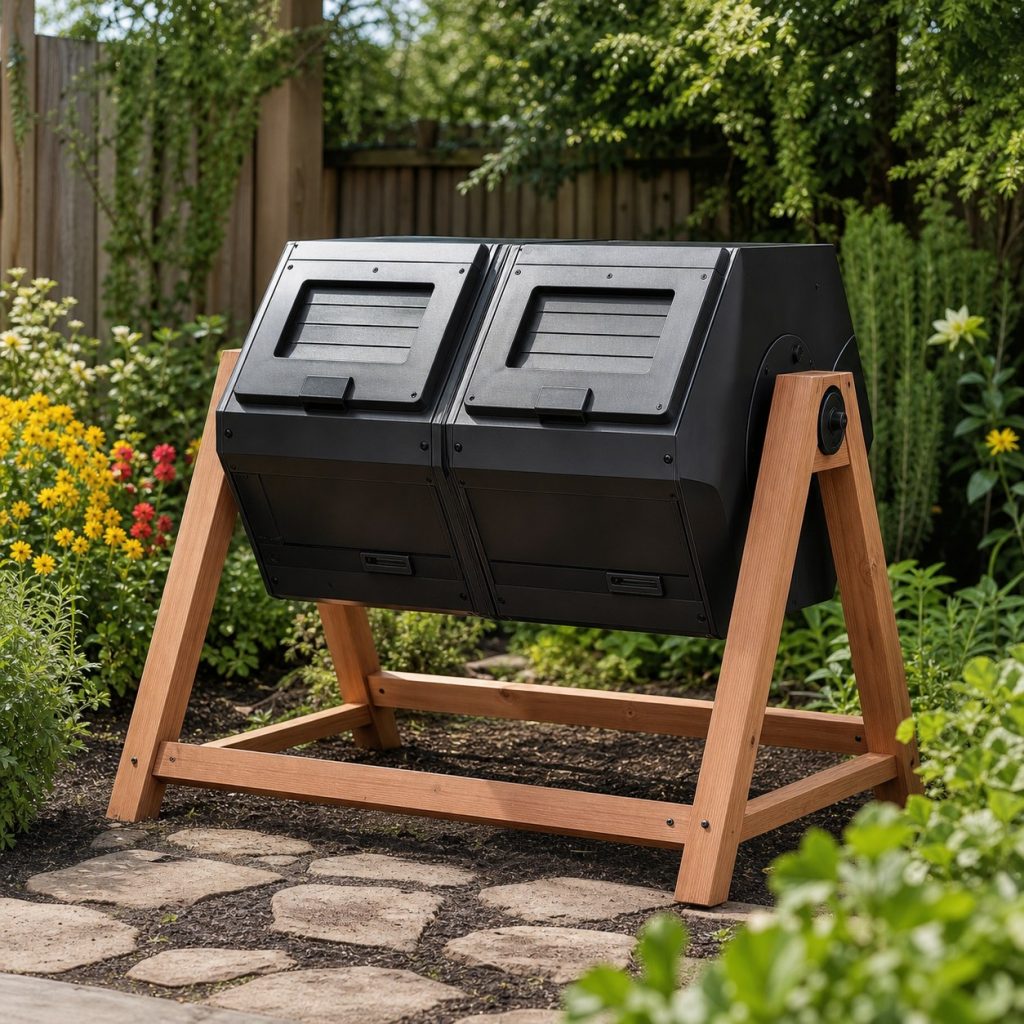
Two chambers allow one batch to mature while fresh scraps enter the other. A center divider must be durable, the doors must latch positively, and the frame must support an uneven load when only one side is full.
Low Roller-Cradle Tumbler
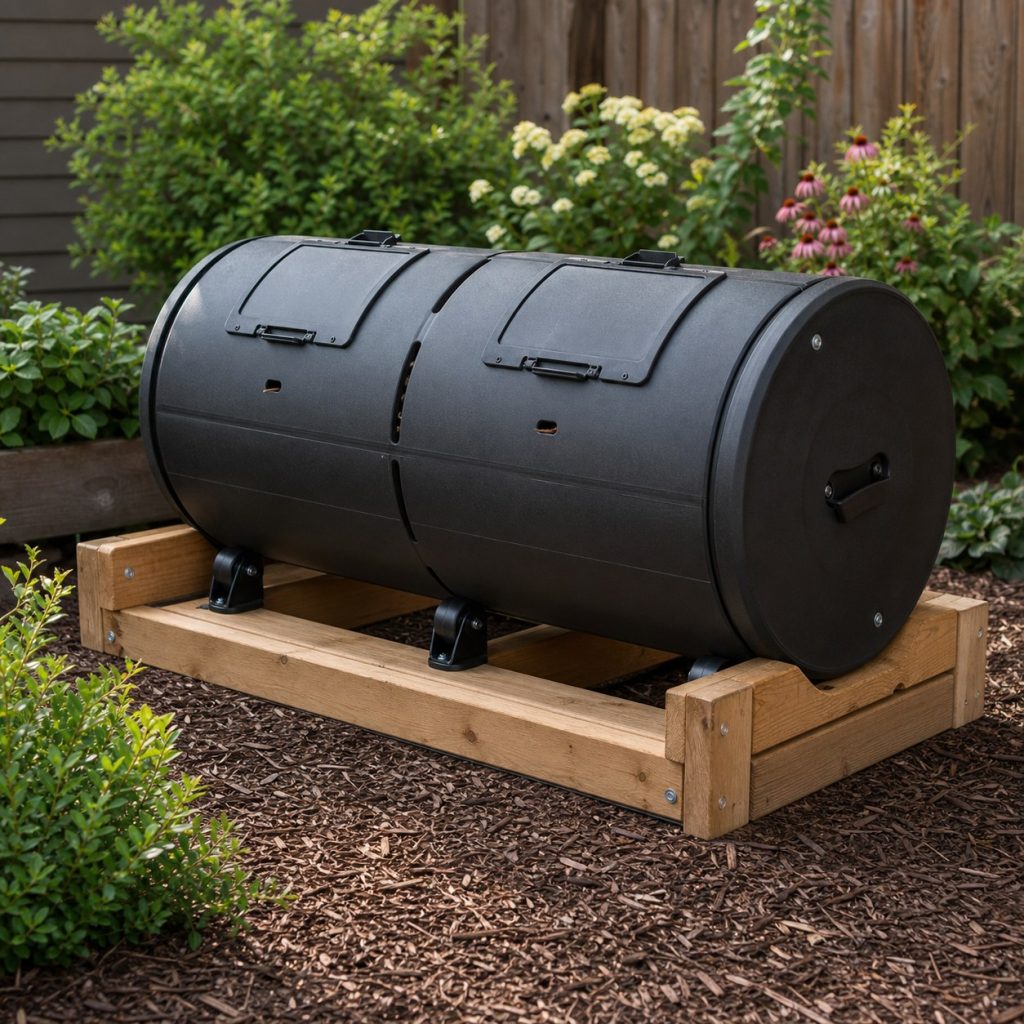
A roller cradle avoids a shaft through the drum and keeps loading height low. Use captured rollers, side guides, and a positive stop so the vessel cannot walk off the frame during rotation.
Crank-Handle Compost Tumbler
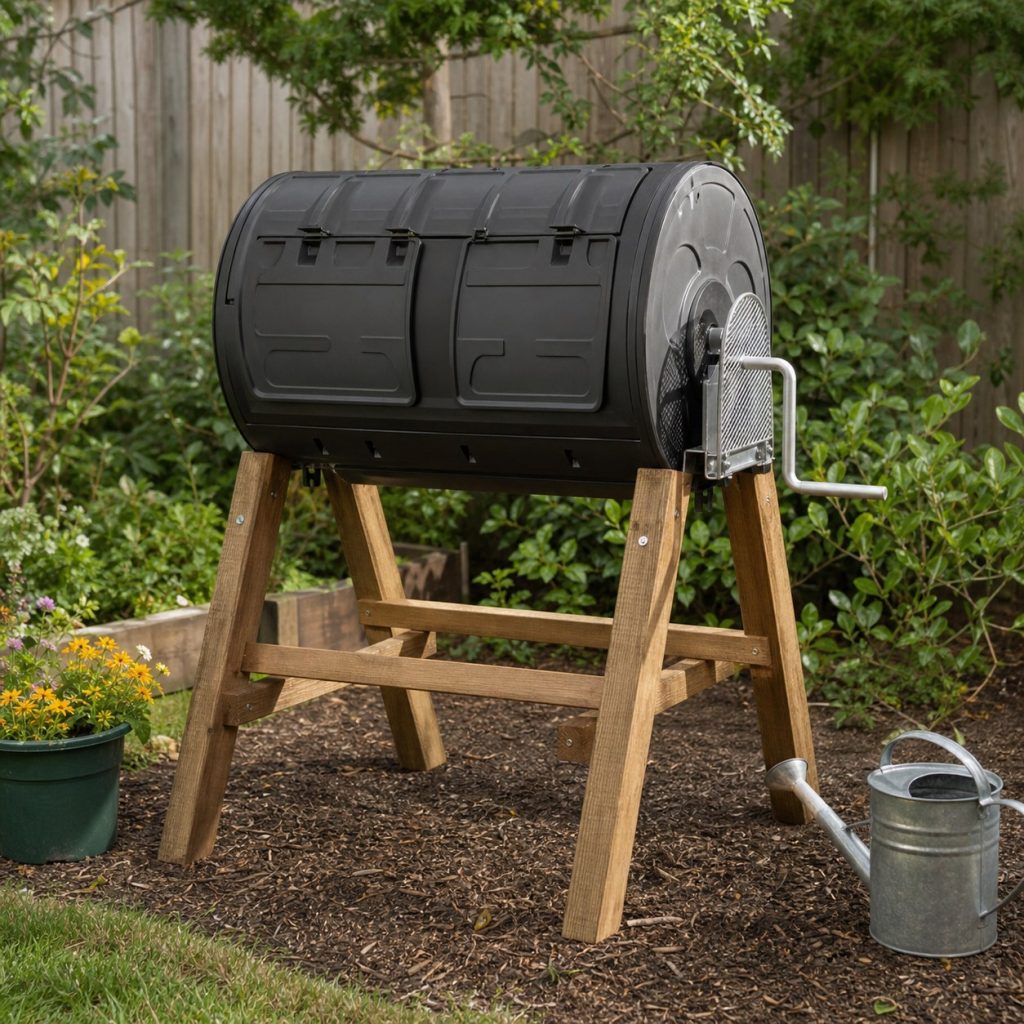
A crank can make a heavy batch easier to turn but adds torque and pinch hazards. Size the shaft and bearings for the loaded vessel, provide hand clearance, and include a lock that prevents unexpected rotation while loading.
Wheelbarrow-Height Tumbler
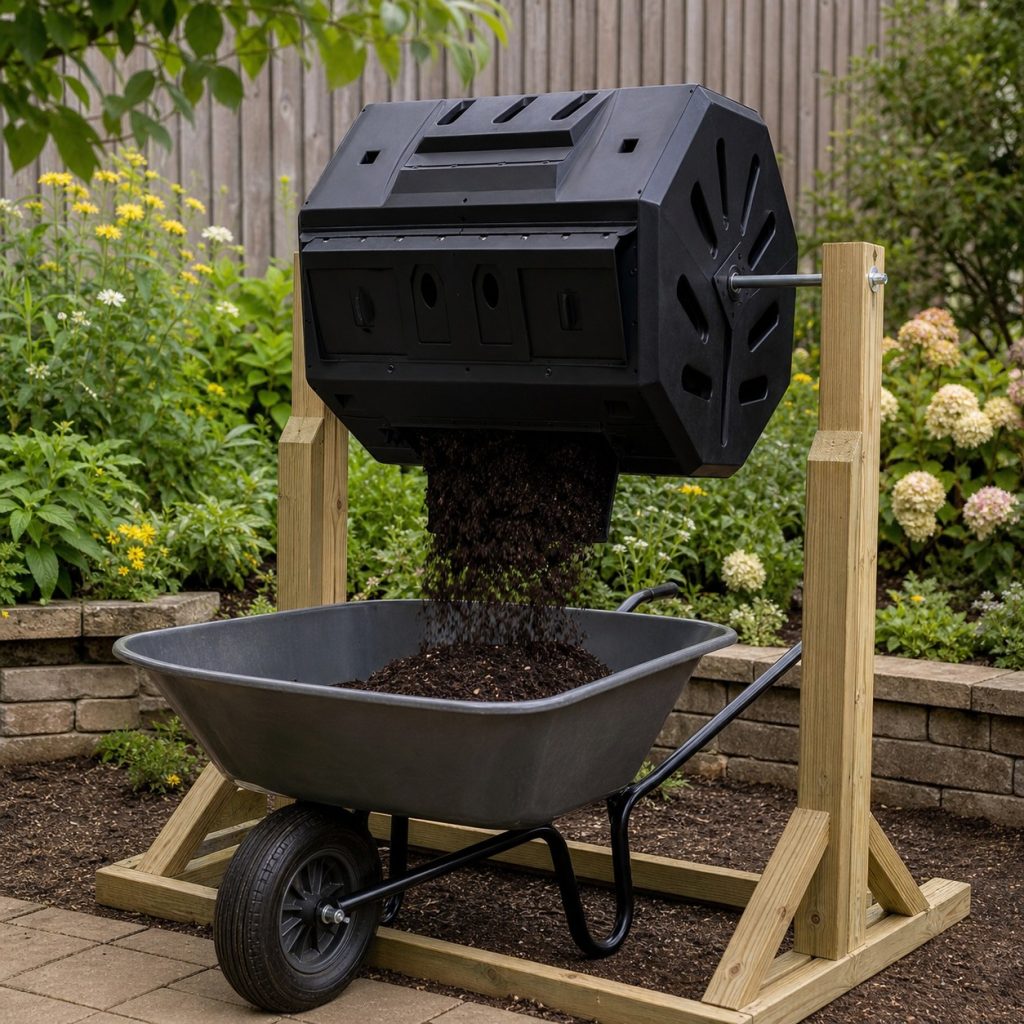
Extra clearance under the hatch speeds harvesting into a tub or wheelbarrow. The taller stand needs diagonal bracing, a broad level base, and secure anchors appropriate to the site without creating trip hazards.
Vent and Drain Details
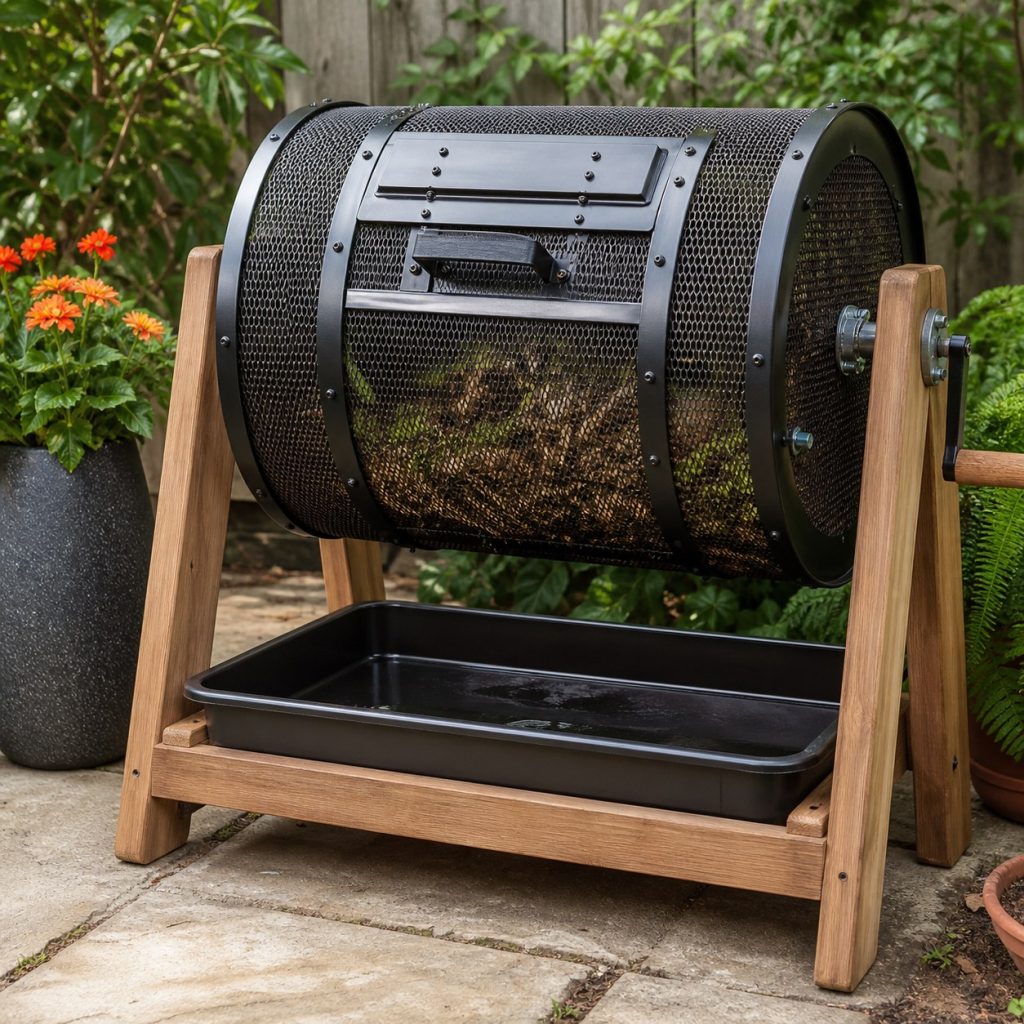
Small screened openings admit oxygen while excluding many pests; drainage prevents a saturated anaerobic batch. Position holes so liquid does not drip onto structural wood, walking surfaces, or storm drains.
Pest-Resistant Loading Hatch
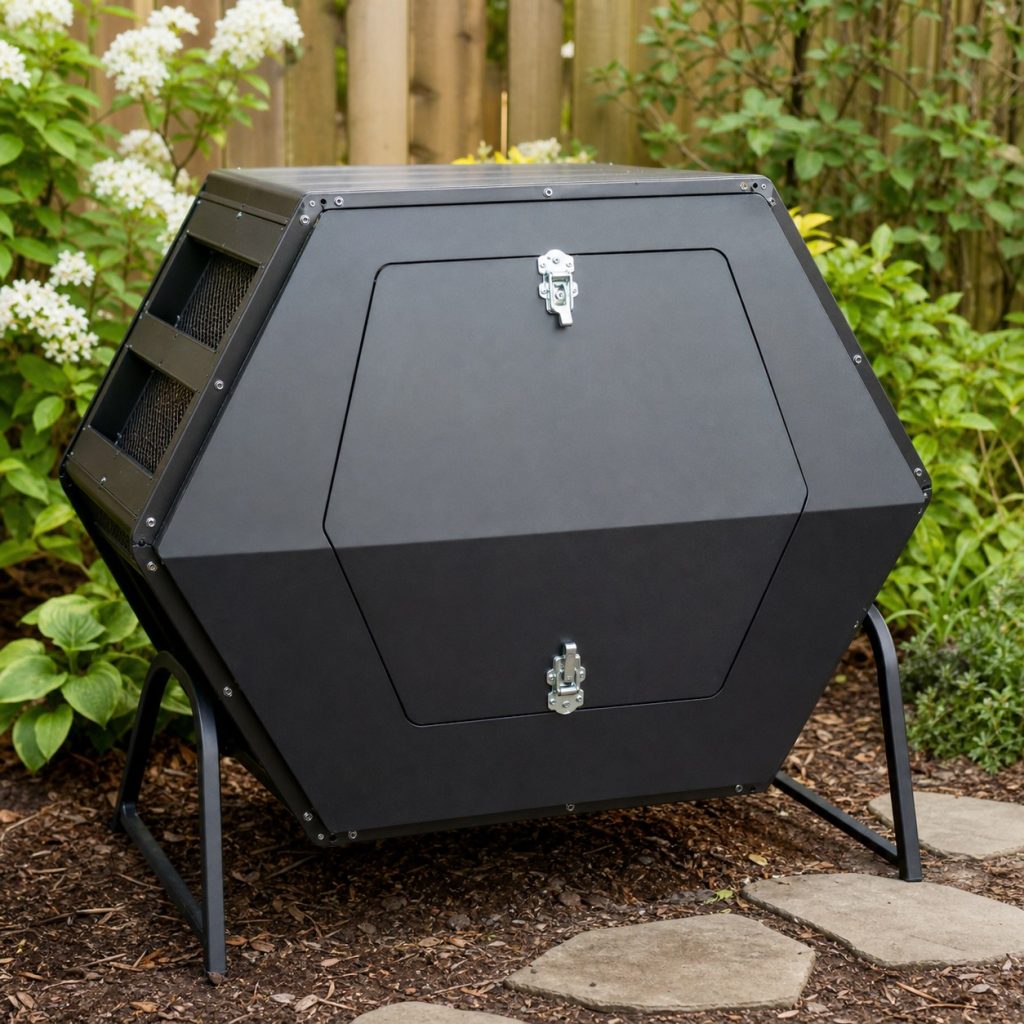
An overlapping hatch with two latches resists warping and animal access better than a loose lid. Keep food scraps covered with carbon-rich material and follow local guidance about meat, dairy, fats, pet waste, and diseased plants.
Safe Rotation and Maintenance
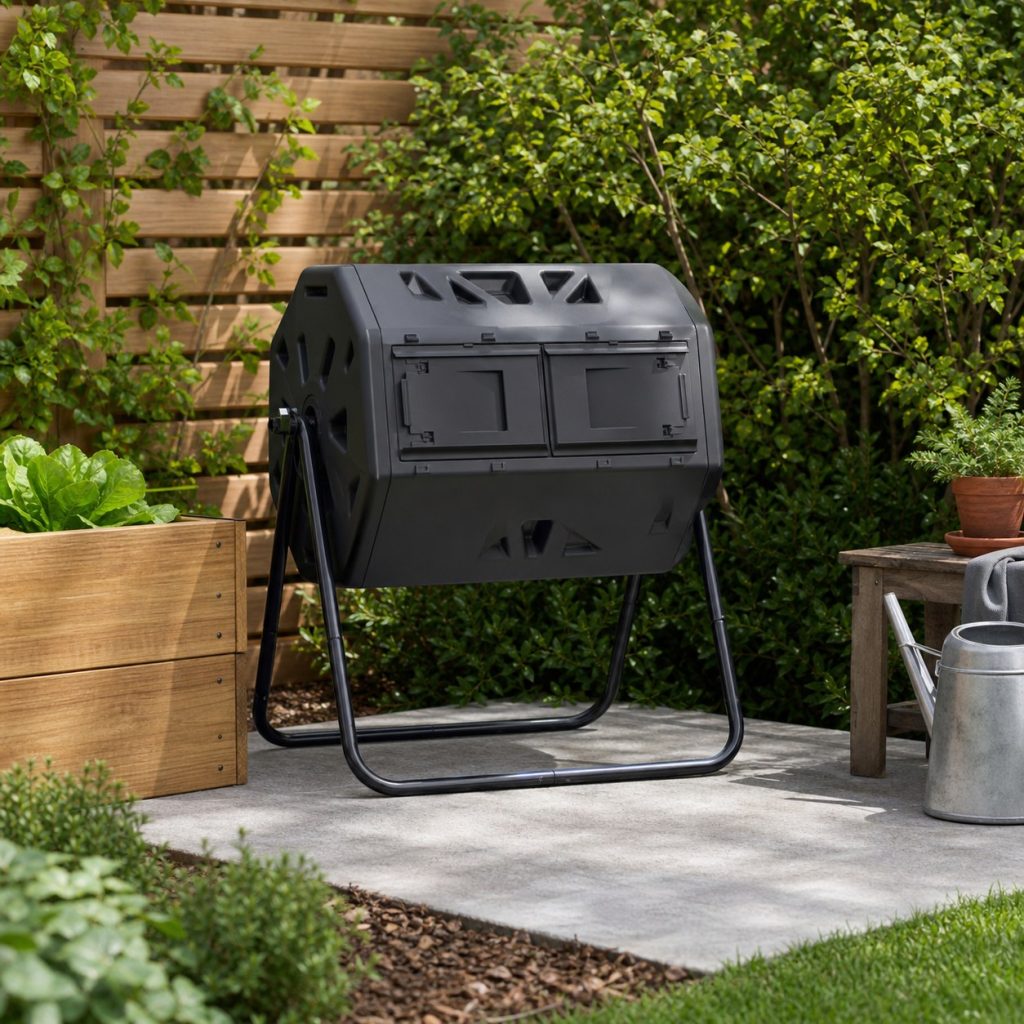
Provide a rotation lock, smooth edges, guarded pinch points, and enough clearance to operate the vessel without striking nearby walls. Inspect fasteners, bearings, latches, and frame decay before each new batch.
Planning checklist
- Use a clean food-safe or purpose-made compost vessel.
- Calculate for the heavy, uneven load of wet organic material.
- Brace the frame and use corrosion-resistant hardware.
- Screen vents and control leachate away from drains.
- Guard pinch points and add a positive rotation lock.
- Follow EPA and local guidance for acceptable ingredients.
These concepts and generated images are general planning inspiration, not measured drawings, drainage calculations, equipment-clearance instructions, accessibility designs, engineered plans, or tested load-rated structures. Verify dimensions, soil and drainage, roots and utilities, lumber and hardware, structural and wind loads, equipment manuals, service access, electrical and plumbing work, water and chemical safety, accessibility, permits, and local requirements for the actual project. Use qualified arborists, engineers, HVAC and pool technicians, electricians, plumbers, drainage professionals, and other licensed trades where those hazards or systems apply.
Frequently asked questions
Does a compost tumbler make compost faster?
Frequent mixing and controlled moisture can speed decomposition, but temperature, particle size, ingredient balance, and climate still matter. Small tumblers may not sustain hot-composting temperatures.
What should not go into a backyard tumbler?
Follow local rules and current EPA guidance. Common exclusions include pet waste, fats, meat, dairy, and materials treated with persistent chemicals or contaminated by disease.
How large should the frame be?
Base it on the vessel dimensions and its maximum wet load, not the empty barrel. Use a wide stance, diagonal bracing, and rated axles, bearings, and fasteners.