Project planning guide
Before you build
Use the reference image and planning notes as a starting point. Confirm dimensions, loads, materials, local codes, and site conditions before purchasing or cutting.
- Garden Projects
- 8 reference images
- Print-friendly guide
A garden pond changes drainage, excavation, child and pet safety, mosquito habitat, electrical exposure, wildlife movement, and maintenance. Start with local rules and the people who use the yard, then plan depth, edges, shelves, liner, overflow, circulation, native planting, utilities, and a safe route around the water.
Small Wildlife Pond
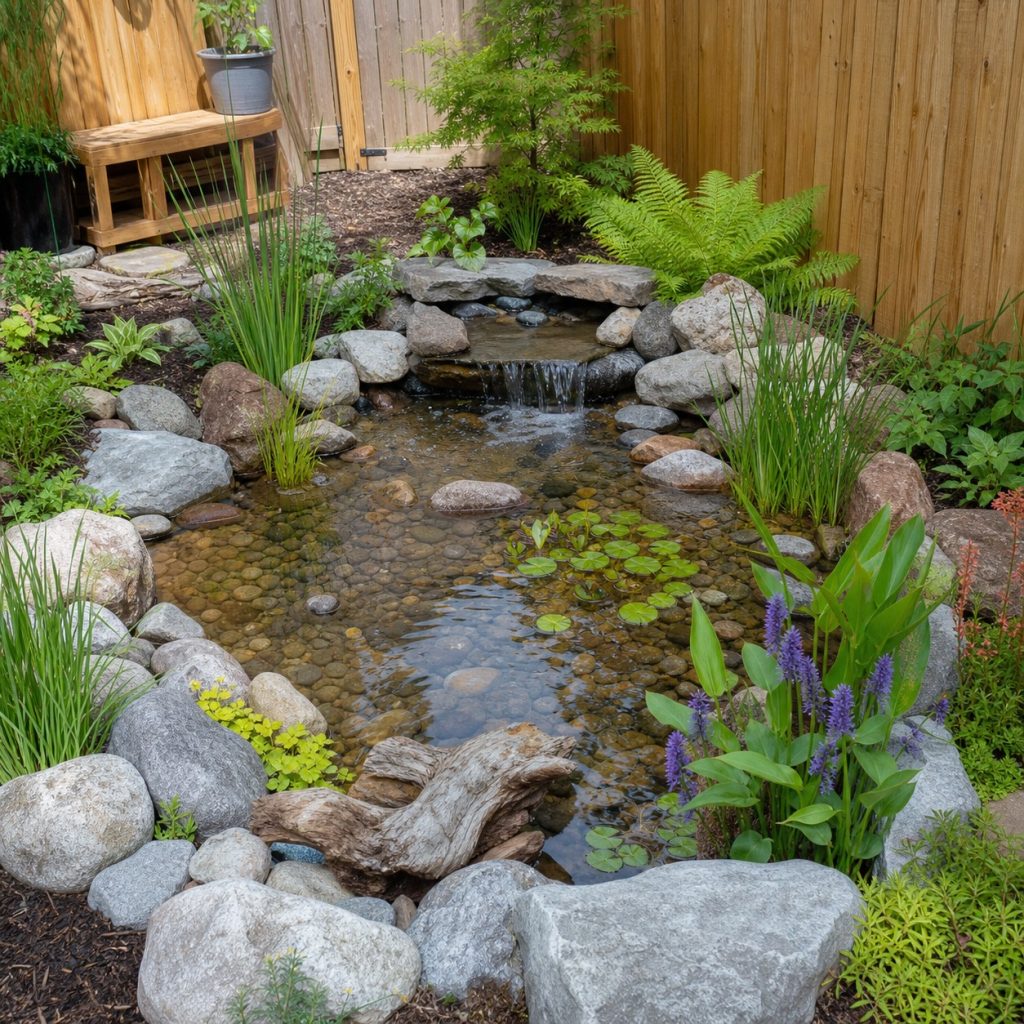
A wildlife pond benefits from varied shallow shelves, gently sloped escape edges, native cover, and some open water. Do not introduce nonnative animals, and avoid collecting wild amphibians. Child and pet safety must control depth, access, barriers, and siting.
Compact Container Pond
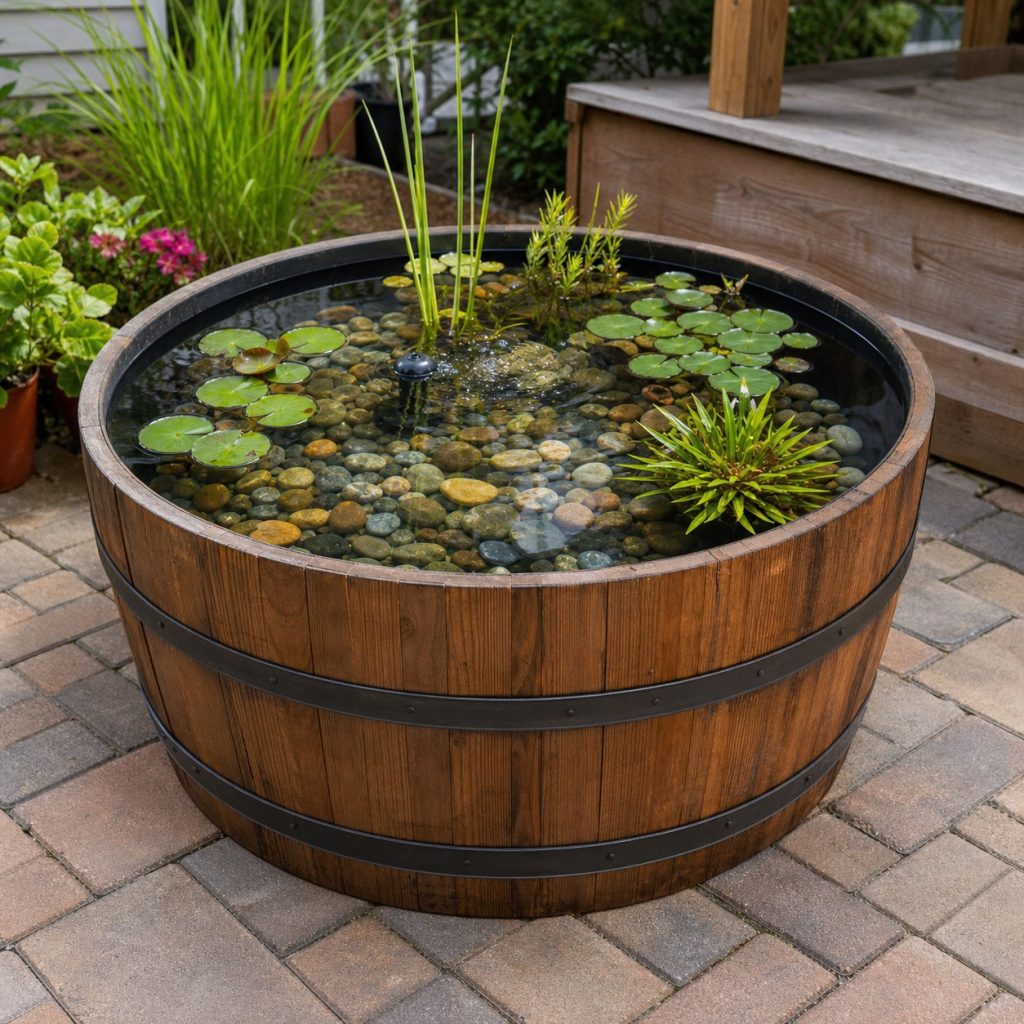
A container pond avoids excavation but still holds drowning-risk water and becomes extremely heavy. Use a purpose-rated watertight vessel on a verified level surface, prevent tipping, provide wildlife escape features, and manage mosquitoes and winter conditions.
Raised Garden Pond
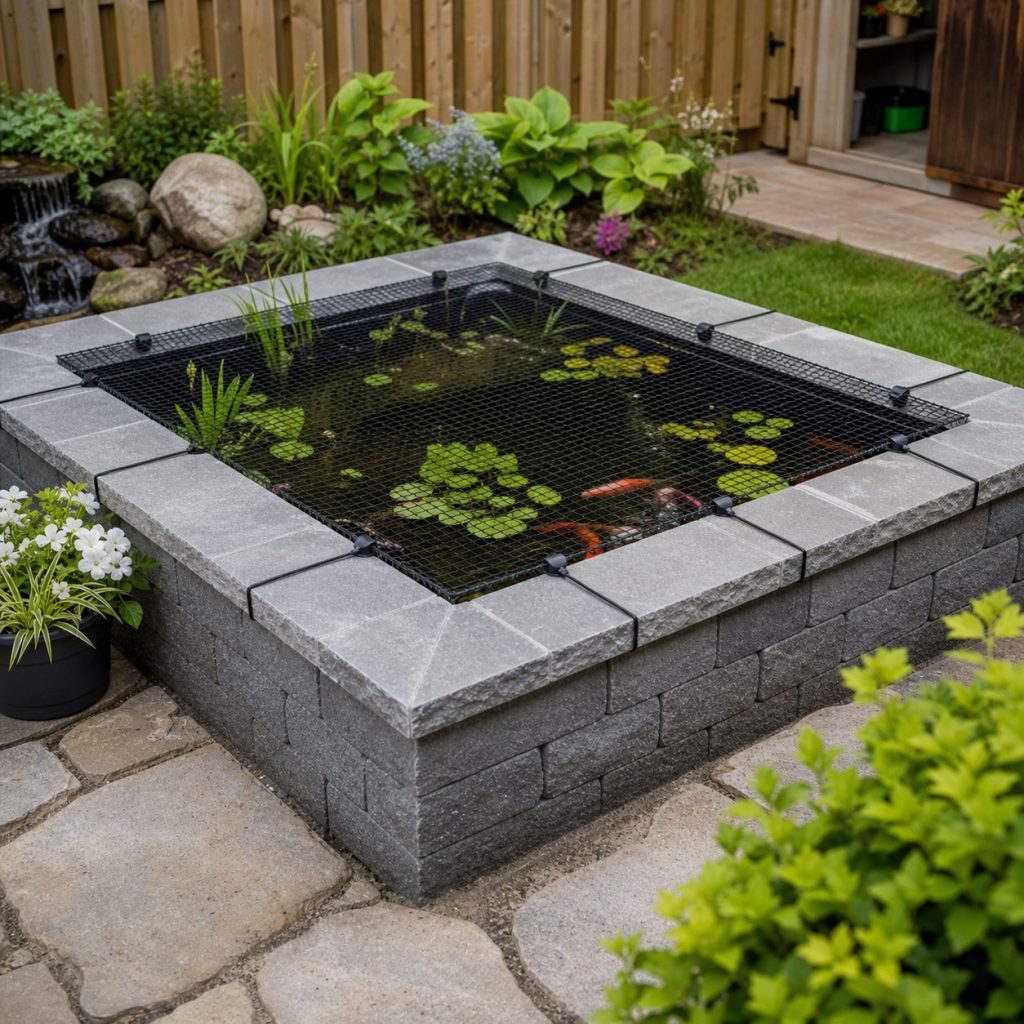
A raised edge can make plants easier to view but creates structural water pressure and a climbable boundary. Use an engineered container or pond system, protect the liner, verify the foundation, and provide barriers or covers required for child safety.
Formal Rectangular Pond
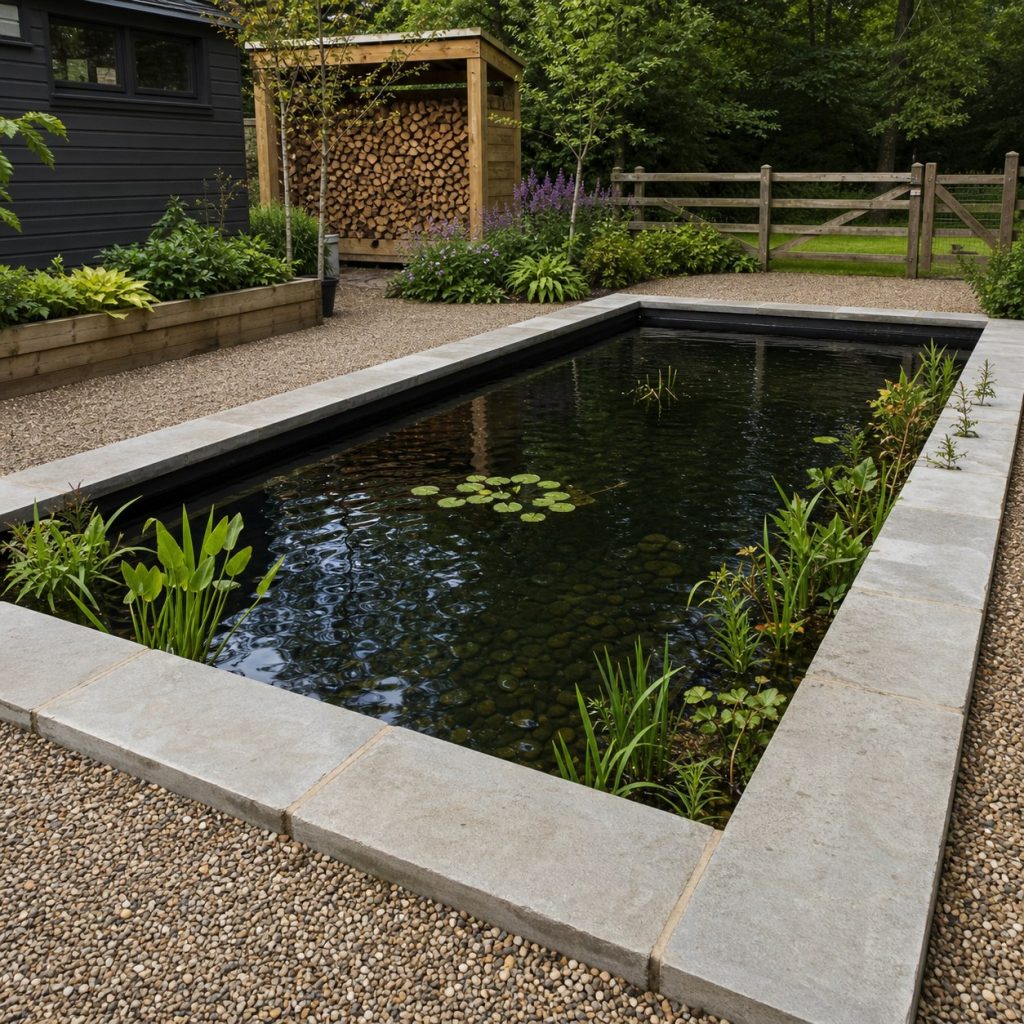
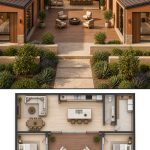
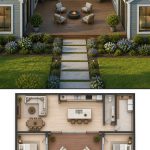
Straight edges require careful level control so the liner and waterline remain concealed. Use a structurally appropriate edge and foundation, provide safe non-slip circulation, and keep coping stable without sharp projections or loose stones.
Pond With Planted Bog Filter
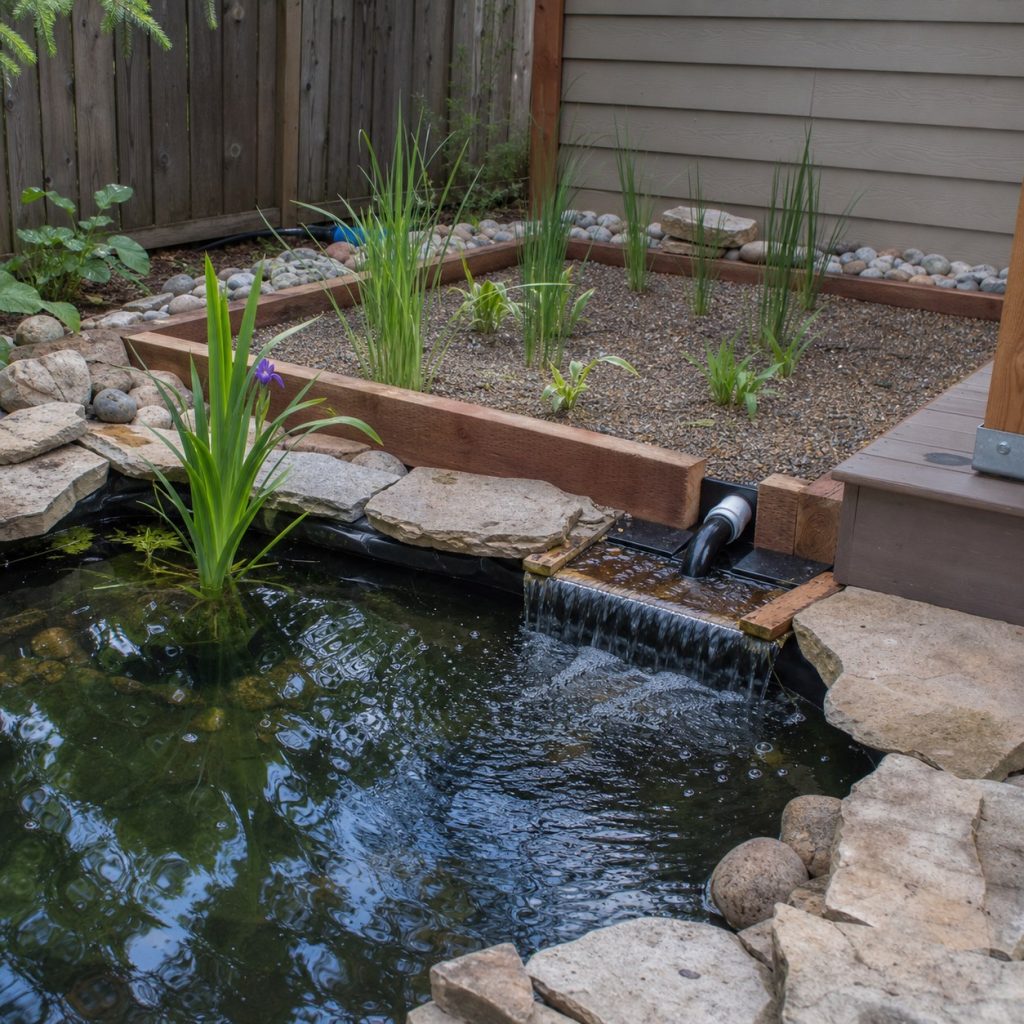
A planted filter zone can support water quality when sized and circulated correctly. Keep gravel and plants out of pump service paths, use pond-safe materials, and design overflow so a blocked return cannot flood buildings or erode soil.
Excavate Shelves and Protect Liner
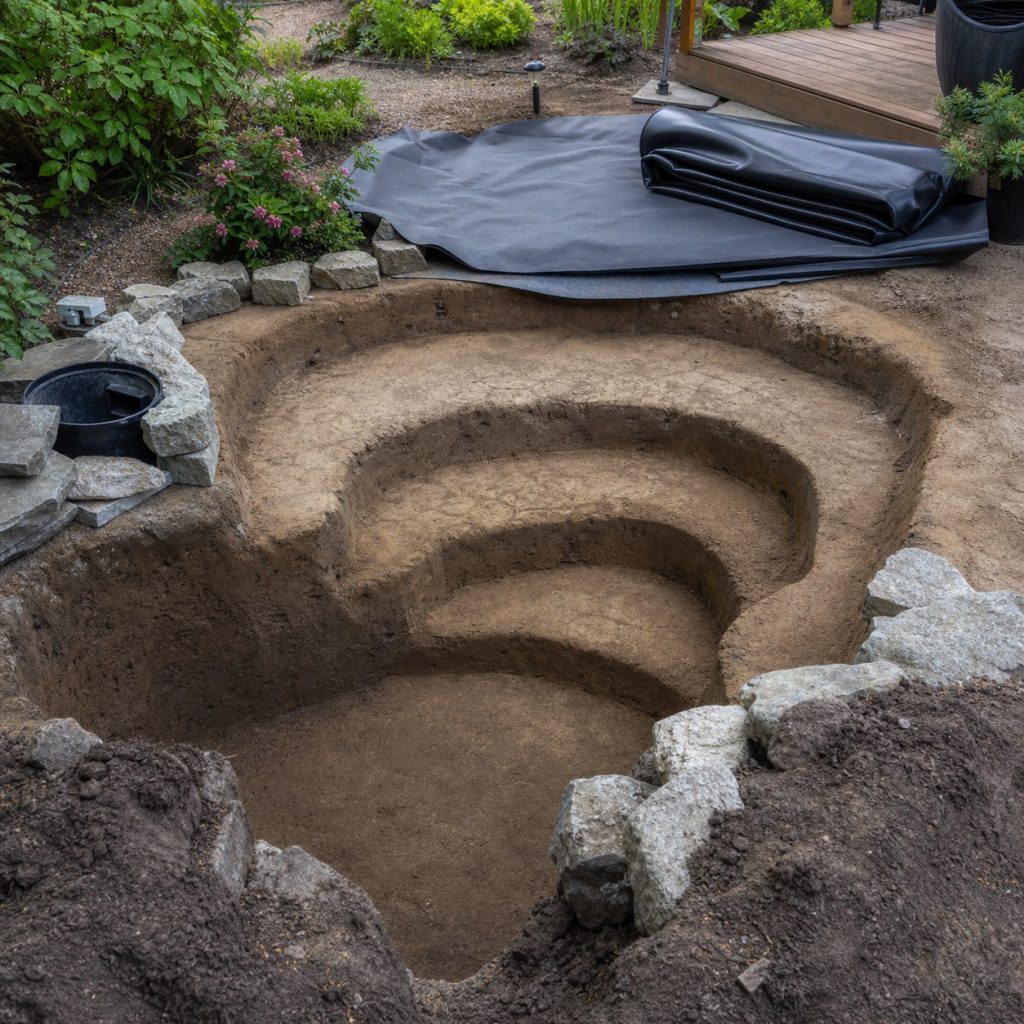
Locate utilities before excavation, shape stable shelves and gently sloped edges, remove sharp roots and stones, and install compatible underlayment. Never enter an unsupported excavation or leave an open hole accessible to children, pets, or wildlife.
Install Pump, Overflow, and Edge
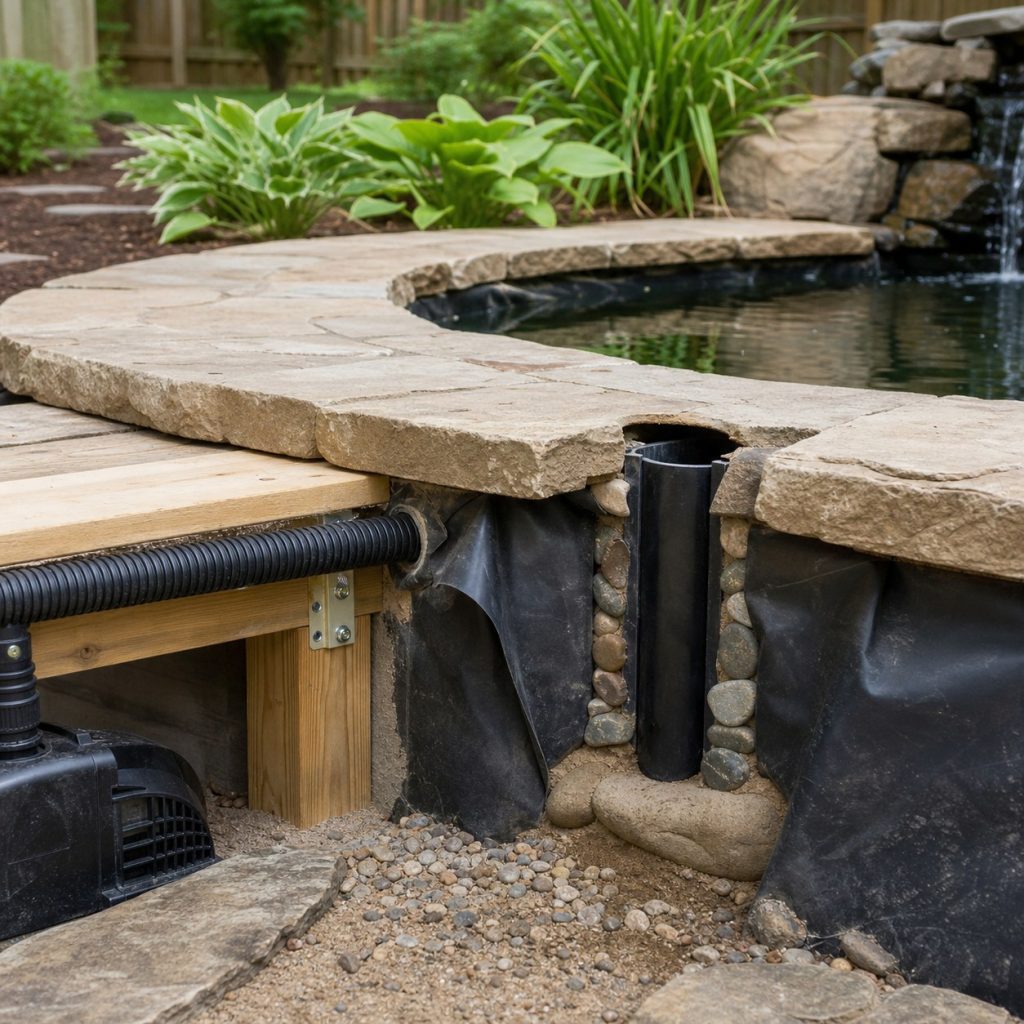
Use only pond-rated equipment and required GFCI or other local electrical protection installed correctly. Route cords without splices or trip hazards, make overflow visible and serviceable, and secure edge materials without puncturing or stretching the liner.
Maintain Water and Safe Access
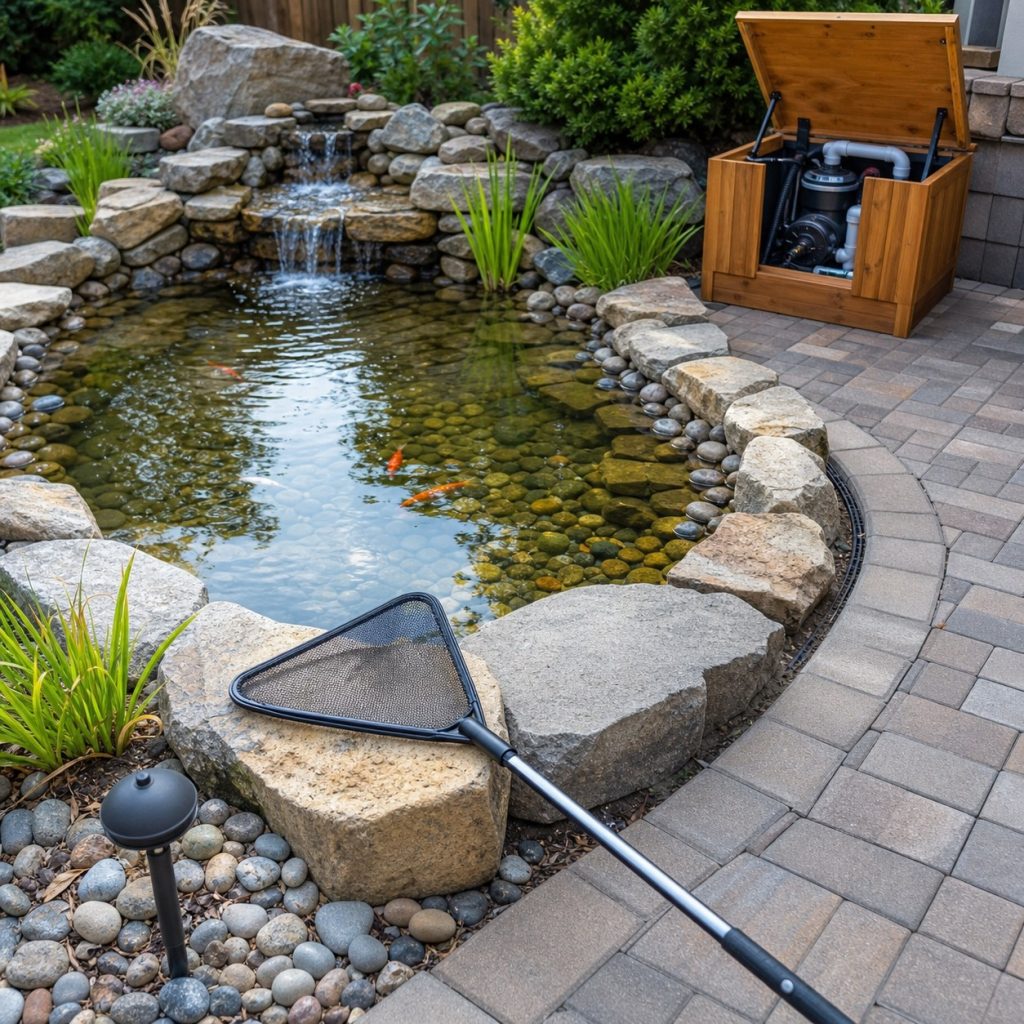
Remove debris, manage leaves, monitor circulation and water condition, and follow local mosquito guidance. Inspect barriers, edging, liner, overflow, pump, electrical protection, and slippery surfaces. Never leave maintenance openings unsecured.
Planning checklist
- Check permits, utilities, barriers, child and pet safety.
- Plan liner, shelves, overflow, circulation, and safe edges.
- Use pond-rated equipment and protected outdoor electrical work.
- Choose regionally appropriate plants and avoid nonnative releases.
- Maintain circulation, mosquito control, barriers, and access.
These concepts and generated images are general planning inspiration, not measured drawings, structural attachment details, pond or electrical designs, engineered plans, or tested load-rated designs. Verify dimensions, lumber grade and treatment, structural and dynamic loads, fasteners, coatings, accessibility, utility locations, water and wildlife guidance, property rules, permits, and local building requirements for the actual project. Use qualified professionals where structural, electrical, plumbing, drowning, fall, or entrapment hazards apply.
Frequently asked questions
How deep should a garden pond be?
Depth depends on climate, purpose, wildlife, plants, equipment, safety barriers, and local rules. There is no universal safe depth.
Will a pond breed mosquitoes?
Neglected or stagnant water can support mosquitoes. Follow current local public-health guidance for circulation, habitat management, and approved control.
Can fish be added?
Fish change depth, filtration, winter, feeding, wildlife, and legal requirements. Confirm local rules and never release nonnative species.