Project planning guide
Before you build
Use the reference image and planning notes as a starting point. Confirm dimensions, loads, materials, local codes, and site conditions before purchasing or cutting.
- Garden Projects
- 8 reference images
- Print-friendly guide
An outdoor coffee table sits low enough that shins, children, pets, cushions, and rain all interact with it. Good plans start with the seating group and circulation, then resolve stable footing, rounded edges, a rigid base, drainable top boards, seasonal wood movement, and safe access to any moving parts.
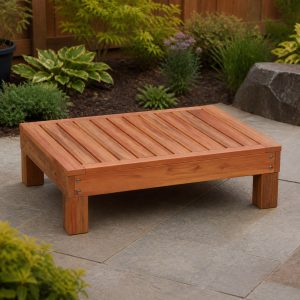
Slatted Rectangular Coffee Table
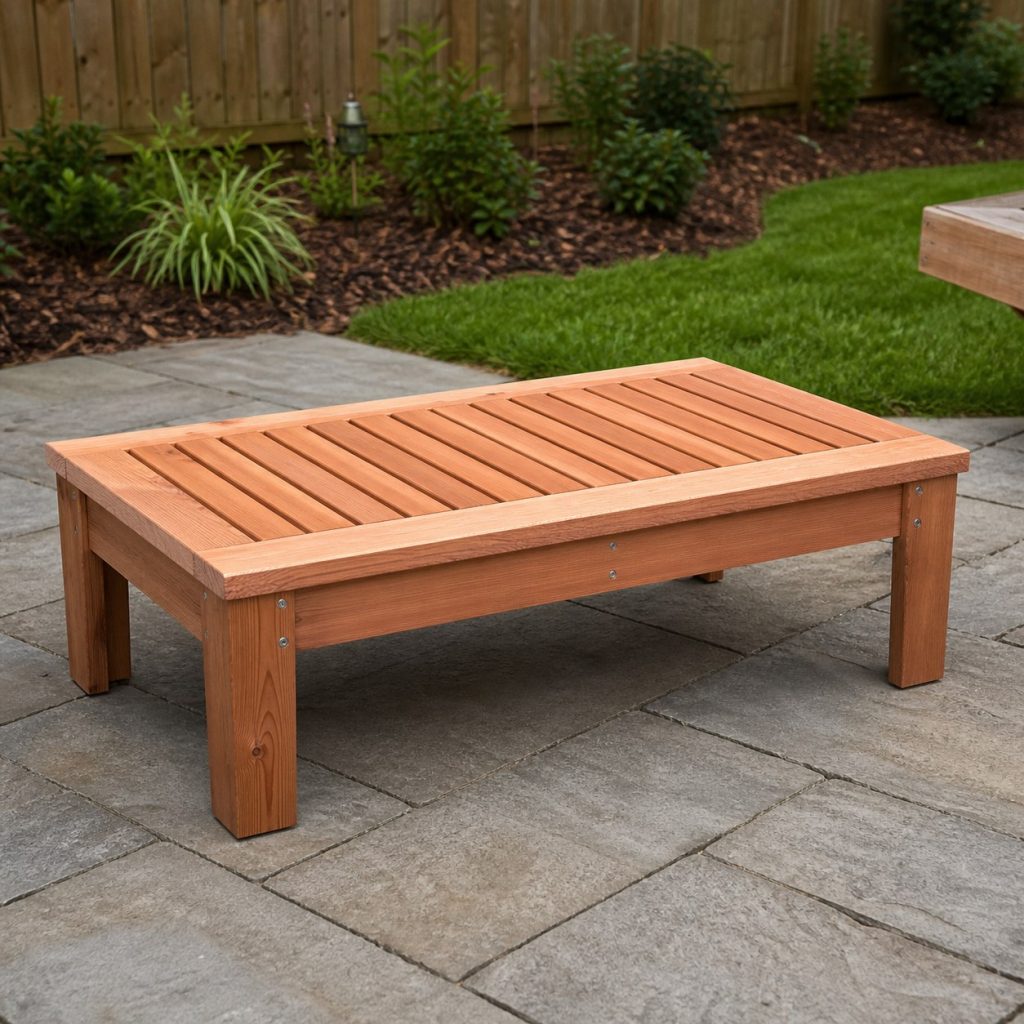
A simple slatted top drains quickly and is easy to repair. Use two complete end frames joined by aprons and lower stretchers, then support the top across its width. Keep the table low enough for the seating group without creating a hard-to-see obstacle.
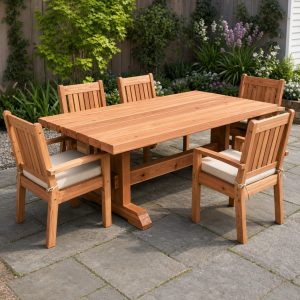
Trestle-Base Coffee Table
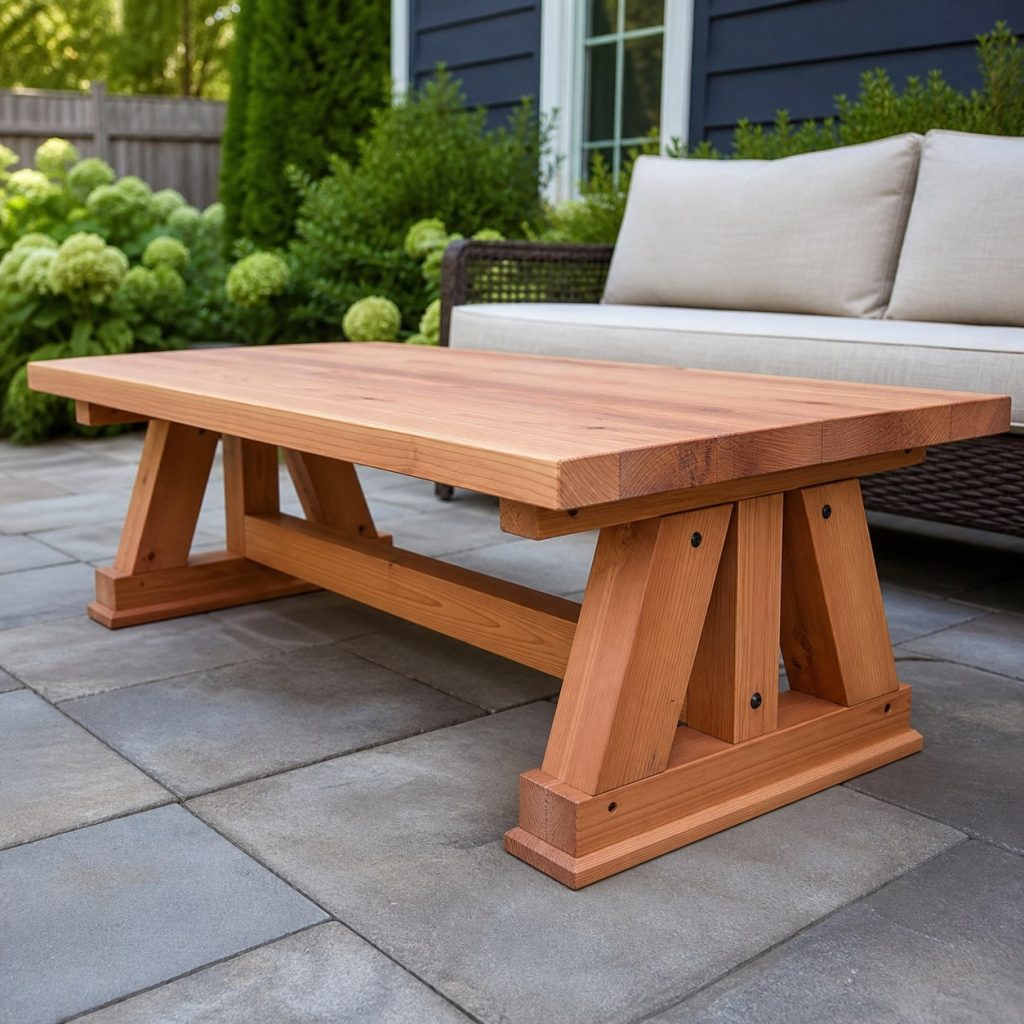
Trestle ends give a broad footprint and leave the corners visually open. Join the bases with a substantial stretcher and brace the top supports. Check that feet do not project into the normal walking path around the seating area.
Two-Tier Patio Table
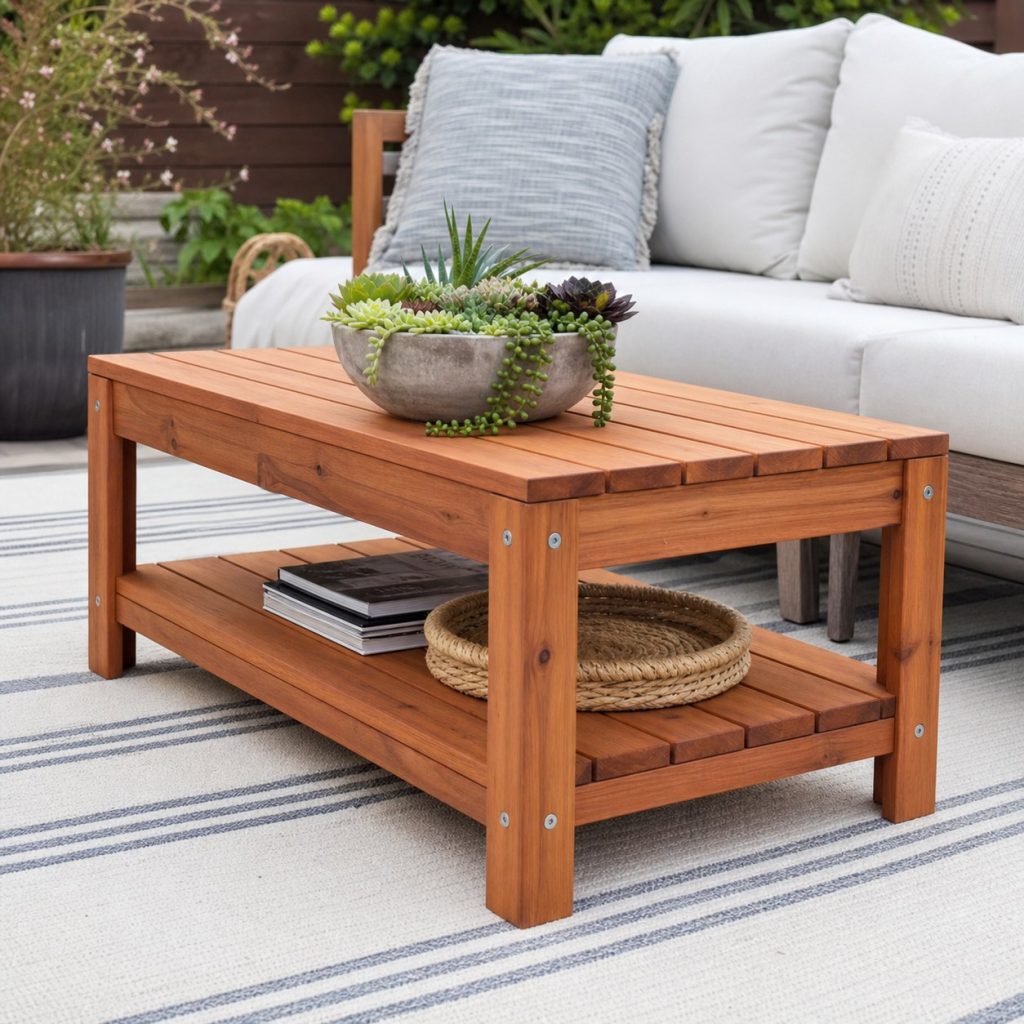
A lower shelf can hold light, dry items while stiffening the frame. Keep it high enough to clean below and open enough to drain. Heavy objects stored near one edge can affect stability, so keep loads light and centered.
Round-Slat Coffee Table
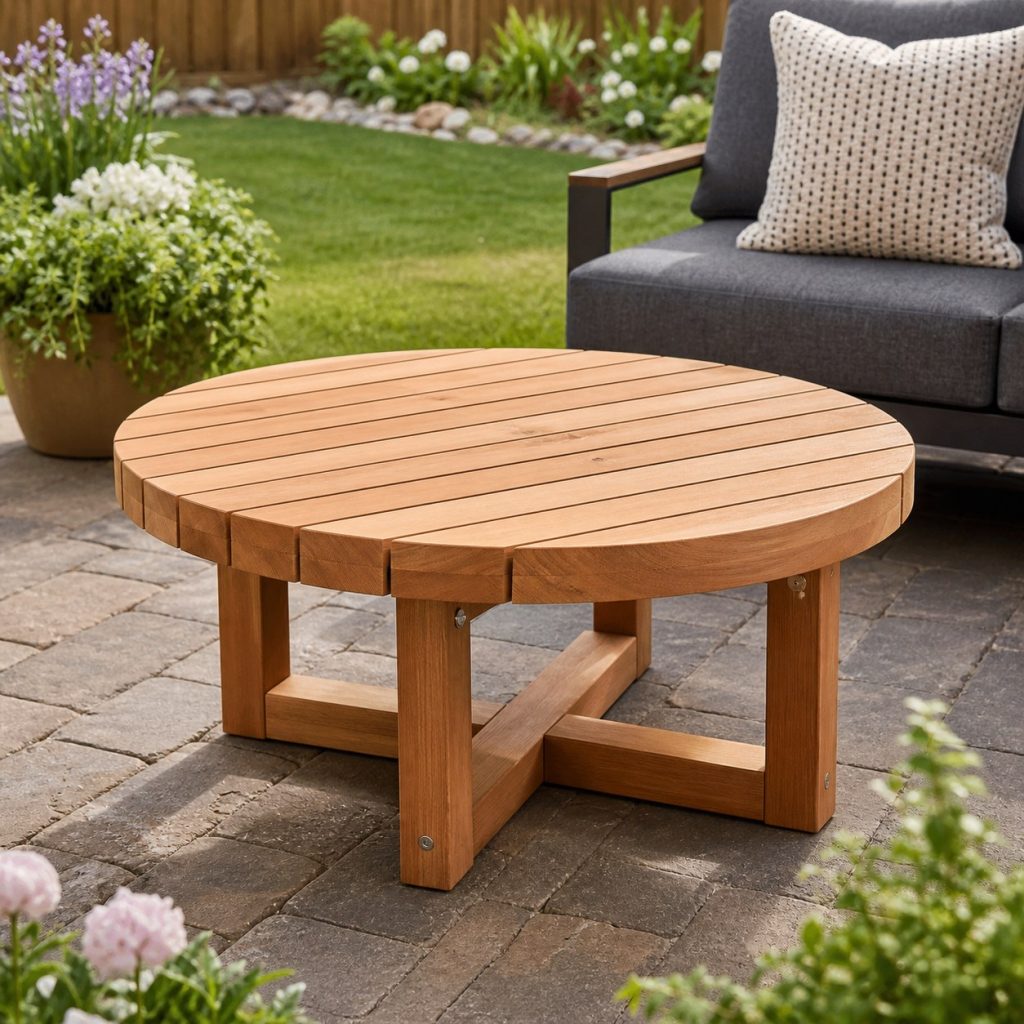
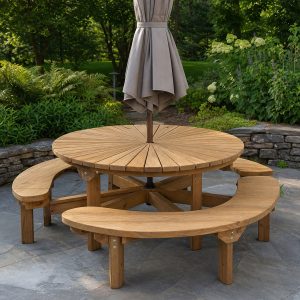
A round appearance can be created with straight top slats trimmed over a polygonal support frame. Support every cut end, ease the perimeter thoroughly, and avoid narrow wedges that split near fasteners. The base should remain broad in every direction.
Compact Nesting Tables
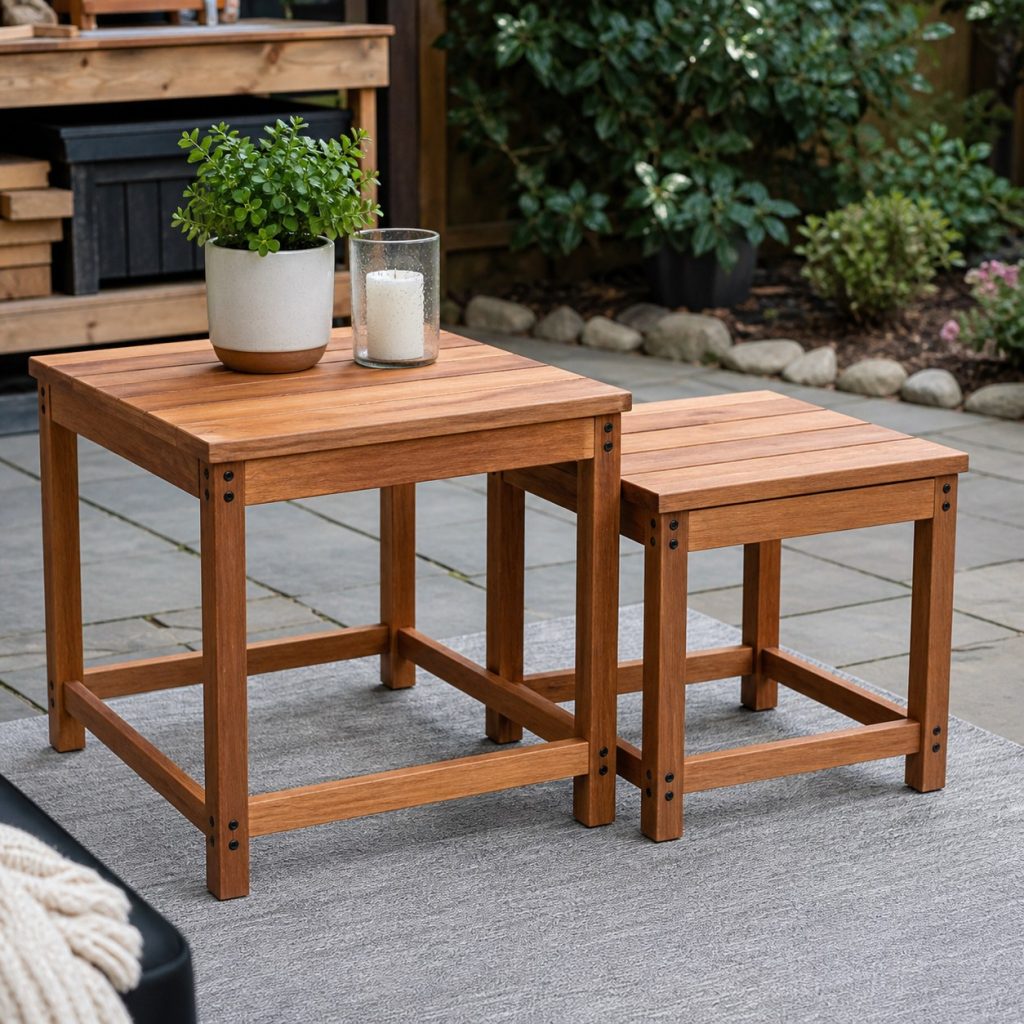
Two independent tables can nest when their leg paths and heights are coordinated. Each must be stable alone, and the smaller table needs a clear pull direction. Maintain enough clearance to avoid scraping, binding, and trapped fingers.
Guarded Lift-Top Table
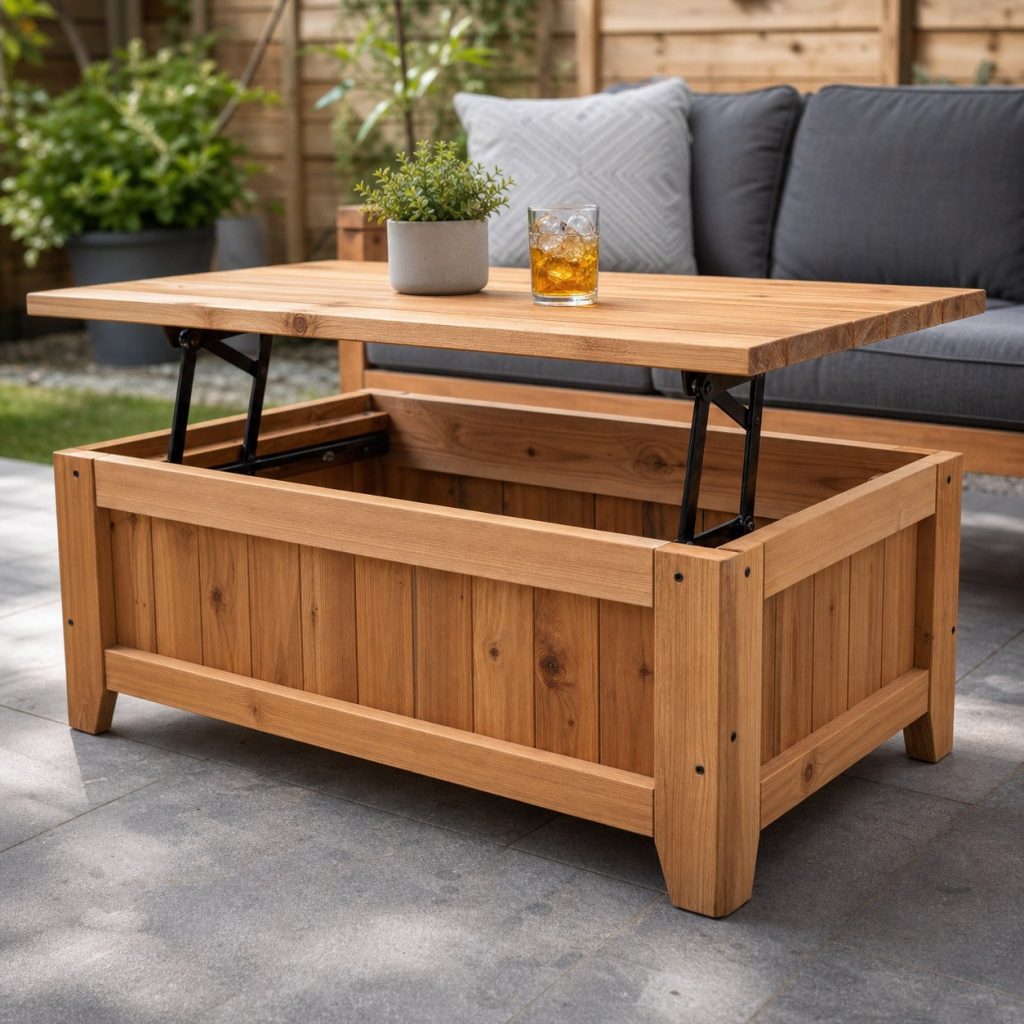
A lift top adds storage and working height but also pinch and closing hazards. Use paired manufacturer-rated mechanisms installed exactly as directed, keep the panel light, control the closing motion, and keep children away from moving parts.
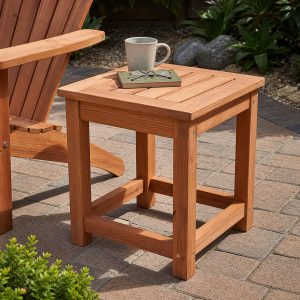
Build a Square Low Frame
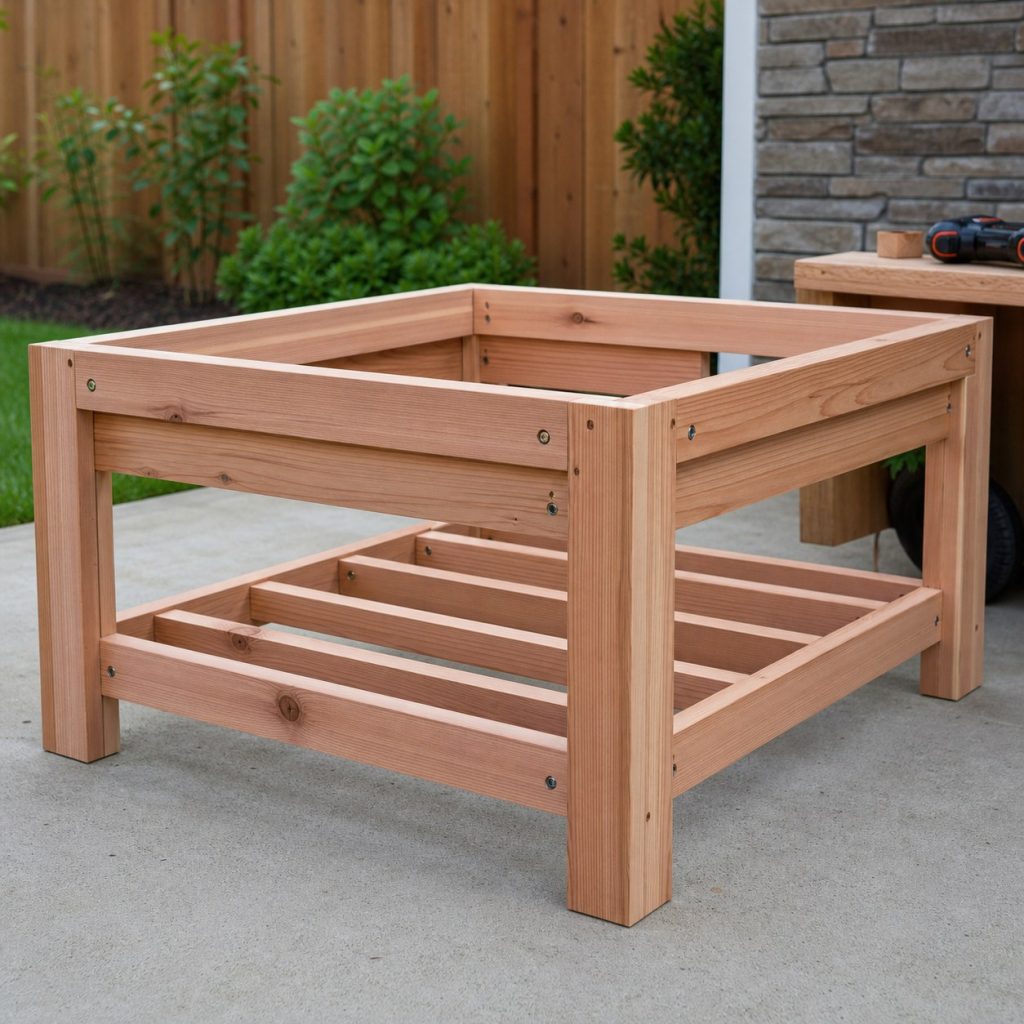
Assemble matching end frames, connect them with rails, and compare diagonals before fastening the top. Add corner blocks or braces where required without creating water pockets. Dry-fit the lower shelf and verify ground clearance on the actual patio.
Attach and Maintain the Top
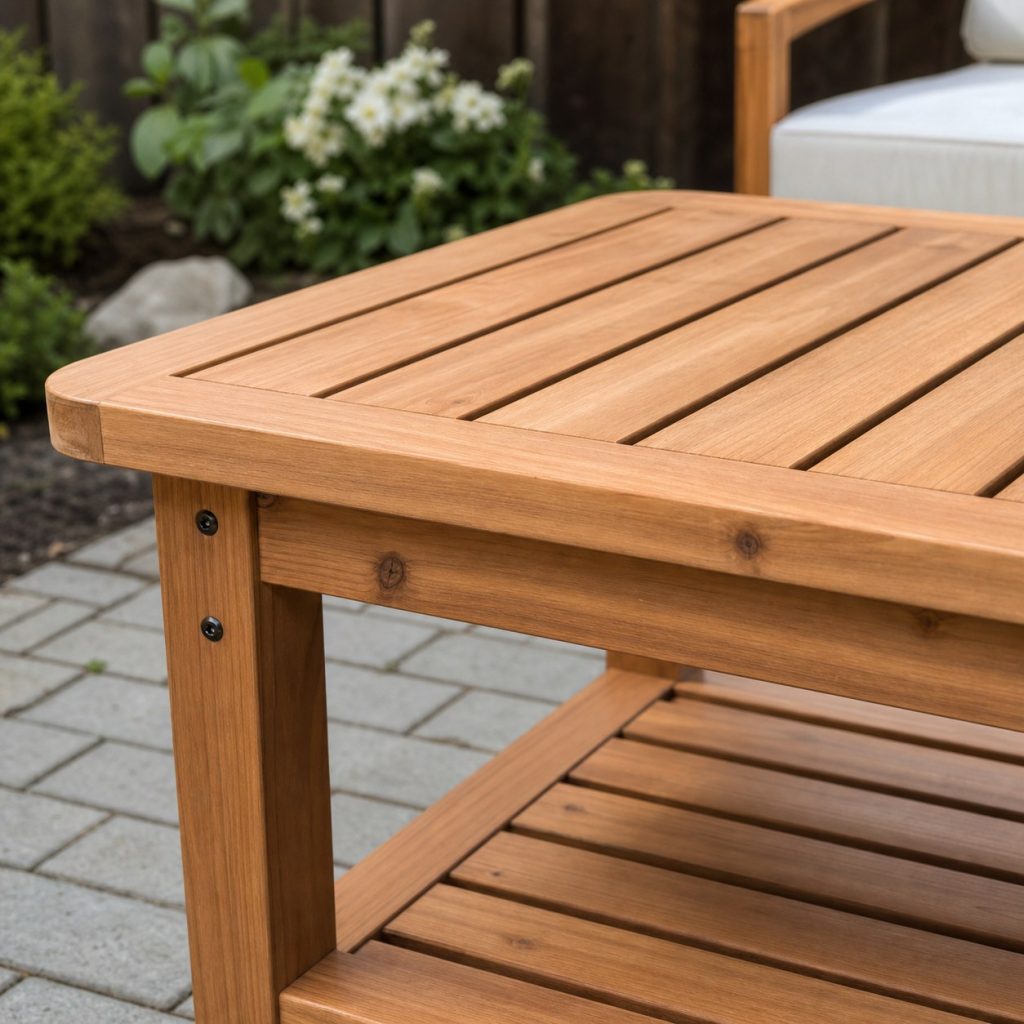
Predrill top slats, leave consistent drainage gaps, and allow boards to move across the grain. Inspect edges, rocking, loose hardware, finish loss, and trapped debris. Store the table where it can dry during long wet periods.
Planning checklist
- Measure seating height and preserve clear circulation.
- Use a broad rigid base with drainable footing.
- Support, gap, and ease all top boards.
- Guard lift-top hinges and use rated paired hardware.
- Inspect rocking, sharp edges, fasteners, and trapped water.
These concepts and generated images are general planning inspiration, not measured drawings, wildlife-box specifications, engineered plans, or tested load-rated designs. Verify dimensions, lumber grade and treatment, structural loads, fasteners, coatings, accessibility, utility locations, wildlife and public-health guidance, property rules, permits, and local building requirements for the actual project. Use current species- and region-specific plans for wildlife habitat, and qualified professionals where structural, electrical, plumbing, fall, or entrapment hazards apply.
Frequently asked questions
How tall should an outdoor coffee table be?
Coordinate height with the actual seat and cushion height, intended use, and user reach. A mock-up is more reliable than a universal number.
Can a coffee table top be one solid panel?
It can, but exterior panels need suitable material, edge protection, slope or drainage, and attachment that allows movement without trapping water.
Are lift-top outdoor tables safe?
They require correctly rated hardware, controlled motion, finger clearance, inspection, and supervision. A fixed top is simpler and lower risk.