Project planning guide
Before you build
Use the reference image and planning notes as a starting point. Confirm dimensions, loads, materials, local codes, and site conditions before purchasing or cutting.
- Garden Projects
- 8 reference images
- Print-friendly guide
A tiered plant stand lifts pots into better view and can improve light and watering access, but wet soil makes even small containers heavy. A useful stand has a broad footprint, braced frames, supported shelves, drainage between levels, and enough space to lift each pot without catching the shelf above.
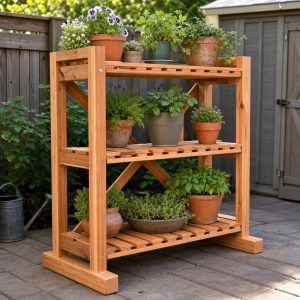
Three-Tier Step Stand
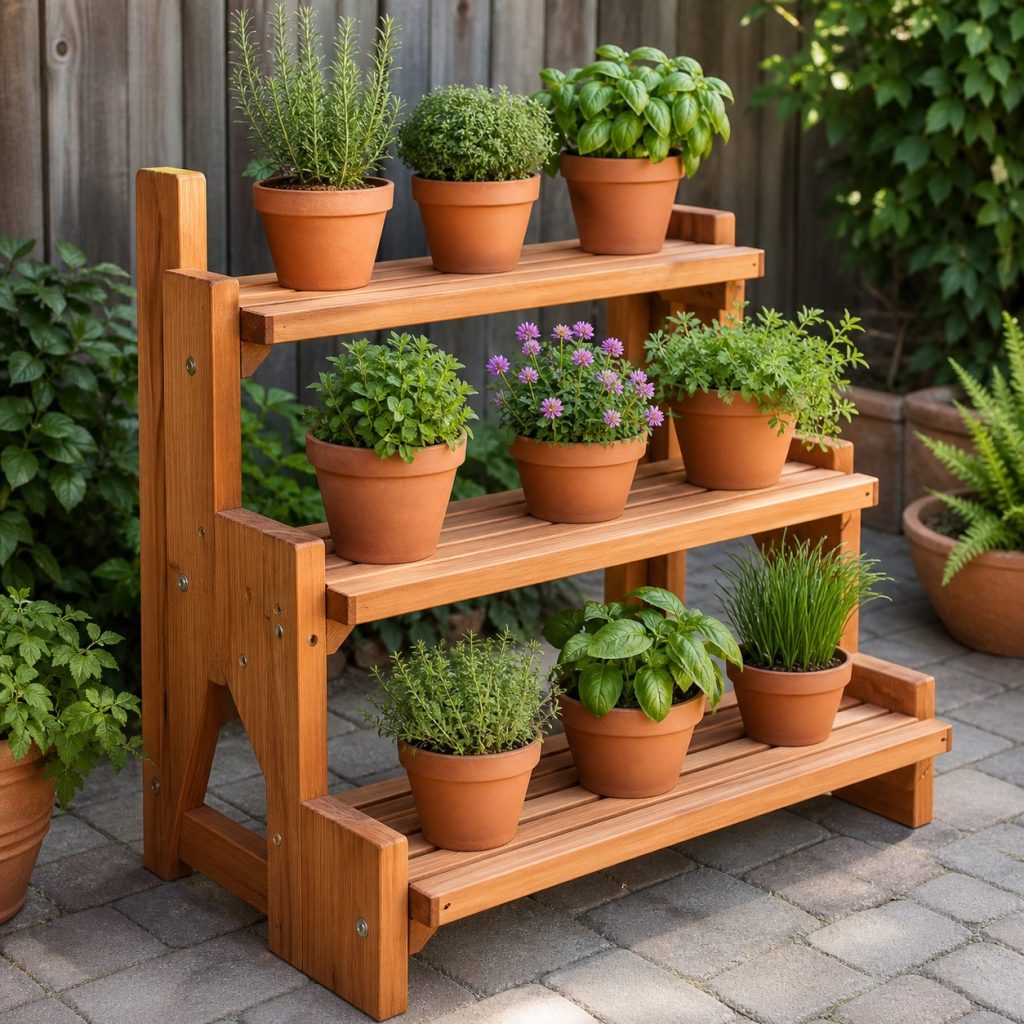
The step form keeps every shelf open to light and makes watering straightforward. Cut two identical side profiles, join them with full-width rails, and support each slatted shelf at both edges. The lowest tier should carry the largest pots and establish a broad stable base.
Corner Tiered Stand
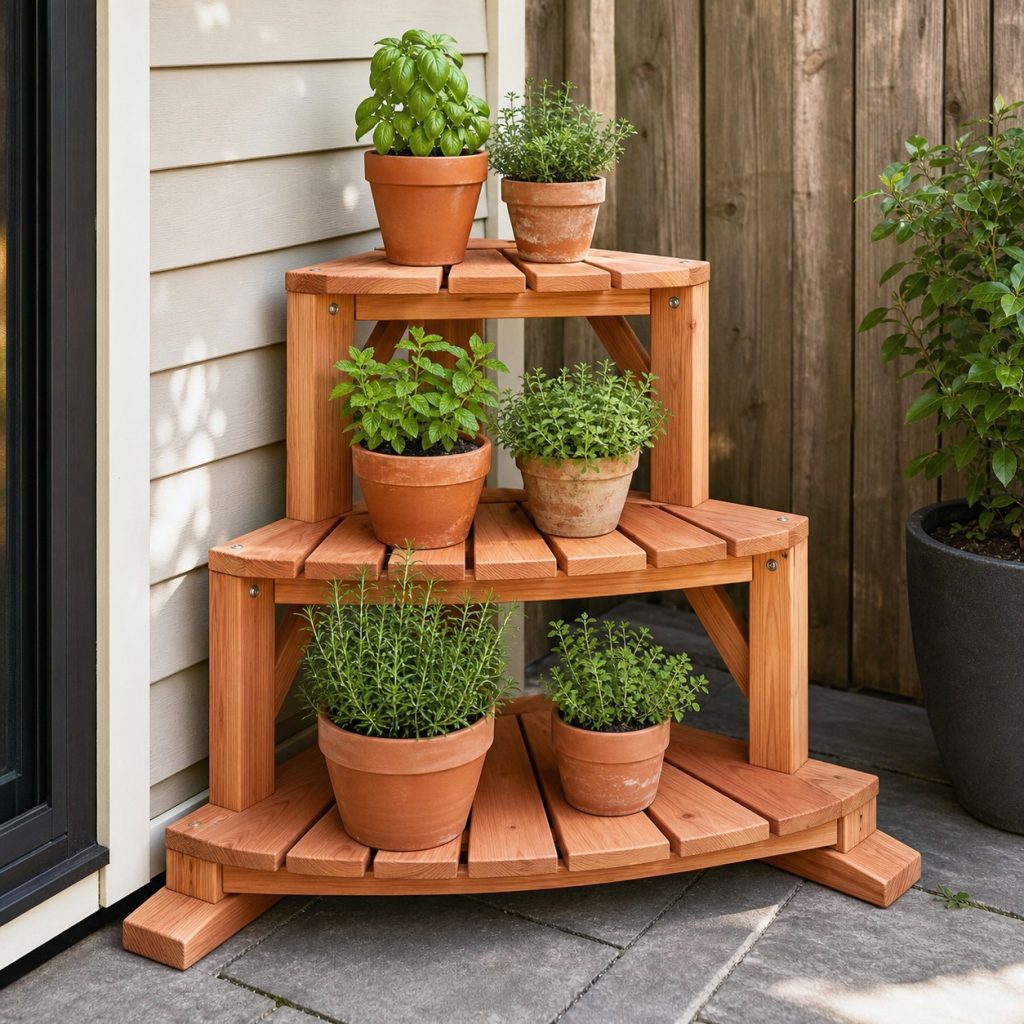
A corner unit recovers unused space but triangular shelves need support along more than one edge. Build a rigid ninety-degree frame, test the door and walking clearance, and keep the heaviest pot near the inside corner. Do not let the stand block drainage or emergency access.
Two-Sided A-Frame Stand
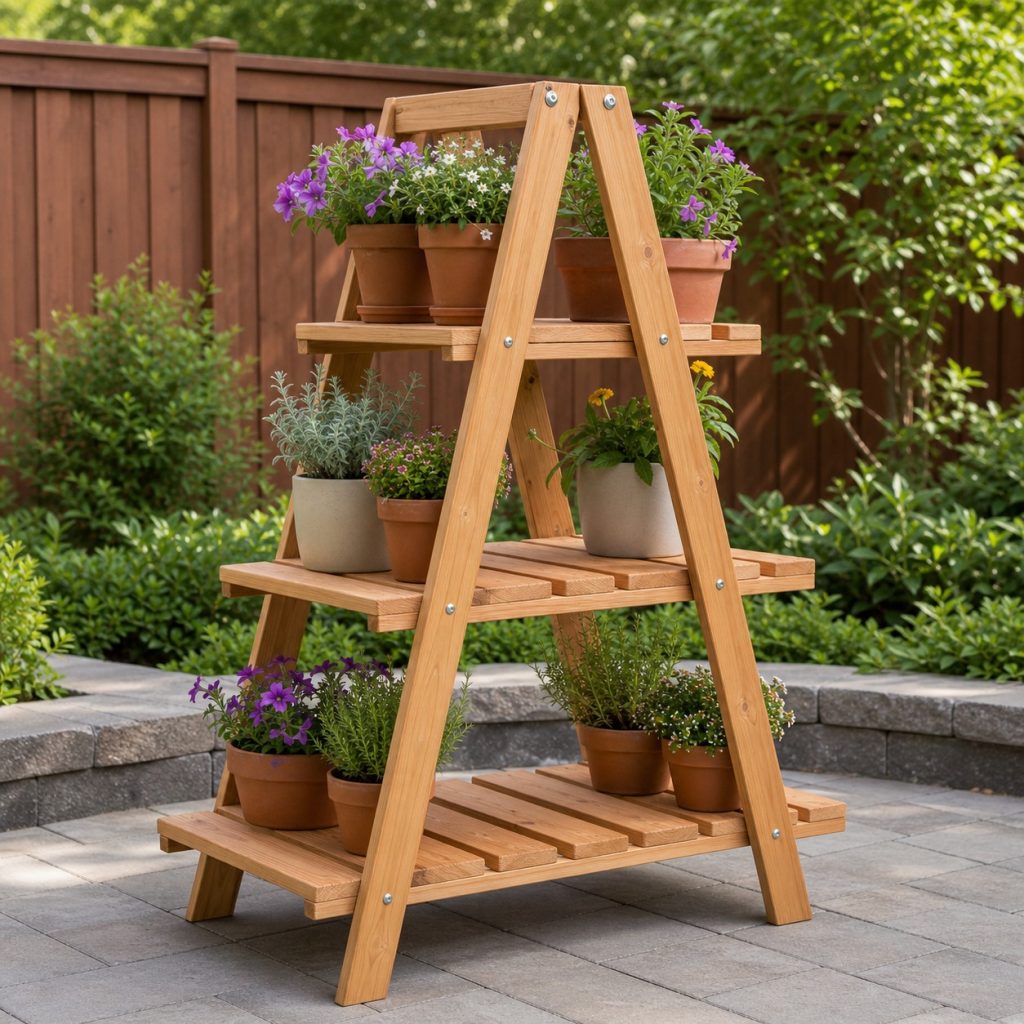
An A-frame balances pots on both faces and folds visually into a garden. Use a secure top connection, positive spread control, and cross bracing so the feet cannot move apart. Load the sides evenly and keep hanging foliage away from the hinge or fasteners.
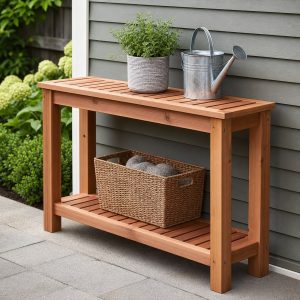
Low Stand Below a Window
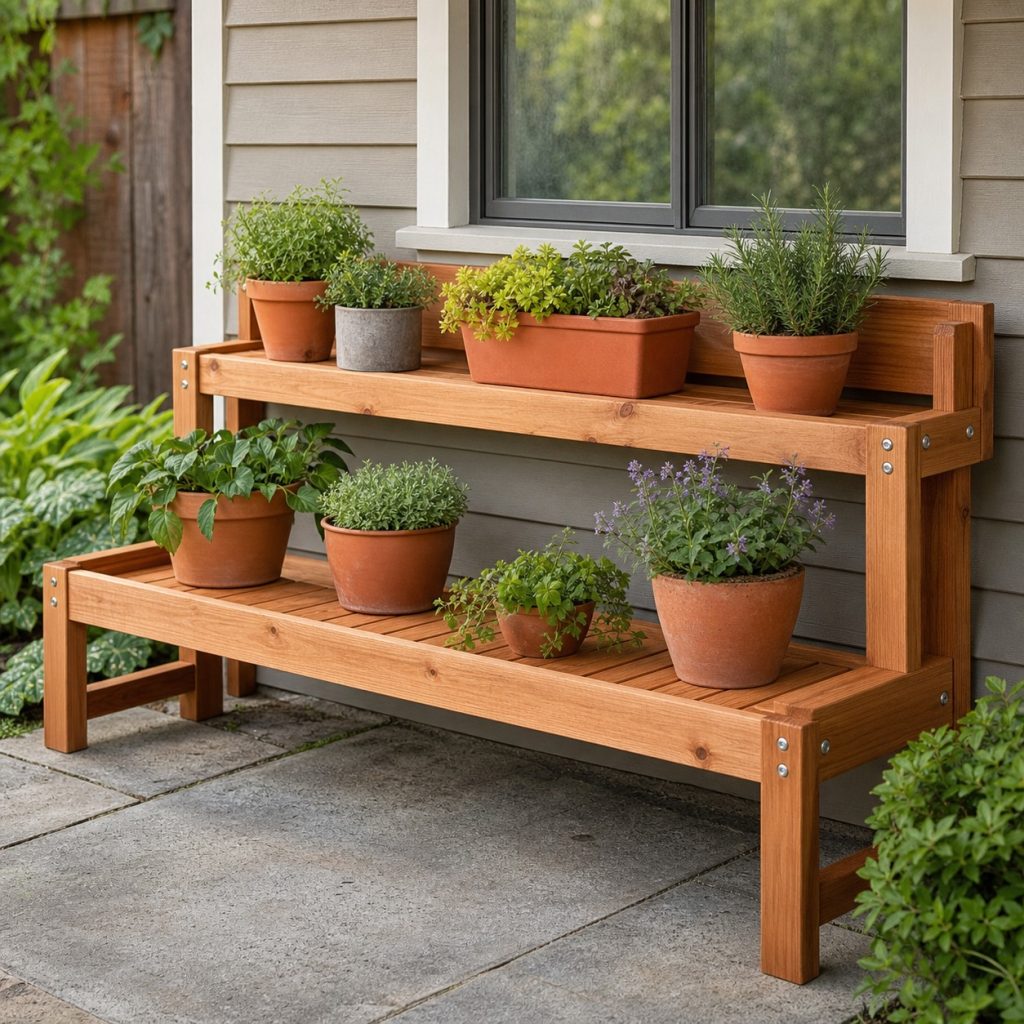
A long low stand can sit beneath a window without blocking light or egress. Support the span at intervals, keep foliage and moisture away from siding, and leave room to wash the wall. Check that opening windows cannot strike tall pots.
Secured Ladder-Style Stand
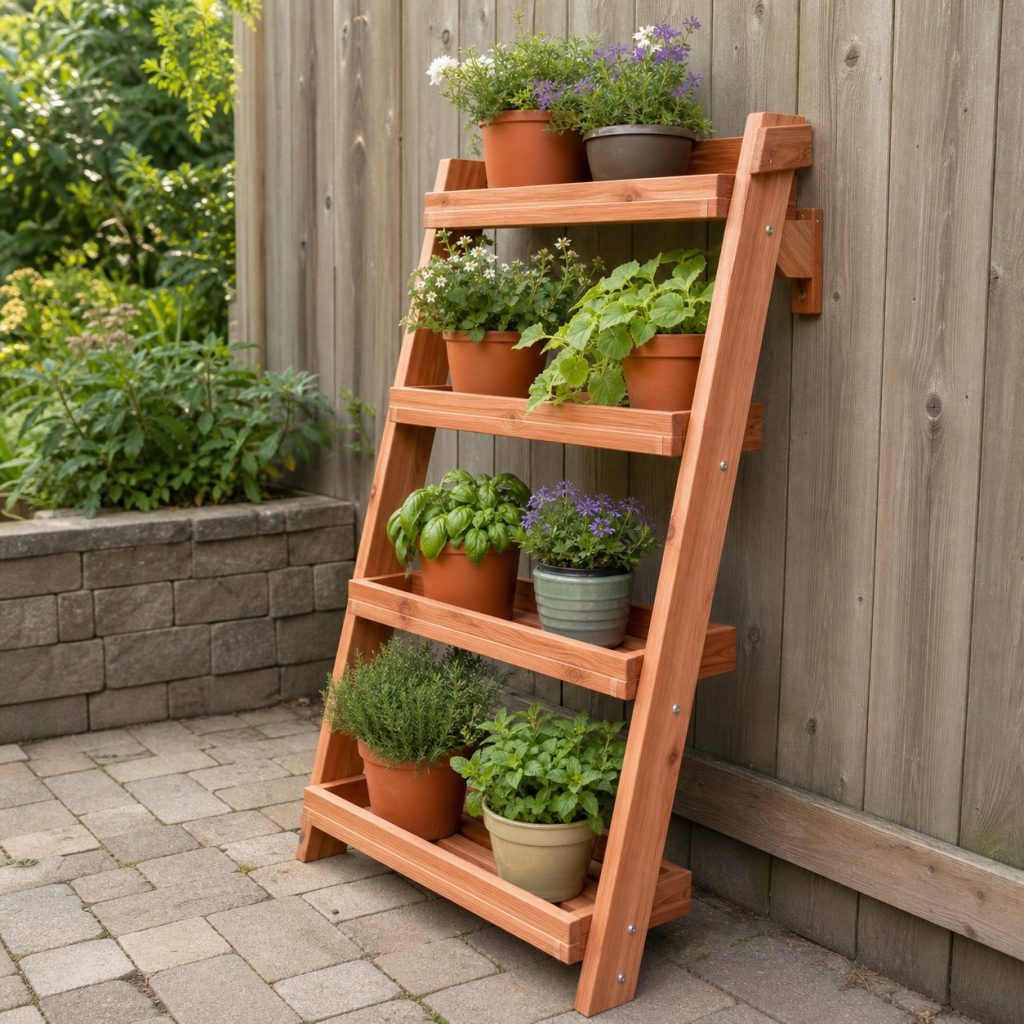
A ladder profile saves floor space but puts more weight higher. Fasten it to suitable structure, give every shelf a front lip, and reserve the top levels for small lightweight pots. A fence board alone may not provide adequate support in wind.
Open-Frame Display Stand
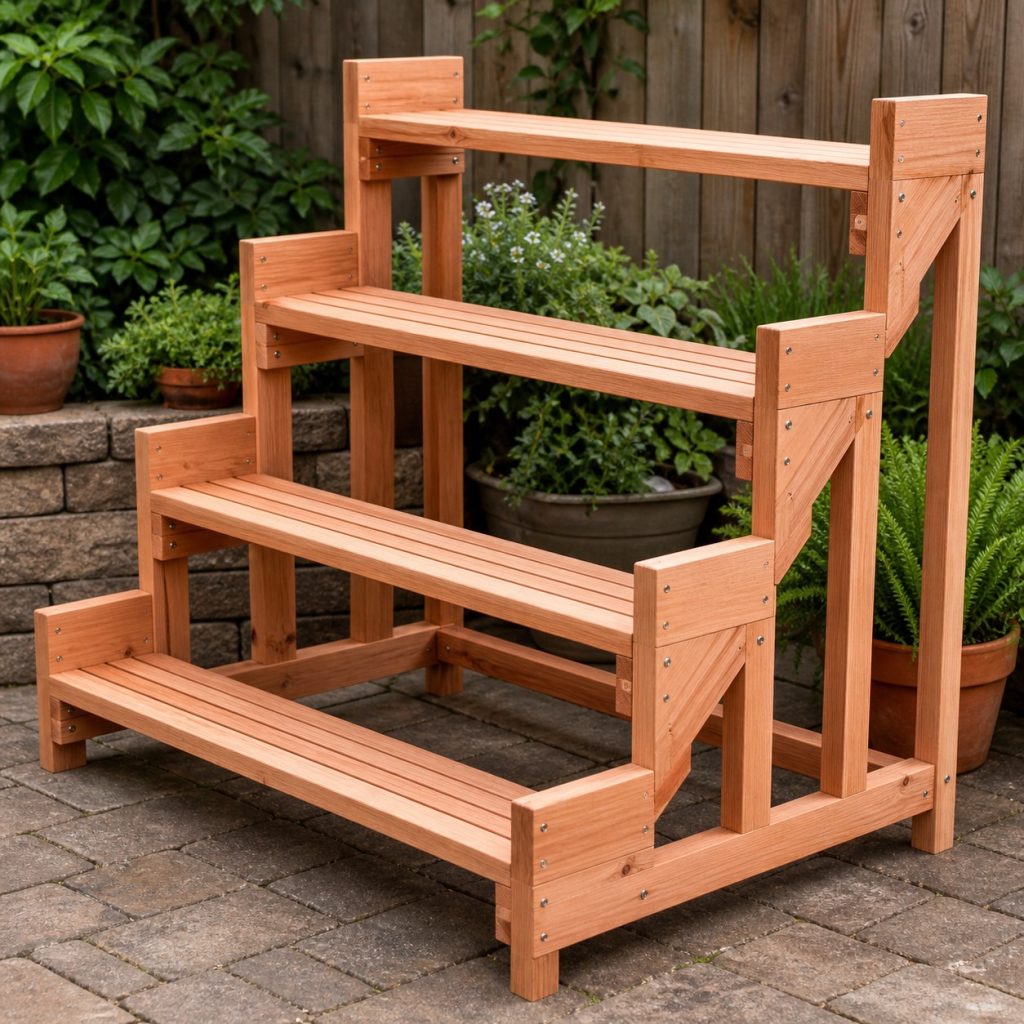
Staggered shelves create a light display while preserving air around foliage. Run the side frames continuously to the floor, add a rear brace, and avoid unsupported decorative projections. Full-scale pot templates help confirm that leaves and watering cans fit.
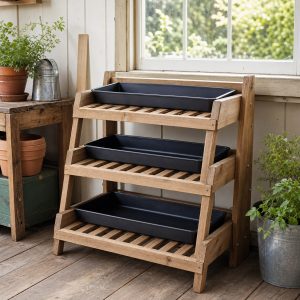
Dark-Finished Garden Stand
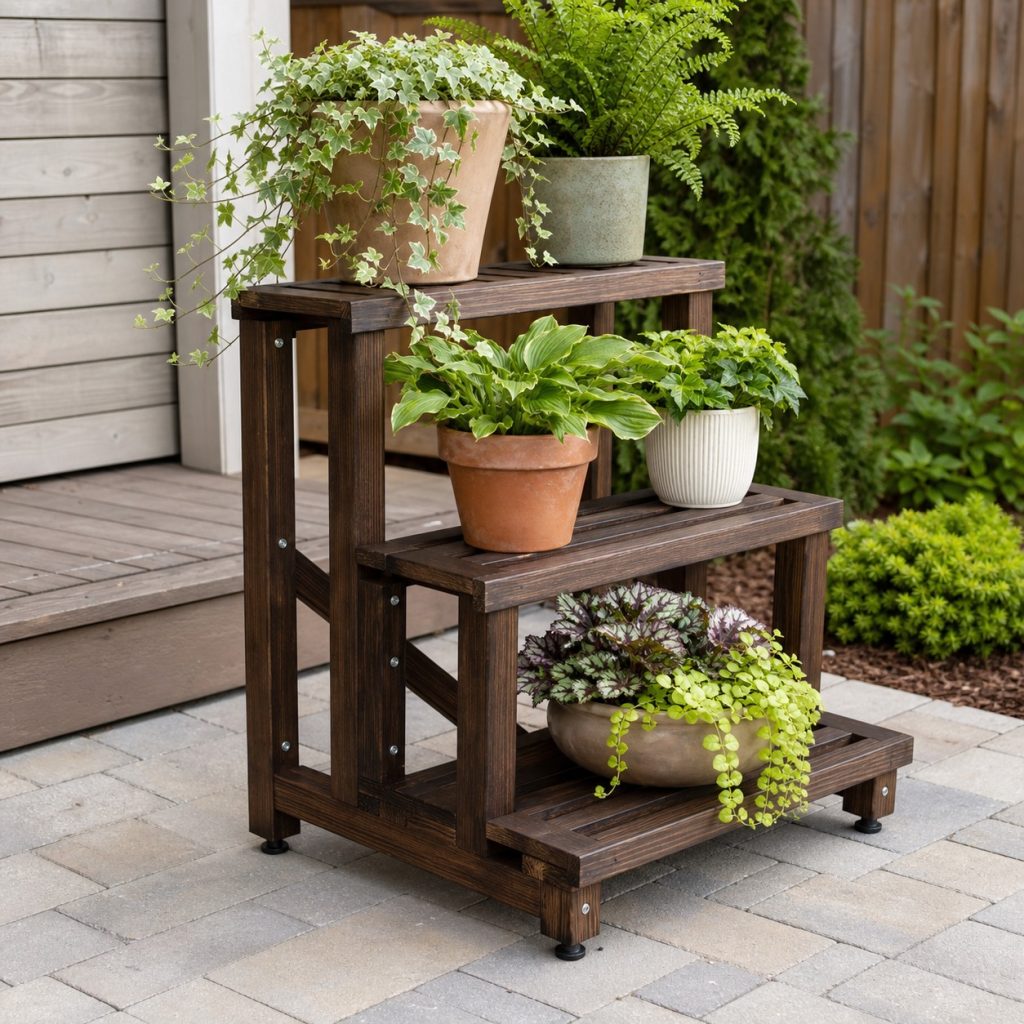
A dark exterior finish can unify mixed containers, but it also hides wet spots and may heat in sun. Coat all faces before assembly when practical, protect end grain, and raise the feet above standing water. Recoat before the finish fails and exposes joints.
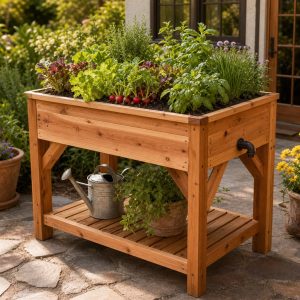
Mobile Tiered Plant Stand
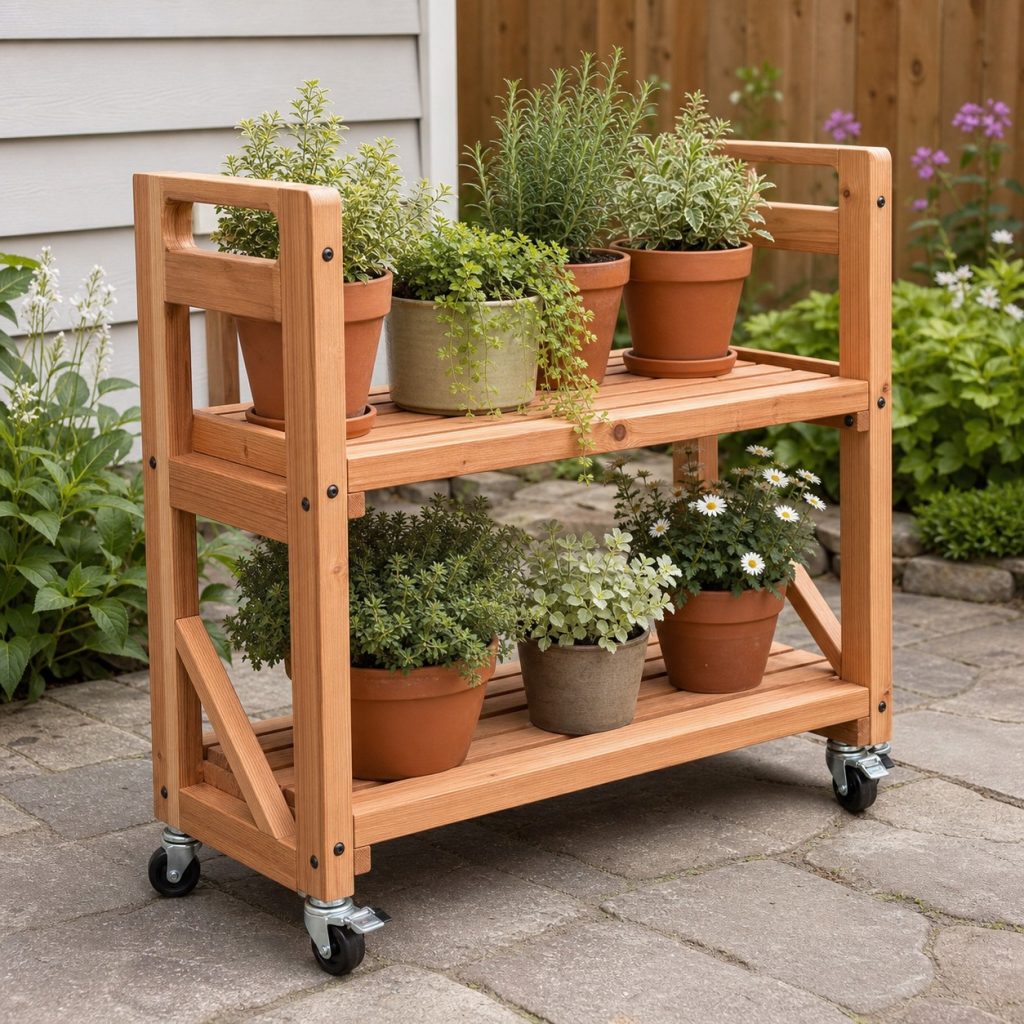
Casters make cleaning and seasonal moves easier only when they are rated for the saturated load and outdoor surface. Keep the unit low, use four positive locks, and roll it unloaded or lightly loaded over thresholds. Never rely on caster brakes on a sloped patio.
Planning checklist
- Measure actual pots and estimate their saturated weight.
- Keep large containers low and support every shelf at both ends.
- Brace side frames against racking and secure tall narrow stands.
- Use drainage gaps and raise wood feet above standing water.
- Verify casters, wall fasteners, and fence attachments for the load.
These concepts are general planning guidance, not engineering drawings or tested load-rated plans. Verify dimensions, lumber grade and treatment, structural loads, foundations, fasteners, coatings, utility locations, accessibility, wildlife guidance, property rules, permits, and local building requirements for the actual site. Use qualified local professionals for structural, fall, swing, bridge, retaining, electrical, plumbing, or water hazards.
Frequently asked questions
How deep should plant-stand shelves be?
Base depth on the actual pot diameter plus safe lifting clearance. Pots should sit fully on the shelf without overhanging an edge.
Can a tiered plant stand stay outside all year?
Only if the lumber, finish, fasteners, footing, and maintenance suit the climate. Moving pots may also be necessary for freeze or storm conditions.
Does a tall plant stand need anchoring?
Often yes. Height, narrow footprint, wind-catching plants, uneven loading, pets, and users all increase overturning risk.