Project planning guide
Before you build
Use the reference image and planning notes as a starting point. Confirm dimensions, loads, materials, local codes, and site conditions before purchasing or cutting.
- Garden Projects
- 8 reference images
- Print-friendly guide
A deck box can organize cushions, empty pots, kneeling pads, and small garden gear, but outdoor storage is never automatically dry or pest-proof. A successful wooden box sheds rain, ventilates damp items, raises the floor above puddles, and uses lid hardware that controls the closing motion.
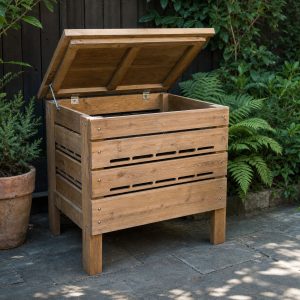
Slatted Cedar Deck Box
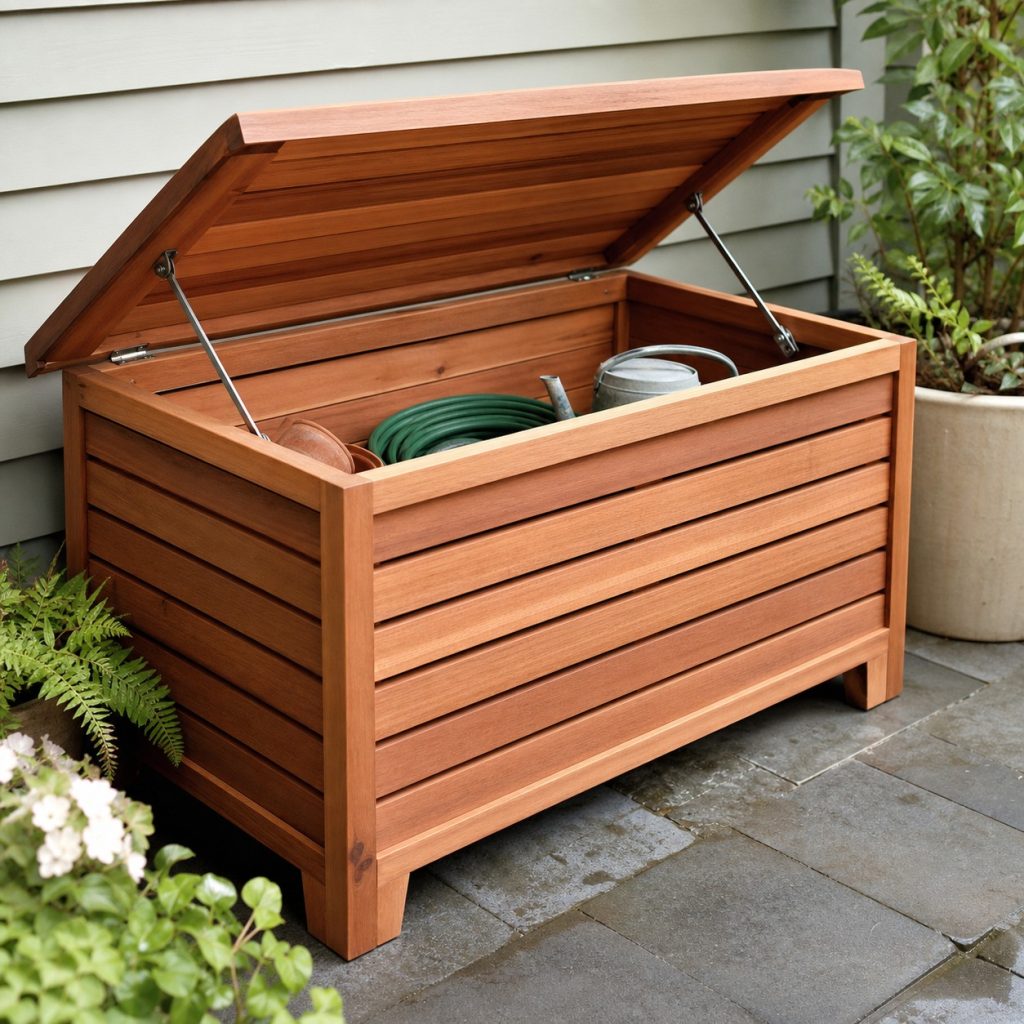
Horizontal slats give the box a light appearance while a framed inner shell carries the structure. Keep the lid solid and slightly sloped, protect vents beneath its overhang, and raise the floor. Store only items that tolerate the expected humidity.
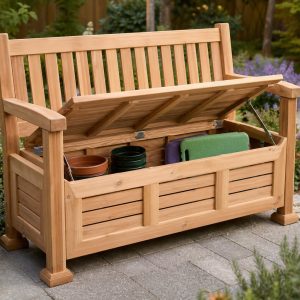
Low Wide Cushion Box
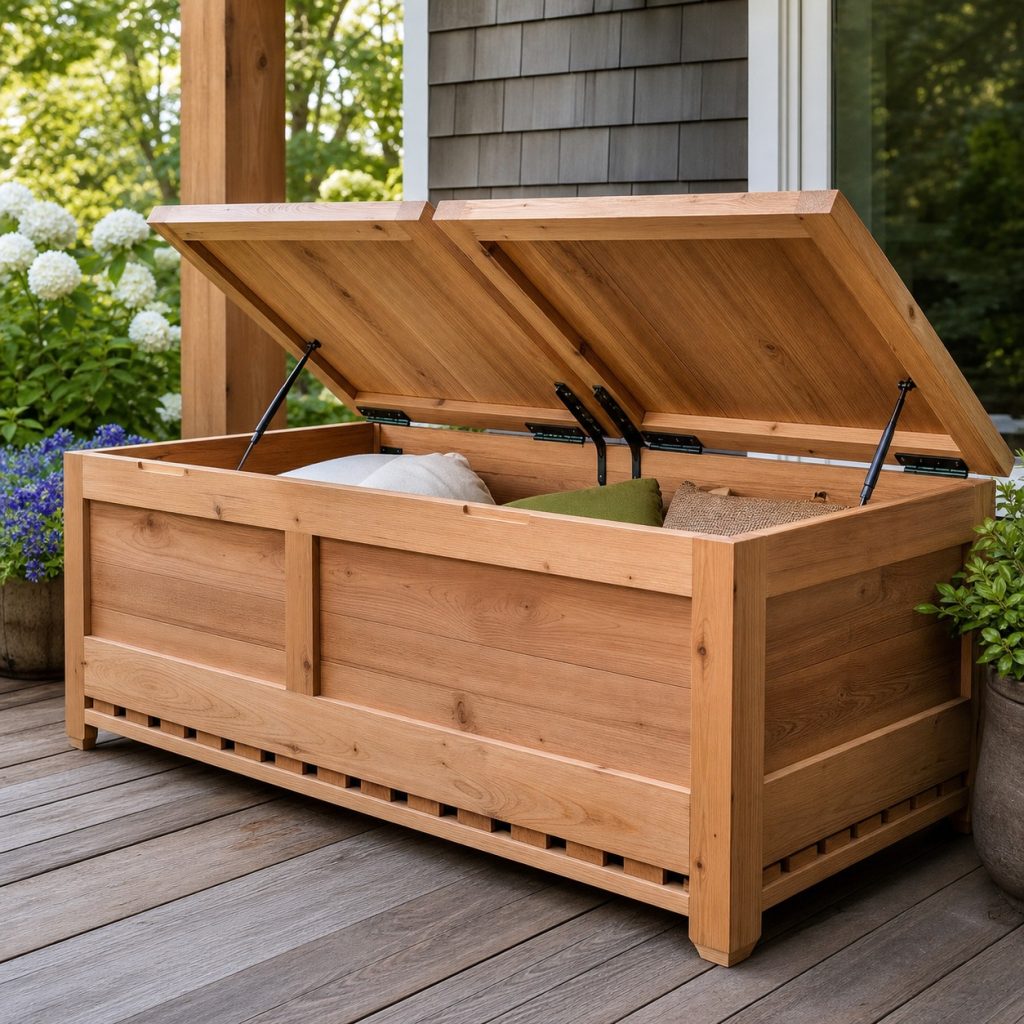
Two smaller lids are easier to control than one very large panel. Give each lid its own hinges and paired stays, divide the top opening with a structural rail, and preserve full interior access. Cushions must be completely dry before storage.
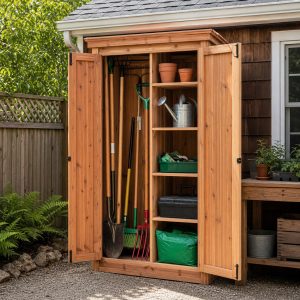
Upright Tool Cabinet
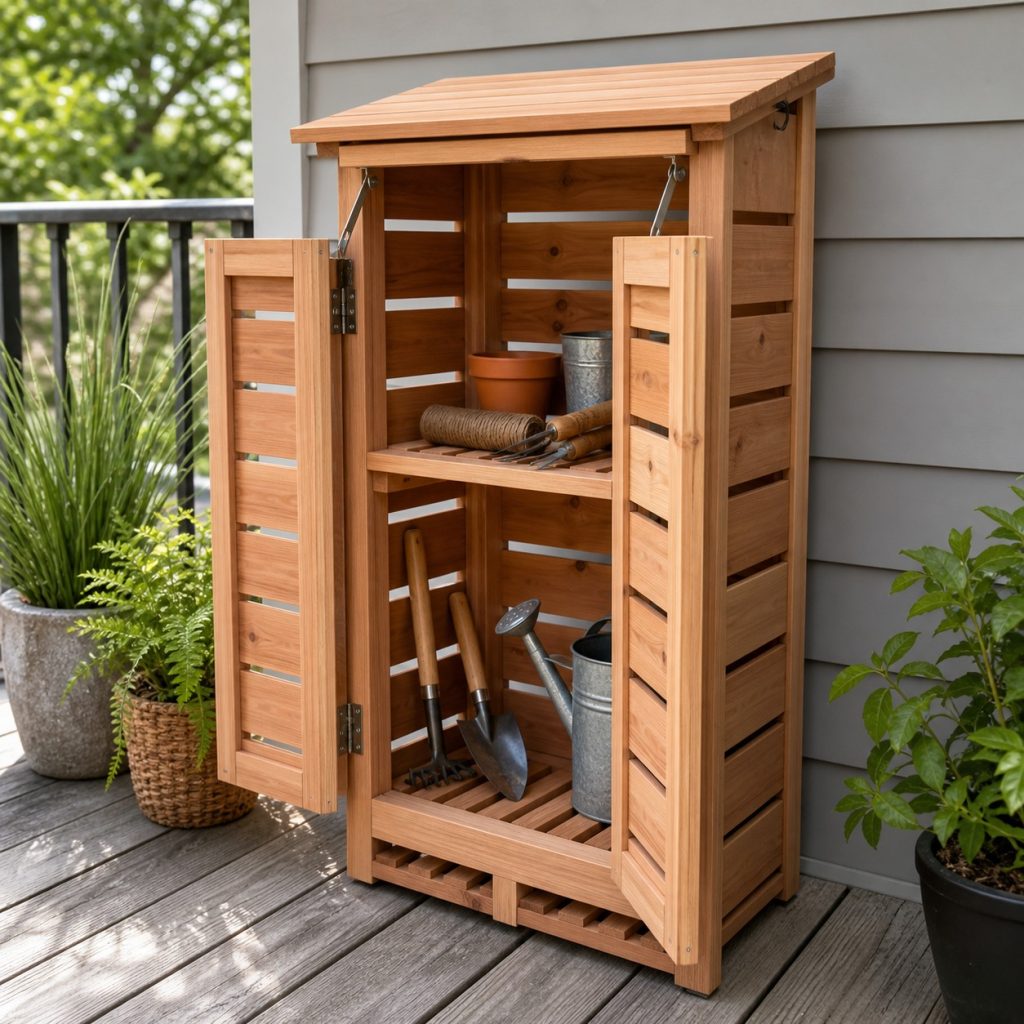
An upright cabinet uses less floor area and suits small patio tools. Anchor the tall unit to suitable structure, slope the roof, add ventilation, and retain items on shelves. Door latches should resist wind without creating a child-access hazard.
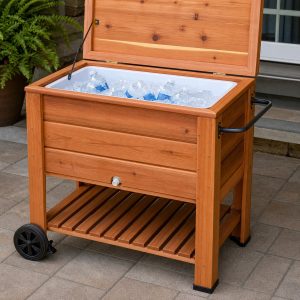
Mobile Storage Box
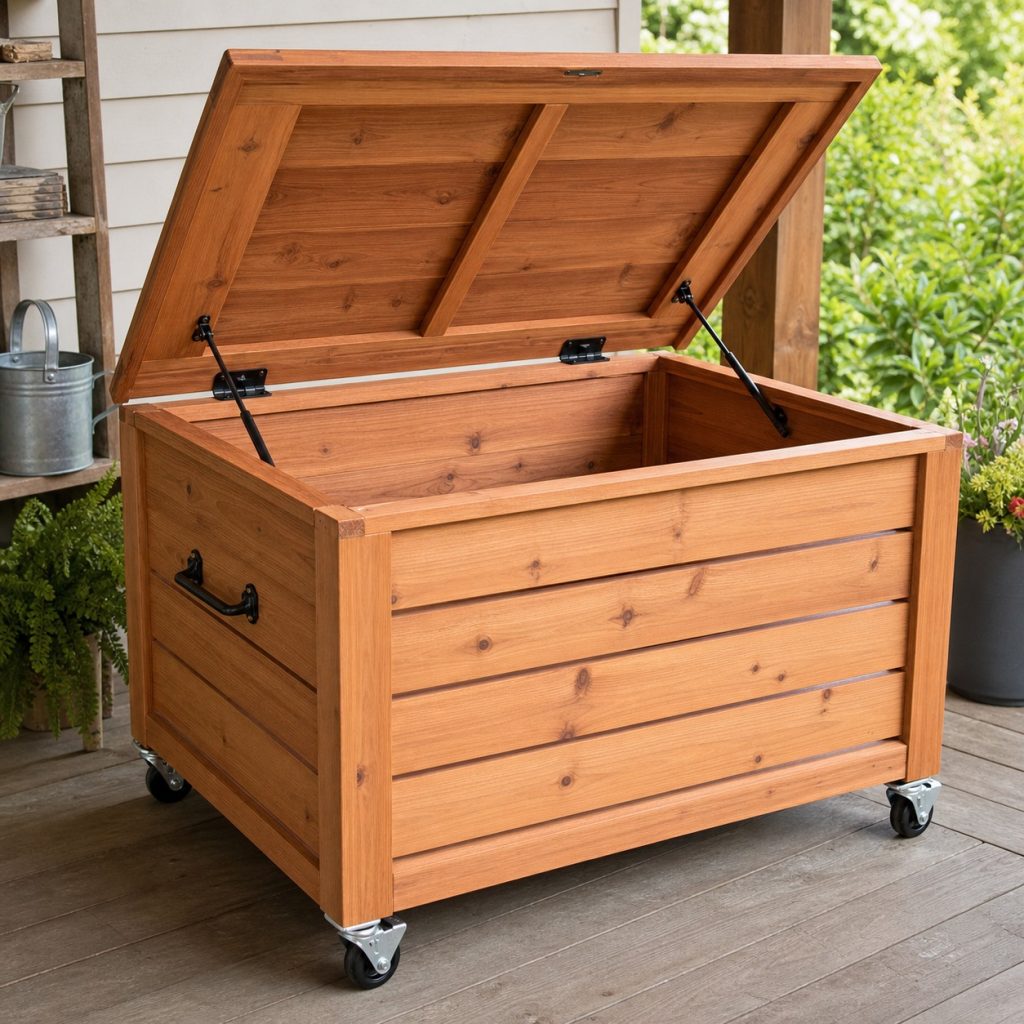
Casters allow cleaning beneath the box but raise its center of gravity. Reinforce mounting corners, use four positive locks, and move the unit lightly loaded on a level surface. Side handles should connect to the structural frame, not only decorative slats.
Protected Side Ventilation
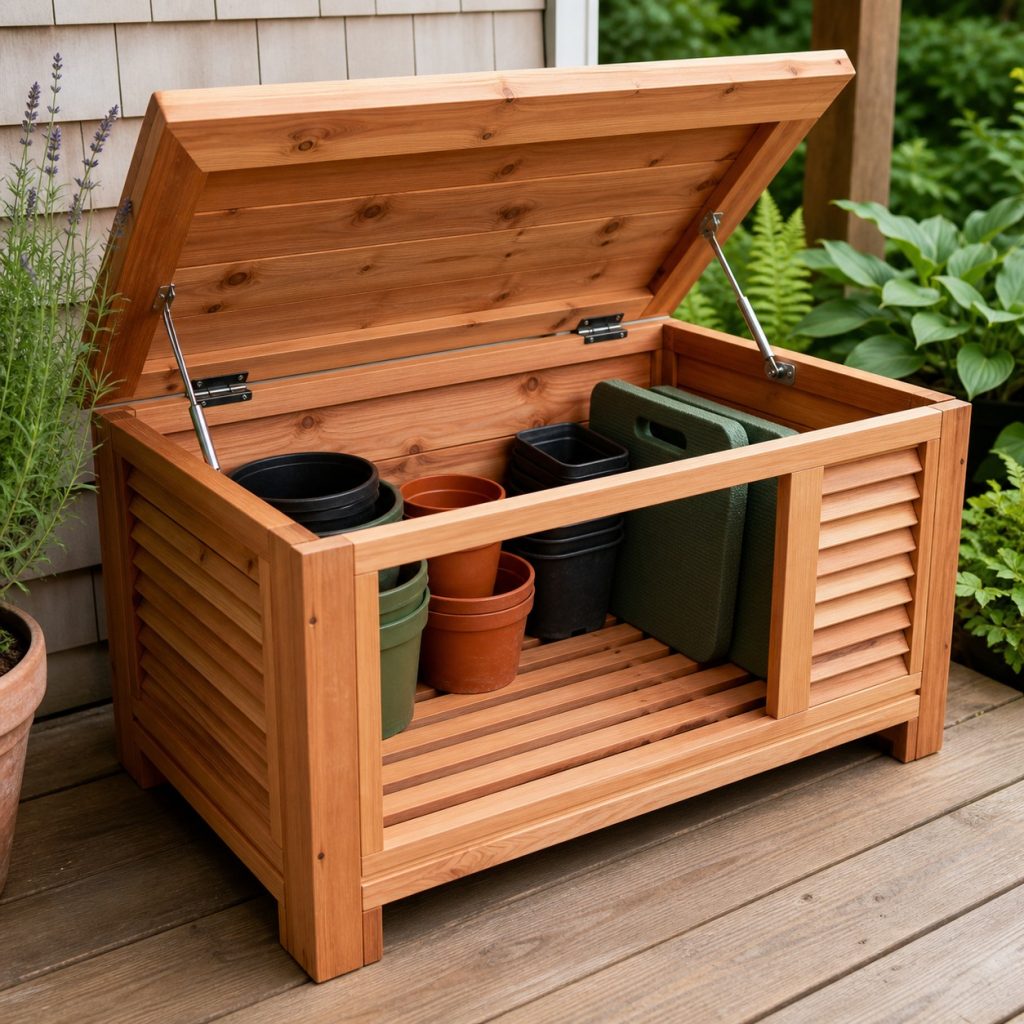
Louvers beneath the lid overhang exchange air while reducing direct rain entry. Fit removable floor panels with drainage gaps and keep vents clear of walls and stored fabric. Ventilation reduces condensation but cannot make wet cushions safe to store.
Assemble a Braced Raised Frame
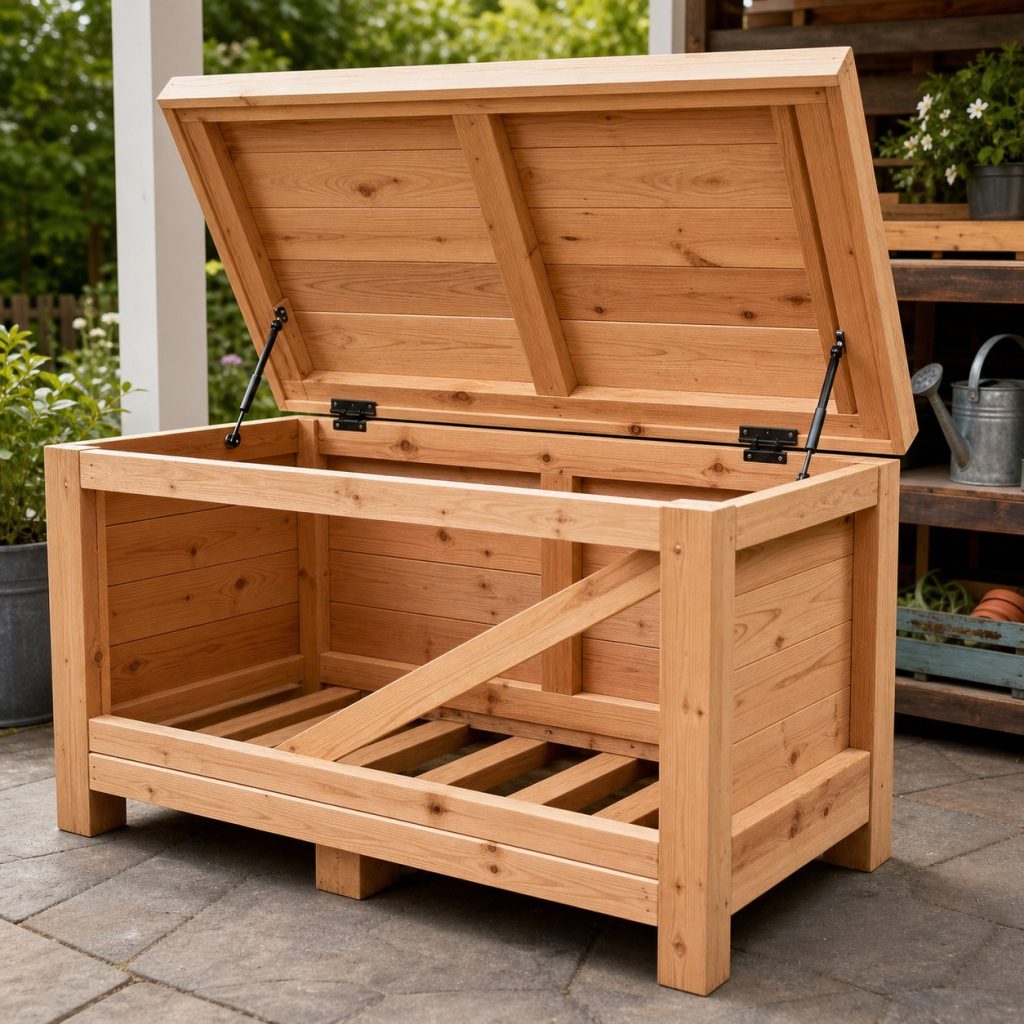
Start with square corner posts and upper and lower rails, then install floor supports above the footing. Compare diagonals before adding panels and use a rigid lid frame that will not sag. Dry-fit the stored items before final assembly.
Control the Lid Safely
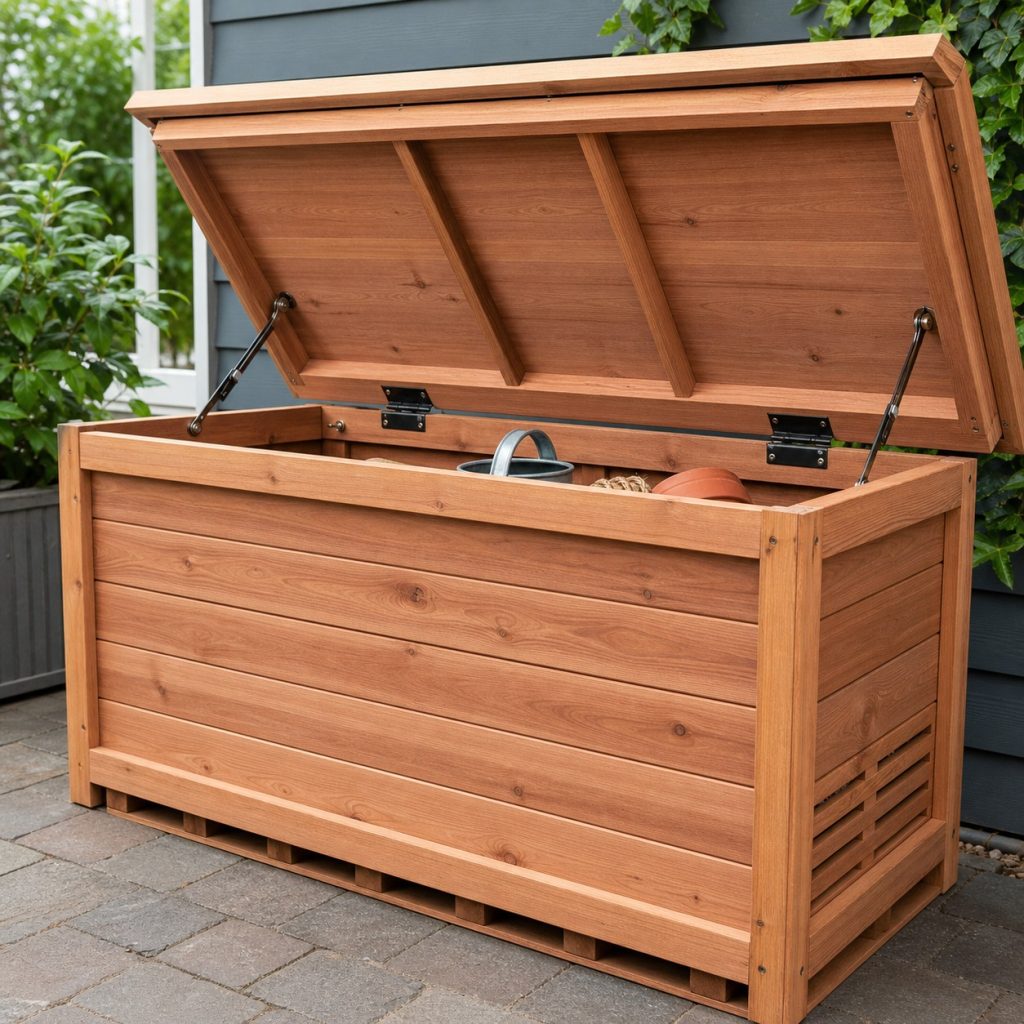
Use hinges and stays rated for the lid size and exterior exposure. Paired stays reduce twisting and help prevent slams; they are not a substitute for supervision. Keep finger clearance at the rear and avoid lockable spaces that could entrap a child.
Check Rain Shedding and Feet
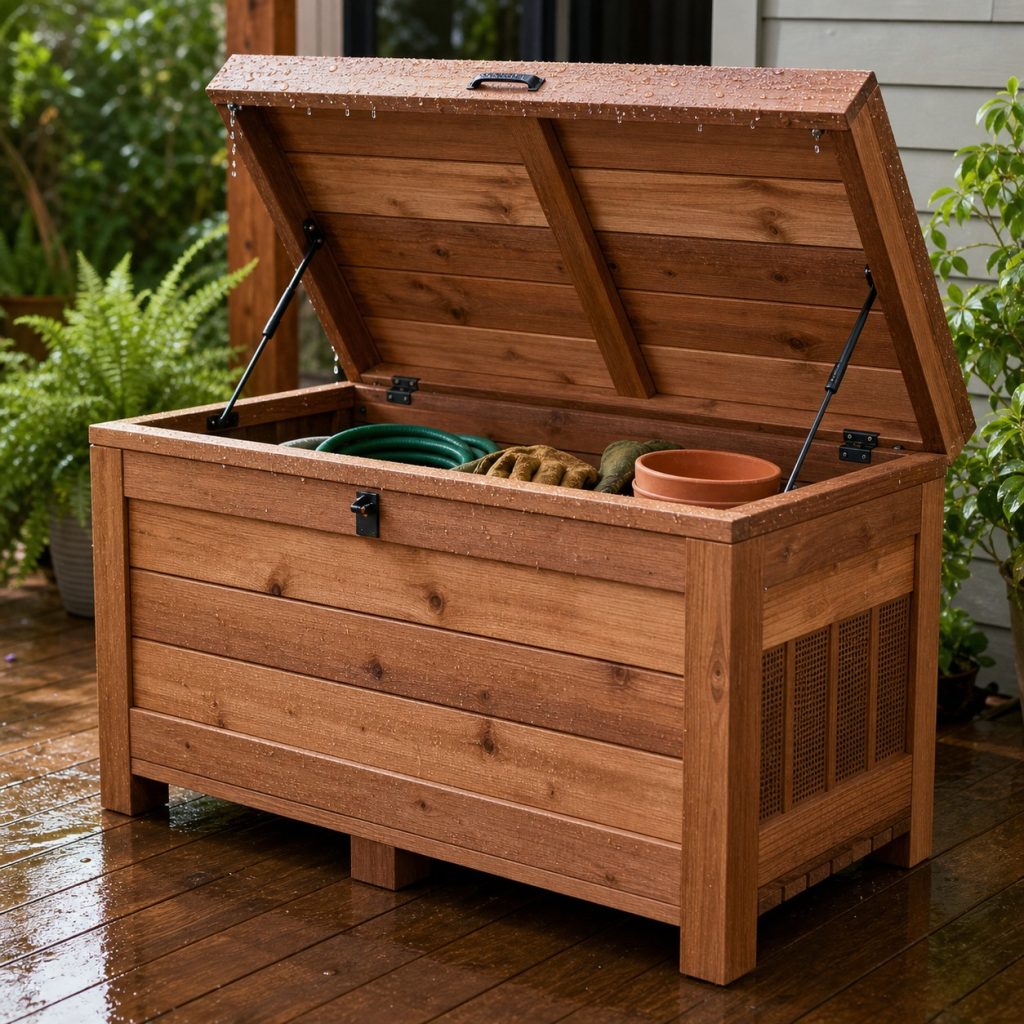
After a storm, inspect the lid seam, drip edge, vents, floor, feet, casters, and stored items. Empty the box when moisture appears and let every surface dry. Repair finish and cracked frame parts before swelling damages the lid alignment.
Planning checklist
- Size the box around specific dry garden items.
- Build a square braced frame with a raised drainable floor.
- Use a sloped overhanging lid with paired rated stays.
- Provide protected ventilation and avoid entrapment or seating claims.
- Inspect after rain and remove any wet stored materials immediately.
These concepts are general planning guidance, not engineering drawings or tested load-rated plans. Verify dimensions, ergonomics, lumber grade and treatment, structural loads, fasteners, coatings, food-contact use, wildlife and compost guidance, accessibility, utility locations, property rules, permits, and local building requirements for the actual project. Use qualified professionals where structural, electrical, plumbing, refrigeration, fall, or entrapment hazards apply.
Frequently asked questions
Is a wooden deck box waterproof?
Usually no. Good detailing sheds most rain, but ventilation, joints, and wood movement mean the contents should tolerate humidity or use separate suitable containers.
Can people sit on a deck-box lid?
Only if the entire box and lid were specifically designed and tested for seating loads. This guide treats the box as storage only.
Should cushions be stored wet?
No. Dry them completely first and check the box regularly for condensation, leaks, and pests.