Project planning guide
Before you build
Use the reference image and planning notes as a starting point. Confirm dimensions, loads, materials, local codes, and site conditions before purchasing or cutting.
- Garden Projects
- 8 reference images
- Print-friendly guide
A patio umbrella table is a woodworking project built around a large central opening and a separate weighted umbrella base. The tabletop must resist splitting around that opening, remain stable under everyday loads, and never be treated as the device that makes an umbrella safe in wind.
Round Slatted Umbrella Table
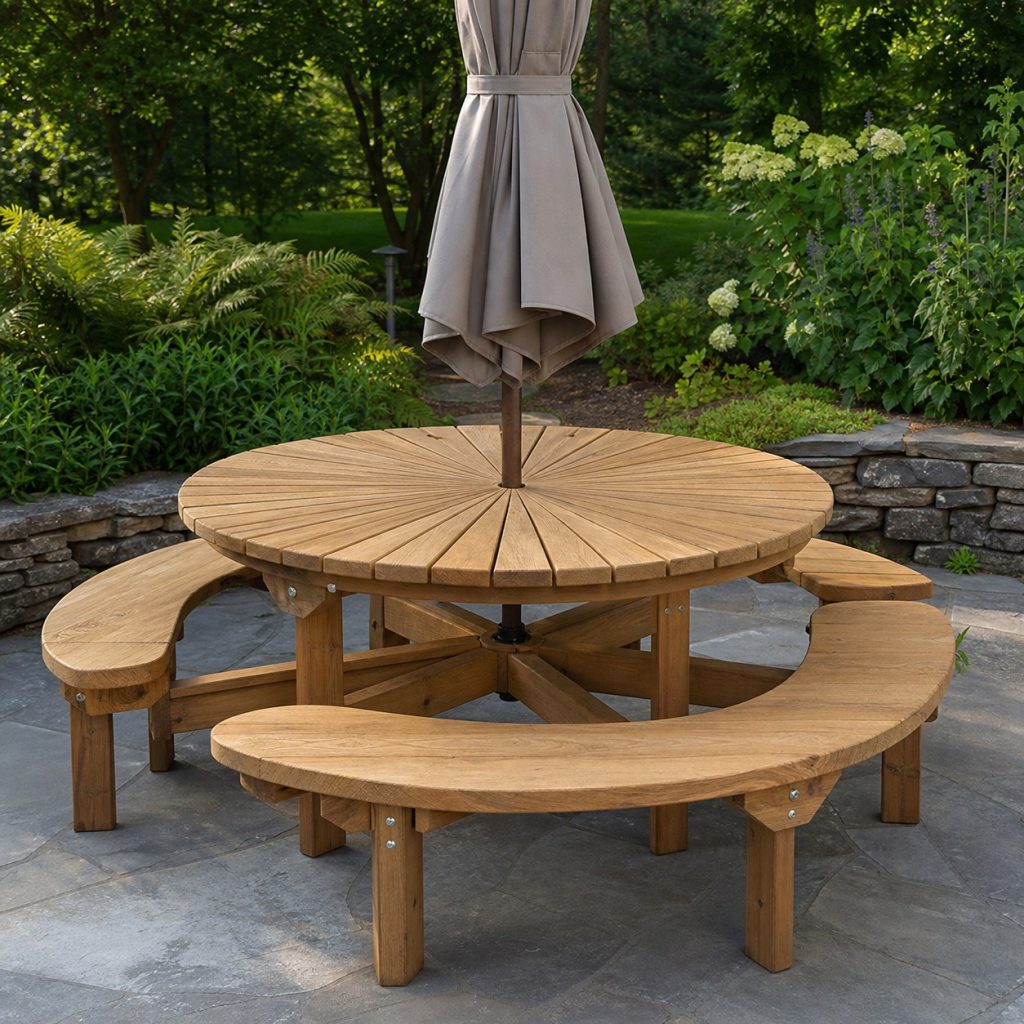
Radial or segmented slats need a reinforced center ring and consistent gaps that shed water. Follow the umbrella and base instructions for ballast, wind, closure, and storage; verify table stability, joint strength, clearances, glass avoidance, and accessibility independently.
Square Picnic-Style Table
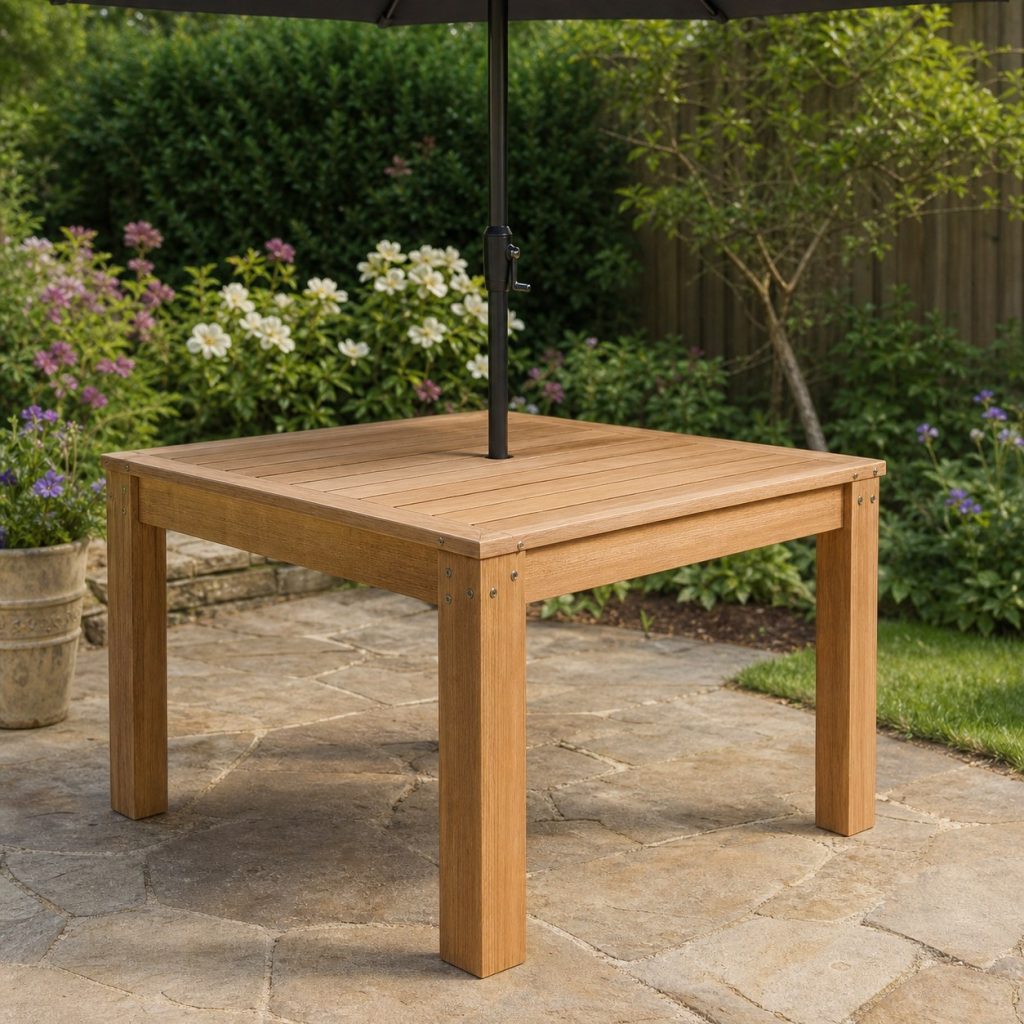
A square apron frame can support the center opening while preserving knee and chair clearance.
Octagonal Garden Table
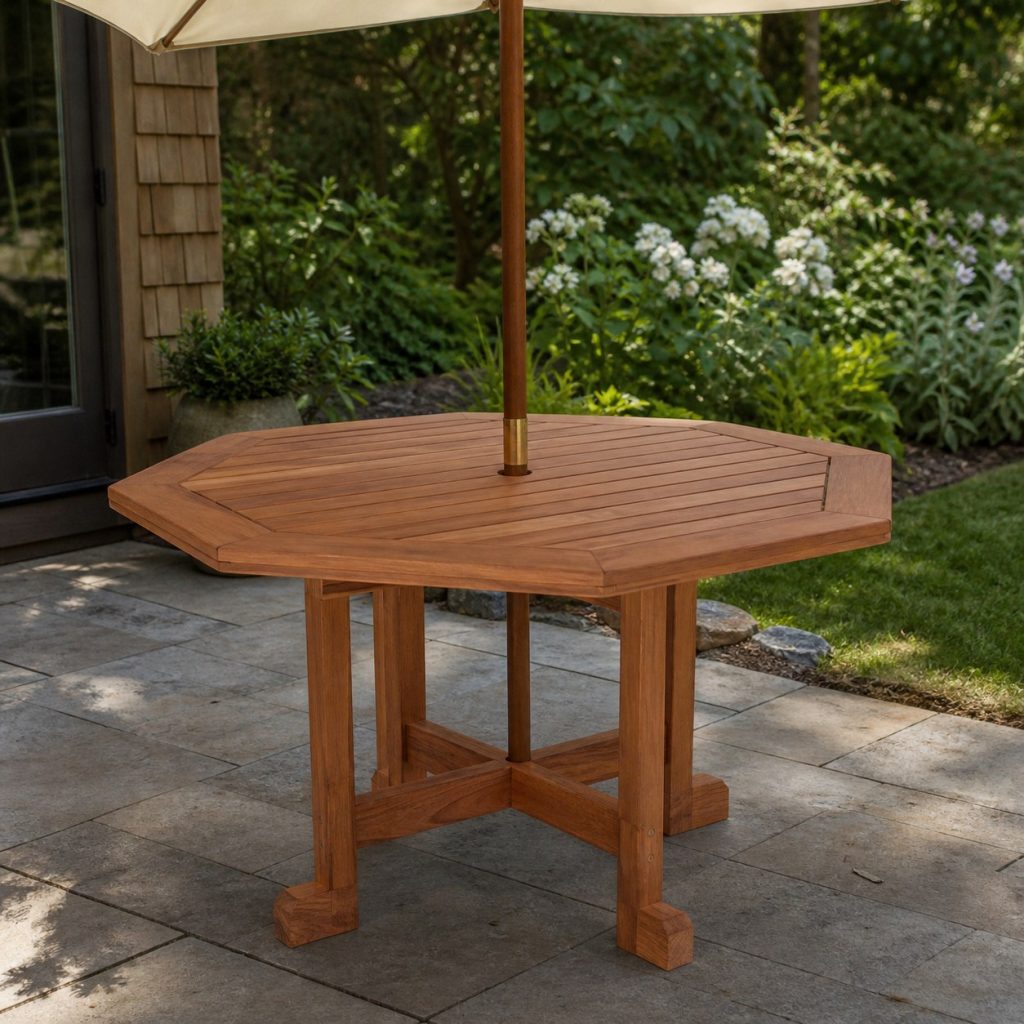
Repeated angle templates make an octagonal top manageable when joints are supported rather than edge-glued alone.
Compact Bistro Umbrella Table
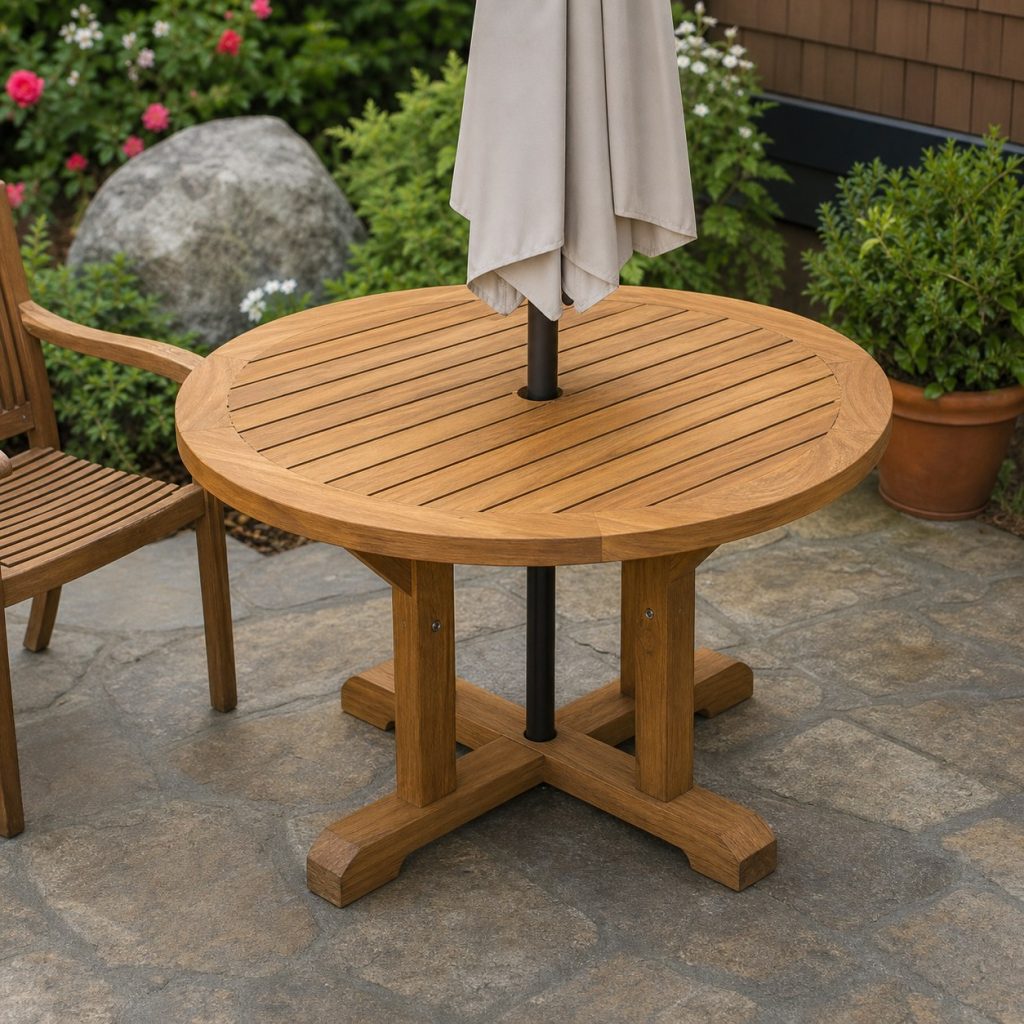
A compact top needs a proportionally stable base and enough separation from the independent umbrella ballast.
Trestle Umbrella Table
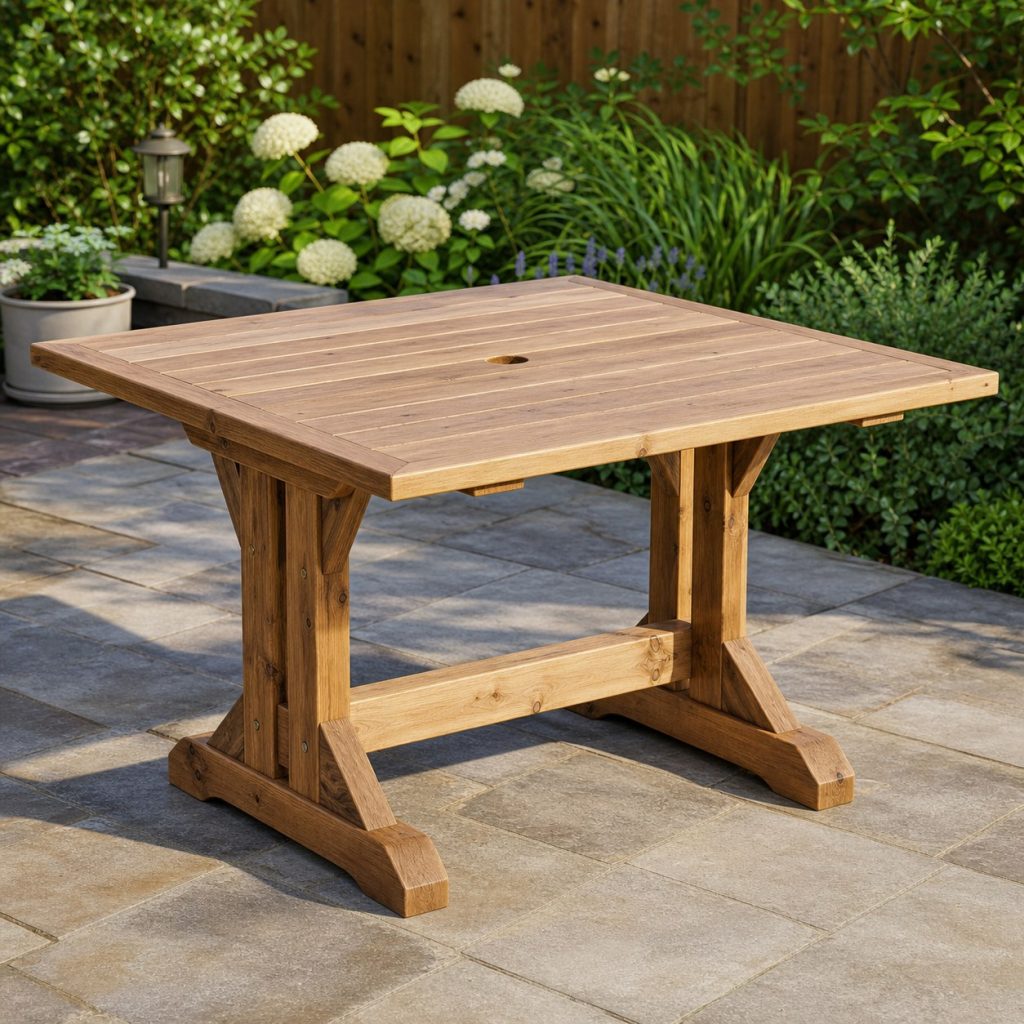
Split stretchers or offset joinery must preserve a continuous load path around the pole and base.
Planter-Base Umbrella Table
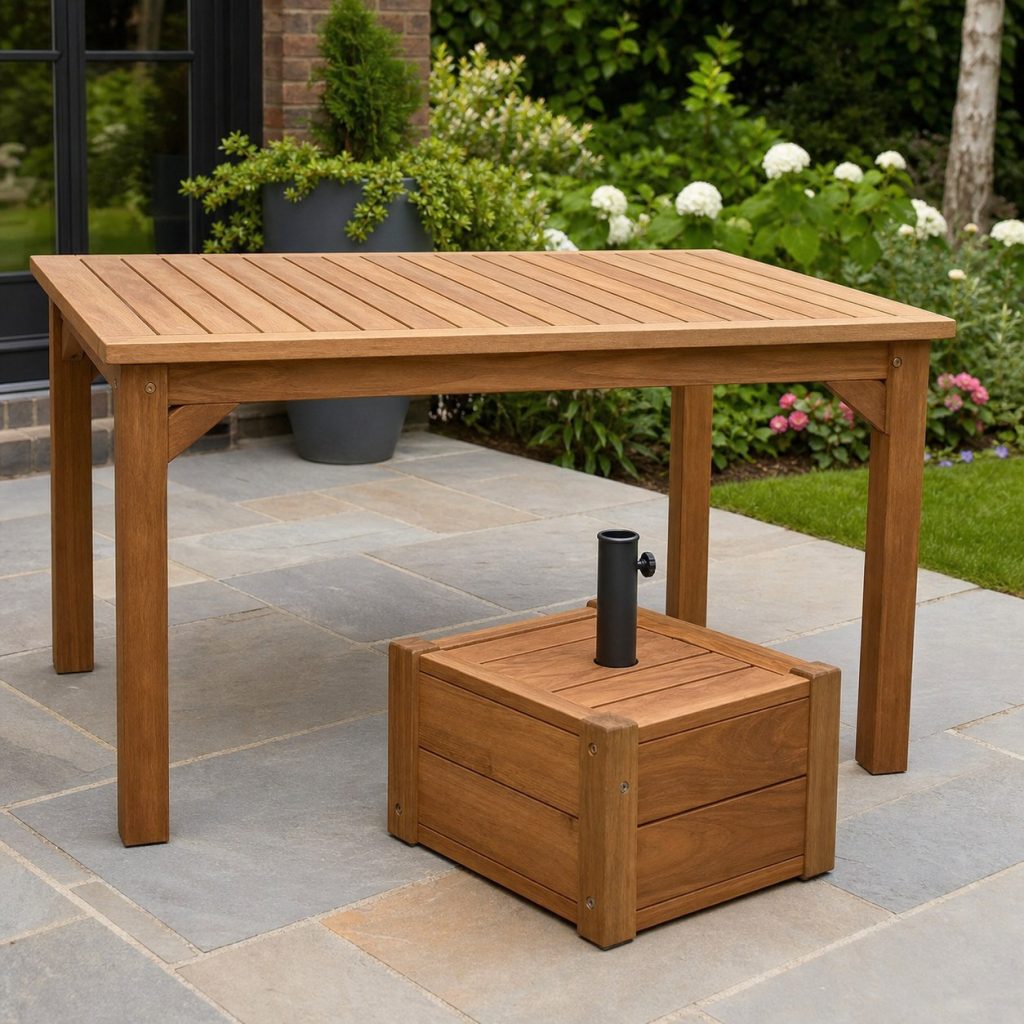
A decorative planter base must be an approved or properly engineered ballast system rather than ordinary loose soil.
Removable Center Insert
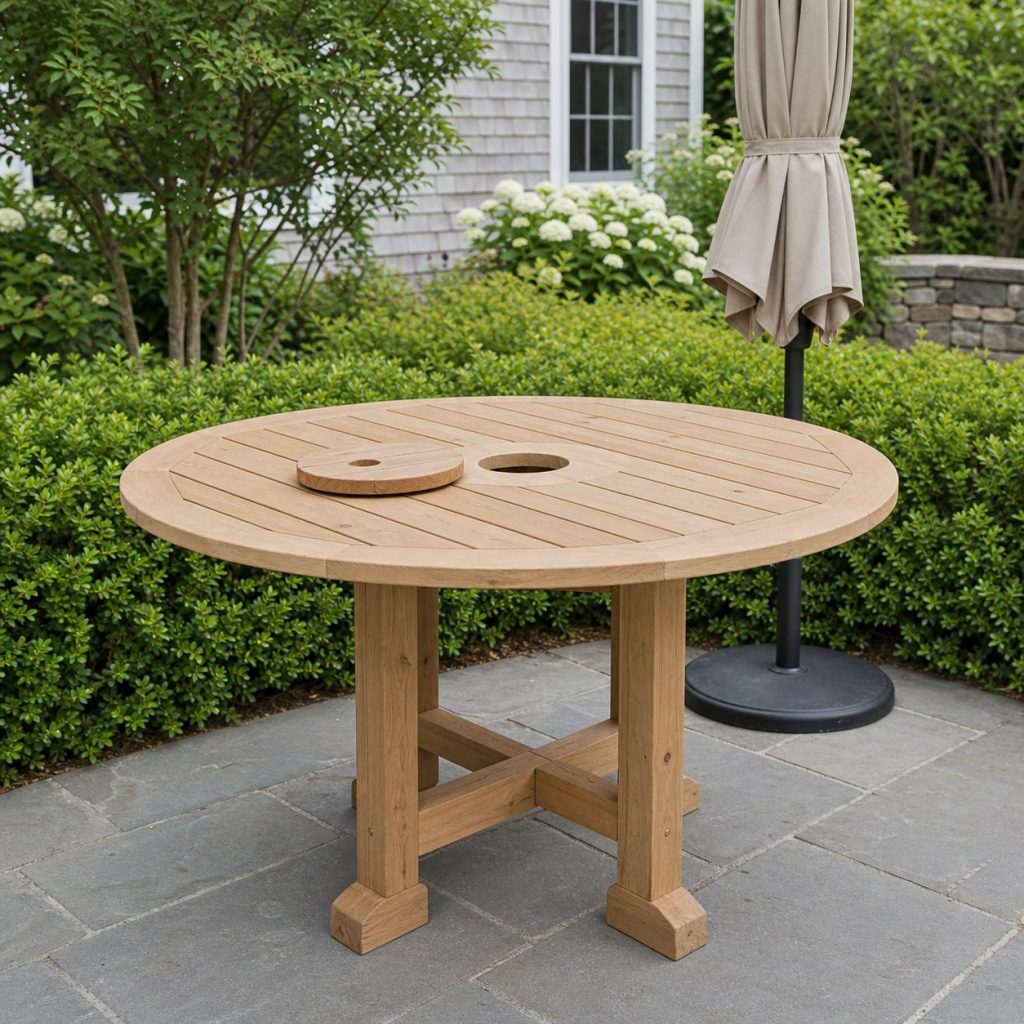
A removable collar can adapt the opening when it stays secure, drains freely, and cannot become a loose projectile.
Center Reinforcement and Finish
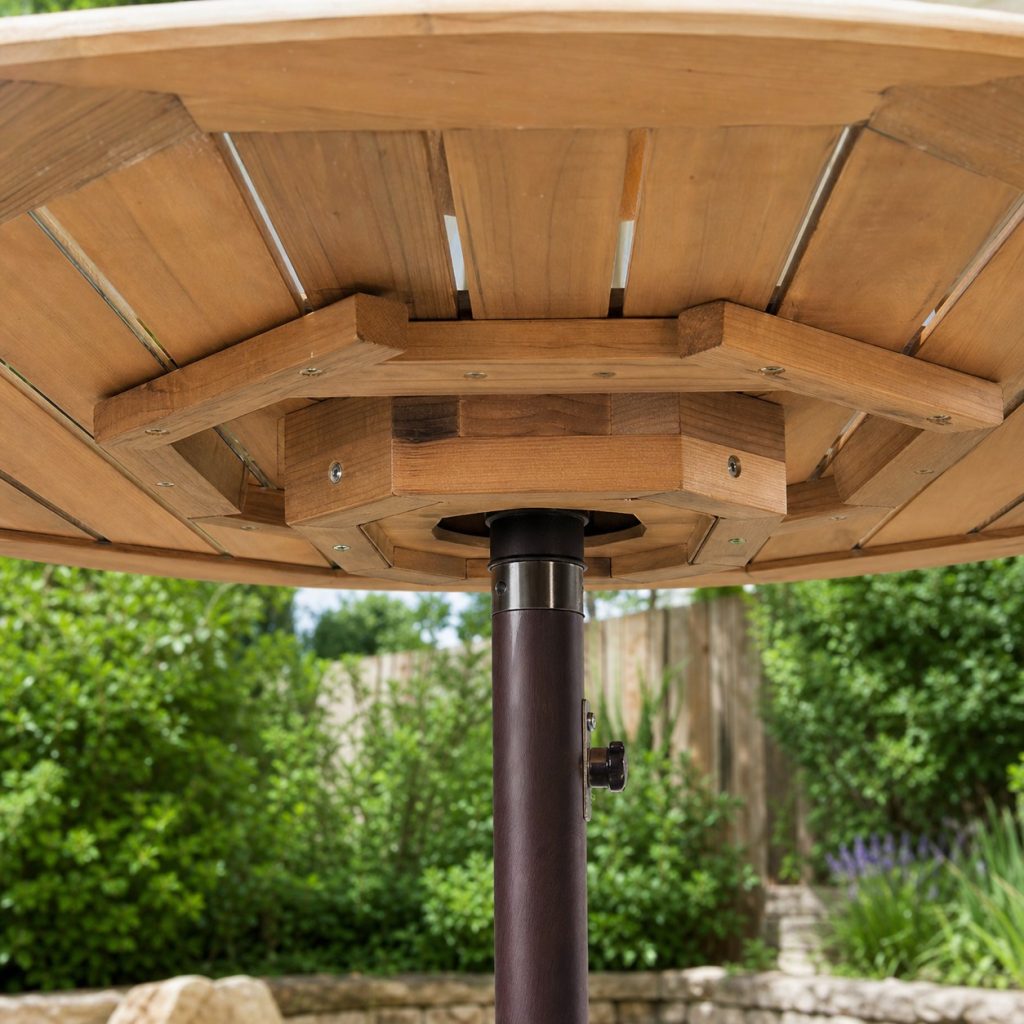
The center opening deserves extra blocking, eased edges, and complete finishing because exposed end grain sees frequent moisture.
Planning checklist
- Choose the umbrella and approved base before sizing the table.
- Design the table independently for stability and everyday loads.
- Reinforce and seal the pole opening and surrounding end grain.
- Preserve knee, chair, and accessible-route clearances.
- Close and store the umbrella according to wind instructions.
These woodworking concepts and generated images are planning inspiration, not measured drawings, cut lists, tested furniture plans, load ratings, engineered structures, accessibility designs, playground certifications, or utility instructions. Verify dimensions, ergonomics, lumber grade and treatment, grain direction, joint design, fastener and preservative compatibility, structural and wind loads, stability, sharp and pinch hazards, finish labels, equipment instructions, accessibility, permits, and local requirements for the actual project. Use appropriate personal protective equipment and qualified engineers, electricians, plumbers, accessibility specialists, and other licensed professionals where the work or hazards require them.
Frequently asked questions
Can the wooden table replace an umbrella base?
No. Use the base and ballast specified for the umbrella; the table opening only guides the pole unless a tested system states otherwise.
How large should the pole opening be?
Follow the actual umbrella and any collar instructions, allowing assembly clearance without excessive movement or exposed sharp edges.
Should I leave gaps between tabletop boards?
Small consistent gaps can support drainage and movement, but size them for the material, fastening method, and safe surface use.