Project planning guide
Before you build
Use the reference image and planning notes as a starting point. Confirm dimensions, loads, materials, local codes, and site conditions before purchasing or cutting.
- Garden Projects
- 8 reference images
- Print-friendly guide
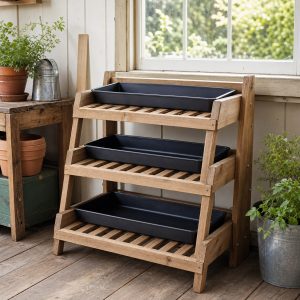
A wooden potting tray contains loose mix on a bench and returns it to storage without sweeping soil onto the floor. This small woodworking project benefits from a rigid supported bottom, shallow smooth sides, and a removable liner or insert that simplifies cleaning.
Classic Three-Sided Potting Tray
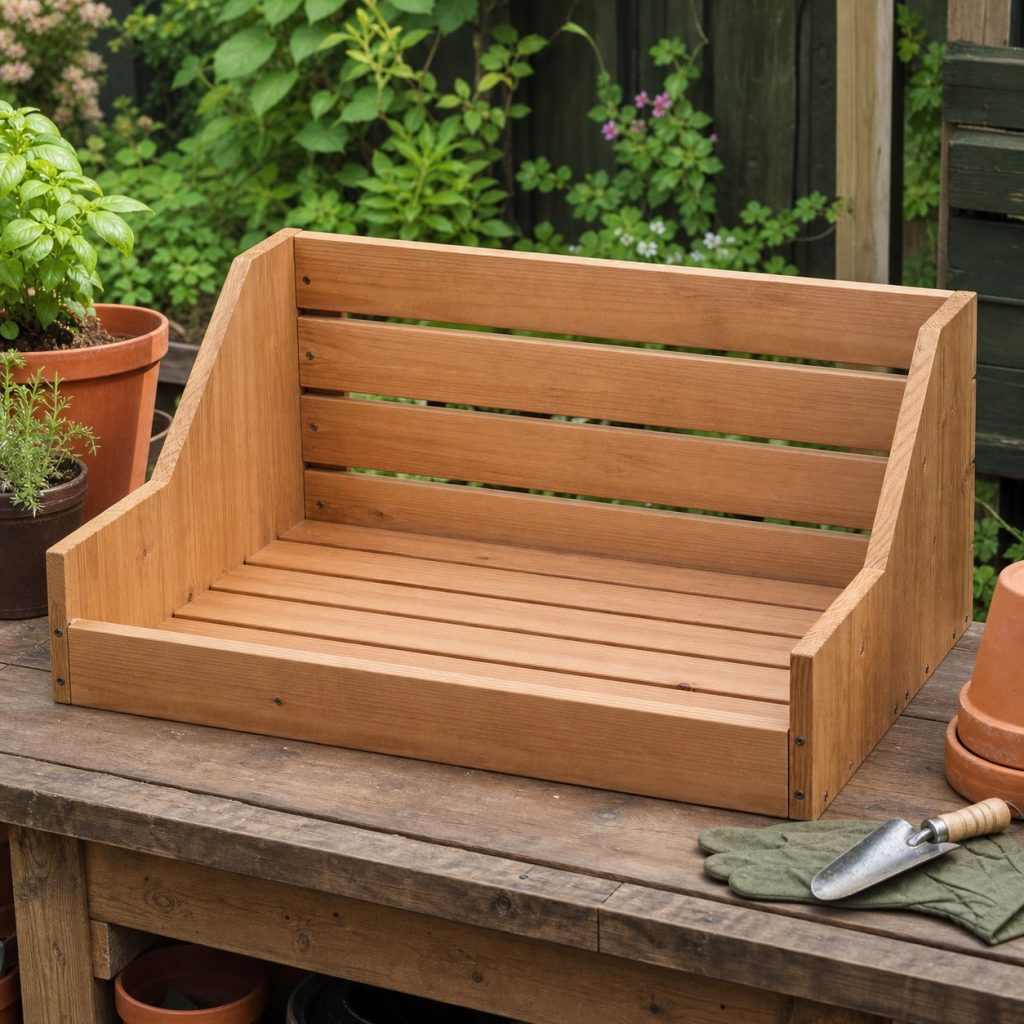
A low front improves access while the captured bottom and corner blocks keep the tray rigid. Avoid washing soil, fertilizer, or chemicals into drains; follow product labels, control dust, keep the loaded tray manageable, and clean it in an approved location.
Removable-Liner Potting Tray
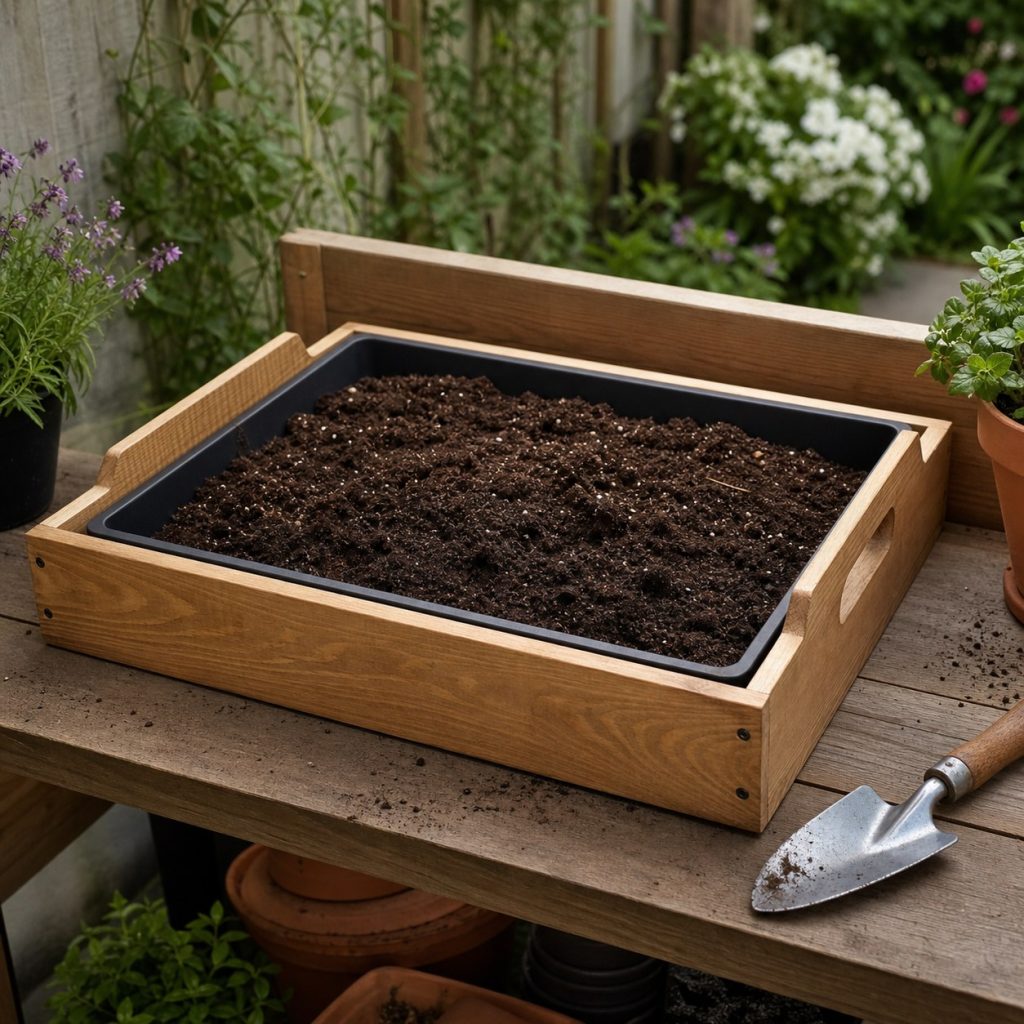
A removable insert contains moisture without relying on the wooden joints as a watertight basin.
Handled Potting Tray
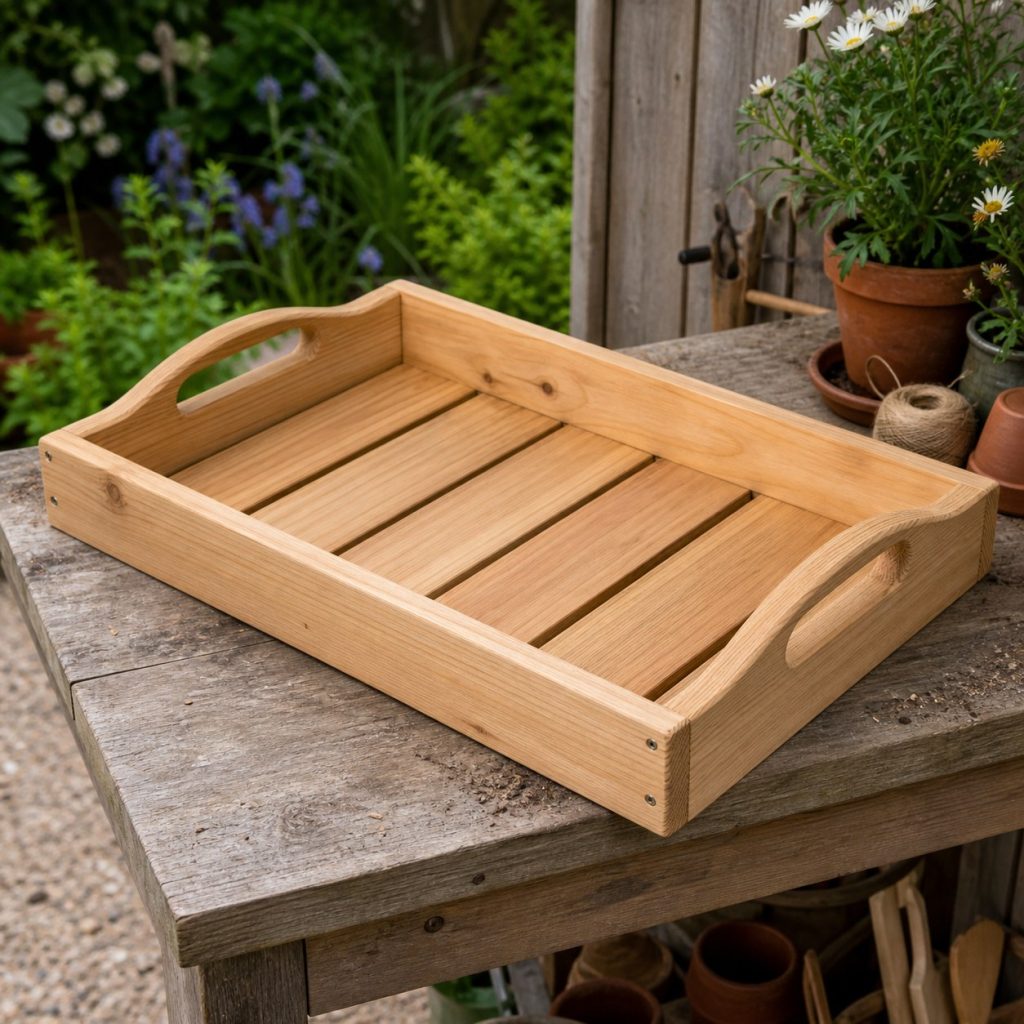
Handles need strong continuous grain and balanced placement for limited carrying.
Fold-Down Front Tray
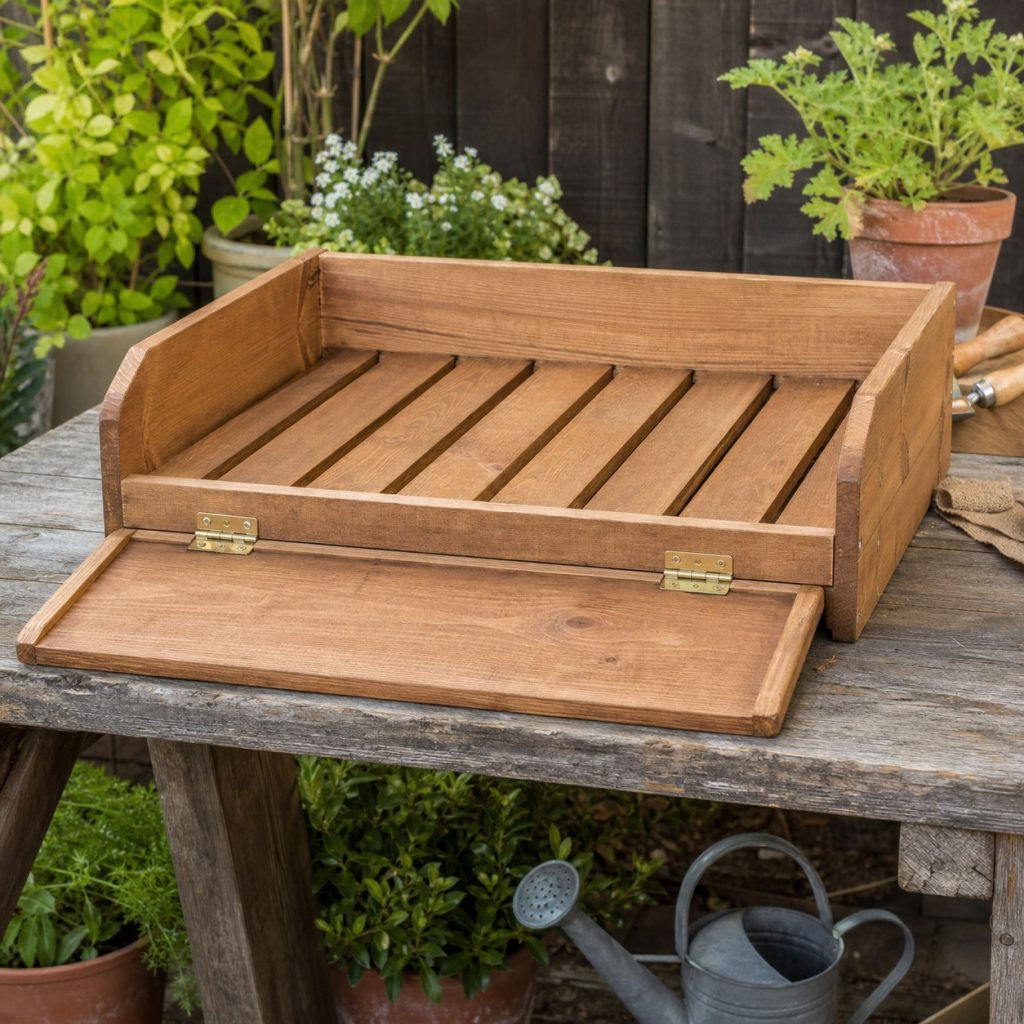
A fold-down front requires controlled hinges, soil-resistant hardware, and positive open support.
Compact Tabletop Tray
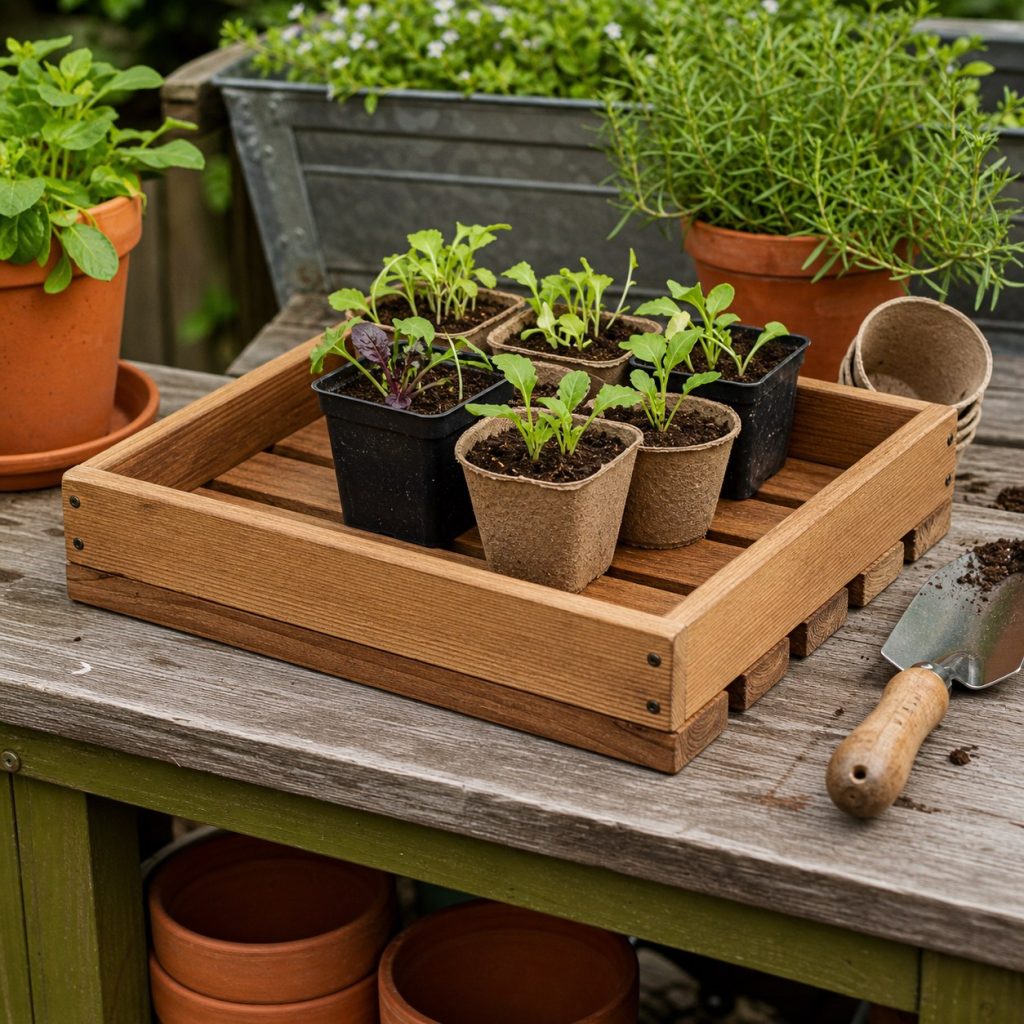
A compact tray controls modest amounts of mix without encouraging excessive loaded weight.
Deep Soil-Sifting Tray
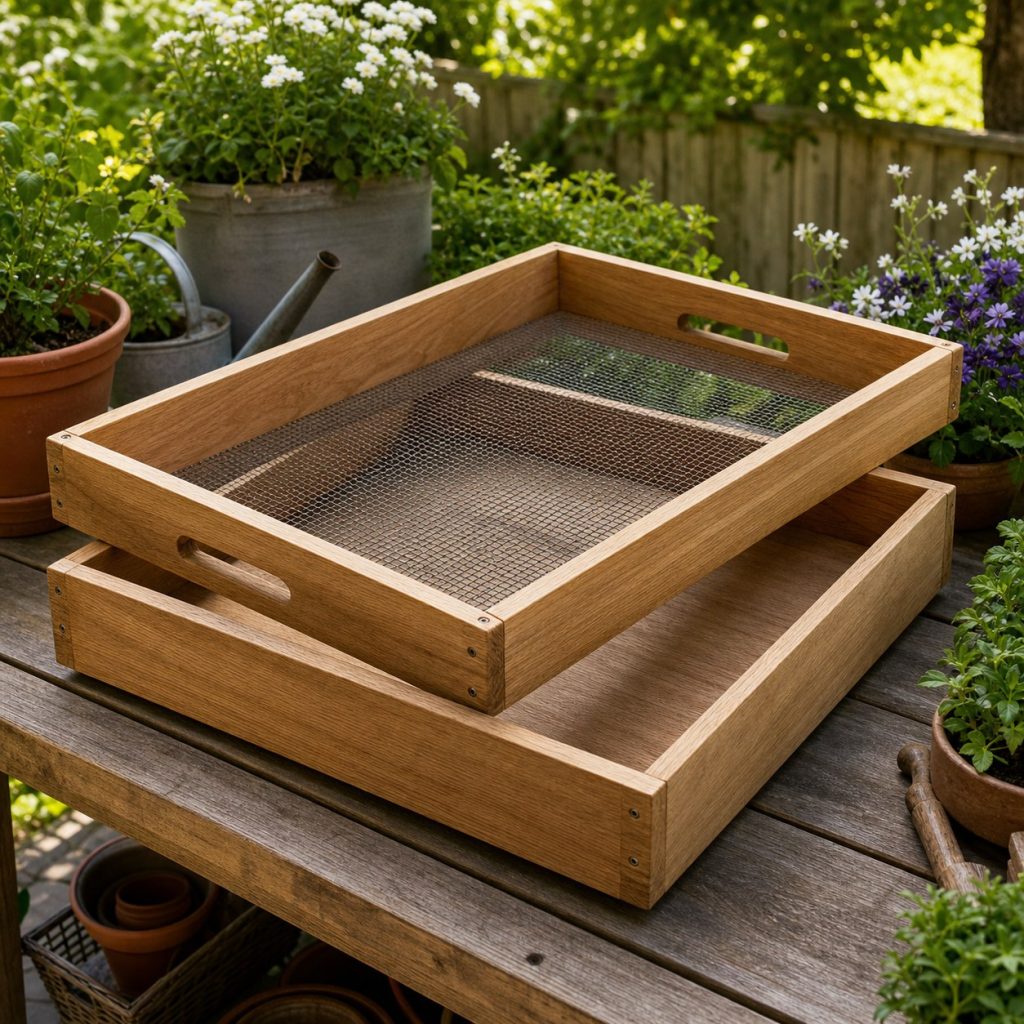
A screen insert handles light dry mix only and needs smooth secure edges and dust control.
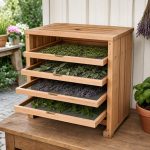
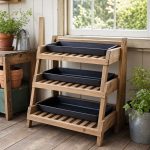
Stackable Potting Trays
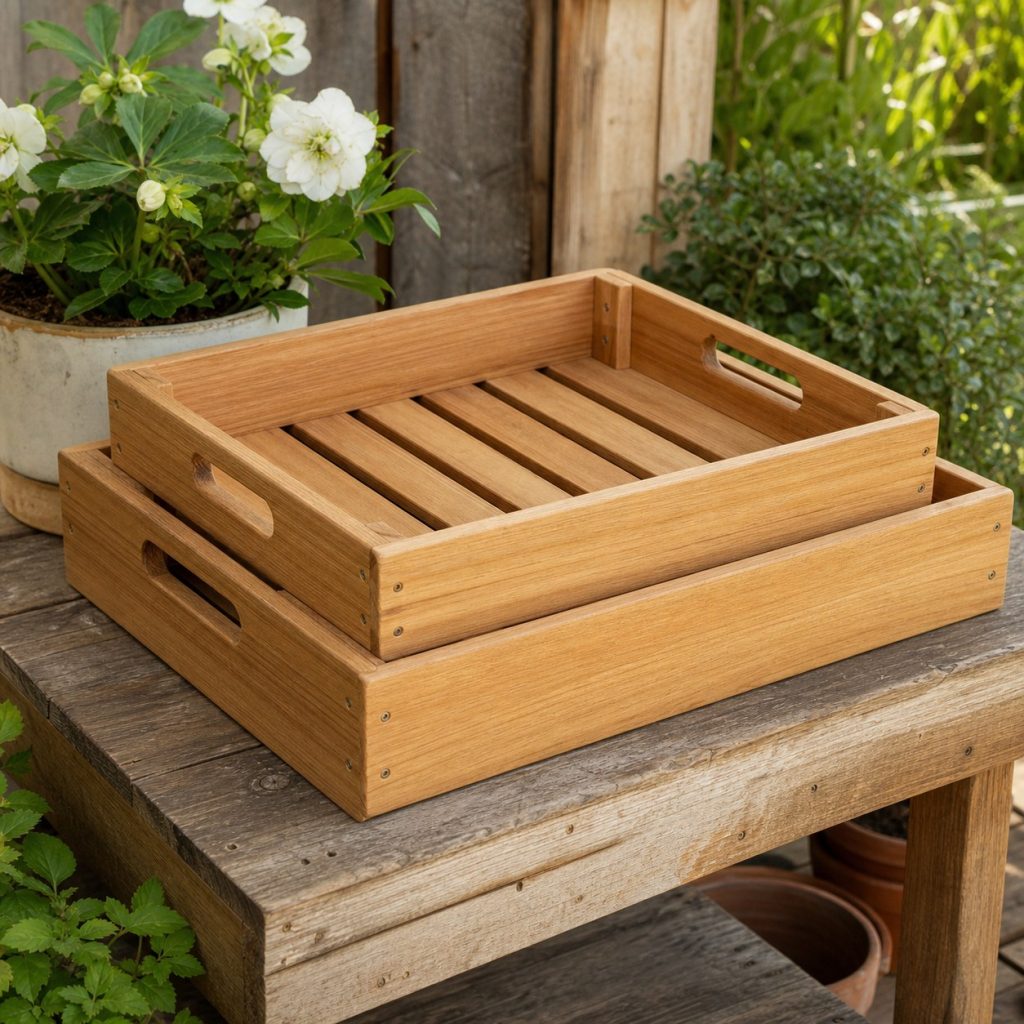
Matching footprints and corner stops allow stacking without trapping damp soil.
Bottom, Liner, and Corner Details
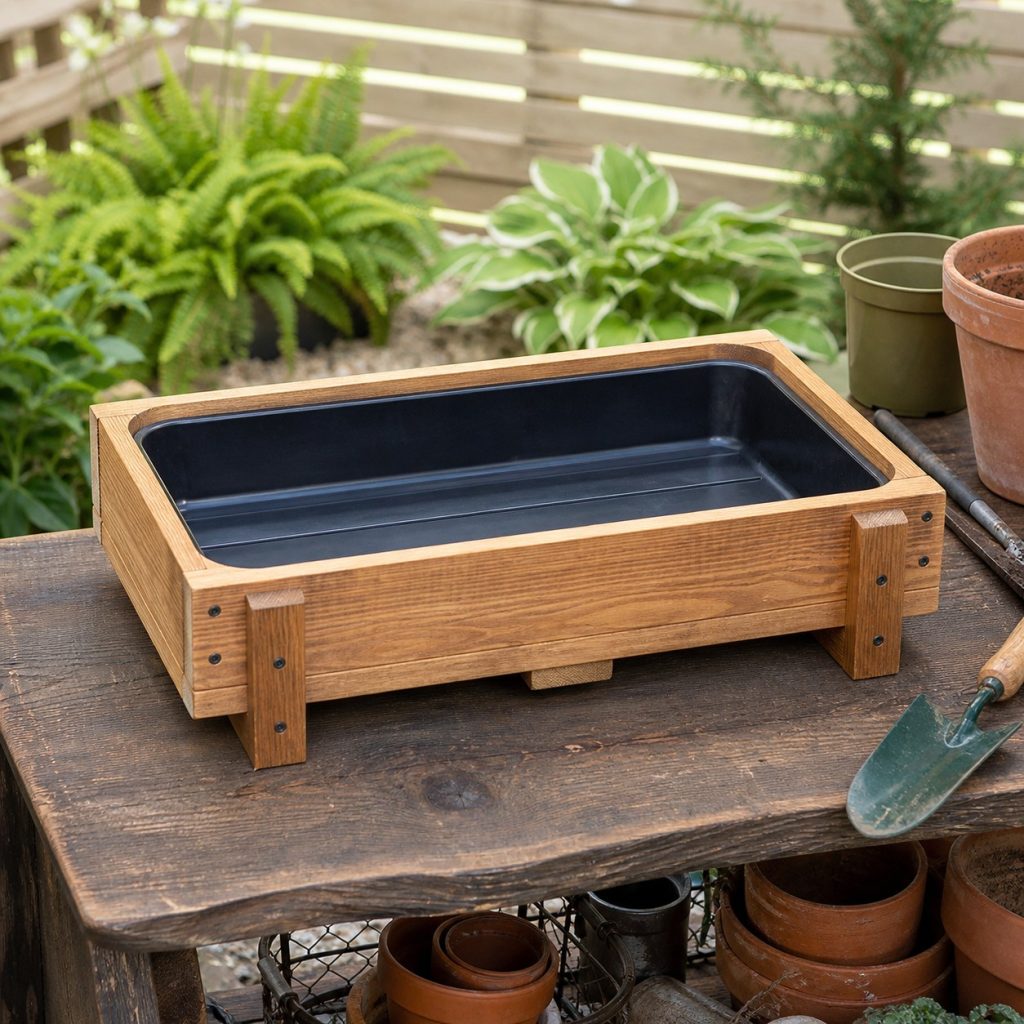
Smooth transitions and removable parts make soil recovery, cleaning, and drying easier.
Planning checklist
- Match tray size to the bench, storage, and safe loaded weight.
- Support the bottom and reinforce handle areas.
- Use a removable washable liner rather than watertight wood joints.
- Control dust and capture all soil and amendments.
- Clean and dry the tray without discharging sediment improperly.
These woodworking concepts and generated images are planning inspiration, not measured drawings, cut lists, tested furniture plans, load ratings, engineered structures, accessibility designs, playground certifications, or utility instructions. Verify dimensions, ergonomics, lumber grade and treatment, grain direction, joint design, fastener and preservative compatibility, structural and wind loads, stability, sharp and pinch hazards, finish labels, equipment instructions, accessibility, permits, and local requirements for the actual project. Use appropriate personal protective equipment and qualified engineers, electricians, plumbers, accessibility specialists, and other licensed professionals where the work or hazards require them.
Frequently asked questions
Should the wooden tray hold water?
No. Use a removable waterproof insert if liquid containment is needed; ordinary wood joints should drain and dry.
Can I carry soil in the tray?
Only a manageable amount within the verified handle and bottom capacity. A separate bucket may be safer for transport.
How do I clean it?
Return usable mix, brush residue into approved waste, wipe the liner and wood as directed, and dry everything fully.