Project planning guide
Before you build
Use the reference image and planning notes as a starting point. Confirm dimensions, loads, materials, local codes, and site conditions before purchasing or cutting.
- Garden Projects
- 8 reference images
- Print-friendly guide
A wooden seed storage box is a small cabinetmaking project for a potting shed or climate-controlled indoor space. Accurate grooves, removable dividers, a flat lid, and smooth interior surfaces matter more than heavy construction, while seed longevity still depends on the crop and storage conditions.
Classic Hinged-Lid Seed Box
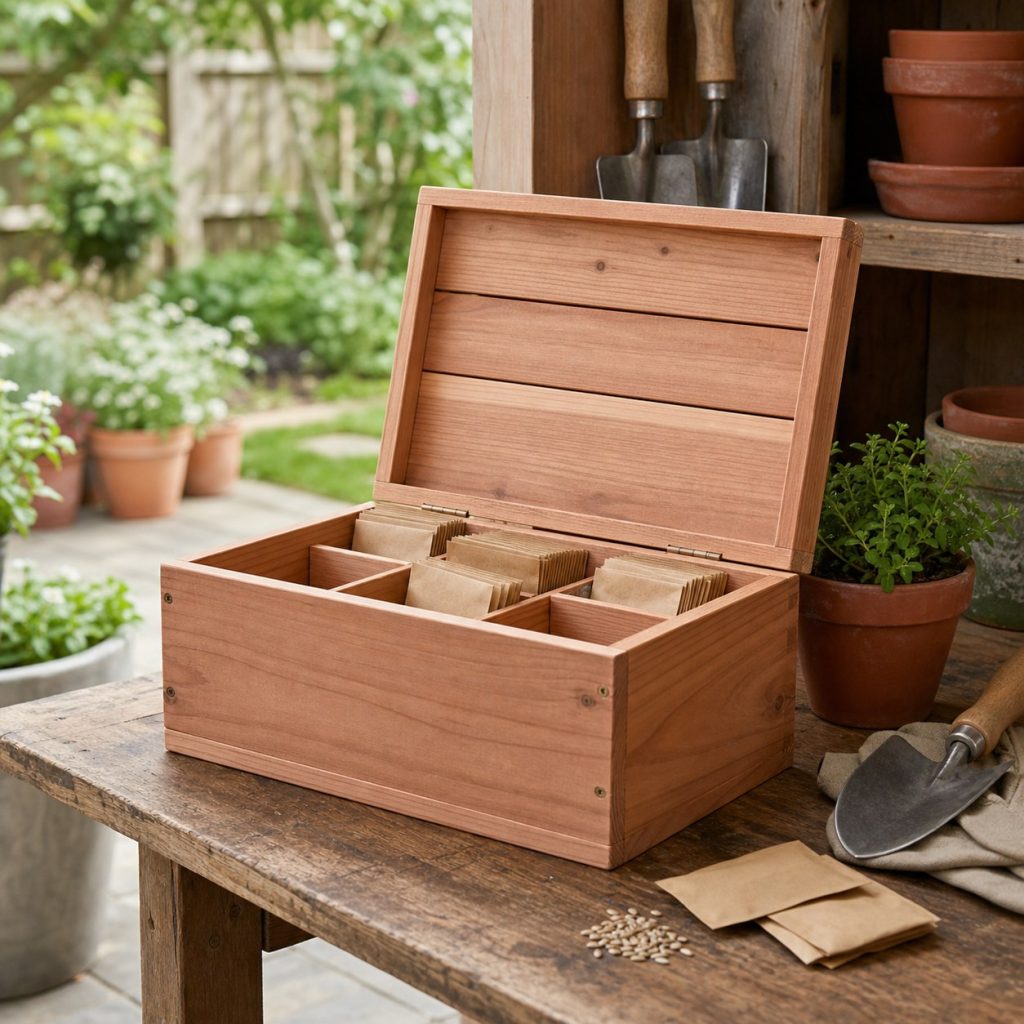
A flat lid, stopped hinges, and square corner joints create a durable everyday organizer. Keep seeds in their original identified packets, follow supplier temperature and humidity guidance, separate treated seed safely, and do not rely on the wooden box as a moisture-proof or child-resistant container.
Sliding-Lid Seed Box
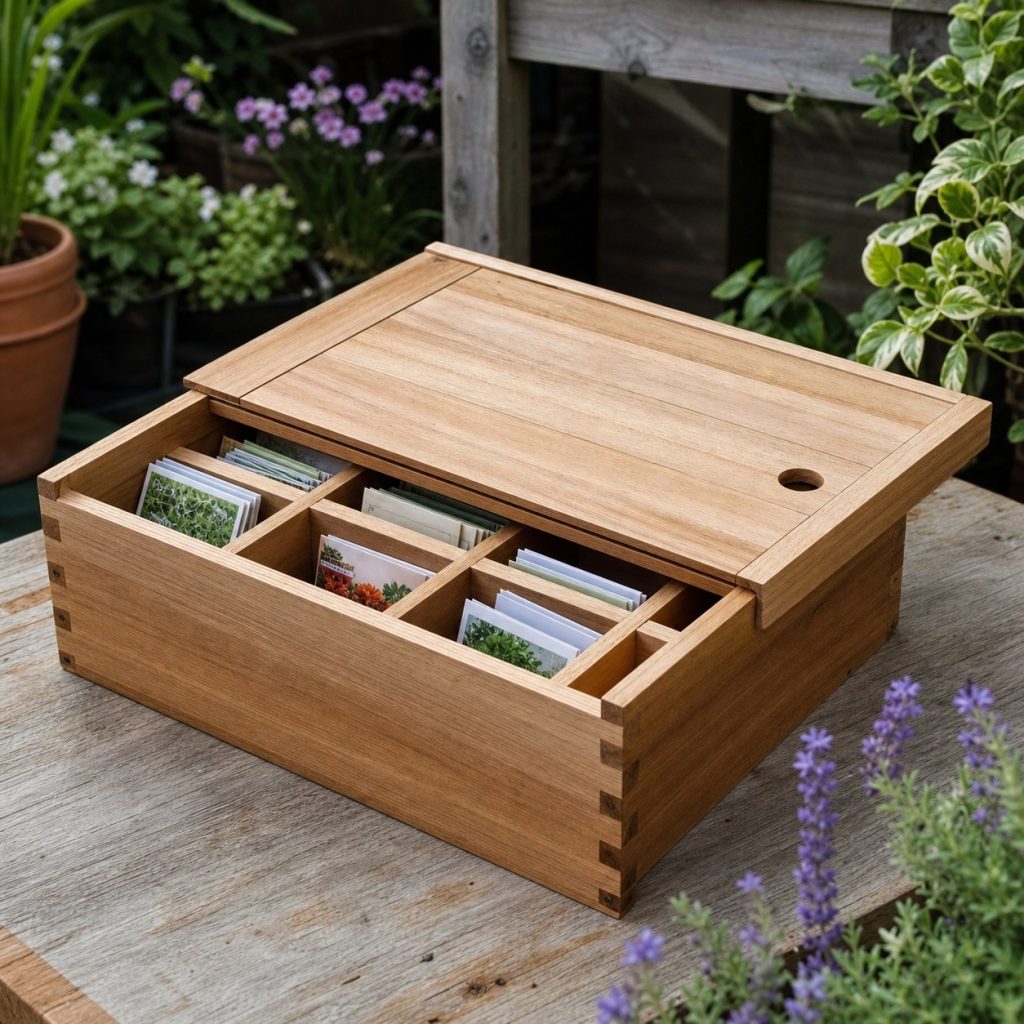
A smoothly fitted lid needs seasonal clearance so it moves without binding or becoming loose.
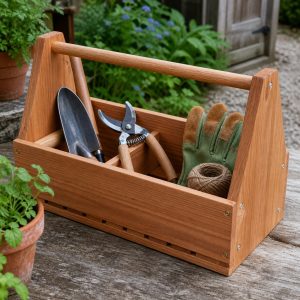
Handled Seed Caddy
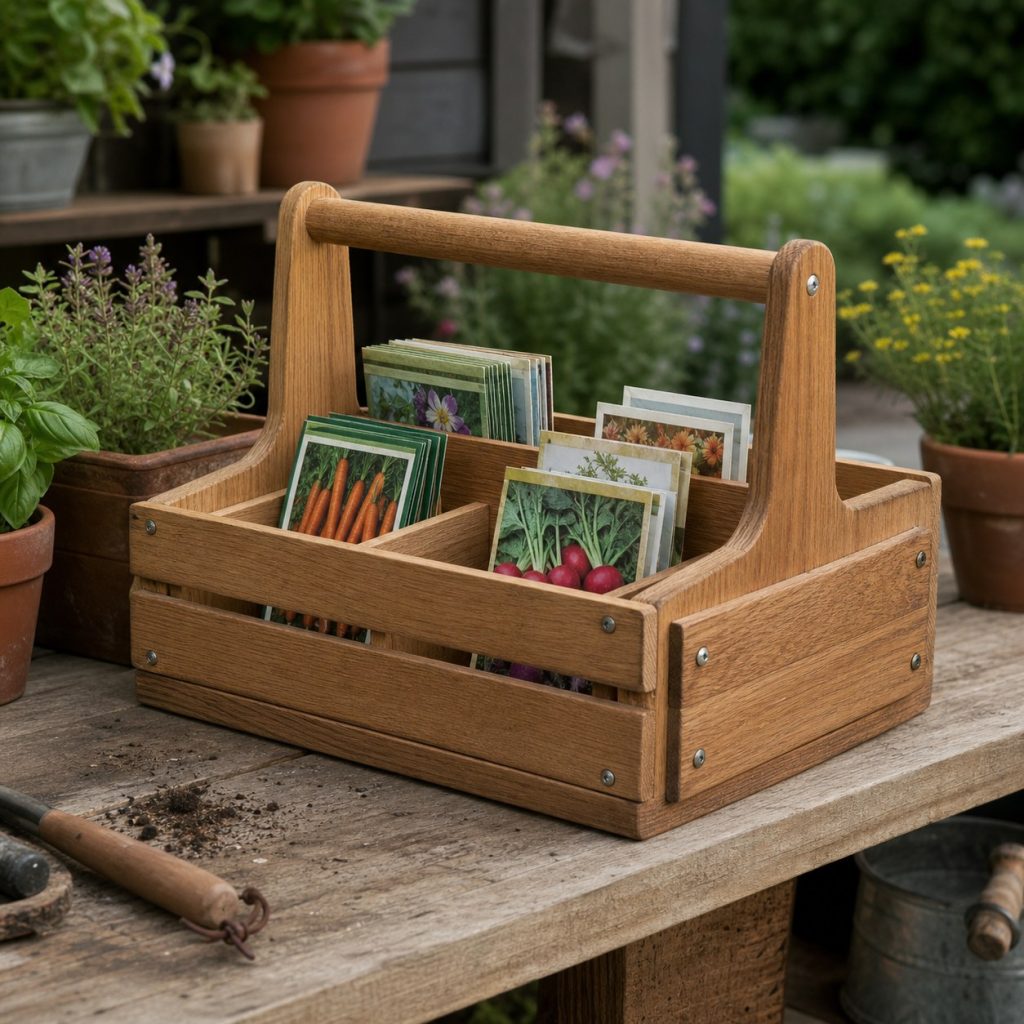
A handle divider can stiffen the box when grain direction, joinery, and comfortable edge rounding are considered.
Drawer-Style Seed Chest
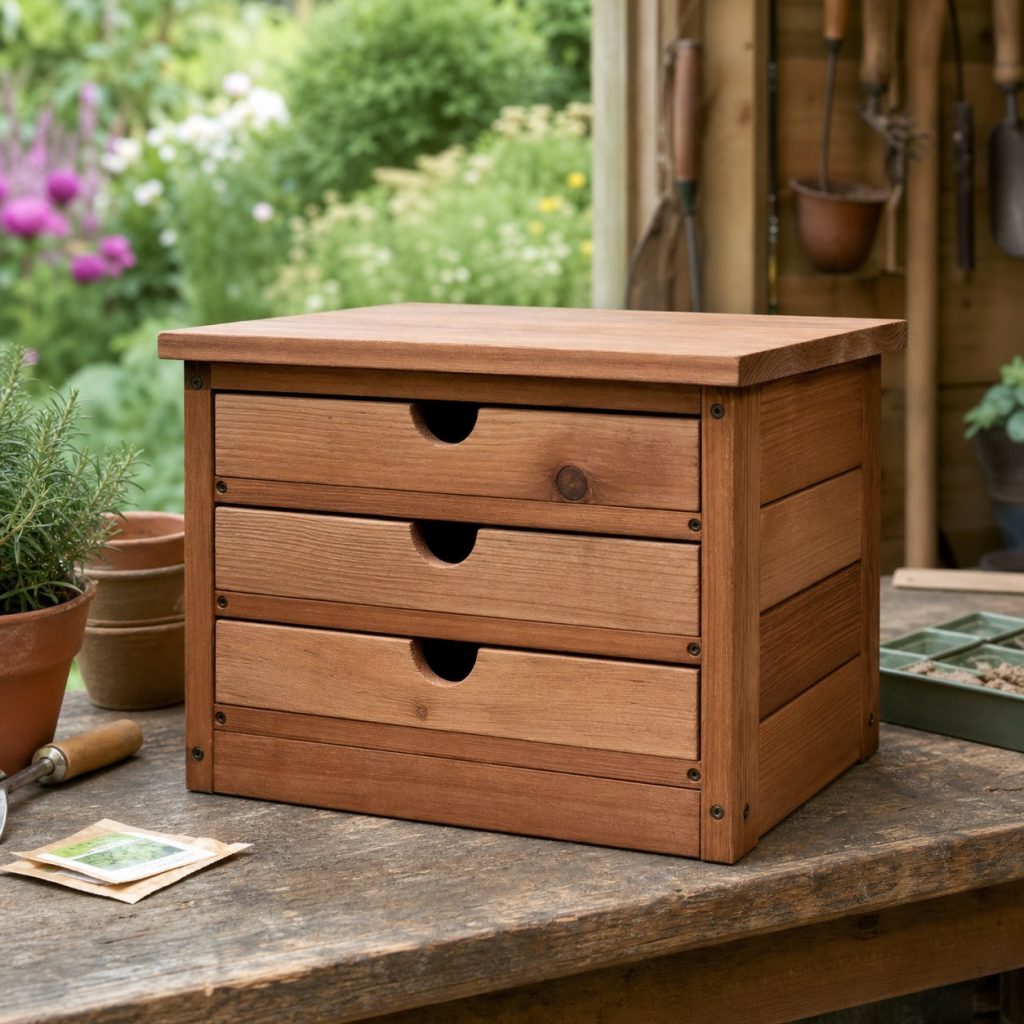
Shallow drawers need runners or slips that stay square and do not spill packets when opened.
Seasonal Divider Box
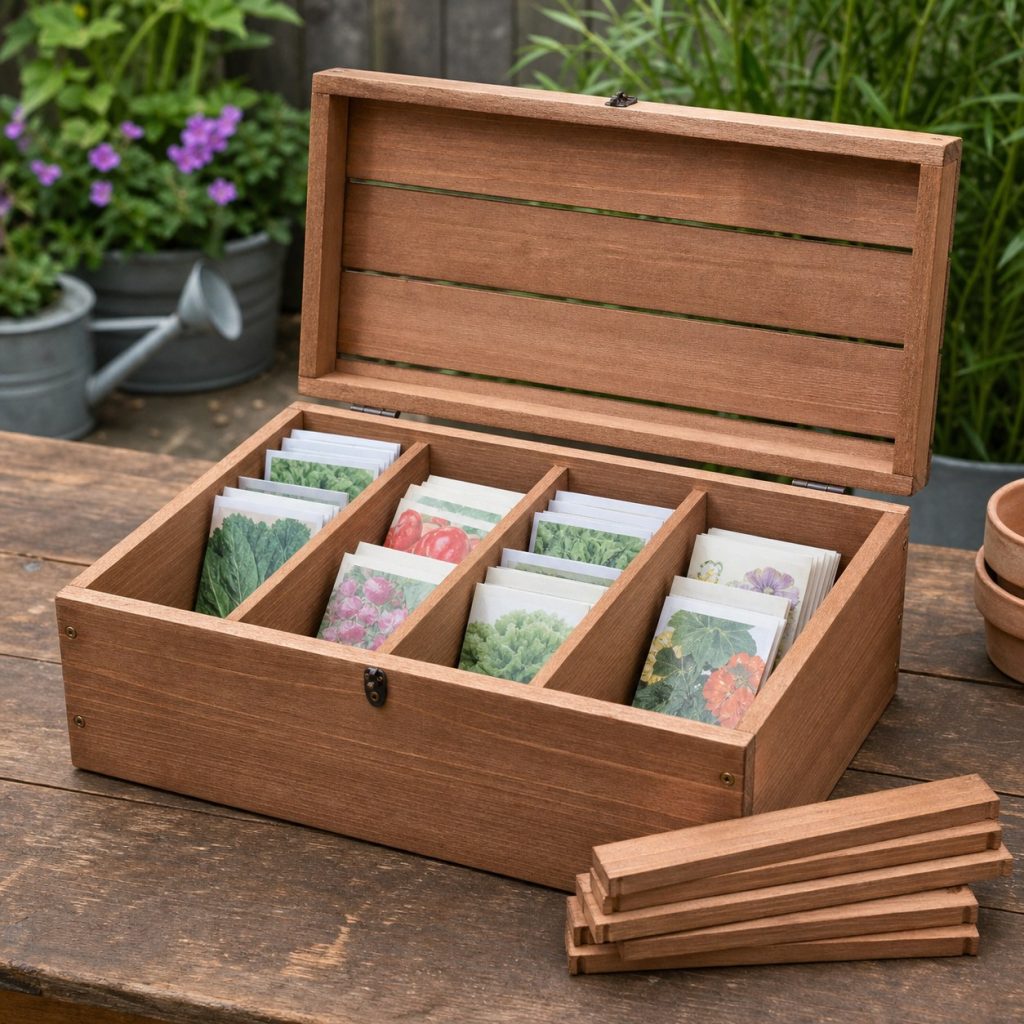
Adjustable grooves allow the layout to change without loose spacer pieces or exposed sharp edges.
Wall-Cubby Seed Organizer
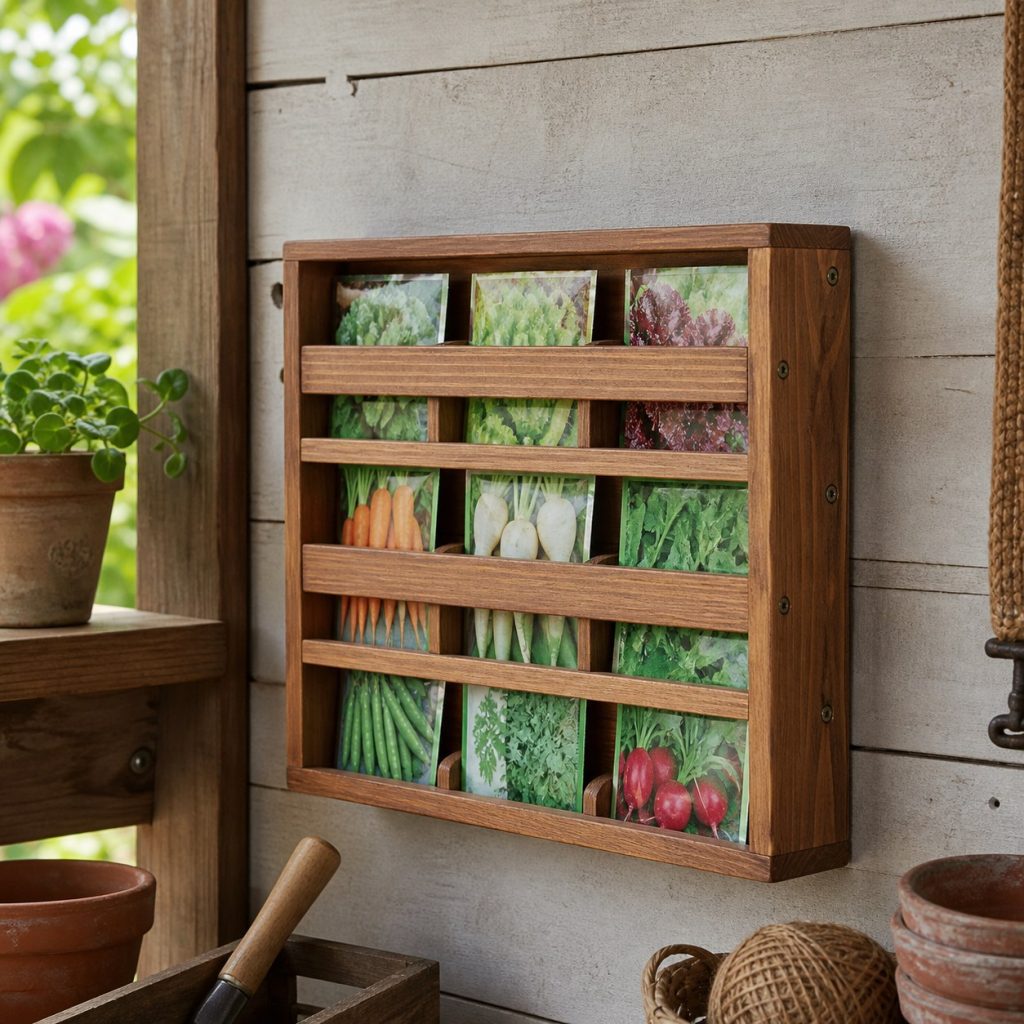
Wall attachment must support the loaded organizer while packets remain protected from damp exterior walls.
Portable Latching Seed Box
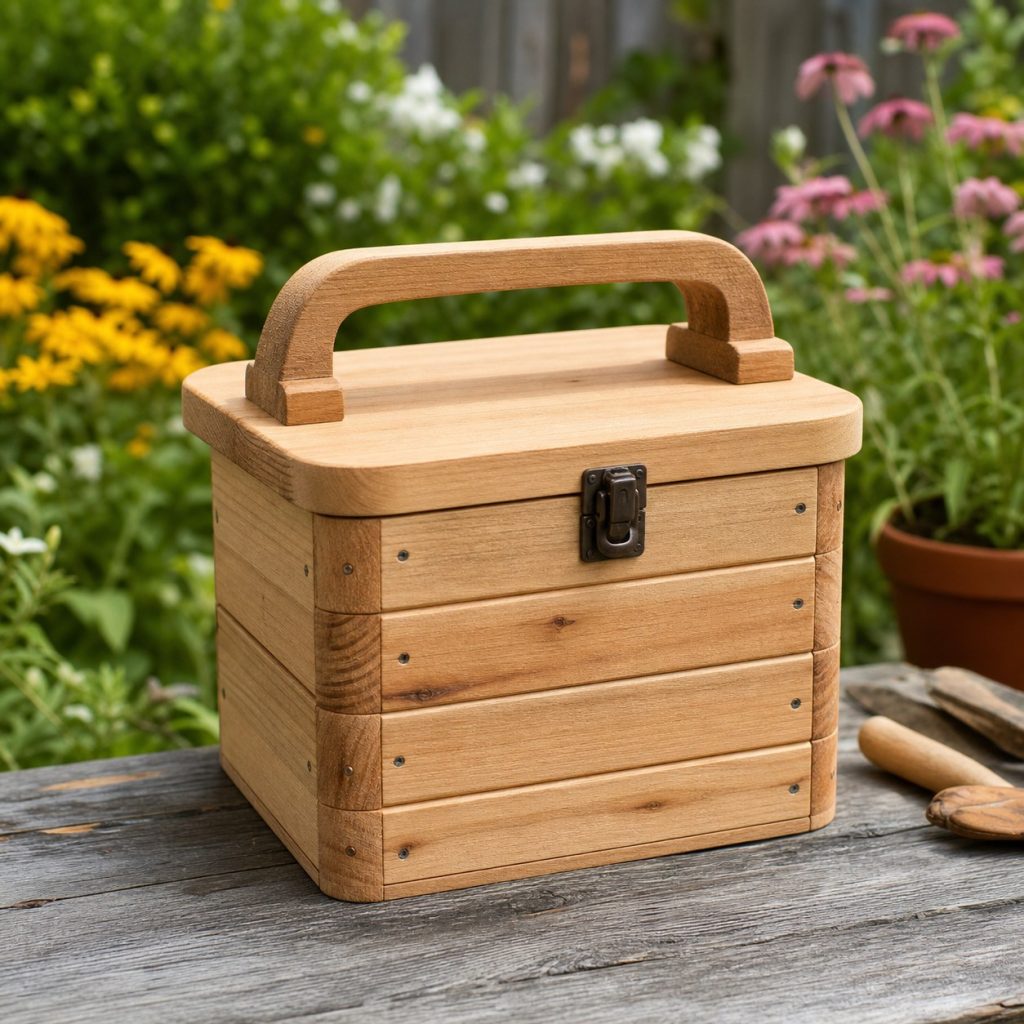
A latch prevents accidental opening but does not make the box child-resistant or moisture-proof.
Divider and Joinery Details
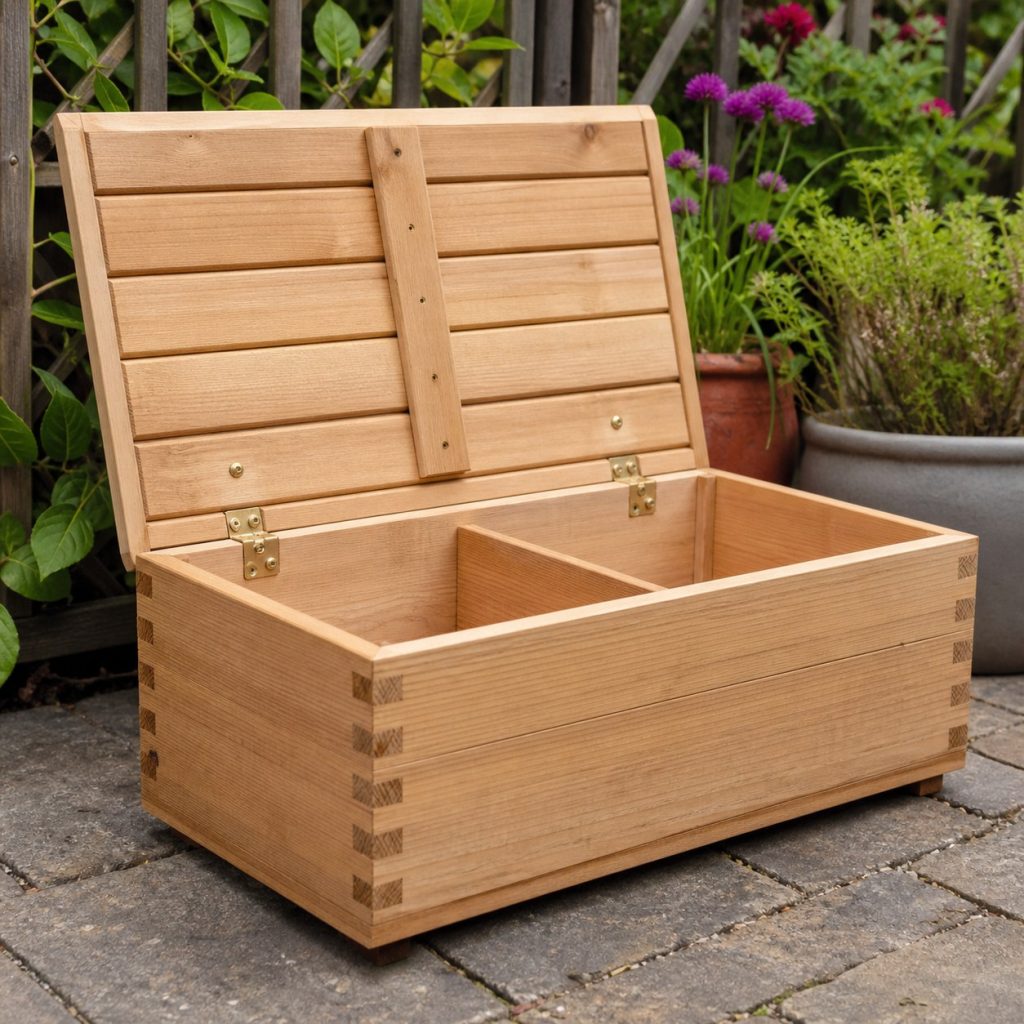
Accurate small-part milling, dust removal, fully cured finish, and removable dividers support safe clean storage.
Planning checklist
- Measure packet sizes and allow comfortable finger access.
- Use square joinery and smooth removable dividers.
- Control lid travel and remove pinch or sharp hazards.
- Keep the box in a dry temperature-appropriate location.
- Retain original packet identification and supplier instructions.
These woodworking concepts and generated images are planning inspiration, not measured drawings, cut lists, tested furniture plans, load ratings, engineered structures, accessibility designs, playground certifications, or utility instructions. Verify dimensions, ergonomics, lumber grade and treatment, grain direction, joint design, fastener and preservative compatibility, structural and wind loads, stability, sharp and pinch hazards, finish labels, equipment instructions, accessibility, permits, and local requirements for the actual project. Use appropriate personal protective equipment and qualified engineers, electricians, plumbers, accessibility specialists, and other licensed professionals where the work or hazards require them.
Frequently asked questions
Should seeds be stored in the garden shed?
Only if its temperature and humidity stay within the seed supplier's guidance. Many sheds become too hot, cold, or damp.
Does a wooden box keep seeds dry?
No. Wood buffers brief changes but is not moisture-proof. Use appropriate inner containers if the seed supplier recommends them.
Can treated seed share the box?
Follow the treatment label and supplier instructions, keep original identification intact, and separate it from food and unauthorized access.