Project planning guide
Before you build
Use the reference image and planning notes as a starting point. Confirm dimensions, loads, materials, local codes, and site conditions before purchasing or cutting.
- Garden Projects
- 8 reference images
- Print-friendly guide
Strawberries have shallow spreading roots, runners, fruit that benefits from airflow, and containers that can dry quickly. A wooden planter should provide real soil volume, free drainage, reachable planting pockets, irrigation access, and a stable frame rather than maximizing the number of tiny openings.
Three-Tier Step Planter
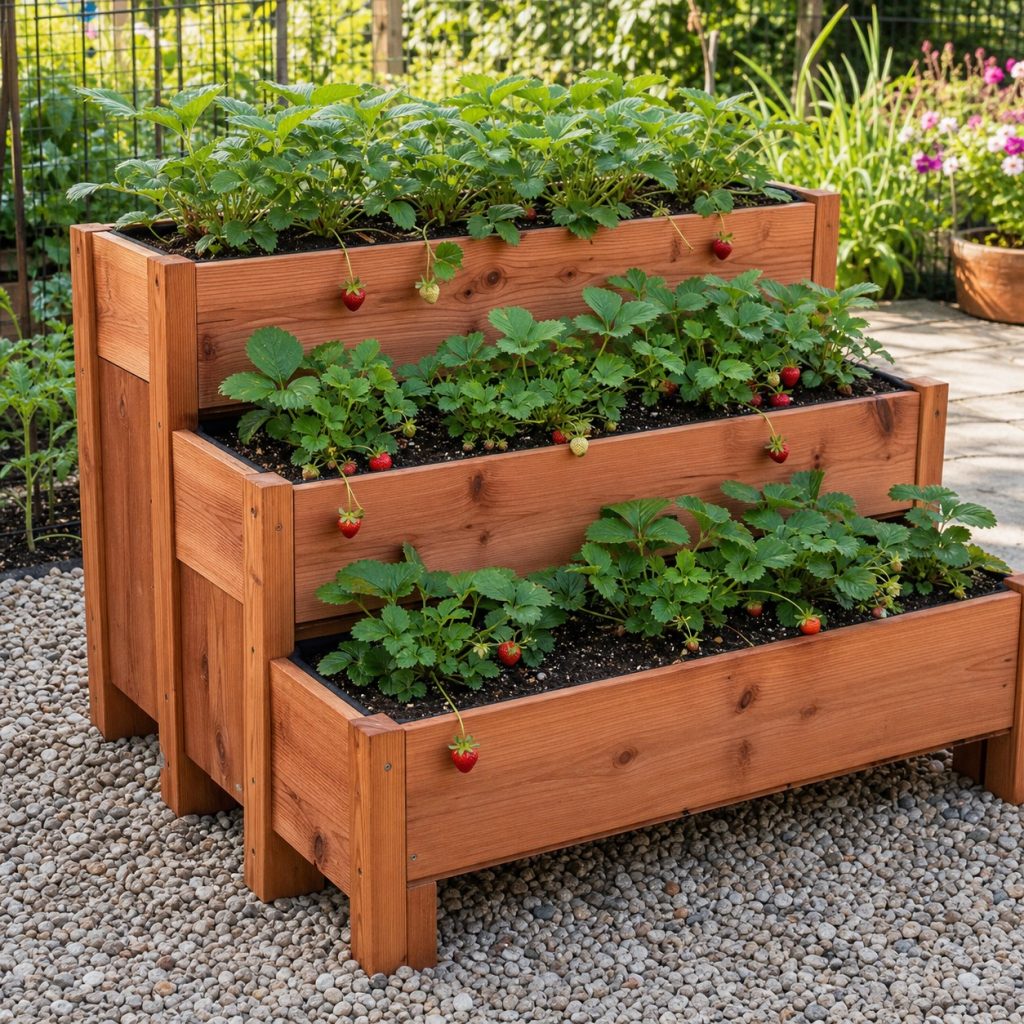
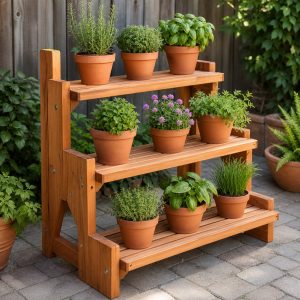
Broad ascending troughs expose fruit to light and make each level easy to reach. Support the front and back of every box, keep upper drainage from eroding the tier below, and allow enough vertical separation for leaves and harvesting hands.
Square Pyramid Planter
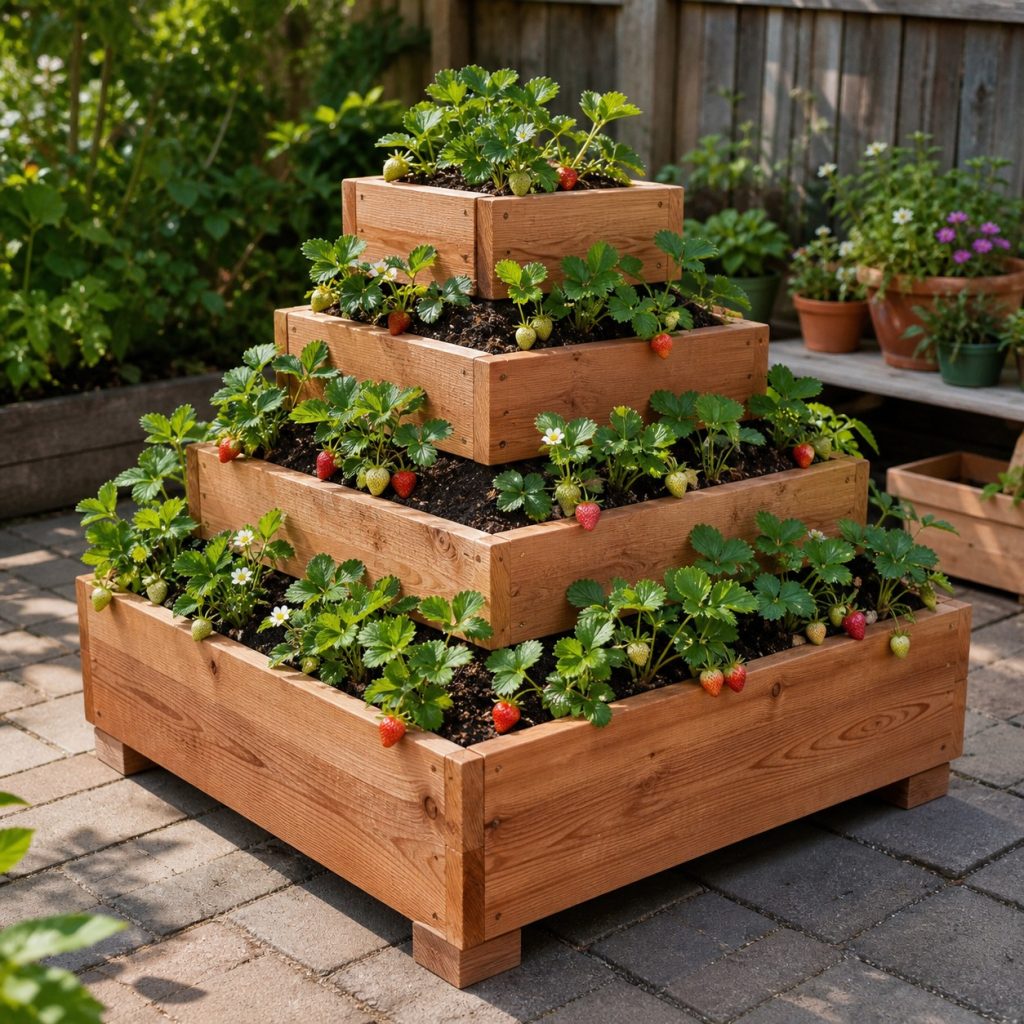
Stack progressively smaller boxes over a wide base, but avoid burying inaccessible soil in the center. Each level needs a supported floor, separate drainage, and a reachable planting band. Check the total saturated weight before placing it on a deck.
Offset Strawberry Tower
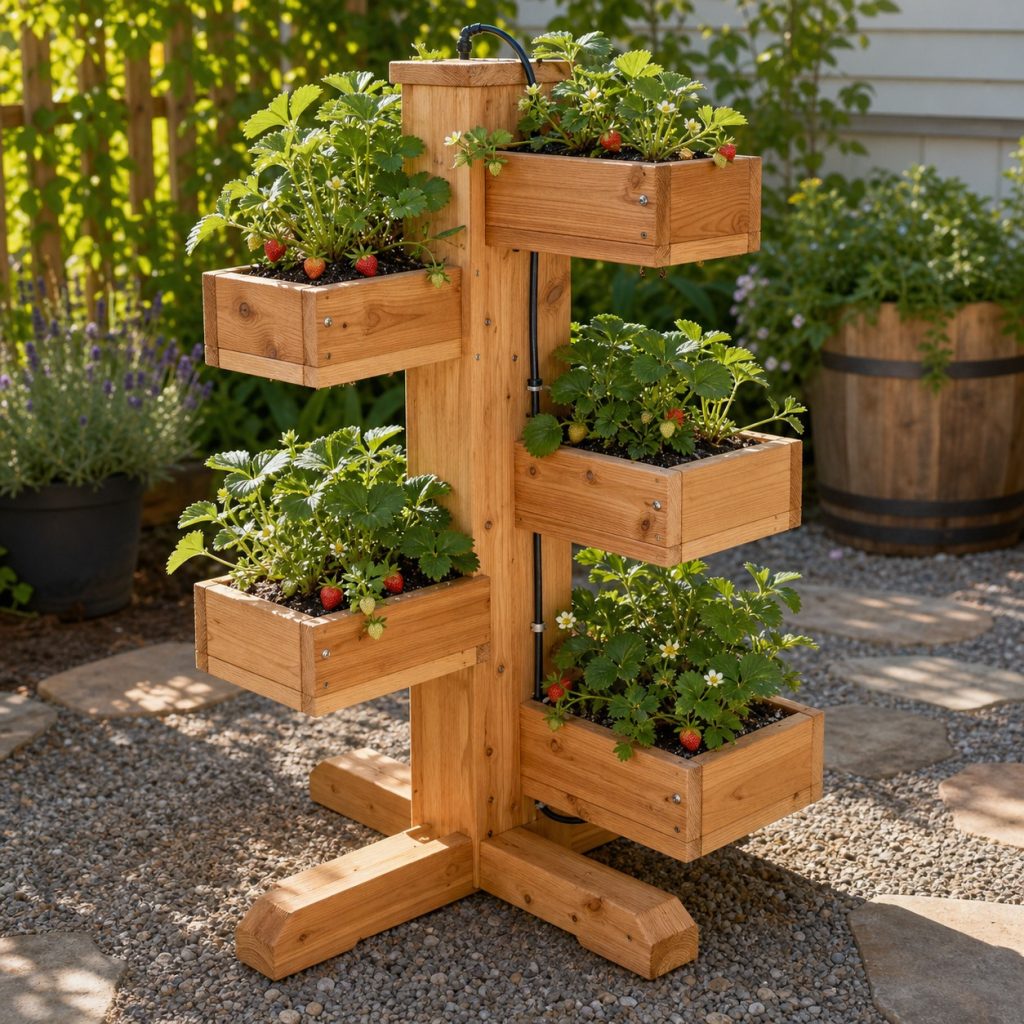
Offset boxes provide multiple orientations without cutting small holes through a solid column. Tie each box to a structural center post, keep the footprint wide, and rotate plant positions only if the tower can be moved safely. Use a top-fed drip line only after checking even distribution.
Secured Ladder Planter
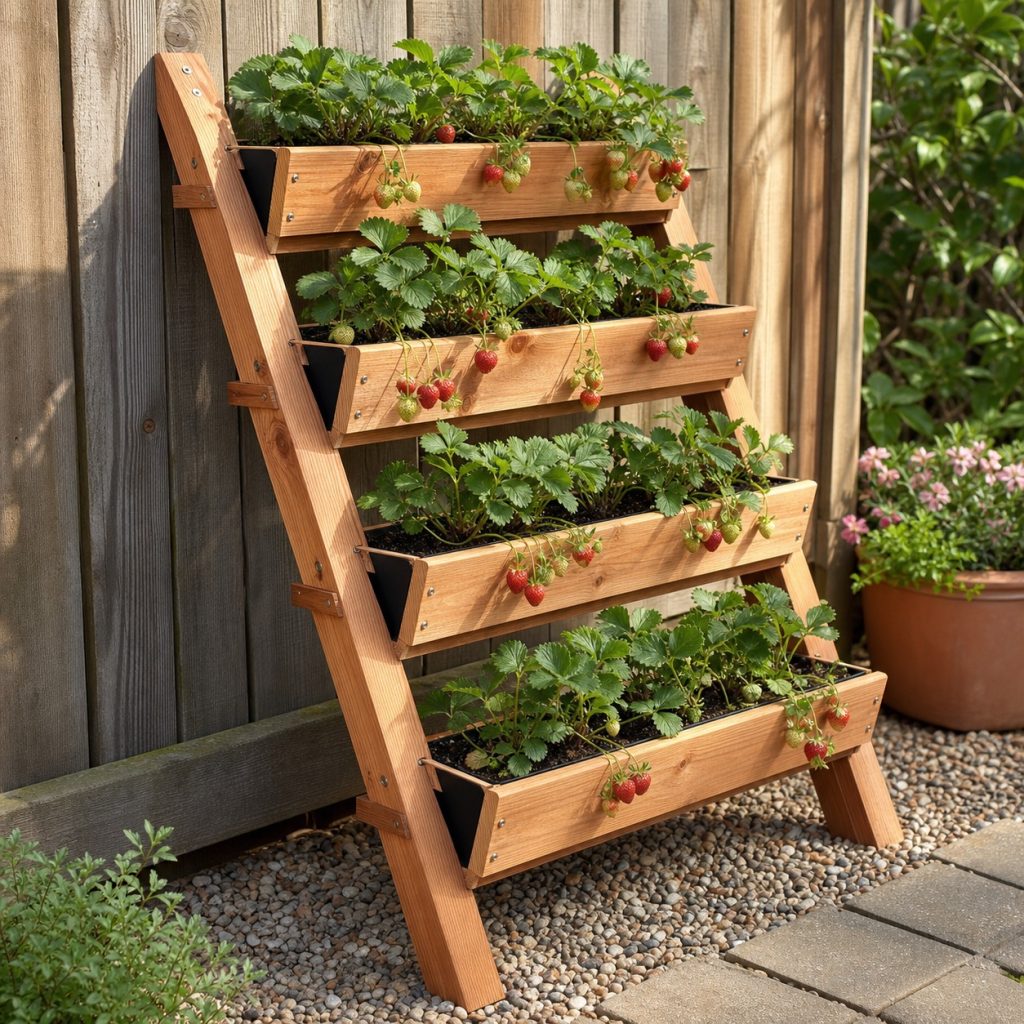
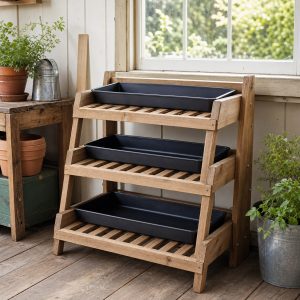
A ladder profile places all troughs on one sunny face and simplifies harvest. Secure it to suitable structure, add front retaining boards, and leave space behind for drainage and cleaning. Upper tiers should remain light enough that the frame cannot overturn.
Two-Sided A-Frame Planter
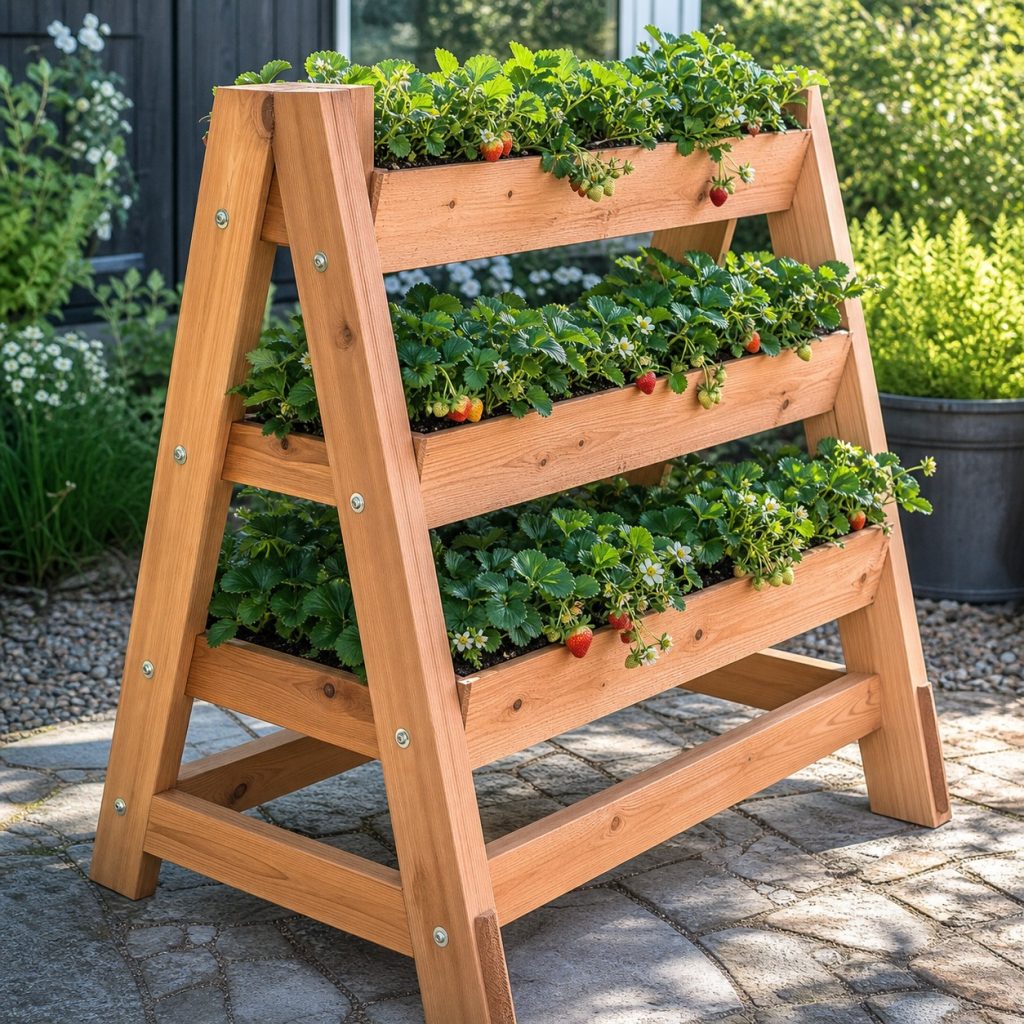
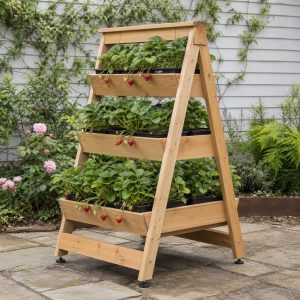
A two-sided frame balances growing pockets but needs positive spread control and sun on both faces. Use continuous legs, cross braces, and supported troughs. Keep the top open enough for watering and avoid letting foliage hide structural connections.
Elevated Strawberry Table
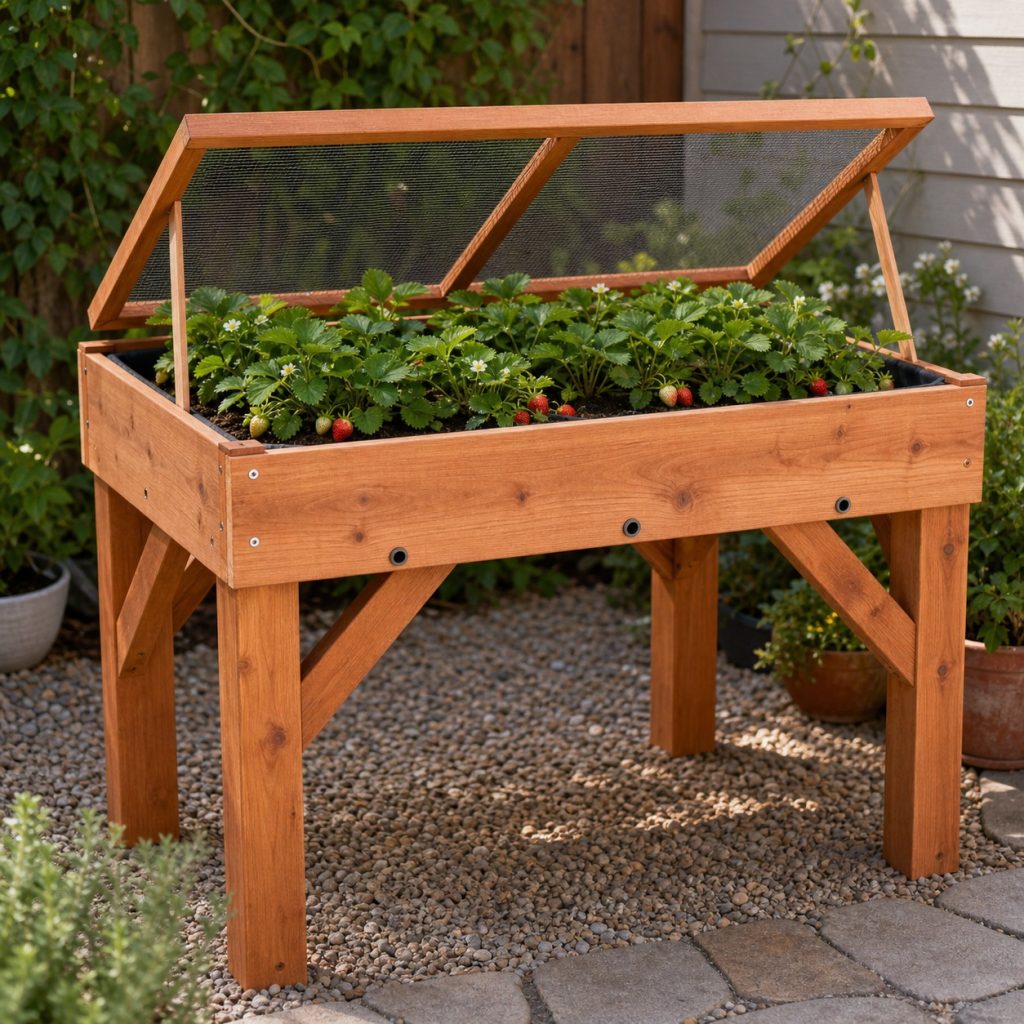
An elevated bed reduces bending and keeps fruit away from splash. The soil load is substantial, so use a rigid apron, multiple floor supports, diagonal bracing, and foundations that will not settle. A removable net frame should never create an entanglement hazard.
Assemble Drained Troughs
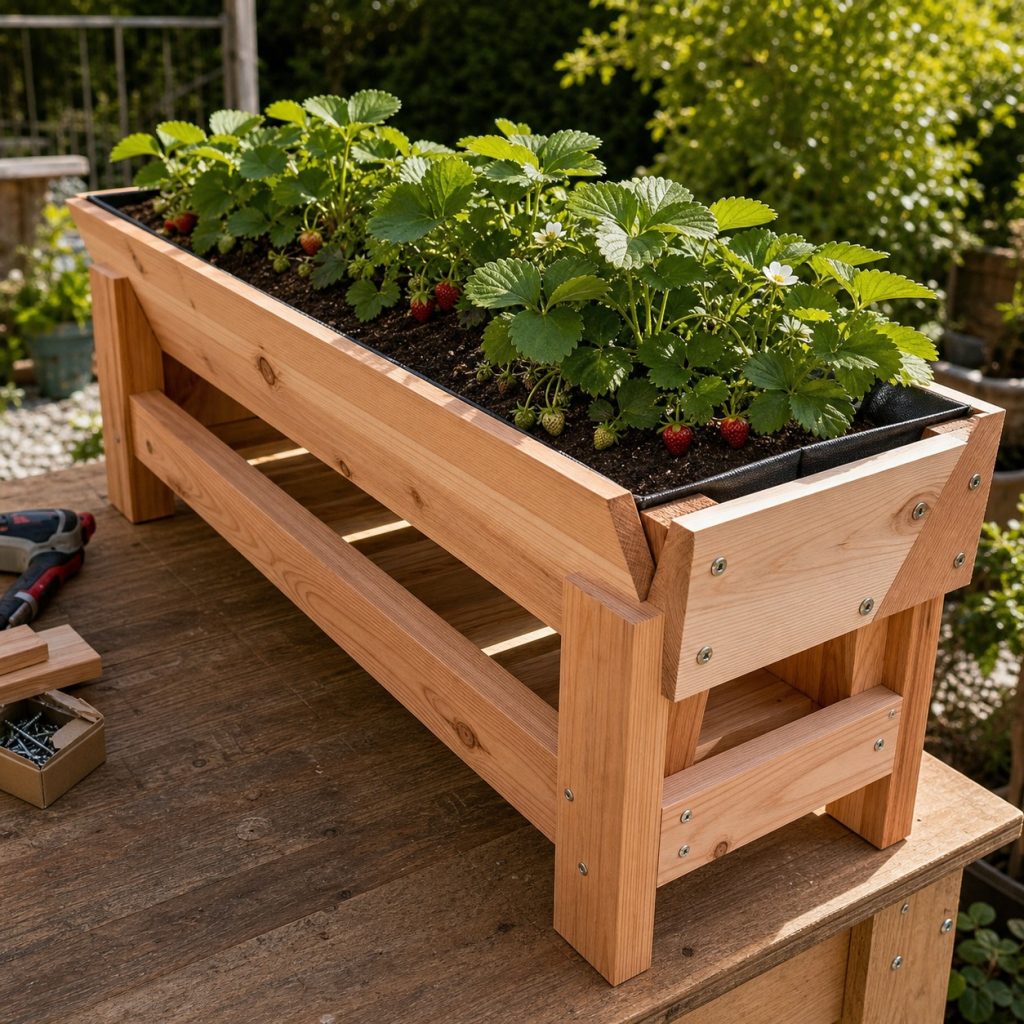
Build identical troughs with matched end panels and support rails. Protect end grain, use a liner that does not seal the wood into a wet pocket, and create open drain routes before assembly. Test with water before adding mix and plants.
Manage Water and Seasonal Wear
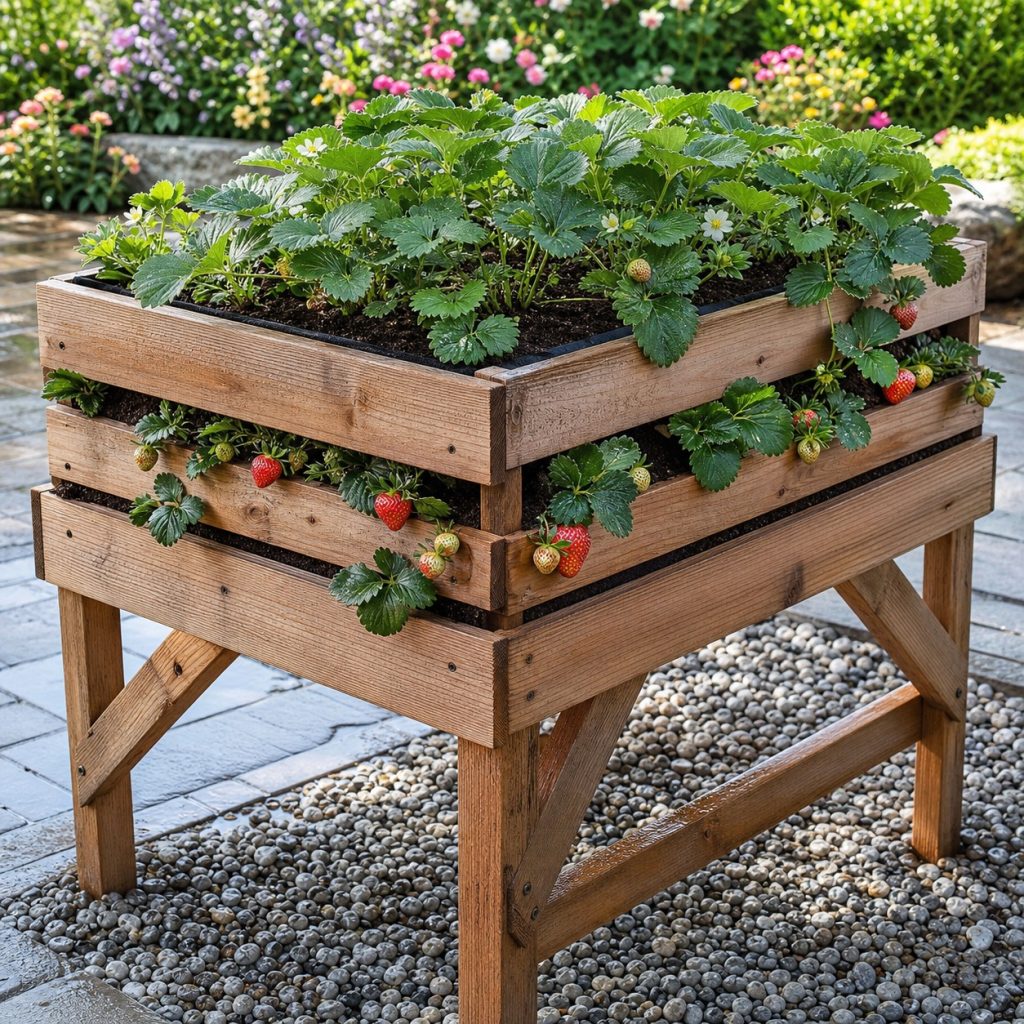
Containers may need frequent irrigation in heat, yet constant saturation promotes root and wood problems. Water each level evenly, renew mix as appropriate, remove diseased material, and inspect joints, feet, liners, and drains after winter or heavy rain.
Planning checklist
- Prioritize soil volume and root health over the number of pockets.
- Support every trough and design the frame for saturated weight.
- Use suitable liners and multiple unobstructed drainage routes.
- Keep all tiers reachable for watering, harvest, and runner control.
- Inspect bracing, feet, fasteners, liner, mix, and drainage seasonally.
These concepts are general planning guidance, not engineering drawings or tested load-rated plans. Verify dimensions, lumber grade and treatment, structural loads, foundations, fasteners, coatings, utility locations, accessibility, wildlife guidance, property rules, permits, and local building requirements for the actual site. Use qualified local professionals for structural, fall, swing, bridge, retaining, electrical, plumbing, or water hazards.
Frequently asked questions
How deep should a strawberry planter be?
Use the depth recommended for strawberries by local extension guidance and the selected cultivar, with room for drainage and a suitable container mix.
Can strawberry planters sit on a deck?
Only after checking the saturated weight, drainage staining, structural capacity, wind stability, and maintenance access.
Is a strawberry tower better than a wide planter?
A tower saves floor area but dries and shades unevenly more easily. A wide trough is often simpler to irrigate and maintain.