Project planning guide
Before you build
Use the reference image and planning notes as a starting point. Confirm dimensions, loads, materials, local codes, and site conditions before purchasing or cutting.
- Garden Projects
- 8 reference images
- Print-friendly guide
A wheelbarrow planter can create a useful garden focal point, but wet soil is heavy and relentlessly damp. The safest version is a stationary planter inspired by a wheelbarrow, with a broad stable footprint, a decorative wheel that is not expected to carry transport loads, controlled drainage, and a replaceable liner or inner pot.
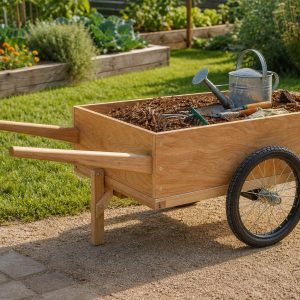
Classic Rustic Wheelbarrow Planter
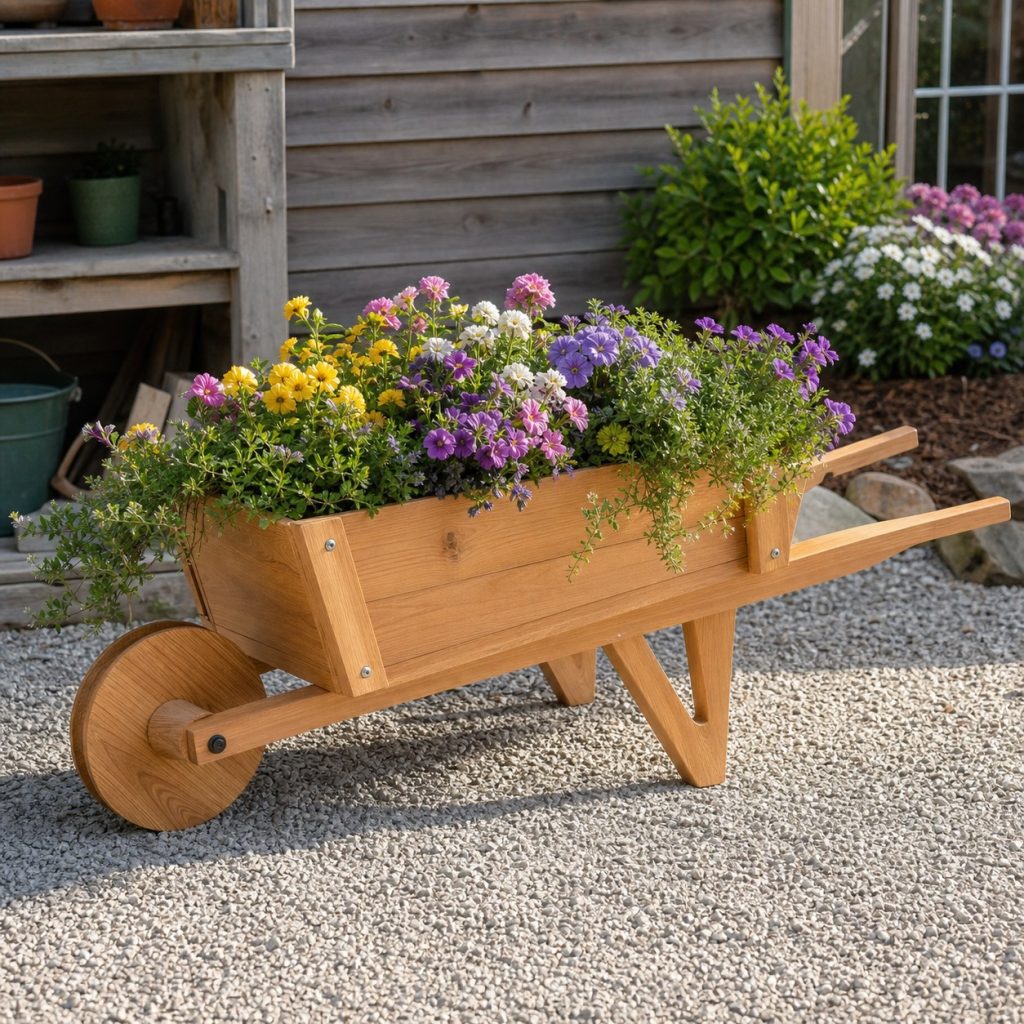
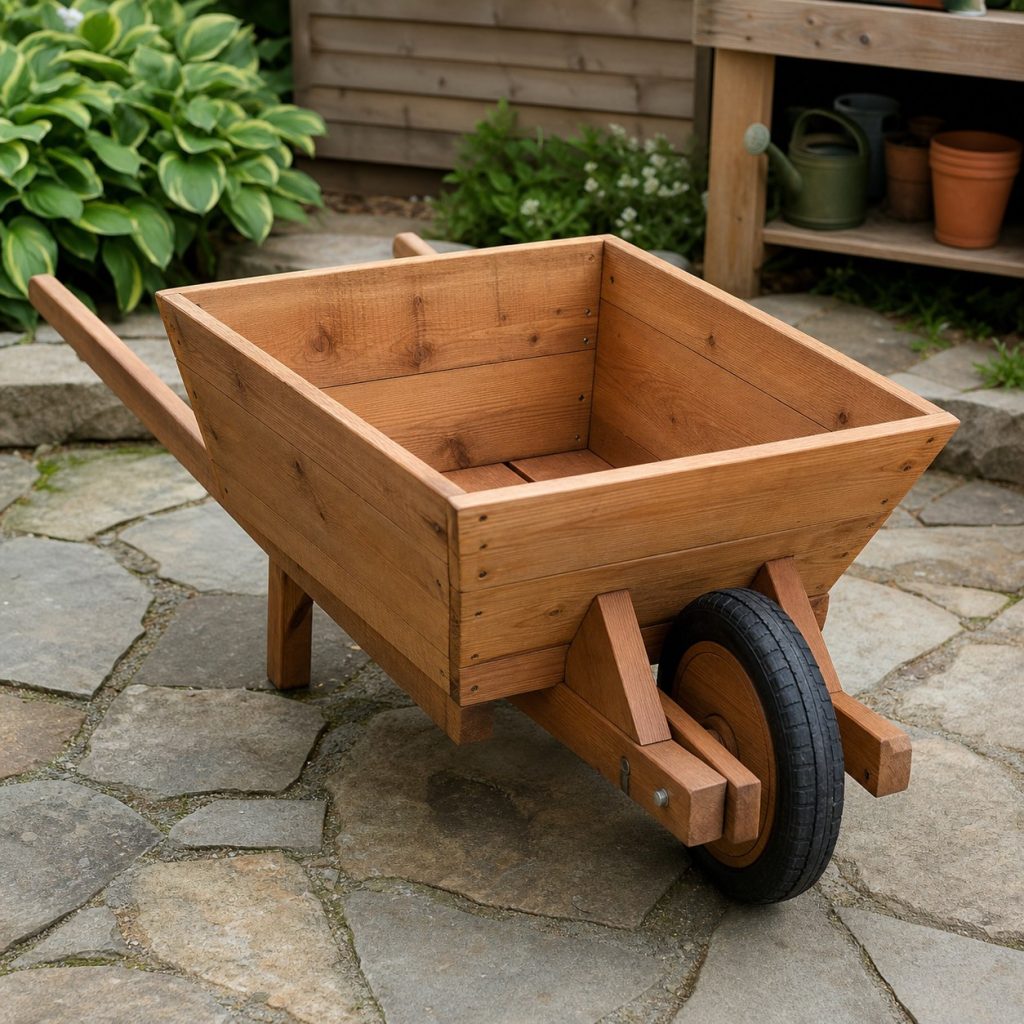
The classic silhouette uses a tapered box, long handles, and one front wheel. Let the frame and rear feet carry the planted box while the wheel completes the form. Keep the handles smooth and discourage attempts to move the planter when loaded.
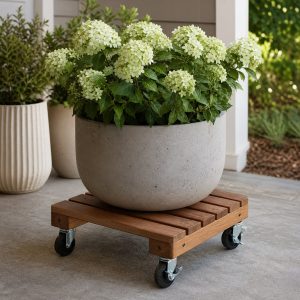
Compact Patio Planter
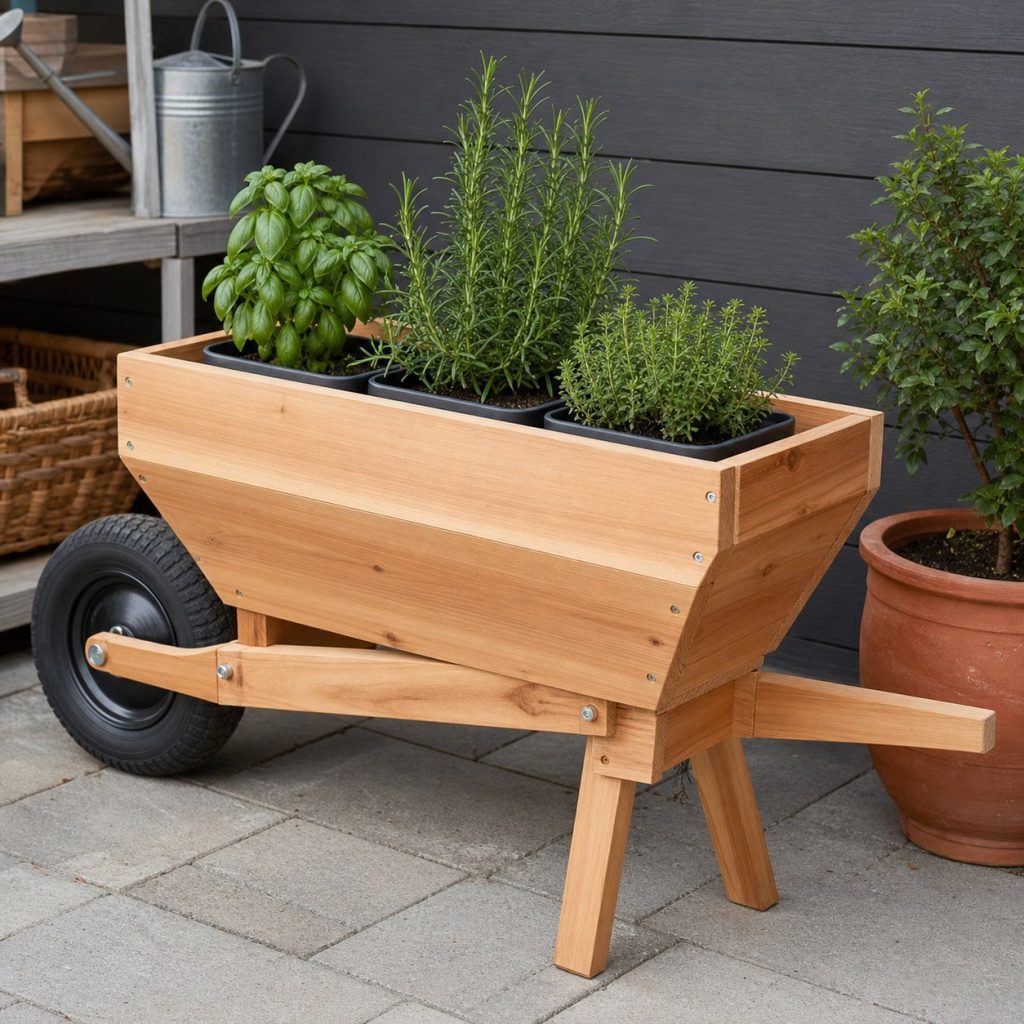
A compact version can hold several removable nursery pots without a deep soil mass. A slatted false floor supports the containers and drains freely. Keep the footprint broad enough that wind, pets, or an accidental bump cannot tip it.
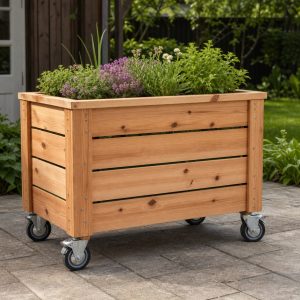
Deep Flower Planter
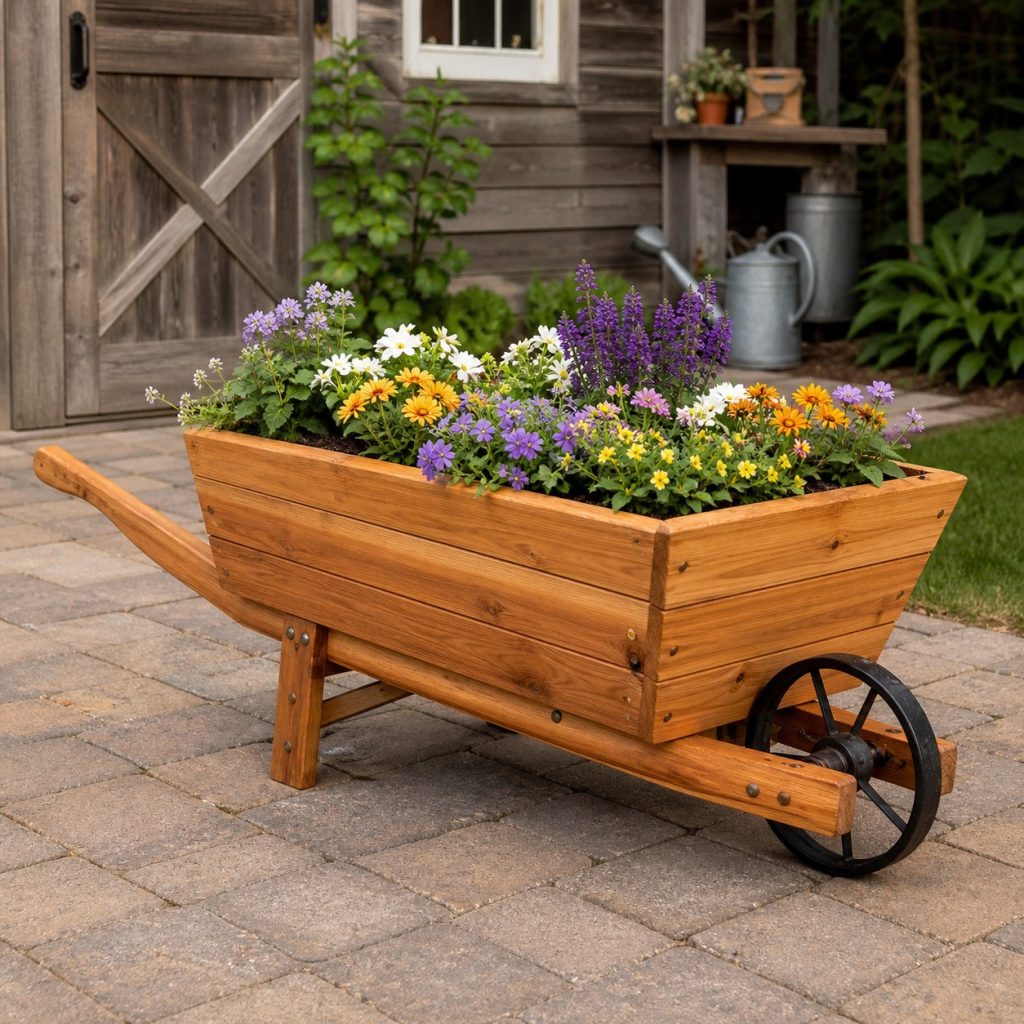
A deeper box supports more roots but greatly increases saturated weight. Use a complete inner support frame, close-spaced bottom supports, stable feet, and a liner system rated for the use. Confirm that overflow cannot soak the wheel hub or handles.
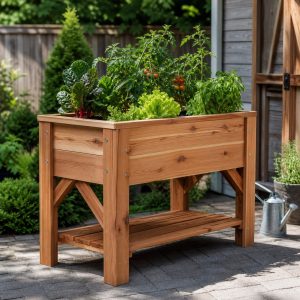
Divided Herb Planter
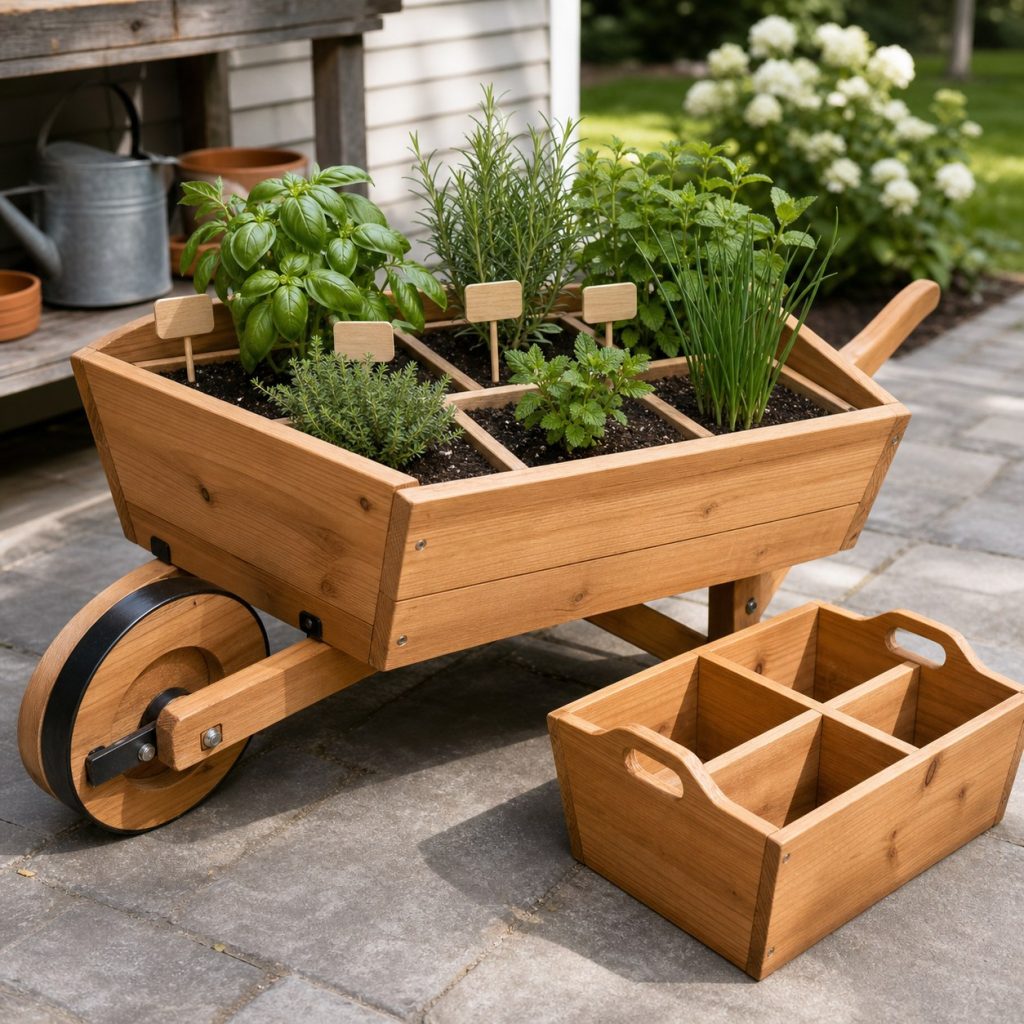
Separate inner containers keep herbs with different moisture needs manageable and simplify replacement. Keep labels and dividers light, avoid treated surfaces where labels or plants contact them contrary to product instructions, and preserve ventilation around the pots.
Removable Liner System
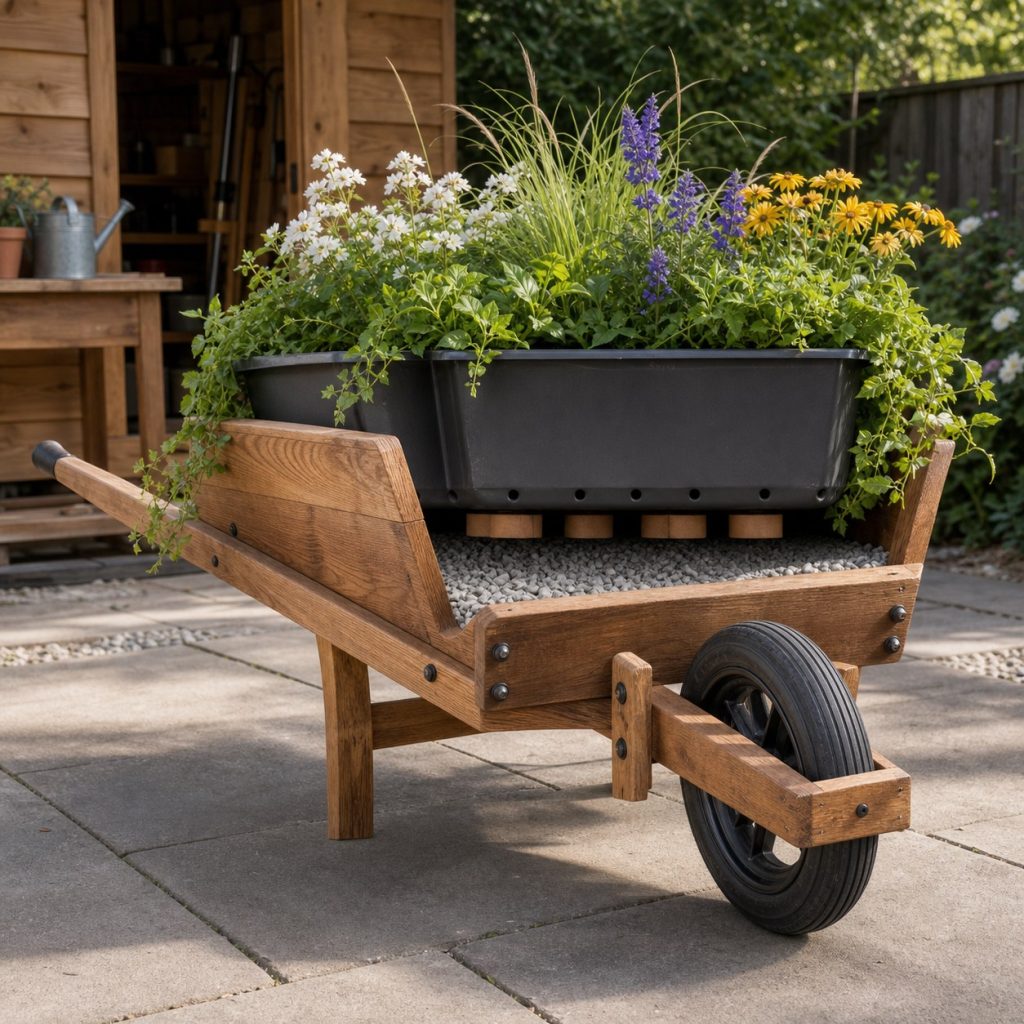
A rigid removable liner isolates much of the moisture and makes seasonal cleanup easier. Support its base rather than only the rim, provide an air gap, align drain openings with a clear outlet, and avoid thin film that tears against fasteners.
Build the Handles and Base Frame
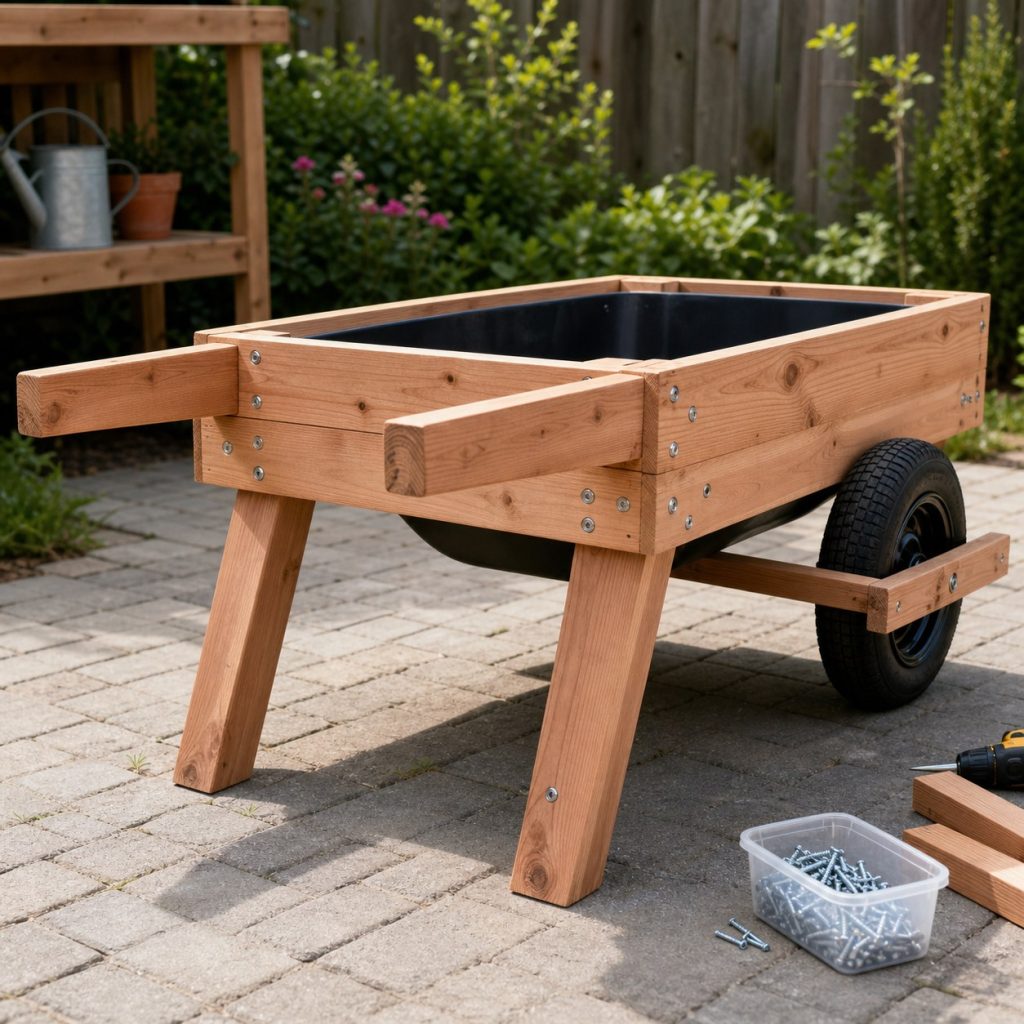
Use two continuous handles as side rails, connect them with cross members, and add rear legs and diagonal braces before installing the box. Compare diagonals and confirm all four support points contact the ground without rocking.
Make a Decorative Wood Wheel
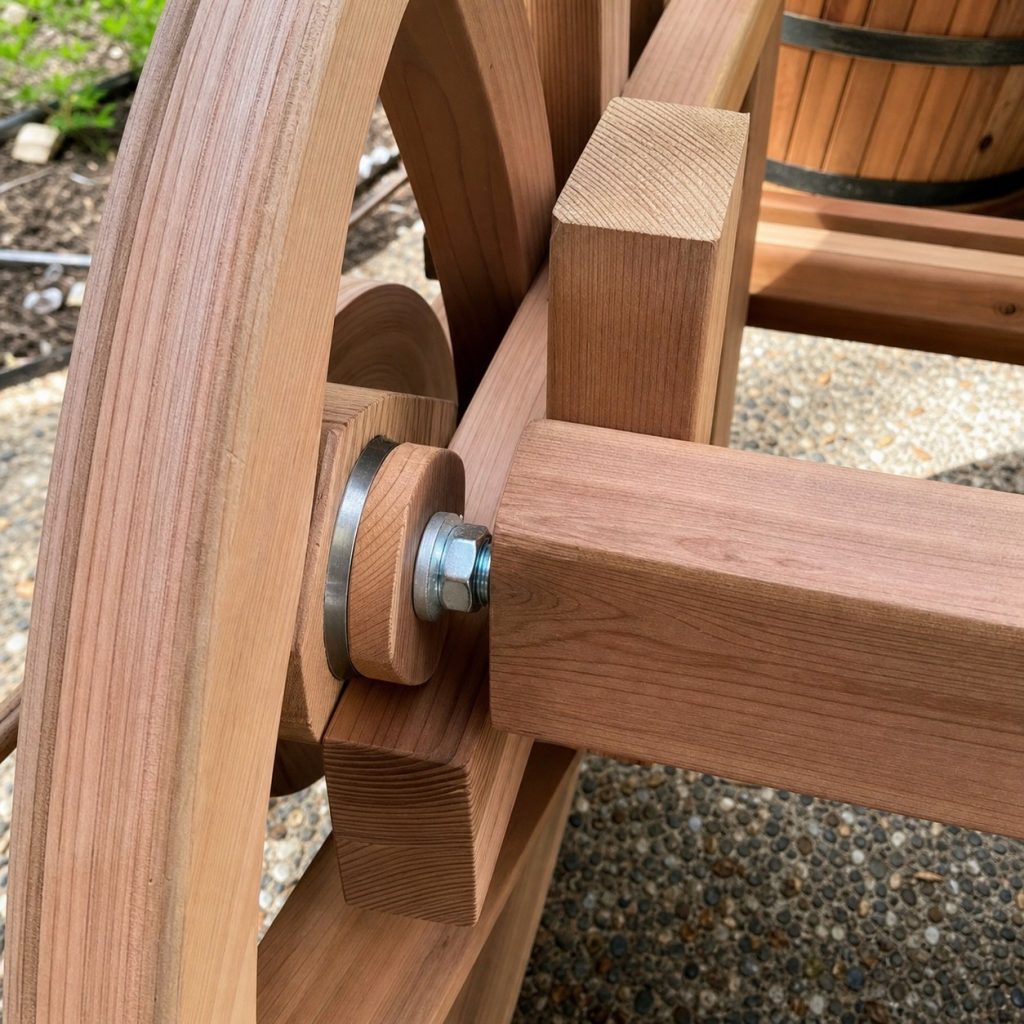
A laminated or segmented wheel needs a protected rim, centered axle hole, spacers, and smooth edges. If the planted unit is stationary, block or pin rotation discreetly. A decorative wheel is not evidence that the loaded planter is safe to transport.
Drain and Renew the Planter
At season end, remove containers or the liner, clear drain openings, and let the wood dry. Inspect the bottom supports, rear legs, wheel, axle, handles, fasteners, and finish. Repair movement or decay before refilling with wet soil.
Planning checklist
- Design it as a stationary planter, not a loaded cart.
- Estimate saturated soil and container weight.
- Use stable rear feet, braces, and supported liners or pots.
- Separate moisture from wood and route drainage safely.
- Empty, dry, and inspect hidden supports seasonally.
These concepts and generated images are general planning inspiration, not measured drawings, wildlife-box specifications, engineered plans, or tested load-rated designs. Verify dimensions, lumber grade and treatment, structural loads, fasteners, coatings, accessibility, utility locations, wildlife and public-health guidance, property rules, permits, and local building requirements for the actual project. Use current species- and region-specific plans for wildlife habitat, and qualified professionals where structural, electrical, plumbing, fall, or entrapment hazards apply.
Frequently asked questions
Can a wooden wheelbarrow planter be moved when full?
Do not assume so. Saturated soil is heavy and a decorative frame or wheel may not be designed for transport. Empty it before relocating.
Should soil touch the wood directly?
A removable rigid liner or individual pots reduce moisture exposure and simplify maintenance. Provide drainage and an air gap where practical.
Does the wheel need to turn?
No. For a stationary planter, a fixed decorative wheel reduces unintended movement and simplifies the axle detail.