Project planning guide
Before you build
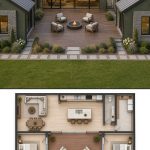
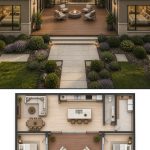
Use the reference image and planning notes as a starting point. Confirm dimensions, loads, materials, local codes, and site conditions before purchasing or cutting.
- Luxury & Custom Homes
- 1 reference image
- Print-friendly guide
A log home kit arrives as a numbered puzzle of timber and a promise: your cabin, faster and cheaper. The promise is real — if you understand what the kit price actually covers. Here’s the honest 2026 math, plus the ownership realities the brochures skip.

What a Kit Actually Includes
“Log home kit” describes three very different purchases, and the industry does not make the difference loud:
Walls-only packages ship the milled logs, fasteners, and sealant between courses — nothing else. Dry-in packages add the roof system, exterior doors, and windows: a shell you can lock. Complete packages include interior partitions, stairs, and trim stock. None of the three includes the foundation, plumbing, wiring, HVAC, kitchen, baths, or labor. When two kits look identical in price, the spec sheet is where one turns out to be $40,000 lighter.
Log Home Cost in 2026: Kit vs. Finished
Kit packages in 2026 run roughly $50 to $100 per square foot depending on completeness and log profile. The rule of thumb the industry itself uses: a finished log home costs two and a half to three times the kit price. Turnkey construction lands most owners between $200 and $400 per square foot — log homes are not the budget path; they are the character path.
| Size | Typical kit price | Finished turnkey (2026) |
|---|---|---|
| 1,000 sq ft | $50,000 – $100,000 | $200,000 – $400,000 |
| 1,500 sq ft | $75,000 – $150,000 | $300,000 – $600,000 |
| 2,000 sq ft | $100,000 – $200,000 | $400,000 – $800,000 |
| 2,500 sq ft | $125,000 – $250,000 | $500,000 – $1,000,000 |
Owner-builders with real skills routinely beat those finished numbers by a third — log shells reward sweat equity better than almost any build type, because the walls go up fast and arrive pre-cut. Remote land adds the usual well, septic, and access costs on top; they hit log builds often because log builds chase remote views.

Building It: The Two Log-Specific Realities
Crane day matters. Milled kits assemble like heavy, precise Lincoln Logs — crews report dry-in in weeks. But logs are logs: plan the crane, the site access, and covered storage for the delivered package, because a kit sitting tarped in the rain for a month starts its life badly.
The house will settle — on purpose. Solid-log walls shrink as they season, up to several inches over the first years. Quality kits engineer for it: screw jacks under posts, slip joints over windows and doors, settling gaps hidden in trim. This is normal maintenance, not a defect — but it is why plumbing and stair details in log homes need builders who have done one before.

The Ownership Contract Nobody Reads Aloud
Log walls are exterior wood, and exterior wood is a maintenance schedule. Plan on washing and re-staining every three to five years — roughly $2,000 to $6,000 per cycle if hired out — plus annual caulk and chinking inspection, especially on south and weather-facing walls. Design buys most of the protection: deep roof overhangs, tall foundations, and gutters keep water off the logs and stretch every cycle. Insurers, meanwhile, quote log homes case by case; wildfire-zone premiums have climbed sharply in 2026, and a quote before land purchase is now standard advice.
Energy performance is better than the R-value math suggests — log mass stores and releases heat, smoothing swings in climates with warm days and cool nights — but air-sealing quality between courses is what separates the snug log homes from the drafty ones. It is a craftsmanship question; ask every builder reference about winter comfort.

Milled Kit or Handcrafted?
Milled kits — uniform, machine-profiled logs — dominate the market and the price table above. Handcrafted log homes, built log-by-unique-log by artisans, start around $400 per square foot and climb steeply; they are heirloom construction, priced accordingly. If the budget conversation is really “maximum character per dollar,” a milled kit with a great room prow and honest finishes wins — and if it is “maximum space per dollar,” a different building type wins entirely; our cost-to-build guide lays out the alternatives.
Log Cabin Kit FAQ
How much does a 1,500 sq ft log cabin kit cost in 2026?
The kit: roughly $75,000 to $150,000. The finished home: $300,000 to $600,000 turnkey, or meaningfully less with owner-builder labor.
Are log homes hard to finance?
Construction loans work normally with experienced builders, but appraisals depend on log-home comparables — thin in some counties. Lenders who know the category exist; find one early.
How much is annual maintenance?
Budget $1,000 to $2,000 a year averaged — the re-staining cycle is the big line, with sealant touch-ups and inspections between.
Do log homes hold value?
Well-maintained ones in cabin markets hold value strongly; neglected ones discount hard, because buyers price the deferred maintenance instantly. The stain schedule is the property value.
Kit contents, settling engineering, and local code acceptance vary by manufacturer and county — read the spec sheet line by line and confirm requirements locally before ordering. Figures above are 2026 planning estimates.