Project planning guide
Before you build
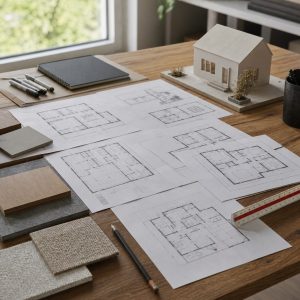
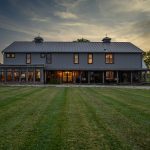
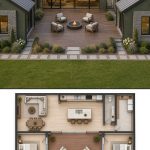
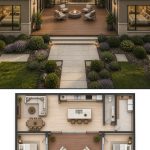
Use the reference image and planning notes as a starting point. Confirm dimensions, loads, materials, local codes, and site conditions before purchasing or cutting.
- Home Building
- 1 reference image
- Print-friendly guide
Planning a build this year? Here’s what a new house actually costs in 2026 — the honest per-square-foot numbers, where the money really goes, and the line items that catch first-time builders off guard.

The Headline Number for 2026
Strip away the outliers and most owner builds in 2026 land between $150 and $280 per square foot for a conventional stick-built home, not counting land. Production builders in affordable markets still touch the low end of that range; custom homes in high-cost metros routinely clear $300. The broad middle — where most readers of this site will land — is $180 to $250 per square foot.
Here’s what that means at common sizes:
| Size | Typical layout | Estimated build cost (2026) |
|---|---|---|
| 1,500 sq ft | 3 bed, 2 bath | $225,000 – $420,000 |
| 2,000 sq ft | 3–4 bed, 2.5 bath | $300,000 – $560,000 |
| 2,500 sq ft | 4 bed family layout | $375,000 – $700,000 |
| 3,000 sq ft | 4–5 bed + bonus room | $450,000 – $840,000 |
Those figures cover construction only. Land, site development, and soft costs stack on top — and they’re exactly where estimates most often go wrong, so let’s walk through them.
Where the Money Actually Goes

A typical single-family budget breaks down in rough tenths. Site work — clearing, grading, utility trenches — usually takes 5 to 8 percent. The foundation runs about 10 percent. Framing, sheathing, and the roof structure claim around 15 percent. The big mechanical systems — plumbing, electrical, and HVAC — together take another 15 percent. Exterior finishes such as siding, roofing, windows, and doors absorb roughly 14 percent.
And then comes the number that surprises everyone: interior finishes eat 25 to 30 percent of the entire budget. Cabinets, countertops, flooring, tile, trim, paint, fixtures, appliances — the pretty stuff you walk through a model home admiring is the single largest slice of the pie. When a build blows its budget, this is usually where it happens, one upgraded faucet at a time.
The Costs Nobody Puts in the Estimate
Beyond the construction contract, plan real money for these:
Permits and fees. Building permits, plan review, and — in many growing counties — impact fees. Depending on where you build, this ranges from about $2,000 to well over $20,000.
Utility connections. City water and sewer taps can cost a few thousand dollars each. On rural land, a well and septic system together commonly run $15,000 to $40,000.
Site surprises. Rock excavation, poor soils requiring engineered fill, or a steep driveway can add five figures before the slab is poured. A soils test before you buy land is the cheapest insurance in home building.
The overrun buffer. Experienced builders tell clients to hold 10 to 15 percent in reserve. Builds that finish exactly on budget are the exception, not the rule.

Five Ways to Genuinely Lower the Cost
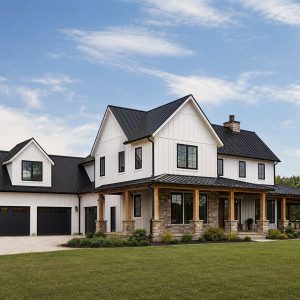
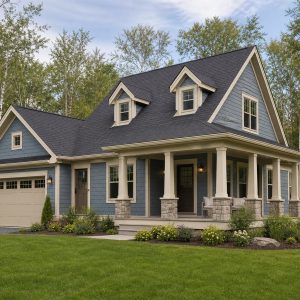
Simplify the footprint. A rectangle is the cheapest shape you can build. Every bump-out, dormer, and roof valley adds framing labor, flashing, and future maintenance.
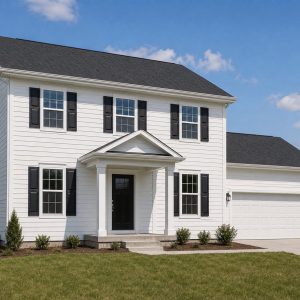
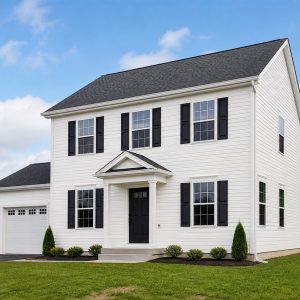
Go up, not out. A two-story home puts the same square footage over a smaller foundation and under a smaller roof — the two most expensive horizontal surfaces in the project.
Finish some space later. A bonus room over the garage or an unfinished basement costs far less to rough in now and finish in a few years than to build as new space later.
Bid it properly. Three genuinely comparable bids on the same plan set routinely come back with a spread of 15 percent or more. That spread is free money for the patient.
Consider a different building type. If maximum space per dollar is the goal, alternative builds can undercut conventional framing — our barndominium cost guide shows how a steel-shell home can come in meaningfully cheaper per square foot.

How Long a Build Takes in 2026
For a straightforward custom home with a competent builder, expect seven to twelve months from breaking ground to move-in, plus the months of design, engineering, and permitting that come first. Weather, inspection backlogs, and change orders are the usual schedule killers — and change orders are the one of the three you control.
Cost to Build FAQ
How much does it cost to build a 2,000 sq ft house in 2026?
Roughly $300,000 to $560,000 for construction, excluding land. In affordable markets with restrained finishes, some builds still land under $300,000; custom builds in coastal metros can exceed the top of the range.
Is it cheaper to build or buy in 2026?
In most established neighborhoods, buying resale remains cheaper per square foot. Building wins when you hold land already, plan to stay long-term, or want a layout the resale market simply does not offer.
What is the cheapest type of house to build?
Simple rectangular plans with truss roofs and slab foundations. Among building types, barndominiums and other kit-based shells typically deliver the lowest cost per finished square foot.
How do construction loans work?
Most owners use a construction-to-permanent loan: the lender releases money in draws as work completes, then the balance converts to a normal mortgage at move-in. Expect the lender to want a detailed budget, a signed builder contract, and an appraisal of the finished value.
Every market, lot, and plan is different — treat these figures as a starting framework, not a quote. Confirm current local costs with builders in your area and your county building department before committing to a budget.