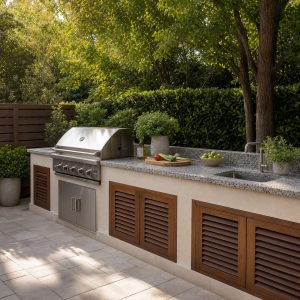
Project planning guide
Before you build
Use the reference image and planning notes as a starting point. Confirm dimensions, loads, materials, local codes, and site conditions before purchasing or cutting.
- Kitchen Design
- 8 reference images
- Print-friendly guide
Outdoor kitchen storage has to handle more than clutter. Cabinets and drawers face humidity, dust, pests, temperature swings, grease, and sometimes wind-driven rain, while appliance cavities need ventilation and service access. A good plan stores only what belongs outside and gives every zone a clear purpose.
Weather-Protected Base Cabinets
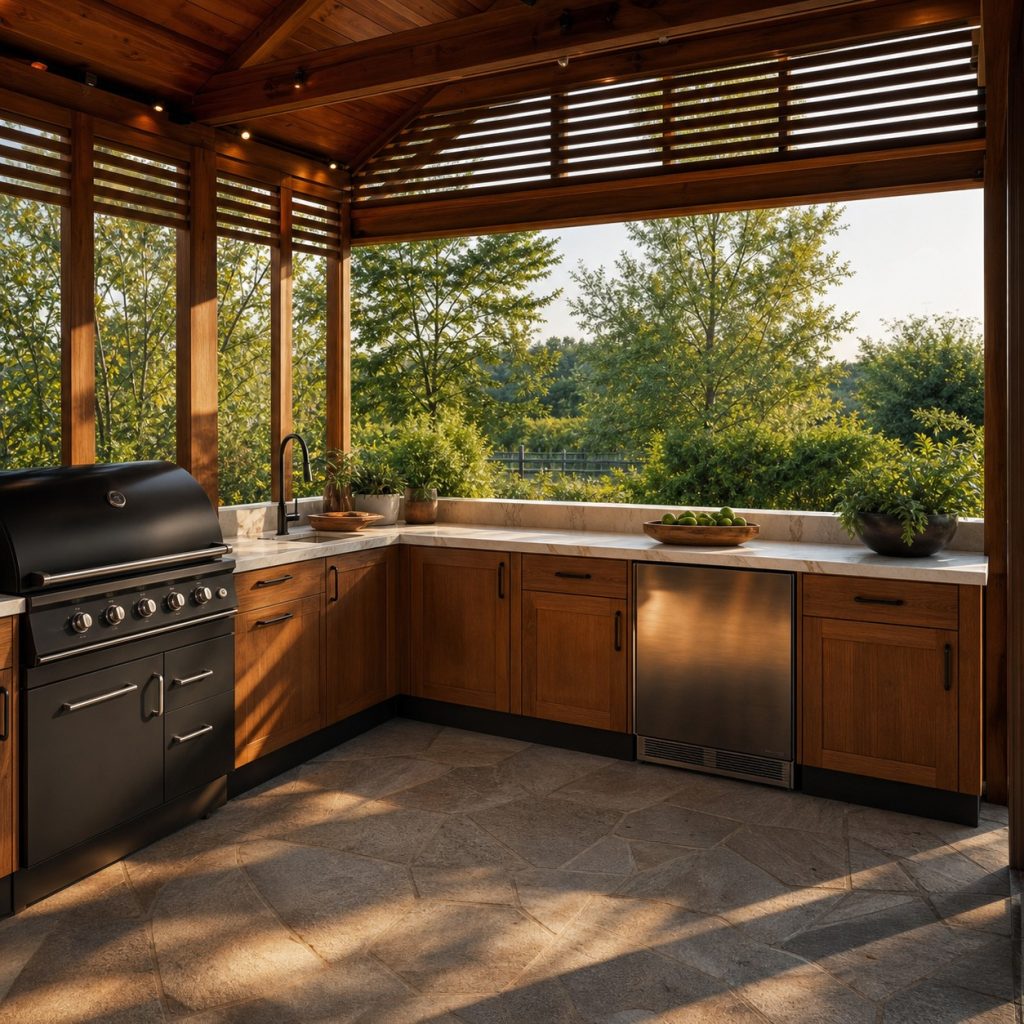
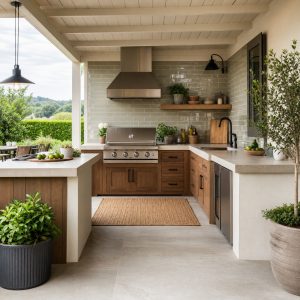
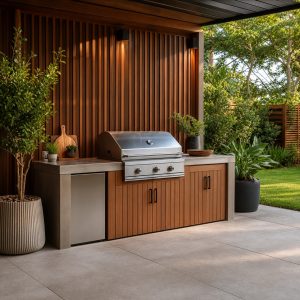
Closed base cabinets protect serving pieces and tools better than open shelves, although they are not automatically watertight. Choose exterior-rated boxes, doors, hinges, and fasteners, and detail the toe kick to avoid standing water. Store food indoors unless the cabinet and climate conditions truly support it.
Ventilated Grill Cabinet
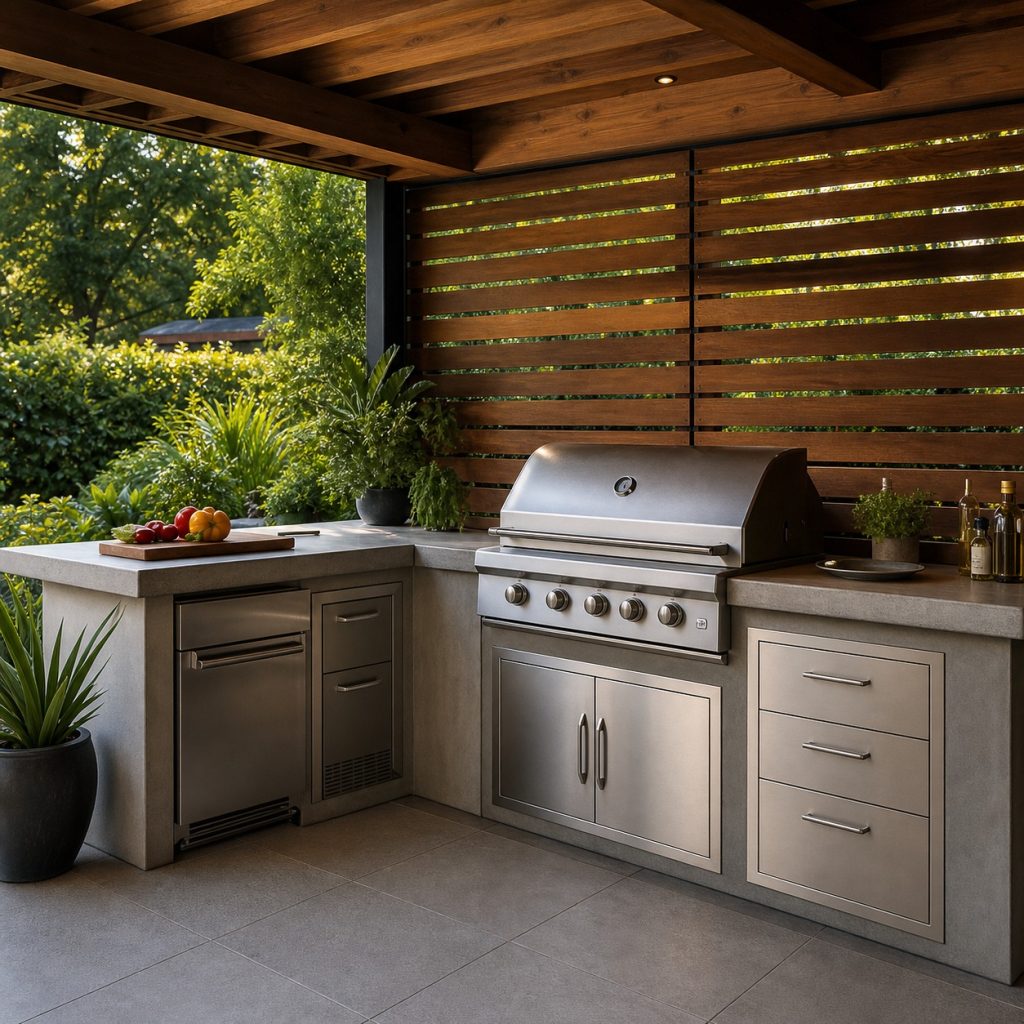
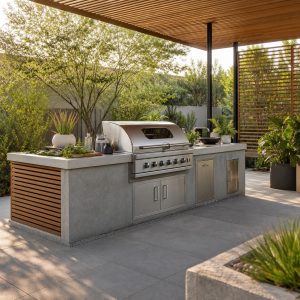
The space beneath and around a built-in grill is an equipment enclosure, not ordinary storage. It may require vents, an insulated jacket, gas access, and clear service panels. Follow the grill and fuel-system instructions exactly, and never block vents with towels, bins, or cleaning supplies.
Open Masonry Niches With Baskets
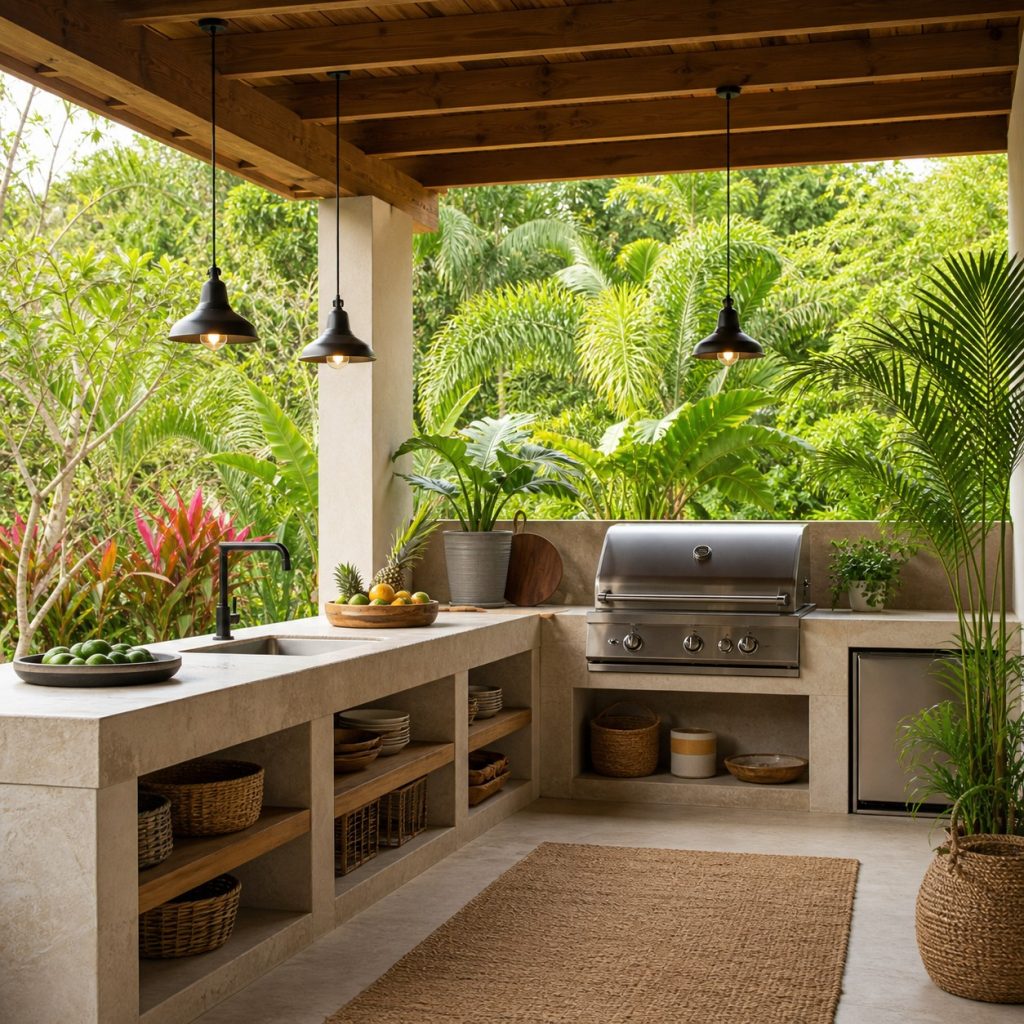
Open niches are durable and easy to inspect, while removable baskets organize lighter items. Use them under good cover and bring soft goods inside when the kitchen is idle. Keep niches away from grease splatter and make the lower surfaces easy to sweep or rinse.
Tall Pantry Cabinet Under a Roof
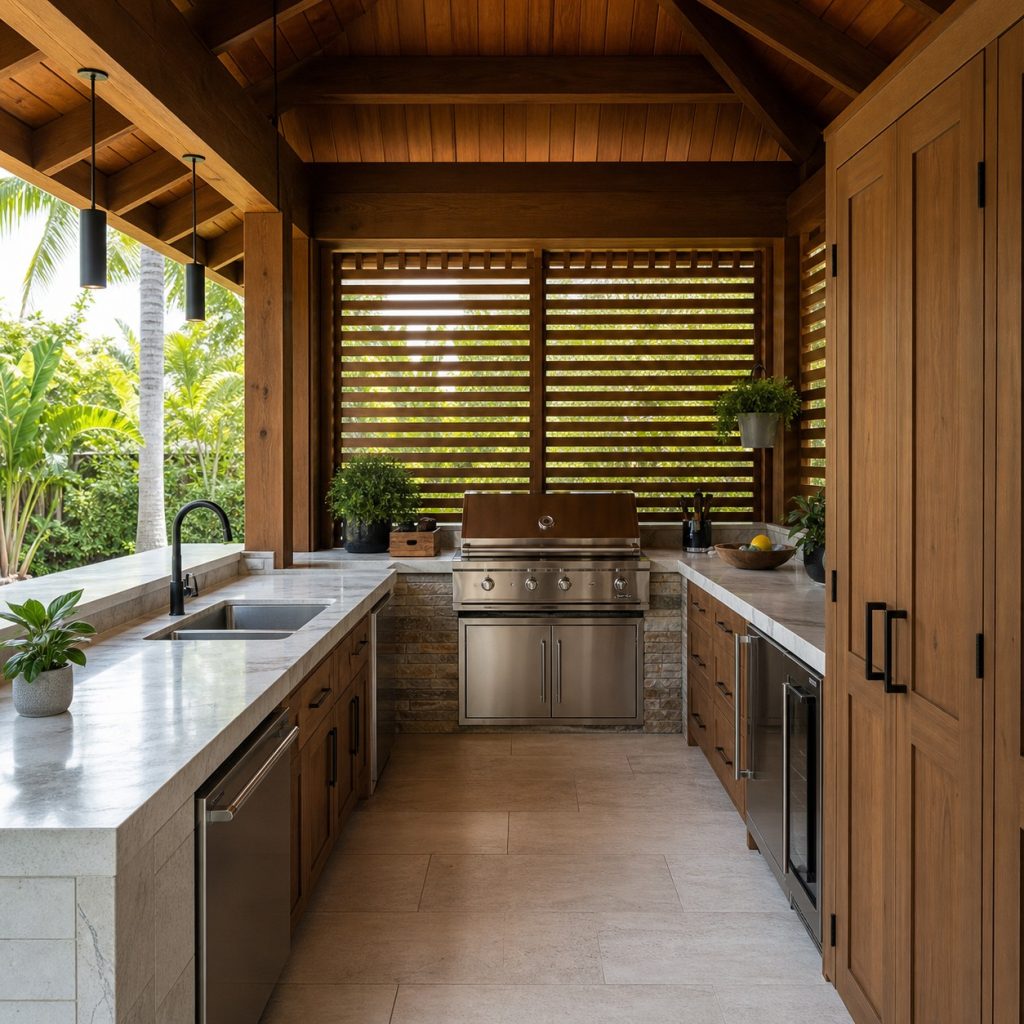
A tall cabinet can store bulky platters, small appliances, and cushions, but it should not become a damp closet. Provide appropriate ventilation, secure tall doors against wind, and anchor the unit as required. Keep it outside the grill clearance zone and preserve the working aisle when doors open.
Drawer Storage Beside the Prep Counter
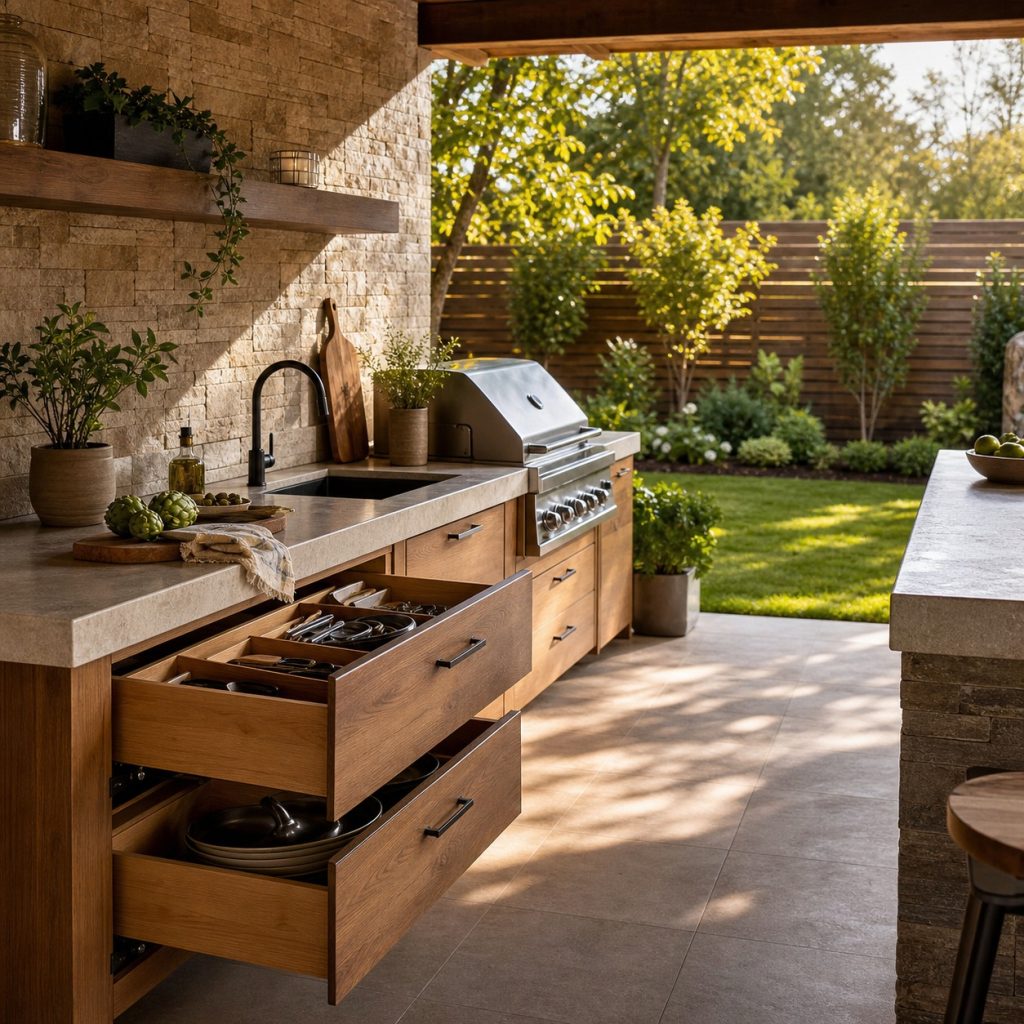
Drawers beside the main prep zone keep utensils visible and reduce bending. Use corrosion-resistant slides, positive latches, and removable organizers that can be washed. Put knives and sharp tools in a secure location, especially where children use the yard.
Separate Wood and Tool Storage
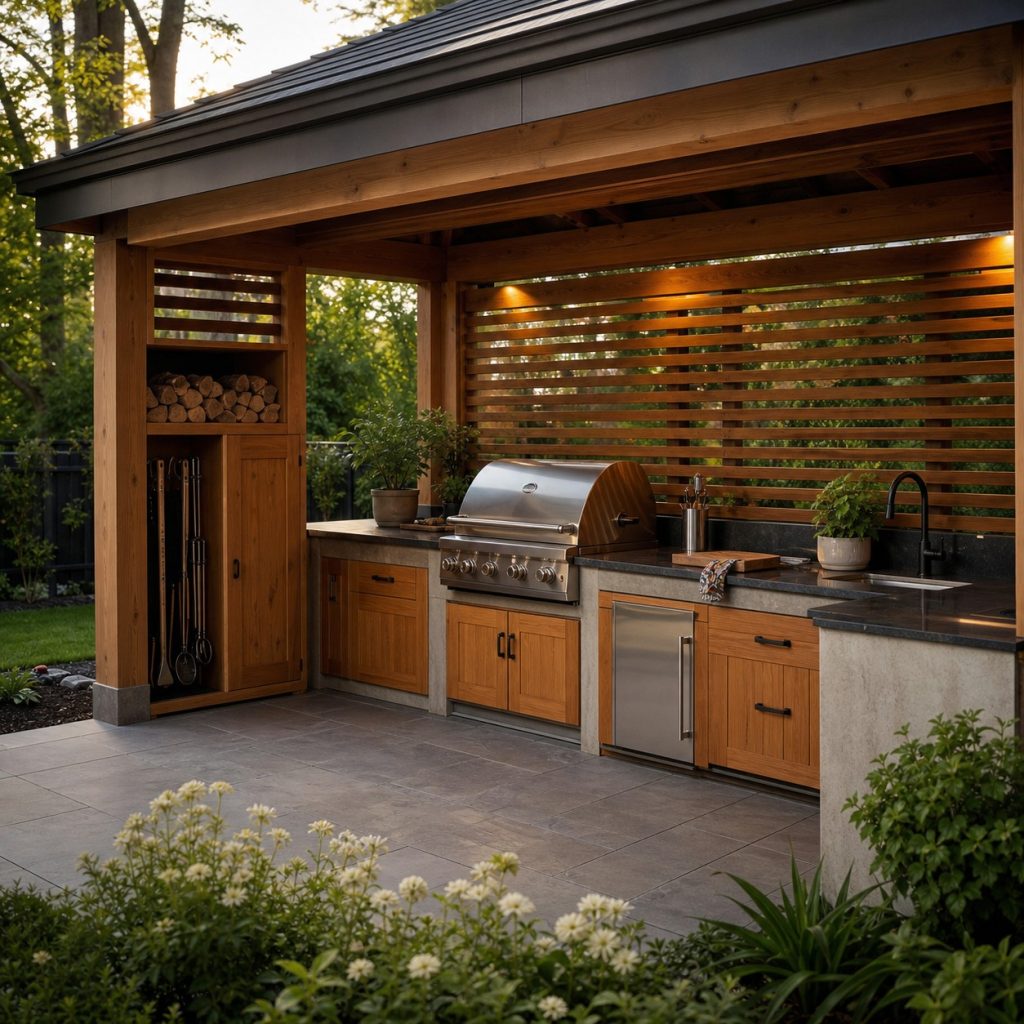
Wood fuel, ash tools, grill brushes, and cleaning products should not share one unplanned cavity. Store fuel only where the appliance maker permits, keep ash in a suitable metal container, and isolate chemicals from food-contact equipment. Separation makes the kitchen safer and easier to inspect.
Wall Shelves With Closed Cabinets
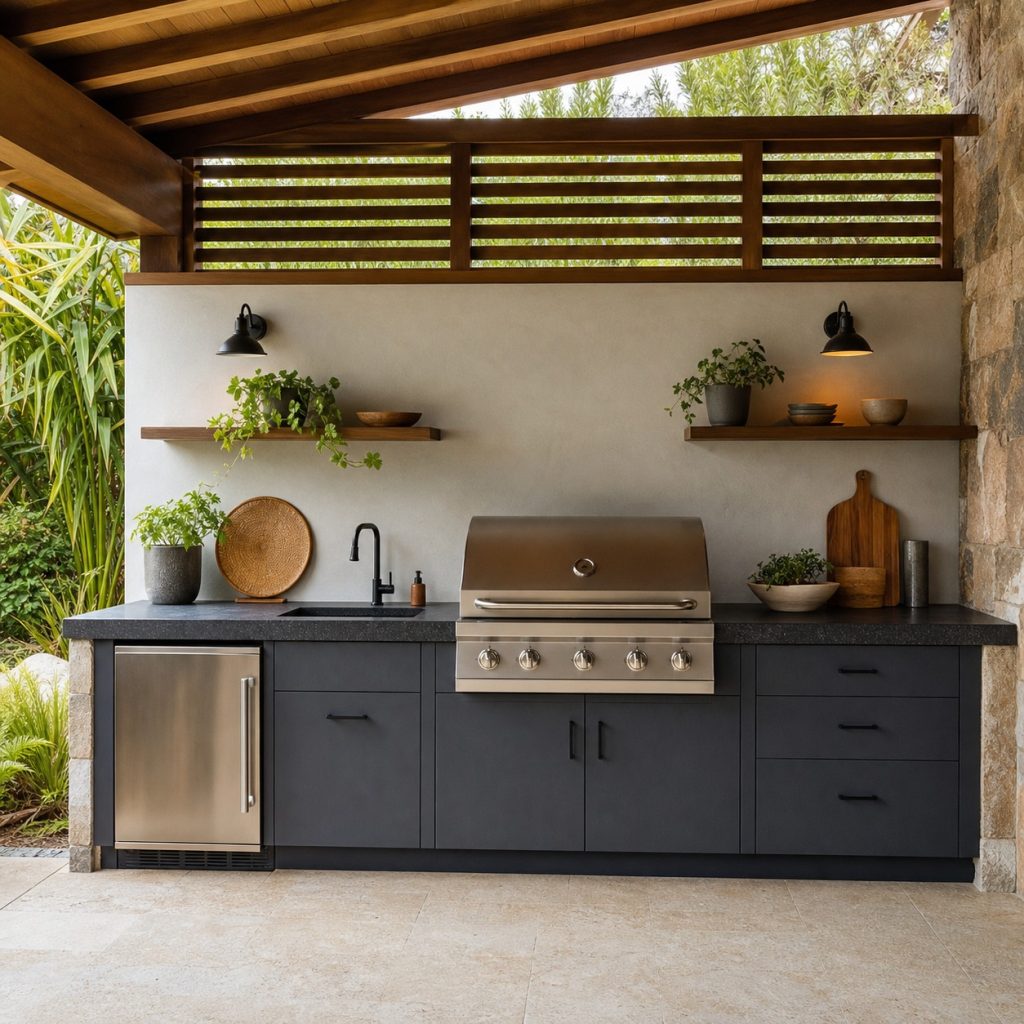
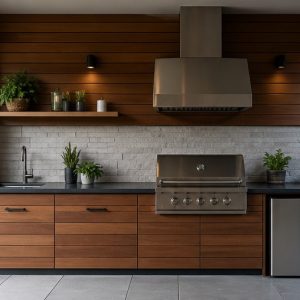
A few shallow shelves can keep oils or frequently used tools within reach during a meal. Most items belong behind doors to reduce cleaning. Mount shelves into suitable structure, choose materials for weather exposure, and avoid placing glass or combustible items above hot appliances.
Mobile and Built-In Storage
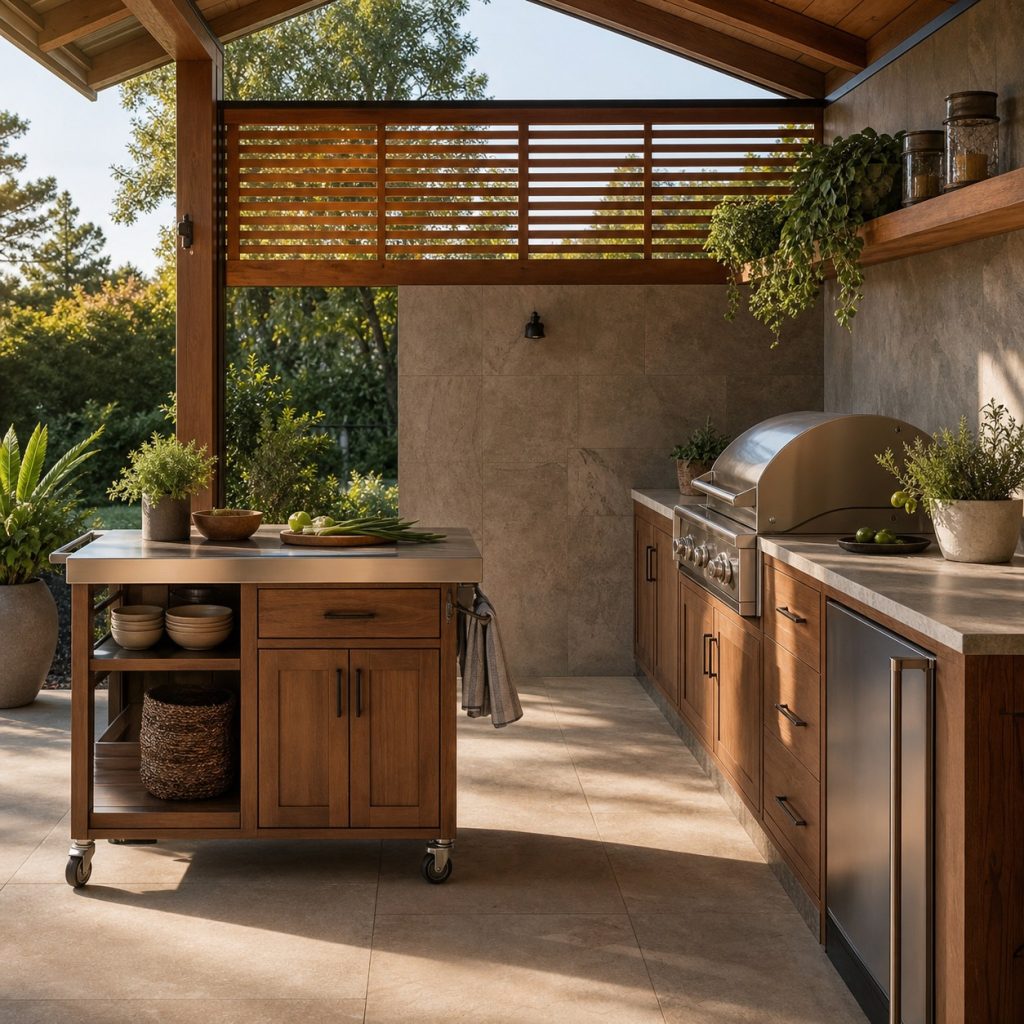
Combining fixed cabinets with a mobile cart supports changing events. The cart can carry ingredients from the house, serve as a buffet, or add prep space, then store under cover. Use locking wheels and keep the cart out of required appliance clearances and exit paths.
Planning checklist
- Choose outdoor-rated cabinet boxes, doors, hardware, and fasteners.
- Keep every appliance vent, shutoff, drain, and service panel accessible.
- Separate food, fuel, chemicals, sharp tools, and ash equipment.
- Plan for standing water, pests, wind, corrosion, and seasonal storage.
- Verify enclosure ventilation and utility access with qualified professionals.
These ideas are general planning guidance. Verify appliance clearances, ventilation, weather exposure, drainage, structural loads, fuel and electrical work, permits, and local fire, pool, and building requirements with manufacturers and qualified local professionals.
Frequently asked questions
Can food stay in outdoor kitchen cabinets?
Usually only selectively. Heat, humidity, pests, and imperfect weather sealing can make long-term food storage unsuitable, so many staples are better kept indoors.
Are stainless steel cabinets waterproof?
Stainless steel can resist corrosion, but seams, drawers, vents, and hardware may still admit moisture. Product grade, construction, exposure, and maintenance all matter.
What should not be stored under a grill?
Do not block required ventilation or service access, and do not store combustible, chemical, or fuel items there unless the appliance manufacturer explicitly permits the arrangement.