Project planning guide
Before you build
Use the reference image and planning notes as a starting point. Confirm dimensions, loads, materials, local codes, and site conditions before purchasing or cutting.
- Kitchen Design
- 8 reference images
- Print-friendly guide
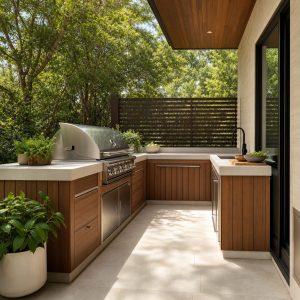
Outdoor kitchen seating works when guests feel connected to the cook without occupying the hot work zone. Counter stools, dining tables, benches, lounge chairs, and picnic tables each support a different kind of gathering, so the first decision is how people will actually eat and talk.
Island Stools on the Serving Side
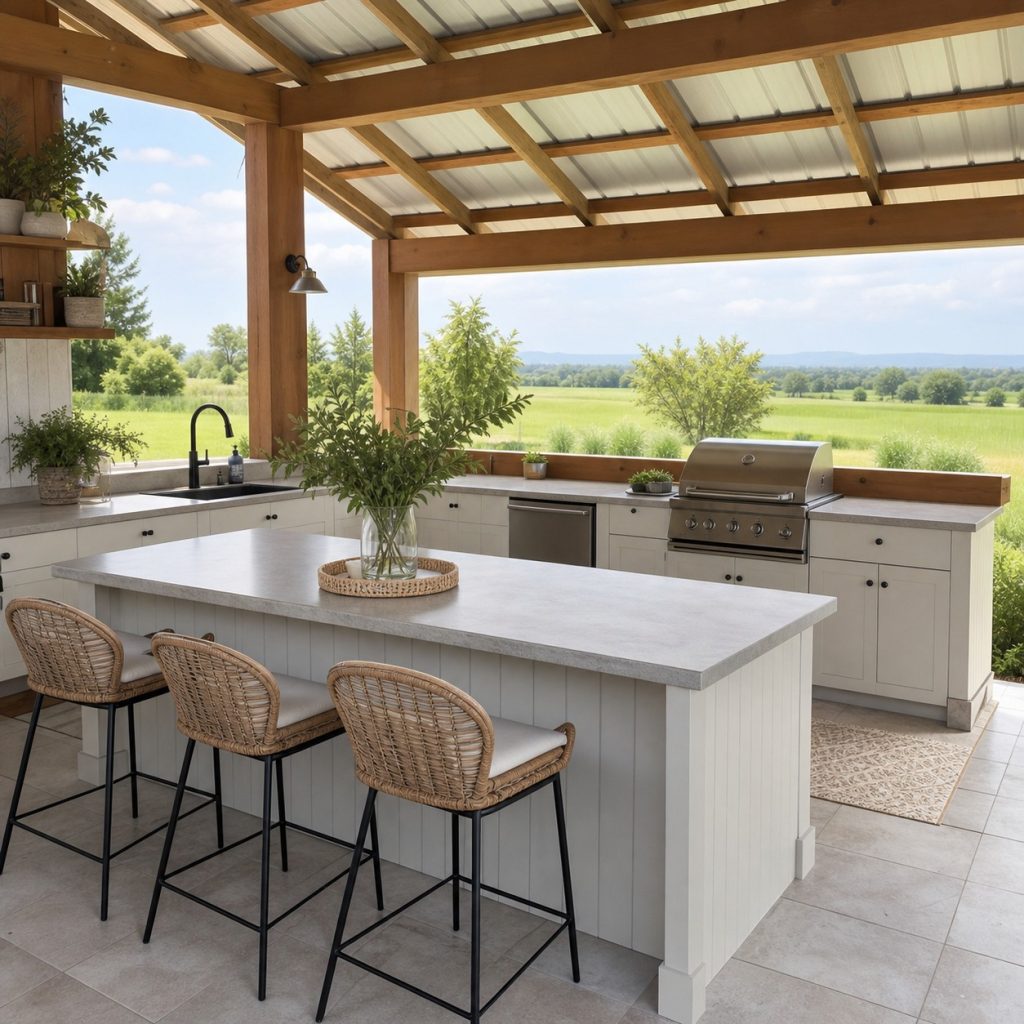
Island stools keep guests in the conversation and work well for snacks or short meals. Put them on the cool side, separated from the grill by a generous counter buffer, and keep door swings away from knees. A footrest and suitable overhang improve comfort, but exact dimensions should follow the chosen stools and counter.
Separate Dining Table
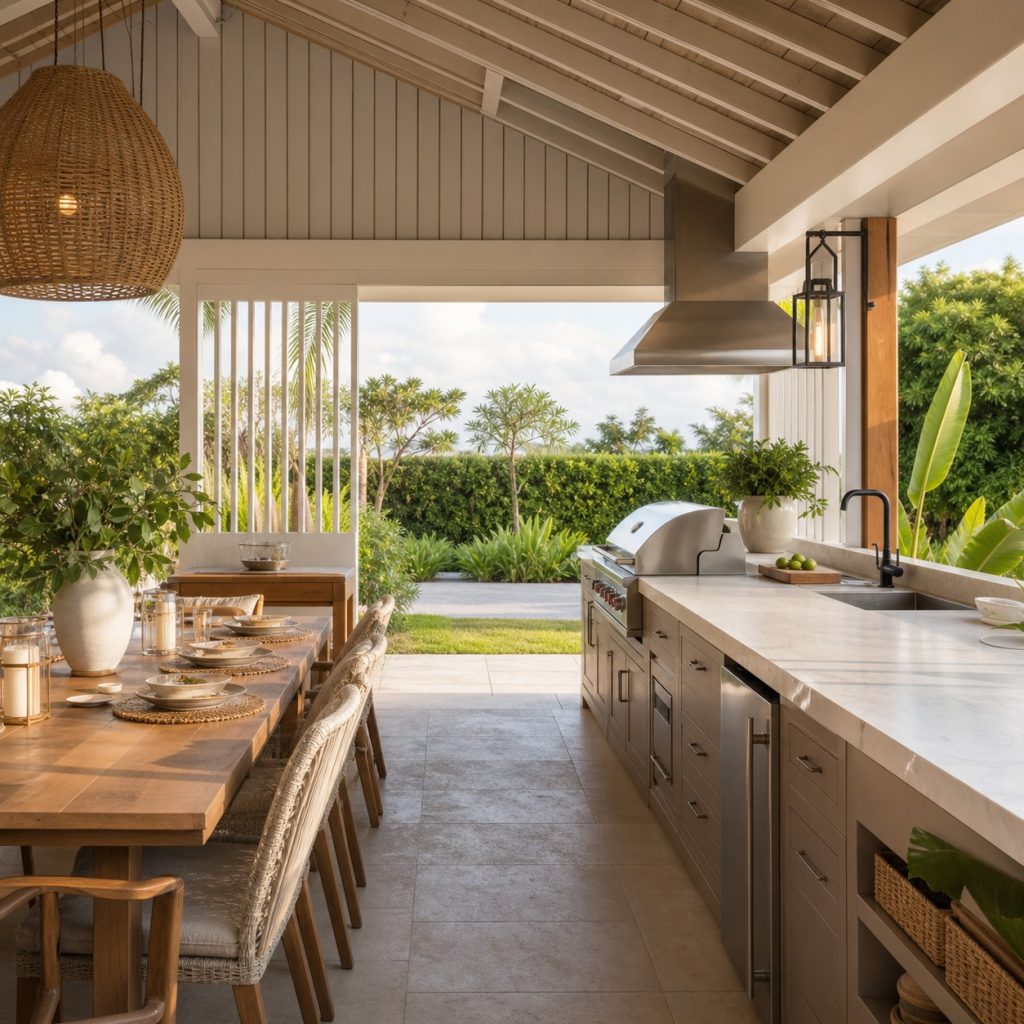
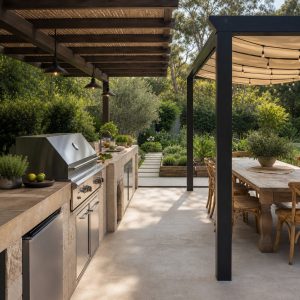
A full dining table supports longer meals and keeps place settings away from prep. Position it near enough for serving but outside the cook’s main route to the house. Check chair pullback, shade movement, evening lighting, and how guests reach the table when someone is working at the grill.
Built-In Bench Dining
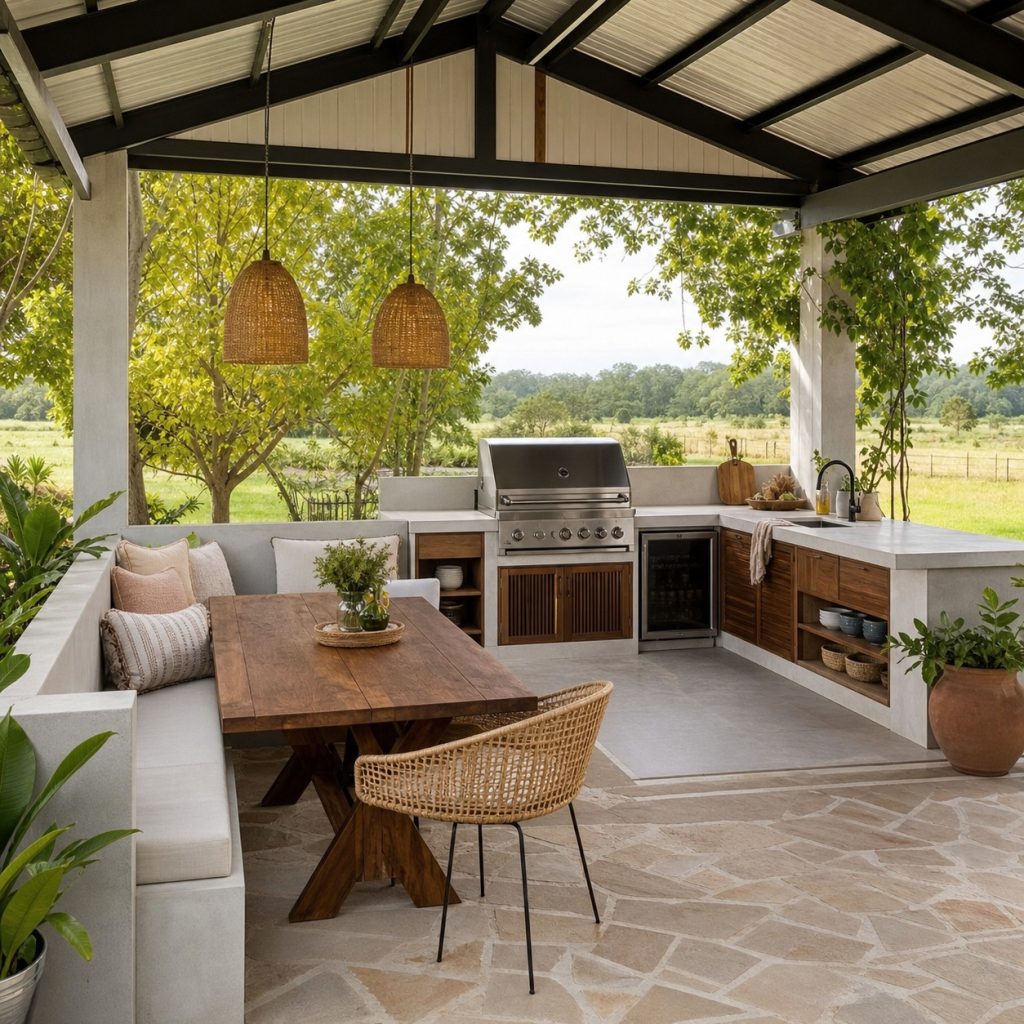
A bench can fit more people along a wall or garden edge and keeps chairs from spreading into circulation. Provide comfortable seat depth, back support where needed, drainage, and removable outdoor cushions. Do not use the bench to hide fuel, chemicals, or unsafe utilities.
Separate Lounge Zone
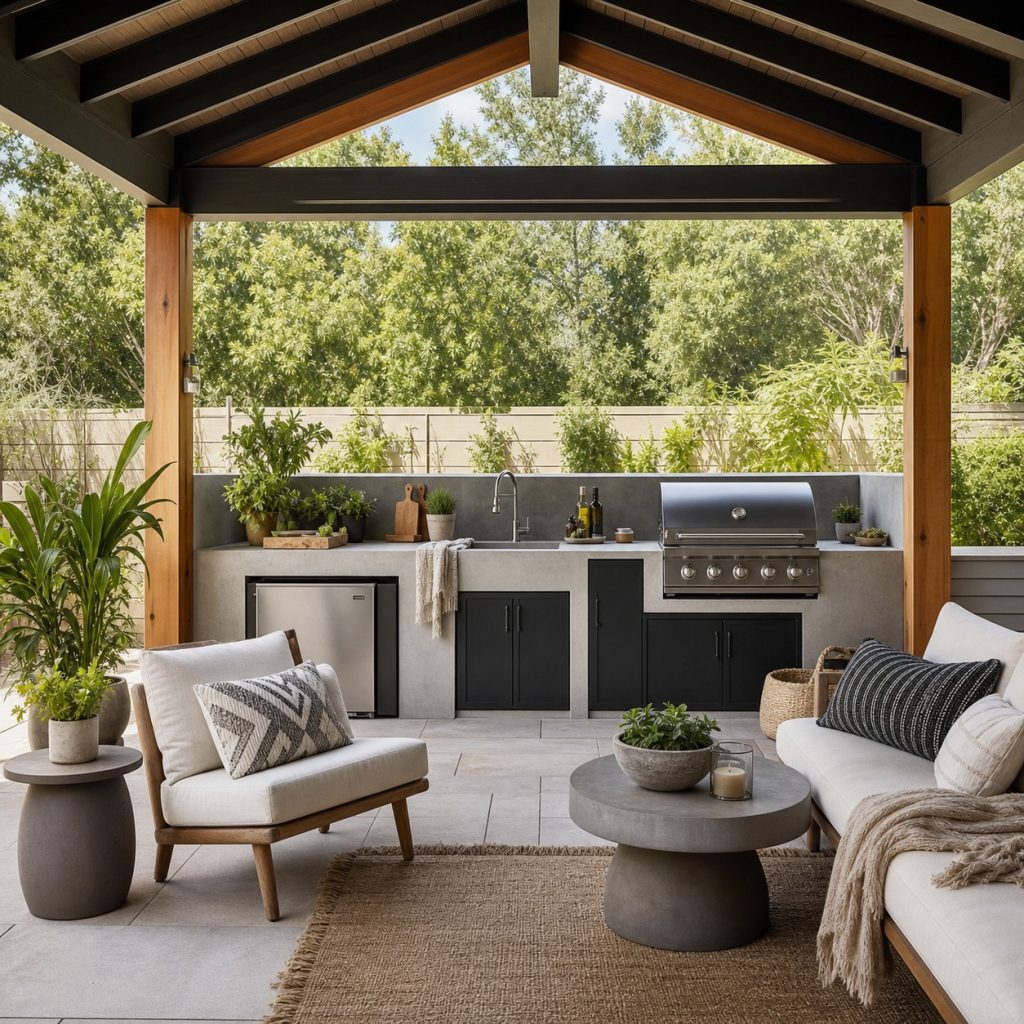
Lounge seating suits conversation before and after the meal rather than cutting and eating. Place it where smoke and glare are controlled and where low chairs do not become obstacles along the serving path. A side table gives guests a safe place for drinks away from prep counters.
Two-Level Counter Seating
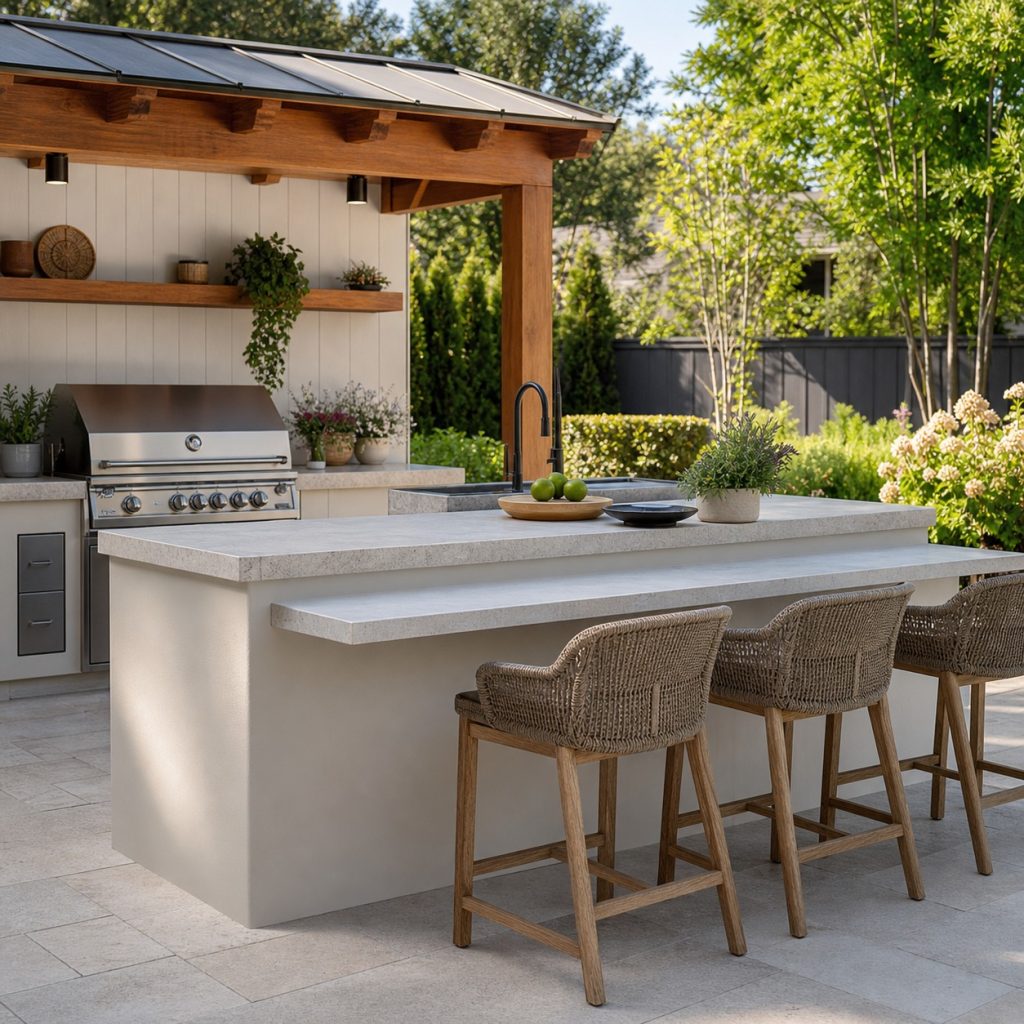
A raised ledge visually separates guest items from the prep surface and can hide some worktop clutter. It also adds corners and can reduce conversation across the island. Test sightlines, stool height, overhang, and reach before choosing a two-level design.
Movable Stools at a Serving Ledge
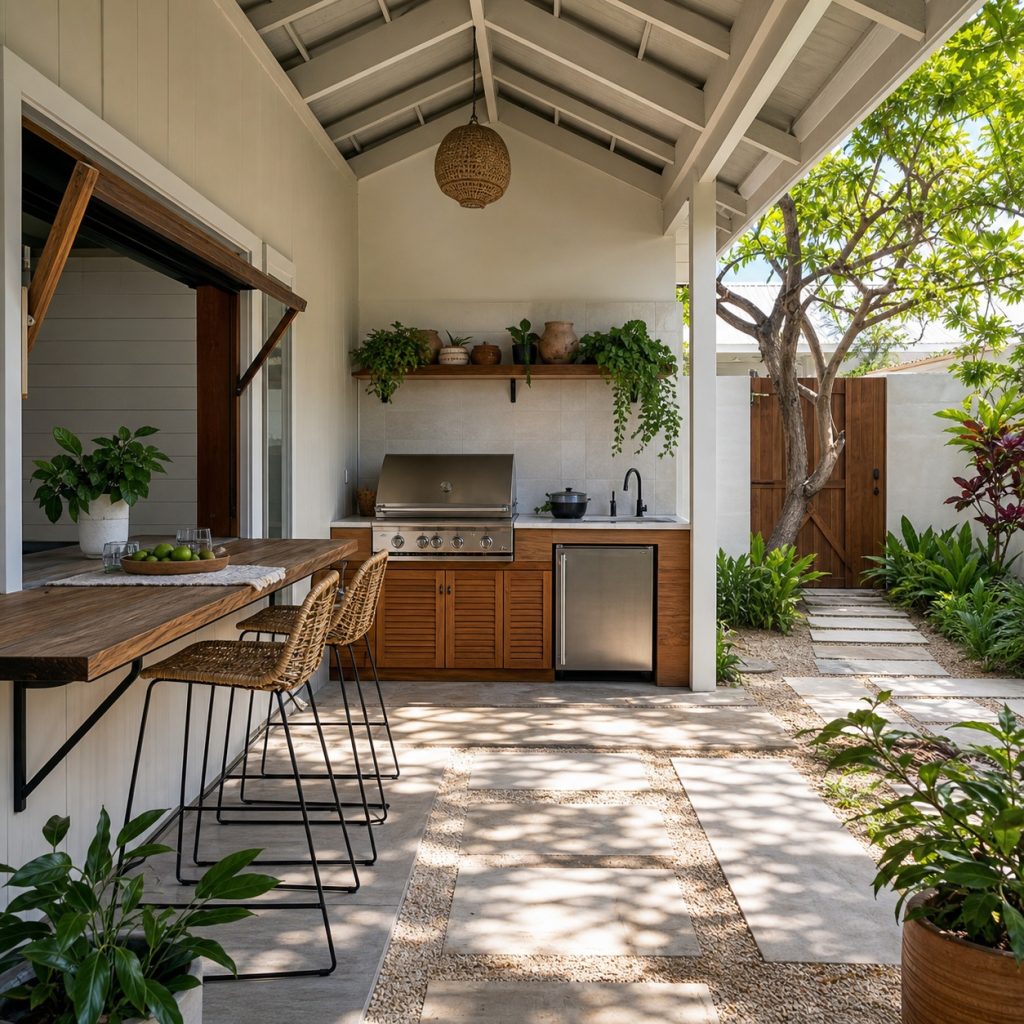
Lightweight stools make a small kitchen adaptable, but they need stable feet and a storage plan for wind and storms. Use them only at a cool serving surface, not beside an open grill lid. Preserve the route even when every stool is occupied.
Picnic Table Beside the Kitchen
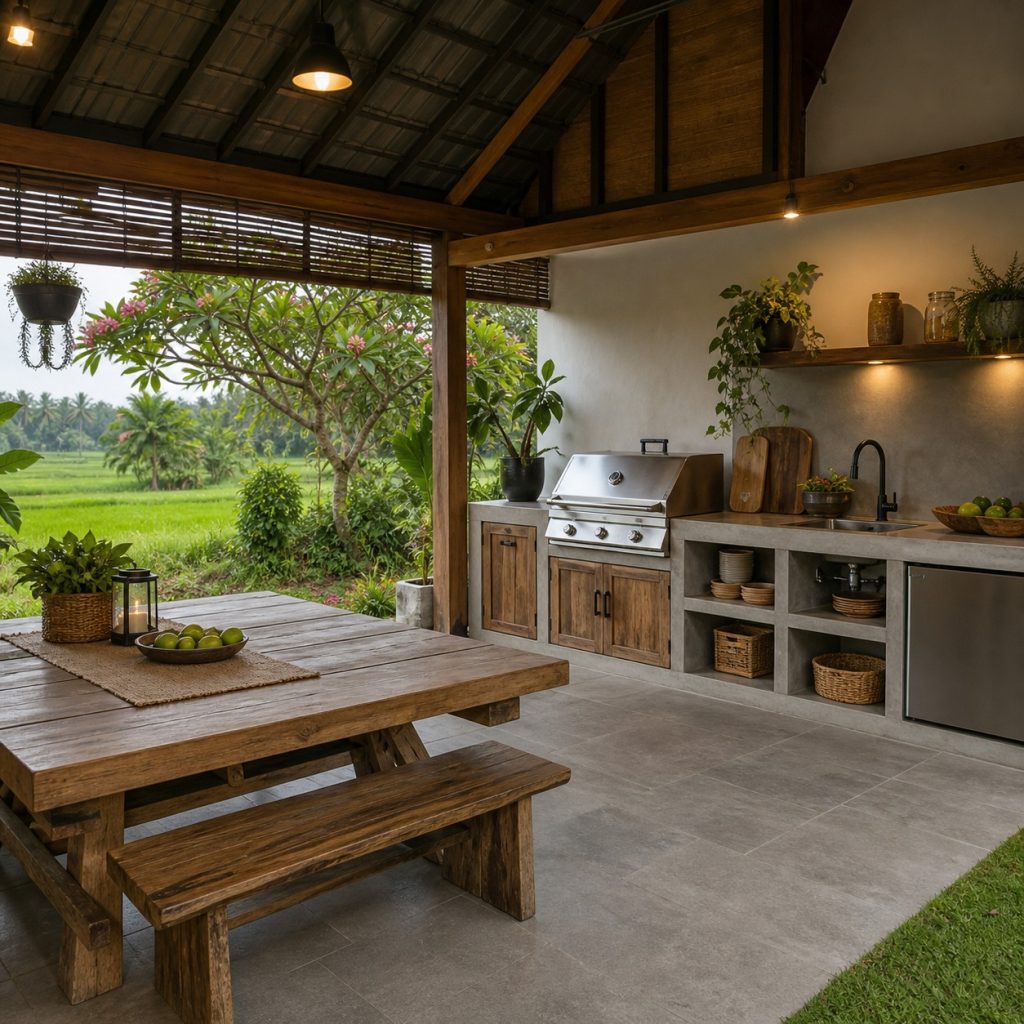
A picnic table offers relaxed family seating and handles casual meals well. Keep it far enough from heat and smoke, provide a firm level surface, and consider whether fixed benches work for older guests or mobility needs. Separate table lighting helps after dark.
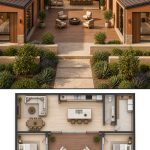
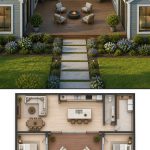
Conversation Circle and Dining Counter
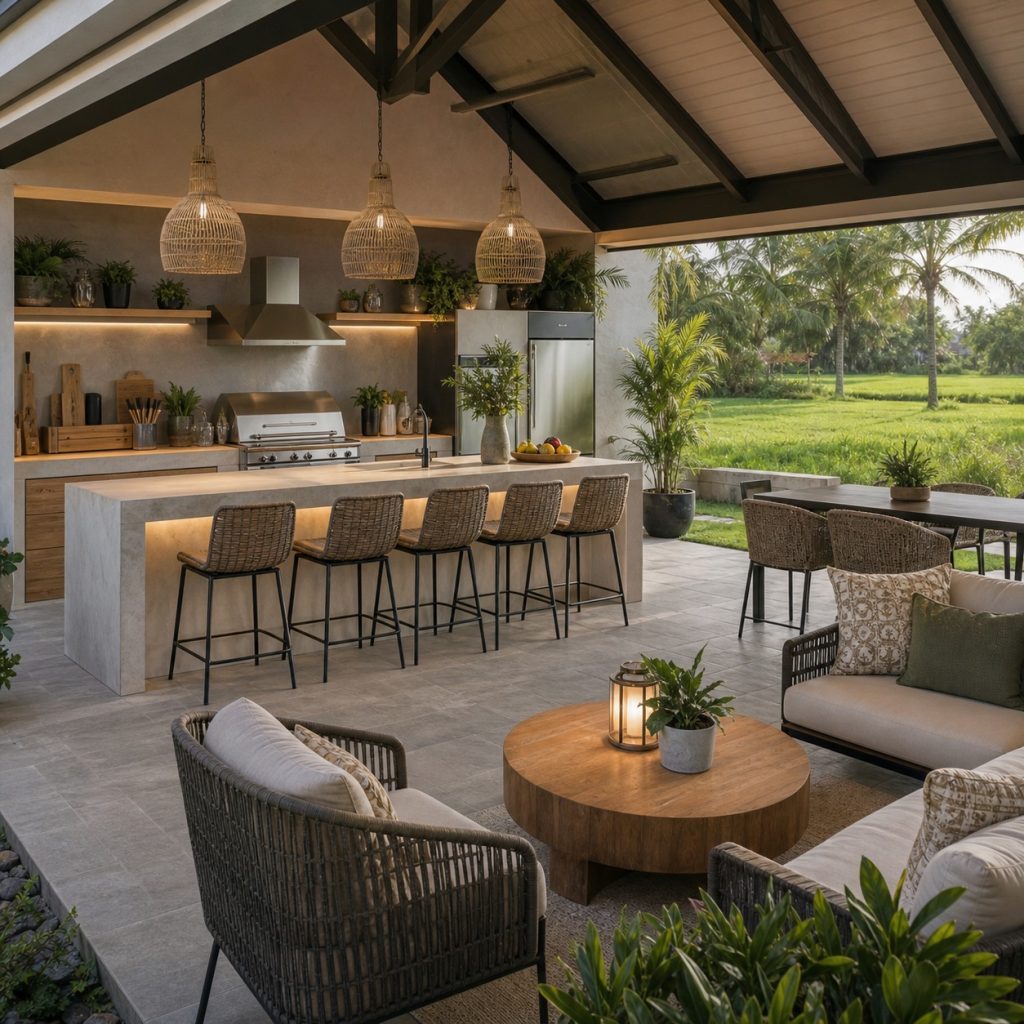
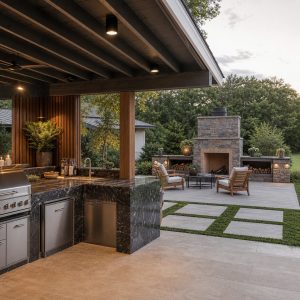
Combining a few counter seats with a conversation circle lets guests choose how they gather. The zones should remain visually connected without sharing the same traffic path. Use rugs or low tables only where they will not create trip hazards or block drainage.
Planning checklist
- Decide whether seats support snacks, full meals, lounging, or mixed use.
- Keep every seat beyond heat, grease, appliance doors, and work aisles.
- Test overhangs, stool heights, chair pullback, footrests, and exits.
- Plan shade, low-glare lighting, wind storage, and weather-ready cushions.
- Preserve accessible routes and verify local fire and pool requirements.
These ideas are general planning guidance. Verify appliance clearances, ventilation, weather exposure, drainage, structural loads, fuel, plumbing and electrical work, permits, and local fire, pool, deck, and building requirements with manufacturers and qualified local professionals.
Frequently asked questions
How many seats should an outdoor kitchen have?
Start with the typical household and gathering size, then fit only the seats that preserve safe circulation and useful counter space.
Can stools go behind an outdoor grill?
They should not occupy the grill’s heat, grease, lid, or working zone. Use a serving side with an adequate counter buffer and follow appliance clearances.
Are built-in benches better than chairs?
Benches save space and control furniture movement, while chairs are often easier to adjust and access. The best choice depends on the users and layout.