Project planning guide
Before you build
Use the reference image and planning notes as a starting point. Confirm dimensions, loads, materials, local codes, and site conditions before purchasing or cutting.
- Kitchen Design
- 8 reference images
- Print-friendly guide
A privacy wall can hide equipment, soften a property line, block selected views, and make an outdoor kitchen feel more settled. It can also redirect wind, trap smoke, create heat-clearance conflicts, affect pool barriers, or violate setbacks, so placement and openness matter as much as material.
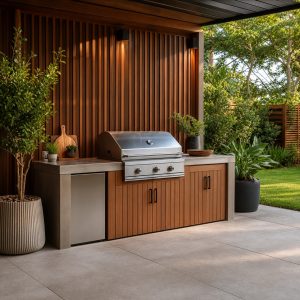
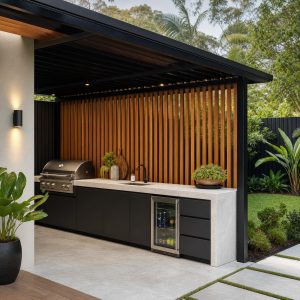
Vertical Timber-Slat Screen
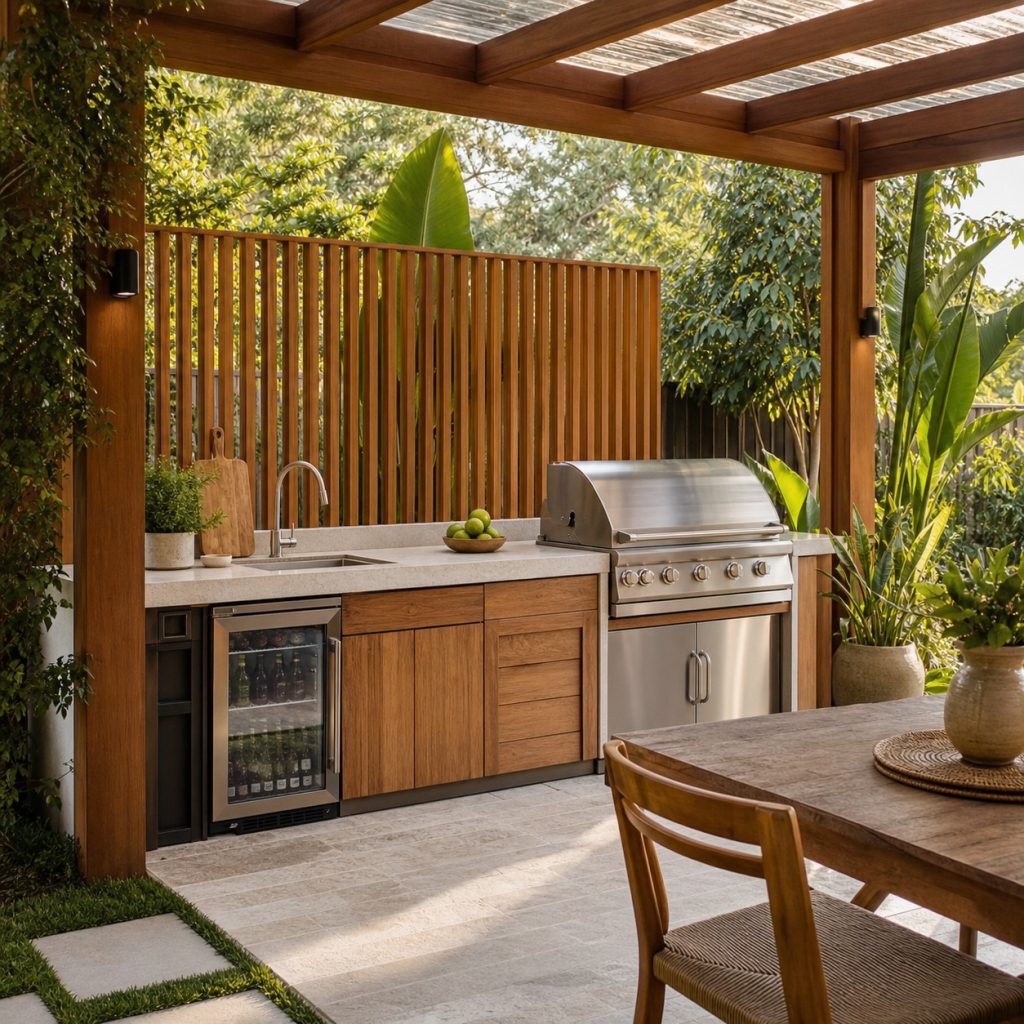
Vertical slats filter views while allowing some light and air. Keep timber outside appliance heat zones and detail the bottom so end grain does not sit in water. Slat spacing should balance privacy with wind and should comply with any pool-climbability restrictions.
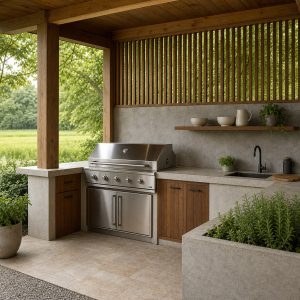
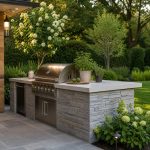
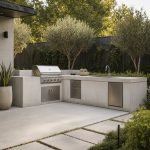
Low Masonry Privacy Wall
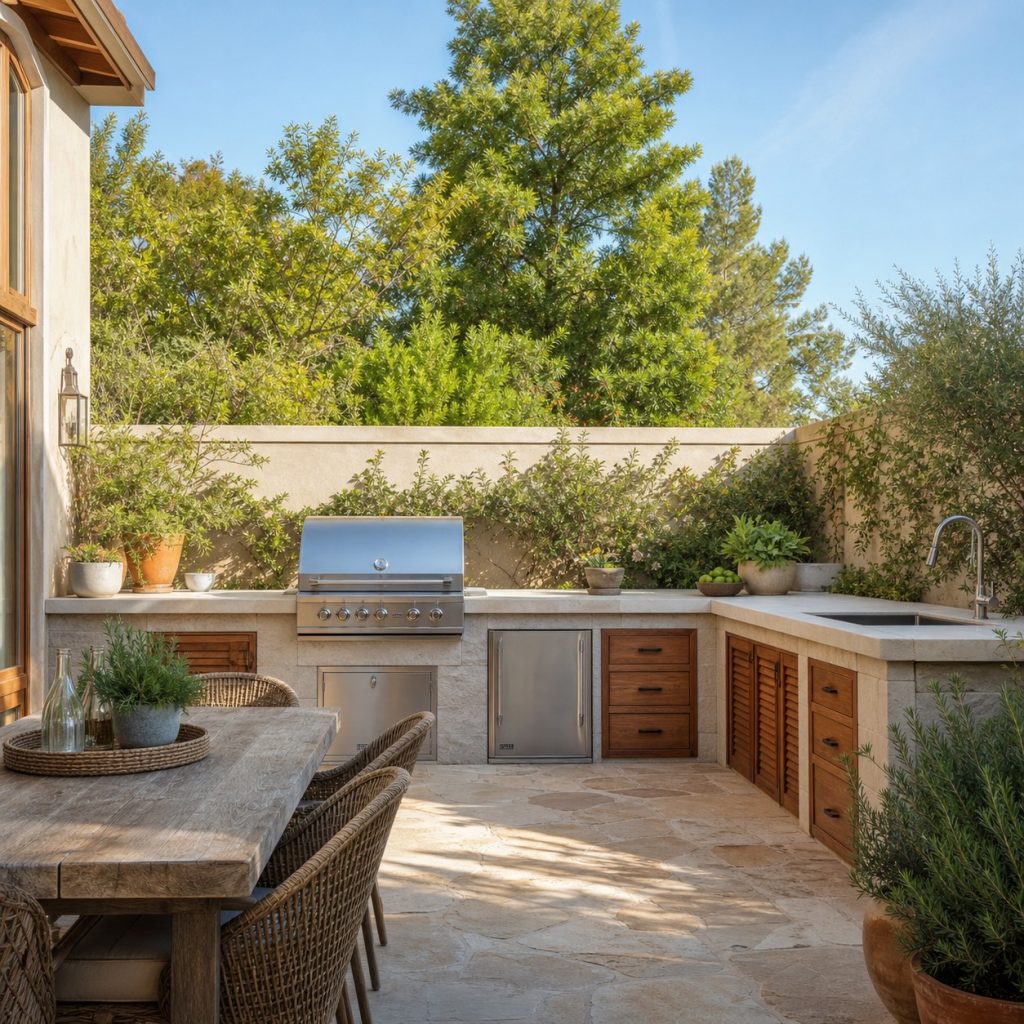
A low wall can hide cabinet backs without closing the sky or trapping as much smoke as a tall enclosure. It needs a suitable footing, drainage, cap, and finish. Check whether its height and location trigger permits or affect sightlines and pool requirements.
Weathered Metal Panels
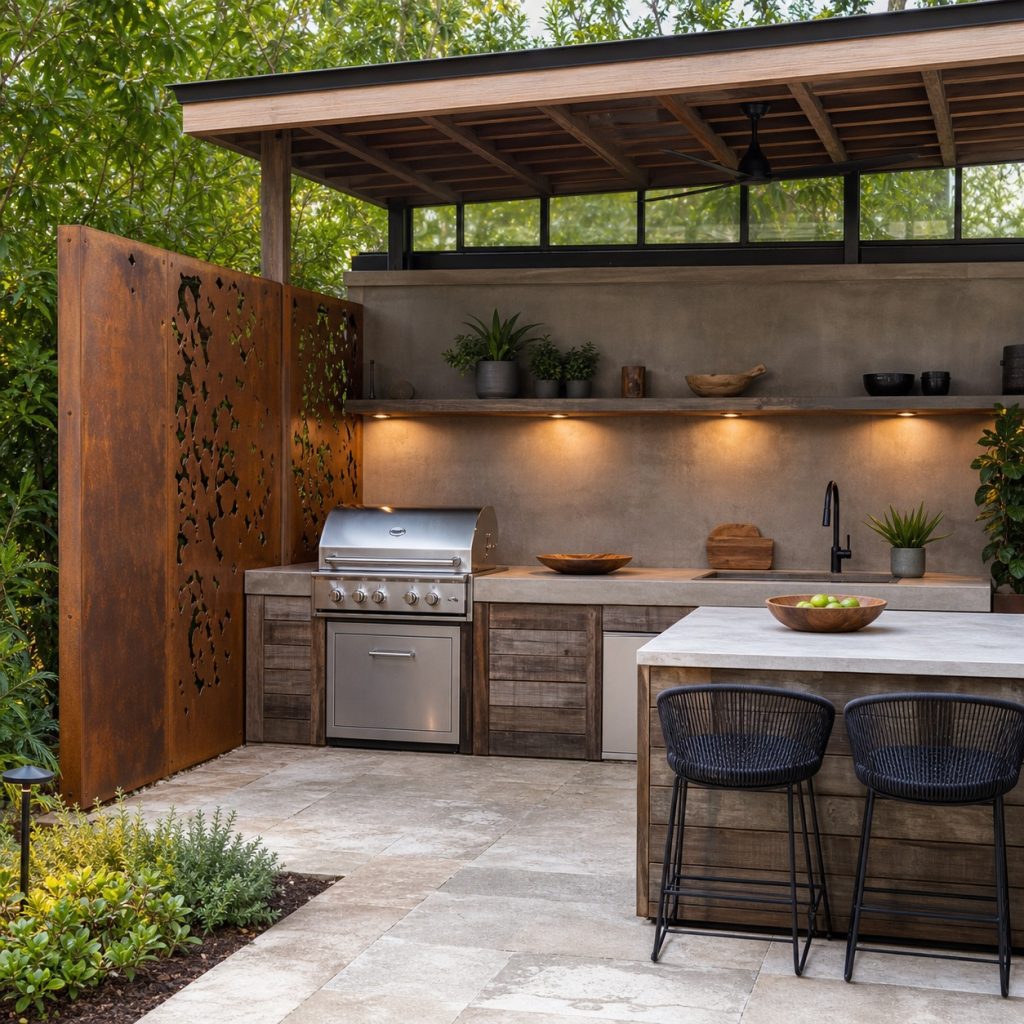
Metal panels create a crisp, durable side screen when corrosion, sharp edges, glare, and heat gain are addressed. Leave a purposeful opening for airflow and maintenance. Connections and footings should be designed for local wind rather than treated like indoor decoration.
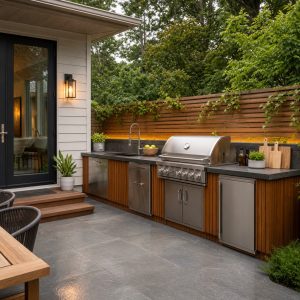
Evergreen Hedge Screen
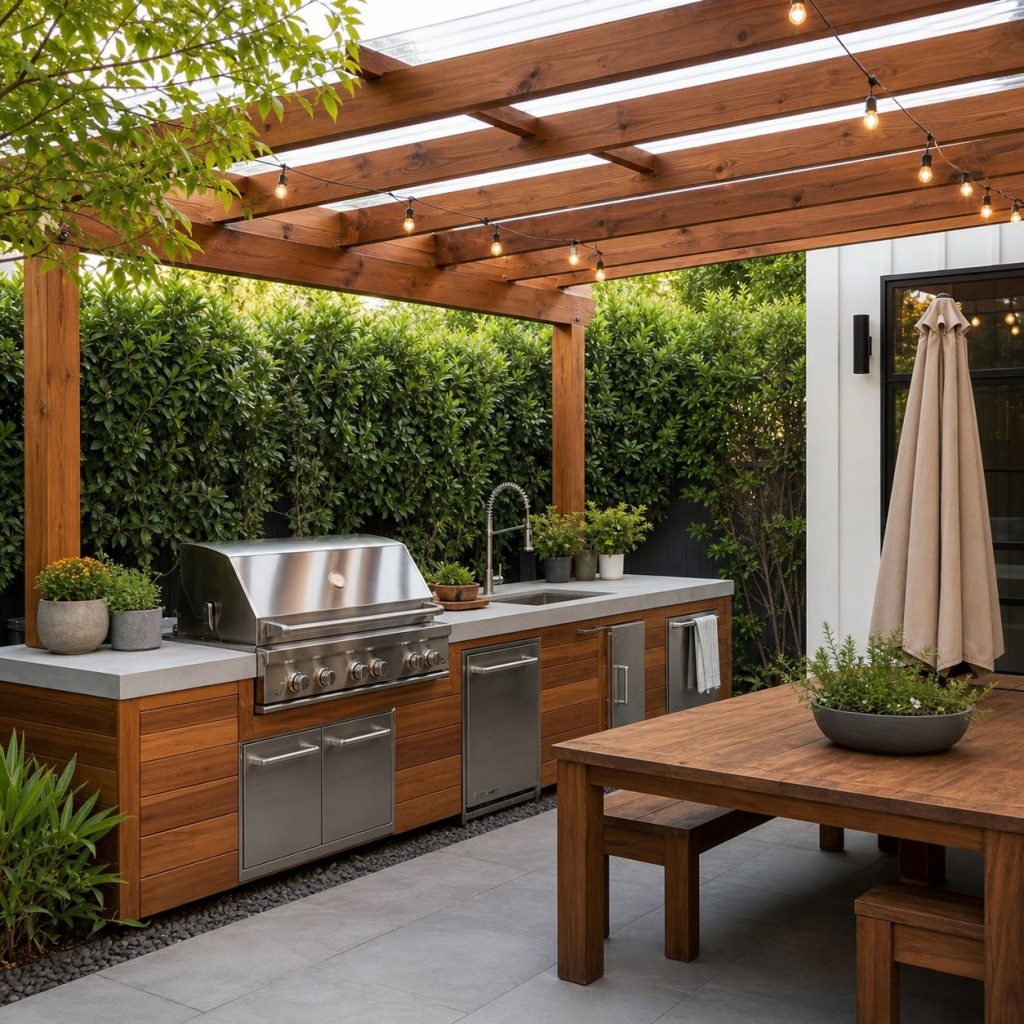
A hedge softens noise and views while integrating the kitchen with the landscape. Choose plants for mature size, roots, litter, thorns, irrigation, and heat tolerance. Keep a paved maintenance gap so growth does not crowd vents, counters, or appliances.
Perforated Breeze-Block Wall
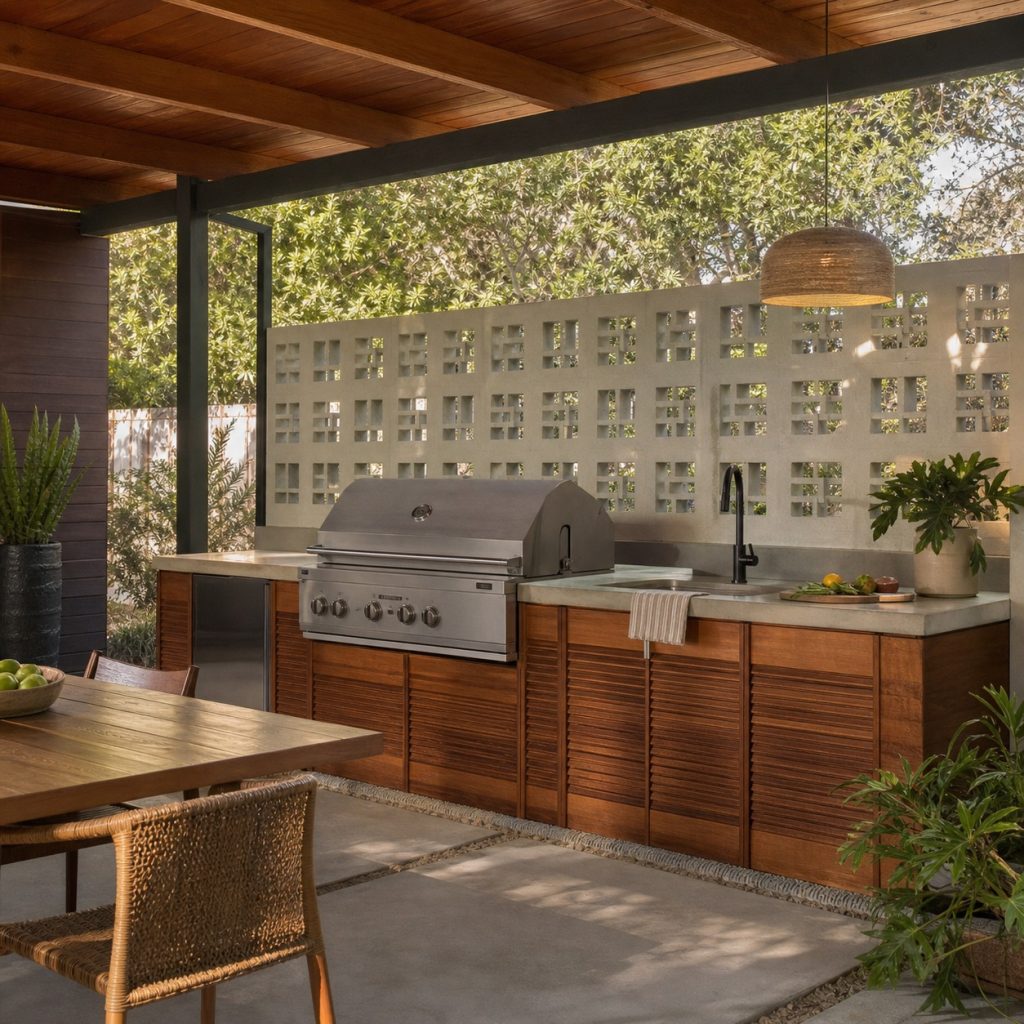
Breeze block gives partial privacy with strong airflow and patterned light. Its foundation, reinforcement, and wind resistance need professional design, especially for a tall freestanding wall. Keep grease-producing equipment far enough away that the openings do not become difficult to clean.
Translucent Glass Side Screen
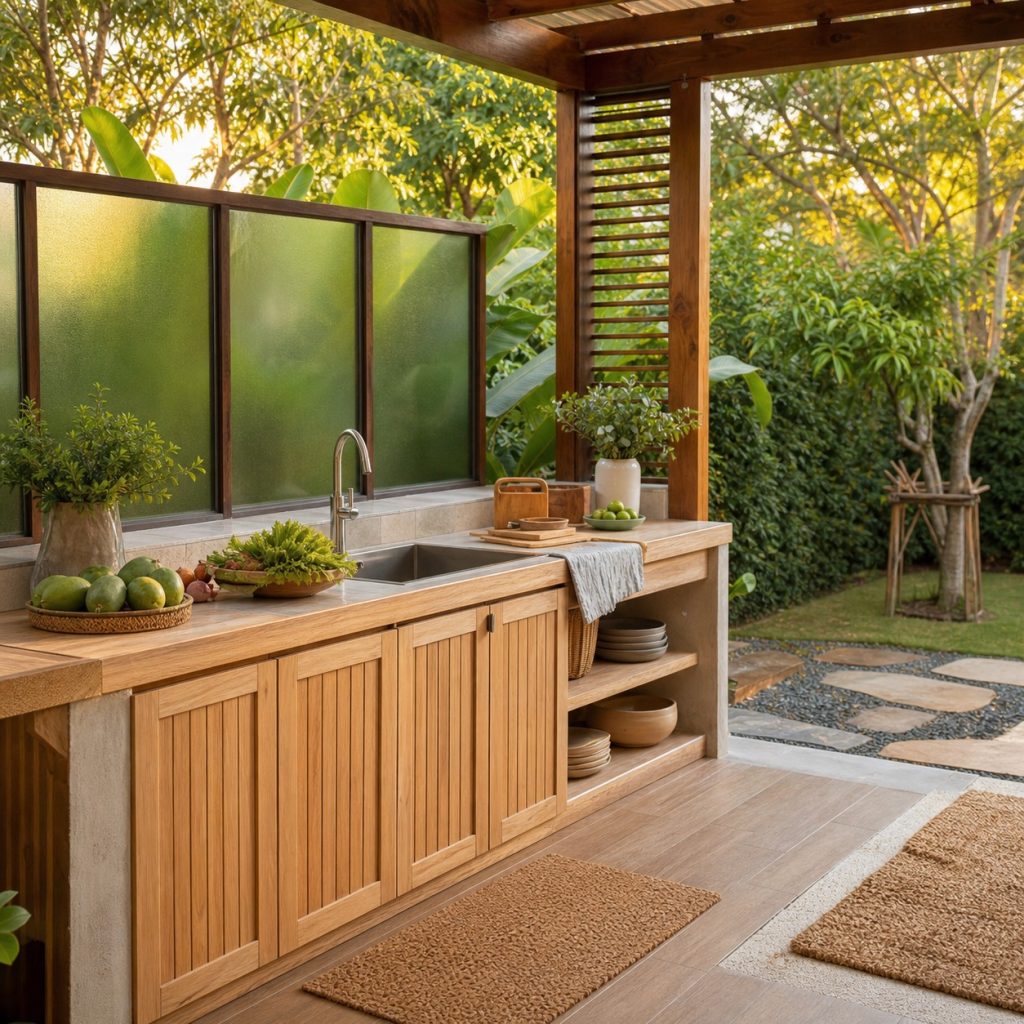
Translucent panels can borrow light while obscuring a close neighbor or service area. Use an exterior-rated safety-glazing system with accessible cleaning surfaces and engineered posts. Avoid placing it where grill heat, grease, or reflected glare creates a problem.
Corner Privacy Screens
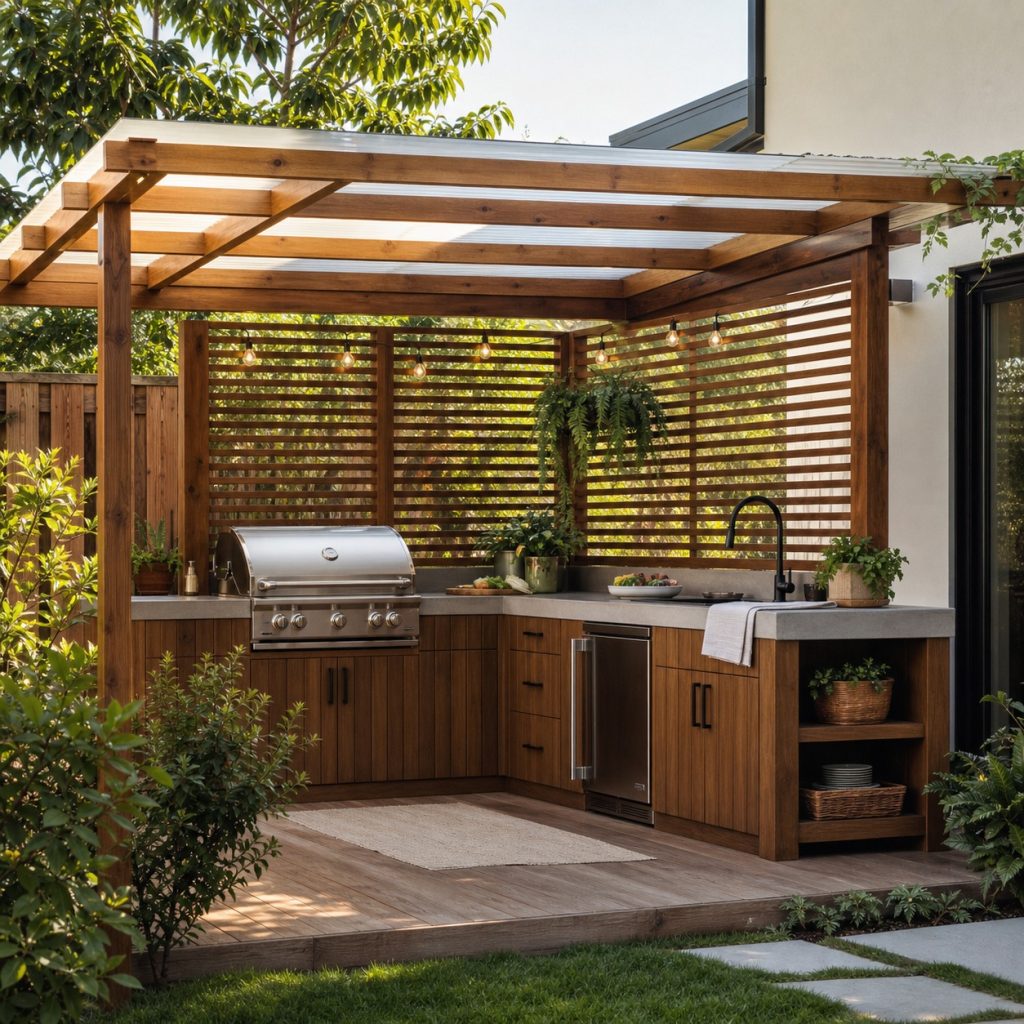
Two partial screens can form a sheltered prep court without building a full room. Leave the cooking face open and observe whether the corner accelerates or traps wind. Position gates, doors, and service routes outside the tightest part of the corner.
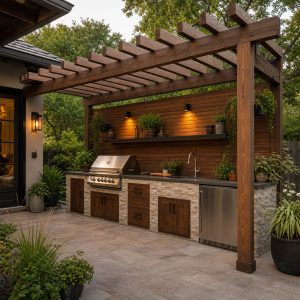
Pergola Side Screen
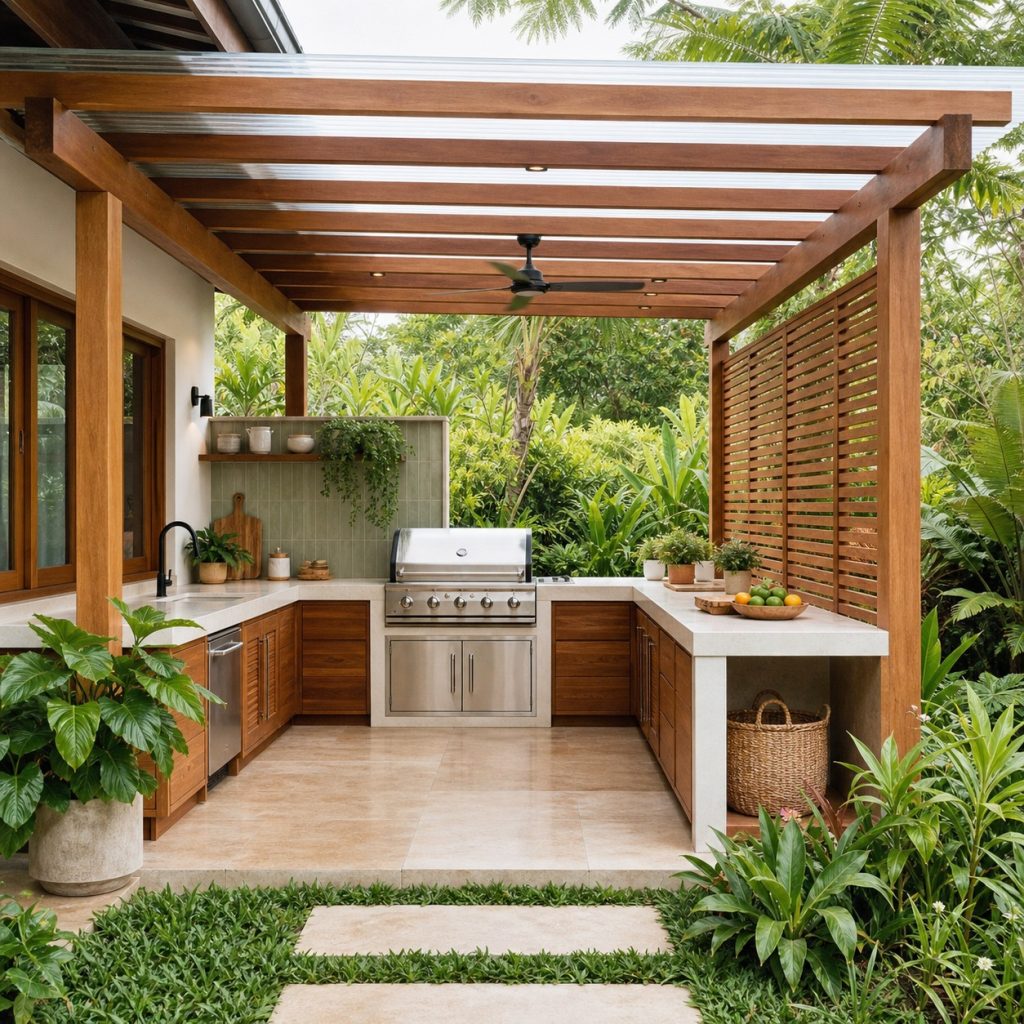
Integrating one screen into a pergola can unify the structure and hide a selected view. The combined assembly takes wind load and should be designed as one system. Keep the grill’s exhaust path open and protect structural members from heat as required.
Planning checklist
- Identify the exact view or direction that needs screening.
- Observe prevailing wind, smoke paths, sun, and neighboring openings.
- Keep screens outside appliance clearances and preserve service access.
- Design footings, attachments, drainage, corrosion protection, and maintenance.
- Verify setbacks, height, wind, pool-barrier, fire, and permit rules.
These ideas are general planning guidance. Verify appliance clearances, ventilation, weather exposure, drainage, structural loads, fuel, plumbing and electrical work, permits, and local fire, pool, deck, and building requirements with manufacturers and qualified local professionals.
Frequently asked questions
How tall should an outdoor kitchen privacy wall be?
Use only the height needed for the view, then check local limits, wind design, property-line rules, sightlines, and pool requirements.
Can a wood screen go behind a grill?
Only when the appliance instructions and local fire rules permit the material and distance. Decorative wood is not automatically a heat shield.
Do privacy walls block smoke?
They can redirect or trap it, sometimes toward the house or guests. Observe wind and keep the cooking zone open enough for safe ventilation.