Project planning guide
Before you build
Use the reference image and planning notes as a starting point. Confirm dimensions, loads, materials, local codes, and site conditions before purchasing or cutting.
- Kitchen Design
- 8 reference images
- Print-friendly guide
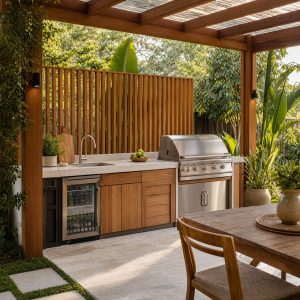
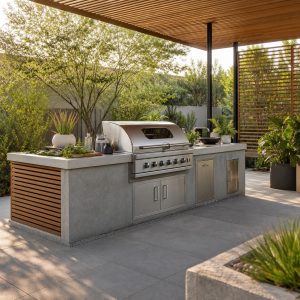
Outdoor kitchen décor should support the space rather than occupy the prep counter, block ventilation, or create a storm-storage problem. The most convincing rooms use a few durable accents at the cool edge of the kitchen and let cabinetry, lighting, planting, and serving pieces do most of the visual work.
One Restrained Display Shelf
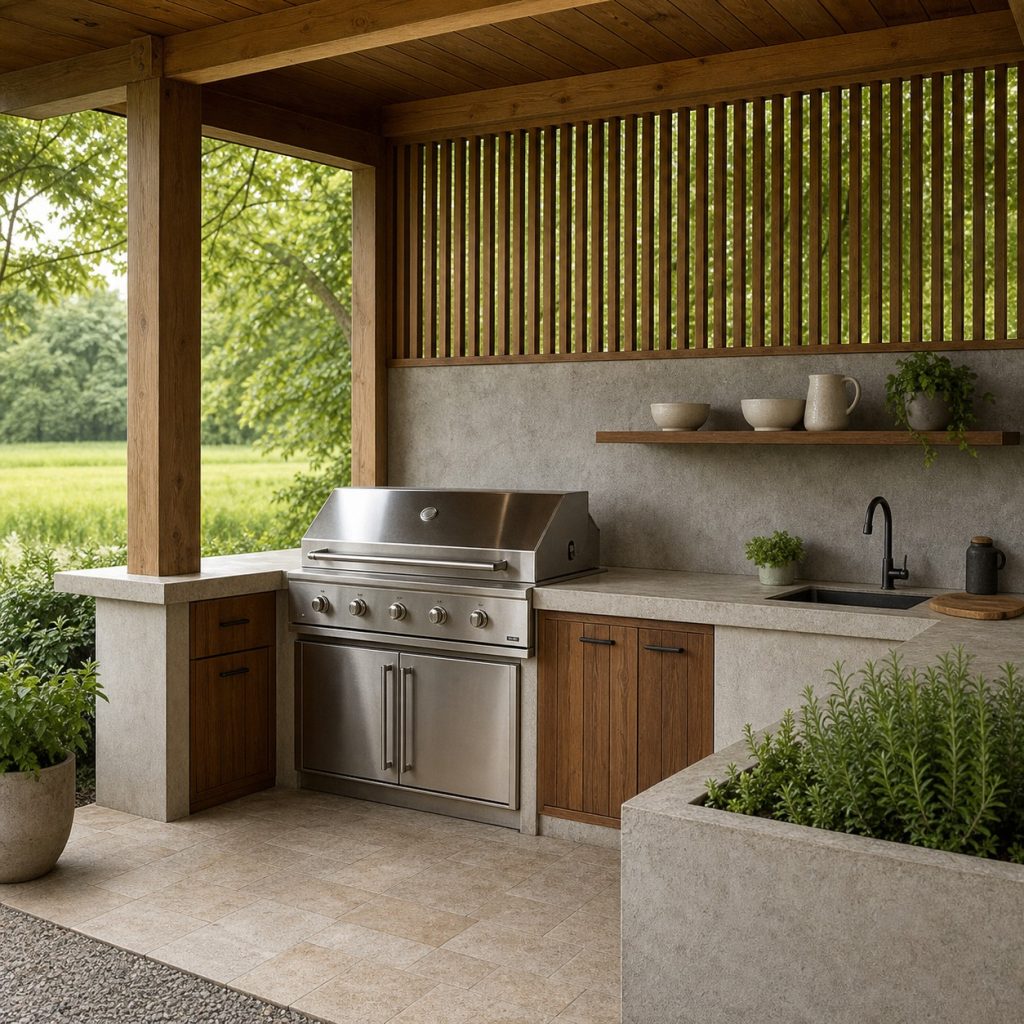
One shelf can personalize a blank prep wall without covering it in objects. Use only stable, washable pieces and mount the shelf into suitable structure. Keep it outside the grill’s heat and grease zone and leave room to clean the wall behind it.
Herbs and Planters at the Prep End
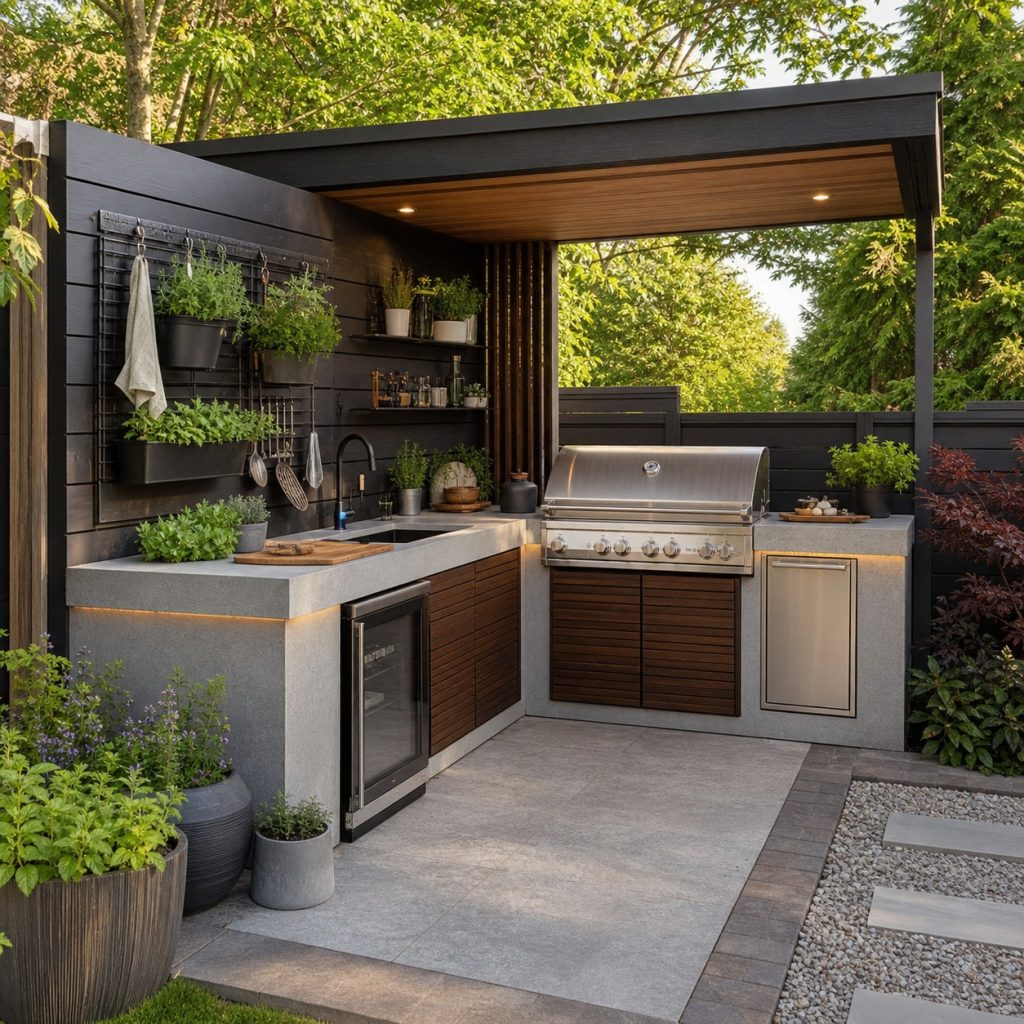
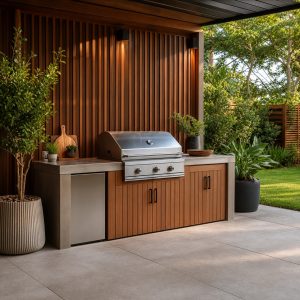
A small herb rail makes garnish easy while larger planters soften the cabinet run. Choose food-safe containers and prevent irrigation from wetting outlets, cabinets, or walking surfaces. Keep foliage away from flames, exhaust, vents, and appliance doors.
Weather-Ready Dining Textiles
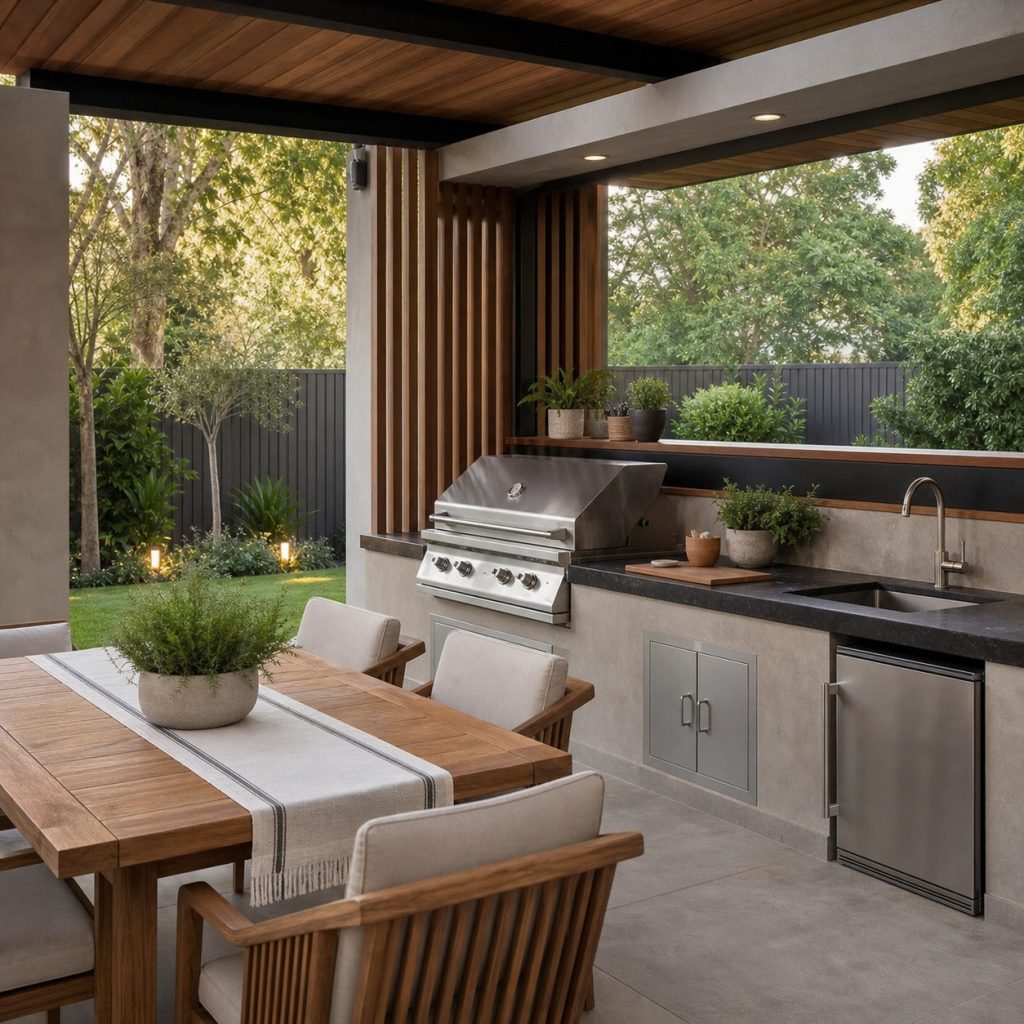
Cushions and one runner can add color without changing permanent finishes. Select washable, quick-drying fabrics and keep them entirely within the dining zone. Store textiles in a dry, pest-resistant, wind-secure location when the kitchen is idle.
Sculptural Exterior Lighting
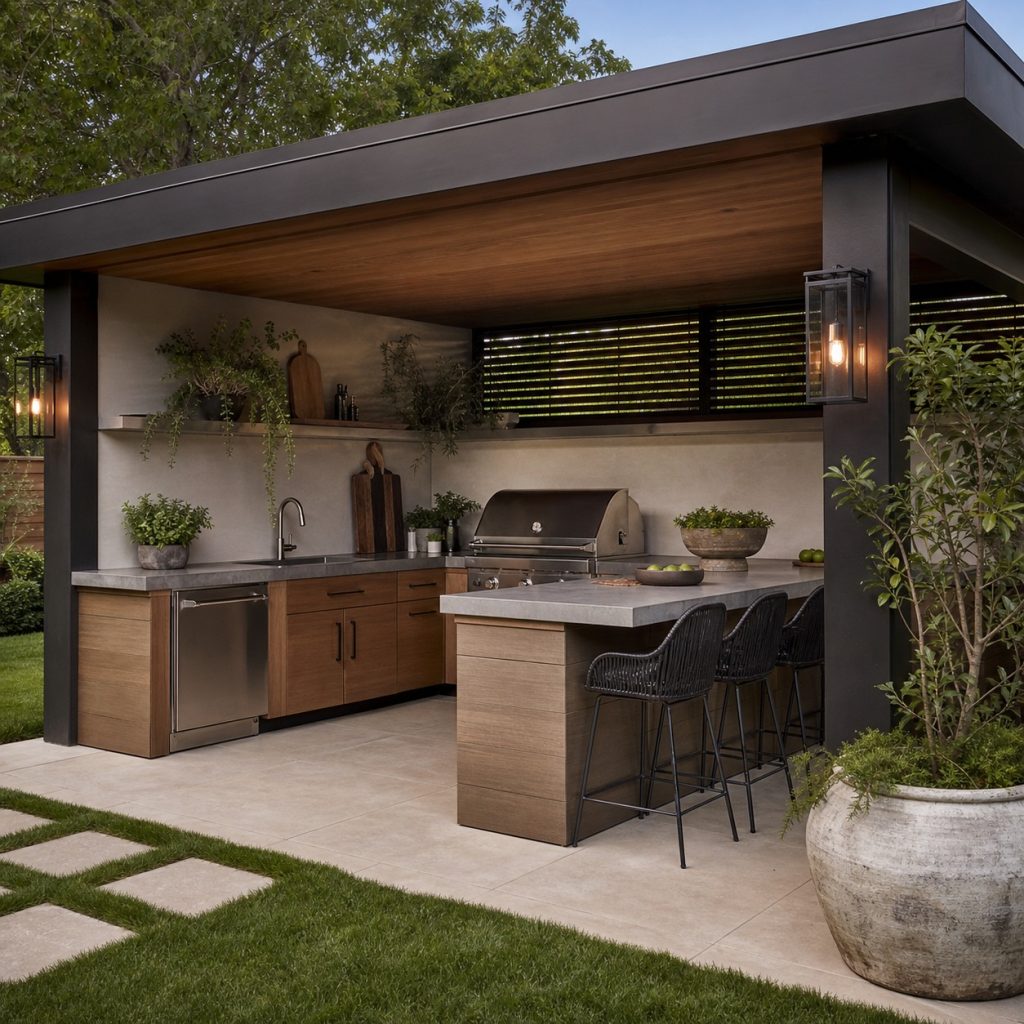
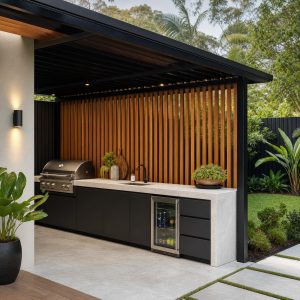
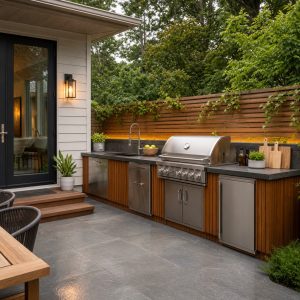
Exterior-rated fixtures can serve as décor while improving task and path visibility. Scale them to the roof and counters, shield glare, and place them where grease is manageable. Electrical ratings and mounting must match the exact wet or damp exposure.
Serving Boards as Working Decor
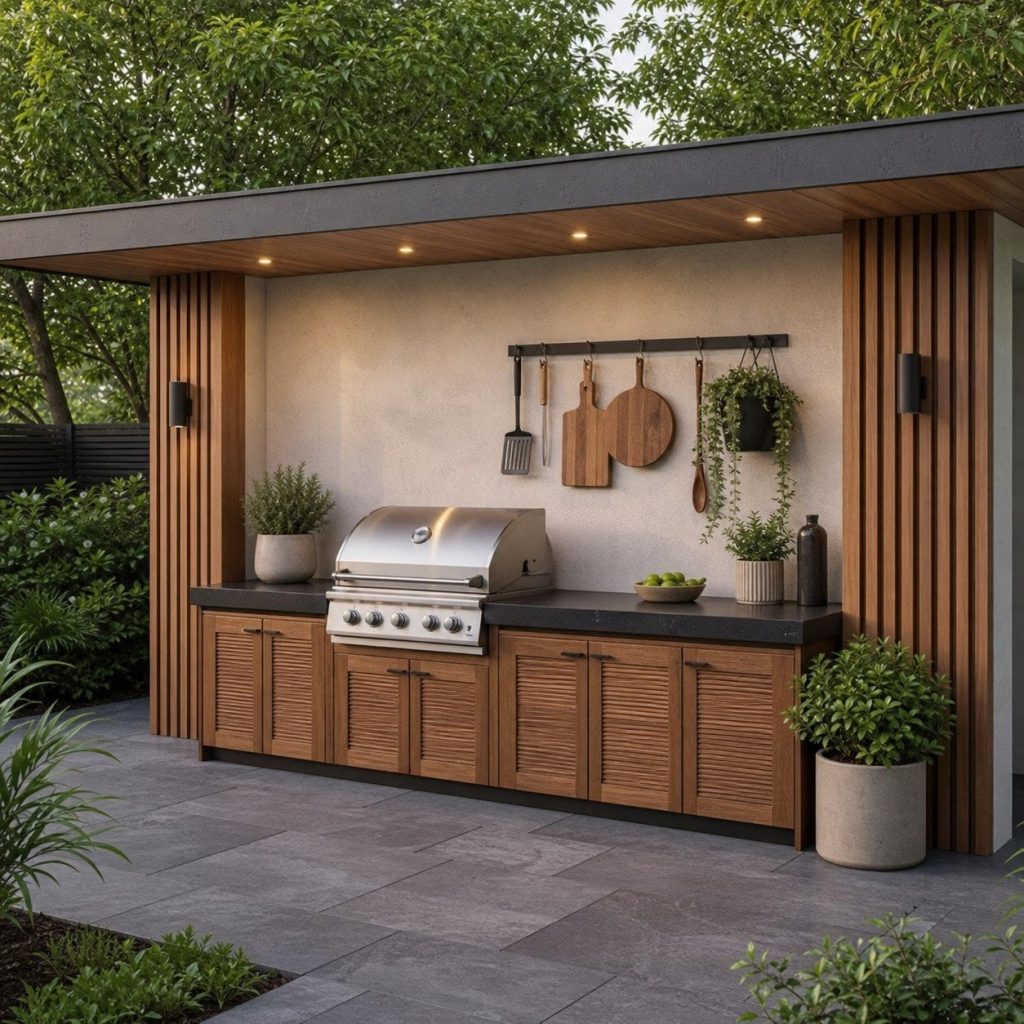
Frequently used serving boards can look attractive on hooks at the cool end of the kitchen. Allow air around clean pieces and bring moisture-sensitive wood indoors between events. Hooks must not interfere with doors, outlets, lights, or required wall clearances.
Built-In Display Niches
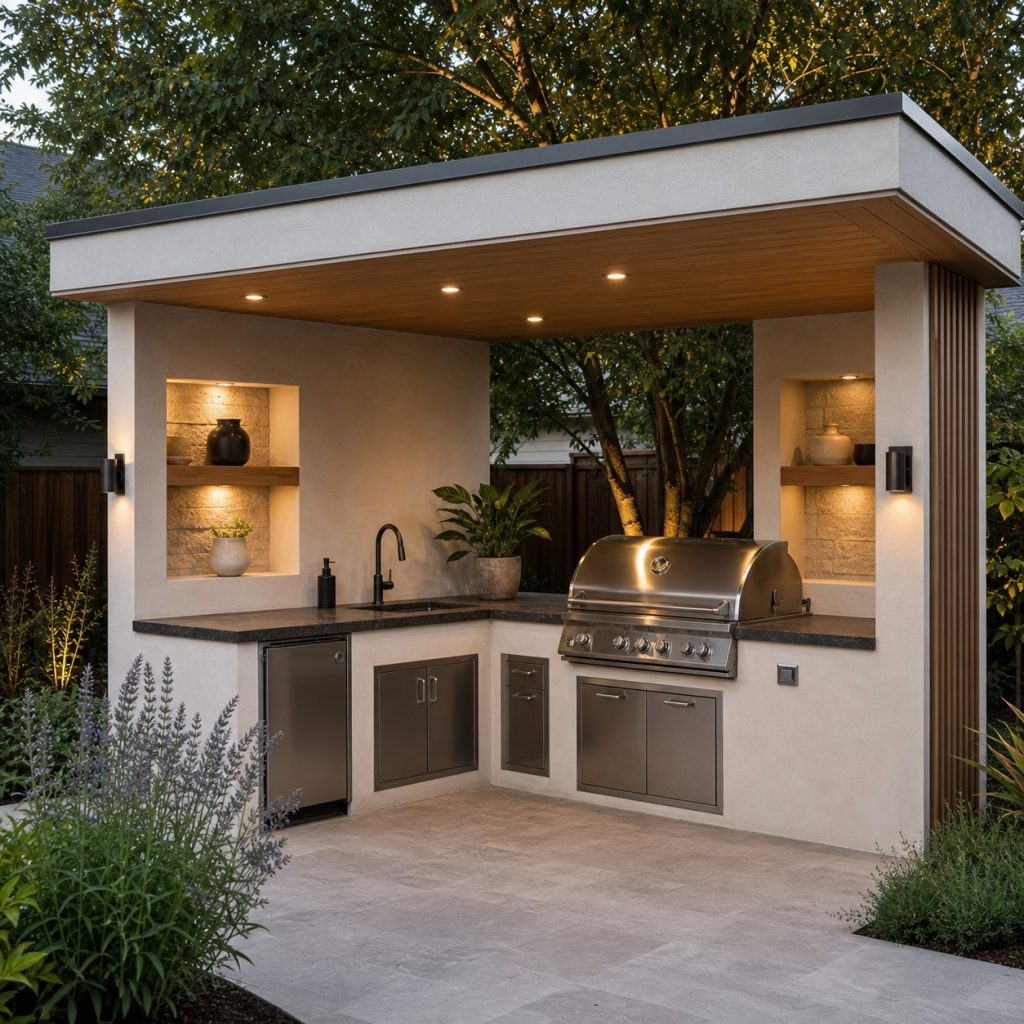
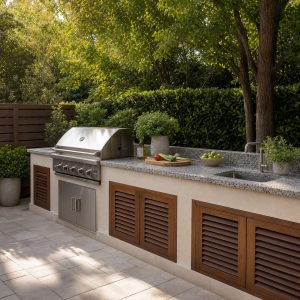
A pair of shallow niches adds depth without projecting into the aisle. Detail their tops and sills to shed water and make every surface reachable for cleaning. Limit the display to a few durable objects so pollen and insects do not create constant work.
Simple Seasonal Table Accent
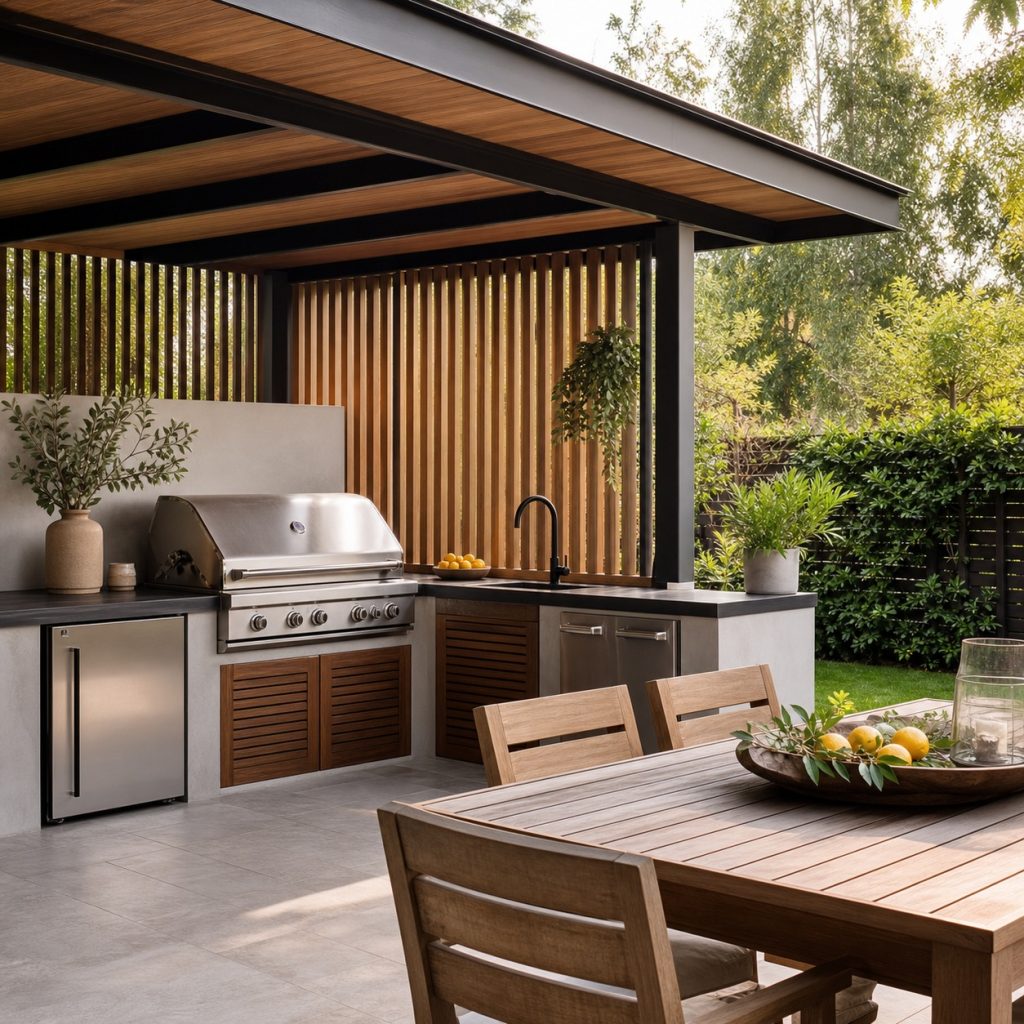
Seasonal color is easiest to add at the dining table, away from raw-food and grill landing space. A low centerpiece preserves conversation and resists wind better than tall branches. Remove fruit and plant material promptly so it does not attract pests.
Weather-Rated Wall Art
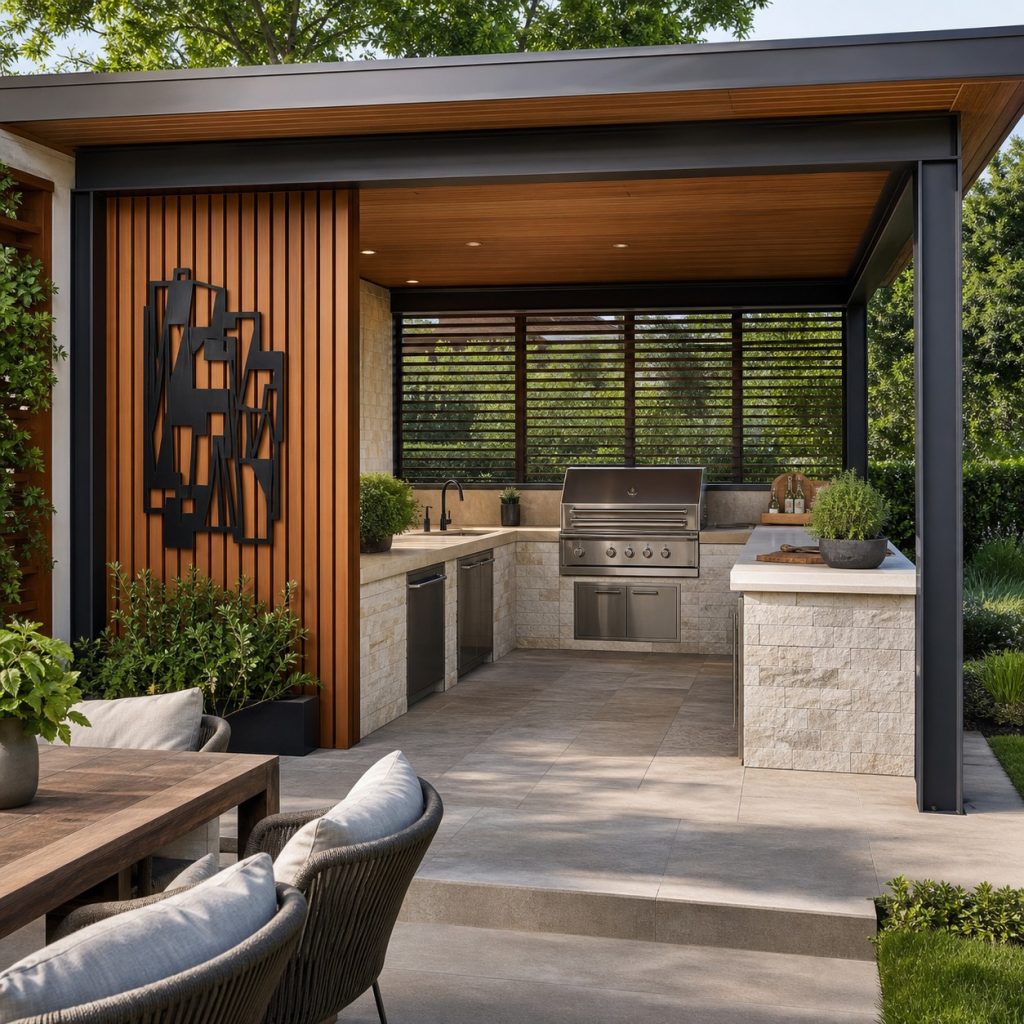
One corrosion-resistant wall piece can anchor the dining side of a modern kitchen. Mount it securely for wind and keep sharp edges, reflected glare, and hot-sun surfaces in mind. Avoid putting art above grills, sinks, or heavily splattered prep areas.
Planning checklist
- Clear heat, grease, landing, door, vent, and service zones first.
- Choose washable exterior materials and secure mounting for wind.
- Use one focal element per prep, dining, or garden zone.
- Plan dry seasonal storage for textiles, pottery, and loose accessories.
- Protect electrical equipment, food surfaces, paths, and fire clearances.
These ideas are general planning guidance. Verify appliance clearances, ventilation, weather and climate exposure, drainage, structural loads, fuel, plumbing and electrical work, permits, and local fire, pool, coastal, deck, and building requirements with manufacturers and qualified local professionals.
Frequently asked questions
What décor can stay in an outdoor kitchen?
Only items suited to the actual weather, wind, pests, cleaning, and seasonal conditions. Many textiles, wood pieces, and table accessories last longer indoors.
Can plants sit beside a grill?
Keep all plants outside manufacturer clearances and away from hot lids, exhaust, grease, fuel, and service access.
How do you decorate without cluttering counters?
Use wall-mounted accents in cool zones, one large planter, restrained lighting, and dining-table décor while preserving every prep and landing surface.