Project planning guide
Before you build
Use the reference image and planning notes as a starting point. Confirm dimensions, loads, materials, local codes, and site conditions before purchasing or cutting.
- Garden Projects
- 8 reference images
- Print-friendly guide
A garden screen can hide bins, soften a property edge, or shield a small seating area without building a solid fence. Because the broad surface catches wind, post depth, footing, frame connections, panel gaps, and local height or setback rules matter more than the decorative slat pattern.
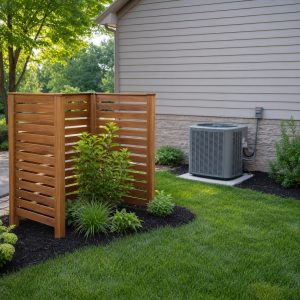
Freestanding Vertical-Slat Screen
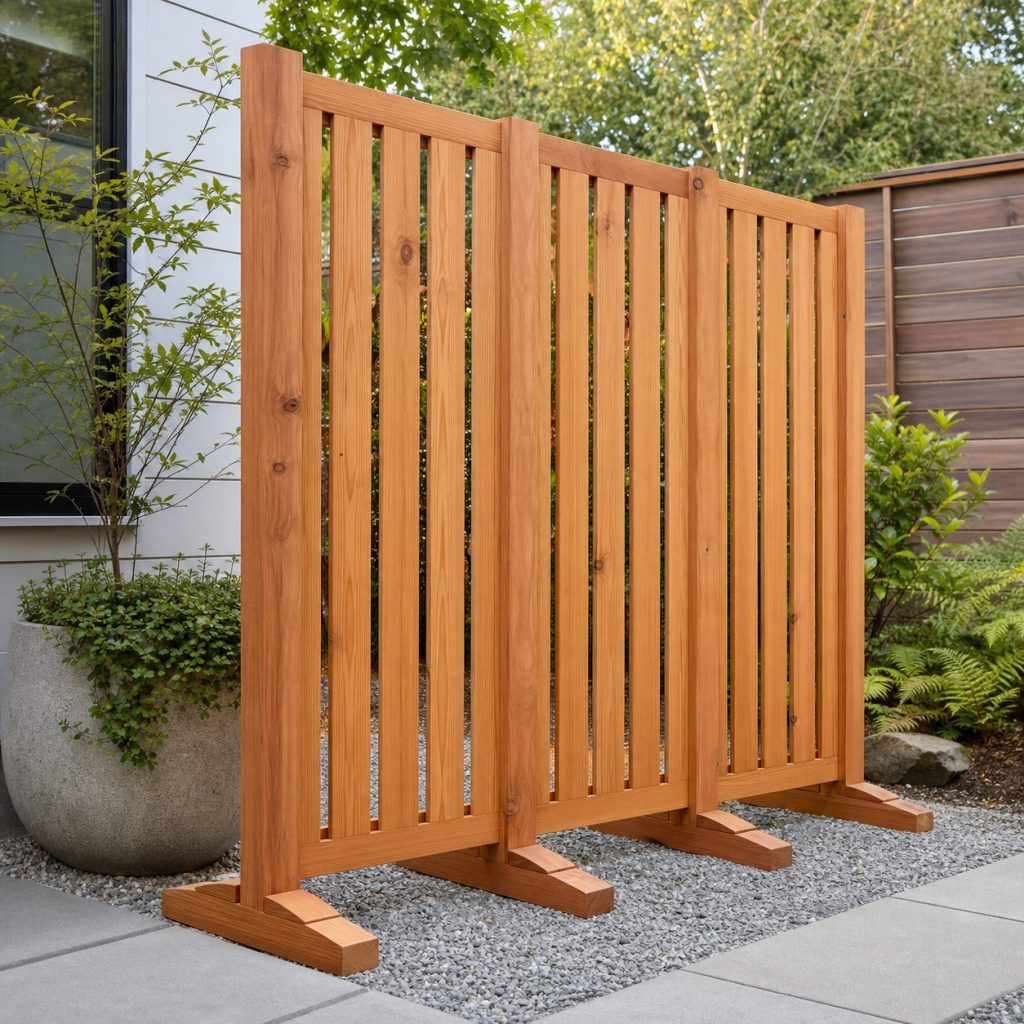
Vertical boards emphasize height and drain well when their ends are protected. A freestanding version needs deep wide feet or another engineered support system, plus discreet rear bracing. Test stability with the panel unloaded and do not place it where a fall could injure someone.
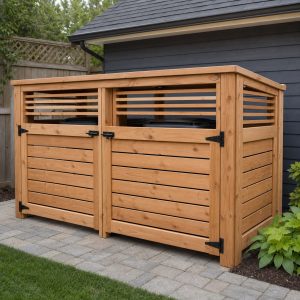
Horizontal Screen for Utility Bins
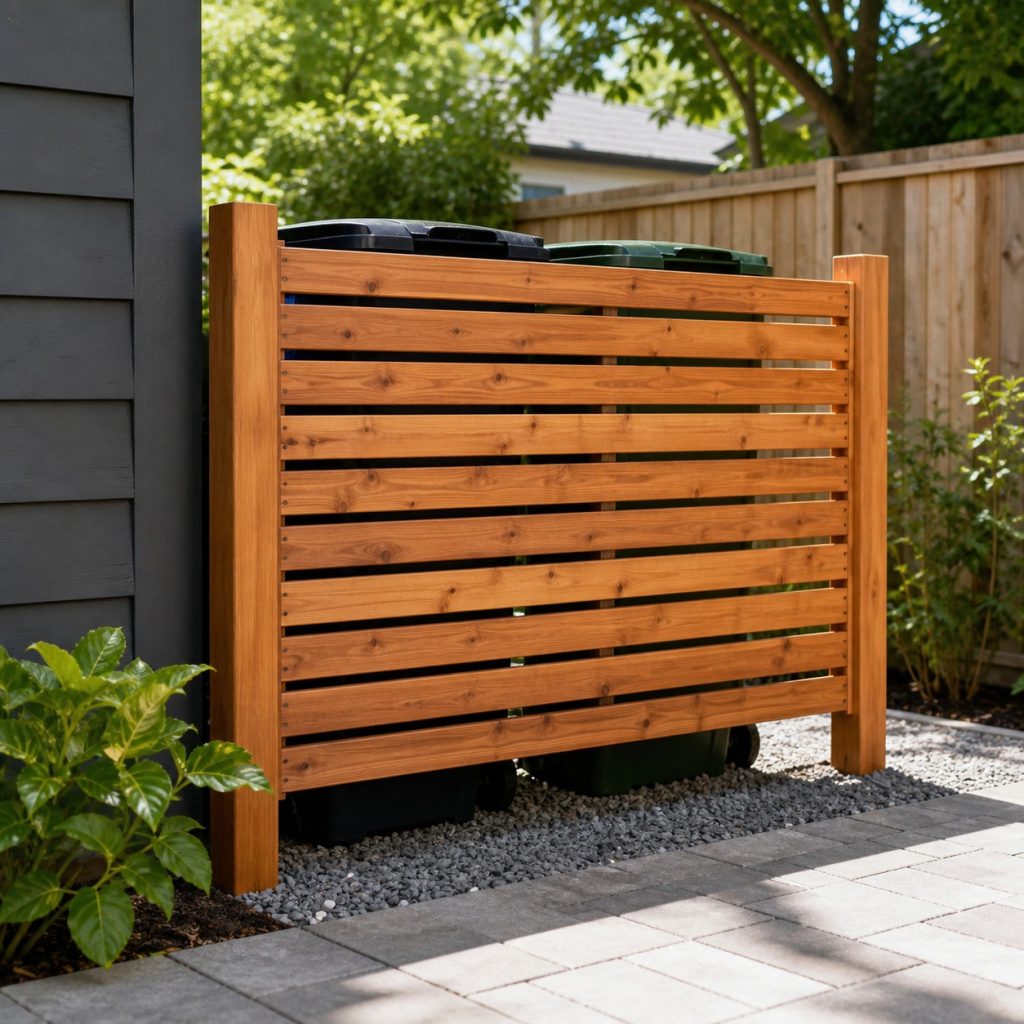
Horizontal slats can conceal bins while preserving ventilation. Mount them between substantial posts, leave enough side clearance to roll containers out, and keep the bottom above gravel. The screen should not trap odors, block a utility meter, or narrow an exit route.
Lattice-Top Screen
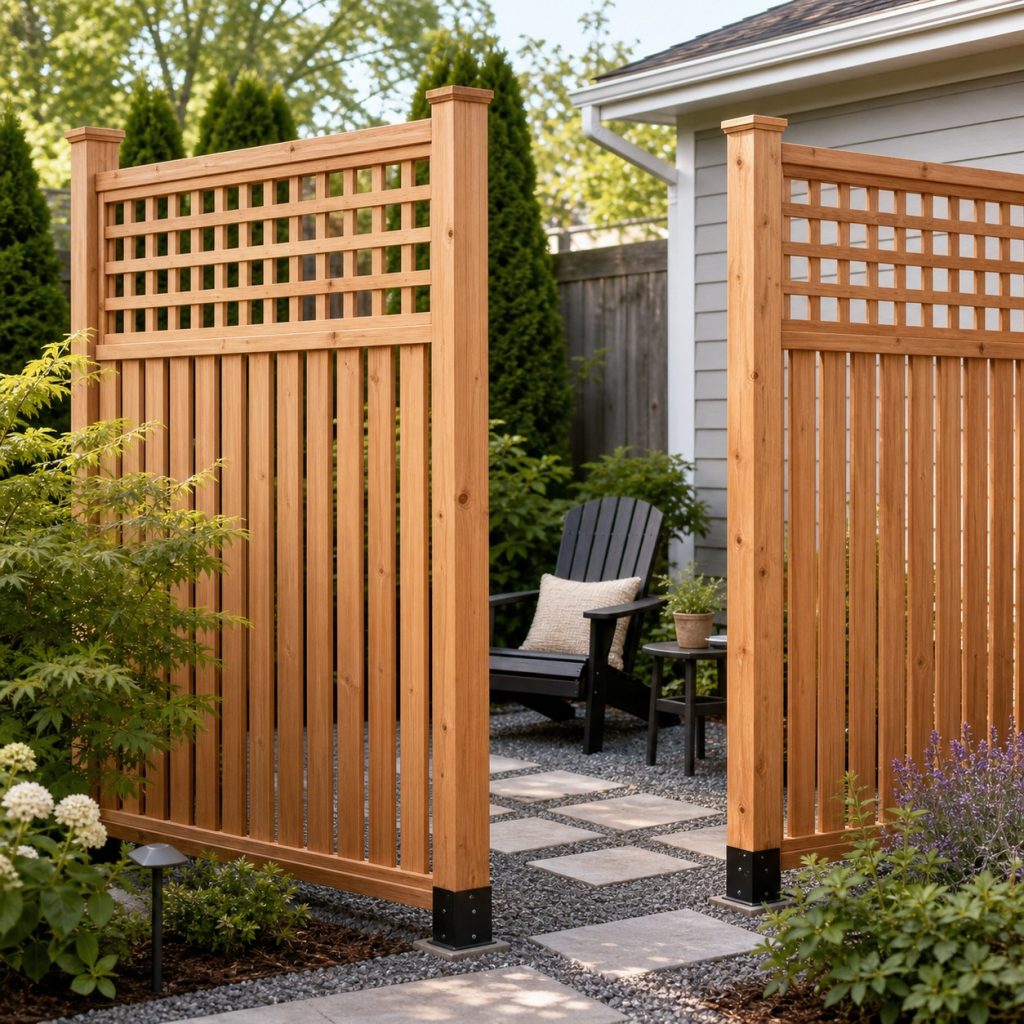
A lattice upper section filters rather than completely blocks the view. Capture thin lattice inside a rigid rail-and-stile frame and use stronger lower slats where privacy is needed most. Plan for pruning access if vines are added; plant weight should not become structural bracing.
Angled Privacy Slats
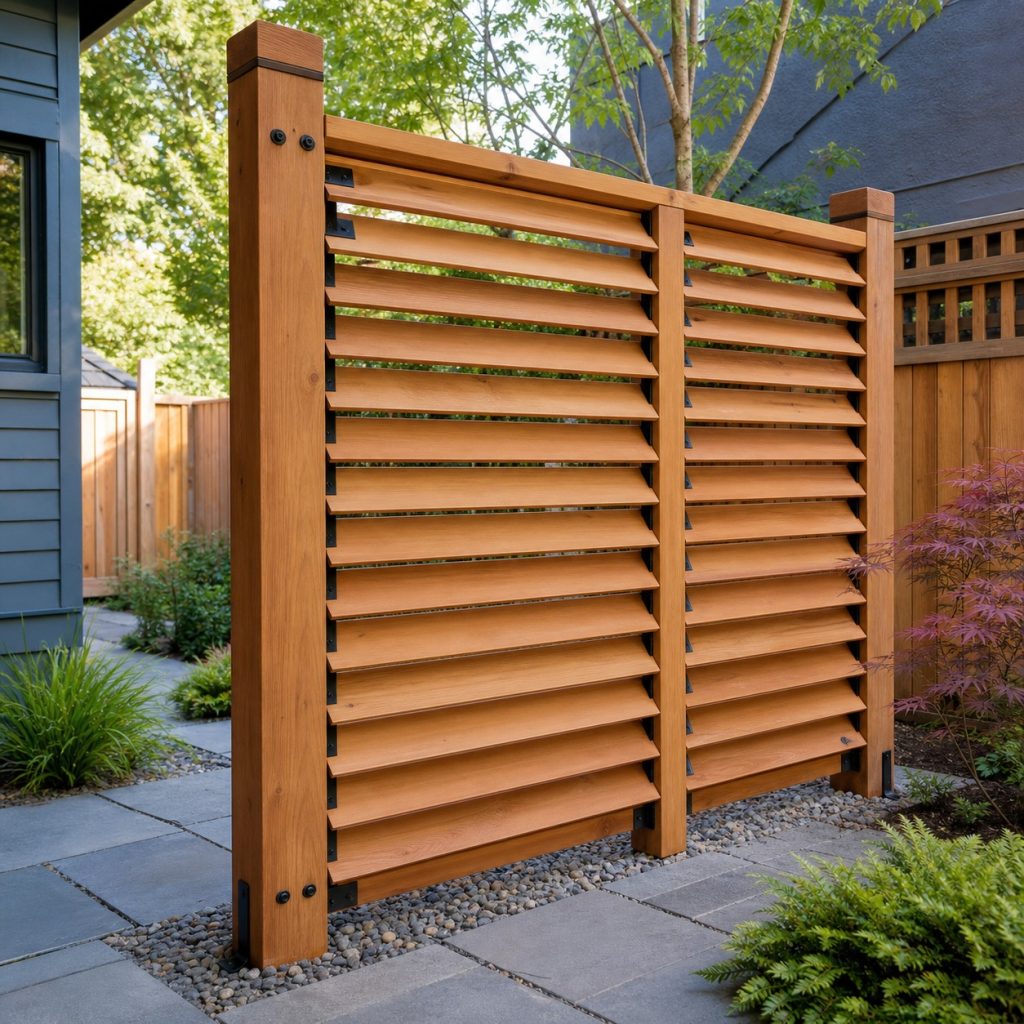
Angled slats can interrupt a specific sightline while allowing light and breeze. Build one test bay to choose the angle, use spacer blocks for repetition, and make the supporting rails strong enough for the offset fasteners. Check privacy from both seated and standing positions.
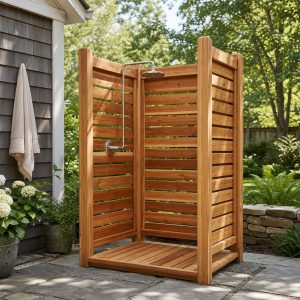
Narrow Modular Panels
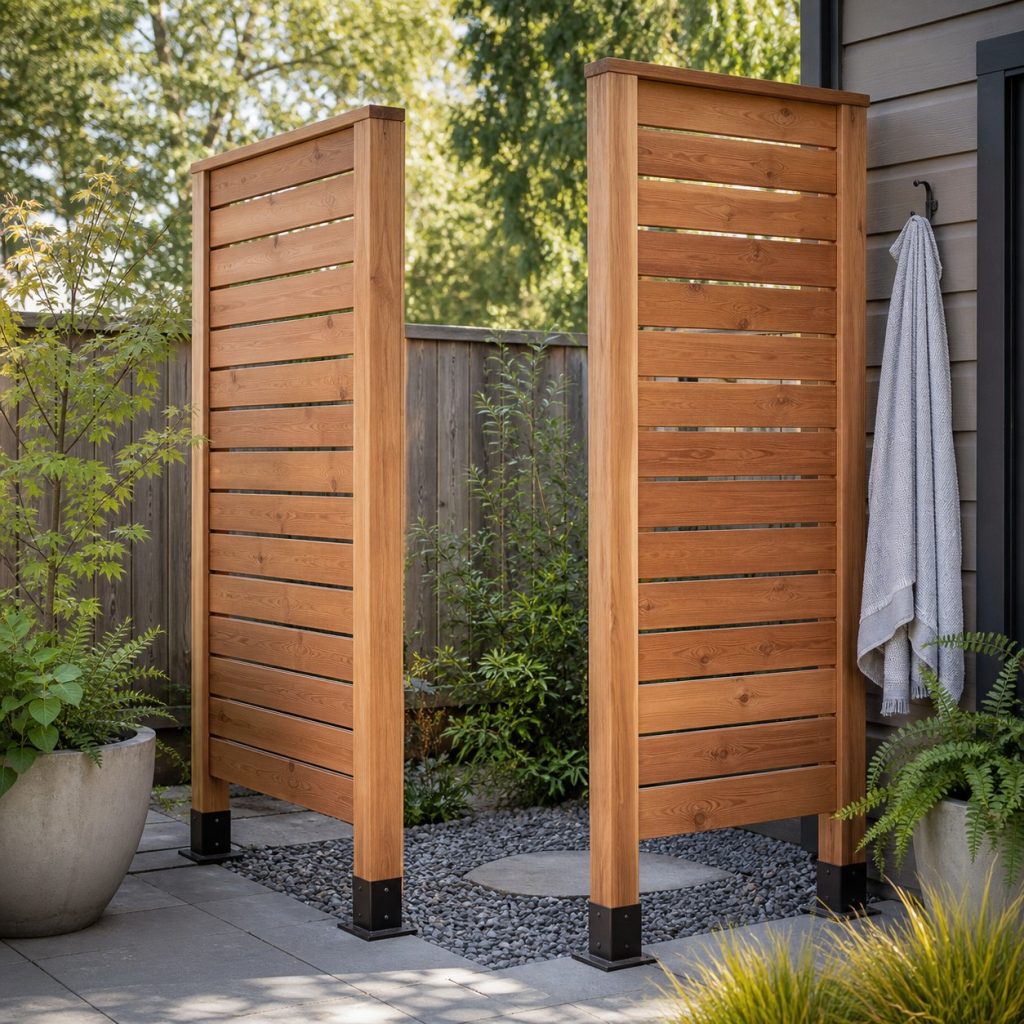
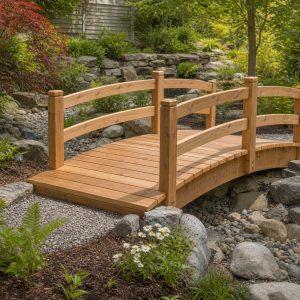
Separate narrow panels are easier to move and repair than one wide sail. Give each module a complete frame and support, align the gaps deliberately, and preserve entry width. Where water is present, use slip-resistant footing and keep wood clear of persistent splash.
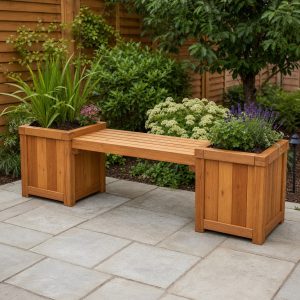
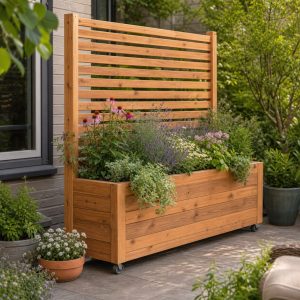
Planter-Integrated Screen
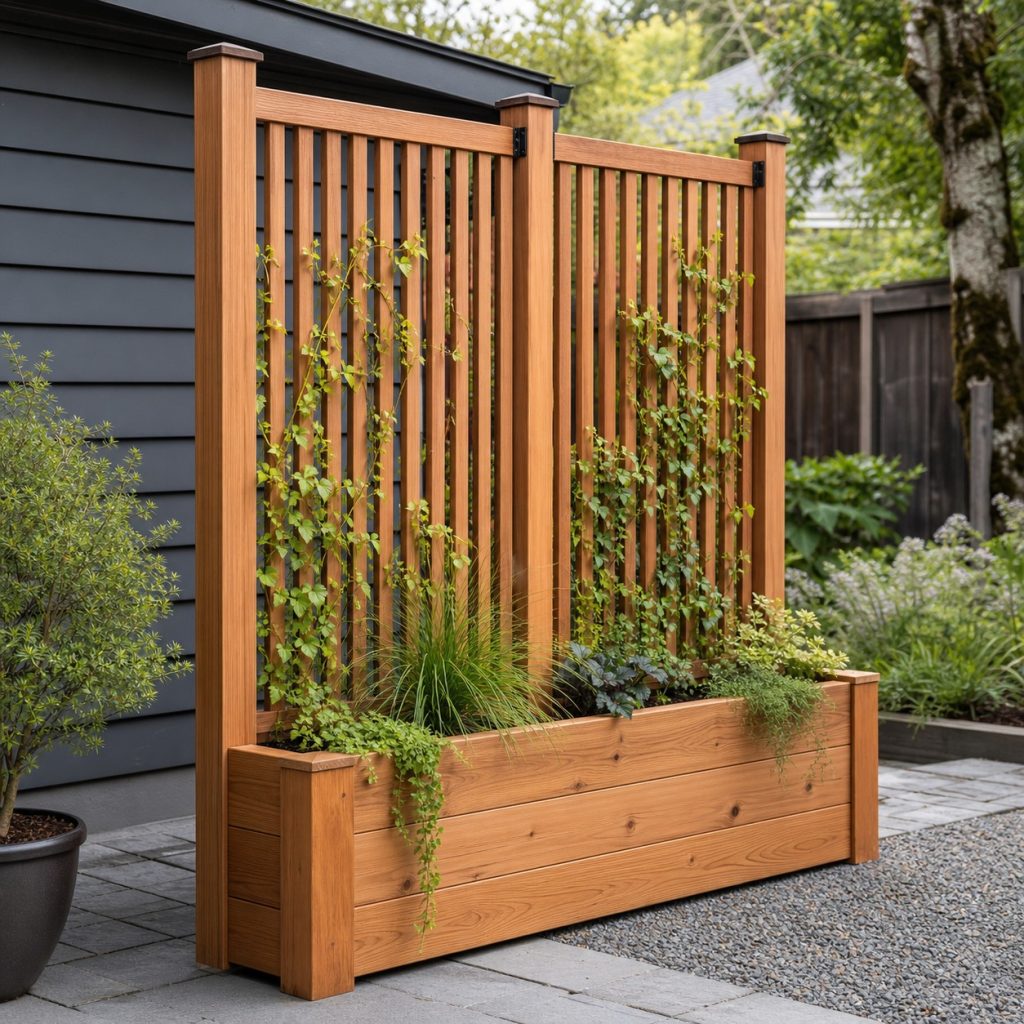
A planted base adds weight, but wet soil alone is not a reliable foundation. Tie the posts into a designed frame, size the planter for roots and drainage, and separate planting moisture from vulnerable end grain. Keep tall vines from overwhelming the screen in wind.
Build a Square Screen Frame
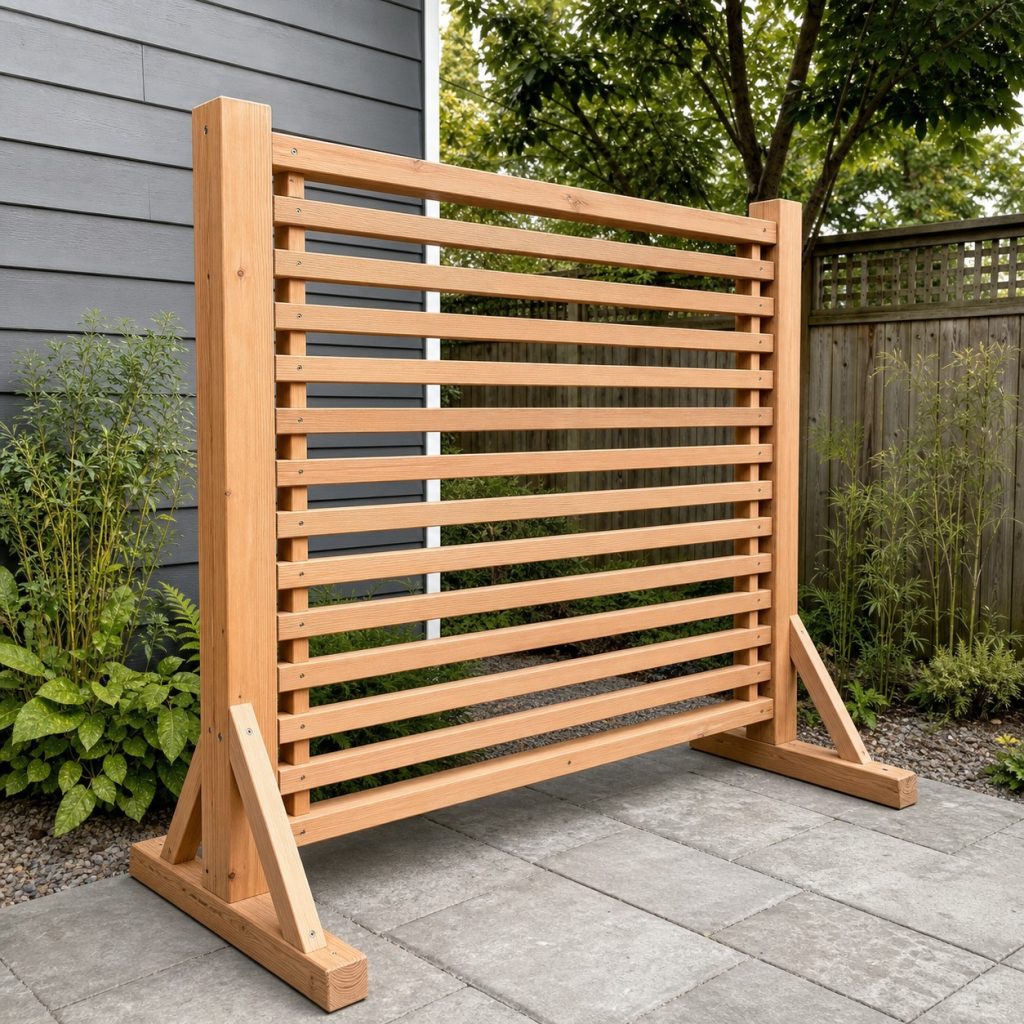
Start with plumb posts or square side frames, then install top and bottom rails before slats. Temporary diagonal bracing keeps the assembly square. Predrill near ends and use one spacer block repeatedly so the finished rhythm stays consistent across the full panel.
Exterior Finish and Post Care
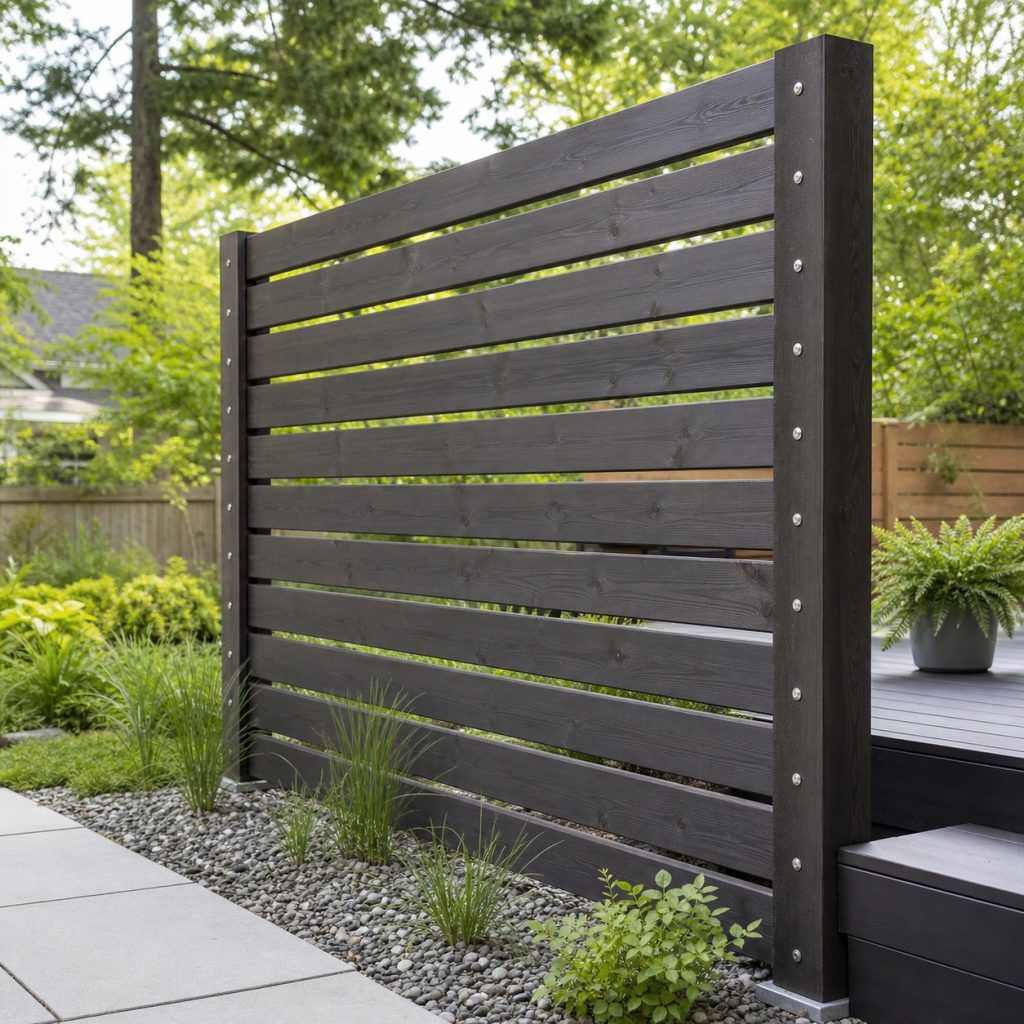
Dark stain can make a screen visually recede, while a clear finish highlights cedar. Coat dry lumber, seal cuts, keep posts and feet out of trapped water, and use fasteners compatible with the wood treatment. Inspect the windward connections after major storms.
Planning checklist
- Map the exact sightline instead of screening the entire boundary.
- Confirm property lines, utilities, height, setbacks, wind, and permits.
- Use complete structural frames, posts, footings, or verified broad feet.
- Keep regular airflow gaps and preserve gates, meters, bins, and exits.
- Maintain finishes, base clearances, fasteners, and storm connections.
These concepts are general planning guidance, not engineering drawings or tested load-rated plans. Verify dimensions, lumber grade and treatment, structural loads, foundations, fasteners, coatings, utility locations, accessibility, wildlife guidance, property rules, permits, and local building requirements for the actual site. Use qualified local professionals for structural, fall, swing, bridge, retaining, electrical, plumbing, or water hazards.
Frequently asked questions
How tall should a garden privacy screen be?
Use the minimum height that blocks the relevant seated or standing view while complying with local fence, setback, and neighborhood rules.
Can a privacy screen be freestanding?
Yes, but the base and bracing must resist wind and overturning. Large panels may require engineered support or fixed posts.
Should privacy-screen boards touch?
Usually small consistent gaps improve airflow, drying, and wind performance. The gap depends on the sightline, board movement, and desired privacy.