Project planning guide
Before you build
Use the reference image and planning notes as a starting point. Confirm dimensions, loads, materials, local codes, and site conditions before purchasing or cutting.
- Garden Projects
- 8 reference images
- Print-friendly guide
Pool equipment needs protection from accidental contact and landscaping debris, but a tight shed can create overheating, corrosion, chemical, electrical, and maintenance hazards. These concepts favor open ventilation, full access, dry floors, and layouts reviewed by pool and electrical professionals.
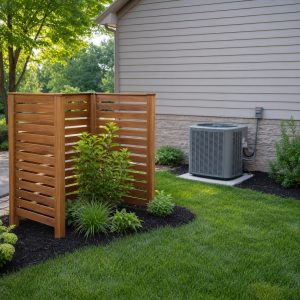
Open-Slat Equipment Screen
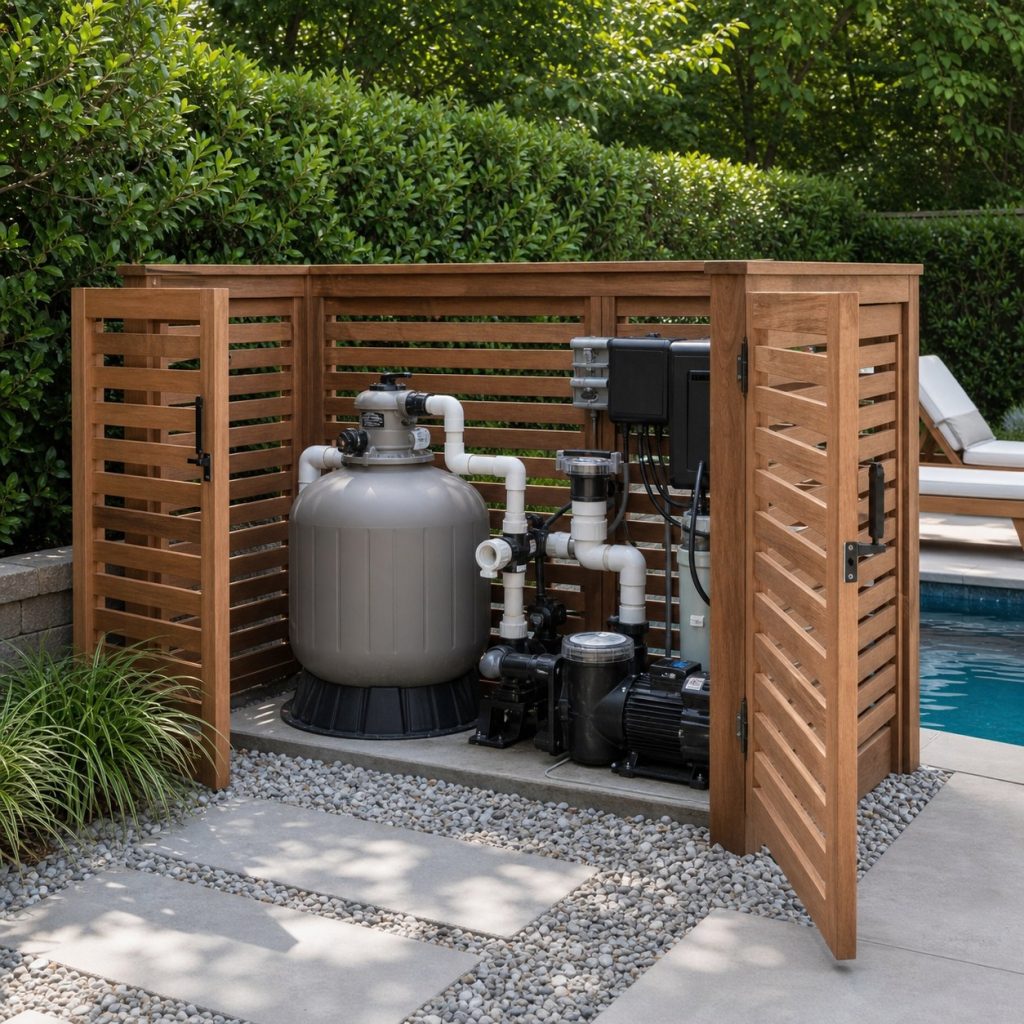
A screen can hide common sightlines without enclosing heat-producing equipment. Keep generous gaps, leave controls visible, and maintain direct access to valves, filters, disconnects, bonding connections, and emergency shutoffs.
Three-Sided Louver Enclosure
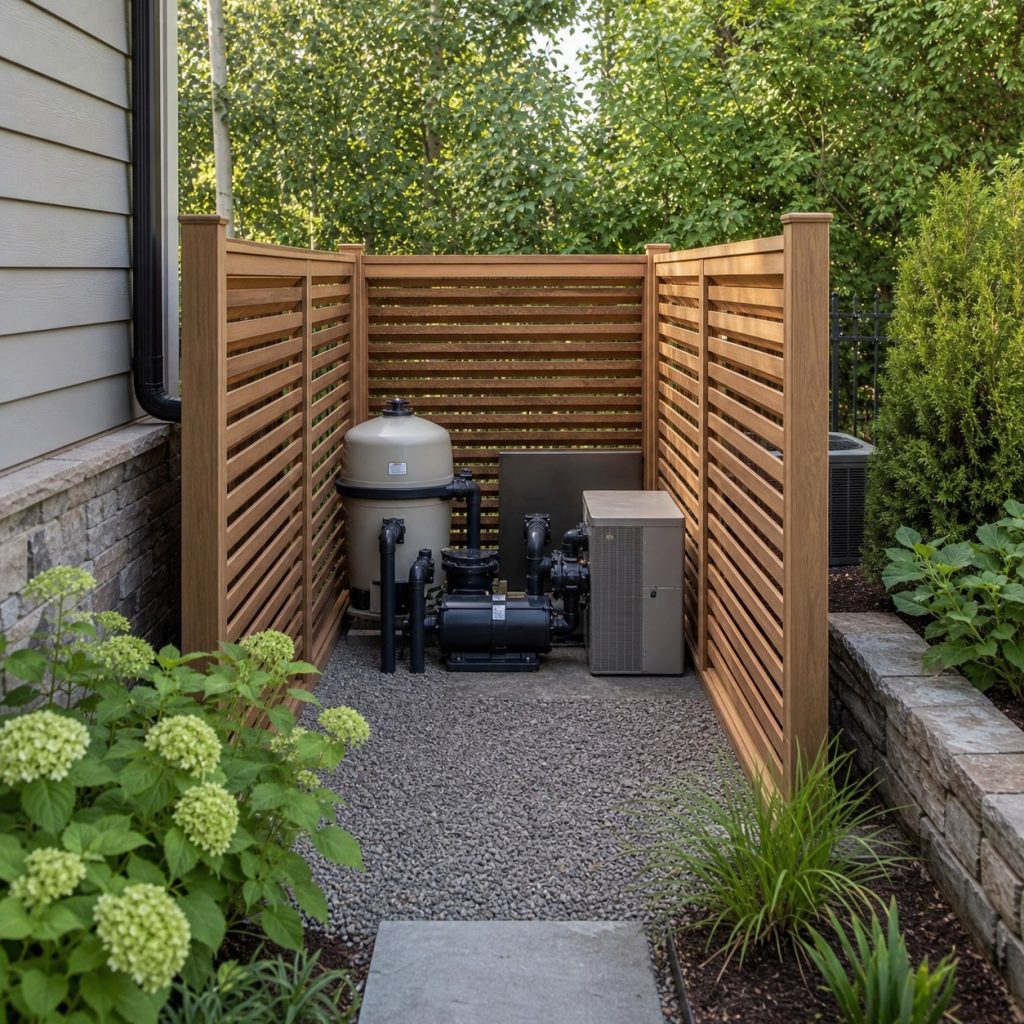
Louvers shed some rain while supporting cross-ventilation, but their free area must satisfy every equipment instruction. Use noncorroding hardware and an open service side sized for filter removal and future equipment replacement.
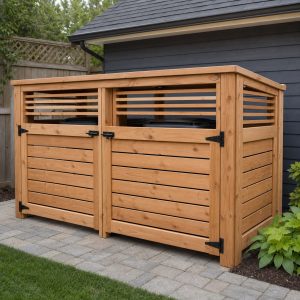
Hinged Full-Access Panels
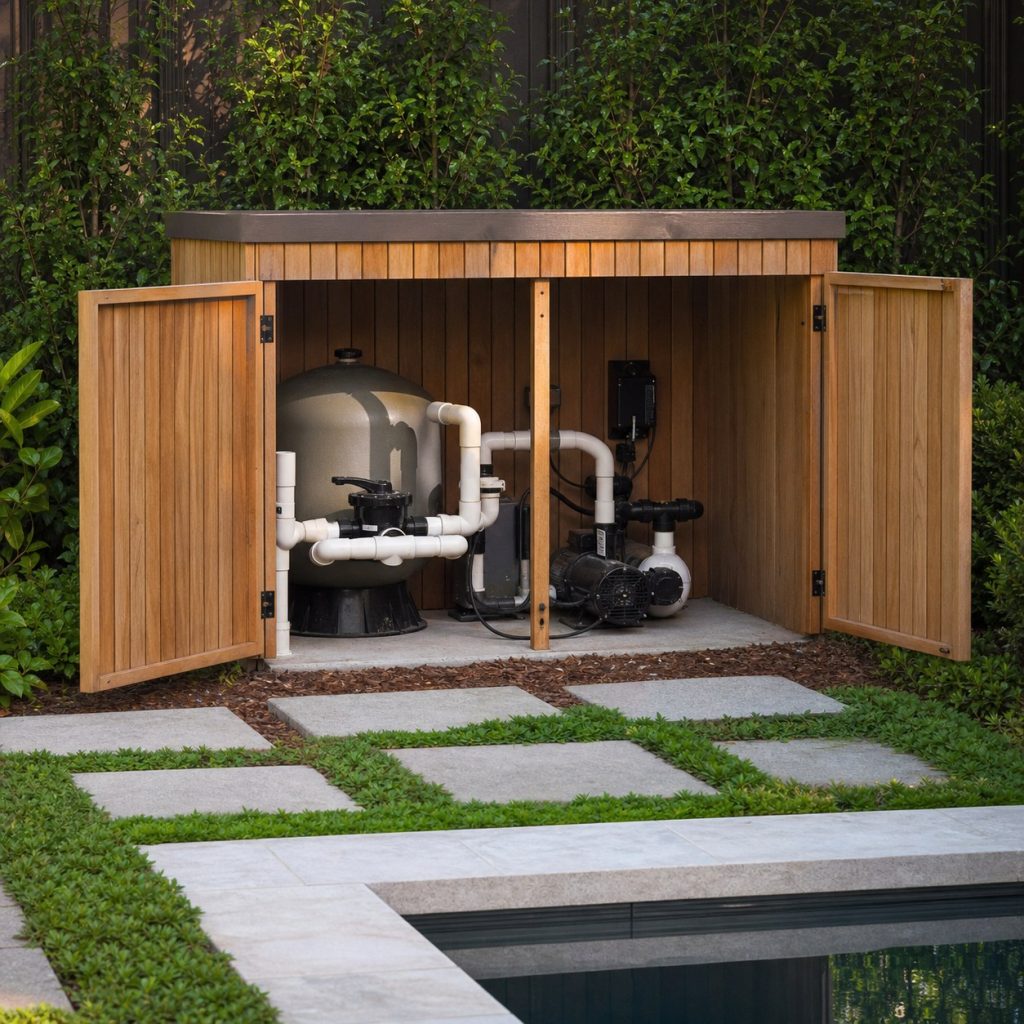
Full-height doors or lift-off panels let technicians work without climbing over pipes. Doors need wind restraints, corrosion-resistant latches, and clear swing paths that never block the pool barrier, electrical disconnect, or escape route.
Sound-Deflecting Offset Screen
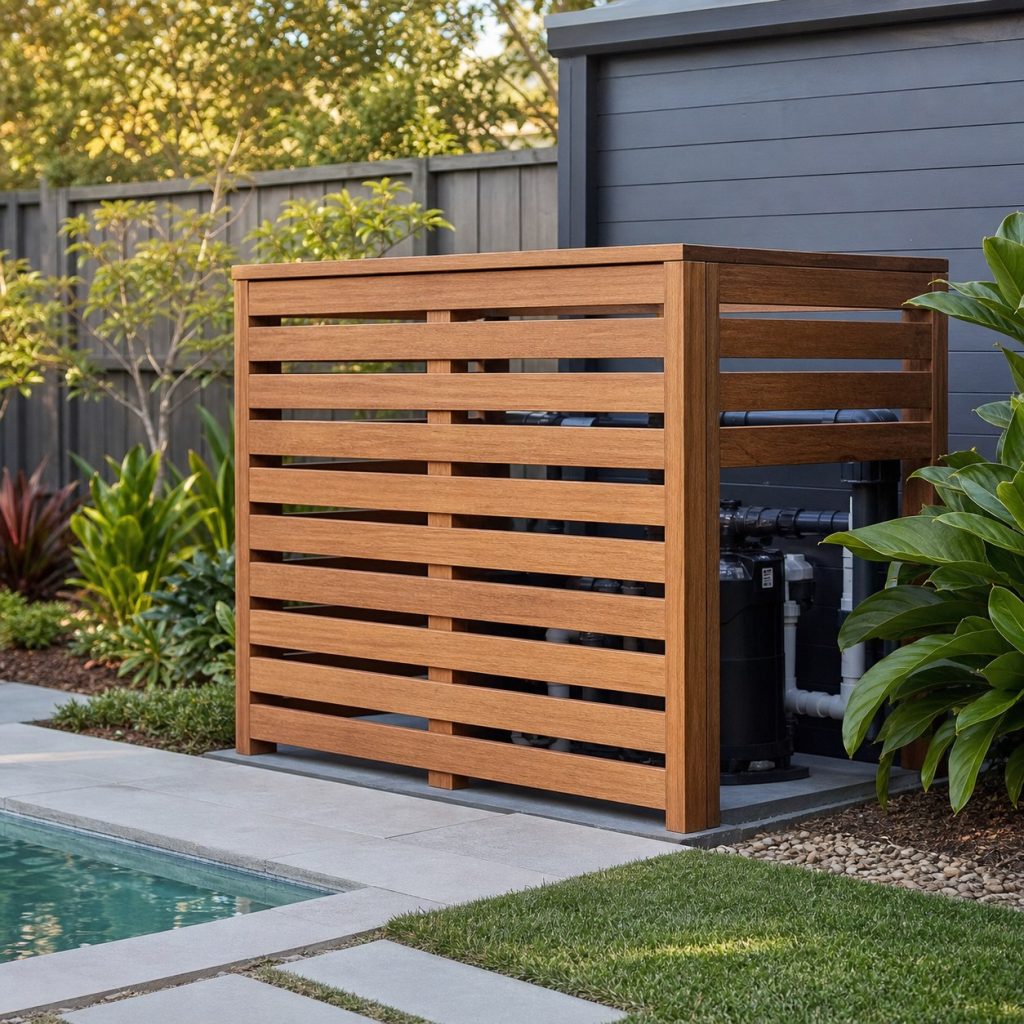
An offset screen can interrupt a direct sound path without forming a heat trap. Do not line the enclosure with absorbent material unless it is moisture-safe, fire-appropriate, and permitted around the specific electrical and mechanical equipment.
Filter-Removal Clearance
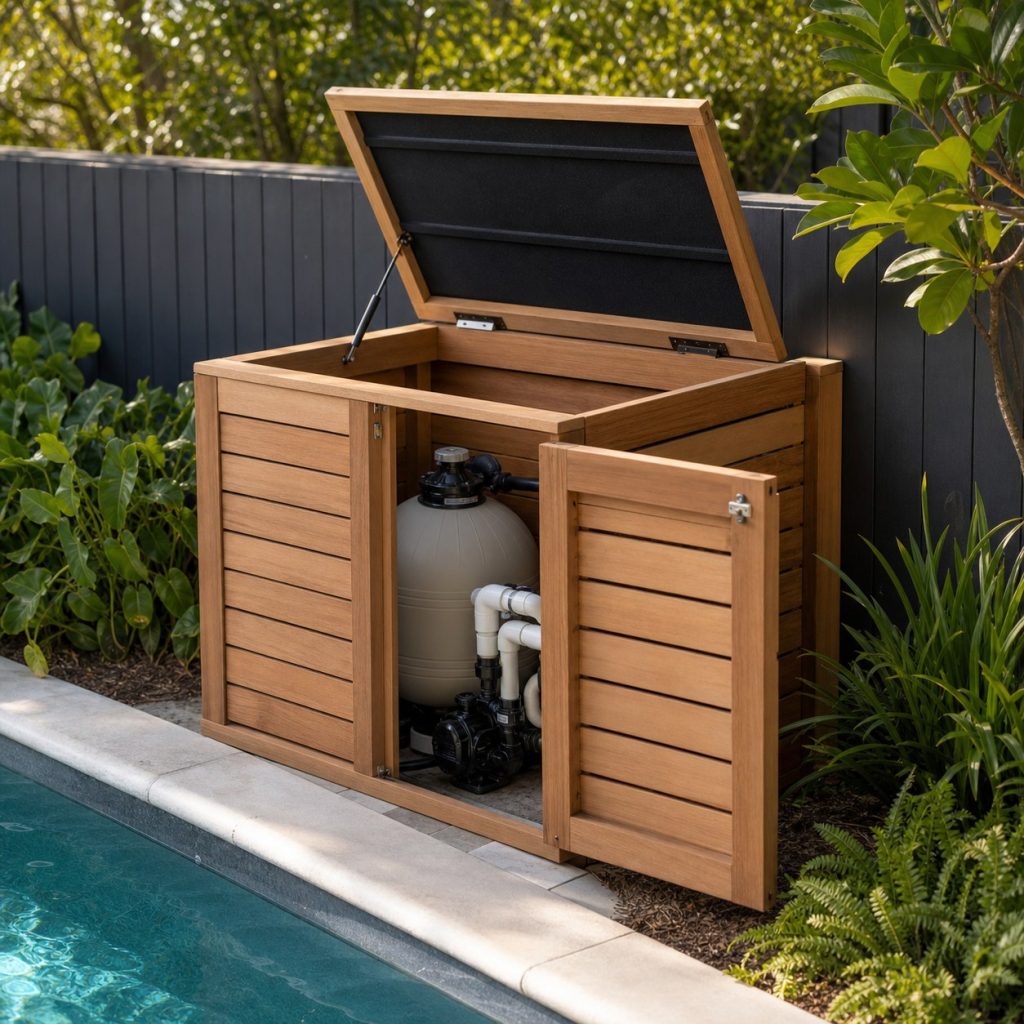
Cartridge and DE filters often require substantial overhead and side clearance for disassembly. Measure the complete service procedure, not just the equipment footprint, and leave a route for safely carrying wet components away.
Dry, Drained Equipment Base
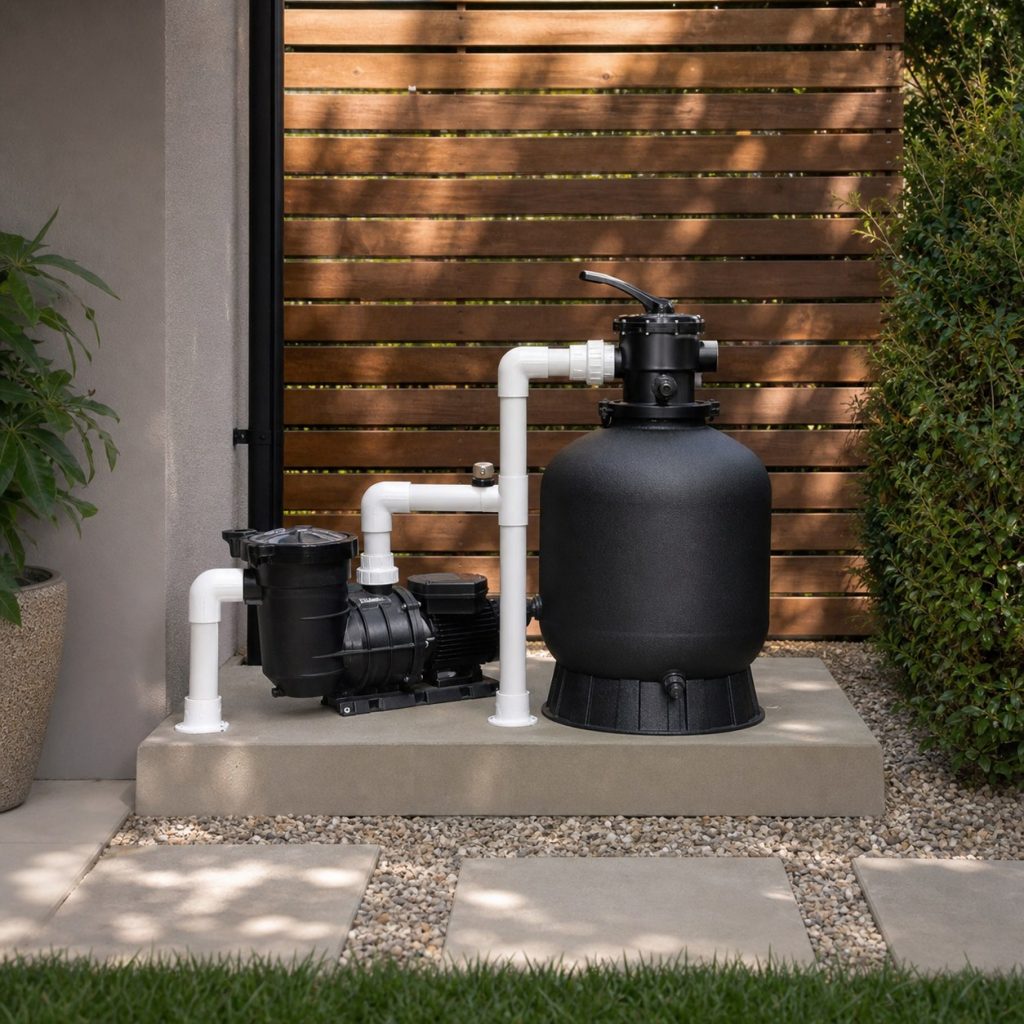
A stable equipment pad and positive site drainage help keep motors and connections out of standing water. Do not alter required bonding, grounding, conduits, or pipe supports; electrical work belongs to a qualified pool electrician.
Chemical Storage Kept Separate
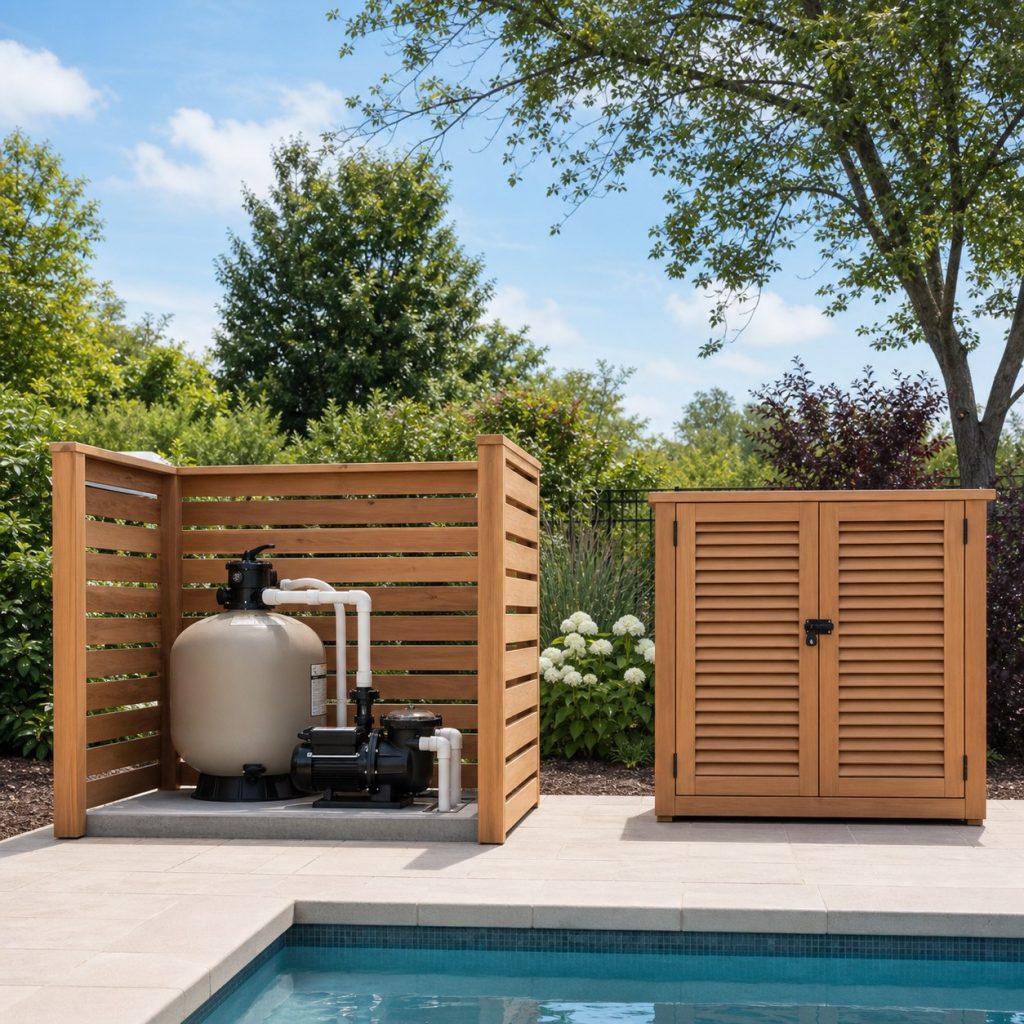
Pool chemicals can corrode equipment and react dangerously, so they should not share an improvised cabinet with motors, fuels, or ignition sources. Follow product labels and current CDC and local storage requirements in a separate suitable location.
Professional Clearance Review
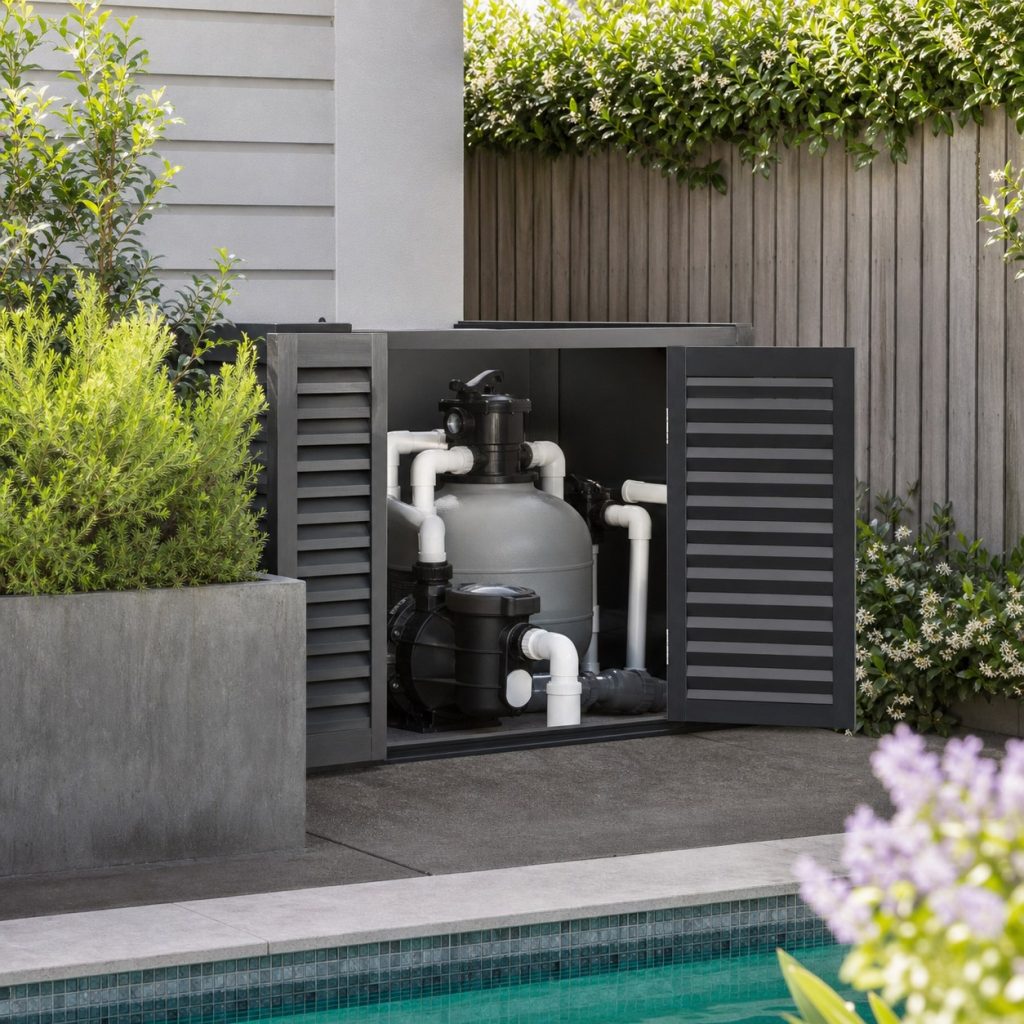
Have the pool professional and electrician review airflow, bonding, GFCI protection, drainage, service paths, and code clearances before construction. Never make a decorative enclosure part of the required child-safety barrier unless it is specifically designed and approved for that role.
Planning checklist
- Collect manuals for the pump, filter, heater, sanitizer, and controls.
- Preserve ventilation plus full side and overhead service access.
- Keep disconnects, valves, bonding, and labels visible.
- Provide a stable dry pad and safe drainage route.
- Store chemicals separately according to labels and CDC guidance.
- Obtain pool-professional and qualified electrical review.
These concepts and generated images are general planning inspiration, not measured drawings, drainage calculations, equipment-clearance instructions, accessibility designs, engineered plans, or tested load-rated structures. Verify dimensions, soil and drainage, roots and utilities, lumber and hardware, structural and wind loads, equipment manuals, service access, electrical and plumbing work, water and chemical safety, accessibility, permits, and local requirements for the actual project. Use qualified arborists, engineers, HVAC and pool technicians, electricians, plumbers, drainage professionals, and other licensed trades where those hazards or systems apply.
Frequently asked questions
Can I put a pool pump in a sealed wooden box?
No. Pumps and related equipment need manufacturer-specified ventilation, drainage, electrical clearances, and service access. Use an open, professionally reviewed arrangement.
Can pool chemicals be stored beside the pump?
Do not improvise shared storage. CDC guidance warns about incompatible materials and ignition sources; follow labels and local requirements for a separate suitable chemical-storage area.
Will an enclosure make the pump quiet?
An offset screen may reduce a direct sound path, but restricted airflow or service access is unsafe. Address abnormal noise through equipment maintenance before adding screening.