Project planning guide
Before you build
Use the reference image and planning notes as a starting point. Confirm dimensions, loads, materials, local codes, and site conditions before purchasing or cutting.
- Garden Projects
- 8 reference images
- Print-friendly guide
A horseshoe court contains heavy thrown metal, projecting stakes, and loose pit material, so layout and clear space matter as much as the frame. These concepts show recreational and rule-based arrangements with visible safety zones.
Regulation-Style Double Court
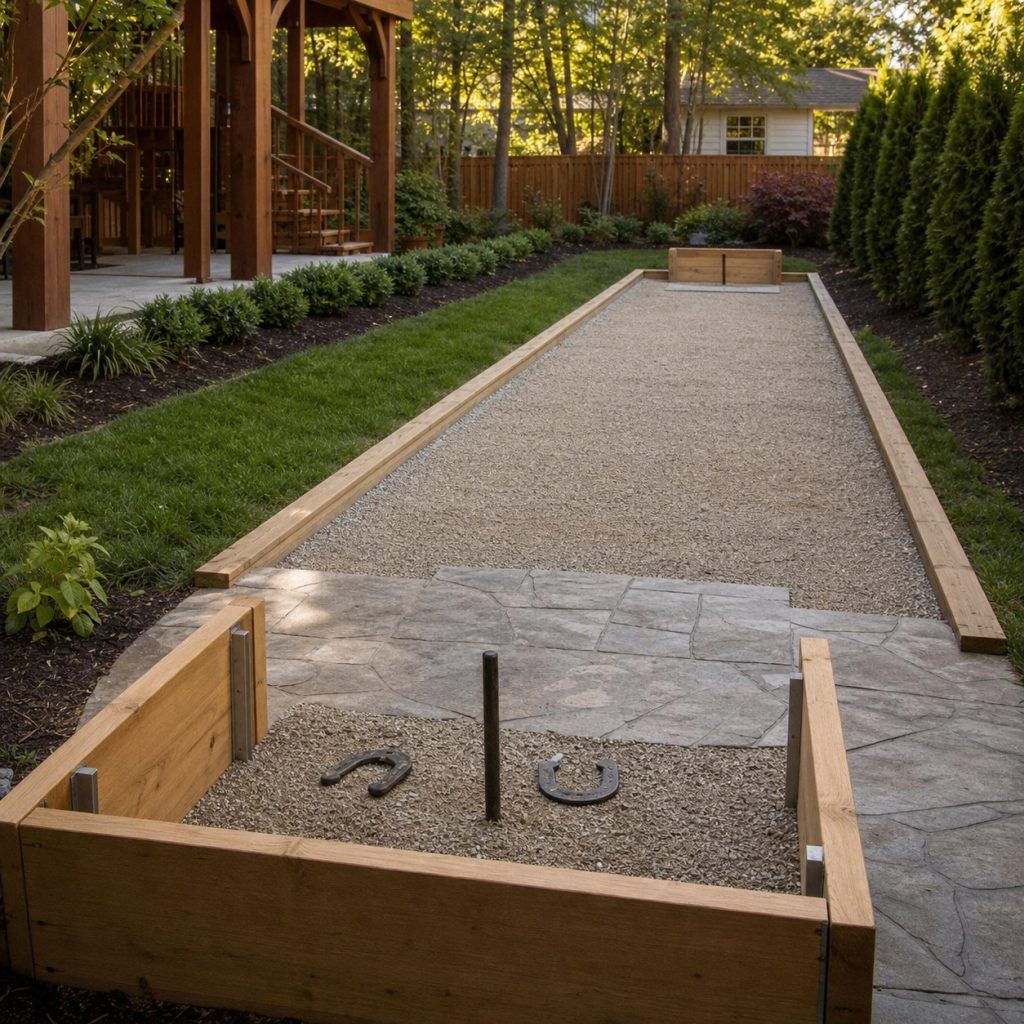
A two-ended layout supports standard play when court, boxes, platforms, stakes, and foul lines follow the current rule book. Follow current NHPA rules for organized play, check utilities before driving stakes, and keep children, spectators, windows, vehicles, and circulation routes outside the throwing and overshoot zones.
Compact Recreational Single Pit
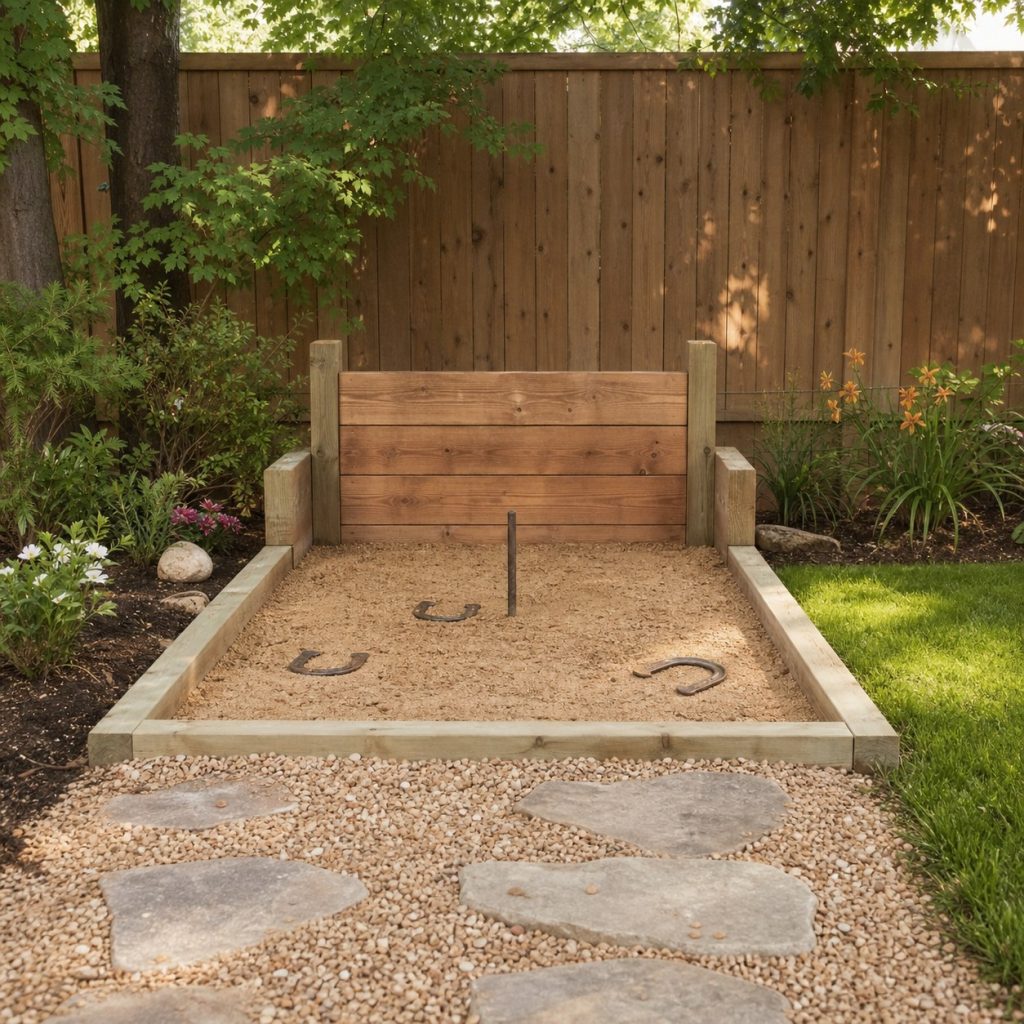
A one-pit practice area saves space but still requires a controlled throwing direction and overshoot zone.
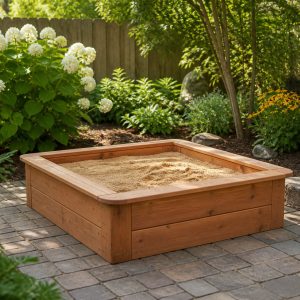
Timber-Framed Sand Pits
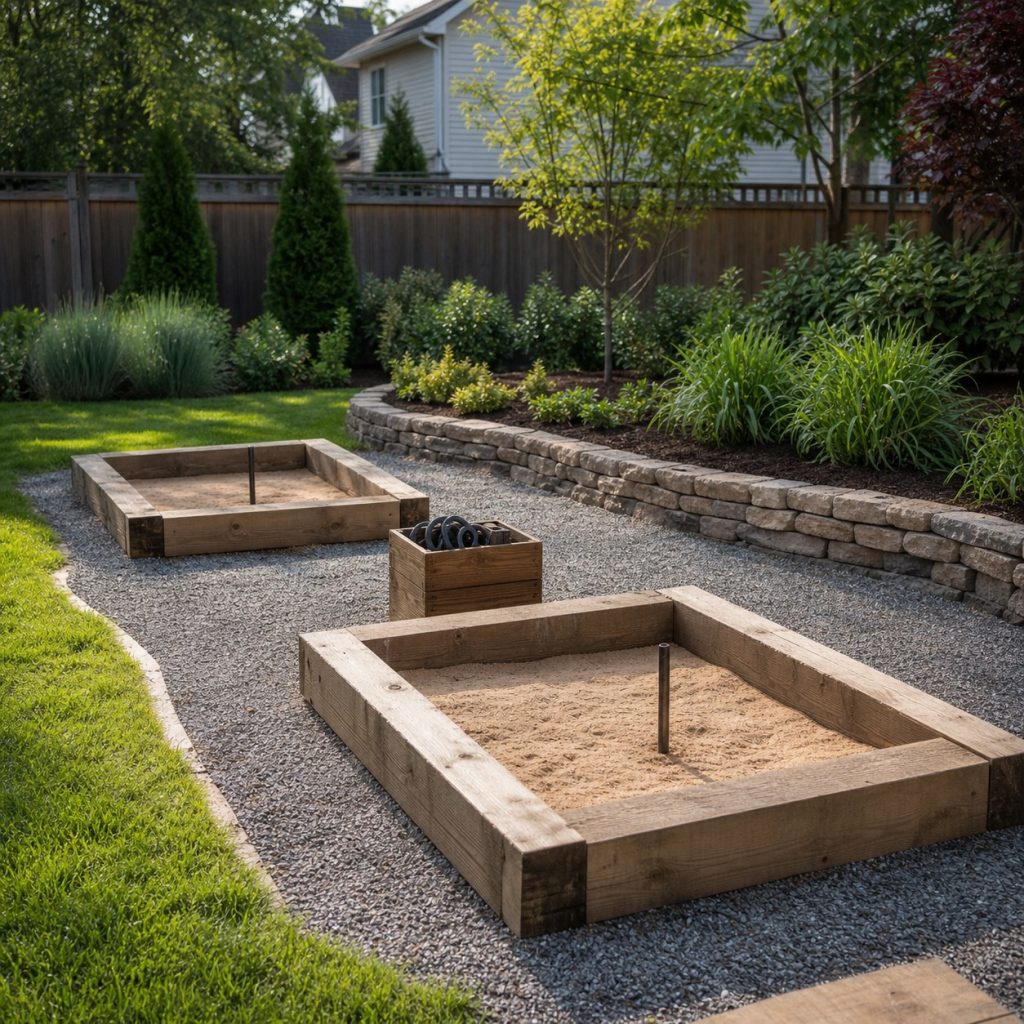
Durable frames contain loose material while keeping fasteners and sharp corners away from feet and shoes.
Clay-Fill Horseshoe Pits
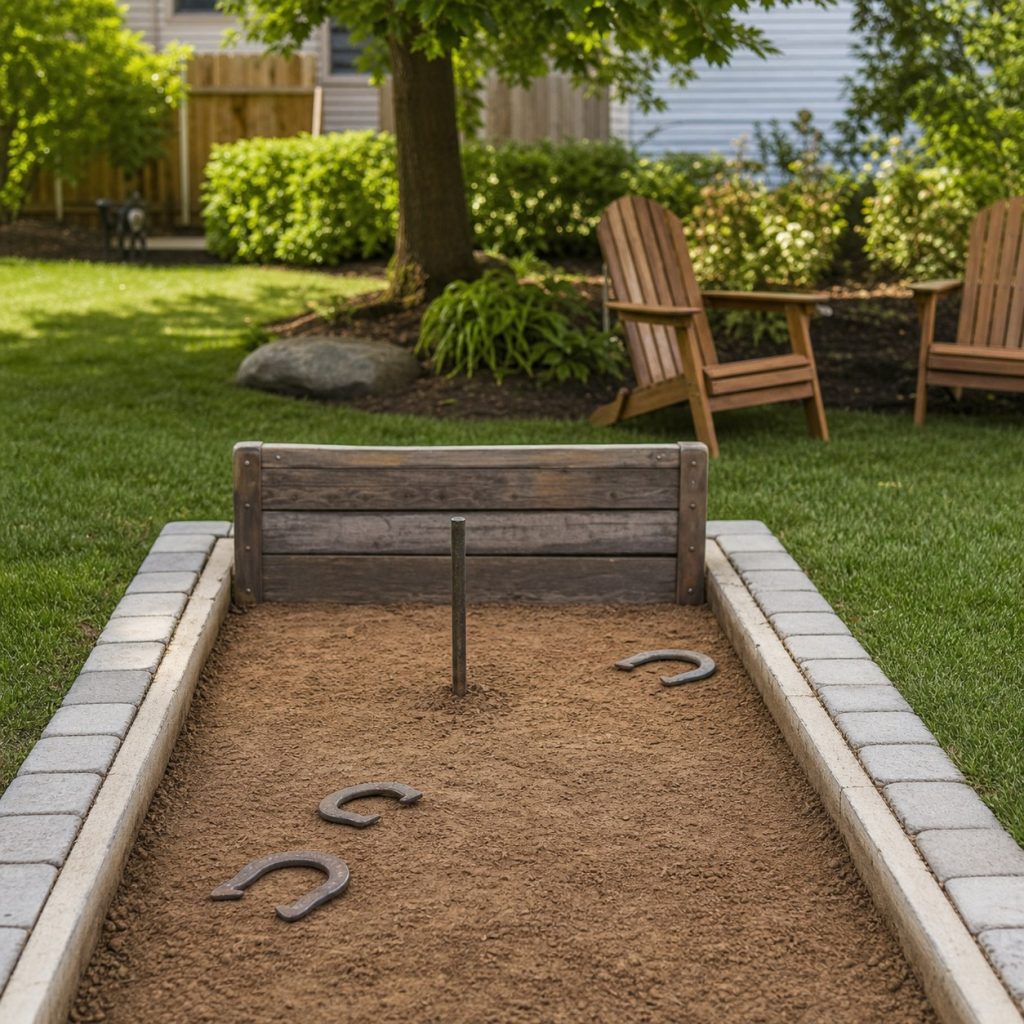
Purpose-made pit clay offers consistent play when moisture and stake alignment are regularly maintained.
Backstop and Overshoot Zone
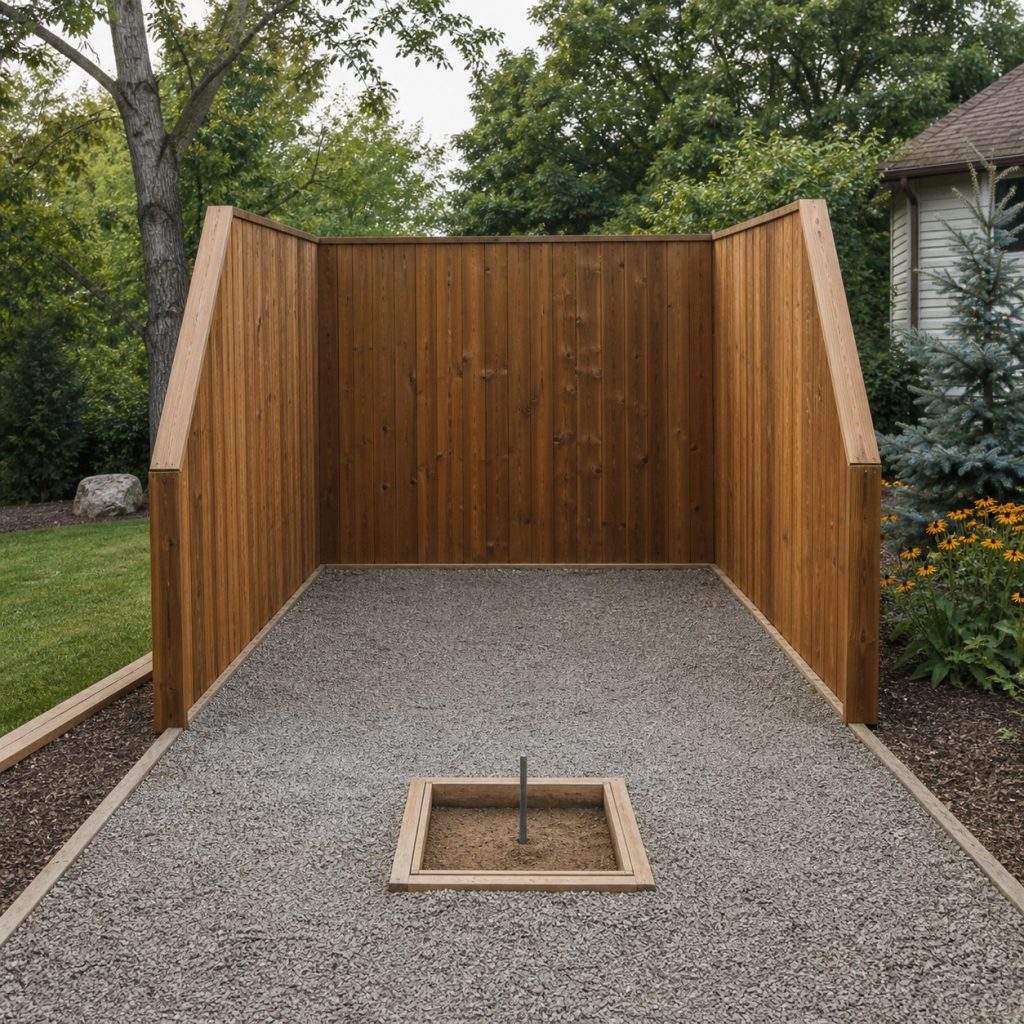
A robust backstop reduces escaped shoes but never replaces a generous clear zone and controlled access.
Accessible Extended Platforms
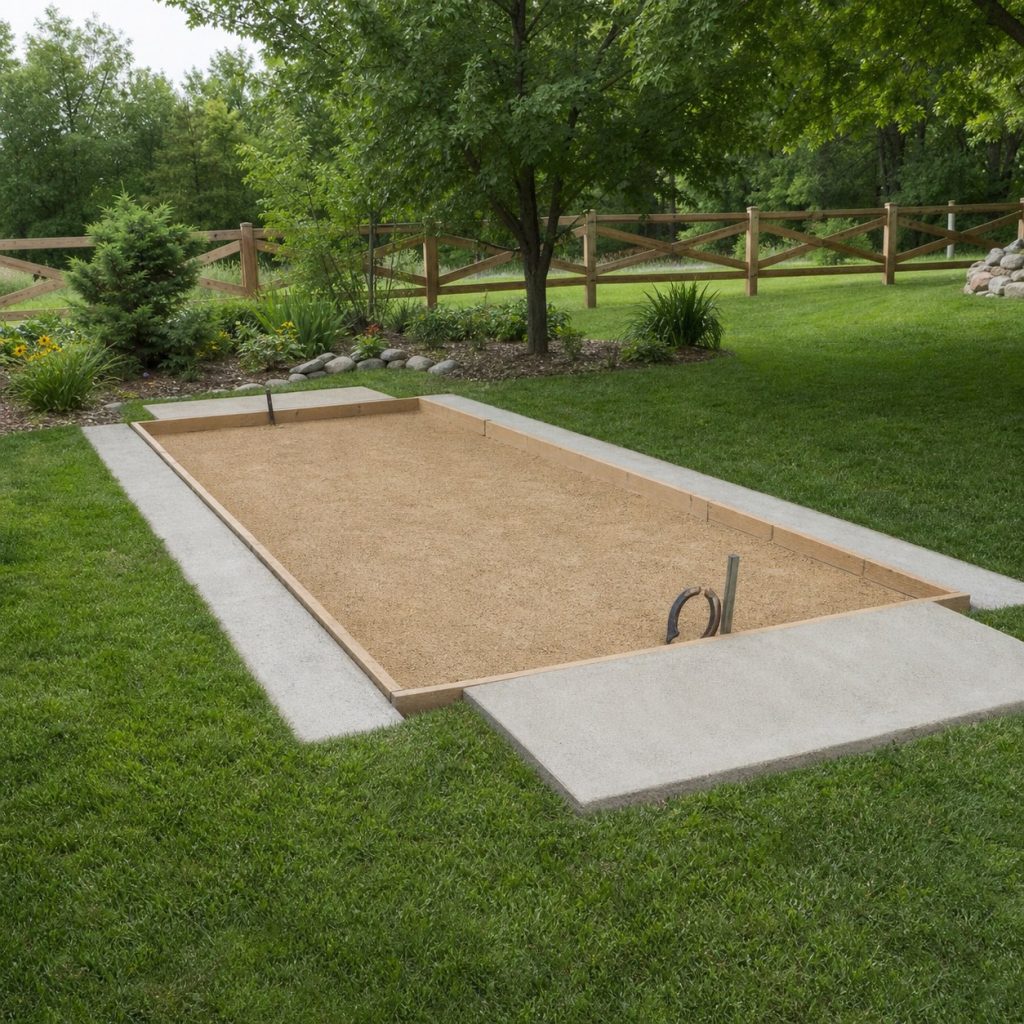
Extended platforms can support shorter-distance pitchers when built to the applicable NHPA specification.
Covered Score and Storage Station
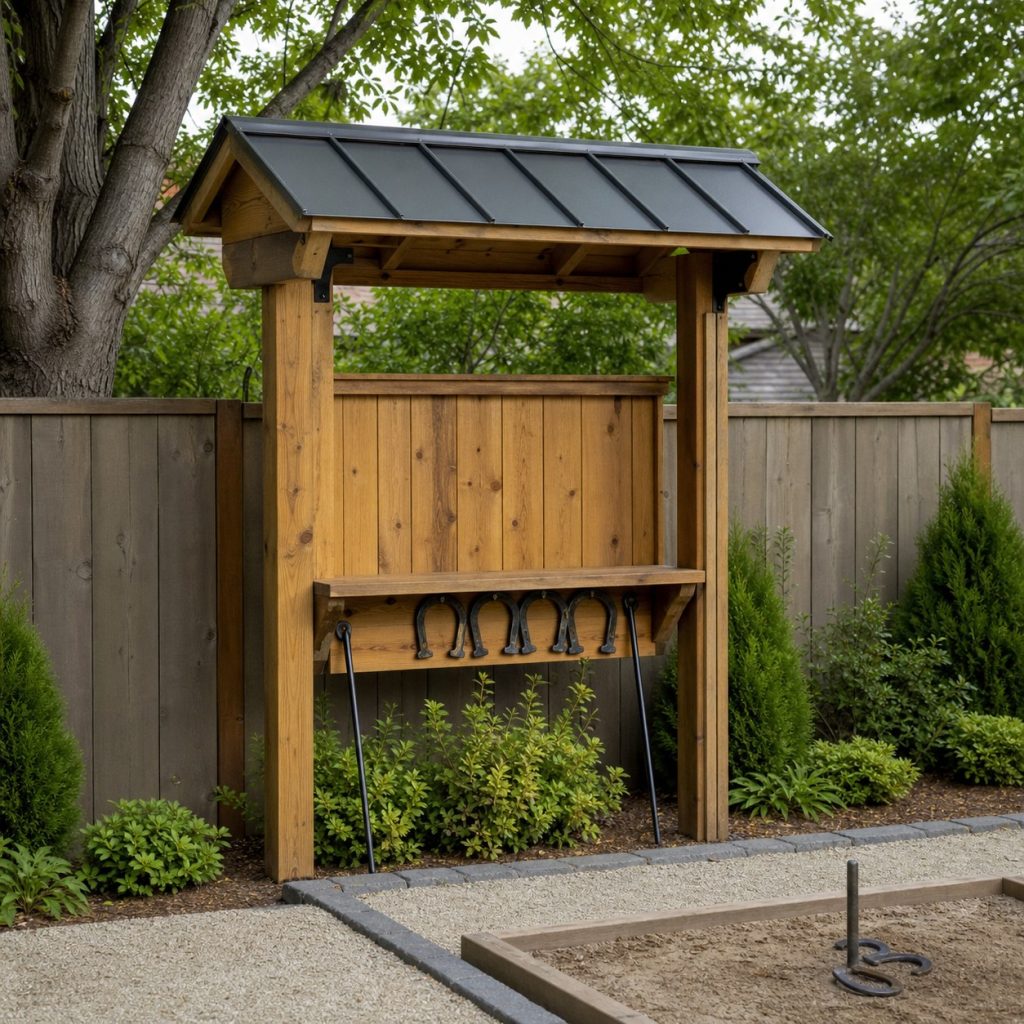
Scorekeeping and shoe storage belong outside all pitching, swing, and overshoot paths.
Stake, Drainage, and Inspection
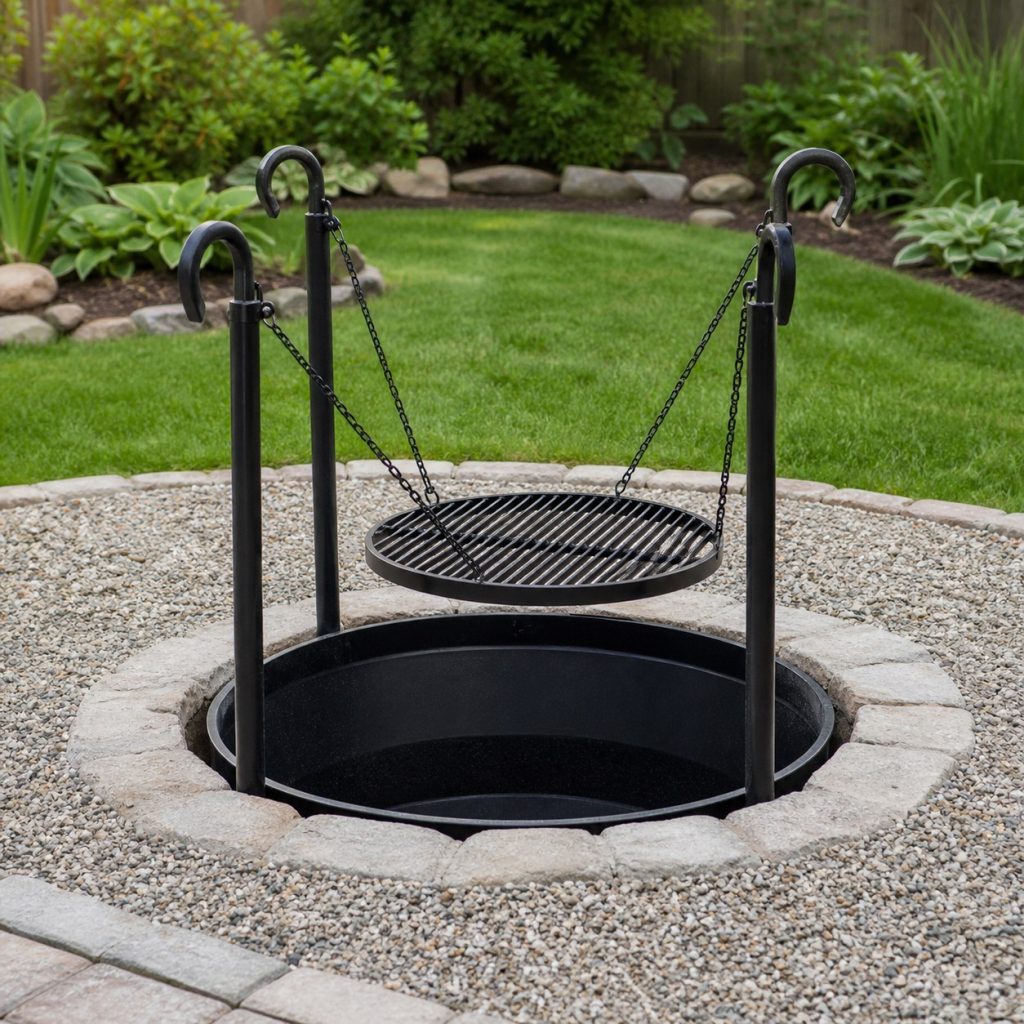
Inspect stake movement, fill depth, frame damage, standing water, and backstop integrity before play.
Planning checklist
- Choose current NHPA or clearly recreational dimensions.
- Locate utilities before setting stakes.
- Provide backstops and generous overshoot clearances.
- Keep spectators and children outside throwing lanes.
- Inspect stakes, frames, fill, and drainage before play.
These concepts and generated images are general planning inspiration, not measured drawings, drainage calculations, equipment-clearance instructions, accessibility designs, engineered plans, or tested load-rated structures. Verify dimensions, soil and drainage, roots and utilities, lumber and hardware, structural and wind loads, equipment manuals, service access, electrical and plumbing work, water and chemical safety, accessibility, permits, and local requirements for the actual project. Use qualified arborists, engineers, HVAC and pool technicians, electricians, plumbers, drainage professionals, and other licensed trades where those hazards or systems apply.
Frequently asked questions
What are official court dimensions?
Use the current NHPA rule and specification book; do not rely on an old diagram or a generic backyard measurement.
Can I use ordinary sand?
Recreational pits may use suitable contained material, while sanctioned play follows NHPA requirements. Maintain consistent depth and drainage.
Is a backstop enough for safety?
No. A backstop supplements, but does not replace, controlled throwing direction, clear overshoot space, supervision, and restricted access.