Project planning guide
Before you build
Use the reference image and planning notes as a starting point. Confirm dimensions, loads, materials, local codes, and site conditions before purchasing or cutting.
- Garden Projects
- 8 reference images
- Print-friendly guide
A wooden chaise lounge combines outdoor-furniture joinery with a moving backrest, so geometry and hardware matter as much as appearance. These woodworking concepts compare fixed, adjustable, wheeled, and compact frames while keeping fingers, tipping, and water exposure in view.
Classic Adjustable Chaise
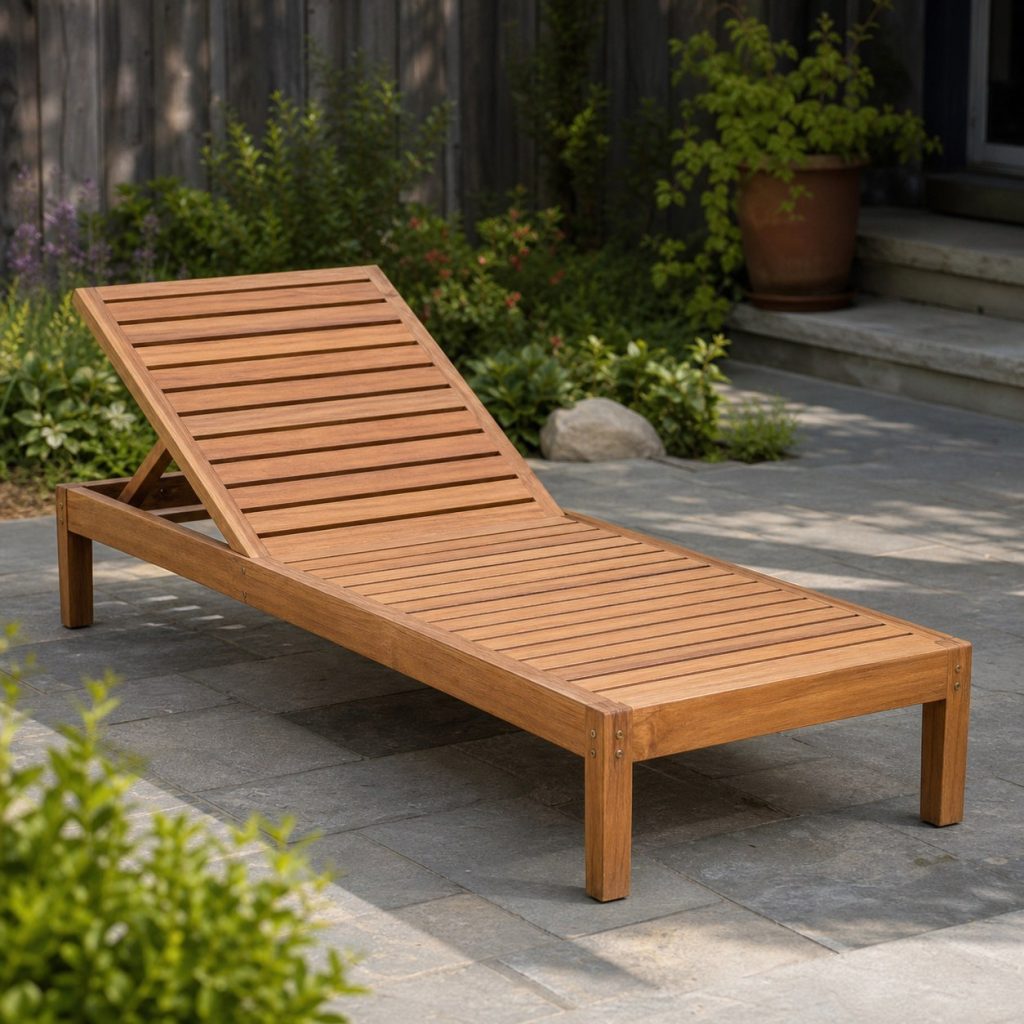
A notched support rail needs positive engagement and enough bearing area at every usable back angle. Generated concepts are not tested furniture plans; verify hinge and stop geometry, joint capacity, load paths, wheel retention, pinch clearances, stability, lumber, hardware, and finish compatibility.
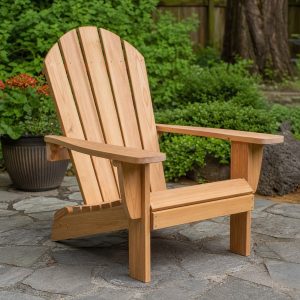
Fixed-Recline Garden Lounger
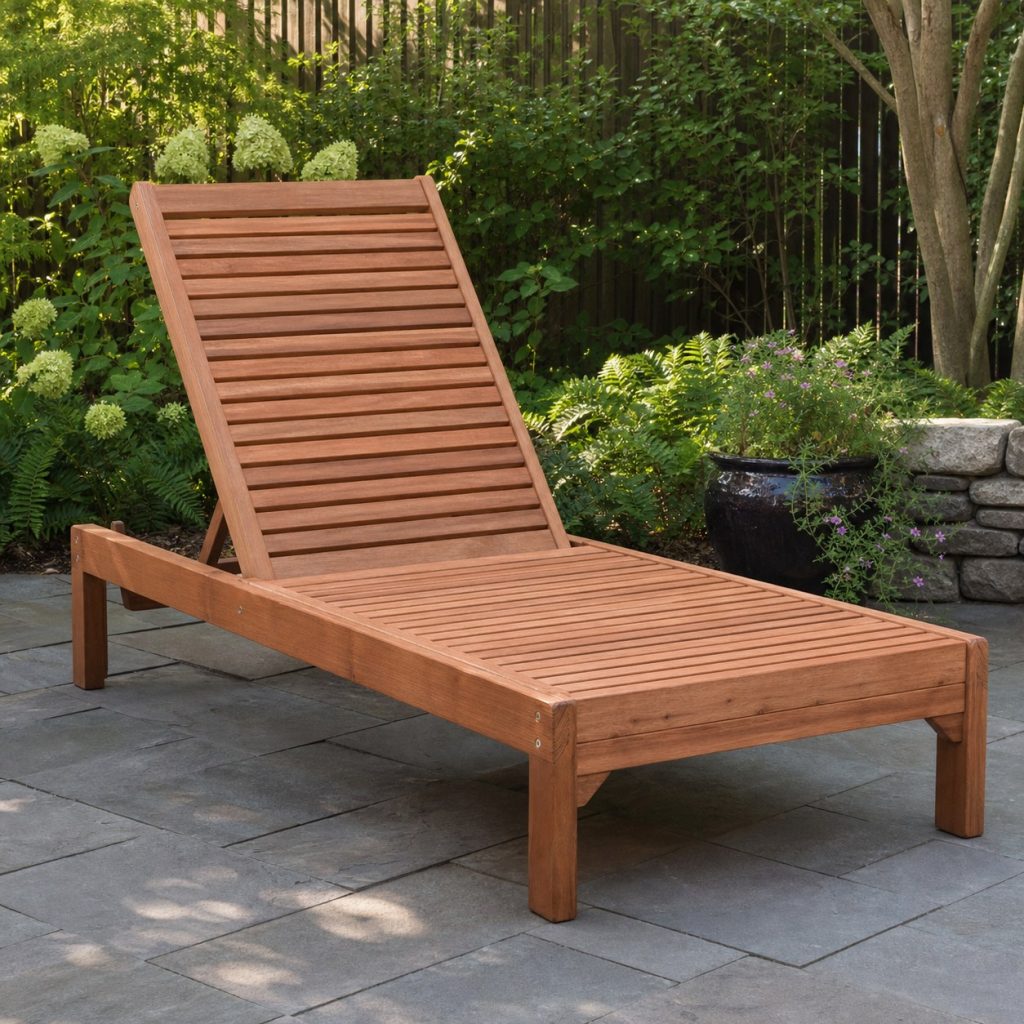
A fixed back eliminates moving hardware but makes accurate full-size side profiles especially important.
Wheeled Poolside Chaise
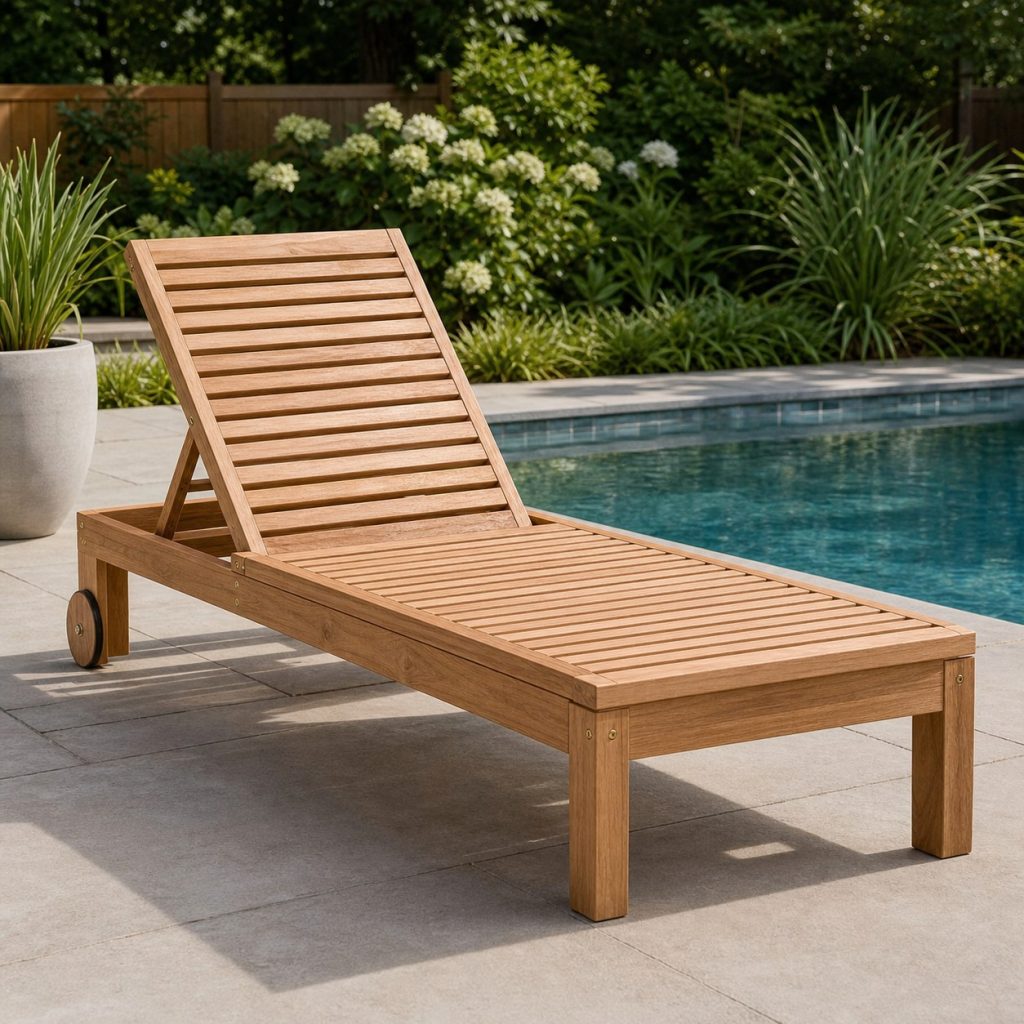
Wheels should be securely retained, kept clear of fingers, and positioned so the frame rests stably when occupied.
Compact Armless Chaise
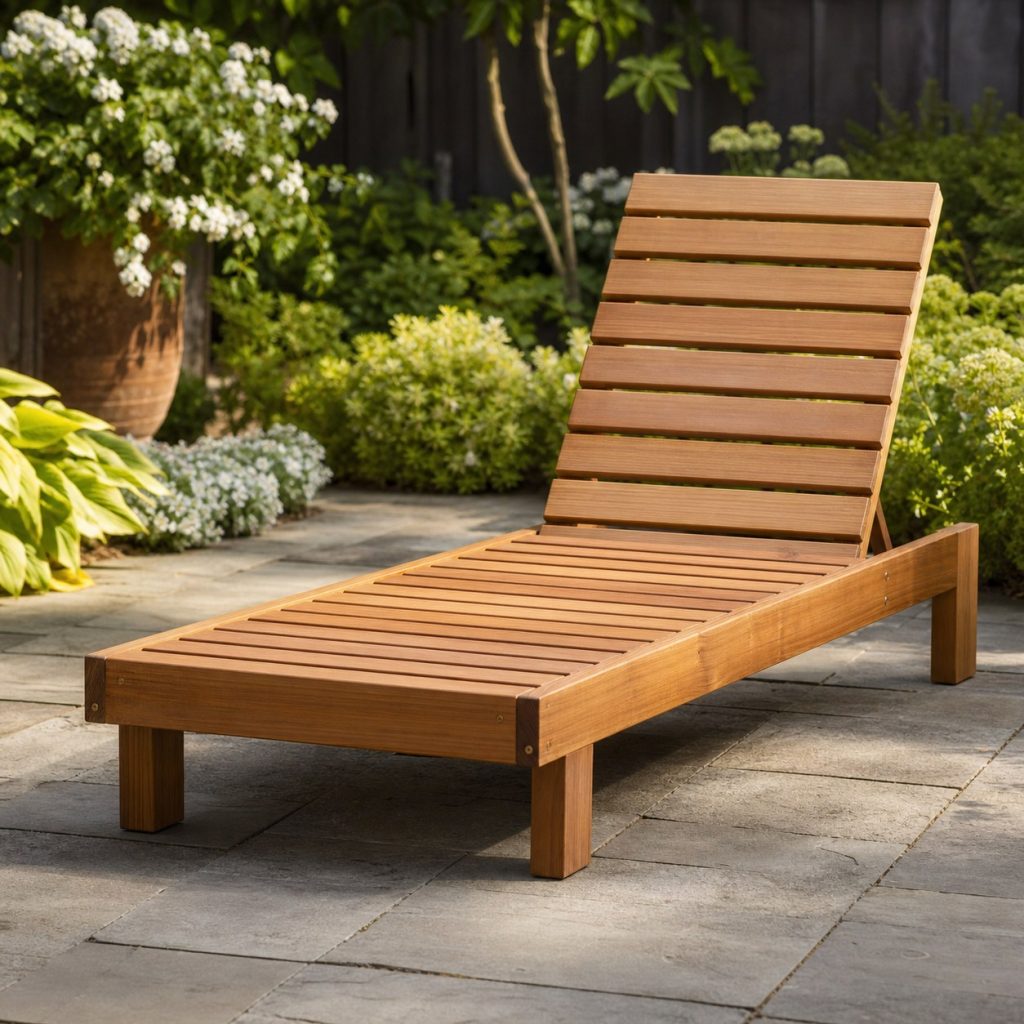
A compact frame saves width while still needing adequate rail depth, cross-bracing, and a stable footprint.
Wide-Arm Chaise
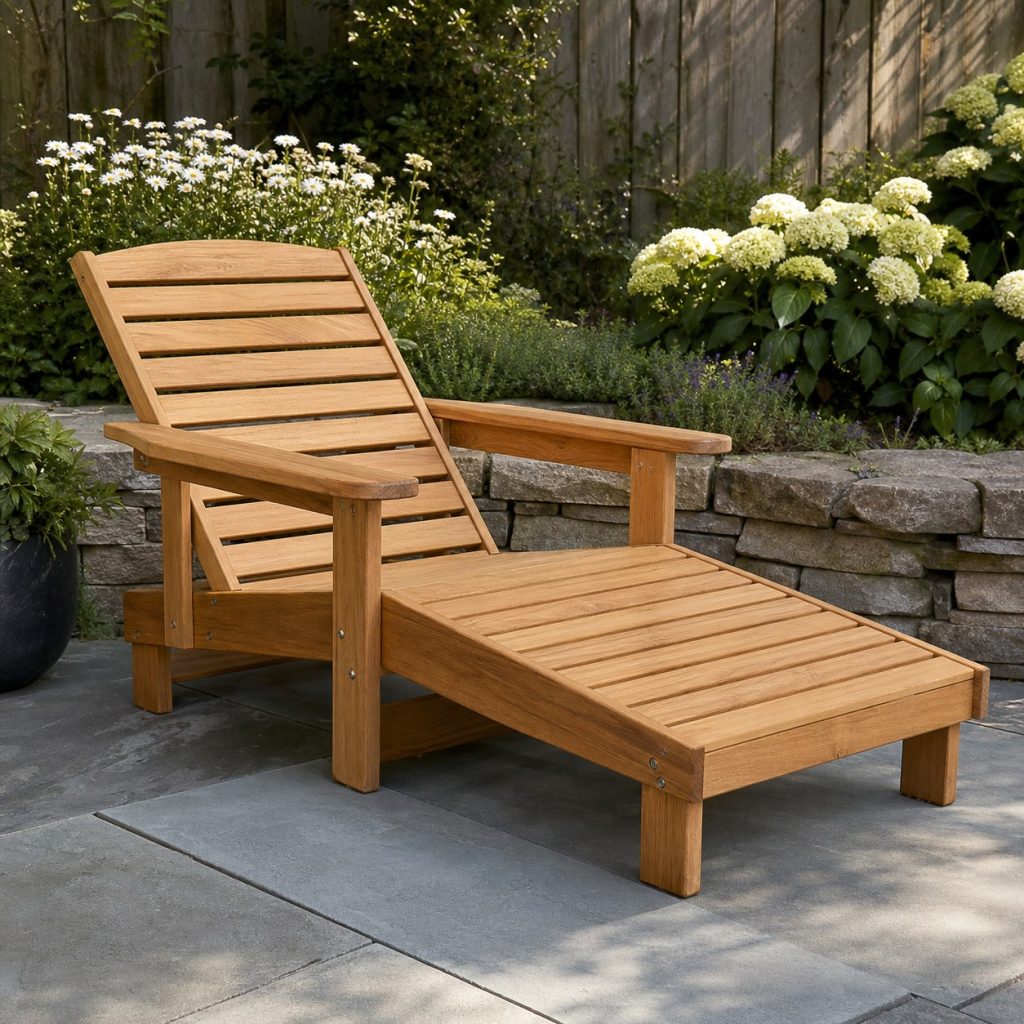
Arm supports must not interfere with the moving backrest or create concealed pinch points.
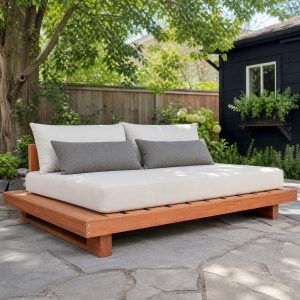
Cushion-Ready Slatted Chaise
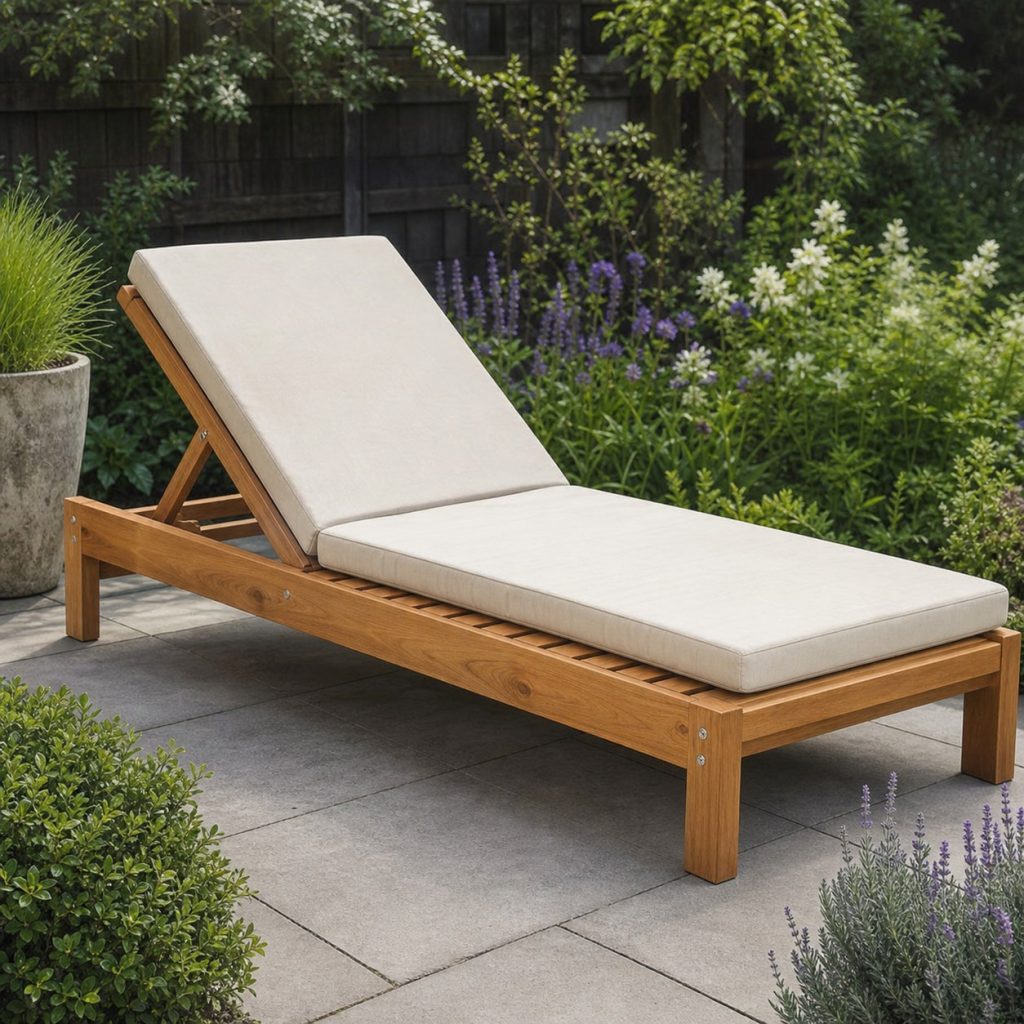
Uniform slat spacing and softened edges support a removable cushion without trapping water beneath it.
Fold-Flat Storage Chaise
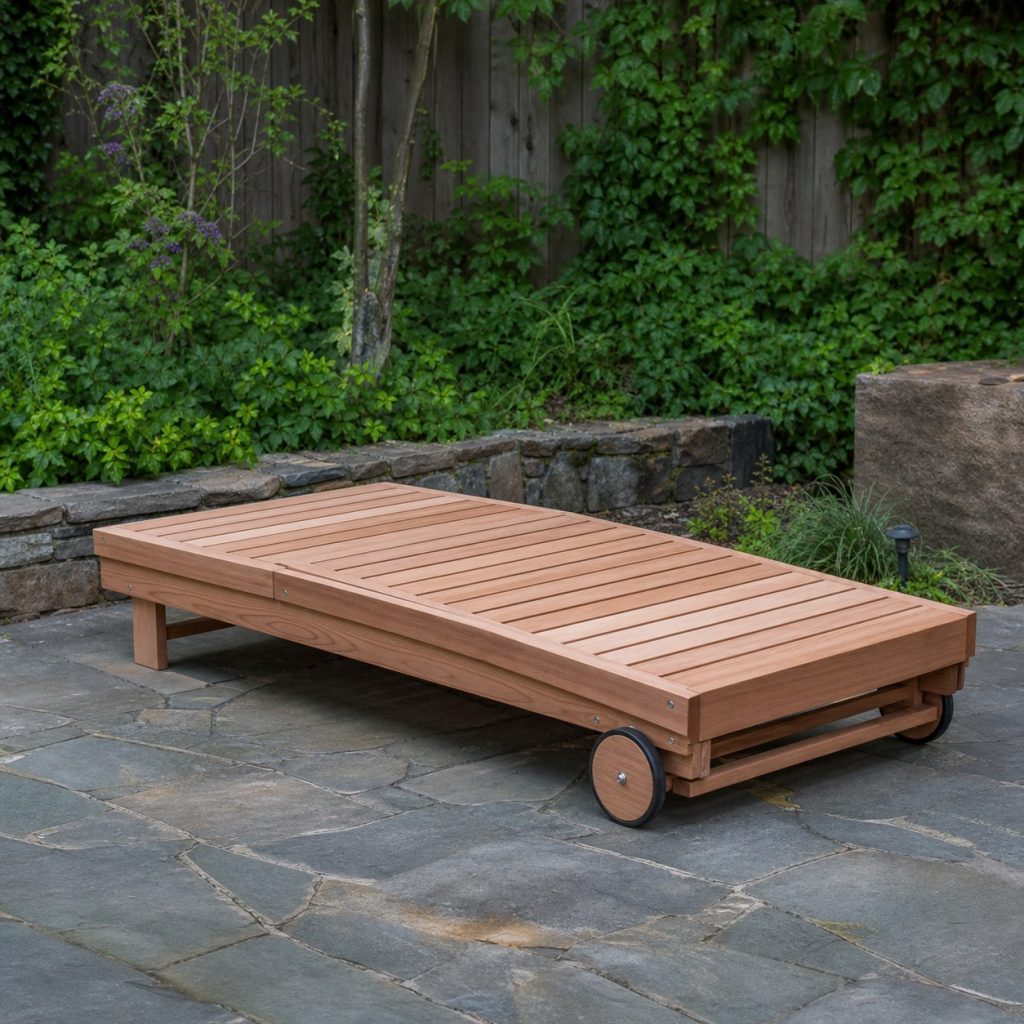
A fold-flat design requires stops that cannot disengage unexpectedly and hardware that remains inspectable.
Backrest Hardware and Drainage
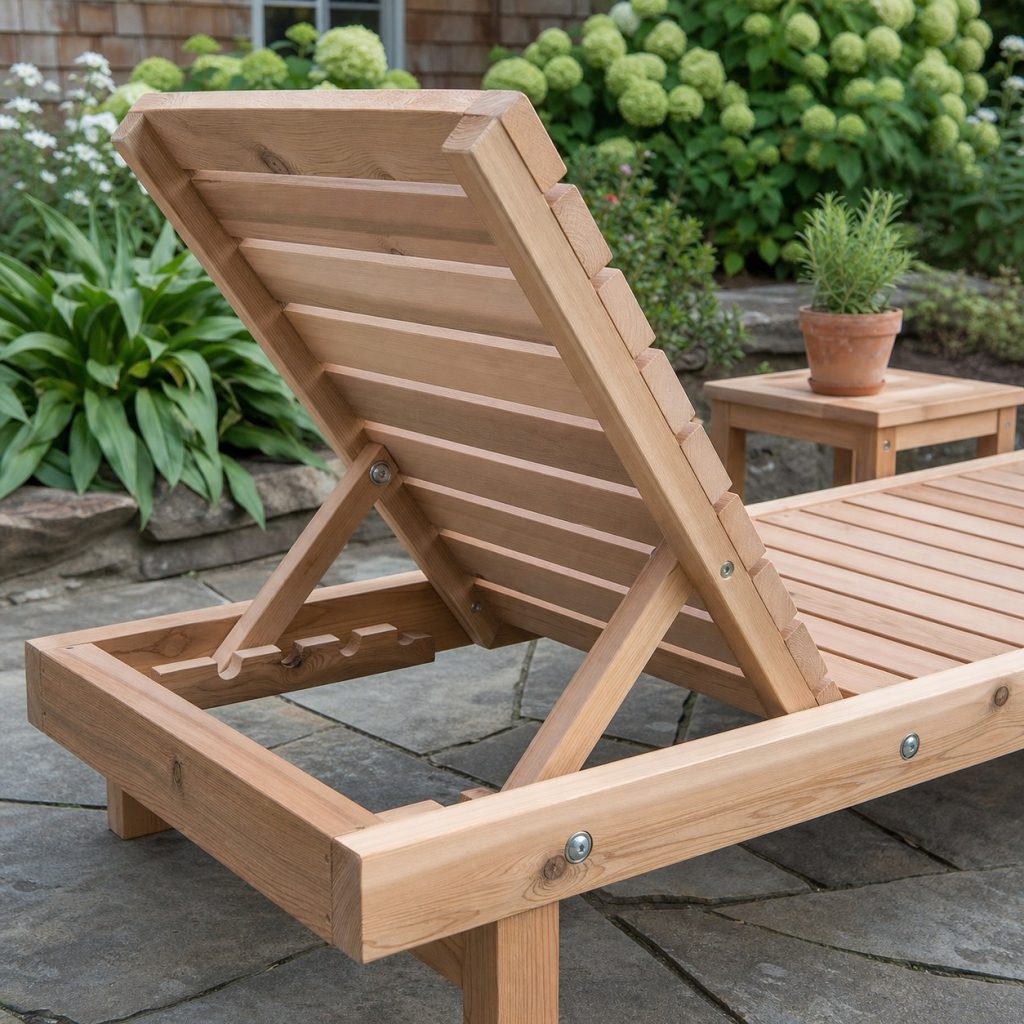
A full-scale hardware mock-up can expose binding, weak notches, sharp edges, and water traps before the final build.
Planning checklist
- Confirm a rigid square base and continuous load paths.
- Prototype every backrest position before final assembly.
- Control pinch points and keep moving hardware accessible.
- Use exterior-rated corrosion-compatible fasteners.
- Round exposed edges and maintain the outdoor finish.
These woodworking concepts and generated images are planning inspiration, not measured drawings, cut lists, tested furniture plans, load ratings, engineered structures, accessibility designs, playground certifications, or utility instructions. Verify dimensions, ergonomics, lumber grade and treatment, grain direction, joint design, fastener and preservative compatibility, structural and wind loads, stability, sharp and pinch hazards, finish labels, equipment instructions, accessibility, permits, and local requirements for the actual project. Use appropriate personal protective equipment and qualified engineers, electricians, plumbers, accessibility specialists, and other licensed professionals where the work or hazards require them.
Frequently asked questions
How many reclining positions should a chaise have?
Use only as many positions as can engage positively and safely in the chosen geometry. More notches are not useful if bearing areas become weak.
Can I add wheels?
Yes, if the axle, wheel retention, ground clearance, and resting geometry are designed so the occupied lounge remains stable.
Should outdoor cushions stay on the chaise?
Use cushions labeled for outdoor use and remove or dry them as directed so moisture is not held against the wood.