Project planning guide
Before you build
Use the reference image and planning notes as a starting point. Confirm dimensions, loads, materials, local codes, and site conditions before purchasing or cutting.
- Garden Projects
- 8 reference images
- Print-friendly guide
An outdoor daybed is a wide lounging platform exposed to sun, rain, shifting body loads, and moisture hidden beneath thick cushions. It needs a rigid base, intermediate supports, a drainable cushion deck, stable back and side frames, clear entry, outdoor-rated textiles, and a storage plan that lets every surface dry.
Simple Platform Daybed
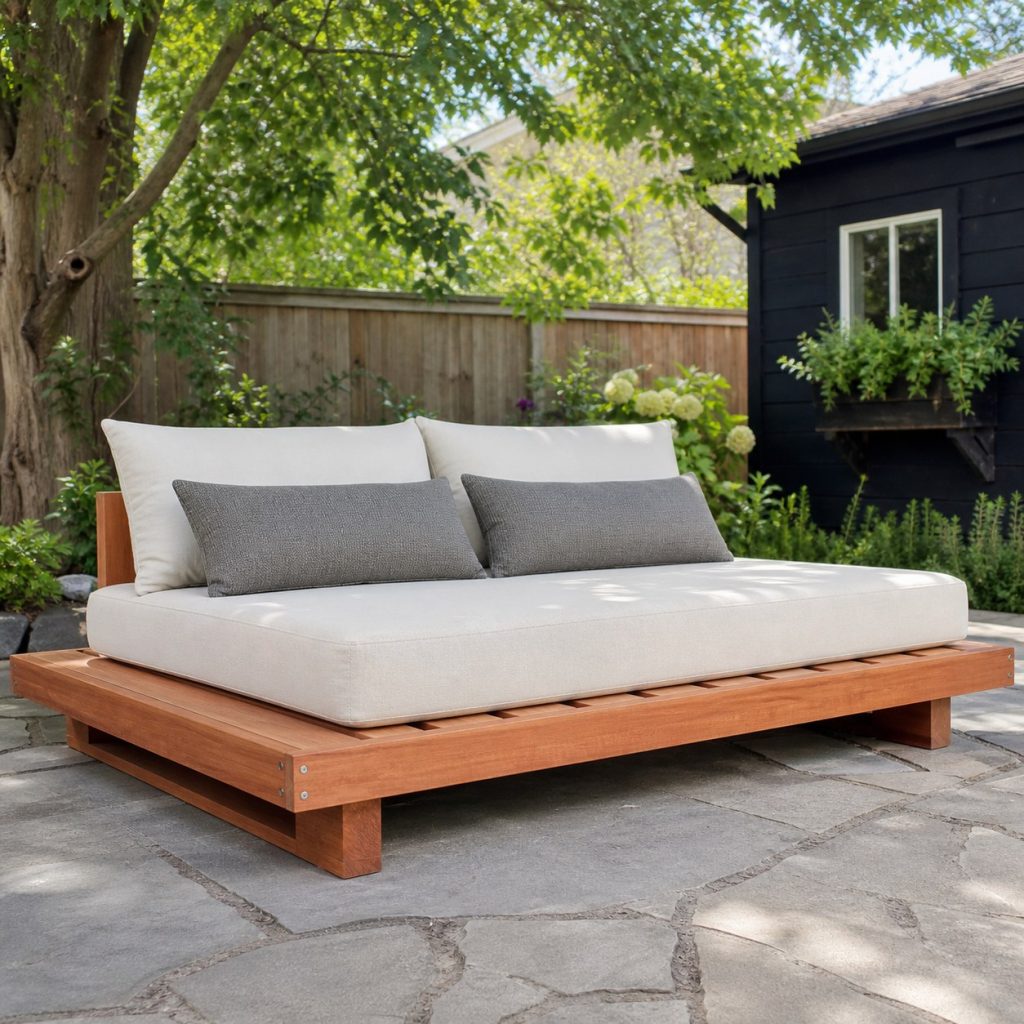
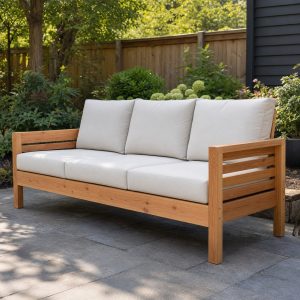
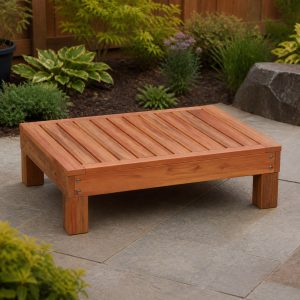
A simple platform keeps structure visible and easy to inspect. Build matching end frames, connect them with full rails and center supports, and use close-spaced drainable slats. Keep the cushion from sliding without trapping water beneath it.
Three-Sided Patio Daybed
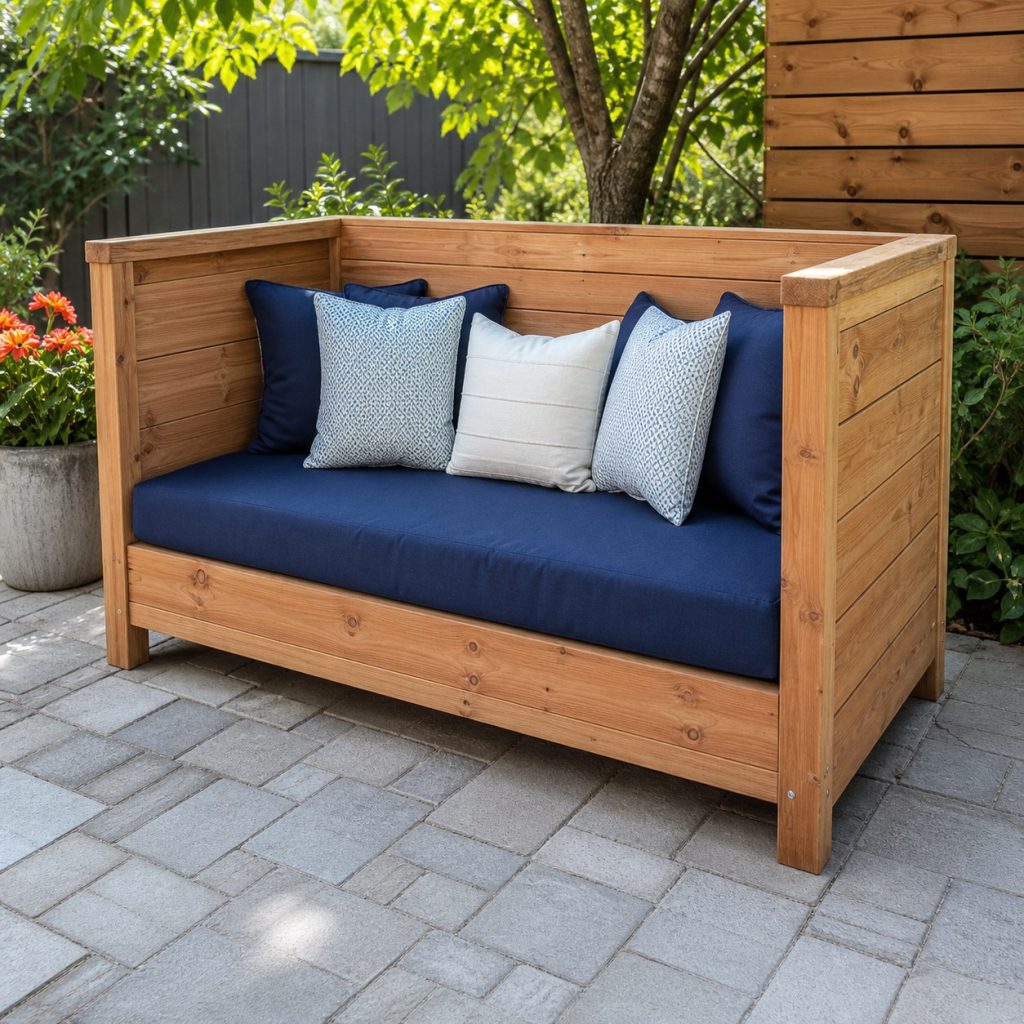
A back and two sides create a sheltered feel but add leverage to the frame. Tie panels into the base through complete posts and rails, keep hand-contact edges smooth, and avoid gaps that trap heads, limbs, or cushions.
Corner Outdoor Daybed
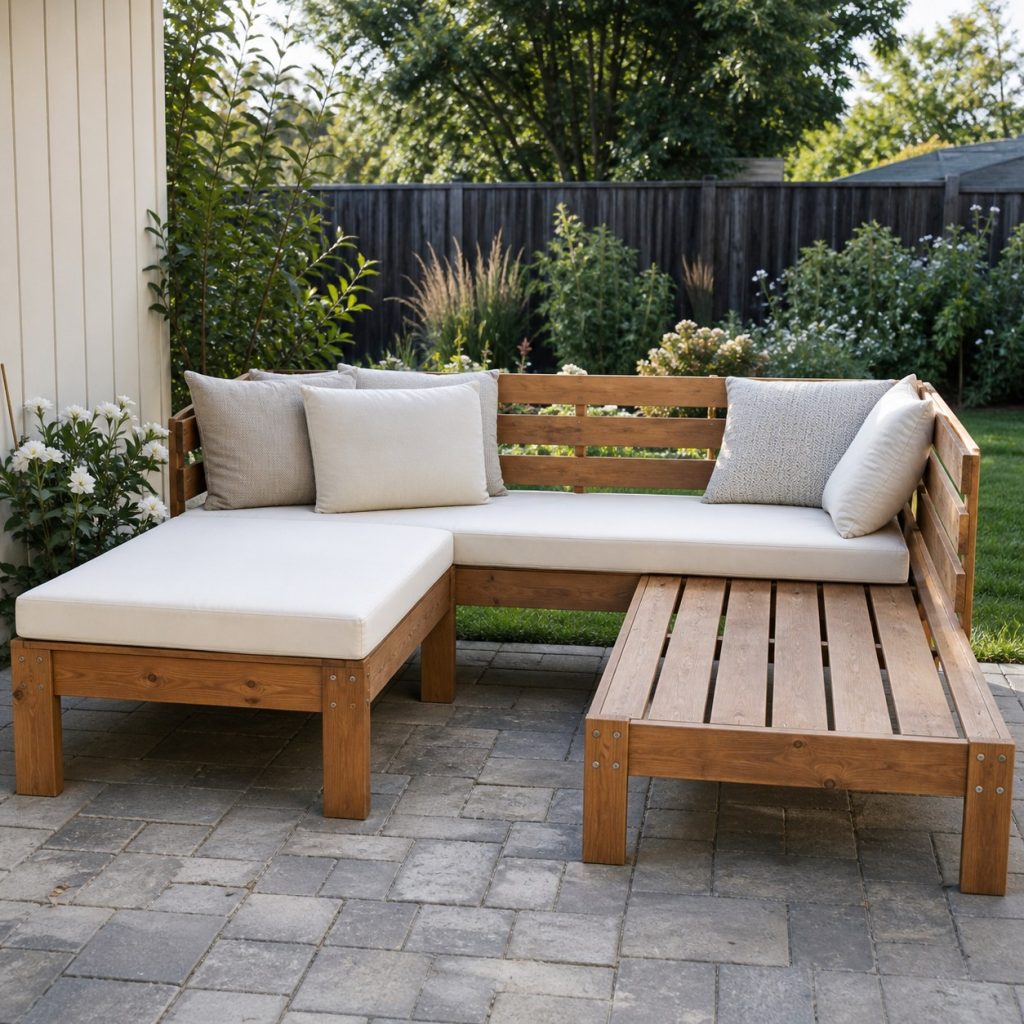
A corner arrangement can use two independently stable modules connected at the inside corner. Match cushion and seat heights, prevent sections from drifting, and leave enough room to lift each cushion and clean the joint between modules.
Canopy Outdoor Daybed
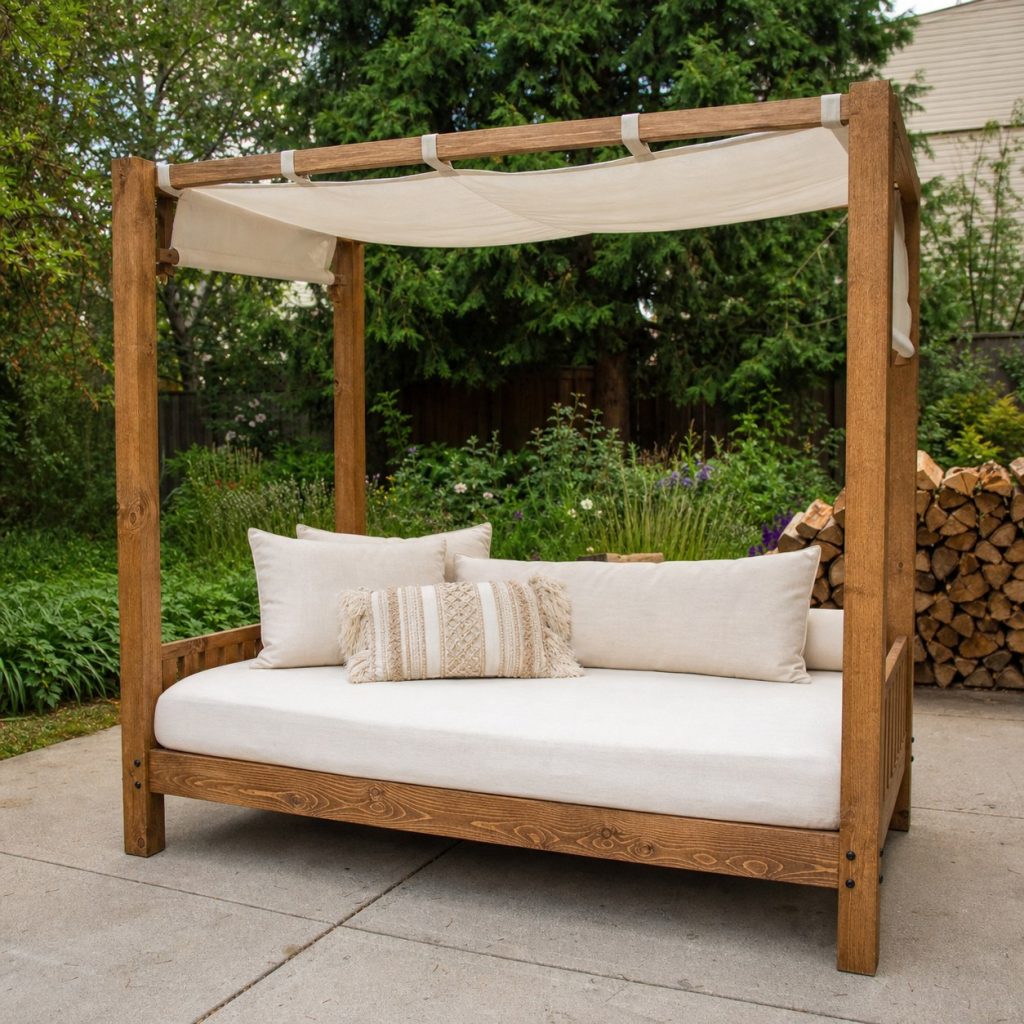
Four posts can support a removable lightweight shade when the frame and wind exposure are verified. Keep overhead joints braced, use a purpose-made fabric system, and remove or secure the canopy before wind or when the bed is unattended.
Rolling Daybed Platform
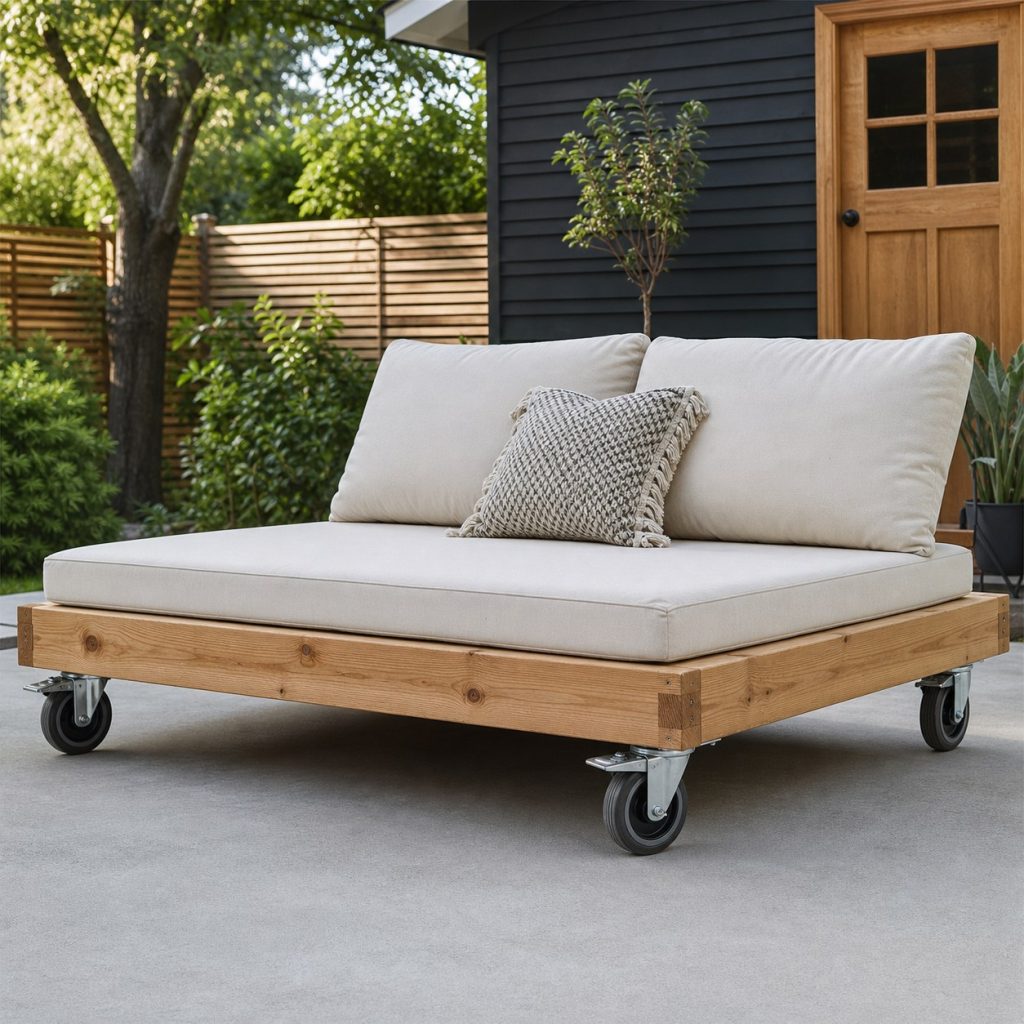
Casters help move an empty frame for cleaning but must carry the complete loaded assembly. Reinforce mounting blocks, use positive locks, keep travel level, and never occupy the bed while it is being moved.
Build a Supported Slat Deck
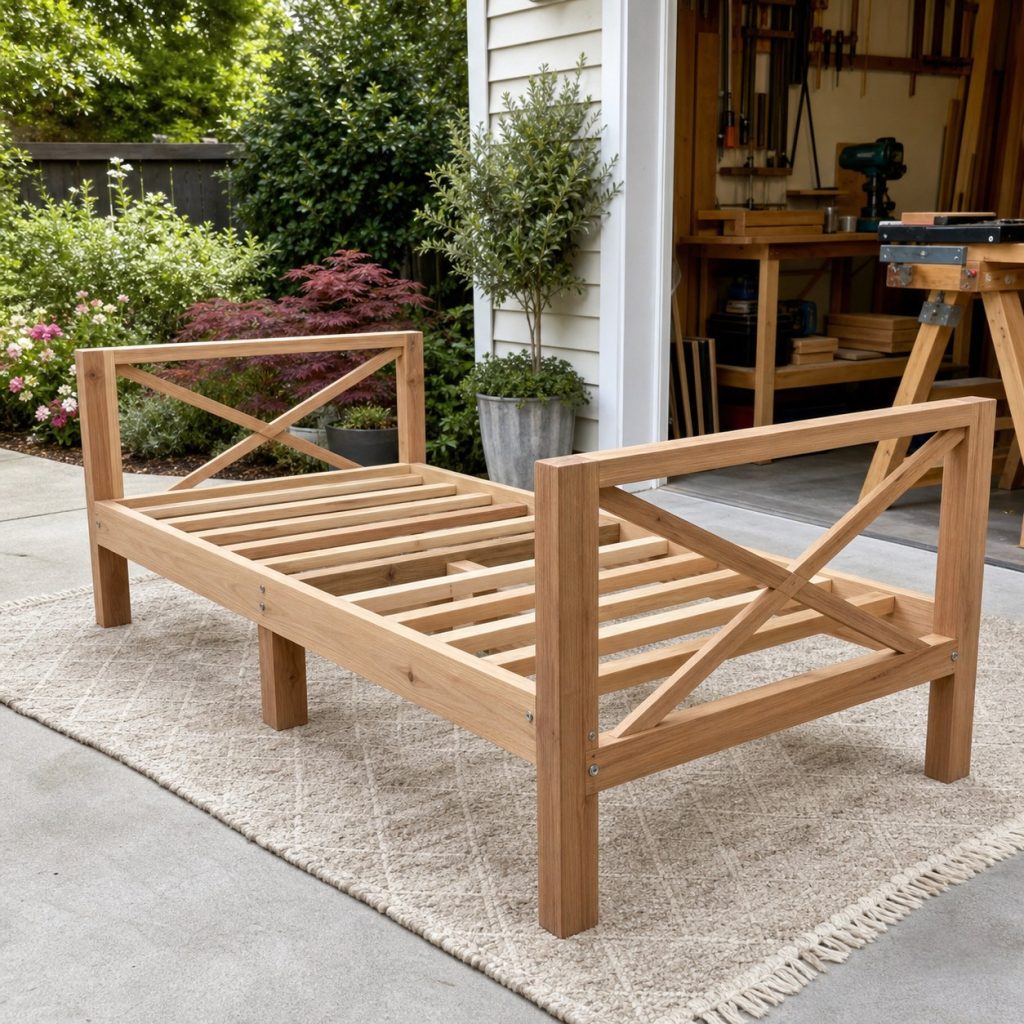
Assemble the perimeter frame square, add a center beam and intermediate legs or supports as required, then fit replaceable slats with consistent gaps. Do not let a thick cushion hide long unsupported spans or weak corner joints.
Choose and Vent Outdoor Cushions
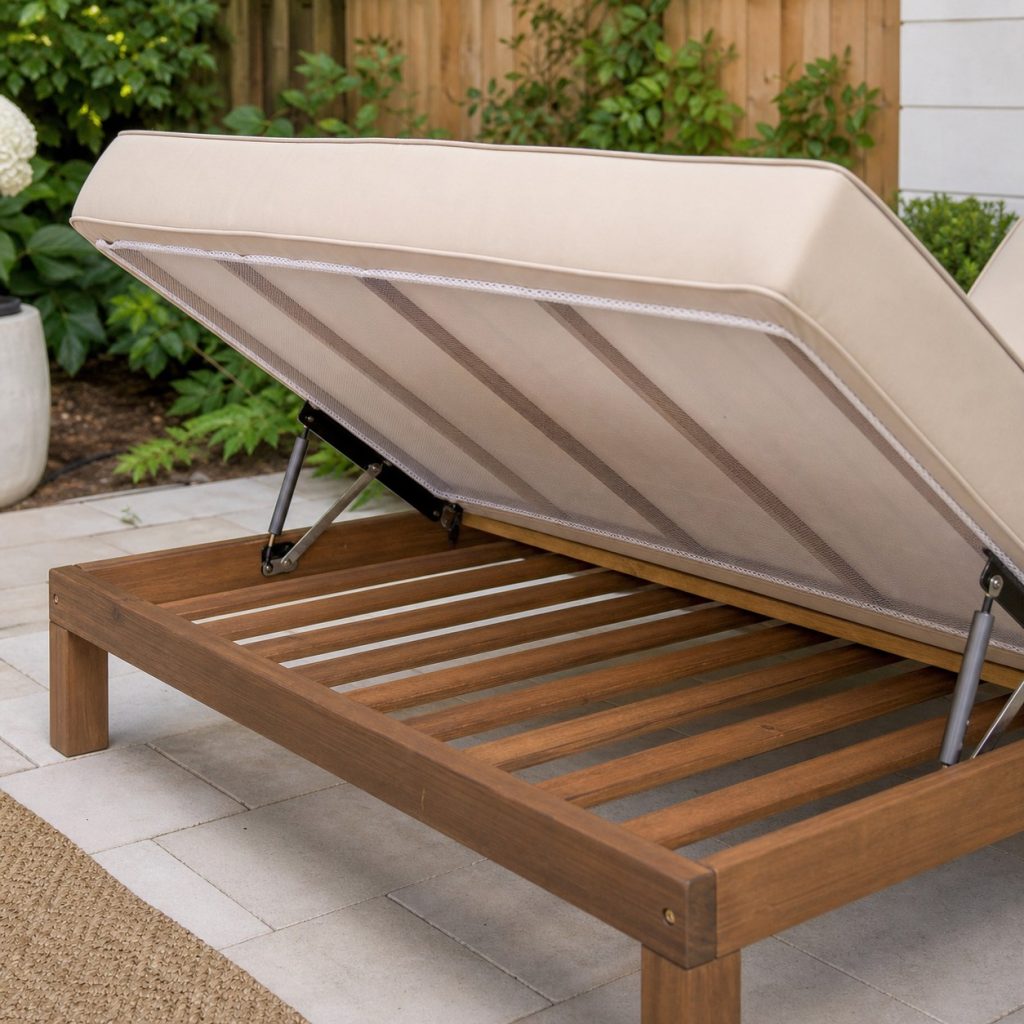
Use cushions intended for outdoor service and follow their cleaning and drying instructions. A breathable layer may help only when approved for the cushion; it does not replace open slats, drainage, and regular removal after wet weather.
Store Dry and Inspect the Frame
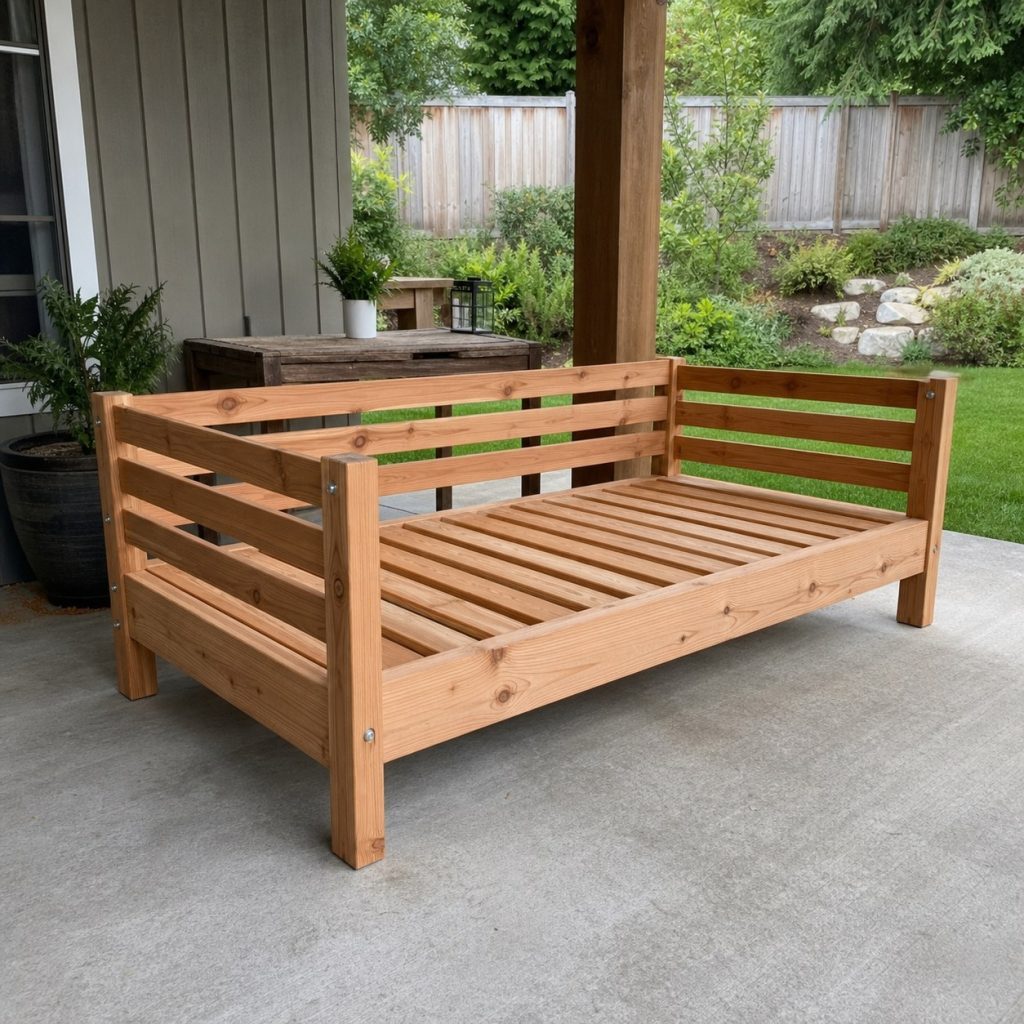
Remove textiles, clear leaves, and inspect rails, center supports, legs, casters, panels, fasteners, finish, and ground contact. Stop use if the frame racks, a support splits, or the footing settles until repairs are complete.
Planning checklist
- Select actual outdoor cushions before sizing the frame.
- Mock up platform height, entry, sides, and user posture.
- Use continuous rails, center supports, braces, and open slats.
- Reinforce and lock casters and secure removable canopies.
- Dry textiles separately and inspect hidden structure.
These concepts and generated images are general planning inspiration, not measured drawings, structural attachment details, pond or electrical designs, engineered plans, or tested load-rated designs. Verify dimensions, lumber grade and treatment, structural and dynamic loads, fasteners, coatings, accessibility, utility locations, water and wildlife guidance, property rules, permits, and local building requirements for the actual project. Use qualified professionals where structural, electrical, plumbing, drowning, fall, or entrapment hazards apply.
Frequently asked questions
Can an indoor mattress be used outside?
Indoor mattresses usually trap moisture and are not designed for weather exposure. Use products specifically intended for the planned outdoor conditions.
Does a daybed need center support?
Wide and long platforms commonly need intermediate structure. Use spans and support spacing from a verified design.
Can cushions remain outside?
Follow the cushion maker instructions. Removing and storing them dry generally improves cleanliness and service life.