Project planning guide
Before you build
Use the reference image and planning notes as a starting point. Confirm dimensions, loads, materials, local codes, and site conditions before purchasing or cutting.
- Garden Projects
- 8 reference images
- Print-friendly guide
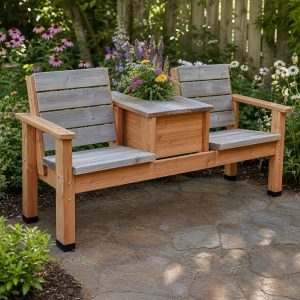
A planter bench combines seating with the weight and moisture of container gardening. Good woodworking keeps the seat structure independent from wet soil, provides replaceable planter boxes or liners, and lets water drain without staining paving or accelerating decay.
Bench Between Twin Planters
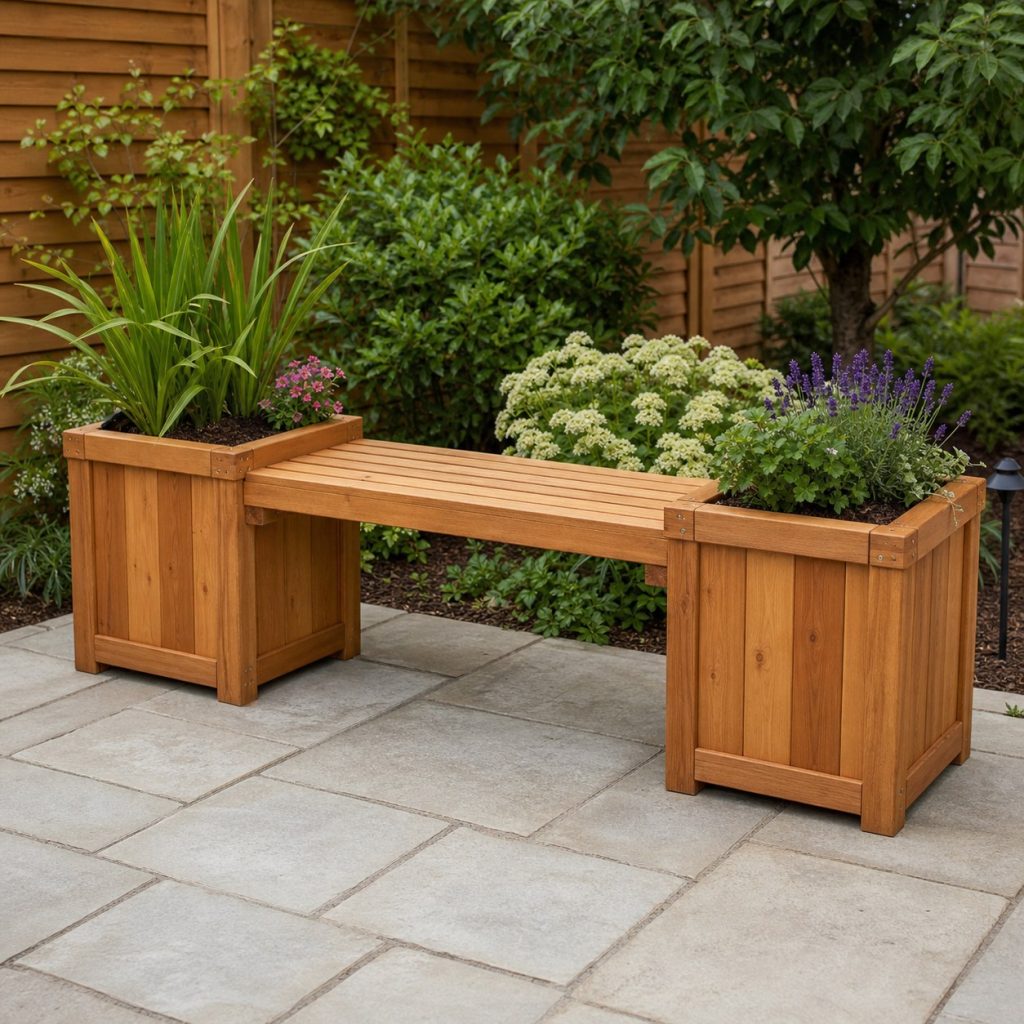
A visually continuous design should still transfer seating loads through dedicated rails and legs rather than planter walls alone. Generated images are concepts, not load-rated plans; verify seat capacity, planter weight when saturated, drainage discharge, lumber and treatment suitability, fasteners, accessibility, and local requirements.
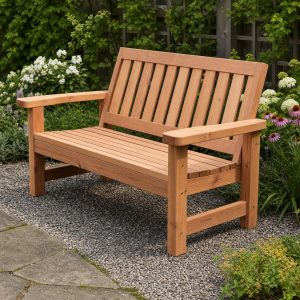
Backed Planter Bench
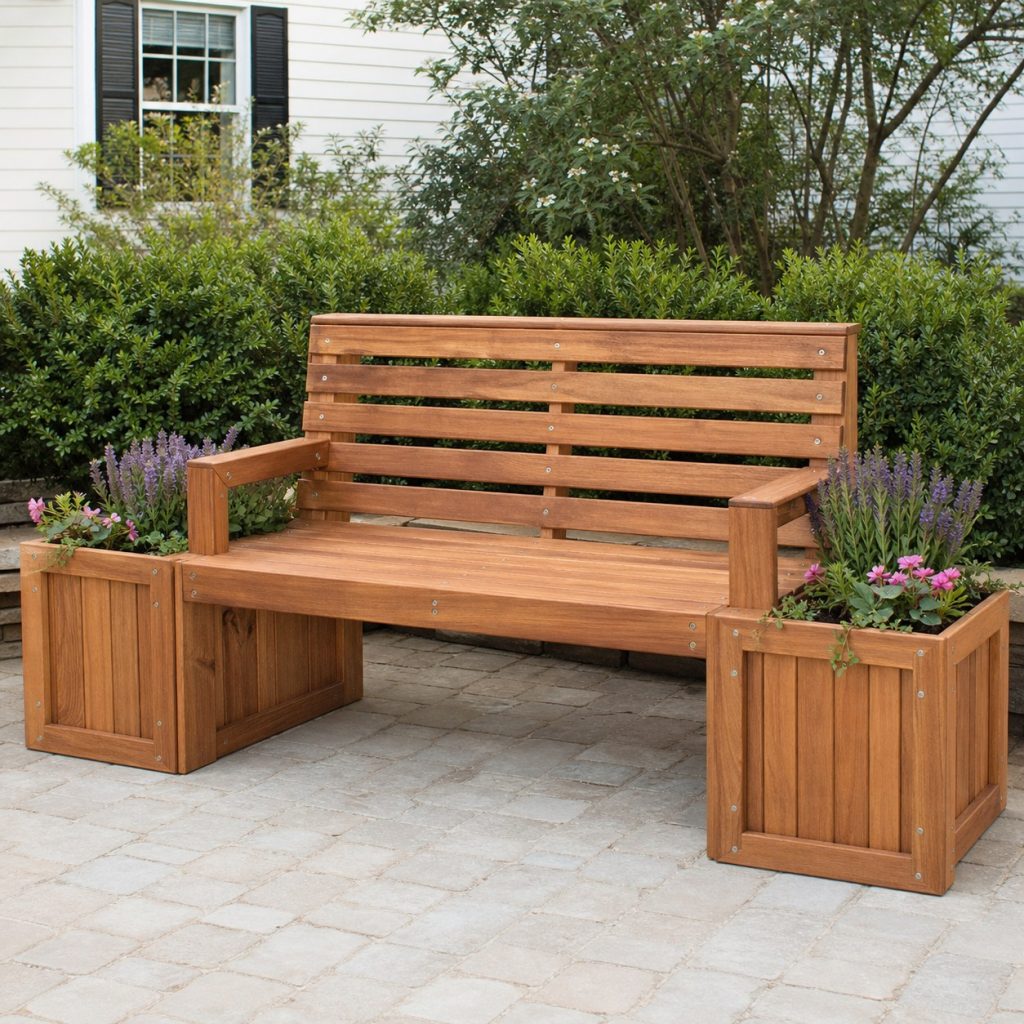
The back posts need a clear load path while planter boxes remain removable or separately supported.
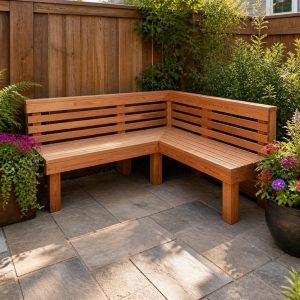
Corner Planter Bench
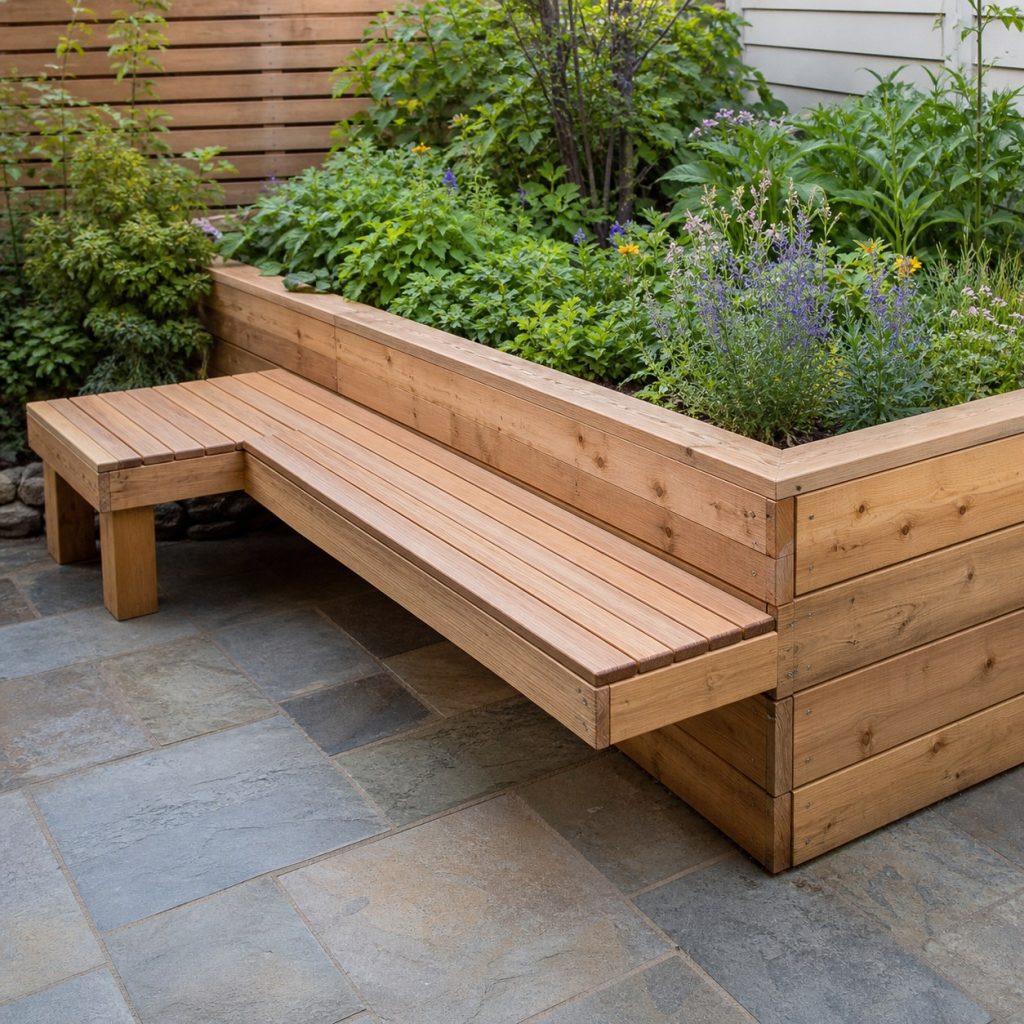
Corner framing requires doubled supports and careful seat-slat layout where the two runs meet.
Compact Entry Planter Bench
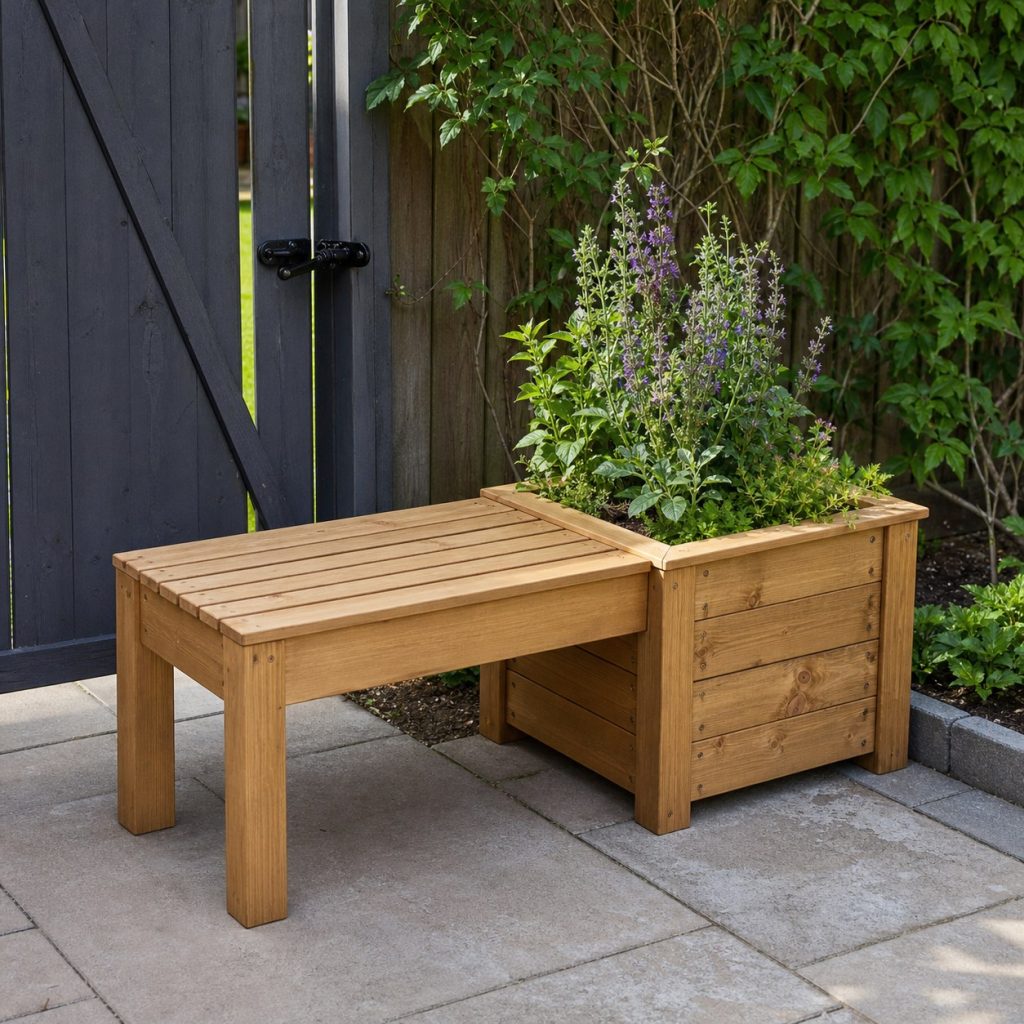
A one-planter composition needs a complete independent bench base so uneven soil weight cannot tip the seat.
Tall-Grass Privacy Bench
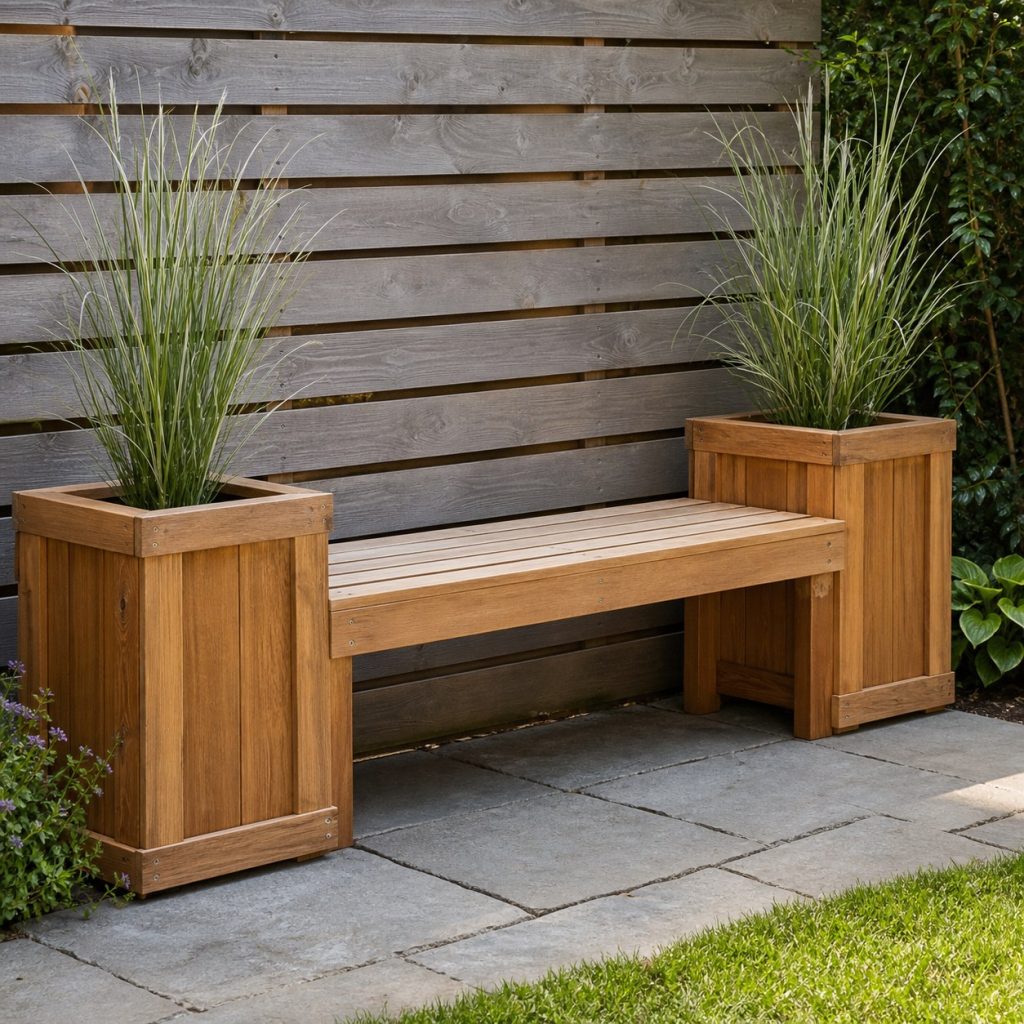
Tall planting increases wind and saturated-soil loads, so the containers need stable footprints and appropriate anchoring.
Backless Accessible Bench
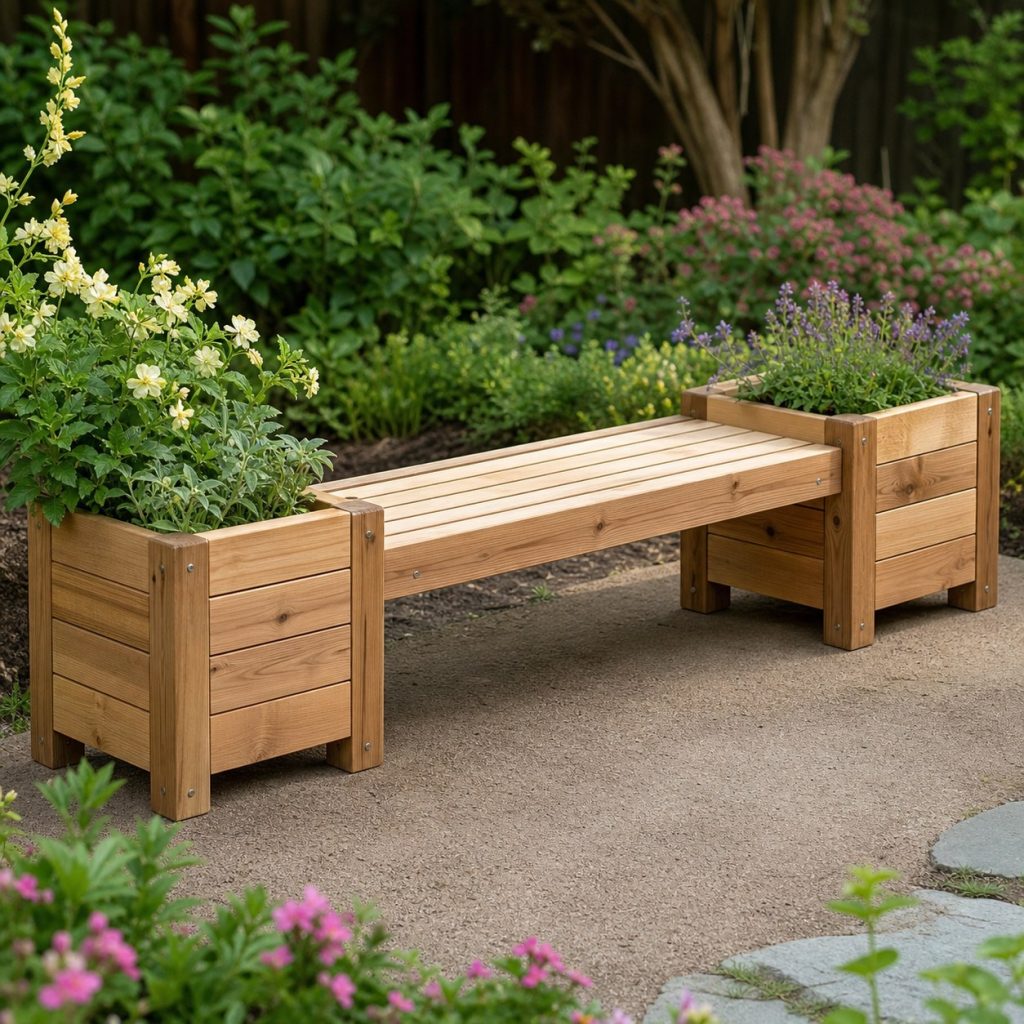
An unobstructed end and firm approach can improve use when seat height and clearances suit the intended users.
Replaceable Planter Liners
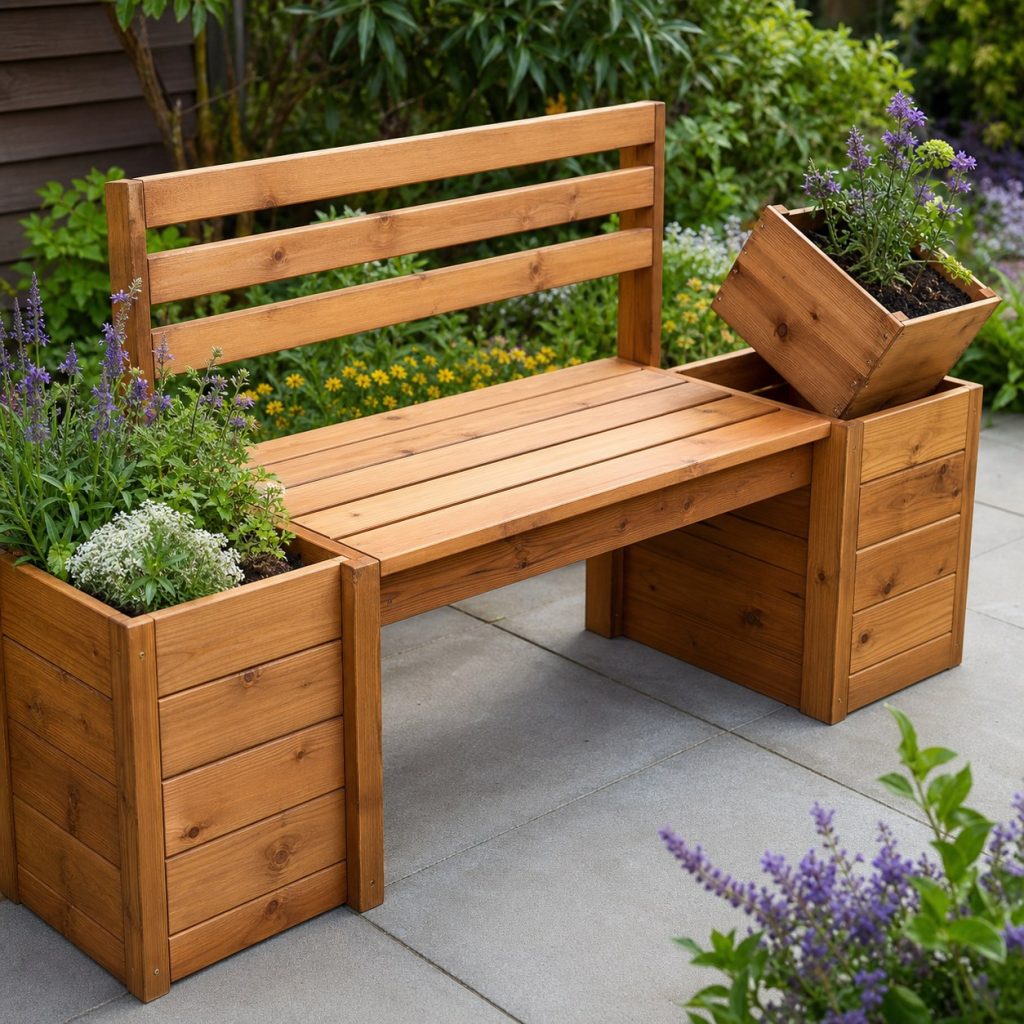
A removable inner box or suitable liner protects the outer wood while preserving drainage and ventilation.
Seat Frame and Drainage Details
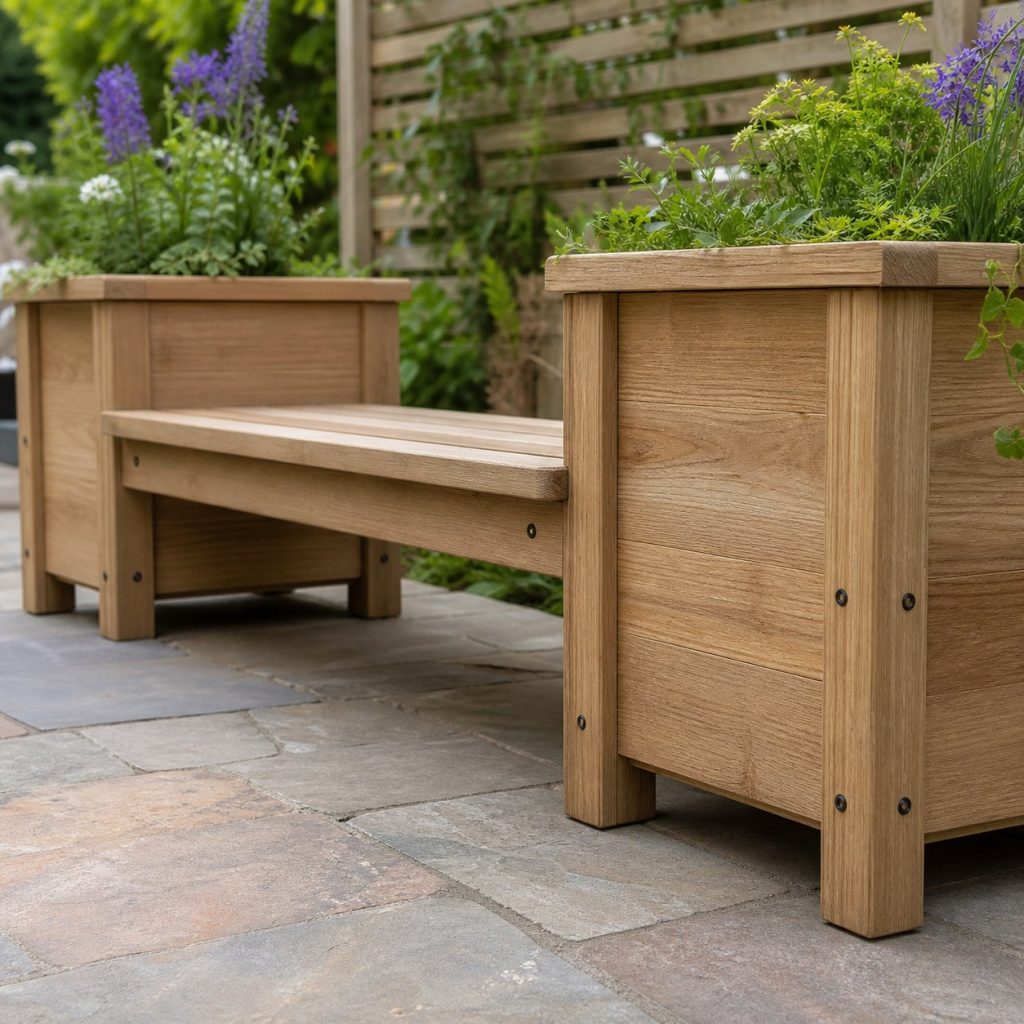
Separating the structural frame from planter moisture makes inspection, refinishing, and eventual replacement easier.
Planning checklist
- Calculate saturated planter weight and support it independently.
- Keep seat loads on a dedicated braced frame.
- Provide unobstructed drainage away from walking surfaces.
- Use removable liners or inner boxes without trapping water.
- Round seat edges and inspect joints and finish regularly.
These woodworking concepts and generated images are planning inspiration, not measured drawings, cut lists, tested furniture plans, load ratings, engineered structures, accessibility designs, playground certifications, or utility instructions. Verify dimensions, ergonomics, lumber grade and treatment, grain direction, joint design, fastener and preservative compatibility, structural and wind loads, stability, sharp and pinch hazards, finish labels, equipment instructions, accessibility, permits, and local requirements for the actual project. Use appropriate personal protective equipment and qualified engineers, electricians, plumbers, accessibility specialists, and other licensed professionals where the work or hazards require them.
Frequently asked questions
Can the planter box support the bench seat?
Do not assume it can. A safer concept uses a dedicated seat frame and independently supported planters unless a qualified design proves otherwise.
Should I line a wooden planter?
A suitable removable liner or inner container may reduce wet-soil contact, but it must drain freely and allow the surrounding wood to dry.
What plants work beside seating?
Choose non-toxic, non-thorny, low-litter plants suited to the climate and container volume, and consider allergies and insects near users.