Project planning guide
Before you build
Use the reference image and planning notes as a starting point. Confirm dimensions, loads, materials, local codes, and site conditions before purchasing or cutting.
- Garden Projects
- 8 reference images
- Print-friendly guide
A wooden lantern post can mark a path, gate, or seating area with a small, carefully detailed woodworking build. Solar and low-voltage concepts can simplify placement, but every fixture, cable, transformer, post base, and electrical connection must still match its listing and local requirements.
Simple Solar Cap Post
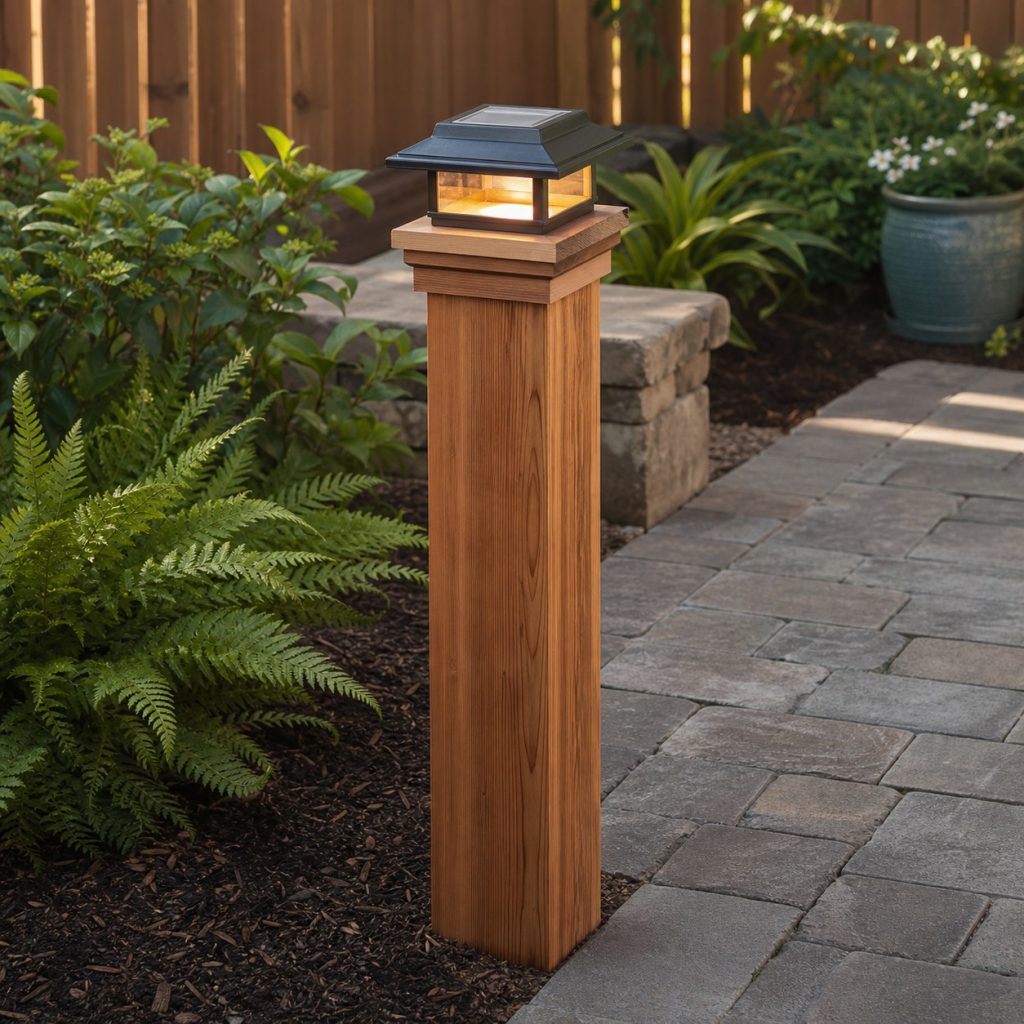
A self-contained cap fixture keeps wiring out of the post while the cap and post top still need drainage. Do not improvise mains-voltage wiring or mount indoor fixtures outdoors; follow product listings, utility-locate rules, burial-depth requirements, electrical codes, permits, and qualified-electrician guidance.
Bracket-Arm Lantern Post
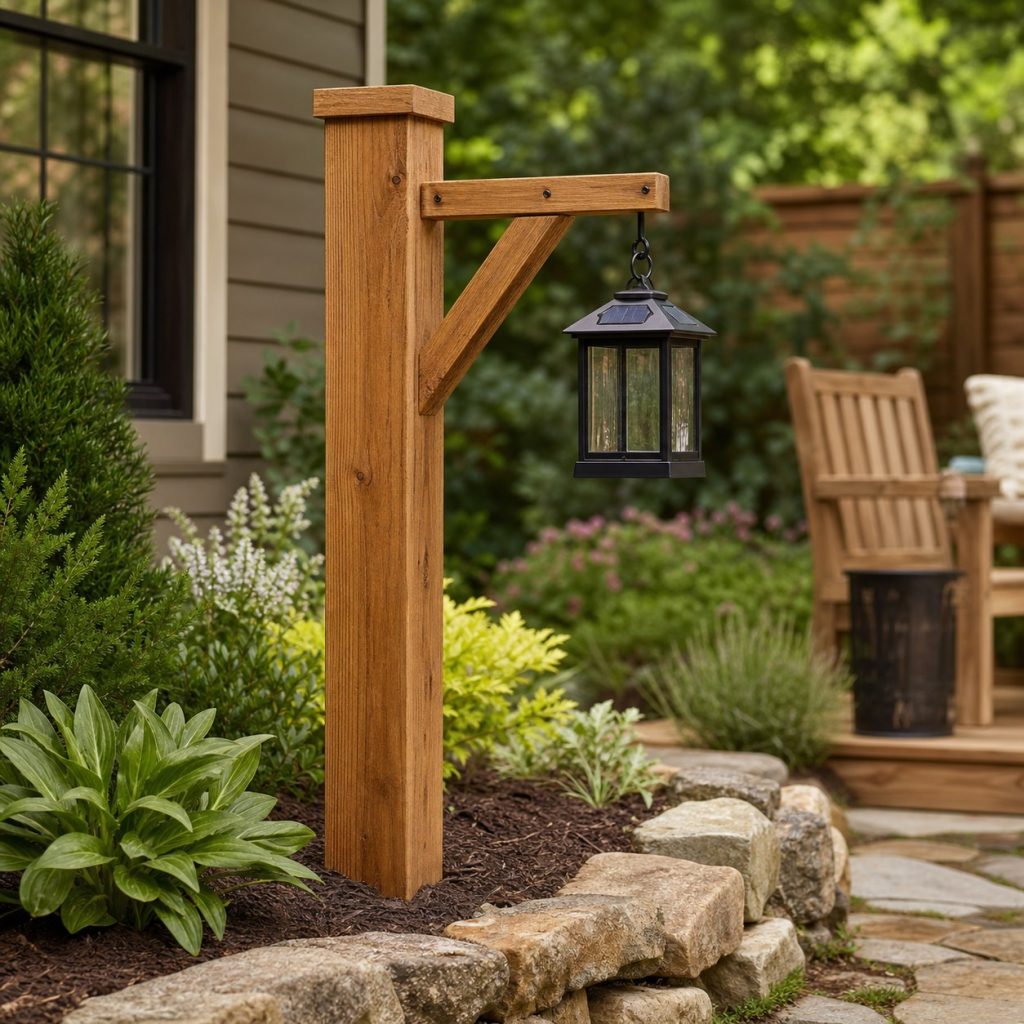
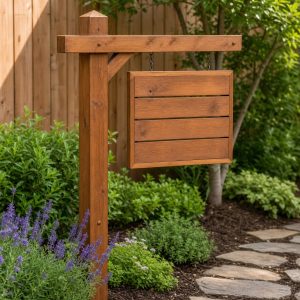
A triangular wooden brace reduces leverage at the arm joint and keeps the fixture attachment visible.
Twin Gate Lantern Posts
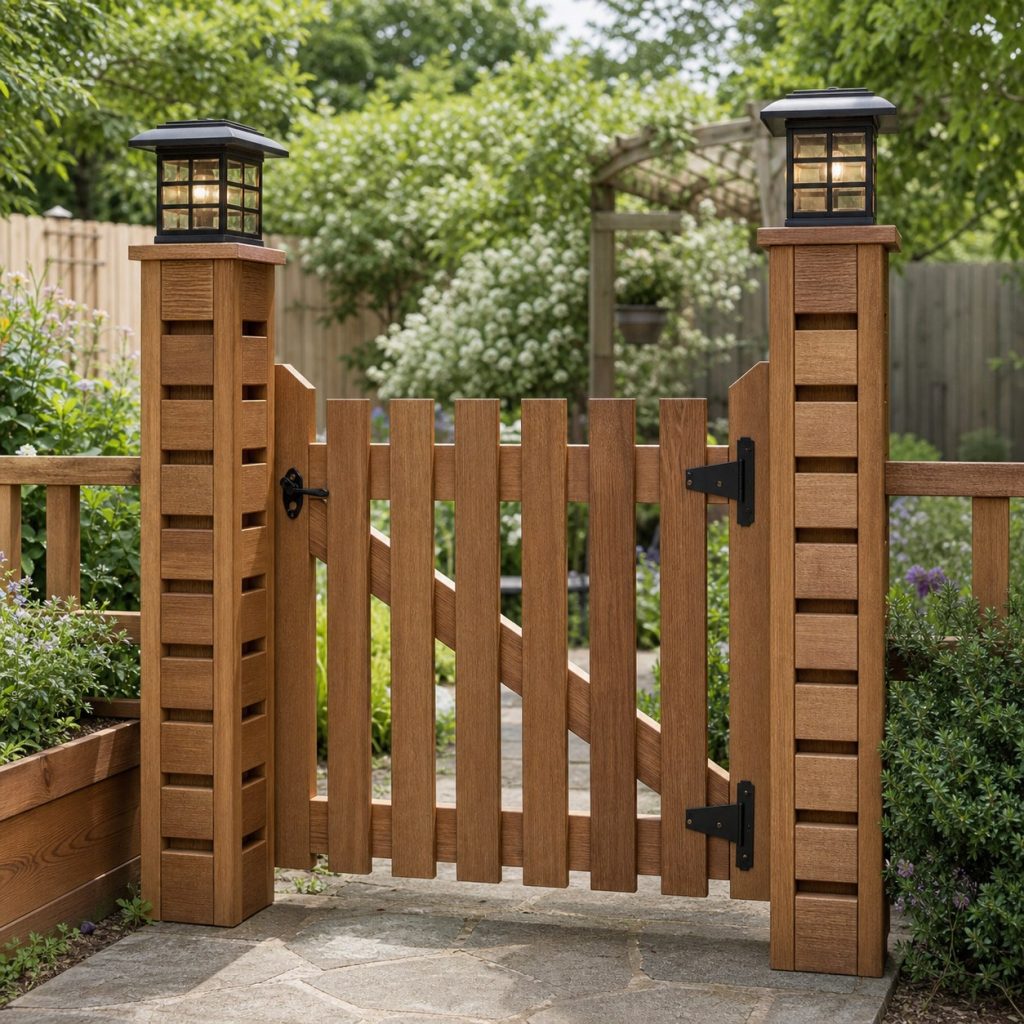
Templates help duplicate the posts while their footings stay separate from gate-hinge and latch loads.
Low Bollard Lantern
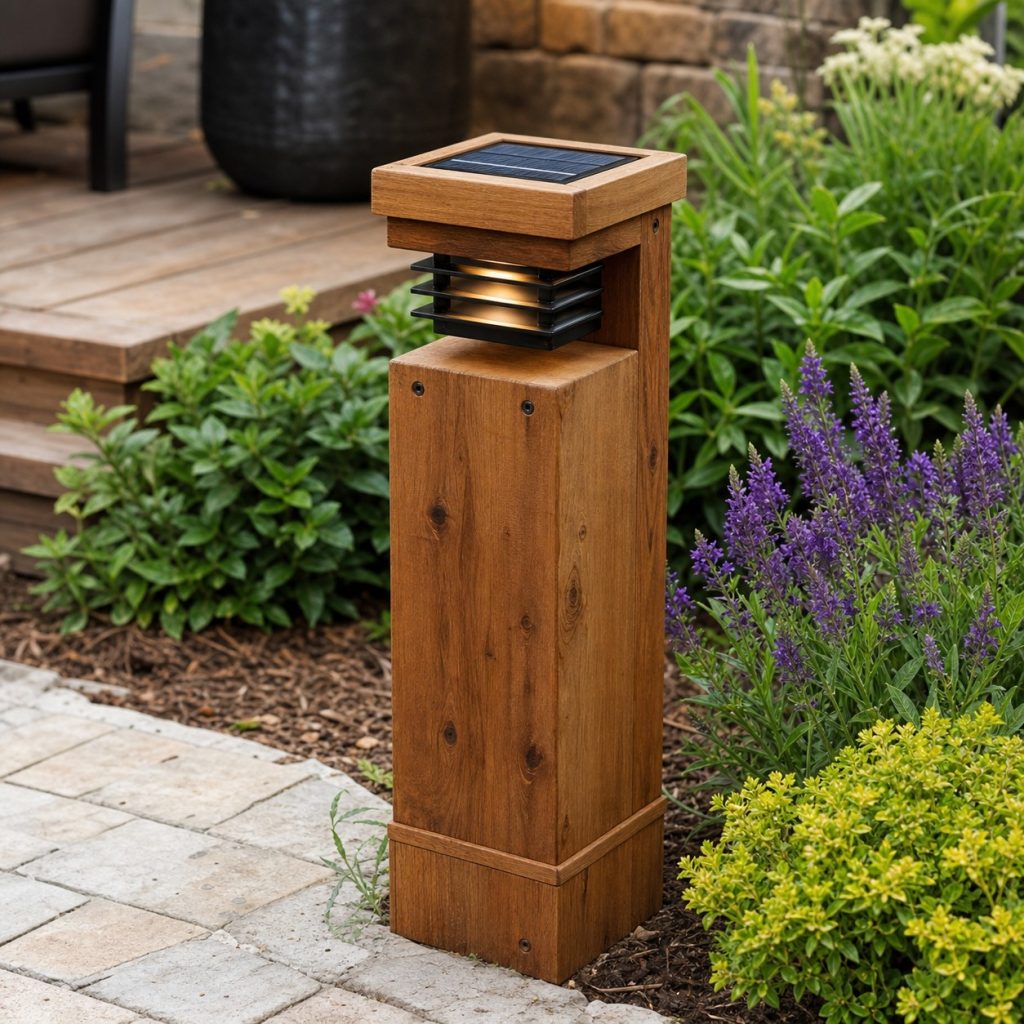
A low fixture should direct light downward and remain outside the clear walking width.
Planter-Base Lantern Post
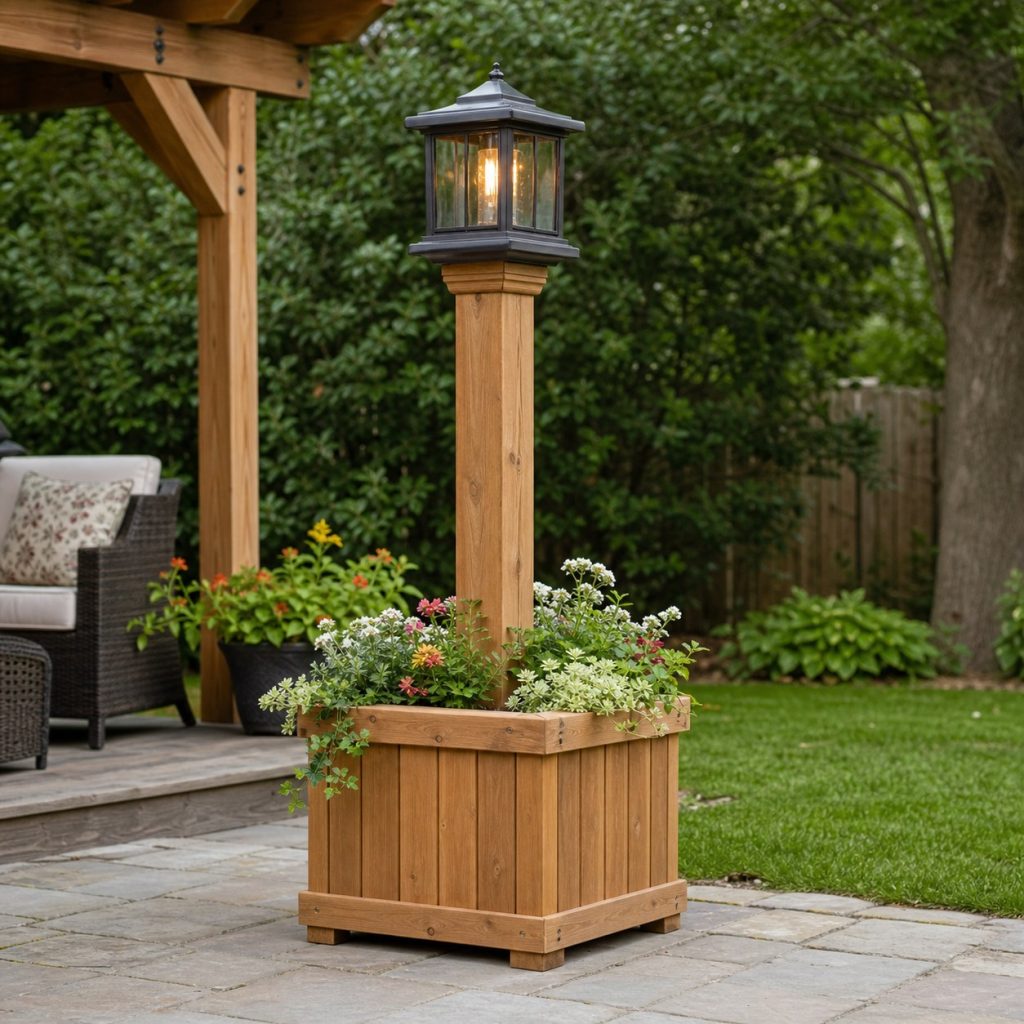
A planter can disguise a base only when wind stability and saturated soil weight are deliberately designed.
Trellis-Side Lantern Post
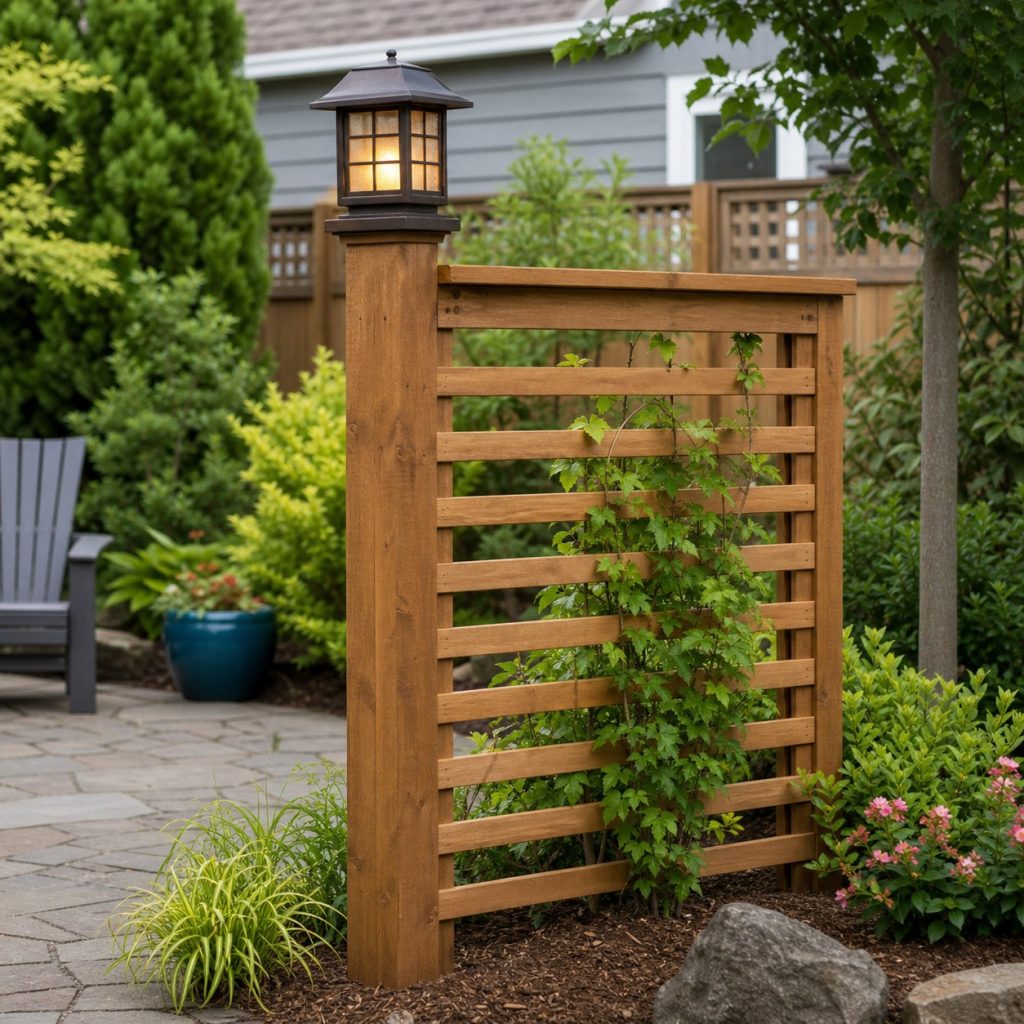
The post can visually align with a trellis while keeping fixture service and vine growth separated.
Low-Voltage Post With Access Panel
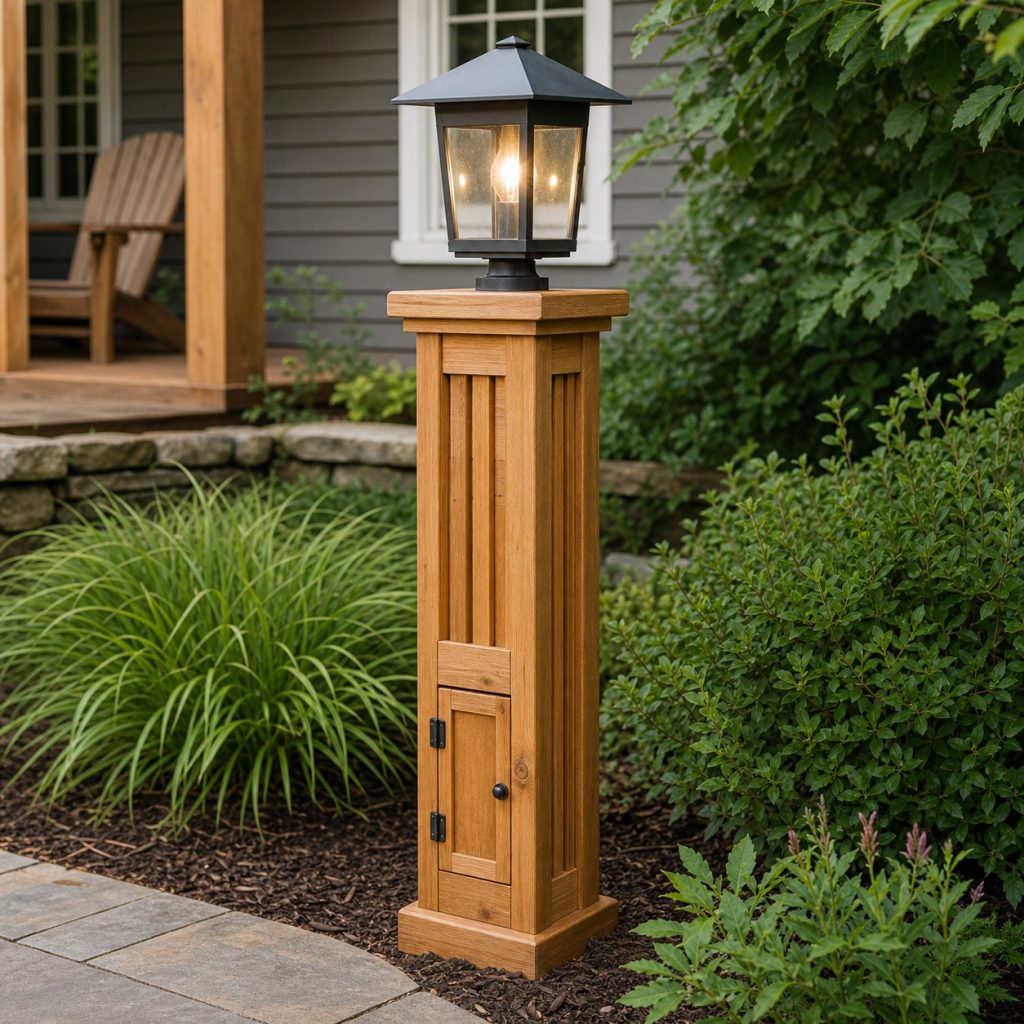
Only listed systems should use a protected cable route and accessible connections installed to their instructions.
Cap, Base, and Water-Shedding Details
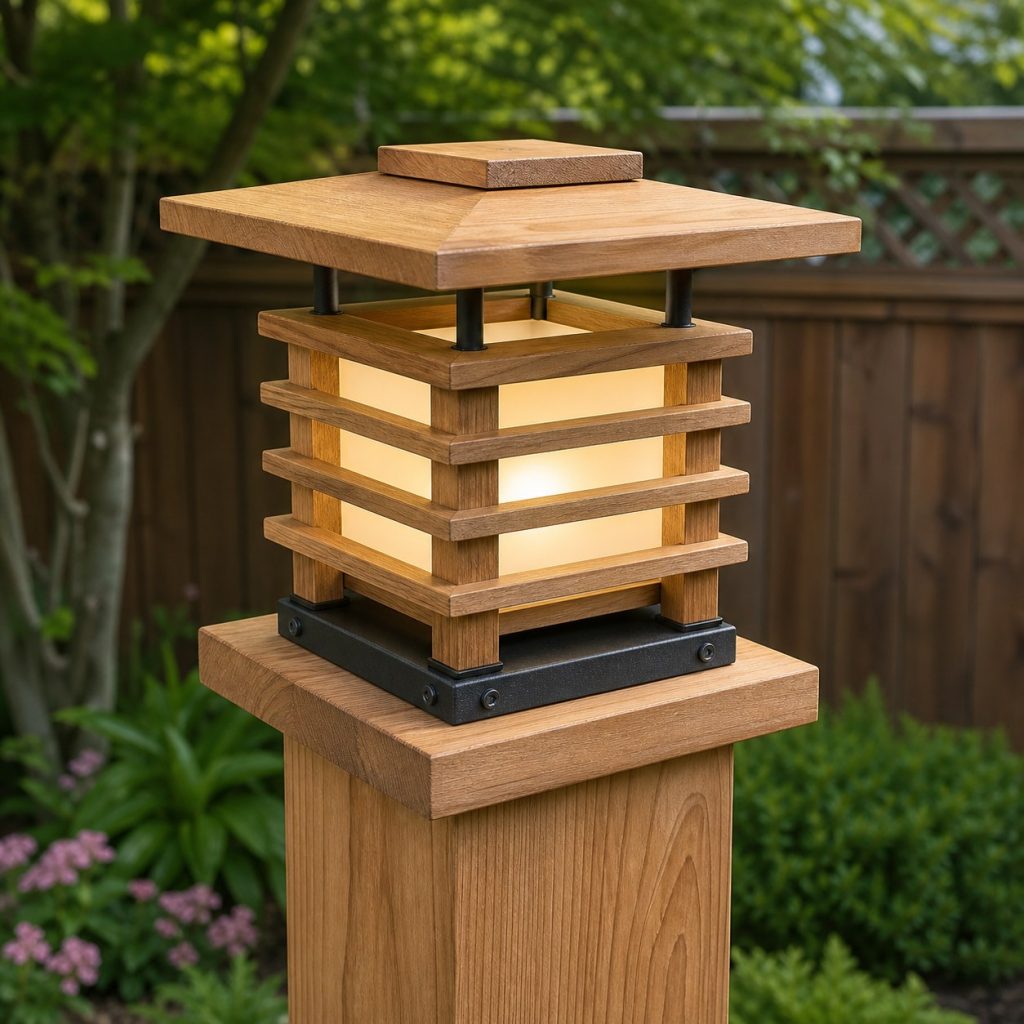
Sloped caps, stand-off hardware, and above-grade post bases reduce persistent moisture at vulnerable joints.
Planning checklist
- Use only fixtures listed for the intended outdoor location.
- Design arm joints and anchoring for fixture weight and wind.
- Keep posts outside required path and gate clearances.
- Use caps, standoffs, and bases that shed water.
- Leave electrical design and mains wiring to qualified professionals.
These woodworking concepts and generated images are planning inspiration, not measured drawings, cut lists, tested furniture plans, load ratings, engineered structures, accessibility designs, playground certifications, or utility instructions. Verify dimensions, ergonomics, lumber grade and treatment, grain direction, joint design, fastener and preservative compatibility, structural and wind loads, stability, sharp and pinch hazards, finish labels, equipment instructions, accessibility, permits, and local requirements for the actual project. Use appropriate personal protective equipment and qualified engineers, electricians, plumbers, accessibility specialists, and other licensed professionals where the work or hazards require them.
Frequently asked questions
Is a solar lantern post completely maintenance-free?
No. Clean the panel, inspect the battery and fixture, check post stability, and maintain the wood finish according to product instructions.
Can I run household cable inside the wooden post?
Do not improvise wiring. Use a listed system installed to electrical code and product instructions by a qualified electrician where required.
How should the post meet the ground?
The correct footing or stand-off base depends on soil, frost, wind, post height, and local rules. Keep untreated end grain out of persistent soil contact.