Project planning guide
Before you build
Use the reference image and planning notes as a starting point. Confirm dimensions, loads, materials, local codes, and site conditions before purchasing or cutting.
- Garden Projects
- 8 reference images
- Print-friendly guide
A wooden sandbox is a child-use woodworking project, so smoothness, visibility, drainage, sanitation, and cover safety take priority over decorative details. These concepts avoid overhead lids that can fall, concealed entrapment spaces, sharp hardware, and inaccessible corners.
Classic Square Sandbox
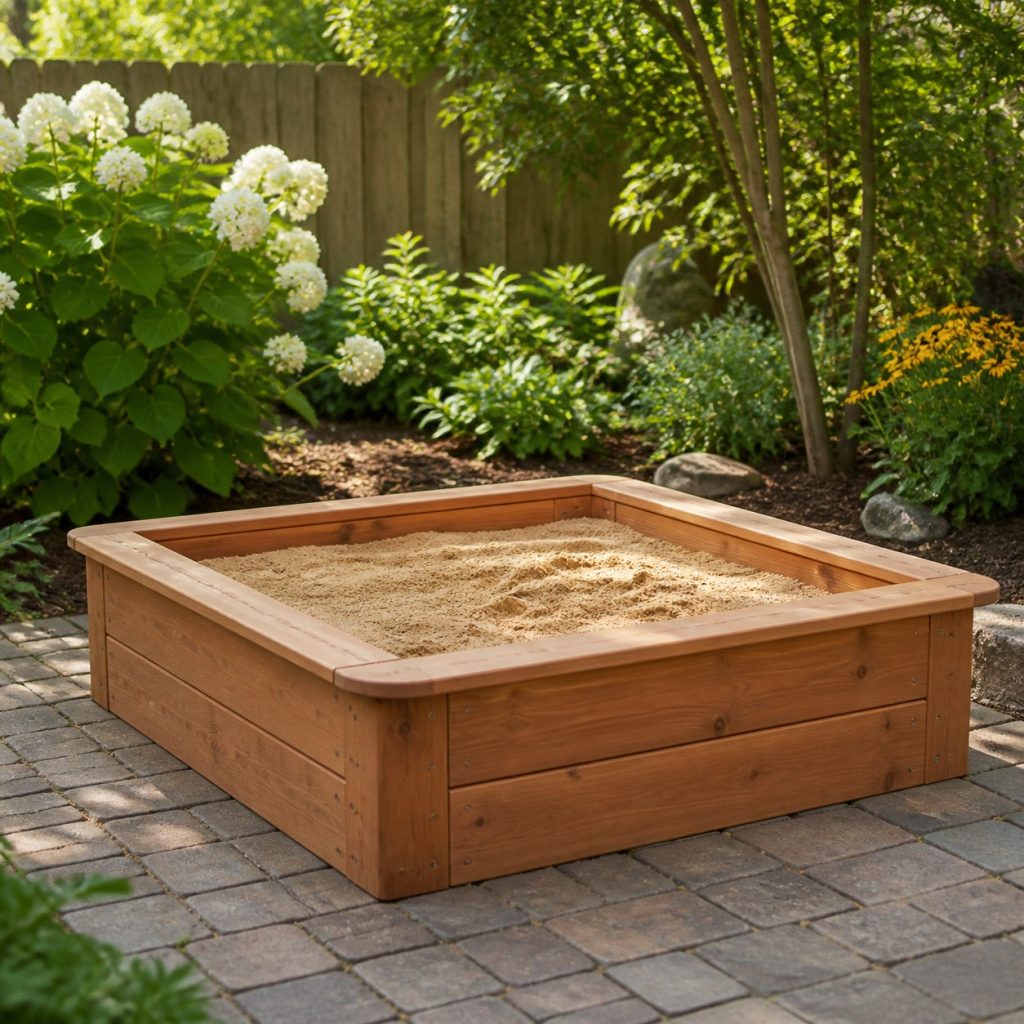
Half-lapped or well-blocked corners can keep low walls aligned without leaving exposed sharp fasteners. Adult supervision is essential; consult current CPSC home-playground guidance, verify materials and finishes for child contact, locate utilities, and inspect sand, fasteners, splinters, drainage, covers, and surrounding hazards frequently.
Sandbox With Corner Seats
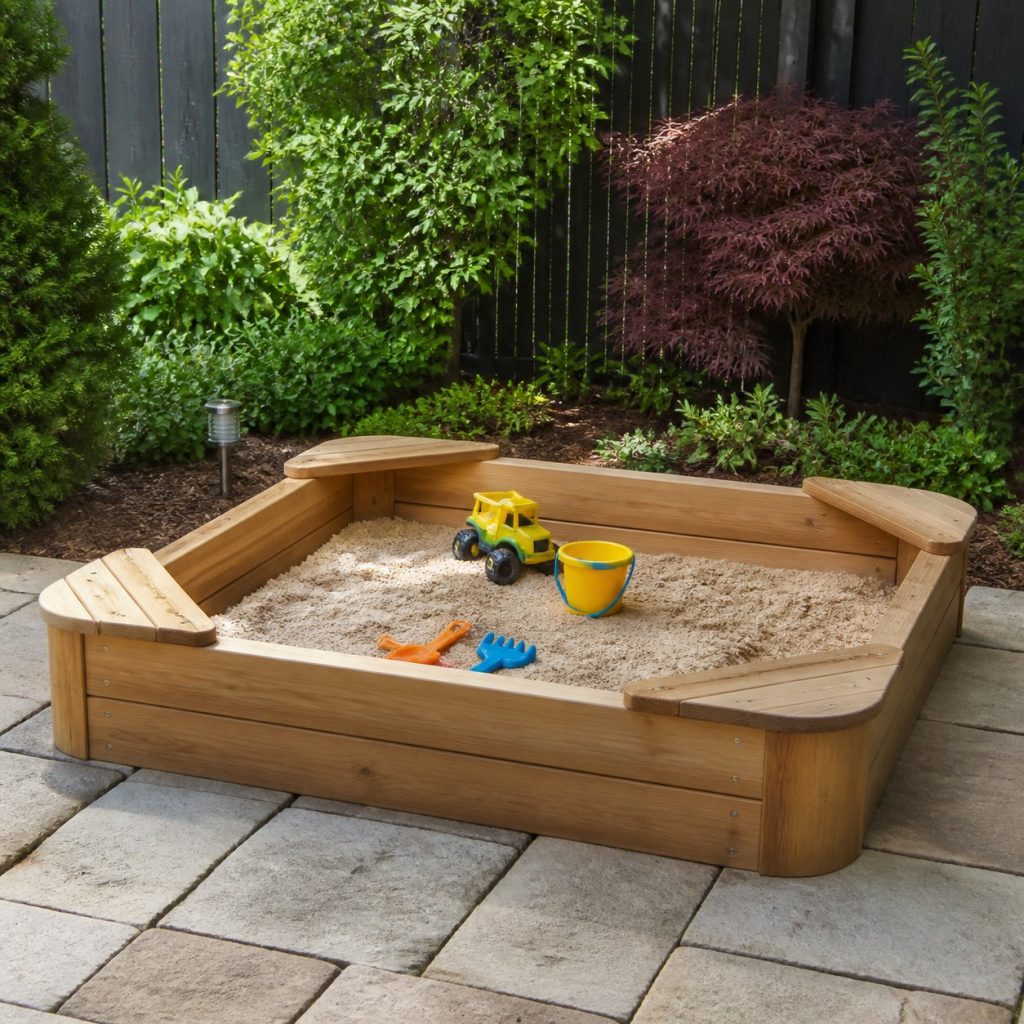
Corner seats need full support underneath and smooth transitions without creating narrow head or neck openings.
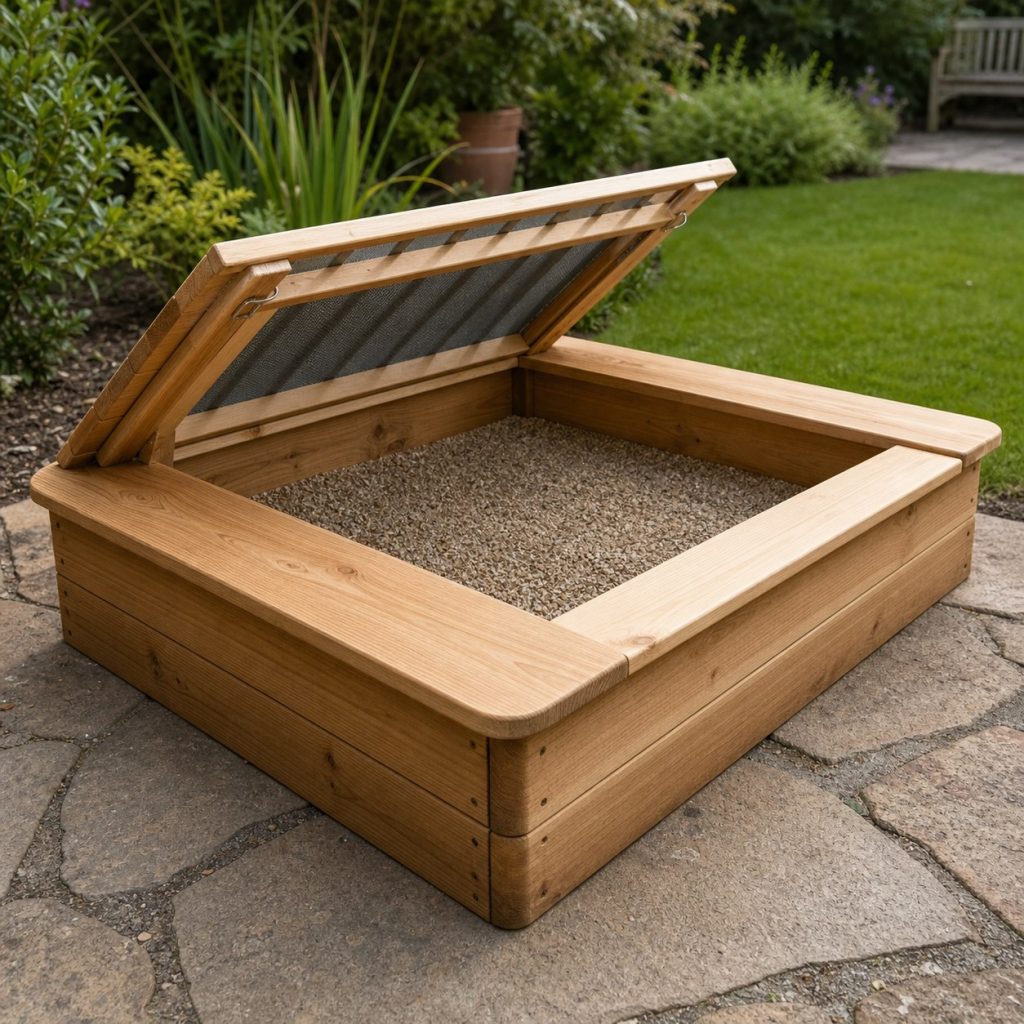
Split Bench-Cover Sandbox
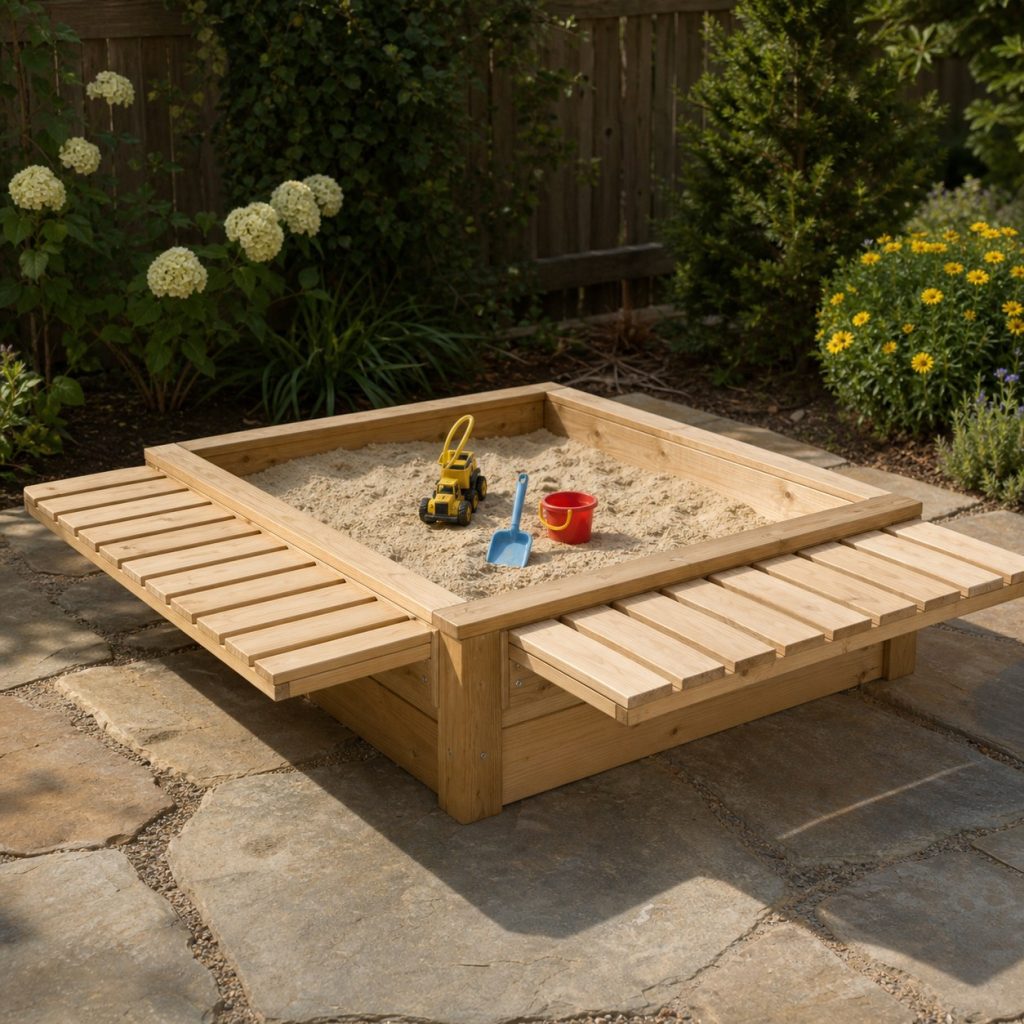
Moving panels require controlled hinges, stops, light manageable weight, and an adult-only setup routine.
Roll-Up Slatted Cover
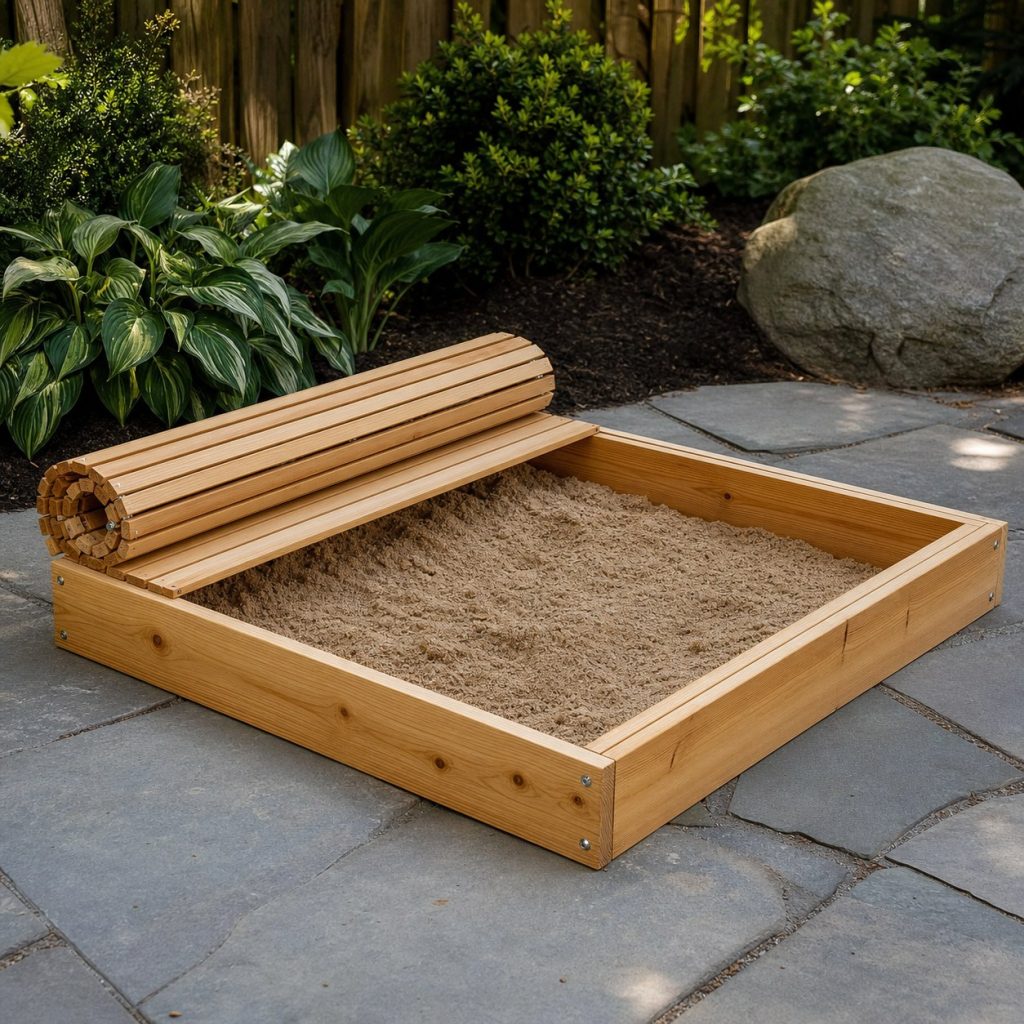
A flexible cover needs durable connections, ventilation, secure storage, and no loops or cords that create entanglement.
Low Accessible Sand Table
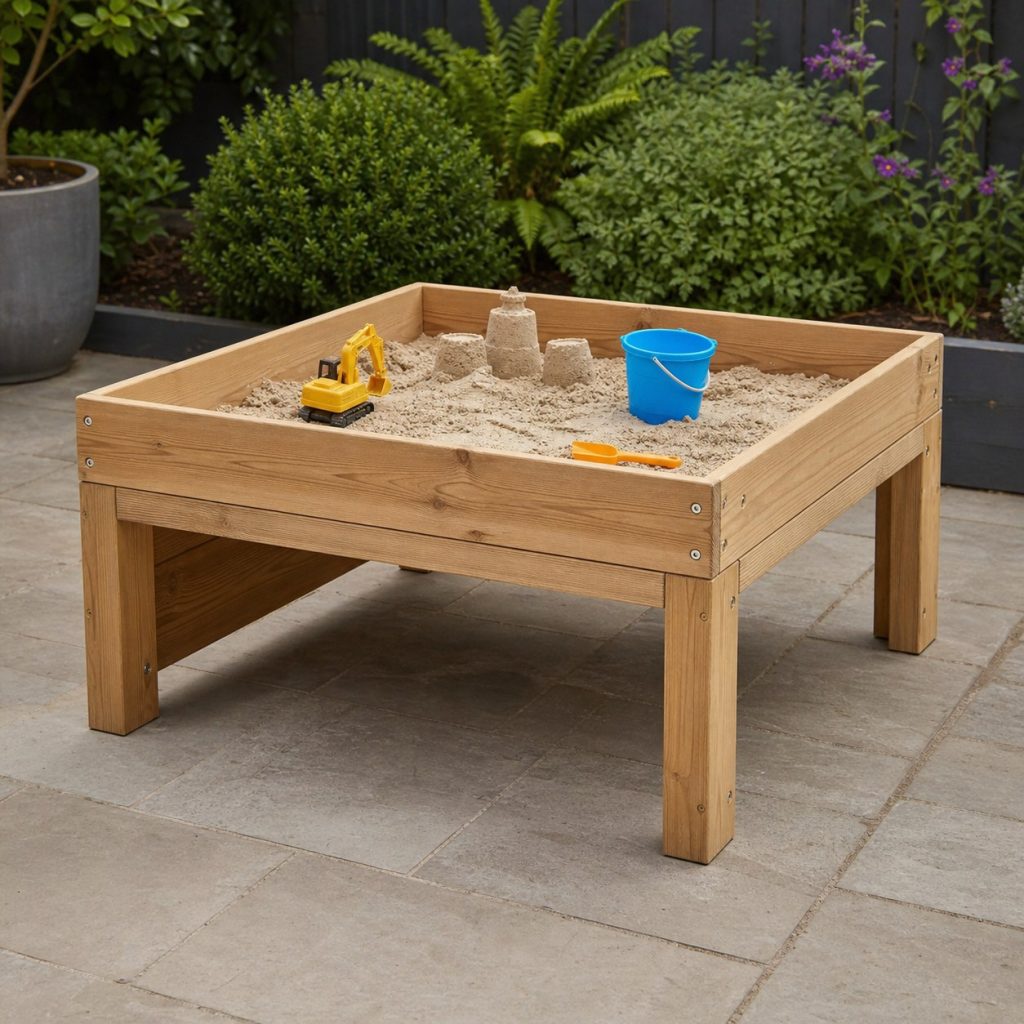
A raised play surface can broaden access when height, reach, edges, and clear approach suit the intended children.
Boat-Shaped Sandbox
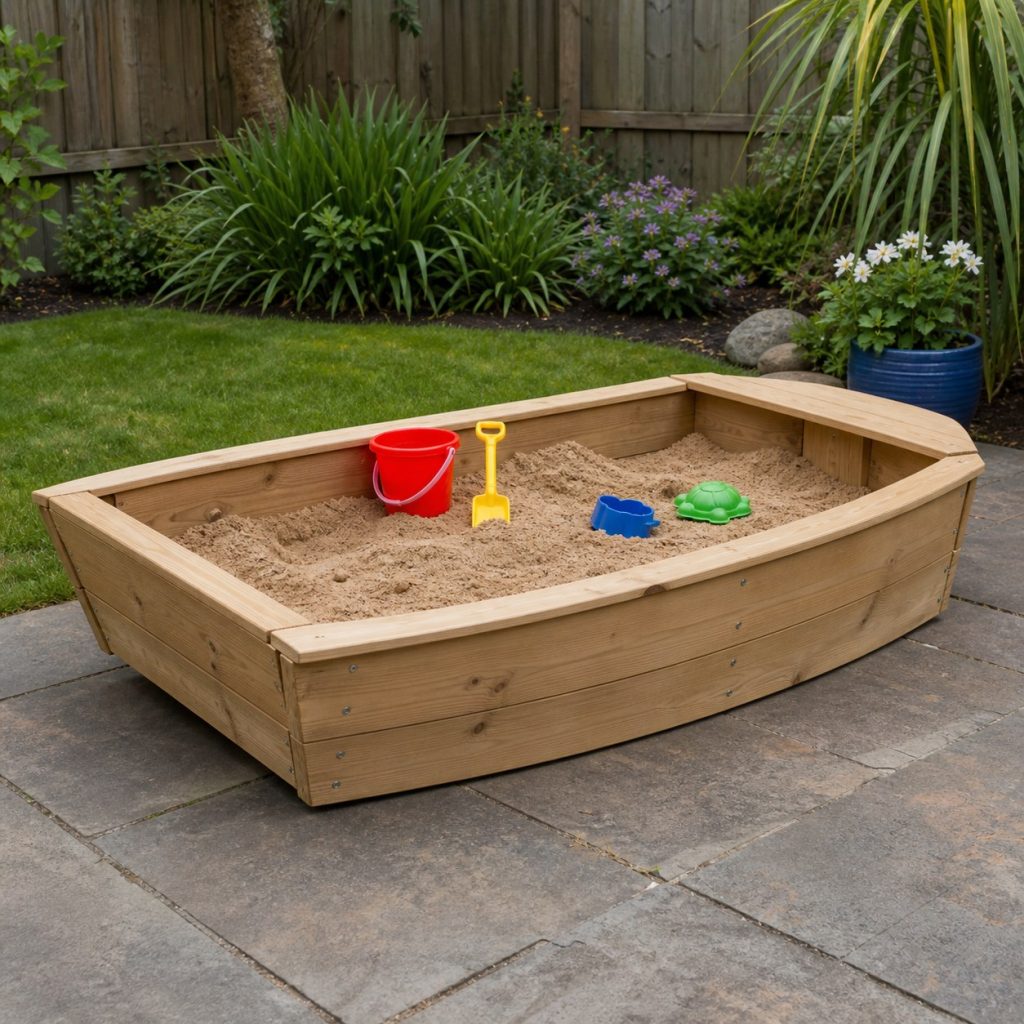
Decorative curves should remain low, rigid, smooth, and free from ropes, protrusions, or climbable fall hazards.
Shade-Sail-Adjacent Sandbox
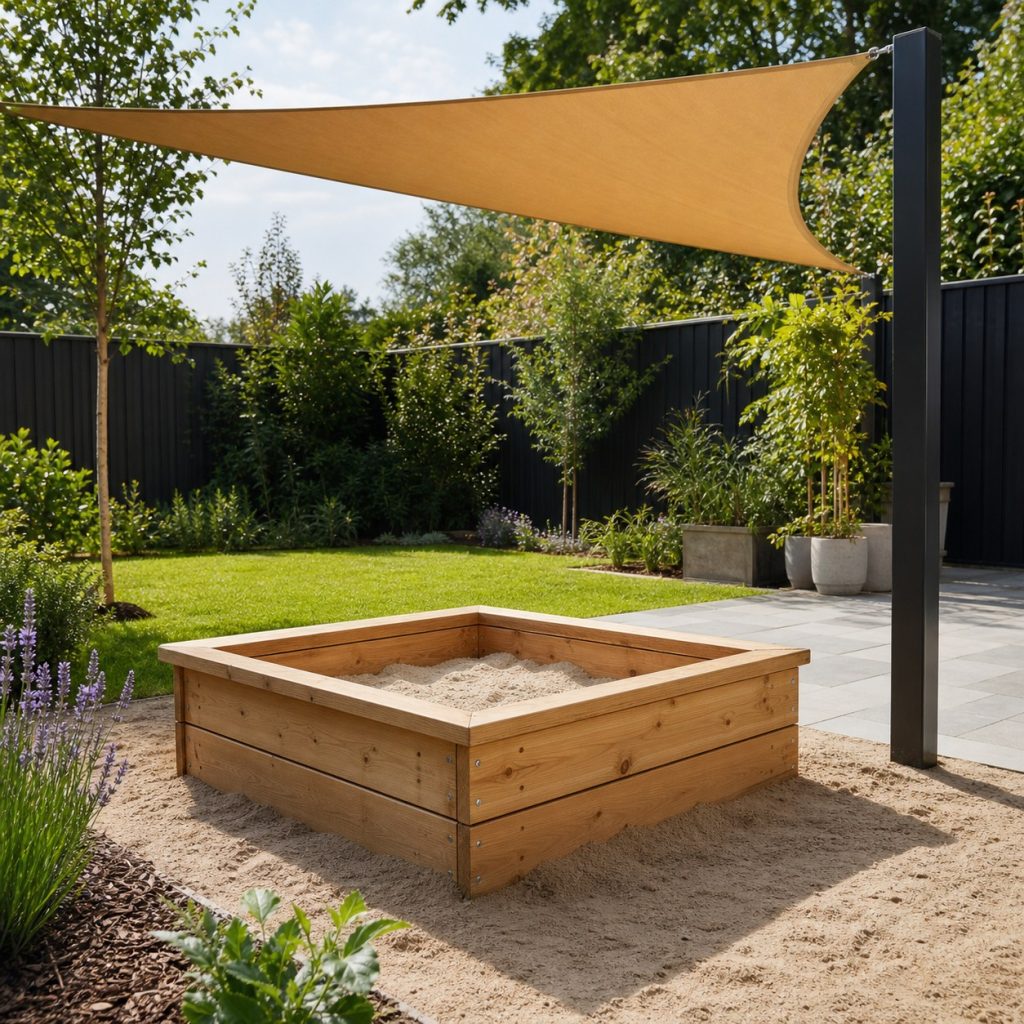
Independent shade avoids loading the sandbox walls and must be located and installed for wind, anchors, and supervision.
Drainage and Inspection Details
A drainable base, clean sand, smooth caps, and accessible corners make routine inspection and sanitation easier.
Planning checklist
- Place the sandbox on a visible level site away from traffic and hazards.
- Use child-appropriate lumber, finishes, sand, and corrosion-resistant hardware.
- Round edges, conceal sharp fasteners, and prevent entrapment openings.
- Provide drainage and a lightweight ventilated secure cover.
- Supervise play and inspect the entire sandbox frequently.
These woodworking concepts and generated images are planning inspiration, not measured drawings, cut lists, tested furniture plans, load ratings, engineered structures, accessibility designs, playground certifications, or utility instructions. Verify dimensions, ergonomics, lumber grade and treatment, grain direction, joint design, fastener and preservative compatibility, structural and wind loads, stability, sharp and pinch hazards, finish labels, equipment instructions, accessibility, permits, and local requirements for the actual project. Use appropriate personal protective equipment and qualified engineers, electricians, plumbers, accessibility specialists, and other licensed professionals where the work or hazards require them.
Frequently asked questions
What kind of sand belongs in a sandbox?
Use clean play sand sold for that purpose and follow supplier guidance. Replace contaminated material and keep food, animals, and standing water out.
Should a sandbox have a solid lid?
A cover helps exclude debris and animals, but it should be lightweight, ventilated, securely stored when open, and unable to fall or trap a child.
Can I use old pressure-treated lumber?
Do not reuse unknown or older treated wood for a child-contact project. Identify materials and follow current EPA, manufacturer, and local guidance.