Project planning guide
Before you build
Use the reference image and planning notes as a starting point. Confirm dimensions, loads, materials, local codes, and site conditions before purchasing or cutting.
- Garden Projects
- 1 reference image
- Print-friendly guide
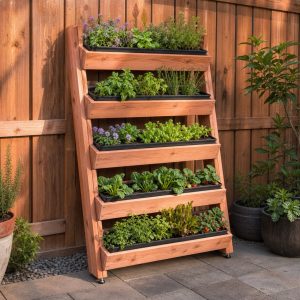
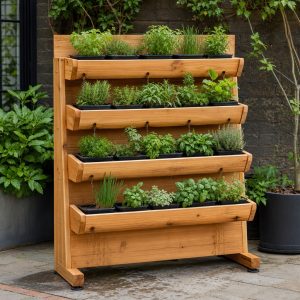
Quick answer: A freestanding vertical planter can place four shallow planting troughs in a footprint about 3 feet wide and 18 inches deep. Stagger the troughs so each receives light, give the frame a wide base or wall restraint, and route drainage so water from the top tier does not flood every level below.
Confirm light, weight, and drainage first
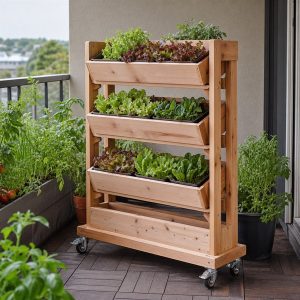
Observe the patio through the day and select crops for its real sun exposure. Calculate the finished weight of wet soil, plants, containers, and the frame; a planter that is easy to move empty may be immovable when saturated. On a balcony or elevated deck, confirm structural capacity and drainage rules with the property owner or a qualified professional.
Select crops for trough depth
| Good candidates | Less suitable without deeper containers |
|---|---|
| Many herbs, leaf lettuce, compact strawberries | Large tomatoes and deep-rooted crops |
| Trailing flowers | Heavy vining crops without separate support |
| Shallow-rooted greens | Aggressive spreaders that crowd one trough |
Check the mature root space and water needs for each specific cultivar. Group plants with similar irrigation needs rather than treating every tier identically.
Build a stable freestanding frame
- Make two matching angled side frames with broad feet.
- Connect them using lower and upper crossrails, checking diagonal measurements.
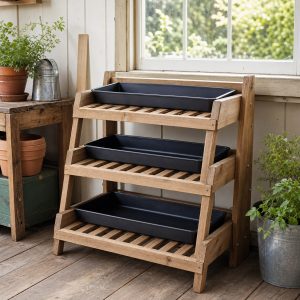
- Build four lined or naturally durable troughs with open drainage paths.
- Mount the lowest trough first, then space upper tiers for hand access and sunlight.
- Add a back brace or approved wall restraint where tipping is possible.
- Install feet or pads that keep end grain away from standing water.
Do not make the top trough the deepest and heaviest. Keep the center of gravity low and avoid projecting containers that can be bumped from a walkway.
Manage water between tiers
Each trough needs drainage holes protected from clogging. Use a removable drip tray, gravel strip, or individual drainage tubes where runoff would stain a patio or bother neighbors. Water slowly from the top of each container rather than assuming overflow from one tier provides even irrigation to the next.
Use materials that can stay damp
Cedar or another locally suitable decay-resistant wood is practical. If lining wooden troughs, use a durable material appropriate for food-growing containers, provide drainage, and avoid trapping water against every wood surface. Corrosion-resistant screws and replaceable troughs make long-term maintenance easier.
For more growing volume, build the 4×8 raised bed. Add a compact rain barrel setup only where overflow and local rules permit.
Calculate wet weight and tipping risk
Soil, plants, and retained water are much heavier than an empty planter. Estimate the saturated load of every trough and keep the heaviest containers low. A freestanding frame should be tested on the actual patio surface, including slope and wind exposure. Do not assume siding, a railing, or a light fence can serve as an anchor.
- Provide overflow routes that do not stain walls or create slippery paths.
- Use removable liners or containers so decayed parts can be inspected.
- Separate edible plants from materials not intended for growing food.
- Leave enough space to prune and harvest without leaning the frame.
Water from the top down during a trial and watch every lower tier. If upper drainage erodes soil, wets foliage continuously, or overloads the bottom container, add controlled collection rather than simply increasing watering frequency.
Common questions
Can a vertical planter stand against siding?
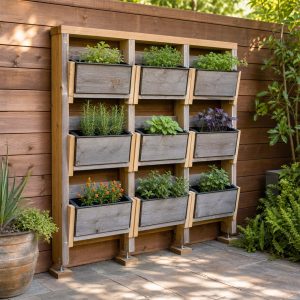
Leave an air gap and do not route irrigation against the wall. A freestanding planter still needs tipping protection without depending on cladding that is not structural.
How do I stop the top tier from shading lower plants?
Offset the troughs, keep upper containers narrow, orient the frame for the site’s sun path, and put shade-tolerant greens below sun-loving herbs.