Project planning guide
Before you build
Use the reference image and planning notes as a starting point. Confirm dimensions, loads, materials, local codes, and site conditions before purchasing or cutting.
- Garden Projects
- 1 reference image
- Print-friendly guide
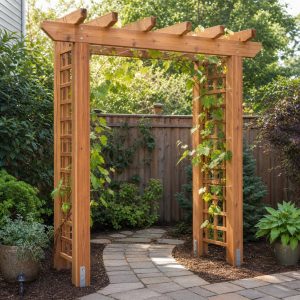
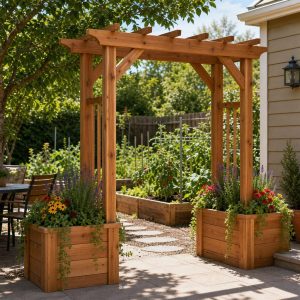
Quick answer: A practical garden arbor has a clear opening about 42 to 48 inches wide, posts around 7 feet above the path, two rigid side panels, and an open top that ties the structure together. Set or anchor the posts for local soil, frost, and wind conditions, and size the arbor before selecting climbing plants.
Locate the arbor as part of the path
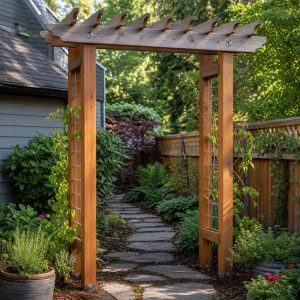
An arbor works best when it marks a real transition: the entrance to a vegetable garden, a change in path direction, or the opening in a fence. Center it over the finished path, not the rough excavation. Confirm that wheelbarrows, carts, and the widest regular user can pass without brushing the posts.
Check property lines, easements, overhead branches, utilities, and local height or setback rules before digging. Keep an arbor away from roof snow or drainage discharge that could damage the structure or path.
Choose dimensions for people and plants
| Feature | Useful starting point |
|---|---|
| Clear opening | 42 to 48 in. wide |
| Clear headroom | About 7 ft. before mature vines |
| Side-panel depth | 18 to 24 in. |
| Overall post spacing | Opening plus post and trim widths |
Dense vines reduce both width and headroom. Leave extra clearance for thorny roses and prune growth away from latches, eyes, and walking surfaces.
Build two matching side assemblies
- Lay pairs of posts on a flat surface with equal spacing.
- Connect each pair using lower and upper rails.
- Fit cedar lattice or rot-resistant slats inside a supported frame.
- Build the second side directly over the first so both match.
- Seal cut ends and prefinish hard-to-reach surfaces if desired.
Lattice is plant support, not the primary structure. The posts and rails must resist racking without relying on thin decorative strips.
Install posts and connect the top
Use an appropriate footing or rated post-anchor method for local frost depth, soil, wind, and decay exposure. Brace both sides plumb during installation. Join them with front and rear headers, then add evenly spaced top slats or rafters. Check the opening for square before tightening all connections.
Do not attach a freestanding arbor casually to a lightweight fence and assume the fence will stabilize it. Each structure needs a clear load path.
Add vines without damaging the arbor
Select a plant suited to the climate, sunlight, mature weight, and maintenance available. Tie young growth loosely with soft material. Keep woody stems out of joints and inspect hidden fasteners annually. Aggressive vines can overwhelm a small structure and should be avoided where local extension guidance identifies them as invasive.
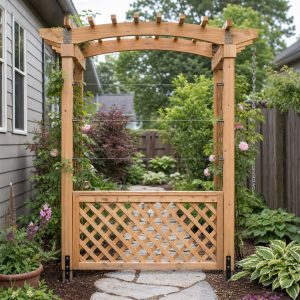
Place the arbor at the start of the gravel garden path and pair it with the DIY garden gate when controlled access is needed.
Design for mature plants and seasonal wind
A bare arbor experiences different forces after vines fill the roof and sides. Mature foliage adds weight, catches wind, and can hide loose joints or decay. Choose plant supports that remain separate enough to inspect and refinish the primary structure. Confirm that the selected vine is suitable for the climate and will not overwhelm the intended dimensions.
- Keep the clear opening usable after stems and ties are added.
- Direct roof or path drainage away from post bases.
- Use corrosion-resistant connectors compatible with treated or naturally durable wood.
- Provide a pruning plan before growth reaches utilities or roofs.
Check plumb, post firmness, top connections, and ground-line decay each season. Movement that appears minor at the top may indicate a failing post base and should be corrected before people pass beneath the arbor.
Common questions
Should arbor posts be set in concrete?
That depends on soil, frost, wind, post material, drainage, and local practice. A rated above-grade anchor can keep wood drier; an embedded post may require a different footing detail.
Is cedar strong enough for an arbor?
Cedar is decay resistant and commonly used outdoors, but member sizes, spans, connections, and wind exposure still determine performance.