Project planning guide
Before you build
Use the reference image and planning notes as a starting point. Confirm dimensions, loads, materials, local codes, and site conditions before purchasing or cutting.
- Kitchen Design
- 8 reference images
- Print-friendly guide
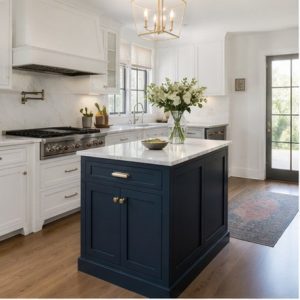
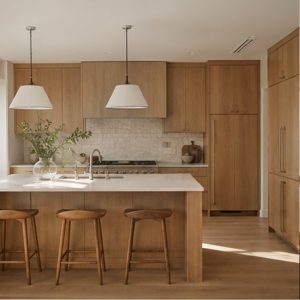
Kitchen backsplash ideas with white cabinets can be quiet, colorful, smooth, or deeply textured. The key is to compare the backsplash with the actual cabinet white and countertop—not a showroom sample in isolation. Bring all three surfaces together, then view them vertically under the lighting used at the counter.
Handmade white zellige
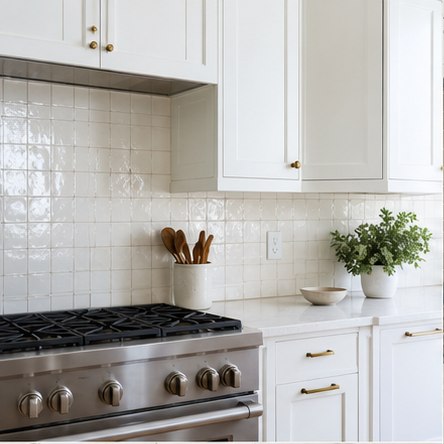
Handmade-look white tile adds variation through uneven surfaces and glaze rather than strong color. It can make a simple white kitchen feel layered, but expect irregular edges and grout joints. Review several loose tiles together, use a skilled installer, and test how under-cabinet lights reflect from the glossy, rippled face.
Warm greige subway tile
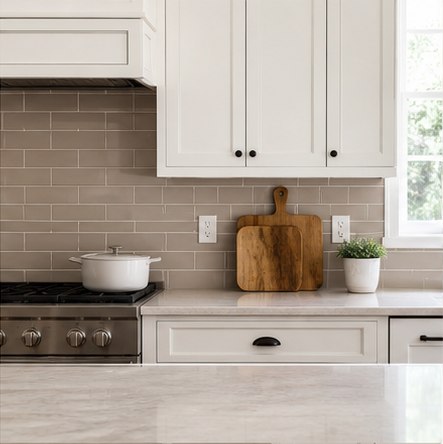
Greige subway tile creates gentle contrast and can connect creamy cabinets to a warmer floor. Tile orientation and grout color change the effect: stacked joints feel orderly, while a running bond is familiar and forgiving. Choose grout after the tile is installed dry on a sample board, because a small color shift can emphasize every joint.
Blue patterned ceramic
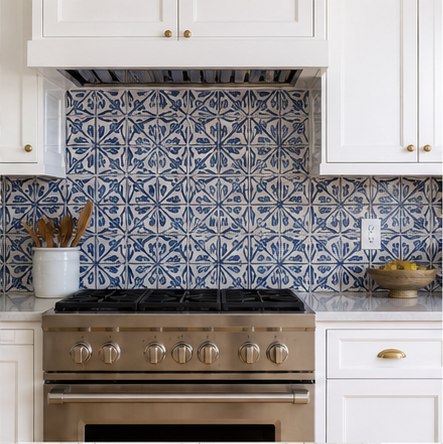
Patterned tile turns the range wall into a focal point. Keep the surrounding counters, hardware, and accessories quieter so the pattern has room to breathe. Lay out the entire focal area on the floor first to center motifs, avoid awkward slivers, and decide whether the pattern continues or transitions at adjacent walls.
Vertical green tile
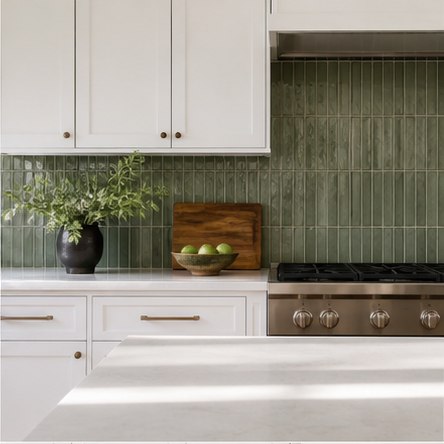
A vertical stack visually lifts the space between counter and upper cabinets. Muted green gives white cabinetry a natural counterpoint and works with wood and warm metals. Plan cut locations around outlets and window trim, and check whether a directional glaze creates obvious shade bands before approving the layout.
Marble-look slab
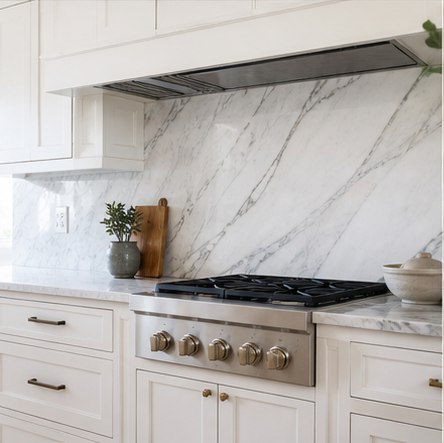
Running one slab material from counter to backsplash minimizes grout and emphasizes veining. Confirm slab dimensions, seam locations, outlet cuts, and the relationship between horizontal and vertical patterns. A printed or engineered surface may provide easier maintenance, while natural stone needs product-specific sealing and cleaning care.
Quiet quartzite or stone slab
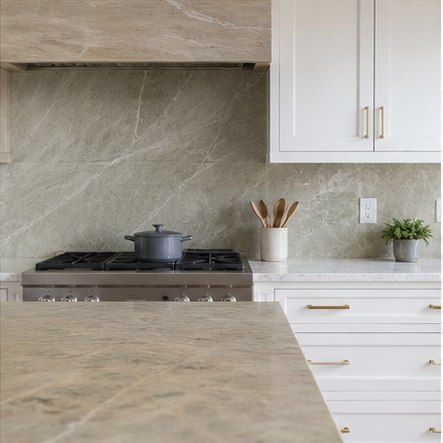
A softly patterned slab can add depth without a high-contrast statement. View the complete slab rather than a small sample, reserve specific areas for the range and sink walls, and photograph the layout before fabrication. Ask the fabricator how corners, seams, thickness changes, and outlet openings will be finished.
Small-scale mosaic
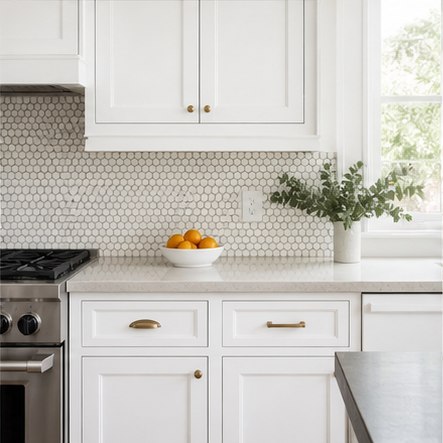
Mosaic introduces texture and adapts well around curves or detailed openings, but it also creates more grout. Choose a grout color and performance level suited to the cooking zone, and have the installer blend sheet edges so the repeating grid does not telegraph across the wall. A sample board reveals the finished scale.
Terracotta geometric tile
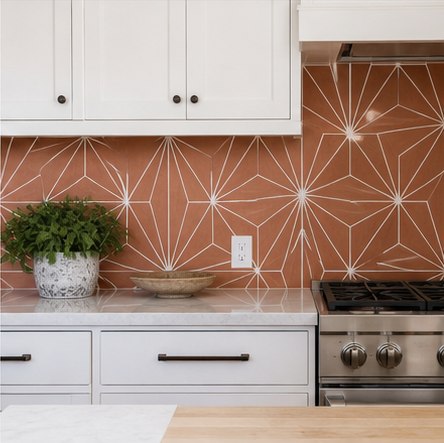
Terracotta color warms a white kitchen and pairs naturally with wood. Geometric layouts need a careful centerline and edge plan so partial shapes look deliberate. Verify sealing and cleaning requirements for the selected tile, especially behind a range, and test grout on spare pieces because porous surfaces can absorb pigment.
Planning checklist
- Compare cabinet, counter, floor, wall paint, and tile samples together.
- Review tile variation across several pieces or inspect the complete slab.
- Draw edges, corners, outlets, windows, and range transitions.
- Approve grout color, joint width, trim, and sealant with a sample board.
- Follow material and appliance requirements for heat, sealing, and cleaning.
Planning dimensions and product guidance are general. Verify the selected appliance and material instructions, site conditions, accessibility needs, and applicable local codes with qualified professionals.
Frequently asked questions
What backsplash looks best with white cabinets?
Choose one that connects to the countertop and room undertones. Warm tile, soft stone, muted color, and textured white can all work when the samples are evaluated together.
Should the backsplash match the countertop?
It can continue the counter material for a seamless look, or contrast in tile. Matching undertones is usually more important than matching the exact color.
Is a slab backsplash easier to clean than tile?
It generally has fewer joints, but care depends on the slab material. Natural stone, engineered surfaces, porcelain, and tile each have specific heat, sealing, and cleaning requirements.