Project planning guide
Before you build
Use the reference image and planning notes as a starting point. Confirm dimensions, loads, materials, local codes, and site conditions before purchasing or cutting.
- Kitchen Design
- 8 reference images
- Print-friendly guide
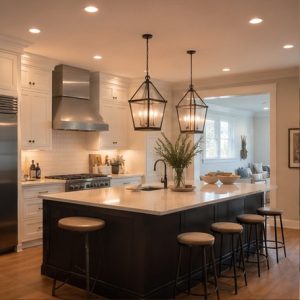
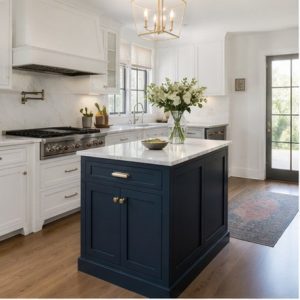
Modern kitchen ideas no longer need to feel cold or bare. Natural wood, tactile stone, warm neutrals, soft edges, and carefully concealed storage can produce a clean room that still feels like home. The goal is visual calm supported by practical organization—not the removal of every personal object.
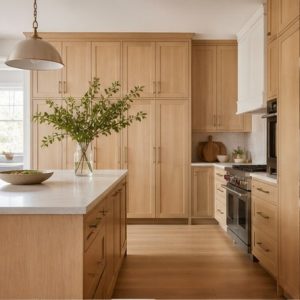
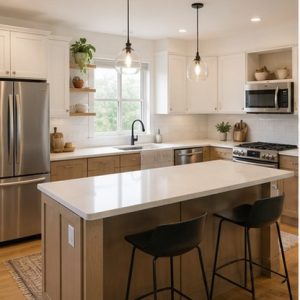
Pair white oak with quiet stone
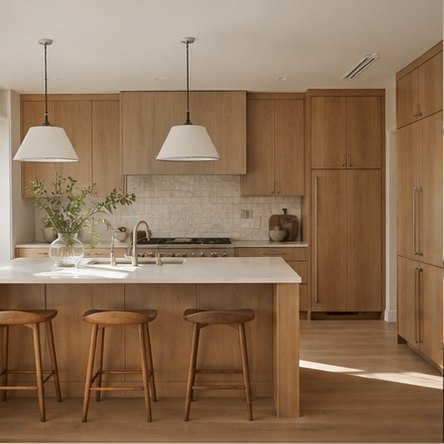
White oak and a softly patterned counter create a low-contrast foundation. Keep the cabinet grain direction consistent, align tall-unit reveals, and choose a stone with movement that does not compete with the wood. Dark hardware is optional; integrated or tone-on-tone pulls can preserve the calm geometry.
Mix walnut and light plaster
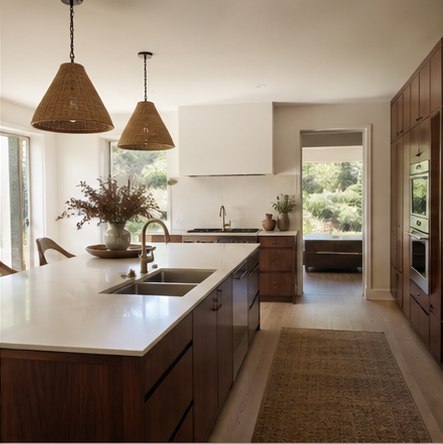
Walnut gives a minimal kitchen depth, while warm plaster or mineral-look walls soften sharp cabinet lines. Use the darker wood on the island or a tall unit to create a focal mass. Samples should be checked under the final lighting because both walnut and plaster can shift dramatically from orange to gray.
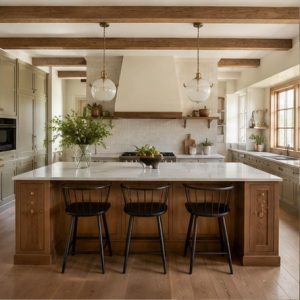
Use a sculpted plaster hood
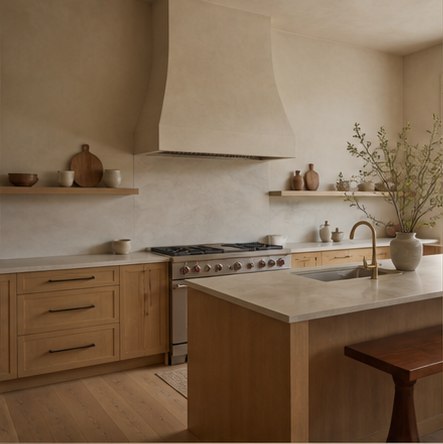
A plaster-finish hood can provide one architectural curve without adding ornament everywhere. Its form must still accommodate the specified ventilation insert, clearances, duct route, service access, and cleanable surfaces. Keep adjacent shelving spare so the hood reads as part of the room rather than a decorative object applied to it.
Choose soft taupe cabinetry
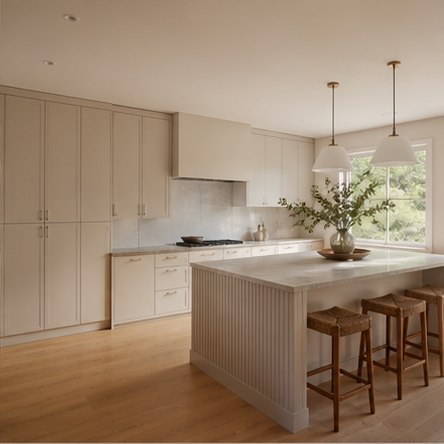
Taupe, mushroom, and putty cabinetry creates warmth while retaining a modern, tonal effect. Match undertones to the floor and counter, then introduce texture through woven seating or wood rather than adding many accent colors. Full-height storage makes the palette feel intentional and keeps appliances and supplies out of the primary view.
Balance flat panels with open shelves
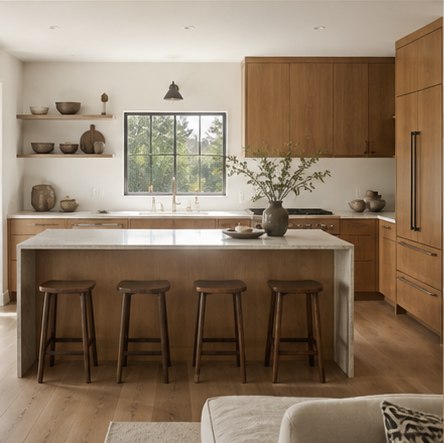
Flat-panel doors establish clean lines, while one or two wood shelves prevent the room from becoming a sealed box. Use open storage only for items that are attractive, frequently used, and easy to clean. Align shelf thickness and edges with nearby cabinet details so the composition feels built rather than improvised.
Integrate large appliances
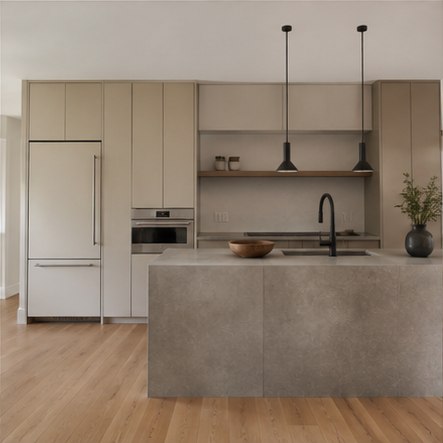
Panel-ready or carefully grouped appliances help a modern kitchen read as architecture, but integration requires accurate specifications and service planning. Preserve ventilation and door swing, distinguish pantry doors from appliance panels through hardware or subtle reveals, and keep an easy route to the refrigerator for family and guests.
Soften the island with a curve
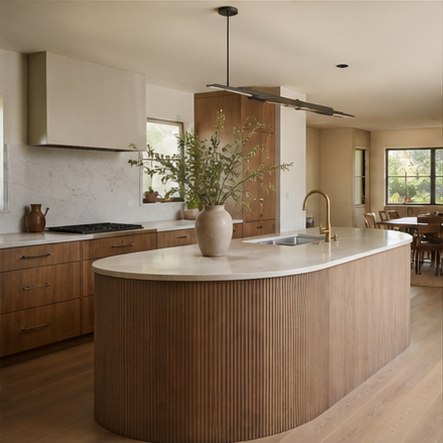
A rounded island can improve flow and echo the softer forms now appearing in kitchen searches. Use the curve where people pass or sit, and keep the working face straight enough for useful drawers and appliances. Custom fronts, stone templates, floor outlets, and supports need early coordination.
Let rich wood be the statement
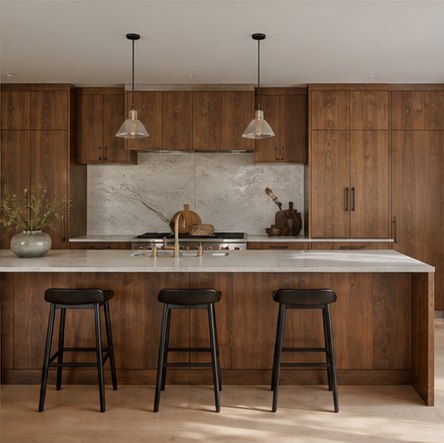
A full wood kitchen feels modern when profiles, reveals, and hardware remain disciplined. Break up a large elevation with a pale counter, window, or open niche, and use good lighting to reveal grain without creating glare. Avoid adding several competing wood species; one dominant tone and one quiet companion are enough.
Planning checklist
- Choose no more than two dominant materials plus a supporting metal.
- Resolve cabinet reveals, fillers, and appliance panels in detailed elevations.
- Include closed storage for the objects that create daily visual clutter.
- Use warm, high-quality task lighting to reveal material texture.
- Add curves or open shelves only where they improve flow or function.
Planning dimensions and product guidance are general. Verify the selected appliance and material instructions, site conditions, accessibility needs, and applicable local codes with qualified professionals.
Frequently asked questions
How do you make a modern kitchen feel warm?
Use natural wood, warm-neutral color, tactile surfaces, layered lighting, and a few personal objects. Maintain clean lines while avoiding a stark all-white palette.
Are flat-panel cabinets practical?
Yes, when hardware, edge details, finish durability, and cleaning needs suit the household. Simple fronts still require precise installation to keep reveals aligned.
Will warm modern kitchens date quickly?
A restrained palette, durable materials, and functional layout have more staying power than a collection of short-lived decorative effects.