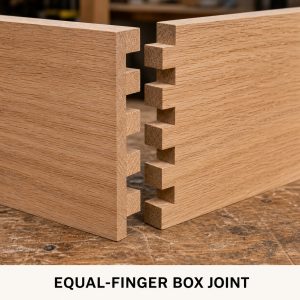
Project planning guide
Before you build
Use the reference image and planning notes as a starting point. Confirm dimensions, loads, materials, local codes, and site conditions before purchasing or cutting.
- Type of Wood Joints
- 10 reference images
- Print-friendly guide
Lap joints remove or overlap material so two members share the same space. Correct depth and flat bearing surfaces determine whether the assembled faces sit flush or intentionally stack.
Quick answer: This guide shows ten separate, labeled examples related to lap joint types. Study the mating faces, shoulders, grooves, fasteners, and direction of assembly before choosing a joint for a real project.
10 examples in this guide
- End Half-Lap Joint
- Cross Half-Lap Joint
- T Half-Lap Joint
- Corner Half-Lap Joint
- Oblique Half-Lap Joint
- Full Lap Joint
- Lapped Splice Joint
- Notched Lap Joint
- Doweled Half-Lap Joint
- Bolted Timber Lap Joint
1. End Half-Lap Joint
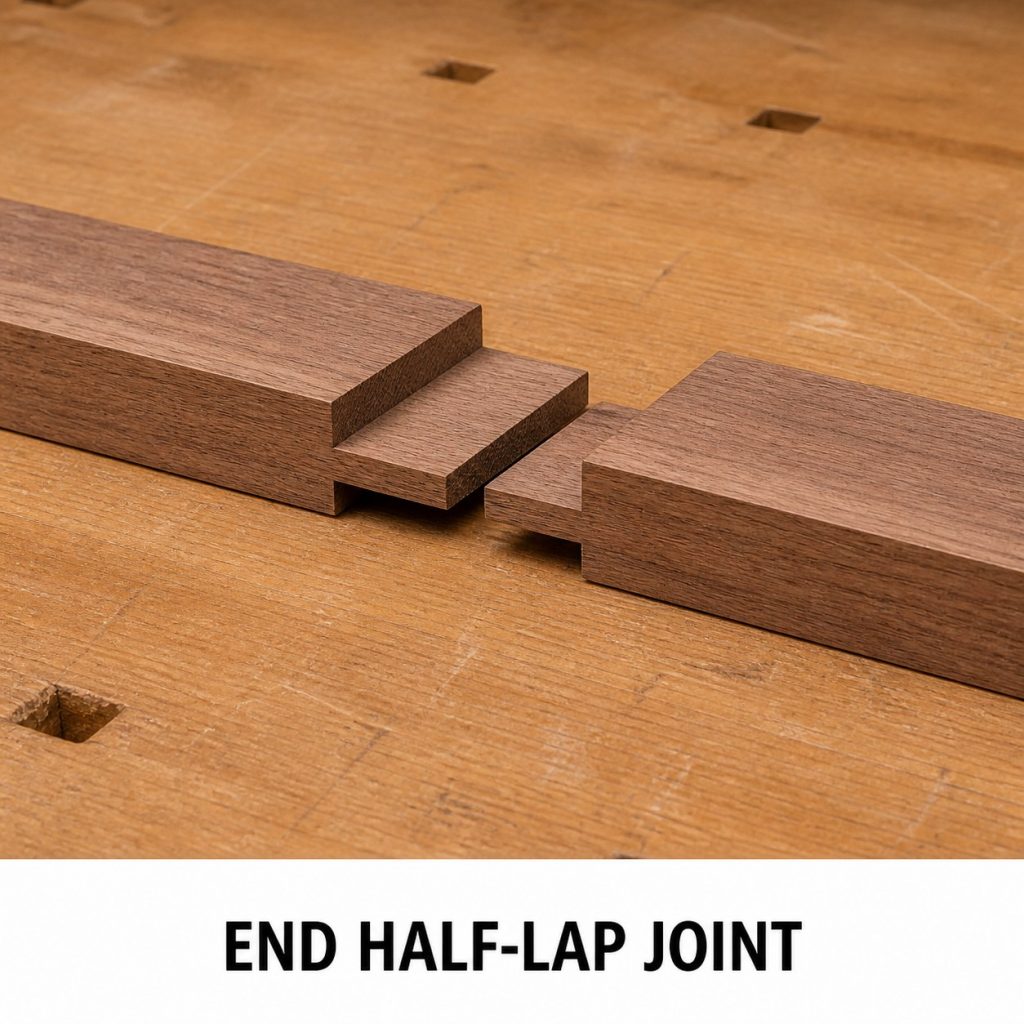
What to notice: Complementary end rebates overlap to restore the original thickness.
Typical uses: splicing rails and frames.
Dry-fit check: Confirm that mating parts are complementary, shoulders close evenly, and the parts assemble in the intended direction without forcing.
2. Cross Half-Lap Joint
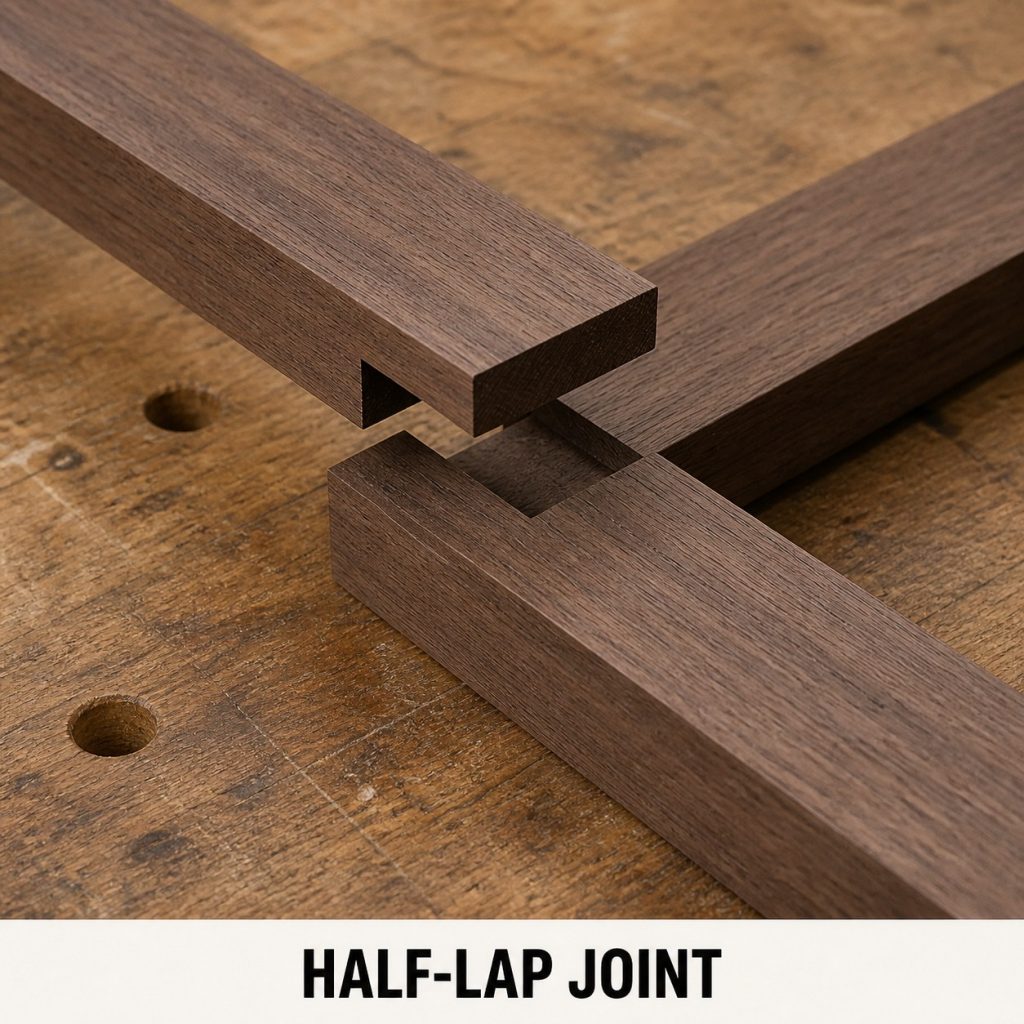
What to notice: Two half-depth notches let crossing faces finish flush.
Typical uses: trellises, grids, frames.
Dry-fit check: Confirm that mating parts are complementary, shoulders close evenly, and the parts assemble in the intended direction without forcing.
3. T Half-Lap Joint
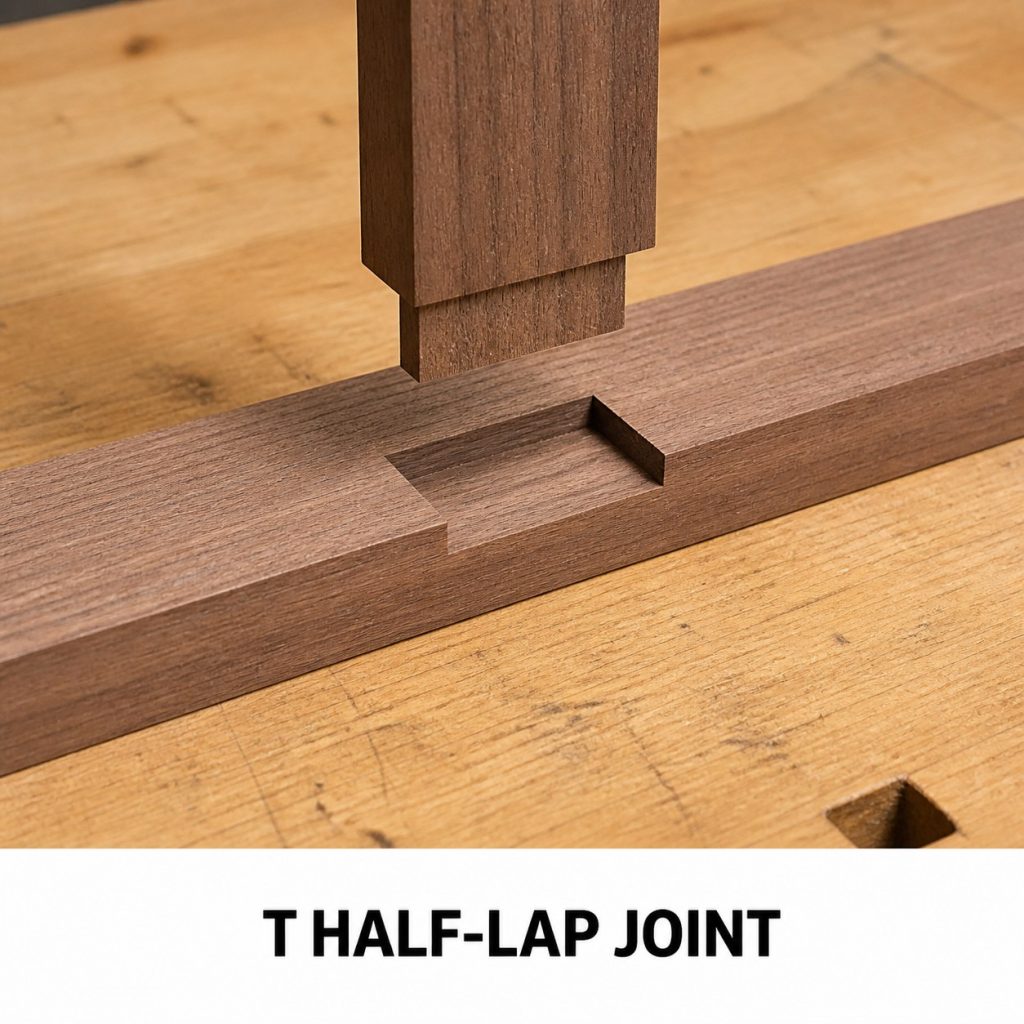
What to notice: A half-depth rail end nests into a matching housing at a T connection.
Typical uses: frames, partitions, table bracing.
Dry-fit check: Confirm that mating parts are complementary, shoulders close evenly, and the parts assemble in the intended direction without forcing.
4. Corner Half-Lap Joint
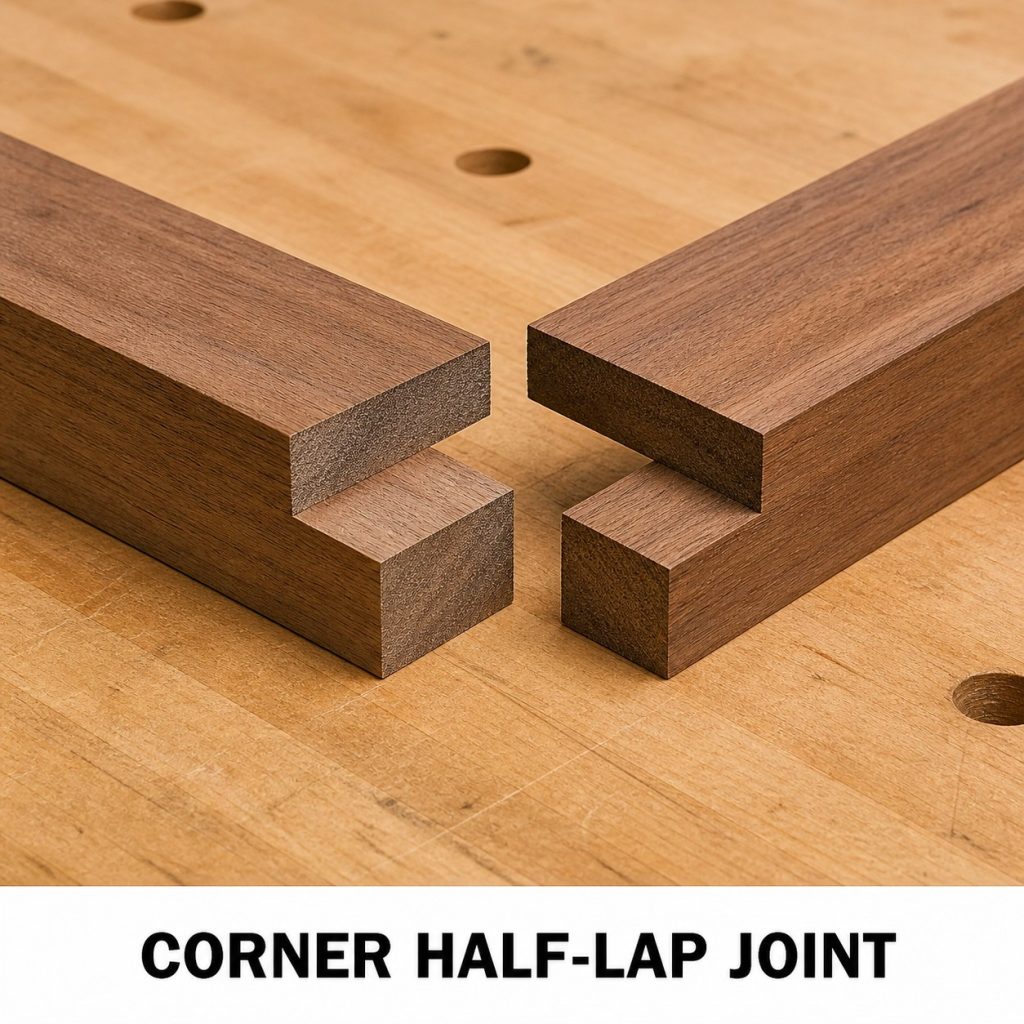
What to notice: Corner half-laps create broad face-grain overlap in rectangular frames.
Typical uses: frames, gates, light doors.
Dry-fit check: Confirm that mating parts are complementary, shoulders close evenly, and the parts assemble in the intended direction without forcing.
5. Oblique Half-Lap Joint
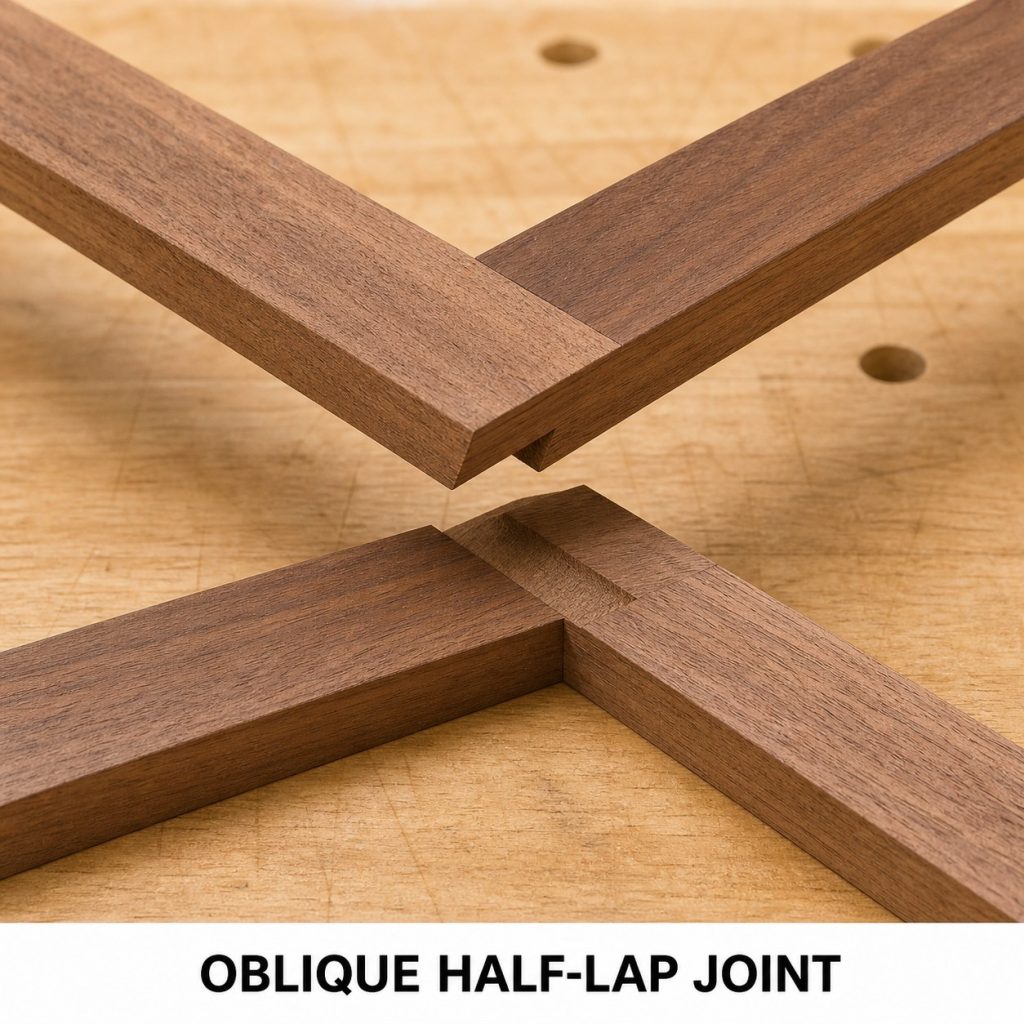
What to notice: An oblique half-lap locks diagonal members together while keeping both faces in the same plane.
Typical uses: diagonal braces, gates, and trellis frames.
Dry-fit check: Confirm that mating parts are complementary, shoulders close evenly, and the parts assemble in the intended direction without forcing.
6. Full Lap Joint
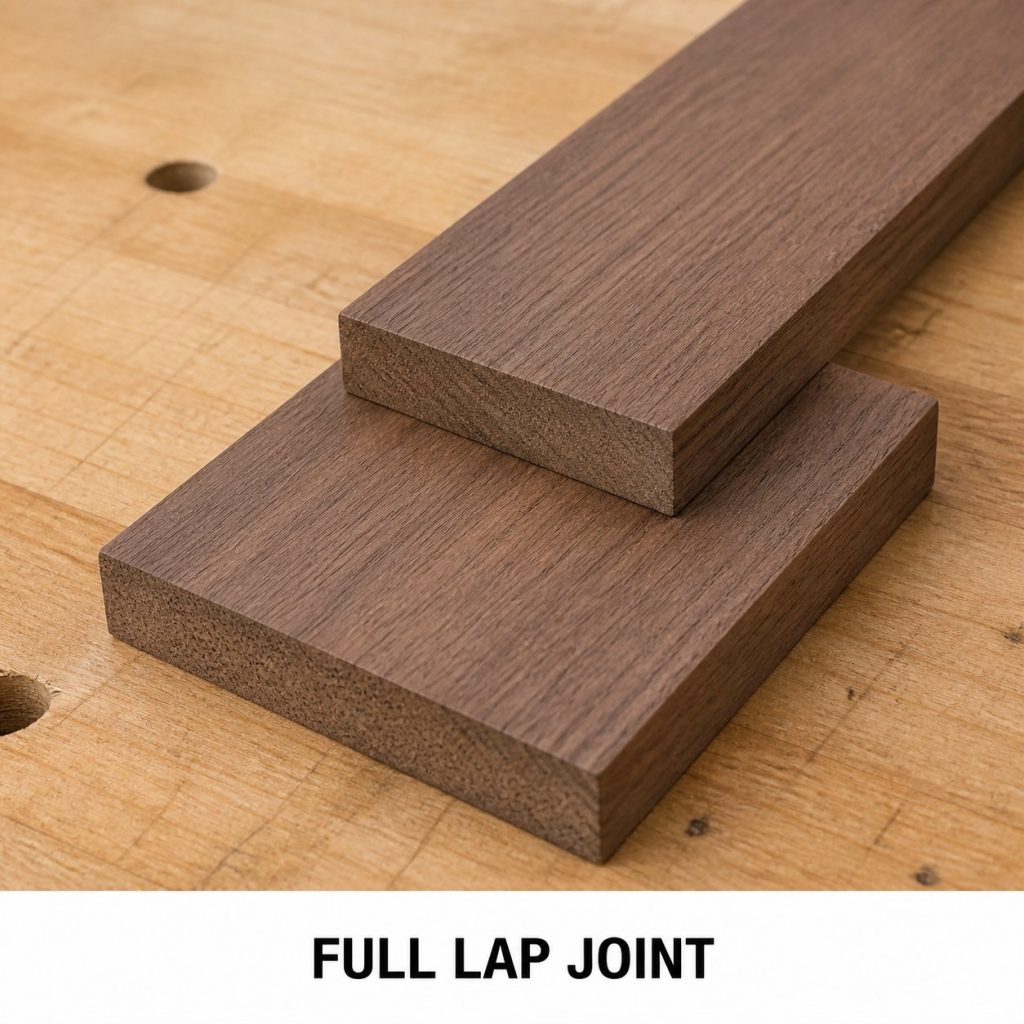
What to notice: A full lap overlaps complete thickness without cutting either member.
Typical uses: rough framing, temporary assemblies.
Dry-fit check: Confirm that mating parts are complementary, shoulders close evenly, and the parts assemble in the intended direction without forcing.
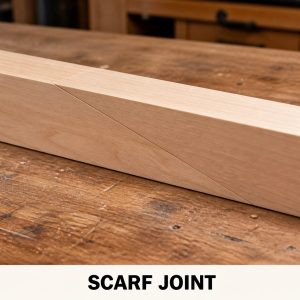
7. Lapped Splice Joint
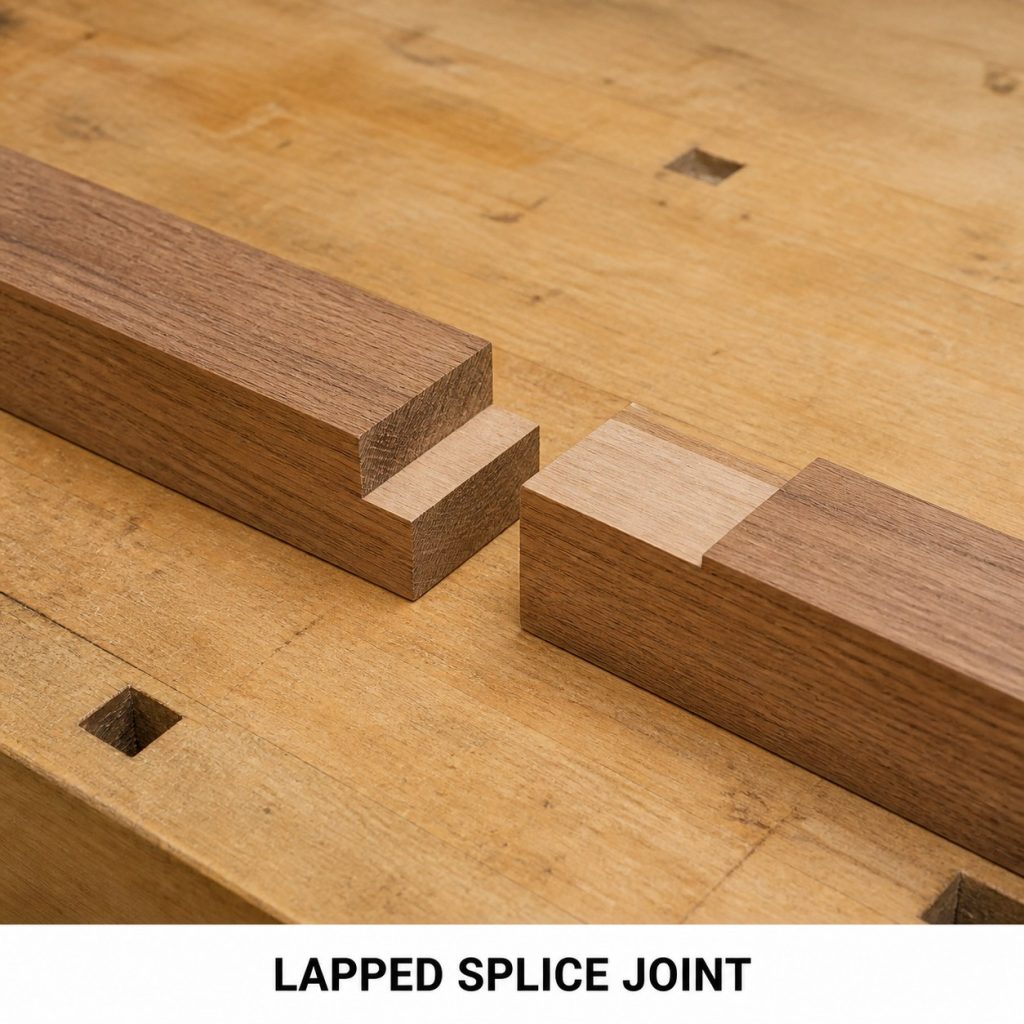
What to notice: A long lap spreads a splice over more face-grain area than a square butt.
Typical uses: rails, repairs, noncritical timber extensions.
Dry-fit check: Confirm that mating parts are complementary, shoulders close evenly, and the parts assemble in the intended direction without forcing.
8. Notched Lap Joint
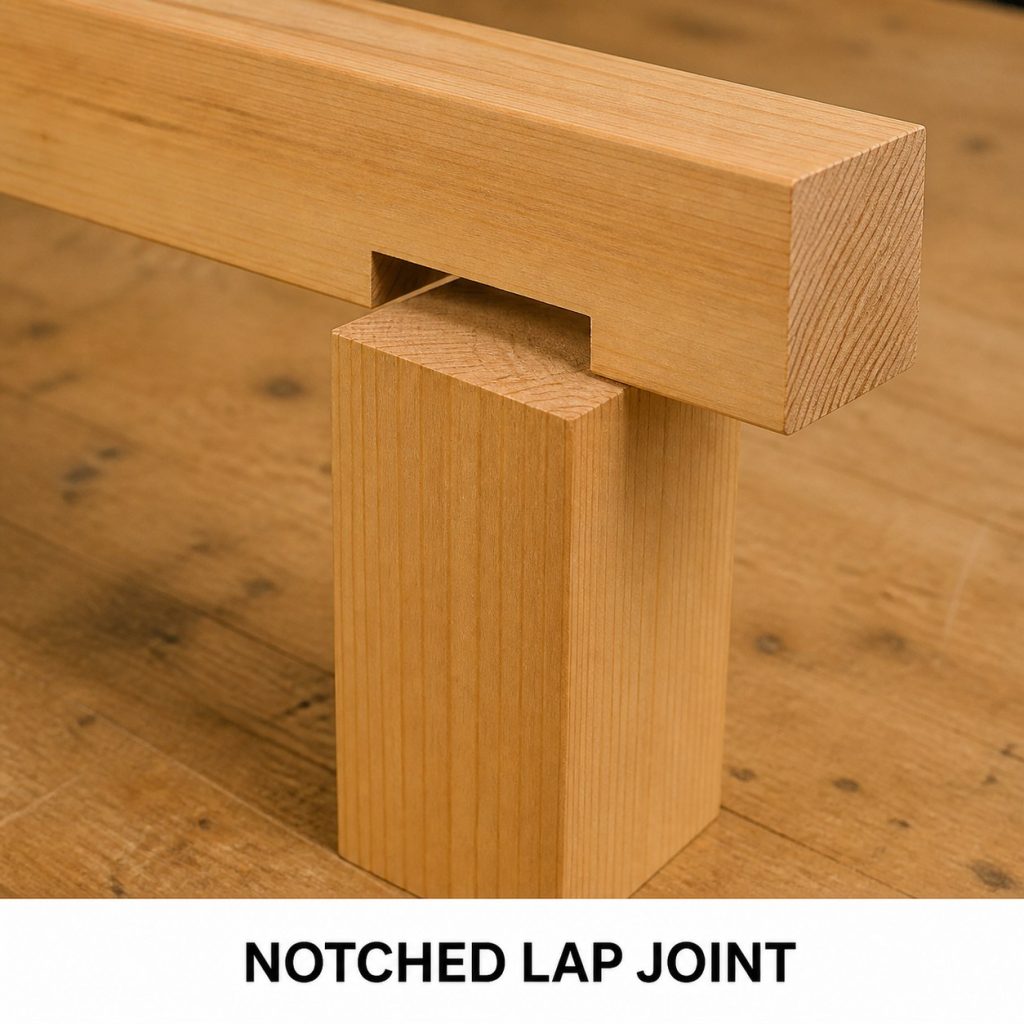
What to notice: A single seat notch locates one member while retaining most of the lower member.
Typical uses: saddles, supports, simple frames.
Dry-fit check: Confirm that mating parts are complementary, shoulders close evenly, and the parts assemble in the intended direction without forcing.
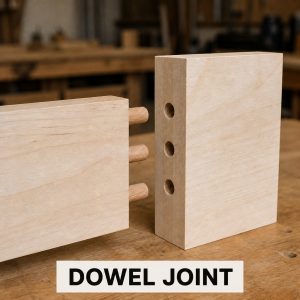
9. Doweled Half-Lap Joint
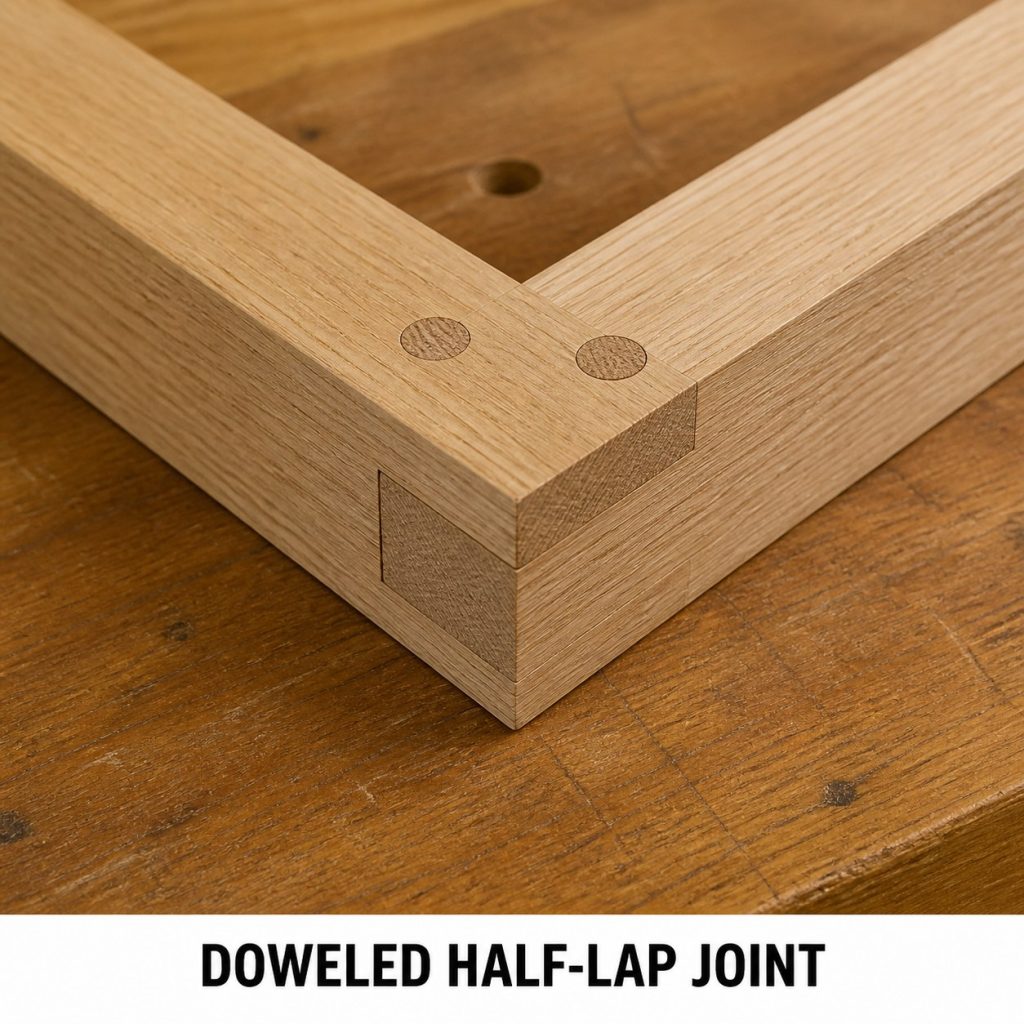
What to notice: Dowels lock the broad lap faces against sliding or lifting.
Typical uses: frames, benches, outdoor furniture.
Dry-fit check: Confirm that mating parts are complementary, shoulders close evenly, and the parts assemble in the intended direction without forcing.
10. Bolted Timber Lap Joint
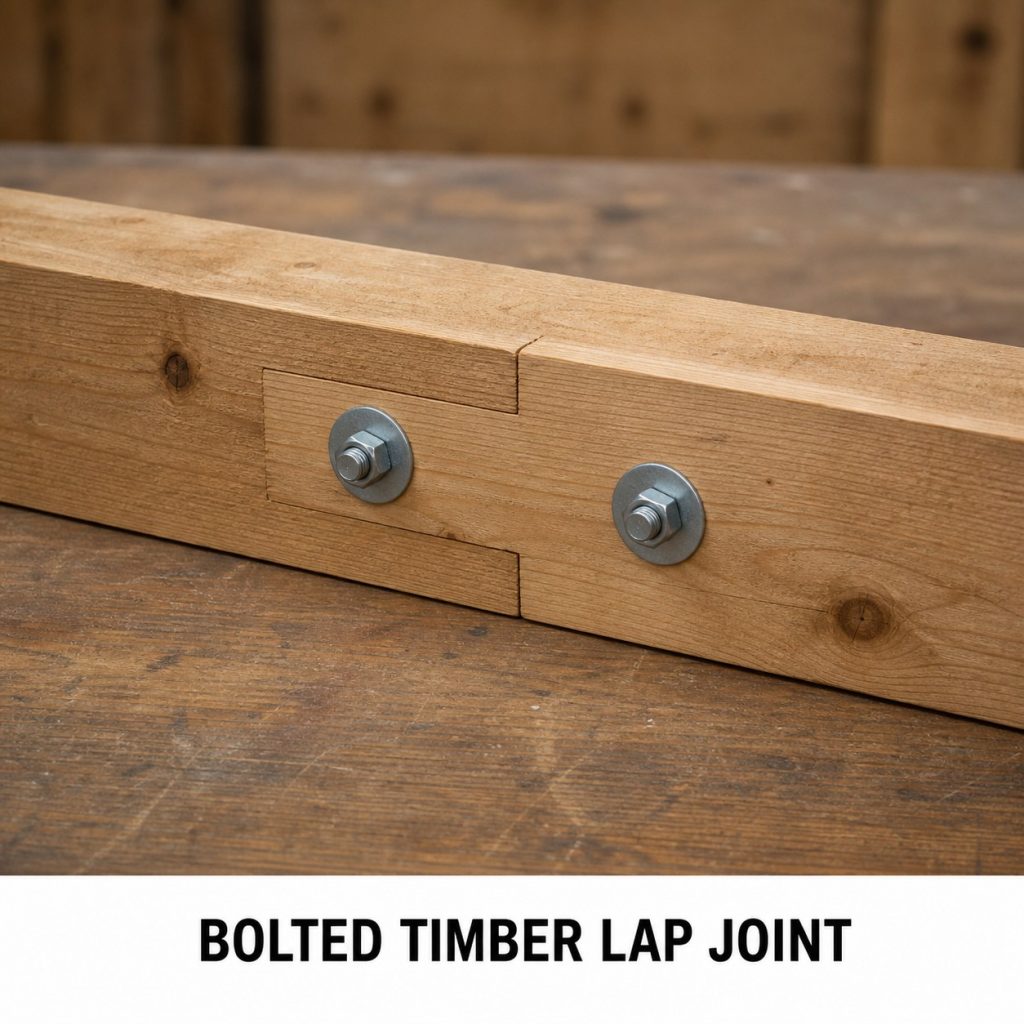
What to notice: Bolts provide mechanical clamping where a structural design specifies them.
Typical uses: timber repairs and heavy utility framing.
Dry-fit check: Confirm that mating parts are complementary, shoulders close evenly, and the parts assemble in the intended direction without forcing.
Before you cut the joint
- Mark a reference face and edge on every workpiece.
- Make a full-size sample from scrap of the same species and thickness.
- Dry-fit before glue and inspect cheeks, shoulders, end grain, and movement clearance.
- Use guards, hold-downs, eye protection, dust control, and the tool manufacturer’s instructions.
- Use engineered drawings for load-bearing timber, roof, stair, deck, or structural connections.
Frequently asked questions
Can I copy dimensions from these photos?
No. The images explain orientation and connection type only. Size the joint from the real stock, load, species, and verified plan.
Why make a test joint?
A scrap test reveals cutter width, setup error, grain behavior, and fit before the final component is damaged.
Should a dry joint need heavy force?
No. It should close with controlled hand pressure or light tapping appropriate to the design. Excessive force can split cheeks, pins, tails, or shoulders.
More wood-joint guides
Browse the Type of Wood Joints hub, or continue with 10 Tongue-and-Groove Profiles and Project Uses, 10 Box Joint Variations and Project Uses, 10 Ways to Reinforce a Butt Joint.