Project planning guide
Before you build
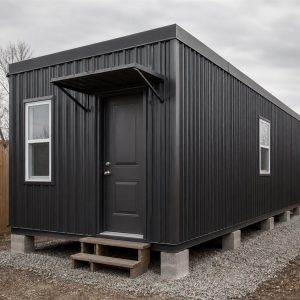
Use the reference image and planning notes as a starting point. Confirm dimensions, loads, materials, local codes, and site conditions before purchasing or cutting.
- Tiny & Budget Homes
- 1 reference image
- Print-friendly guide
Container homes promise a house for the price of a used truck. The truth in 2026 is more interesting: real savings exist, but they hide behind steel-cutting costs, insulation physics, and a permit process that still confuses half the counties in America.

What Containers Actually Cost in 2026
The raw box is genuinely cheap: a used 40-foot high-cube container — the only kind worth building with, thanks to its extra foot of ceiling — runs about $3,000 to $6,500 delivered in most markets. A one-trip unit costs roughly double and arrives without a decade of dents and mystery cargo history. Then the real project begins:
| Configuration | Approx. size | Estimated finished cost (2026) |
|---|---|---|
| Single 40 ft high-cube | ~300 sq ft studio | $40,000 – $90,000 |
| Two containers, side by side | ~600 sq ft, 1–2 bed | $90,000 – $180,000 |
| Three to four containers | 900–1,200 sq ft family home | $150,000 – $300,000 |
| Prefab turnkey unit | Factory-finished, craned in | $50,000 – $200,000+ |
Per square foot, finished container homes land around $130 to $300 — overlapping ordinary construction. The savings concentrate in small, simple builds: one or two boxes, minimal cutting, finished modestly. The multi-container showpieces on design blogs cost custom-home money, because at that scale the container stops being a shortcut and becomes an aesthetic choice.
Where Container Budgets Blow Up
Every cut costs twice. A container’s strength lives in its corrugated walls. Each window, door, and room-joining opening means plasma cutting plus welded steel reinforcement to put the strength back. Plans that respect the box — using the existing end doors, limiting openings, spanning glass across the gap between two offset containers — save five figures over designs that treat steel like drywall.
Insulation is non-negotiable physics. Steel conducts heat brutally and sweats condensation wherever warm interior air touches cold metal. Closed-cell spray foam is the default answer and costs real money; skipping or thinning it is how containers become moldy ovens. Exterior insulation preserves interior width — you started with only 7 feet 8 inches — but changes the look entirely.
The crane day. Site access, a crane, and a crew for setting boxes runs $1,500 to $5,000 — trivial for one container, meaningful when a stacked design needs precise multi-box placement.

Plans That Work Inside Eight Feet
Interior width is the discipline of container design: after insulation and finish, barely seven feet remains. Layouts that fight it feel like hallways; layouts that use it feel like yacht cabins.
The single bar. Kitchen along one wall, bath at one end, living at the glazed end. The classic studio — and the configuration where containers genuinely beat stick-built on price.
The offset pair. Two containers set apart, with a conventional roof spanning the gap. The steel boxes hold the private rooms; the in-between space becomes a full-width living room at framed-construction cost. The best cost-per-drama trick in container building.
The stack. Bedrooms up, living down, stairs outside or in a connecting tower. Structurally natural for containers — they are built to carry nine loaded boxes overhead — but every stack multiplies cutting, welding, and engineering fees.

Permits, Lenders, and the Legitimacy Question
Container homes are permittable in most of the country in 2026, but the burden of proof sits on you: expect to provide engineer-stamped drawings, insulation details, and corrosion documentation that a conventional plan set never needs. Rural counties are generally easier than design-review suburbs. Financing follows the same pattern — construction lenders will fund engineered, code-approved container builds, while informal conversions get treated like personal projects and funded with personal loans. Budget time for both conversations before buying boxes.

Container Home FAQ
Are container homes cheaper than regular houses?
Small ones, honestly built: yes, often 20 to 40 percent cheaper than equivalent stick-built space. Large multi-container homes: usually not — they price like custom construction.
How long do container homes last?
Corten steel protected by cladding or maintained coatings lasts 50 years or more. Neglected bare steel in wet climates can rust through in 15. The variable is maintenance, not the box.
Are they hard to cool and heat?
Badly insulated ones are the worst homes in America. Properly foamed ones are small, tight envelopes that a single mini-split handles cheaply.
What about buying a prefab unit instead?
Factory-finished containers delivered ready to connect have become the fastest-growing slice of the market — compare their delivered price against our tiny house cost numbers, because that is the segment they truly compete in.
Container construction lives or dies on engineering and local approval — bring your county and a structural engineer into the conversation before purchasing containers. All figures are 2026 planning estimates, not quotes.