Project planning guide
Before you build
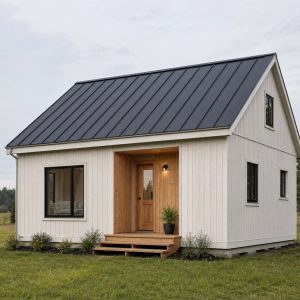
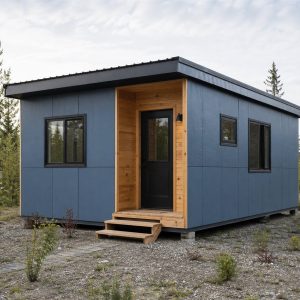
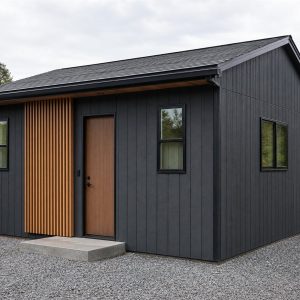
Use the reference image and planning notes as a starting point. Confirm dimensions, loads, materials, local codes, and site conditions before purchasing or cutting.
- Tiny House Plans
- 1 reference image
- Print-friendly guide
Tiny houses were supposed to be the cheap way to own a home. Sometimes they are. Here’s what they really cost in 2026 — DIY and builder-finished, on wheels and on foundations — and the zoning fine print that decides whether the plan works at all.

The Market Has Matured — and So Have the Prices
A decade ago the tiny house scene was plucky owner-builders and salvaged windows. In 2026 it is a real industry: certified builders, financing partners, and factory models with warranties. That professionalization solved the quality problems and ended the fantasy pricing. The honest 2026 numbers:
| Route | What you get | Typical cost (2026) |
|---|---|---|
| DIY on a trailer | 200–400 sq ft, your labor, 6–18 months | $30,000 – $70,000 |
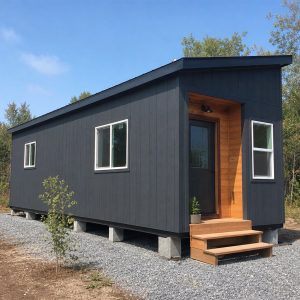
| Builder-finished on wheels | Certified THOW, warrantied, towable | $70,000 – $150,000 |
| Park model (factory) | ~400 sq ft, built to park-model code | $60,000 – $130,000 |
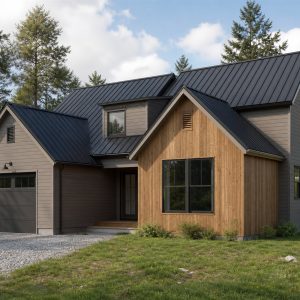
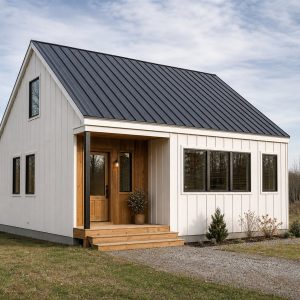
| Small house on foundation | 400–800 sq ft permanent home | $90,000 – $200,000 |
Note what those ranges mean per square foot: tiny does not mean cheap per foot. A $110,000 build at 300 square feet is roughly $370 per square foot — more than most full-size custom homes. The savings are in the total, not the rate, because kitchens and bathrooms — the expensive rooms — exist at full cost in even the smallest plan.
Wheels or Foundation? The Decision That Drives Everything
On wheels (THOW), the build is legally a vehicle in most states. That sidesteps building codes but creates two problems: financing arrives as RV-style loans with shorter terms and higher rates than mortgages, and full-time parking is only legal where local rules explicitly allow it. The 2026 picture is improving — a growing list of cities now permits THOWs as backyard dwellings — but “where will it sit” remains the question to answer before any money moves.
On a foundation, the same square footage becomes real property: mortgage-eligible, appreciating, and code-inspected. It also becomes subject to minimum-size rules in some jurisdictions, though those minimums keep falling as states push for housing options. If the goal is a permanent backyard unit rather than mobility, you are really shopping for an accessory dwelling — our ADU cost guide covers that path in detail.

Design Lessons From a Decade of Tiny Living
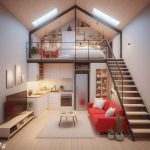
Stairs, not ladders. A storage staircase costs floor space and is worth every inch. Ladders age out fast — ask anyone who has descended one half-asleep.
Headroom over floor area. A 24-foot model with a raised roof over the loft lives larger than a 28-foot model without one. Standing up to dress is not a luxury.
One oversized window wall. Small rooms feel small at the edges. A single glazed gable or sliding door does more for perceived space than any mirror trick.
A real cooking setup. The people who last in tiny homes are the ones whose kitchens work: full-depth counter, two burners minimum, actual refrigeration. The ones who leave usually cite the kitchen.

The Line Items First-Timers Miss
The trailer itself runs $6,000 to $12,000 new — buying used and rusty to save money is the classic false economy under a house. Utility hookups or their off-grid substitutes (solar, batteries, water storage, composting toilet) can add $10,000 to $30,000. Insurance needs a specialty policy for THOWs. Delivery of a finished build commonly costs $2 to $4 per mile. And if the plan involves renting land in a tiny home community, lot rent of $400 to $900 per month belongs in the comparison against a mortgage payment.

Tiny House FAQ
How much does a tiny house cost in 2026?
Most people spend $30,000 to $70,000 building their own on a trailer, or $70,000 to $150,000 for a professionally built and certified model. Foundation-built small homes run $90,000 to $200,000.
Is it legal to live in a tiny house full-time?
Increasingly yes, but it is entirely local. Foundation builds that meet code are legal almost everywhere; tiny houses on wheels depend on city-by-city rules about where a vehicle-dwelling may park and be occupied.
Do tiny houses hold their value?
Wheeled units depreciate like RVs, though quality builds hold value far better than mass-market campers. Foundation-built small homes appreciate with their land like any house.
Can I finance one?
Builder-sold THOWs are financeable through RV and personal loans, typically 7 to 15 year terms. Foundation builds qualify for conventional construction loans and mortgages.
Rules for tiny dwellings change fast and vary block by block — confirm parking, zoning, and code requirements with your local jurisdiction before buying a trailer or a plan set. Figures above are planning estimates.