Project planning guide
Before you build
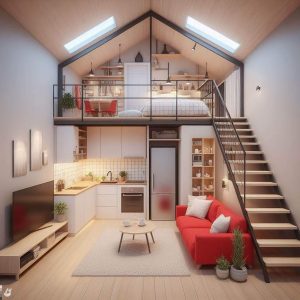
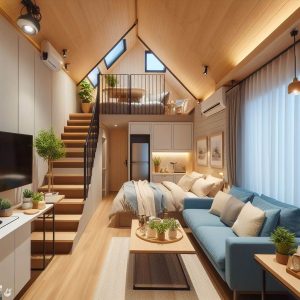
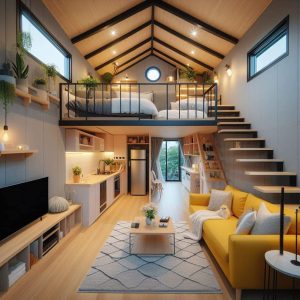
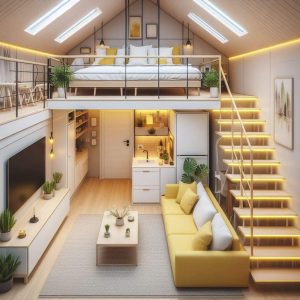
Use the reference image and planning notes as a starting point. Confirm dimensions, loads, materials, local codes, and site conditions before purchasing or cutting.
- Tiny House Plans
- 1 reference image
- Print-friendly guide
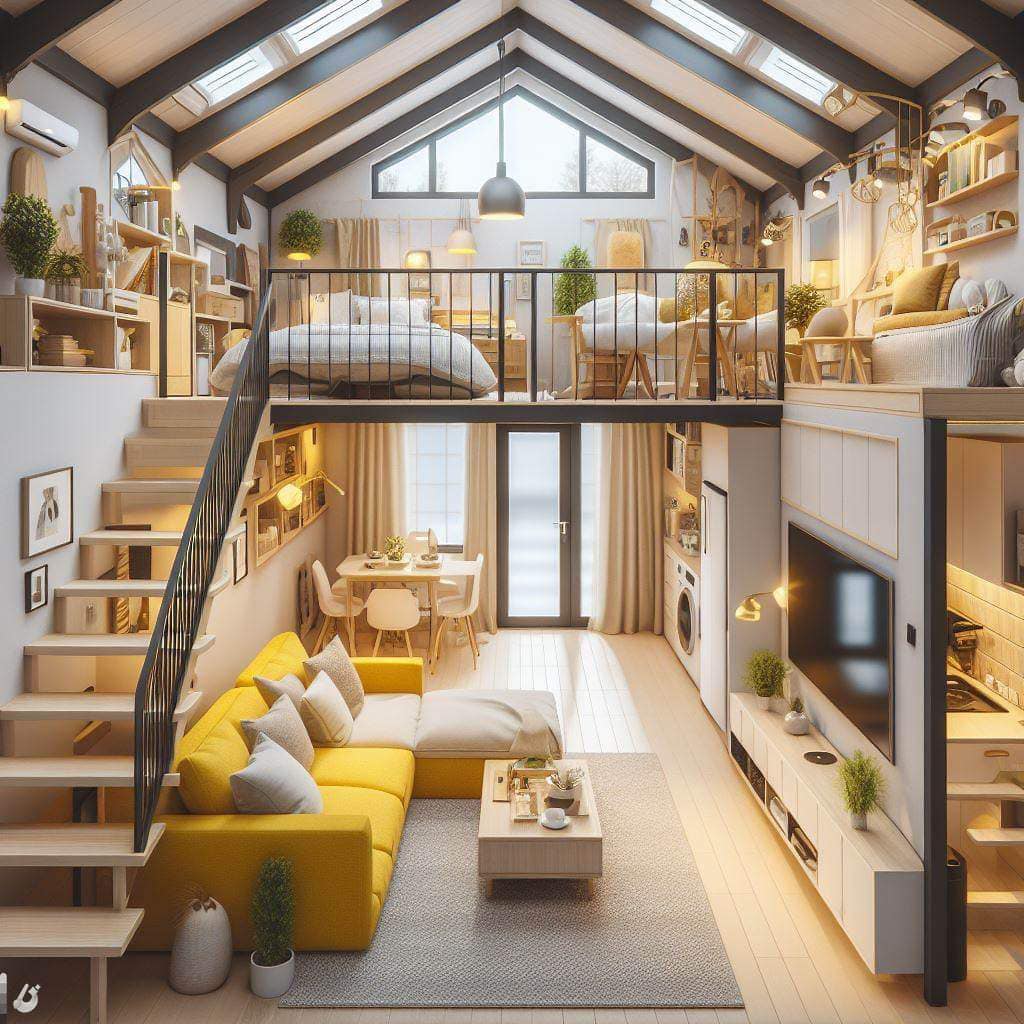
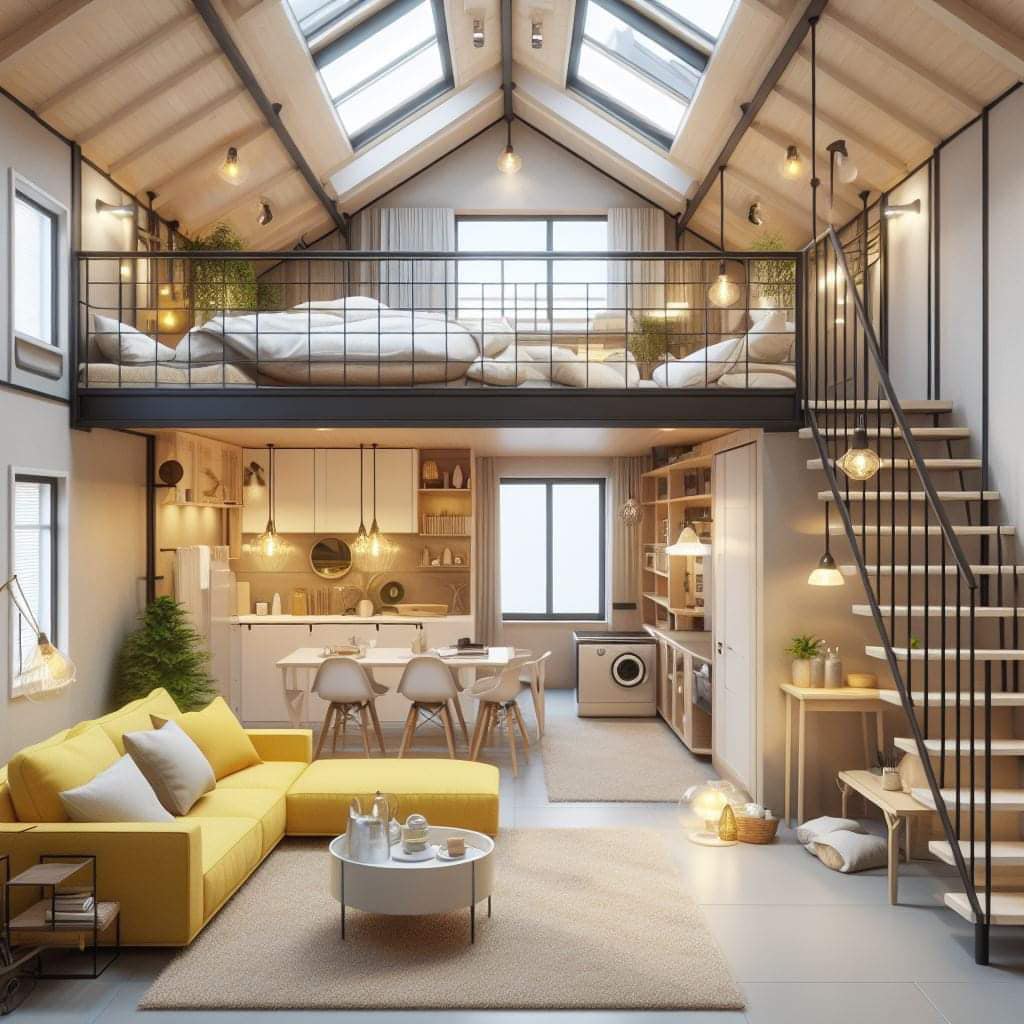
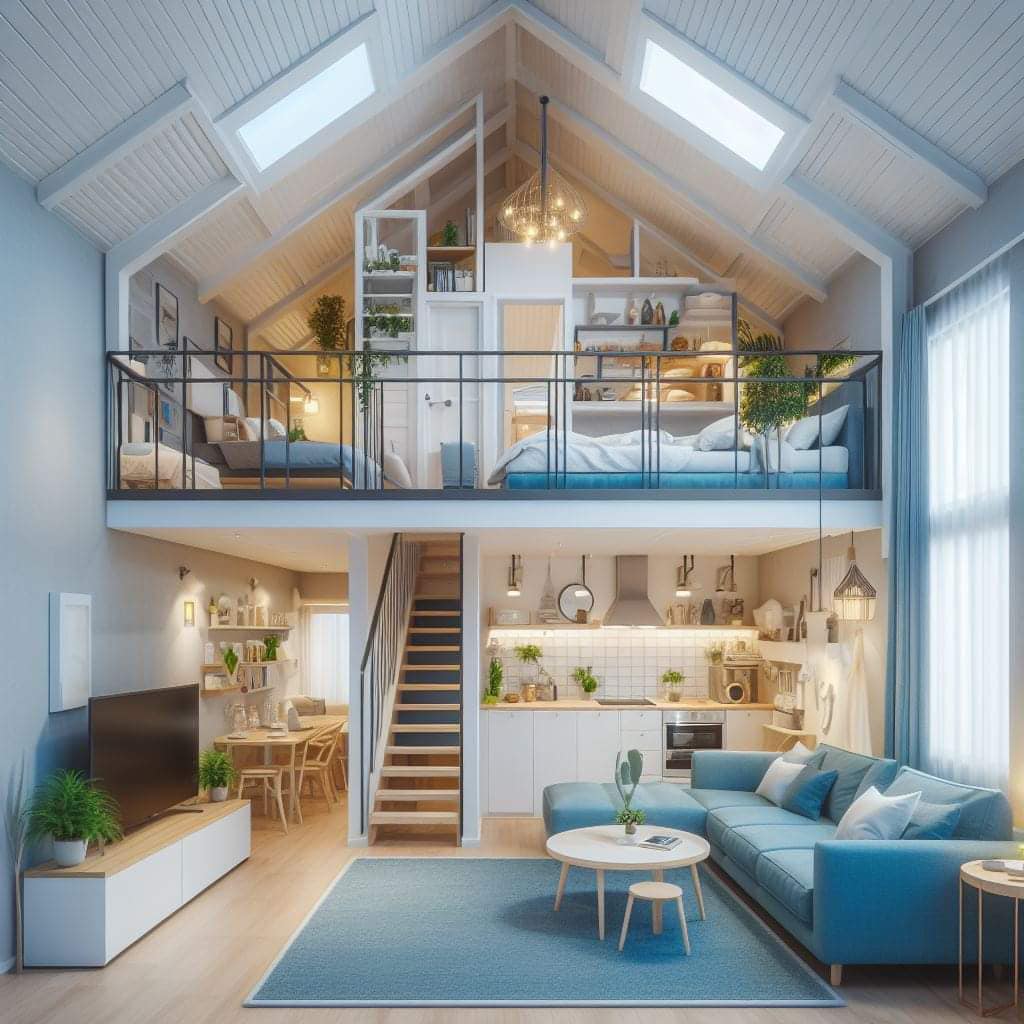
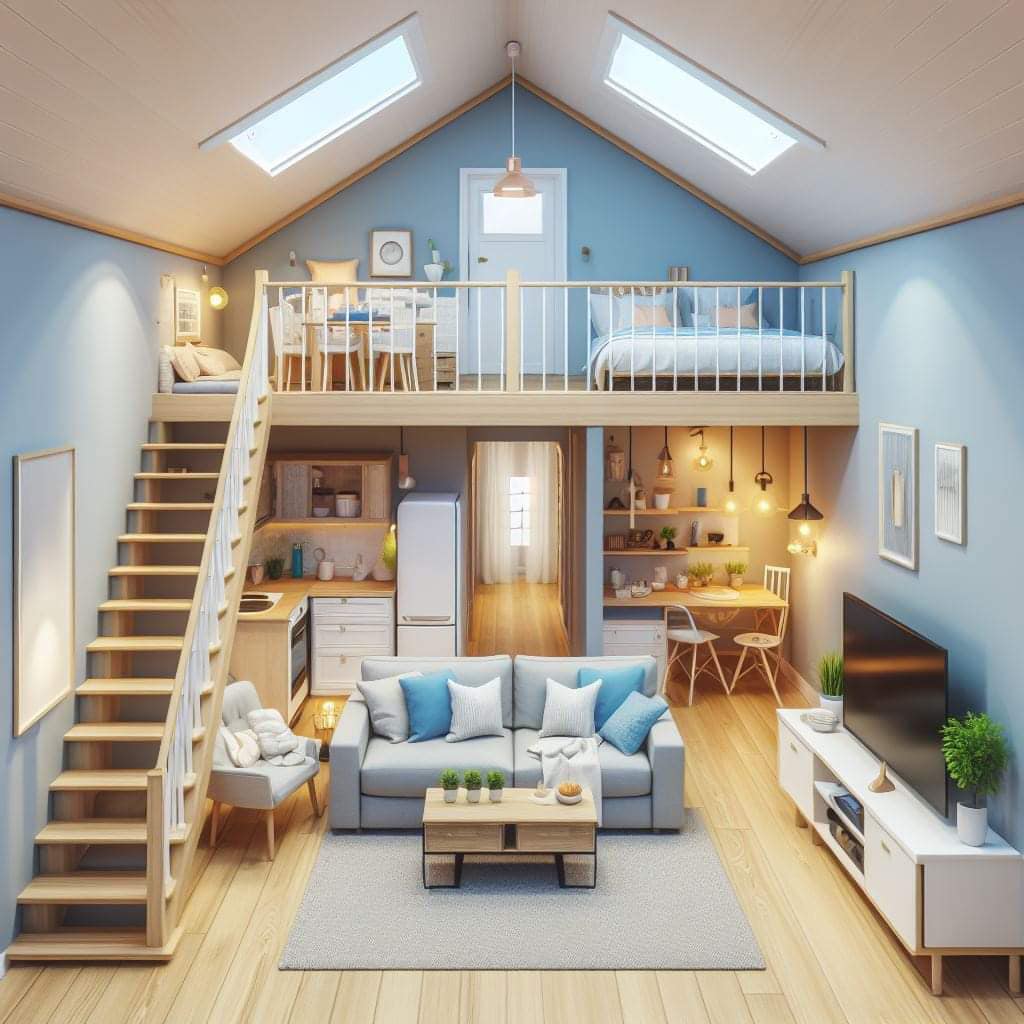
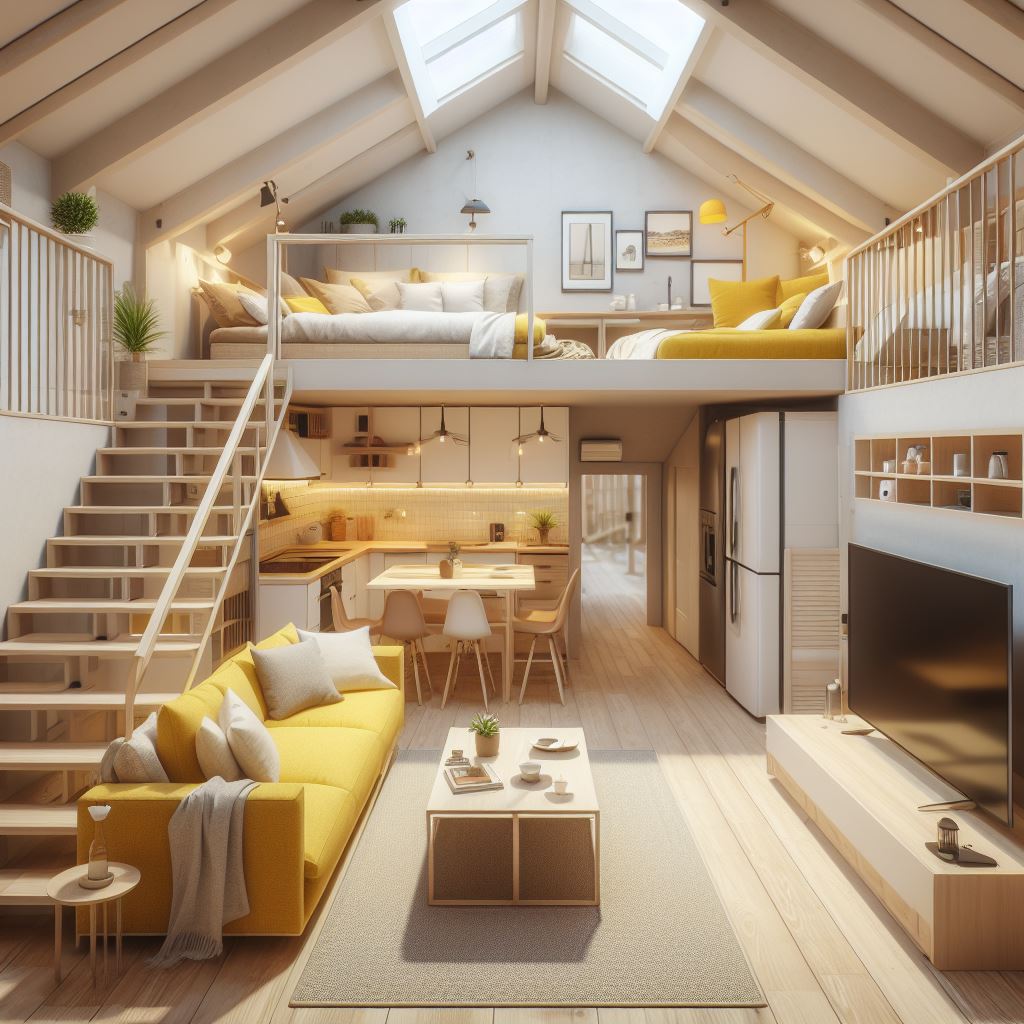
Warm accents can keep a pale tiny-house interior from feeling clinical, but warmth comes from coordinated undertones, texture, light, and material placement rather than adding many unrelated orange or red objects.
Identify the existing undertones
Wood, flooring, counters, white paint, and daylight may lean yellow, red, green, gray, or blue. Compare samples side by side in the room; a warm accent that looks balanced in isolation can make another fixed material appear dirty or pink. Use one fixed finish as the anchor for the palette.
Distribute warmth instead of concentrating it
Repeat a related tone at the entry, main seating area, and loft so the interior reads as one space. Vary scale: a broad wood surface can be balanced by smaller textile and hardware accents. Avoid placing every dark or warm element at one end of a narrow room.
Let lighting support the palette
Lamp color appearance, daylight, fixture direction, and surface sheen change how warm finishes read. Compare evening scenes using the proposed lamps and dimming. Excessively warm light can flatten material differences, while cool high-glare light can make wood and earth tones feel disconnected.
Select healthy, maintainable finishes
High-touch accents need durable cleaning methods, and natural-looking materials still require appropriate coatings or care. Review emissions and ventilation instructions for paints, adhesives, stains, and composite products. Keep fabric and decorative panels clear of heaters, cooking surfaces, and moisture.
Compare the main approaches
| Approach | Useful when | Verify before choosing |
|---|---|---|
| Natural wood accents | Long-term warmth and texture | Undertone, movement, finish, UV change, and maintenance |
| Terracotta or ochre textiles | Low-risk seasonal color | Washability, fading, and visual concentration |
| Warm painted built-in | Defines one functional zone | Large-sample testing, sheen, durability, and future repainting |
Test the idea at full scale
Create a board containing the real flooring, wall, wood, metal, textile, and paint samples. Move it between the brightest and darkest zones and view it under daytime and evening light. Remove any accent that works only in one condition.
Planning checklist
- Choose a fixed material as the undertone anchor.
- Repeat related warmth in at least two separated zones.
- Test samples under actual lamps and daylight.
- Keep saturated color on adaptable layers where possible.
- Review cleaning, emissions, heat, and moisture conditions.
Frequently asked questions
Can warm and cool tones be mixed?
Yes, when one family leads and the other provides deliberate contrast. Equal amounts of unrelated undertones can feel accidental in a small connected room.
Does dark wood make a tiny house feel smaller?
Not automatically. Limited dark accents can add depth and definition when daylight, contrast, and distribution are balanced.
Should all metal finishes match?
They need not be identical, but repeat each selected finish intentionally and avoid a collection of one-off hardware colors.
This article provides planning context and conceptual imagery, not measured drawings, engineering, code approval, or a project-specific construction plan. Verify dimensions, structure, products, utilities, permits, and local requirements with qualified professionals before building.