Project planning guide
Before you build
Use the reference image and planning notes as a starting point. Confirm dimensions, loads, materials, local codes, and site conditions before purchasing or cutting.
- Kitchen Design
- 8 reference images
- Print-friendly guide
Outdoor does not automatically mean well ventilated. Roofs, walls, screens, courtyards, wind, appliance output, fuel, and nearby openings determine whether heat and combustion products disperse or collect. These examples show planning directions, not a substitute for appliance instructions or professional hood design.
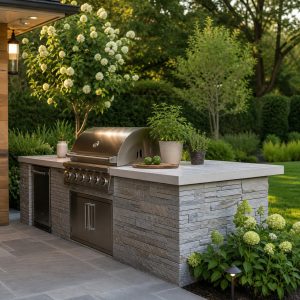
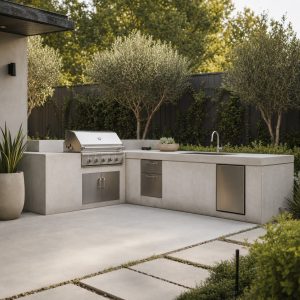
Completely Open-Air Grill Station
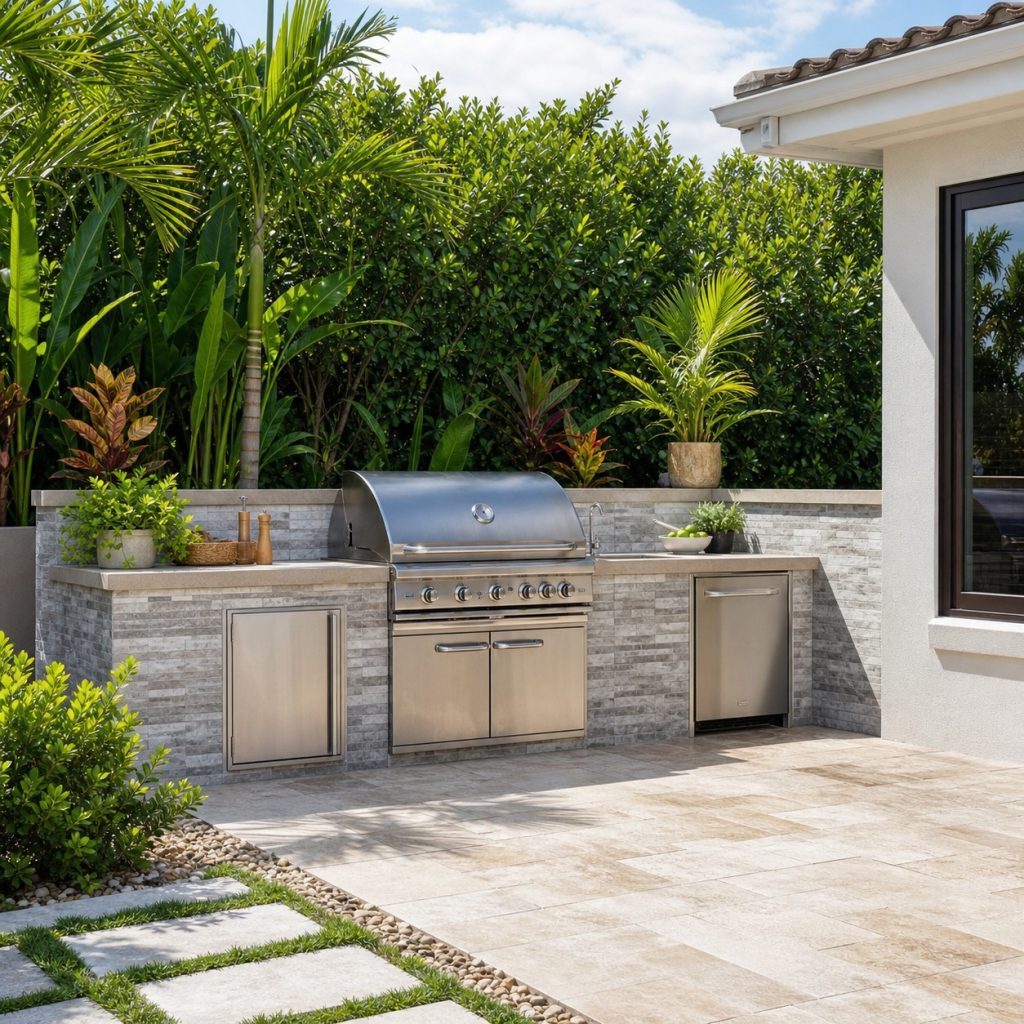
Open sky removes an overhead collection surface and is the simplest ventilation direction. Wind can still blow smoke toward the house, guests, or neighbors. Observe prevailing conditions and preserve manufacturer clearances from walls, fences, and planting.
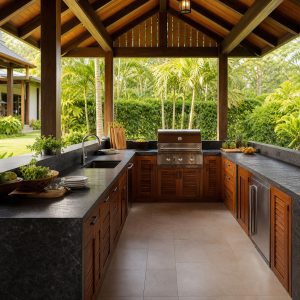
High Open-Sided Pavilion
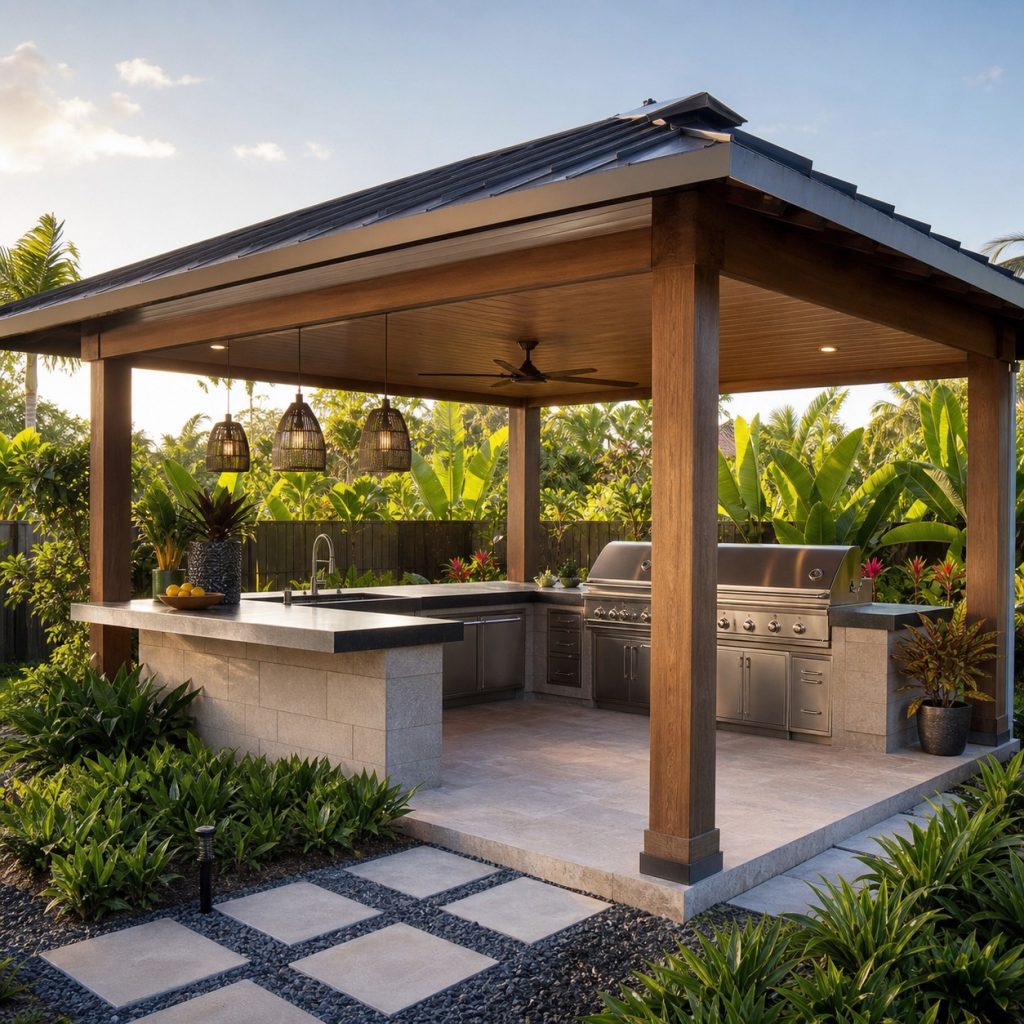
A high roof and fully open sides improve dilution while providing shade. Put the grill at the outer edge and avoid adding later screens that change the airflow. The pavilion structure and combustible materials must still meet appliance requirements.
Professionally Proportioned Hood
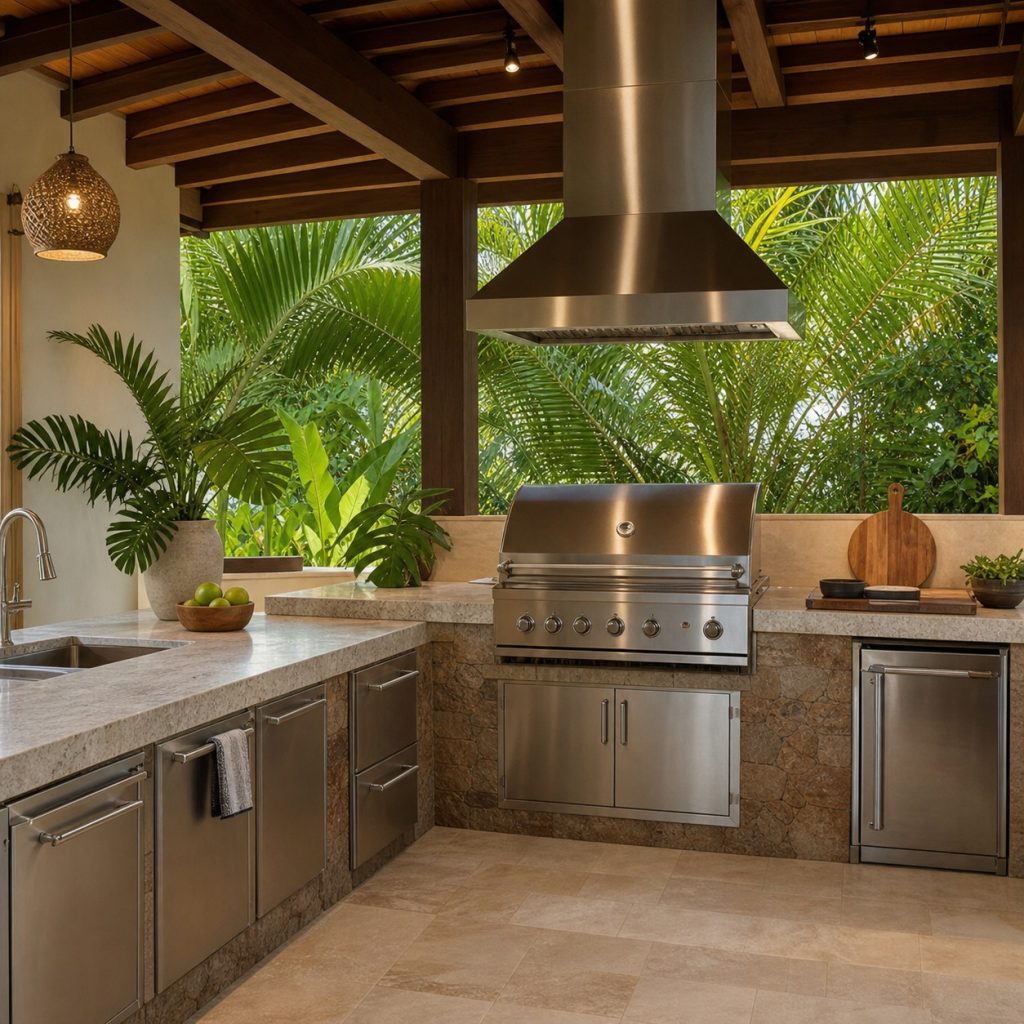
A hood can capture heat and grease when its width, depth, height, airflow, duct, and make-up air match the appliance and enclosure. Outdoor wind makes capture harder than indoor conditions. Use a qualified designer and listed equipment rather than selecting by appearance.
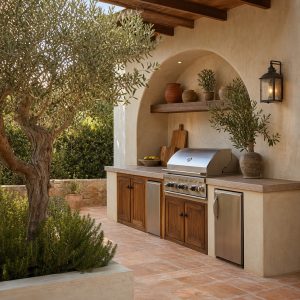
Tall Vaulted Roof and Open Gable
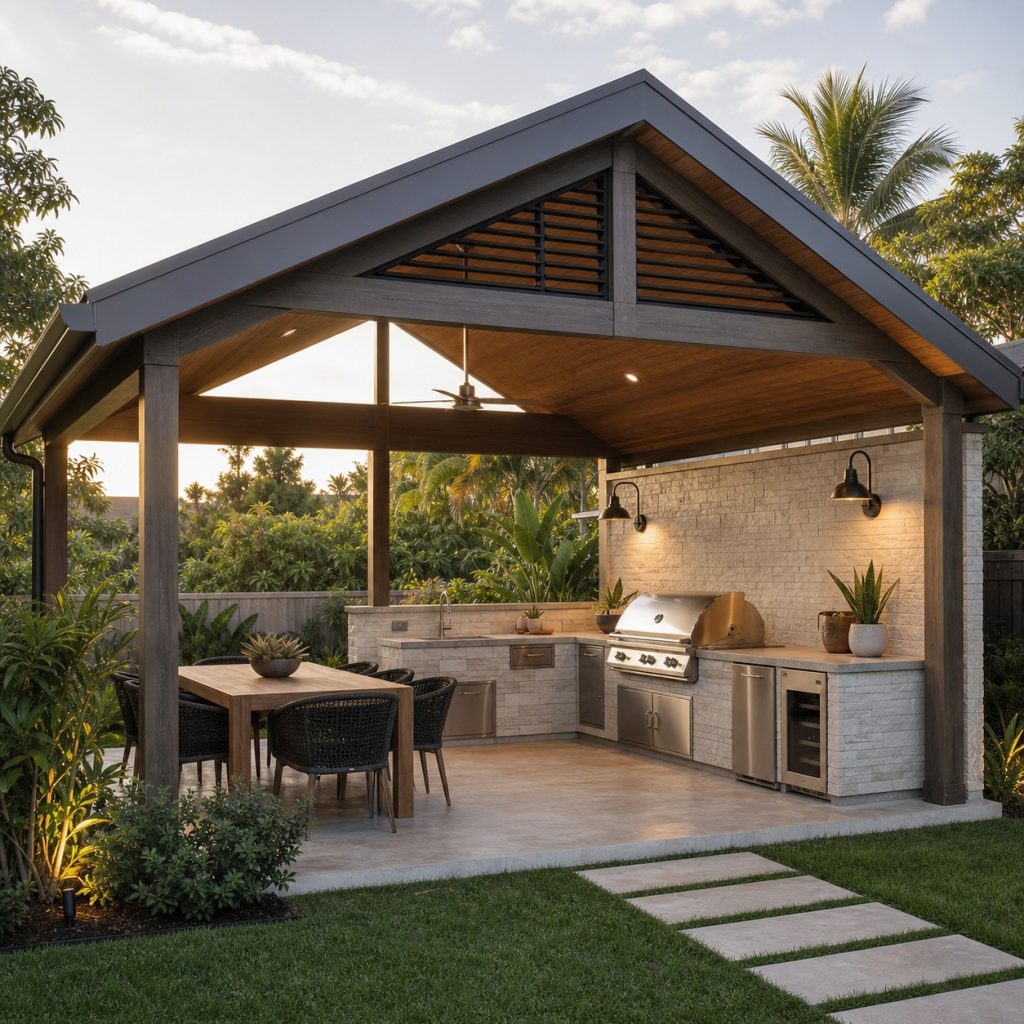
A vaulted roof and open gable reduce the feeling of enclosure and give warm air a high path, but they do not guarantee safe exhaust. Locate the grill on the most open wall and verify whether mechanical capture is still required.
Grill at the Far Exterior End
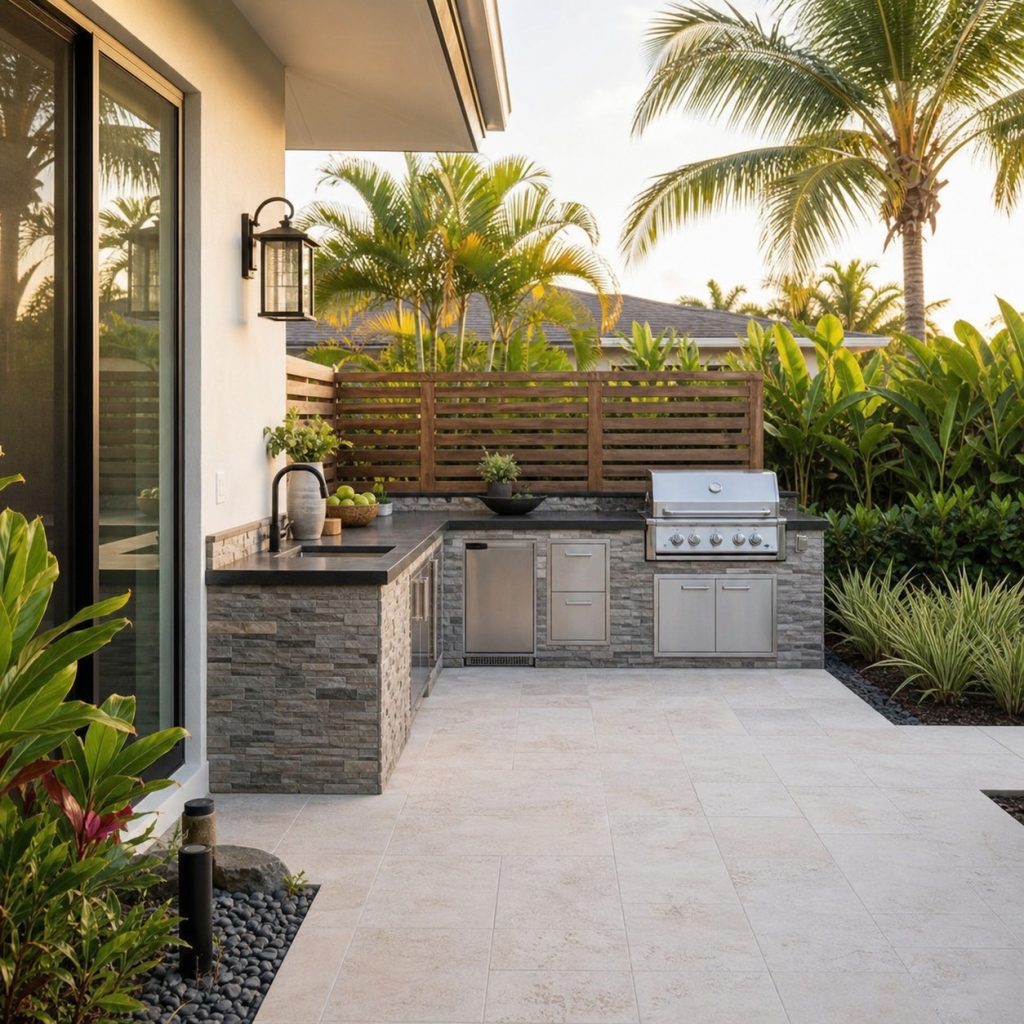
Moving the grill to the far open end protects the nearest doorway and keeps prep closer to the indoor kitchen. Check prevailing wind because an end position can still direct smoke along the wall. Preserve landing counter and service access.
Breathable Privacy Screens
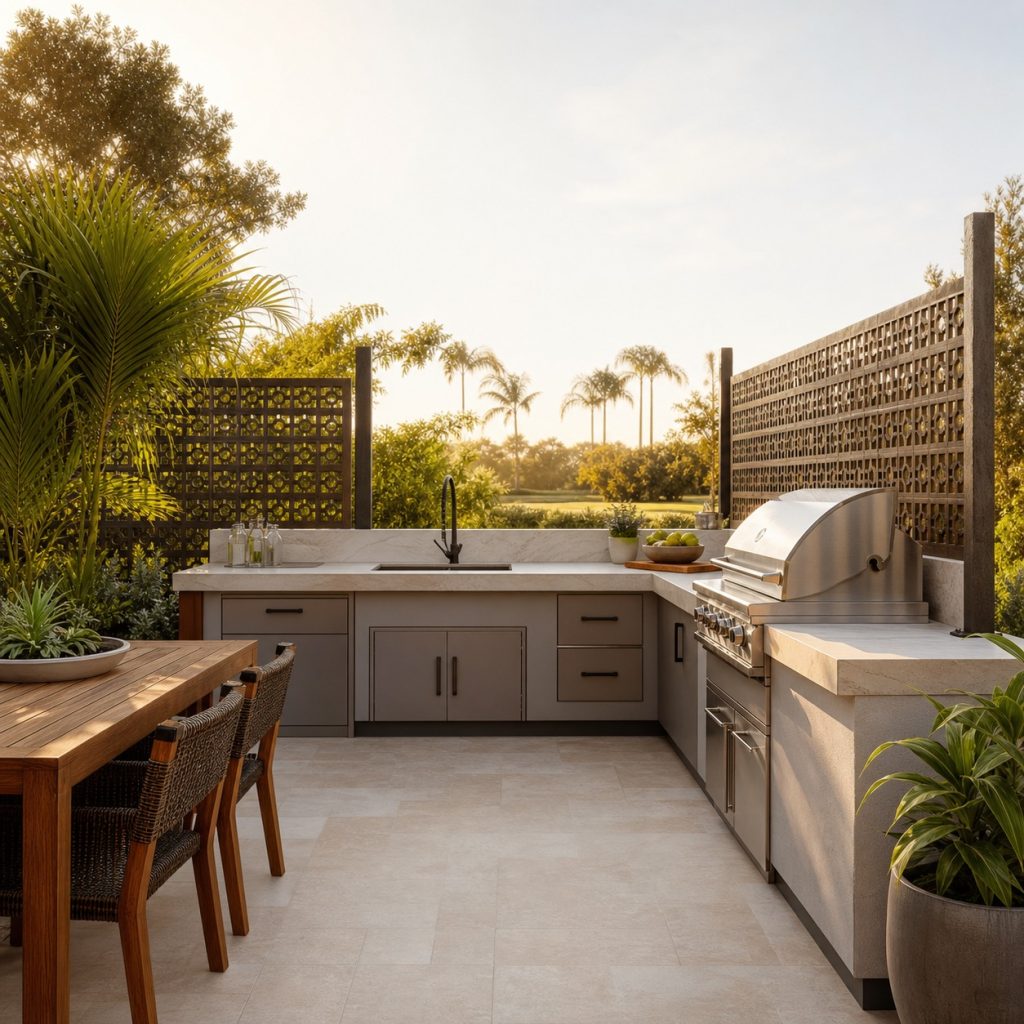
Perforated screens filter views while allowing crossflow, but any screen changes wind speed and direction. Keep the cooking face fully open and avoid extending screens after the grill is installed without reassessment. Combustible screen material must remain clear of heat.
Ducted Canopy Through the Roof
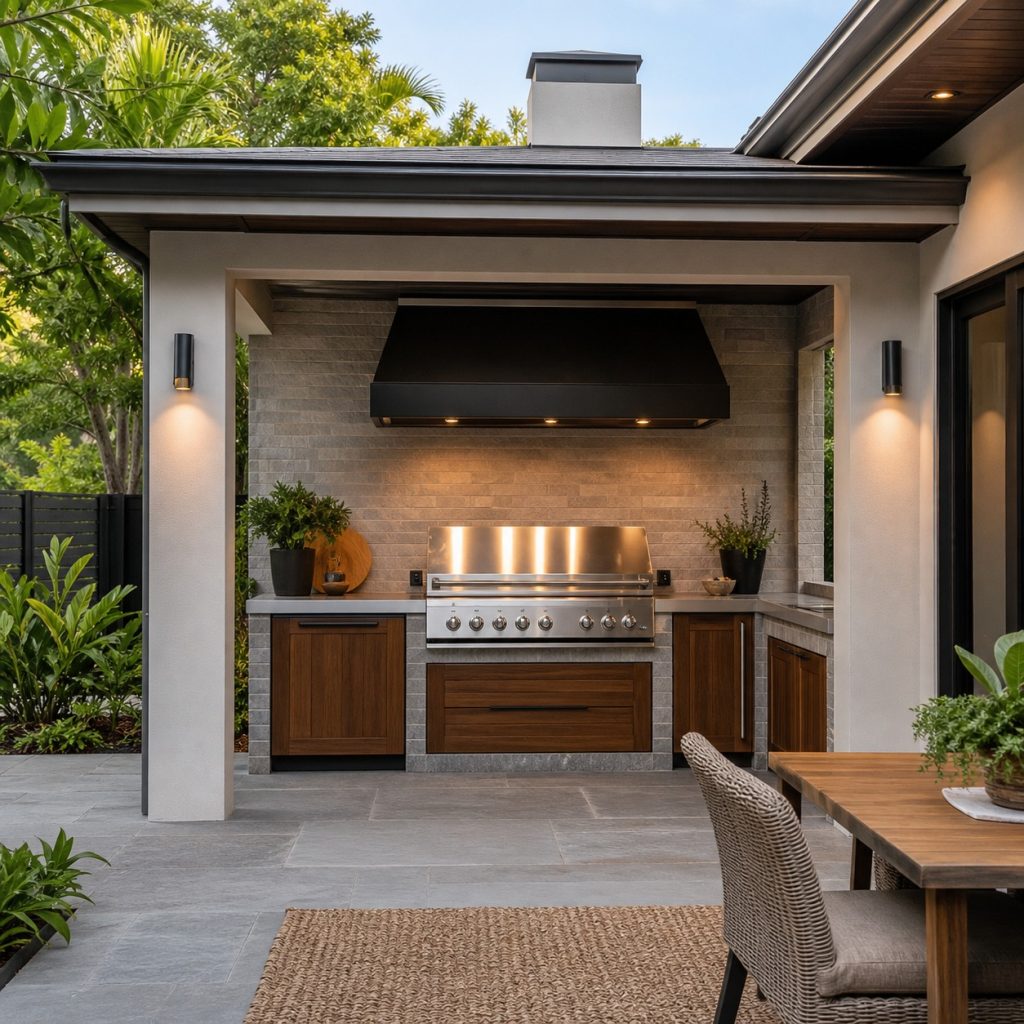
A direct vertical duct route can reduce turns and grease accumulation when properly designed. The roof penetration, weather cap, discharge location, access for cleaning, and make-up air require coordination. Keep the hood controls and filters serviceable.
Separate Smoker Beyond the Roof
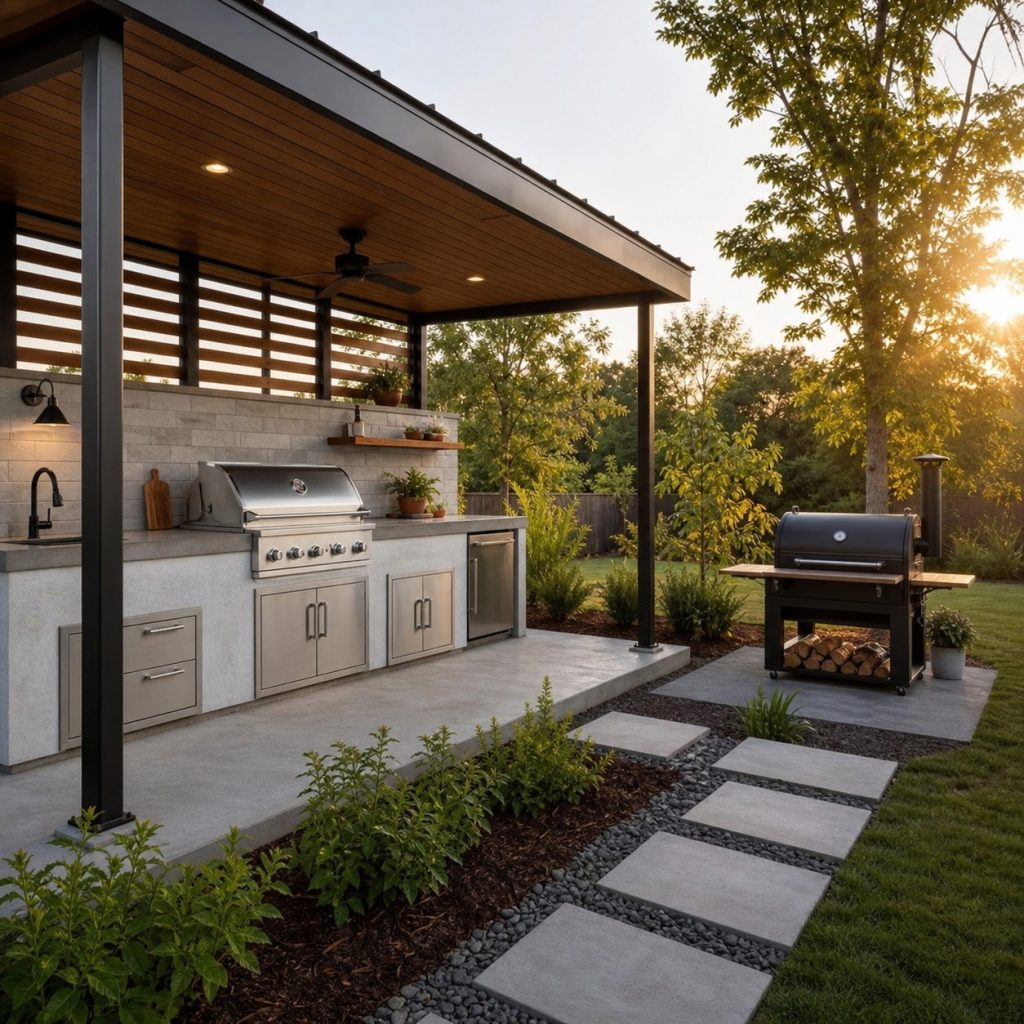
A smoker produces different exhaust and often runs for hours, so a separate uncovered pad may be more practical than forcing it beneath the kitchen roof. Provide a stable noncombustible surface, landing table, fuel and ash plan, and smoke path away from openings.
Planning checklist
- List every appliance, fuel, heat output, and manufacturer requirement.
- Study roofs, walls, screens, wind, doors, windows, neighbors, and seating.
- Keep cooking at the most open safe edge whenever practical.
- Have hood capture, airflow, duct, discharge, and make-up air professionally designed.
- Verify fire, fuel, electrical, air-quality, structure, and permits locally.
These ideas are general planning guidance. Verify appliance clearances, ventilation, weather and climate exposure, drainage, structural loads, fuel, plumbing and electrical work, permits, and local fire, pool, coastal, deck, and building requirements with manufacturers and qualified local professionals.
Frequently asked questions
Does an outdoor kitchen need a vent hood?
It depends on the appliance, fuel, overhead structure, walls, screens, wind, and local requirements. Follow the appliance listing and professional review.
Can ceiling fans replace a grill hood?
No. Fans are for comfort and may disrupt capture. Coordinate their direction and placement with the ventilation design.
How large should an outdoor grill hood be?
There is no safe universal size. The appliance, mounting height, enclosure, wind, duct, and make-up air determine the design.