Project planning guide
Before you build
Use the reference image and planning notes as a starting point. Confirm dimensions, loads, materials, local codes, and site conditions before purchasing or cutting.
- Kitchen Design
- 8 reference images
- Print-friendly guide
Mediterranean outdoor kitchens combine warm mineral surfaces, shade, simple masonry forms, herbs, and restrained color. The look adapts well to many gardens, but clay, stone, plaster, wood, and vines must be selected for the actual rainfall, freeze-thaw cycle, heat, and maintenance—not assumed suitable because of the style.
Limewash and Arched Prep Niche
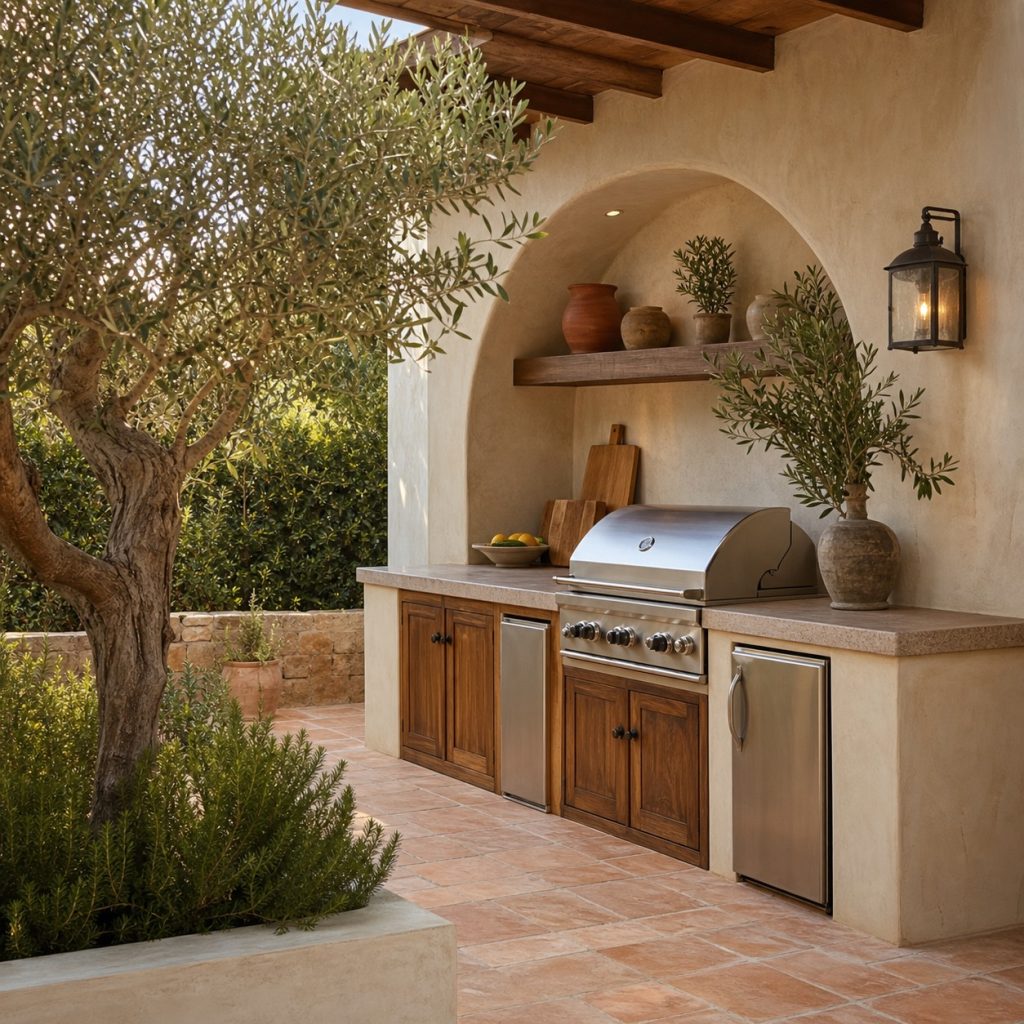
A shallow arch above the prep zone creates a focal point without enclosing the grill. Use an exterior plaster or coating system suited to the substrate and climate. Keep the niche simple, washable, and clear of hot appliance exhaust.
Limestone Courtyard Kitchen
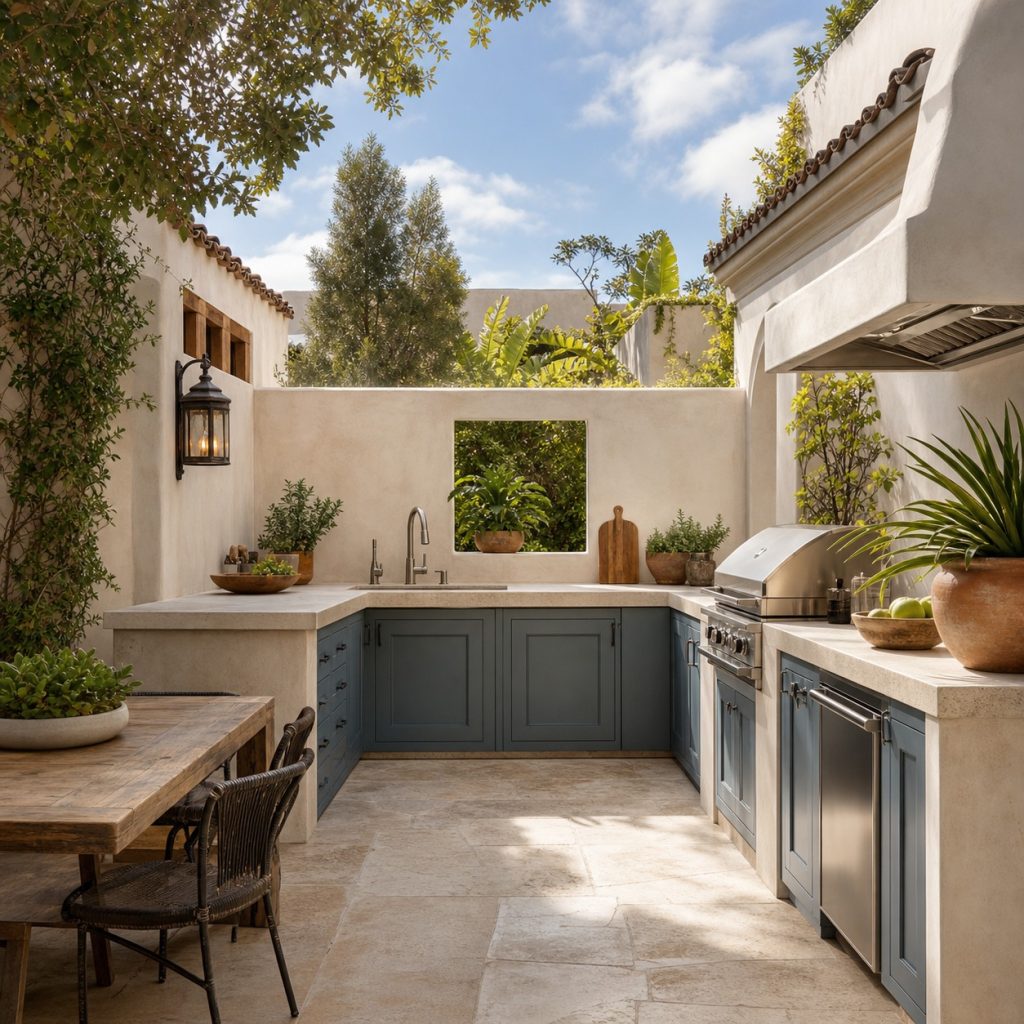
Cream limestone tones brighten a courtyard and relate to warm paving. Natural stone varies in porosity and freeze-thaw performance, so test the exact product and finish. Muted blue-gray cabinets add contrast without turning the room into a theme.
Terracotta Tile Accents
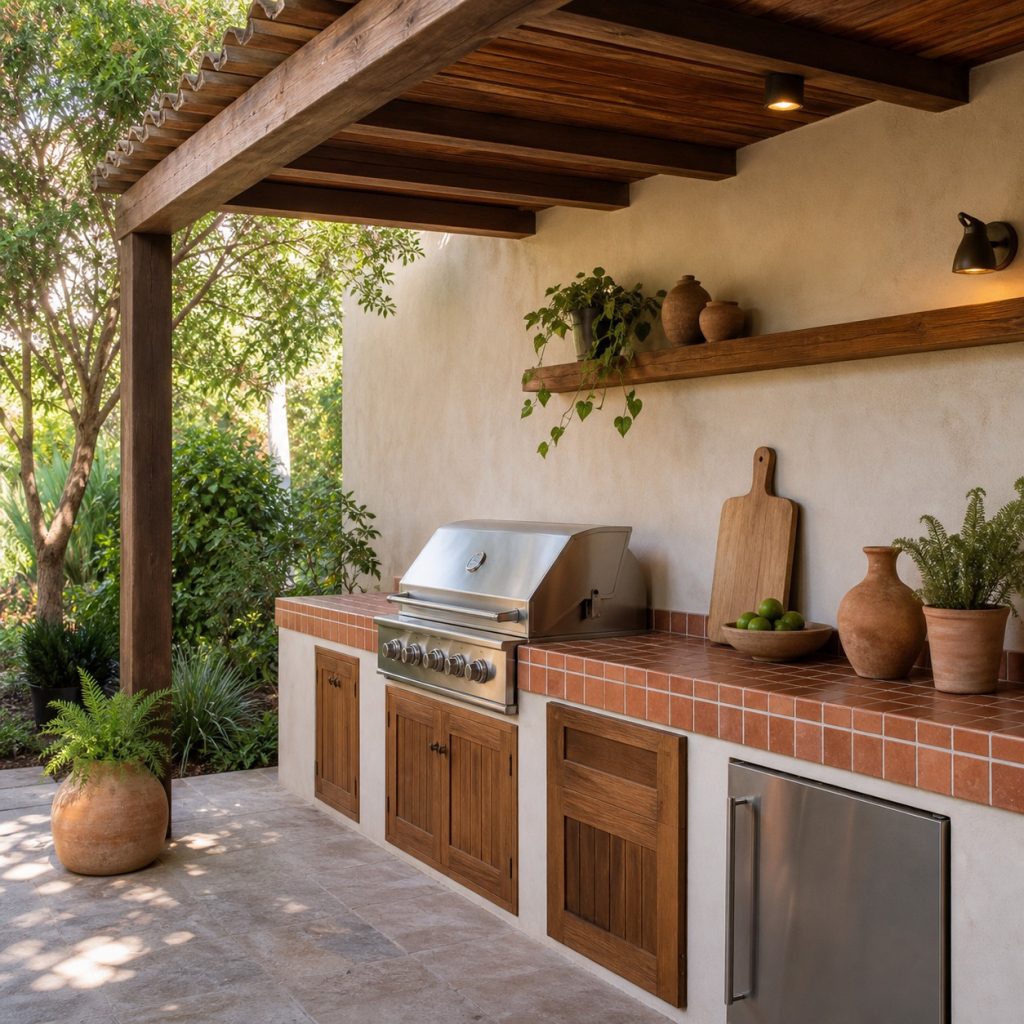
Terracotta works well as a limited backsplash, base accent, or dining detail. Use an exterior-rated system and realistic sealing and cleaning expectations. Keep textured porous tile away from the heaviest grill grease when a smoother surface would perform better.
Mosaic at the Sink Wall
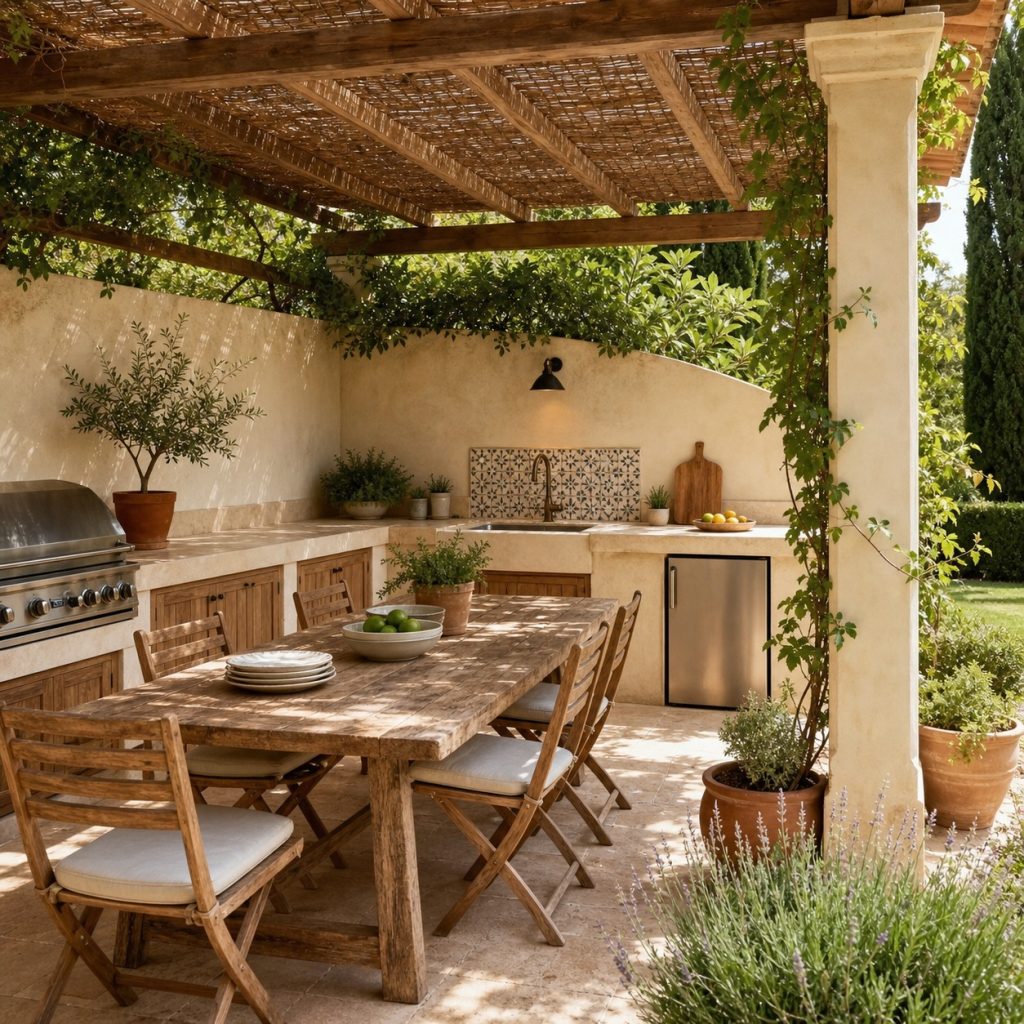
A small mosaic panel can concentrate color at the sink or beverage station. More joints require more maintenance, so use exterior-rated grout and substrate. Limit the pattern to one wall and repeat only a small color elsewhere.
Olive and Herb Garden Kitchen
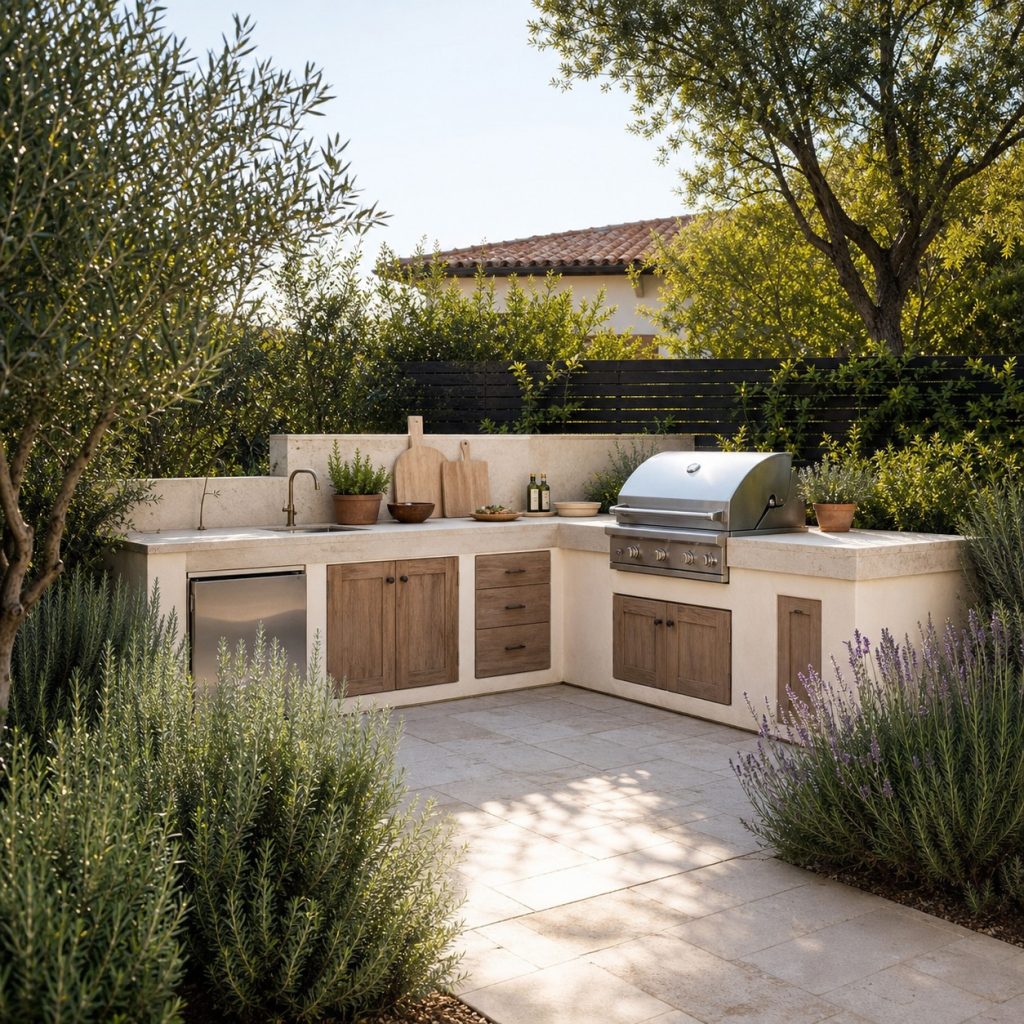
Olives and herbs connect cooking to the landscape when they suit the local climate. Keep roots, irrigation, dry growth, bees, and leaf litter away from appliances and work surfaces. A paved maintenance strip improves access to both plants and cabinets.
Vine-Shaded Pergola Kitchen
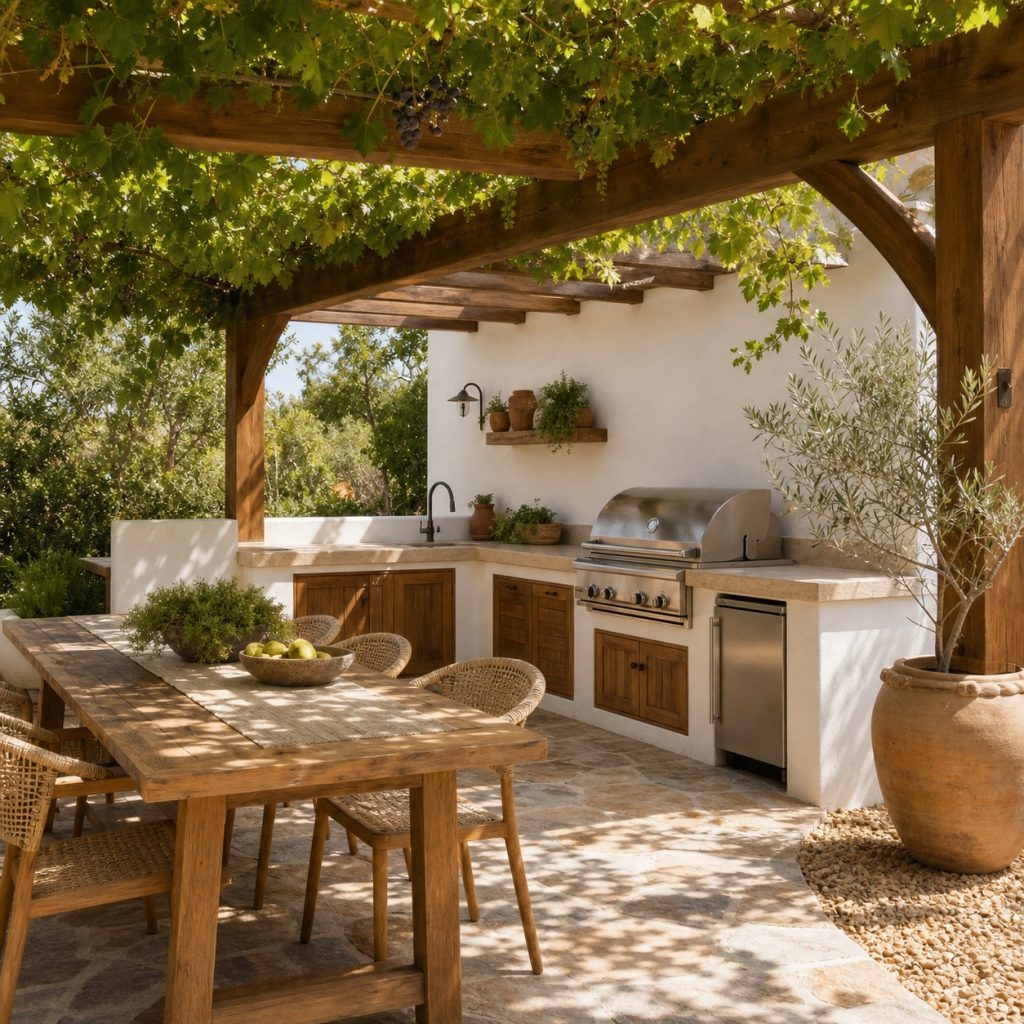
A grapevine canopy provides seasonal shade and texture. Train growth away from lights, chimneys, grills, and electrical equipment, and account for added weight and leaf cleanup. The pergola still needs engineered supports and connections.
Rustic Plaster and Timber Doors
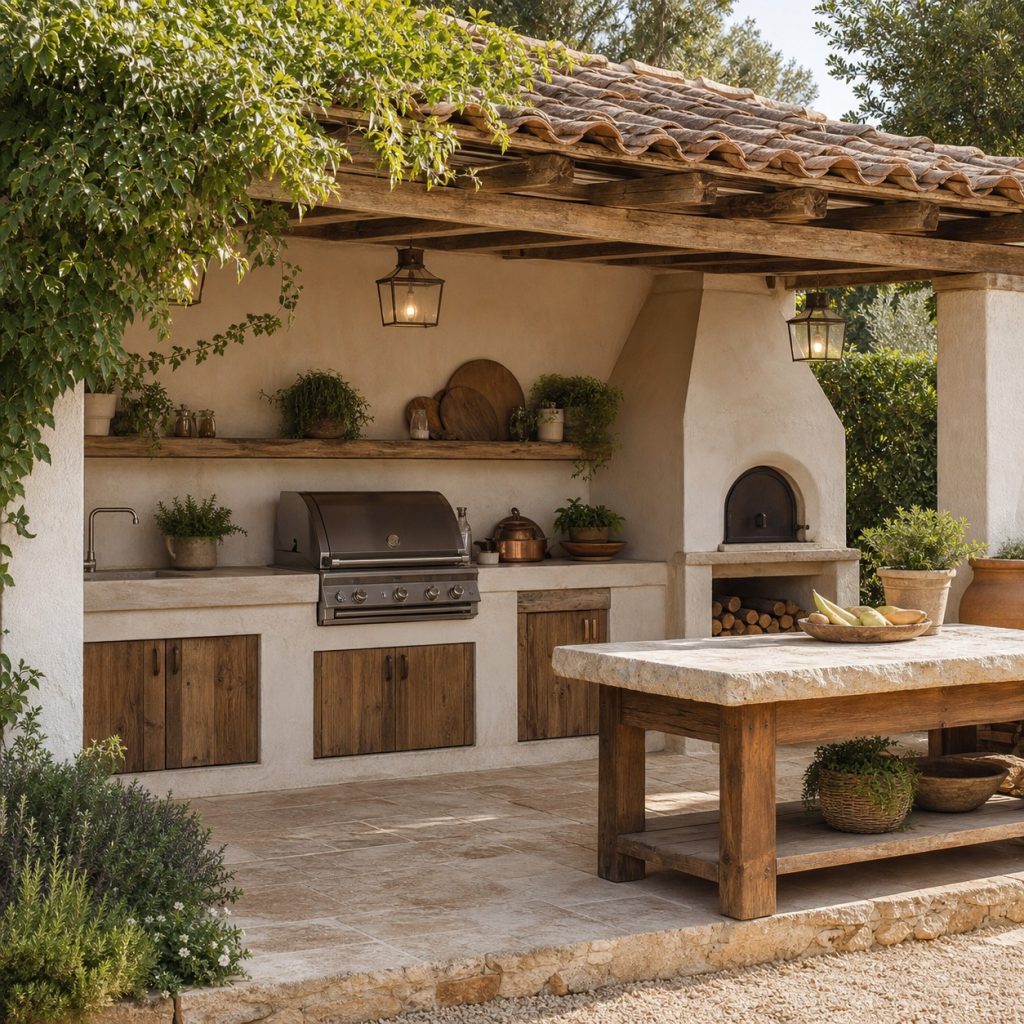
Rough plaster and warm wood create age without excessive decoration. Use durable exterior assemblies and keep timber clear of heat, standing water, and soil. A smooth counter and backsplash preserve an easy-clean work zone.
Contemporary Mediterranean Palette
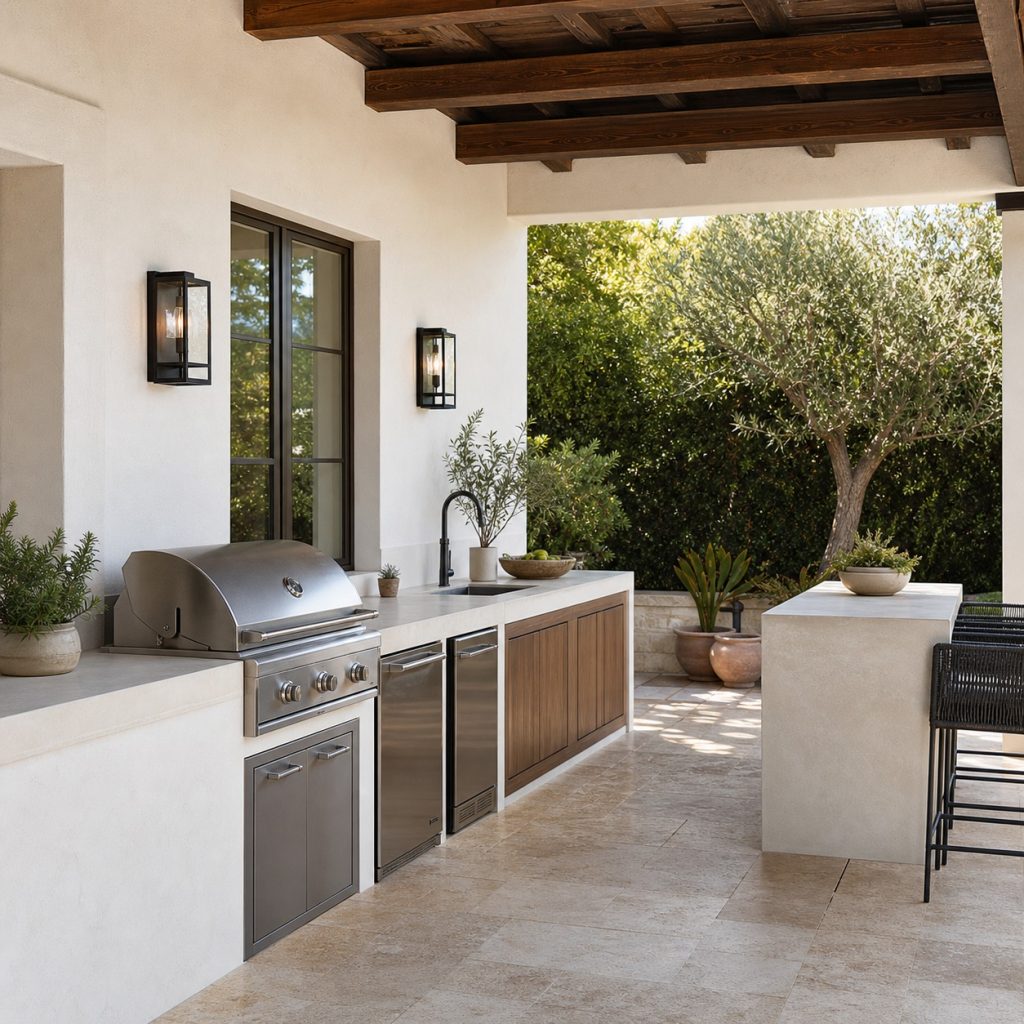
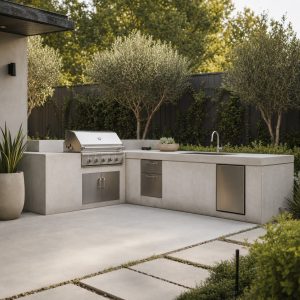
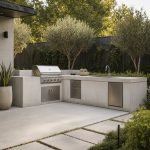
Smooth white stucco, warm paving, bronze details, and a linear layout create a quieter modern interpretation. Choose paving for wet traction and climate performance rather than stone appearance alone. One olive tree or large planter can finish the palette.
Planning checklist
- Choose climate-suitable plaster, stone, clay, wood, and planting.
- Limit arches, mosaic, and pottery to purposeful focal points.
- Keep porous textures away from heavy grease and splash zones.
- Manage vines, irrigation, roots, dry growth, and seasonal cleanup.
- Verify structure, drainage, heat, utilities, and permits locally.
These ideas are general planning guidance. Verify appliance clearances, ventilation, weather and climate exposure, drainage, structural loads, fuel, plumbing and electrical work, permits, and local fire, pool, coastal, deck, and building requirements with manufacturers and qualified local professionals.
Frequently asked questions
What makes an outdoor kitchen Mediterranean?
Warm mineral surfaces, simple masonry, shade, herbs, terracotta tones, and restrained handcrafted details create the character.
Can terracotta tile stay outdoors in freezing climates?
Only if the exact tile and full installation system are approved for the site’s exterior freeze-thaw exposure.
Are vines safe over an outdoor kitchen?
They require structure, pruning, litter control, and separation from heat, flames, chimneys, lights, and electrical equipment.