Project planning guide
Before you build
Use the reference image and planning notes as a starting point. Confirm dimensions, loads, materials, local codes, and site conditions before purchasing or cutting.
- Kitchen Design
- 8 reference images
- Print-friendly guide
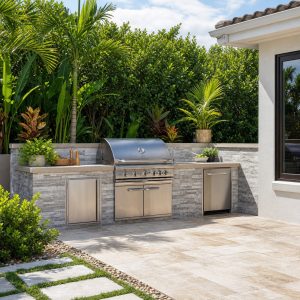
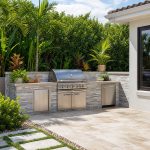
A tropical outdoor kitchen should be built around airflow, shade, drainage, insects, corrosion, storms, and rapidly growing plants. Lush scenery is part of the appeal, but cabinets, appliances, screens, fans, and service routes need enough breathing room to stay practical in heat and humidity.
High Open-Sided Pavilion
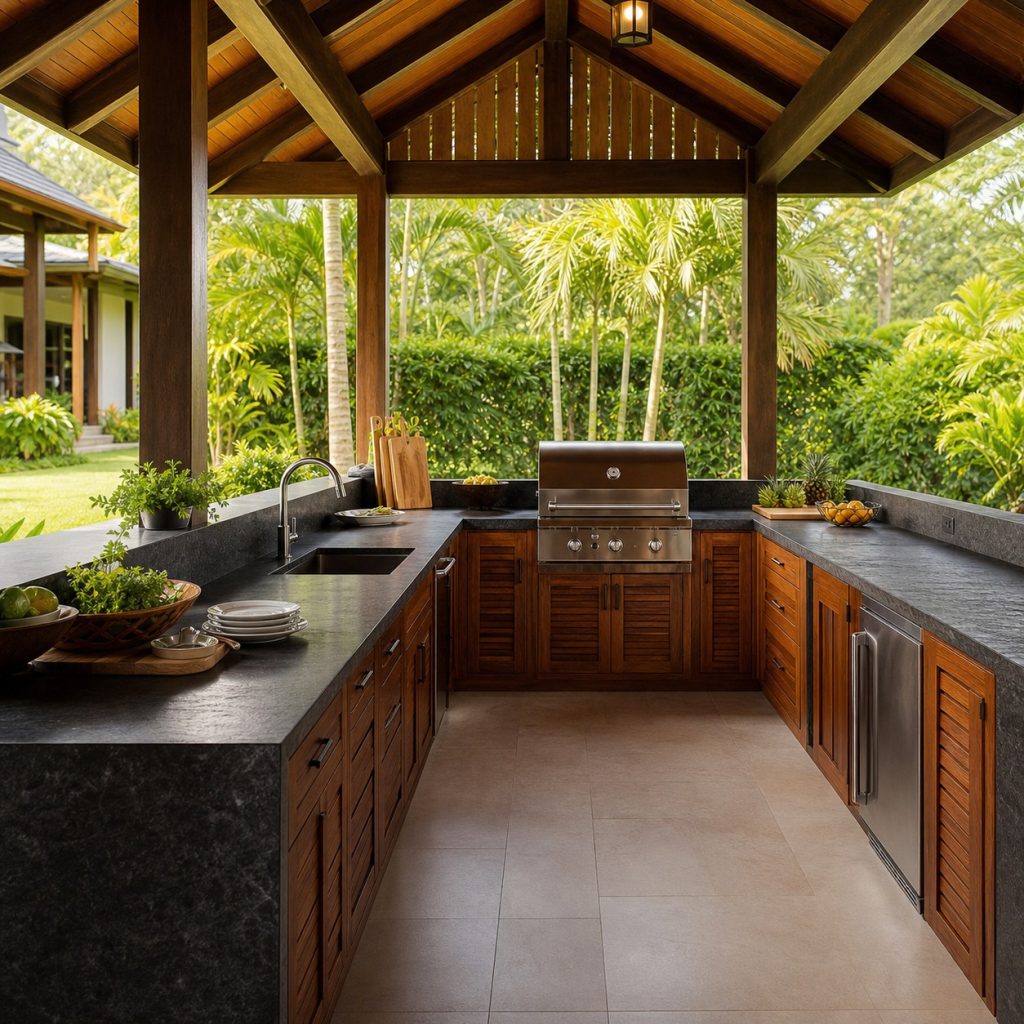
A tall roof and open sides provide shade without turning the kitchen into a closed room. Position the grill at an exterior edge and size any fan or hood professionally. Structure and connections must address local wind, rain, and insect exposure.
Poolside Tropical Serving Kitchen
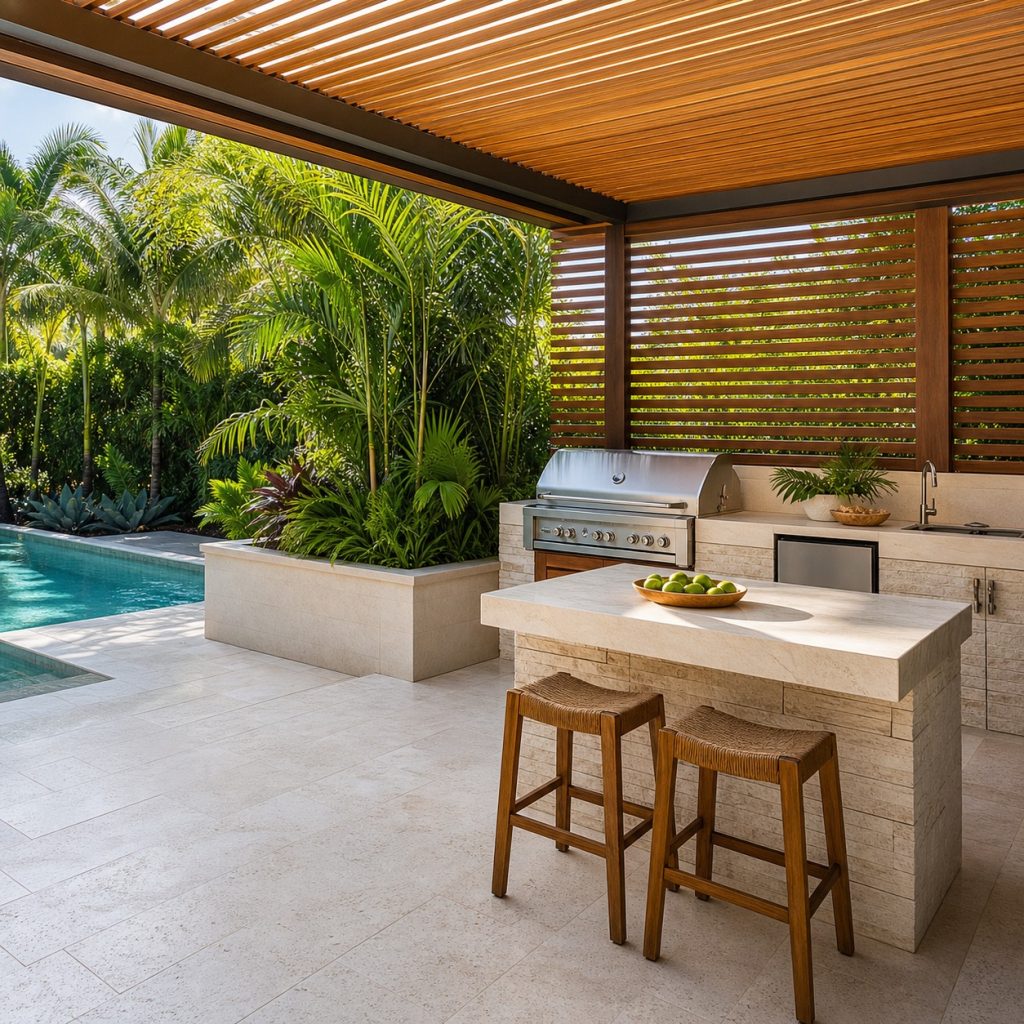
Place the serving island on the dry side and protect the cook from wet circulation. Choose paving for wet traction and solar heat, and keep palms beyond required pool barriers and maintenance routes. Refrigeration and outlets need pool-appropriate installation.
Dark Stone Garden Kitchen
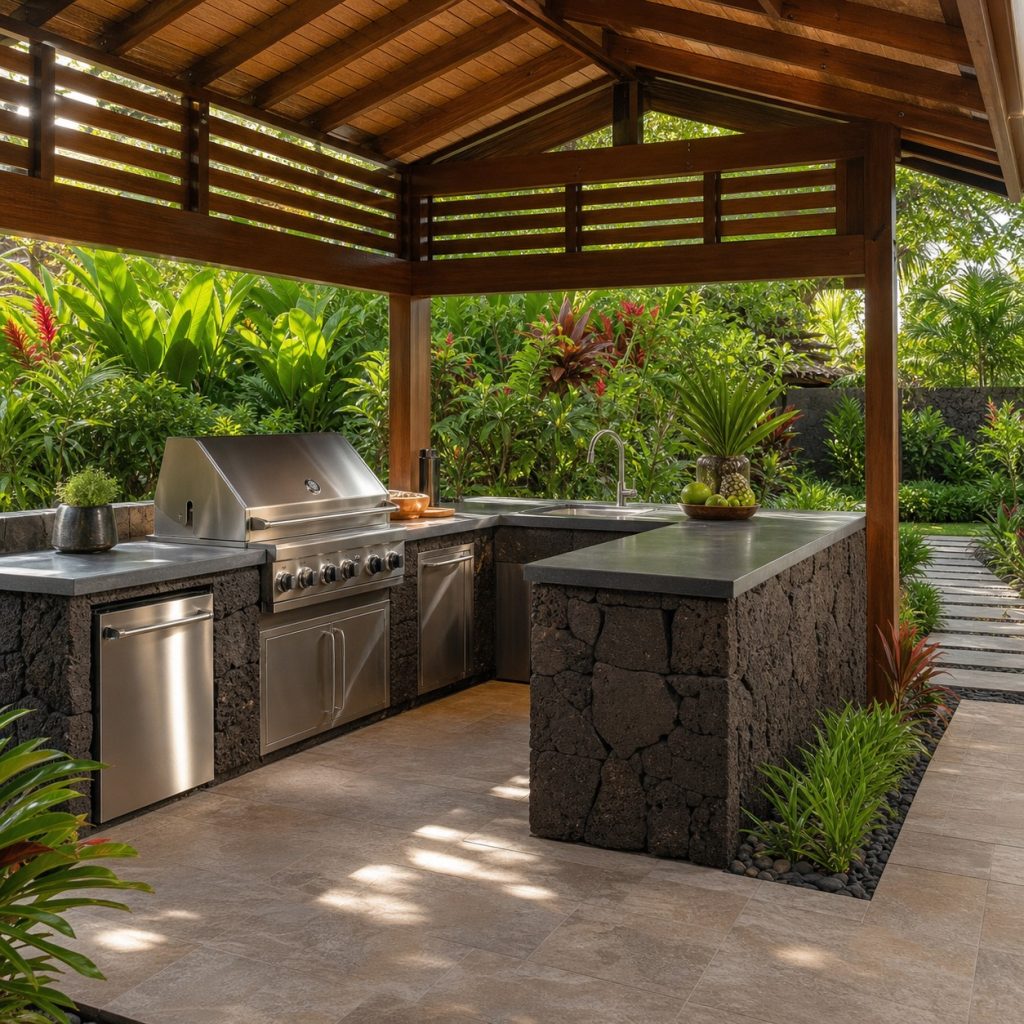
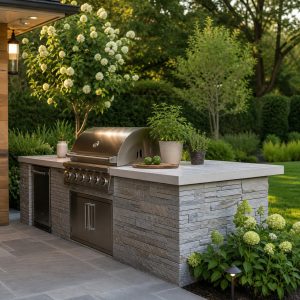
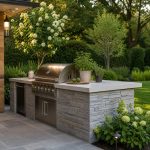
Dark stone gives a lush garden kitchen visual weight but can absorb heat and show mineral deposits. Provide drainage and airflow behind cabinets and avoid deep rough texture near grease. A simple roof controls rain while open sides release heat.
Compact Screened Courtyard
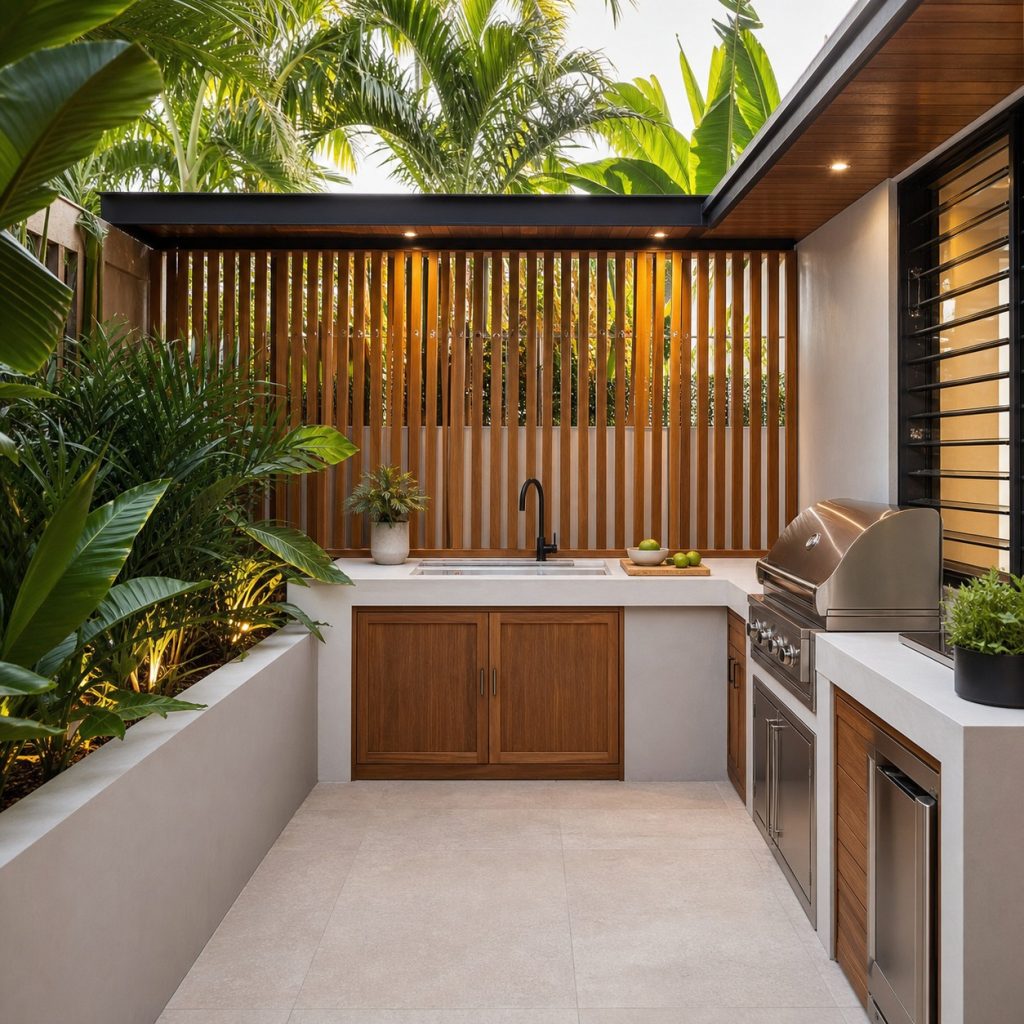
A partial screen can provide privacy and filter sun without fully enclosing a humid courtyard. Use rot- and corrosion-resistant materials and keep planting in maintainable raised beds. Preserve an open smoke path and clear service route.
Modern Tropical Contrast
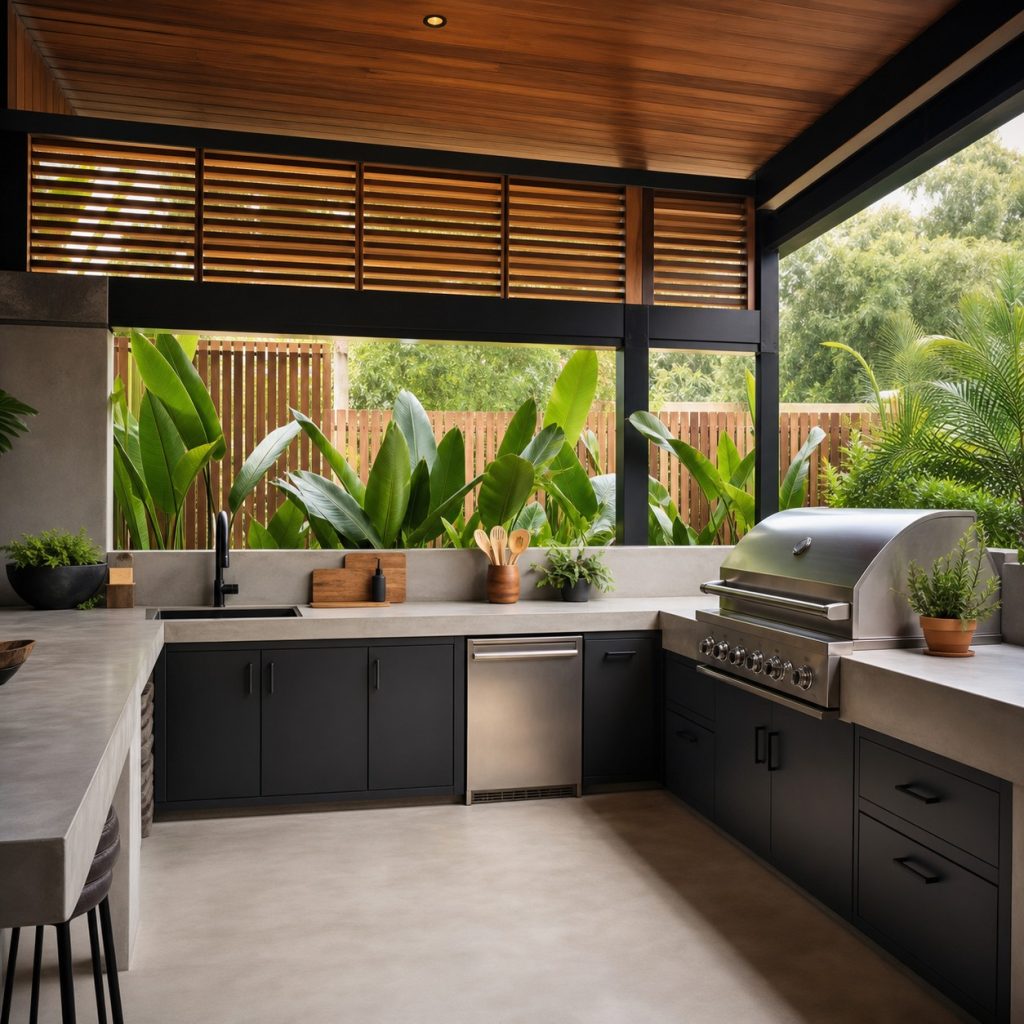
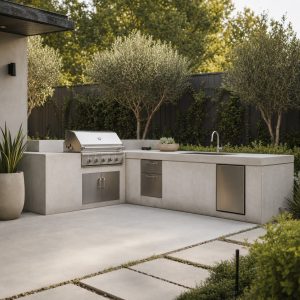
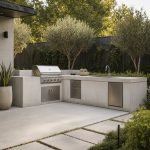
Charcoal cabinets, warm slats, and a green backdrop create a modern tropical palette. Test dark surfaces in sun and keep timber outside heat clearances. A smooth counter and simple hardware reduce cleaning in humid conditions.
Fan-Cooled Dining Pavilion
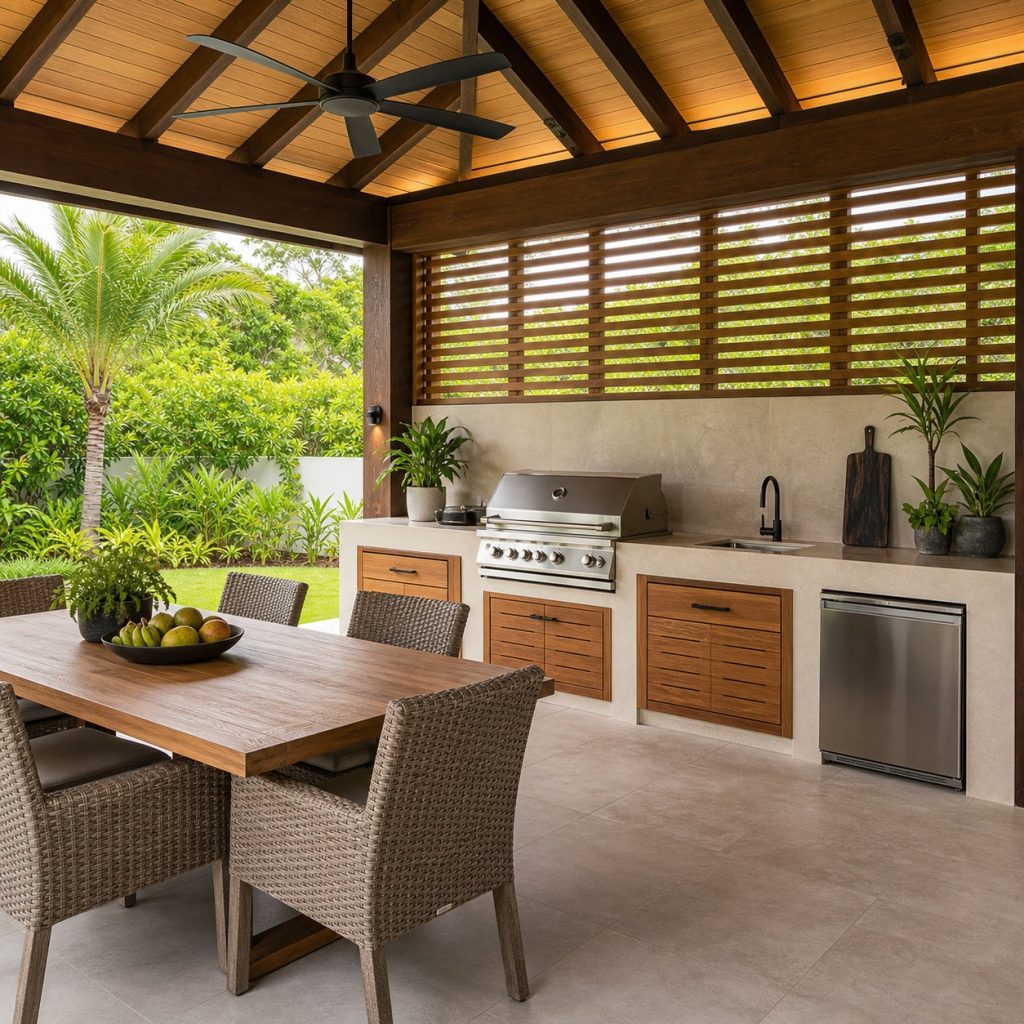
Ceiling fans can improve comfort in the dining zone but must be rated and mounted for the exposure and structure. They do not replace appliance ventilation. Keep woven furniture weather-ready and store lightweight pieces during severe weather.
Herb and Citrus Garden Kitchen
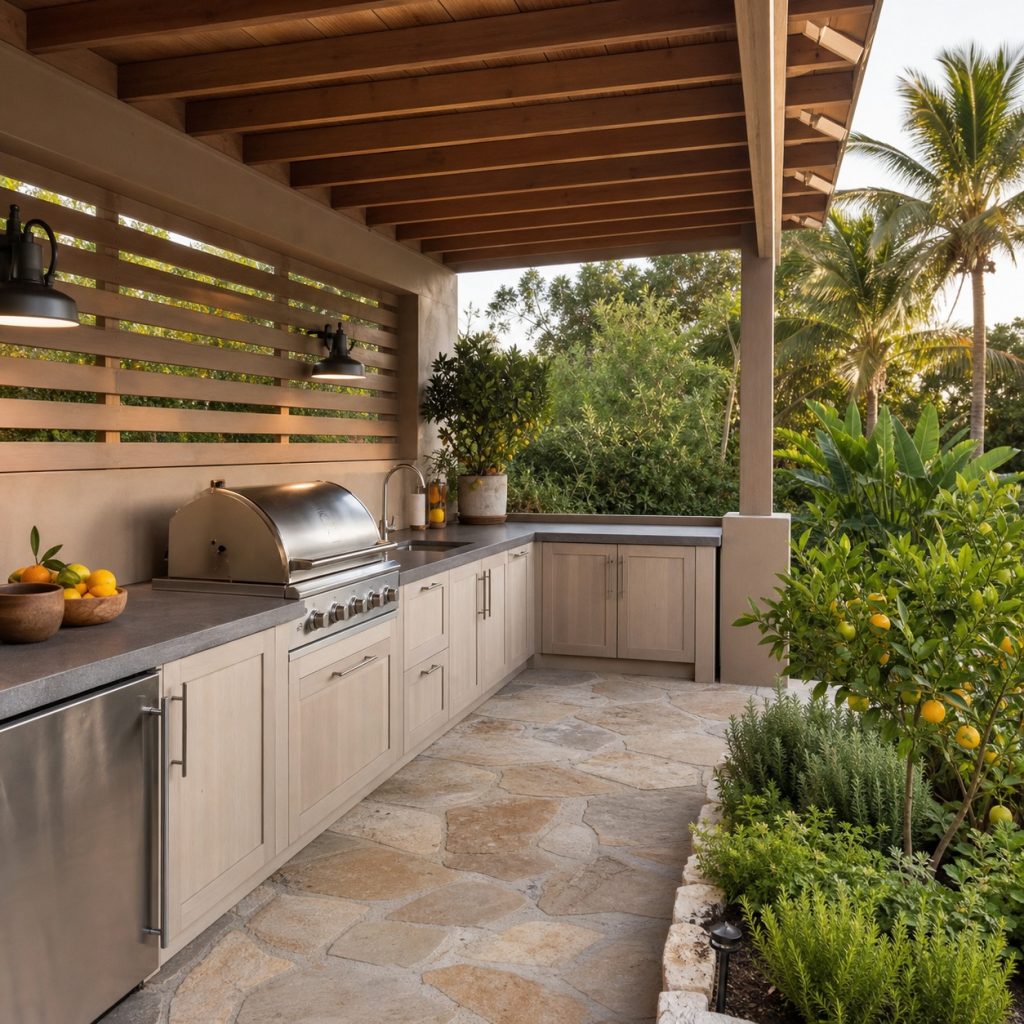
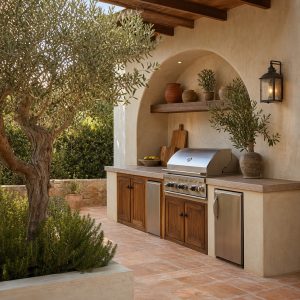
Edible planting makes a compact kitchen feel productive. Use a solid paved work zone and keep irrigation, roots, fruit drop, and pests away from cabinets and food surfaces. Select plants suited to the region and available maintenance.
Indoor-Outdoor Tropical Kitchen
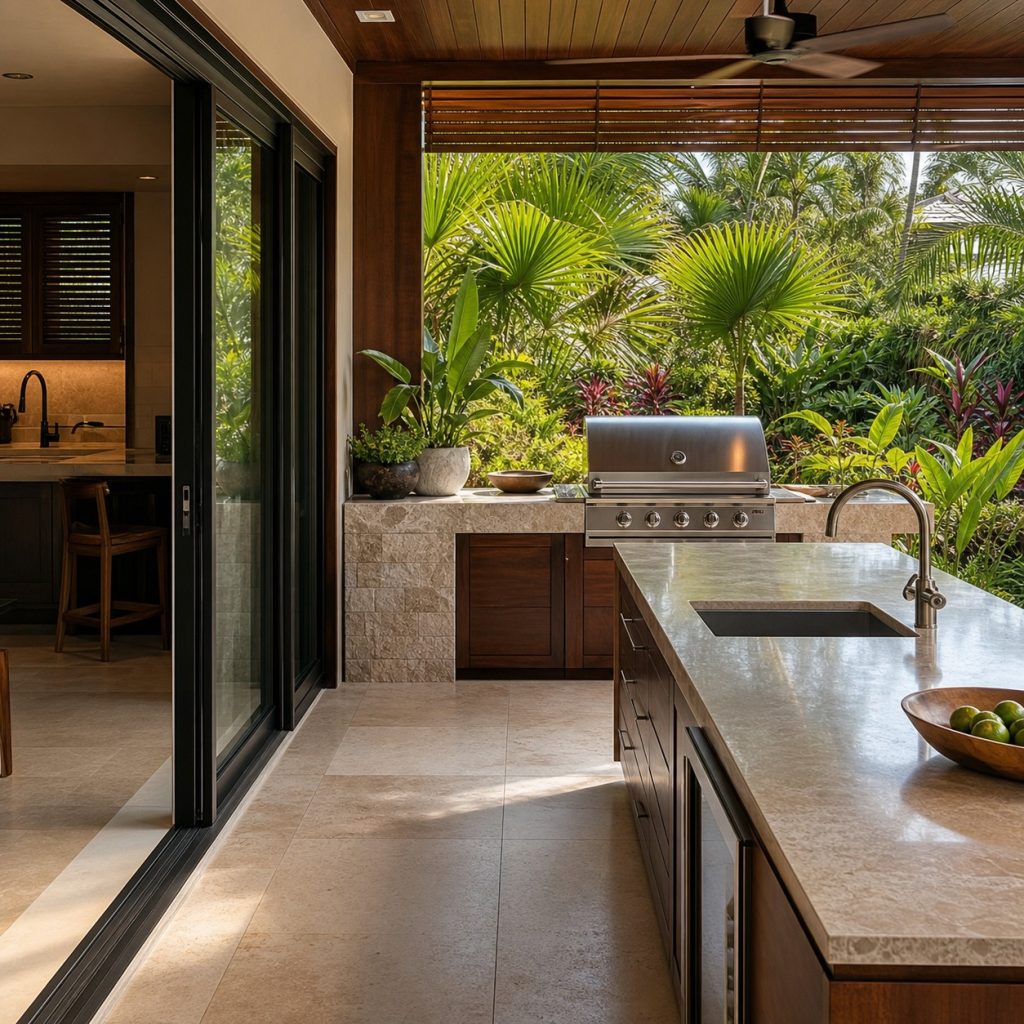
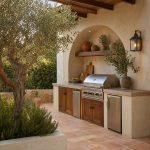
Aligning with indoor doors shortens the service route and extends the living space. Place smoke-producing appliances at the most open exterior edge and study prevailing wind so exhaust does not enter the house. Use thresholds and drainage that keep storm water outside.
Planning checklist
- Prioritize cross ventilation, shade, drainage, and washable surfaces.
- Select corrosion-, moisture-, mold-, and pest-resistant assemblies.
- Keep planting, irrigation, roots, and litter beyond service and heat zones.
- Secure furniture, screens, roofs, and loose items for local storms.
- Verify wind, pool, electrical, fuel, ventilation, and permit requirements.
These ideas are general planning guidance. Verify appliance clearances, ventilation, weather and climate exposure, drainage, structural loads, fuel, plumbing and electrical work, permits, and local fire, pool, coastal, deck, and building requirements with manufacturers and qualified local professionals.
Frequently asked questions
What materials work in a tropical outdoor kitchen?
Use products specifically suited to local humidity, rain, UV, corrosion, pests, and wind. Product details matter more than broad material names.
Do ceiling fans ventilate a grill?
No. Fans improve comfort but can disrupt smoke capture. Appliance exhaust and fan placement need professional coordination.
How close can tropical plants be to appliances?
Keep them outside manufacturer clearances, vents, service access, irrigation splash, and paths, allowing room for mature growth.