Project planning guide
Before you build
Use the reference image and planning notes as a starting point. Confirm dimensions, loads, materials, local codes, and site conditions before purchasing or cutting.
- Garden Projects
- 8 reference images
- Print-friendly guide
A wooden railing planter adds flowers or herbs at eye level, but saturated soil and wind can overload a guard that was never designed for attachments. Safe woodworking begins with the existing railing, an independently verified support method, and a planter that cannot reduce required guard height or create a climbing aid.
Top-Rail Cedar Planter
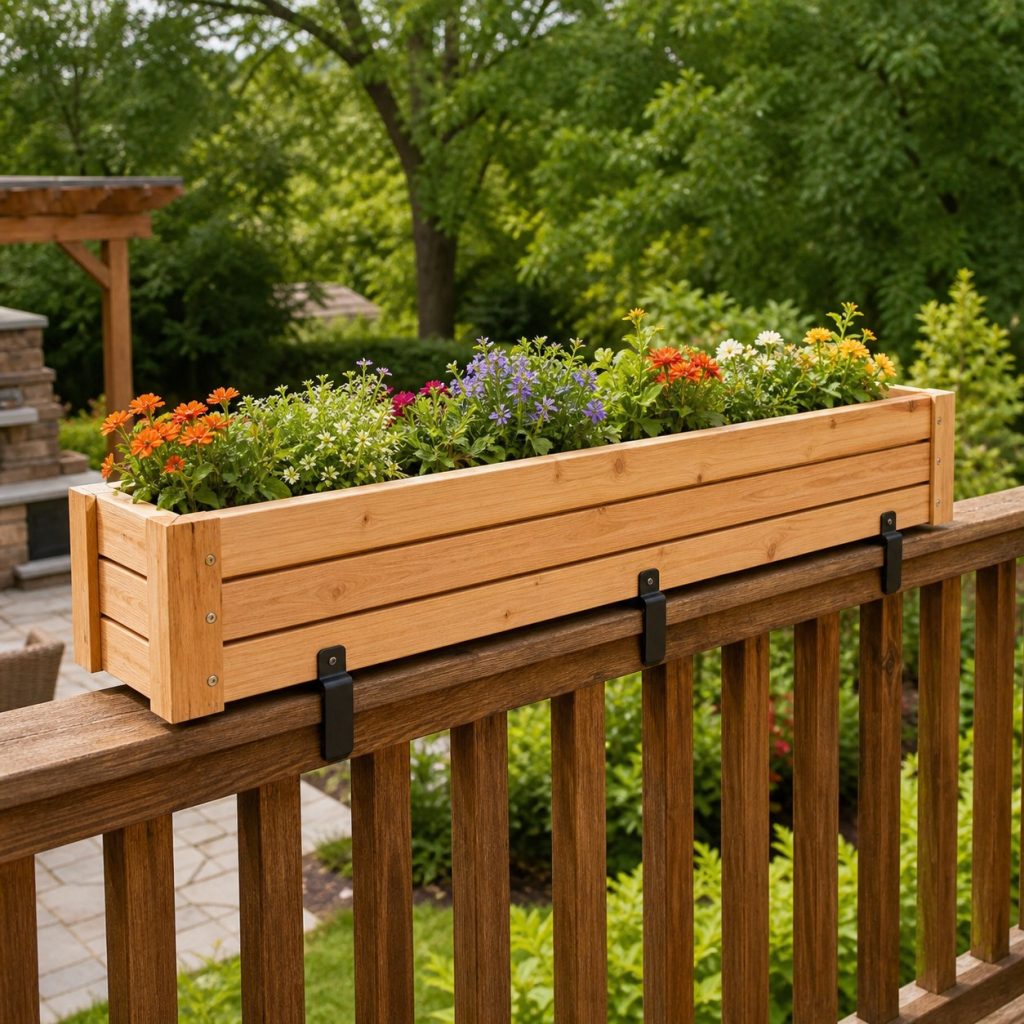
A bracketed box needs verified attachment and a broad bearing system rather than resting loosely on the cap rail. Do not attach a planter to a guard or railing without approval for the added load and leverage; verify codes, structural capacity, wind restraint, child-climbing hazards, waterproofing, and drainage locally.
Inside-Mount Railing Box
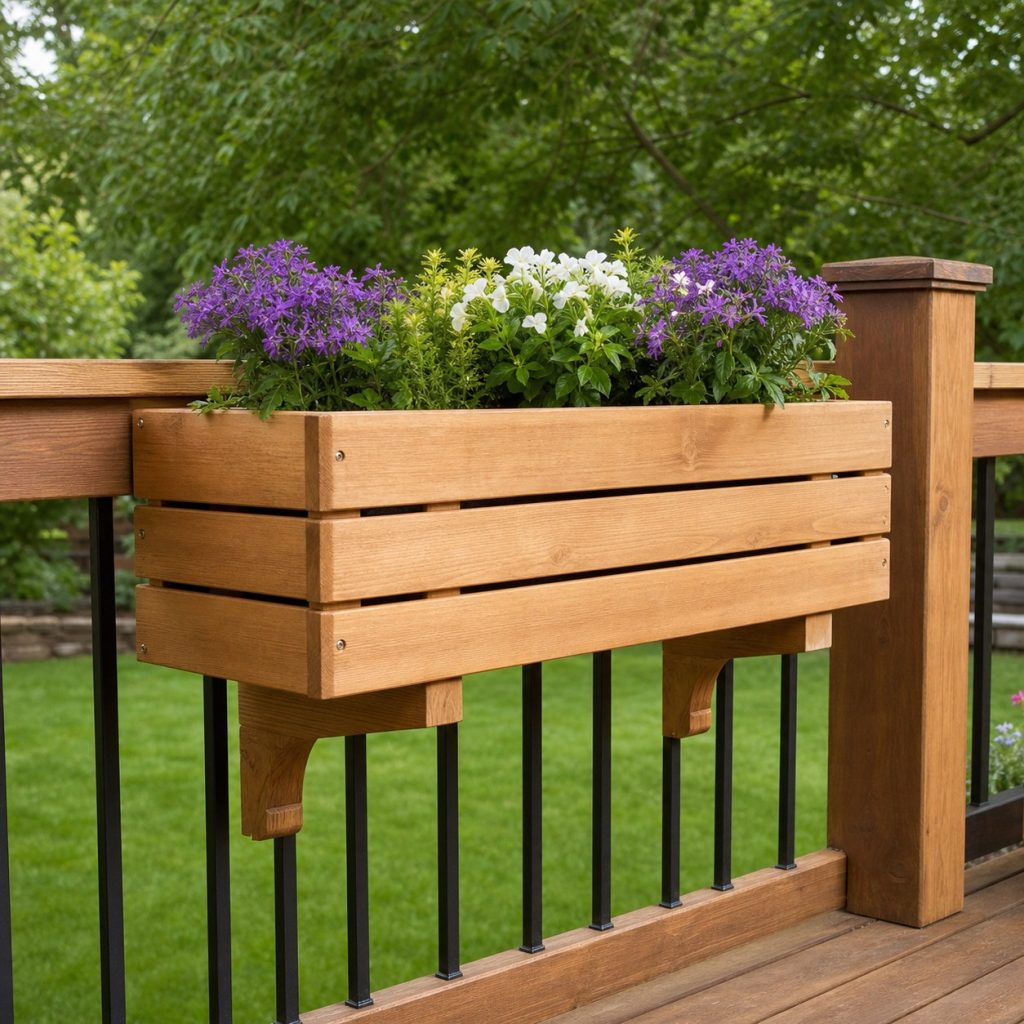
An inside position can reduce outward fall risk while still affecting clearance and climbability.
Removable Bracket Planter
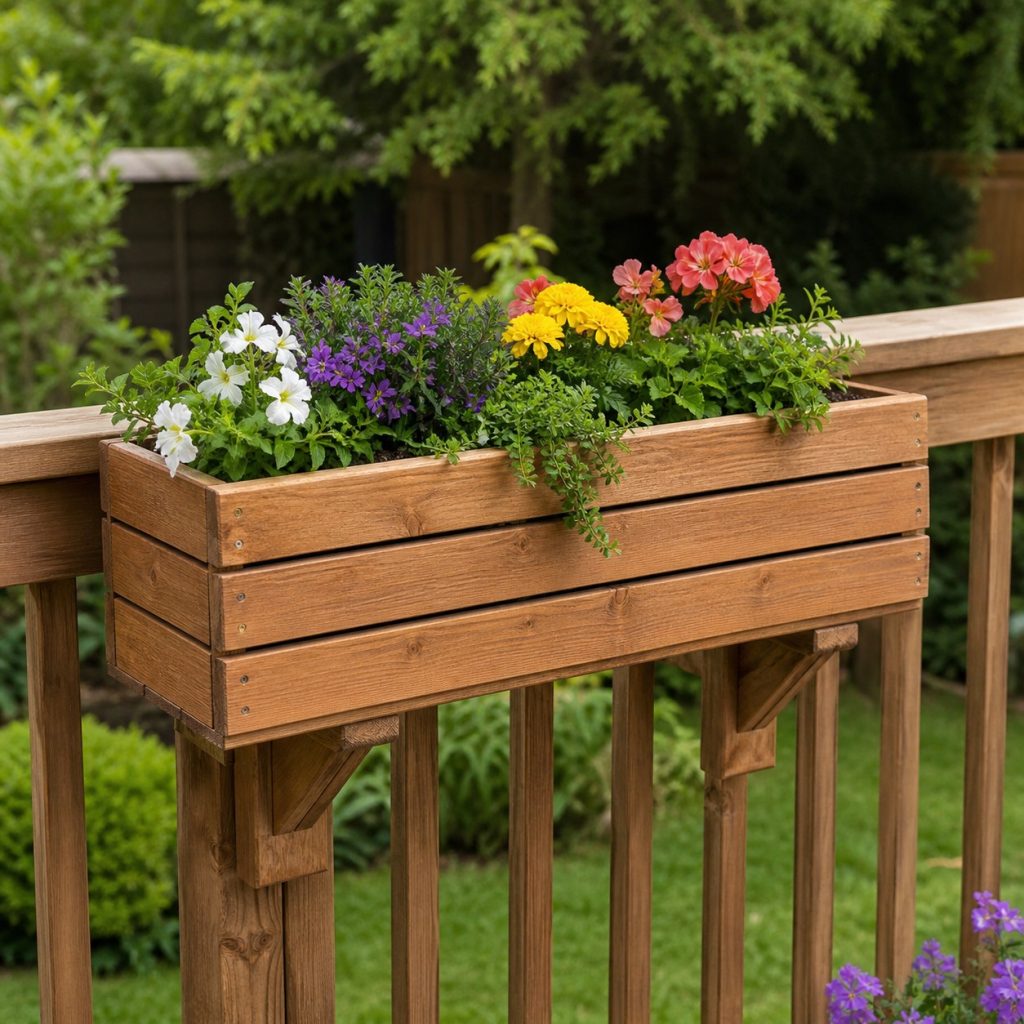
A removable box simplifies planting and inspection when positive restraints prevent accidental lifting or sliding.
Twin Herb Boxes
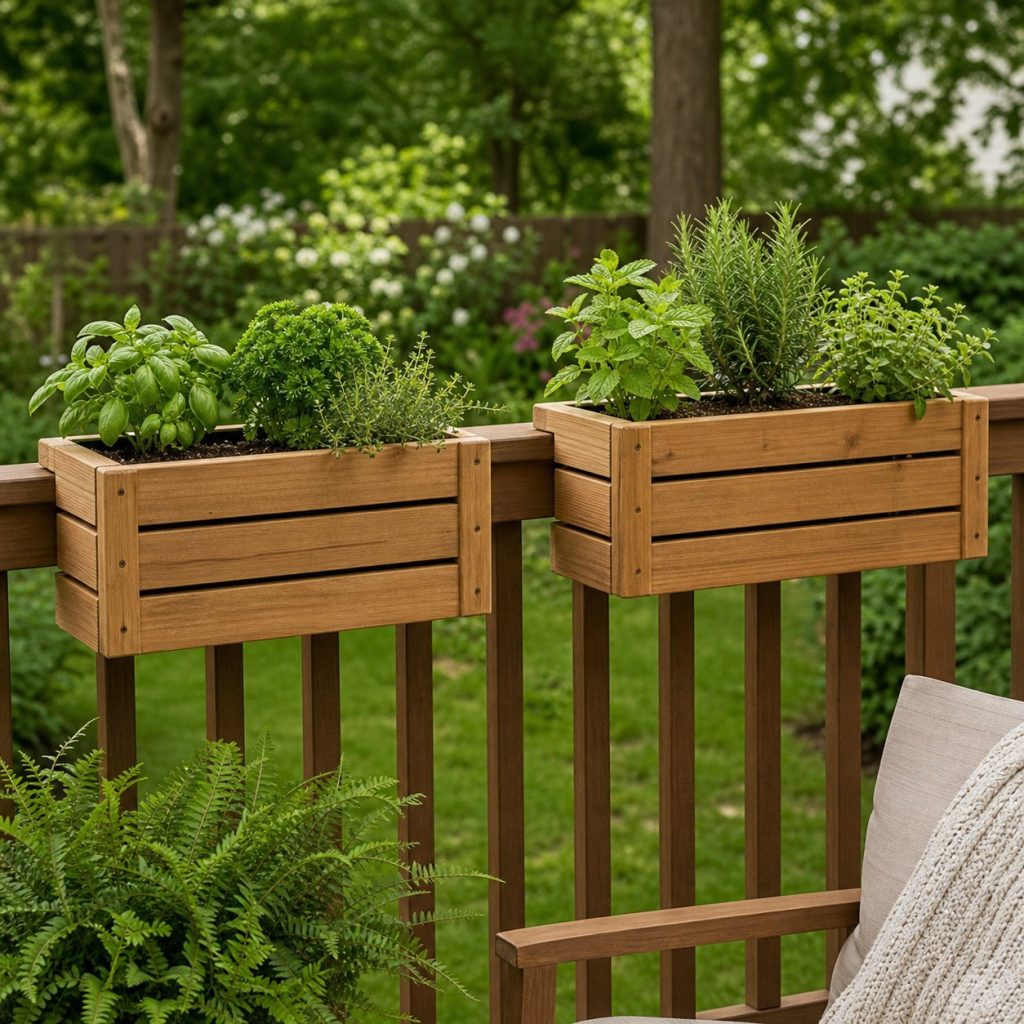
Shorter modules limit individual weight and can preserve views and railing inspection access.
Corner Railing Planter
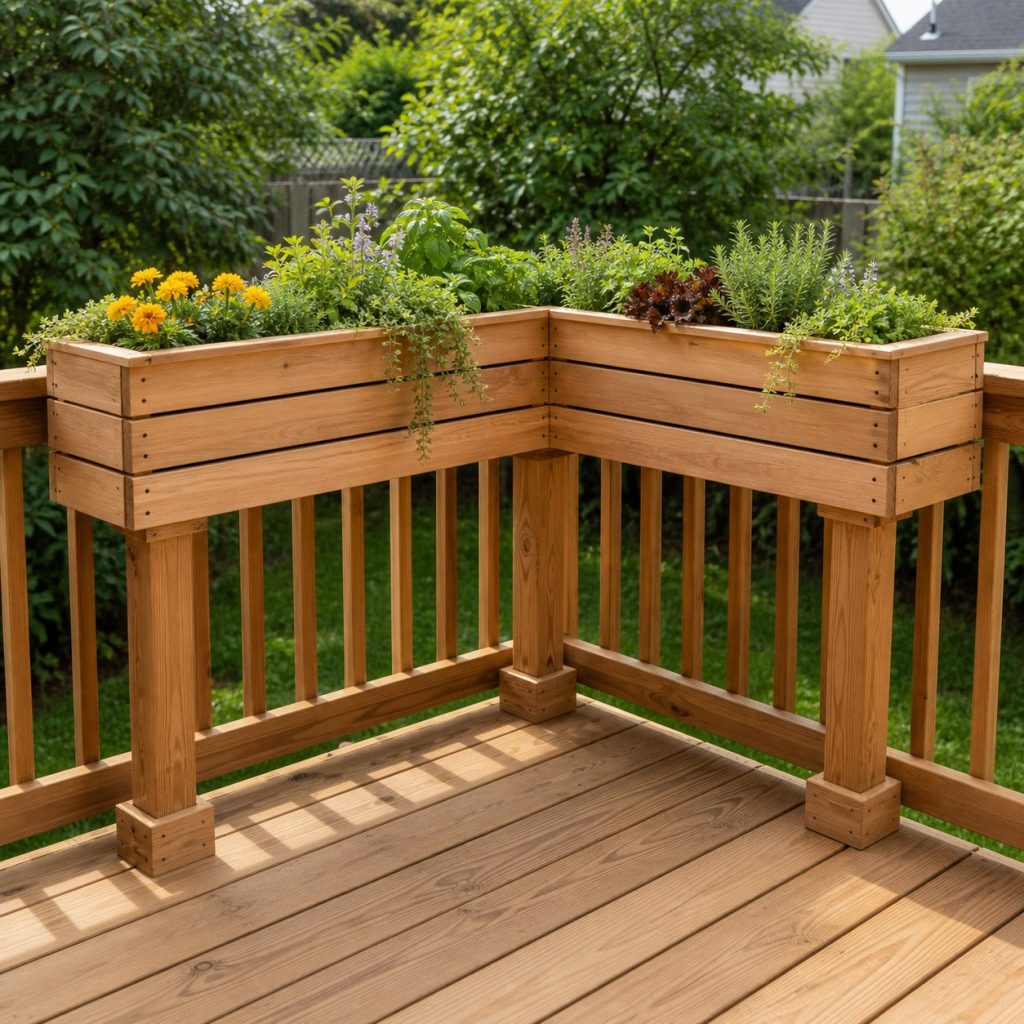
Corner geometry needs independent support on both runs without binding as wood moves.
Slatted Outer Sleeve
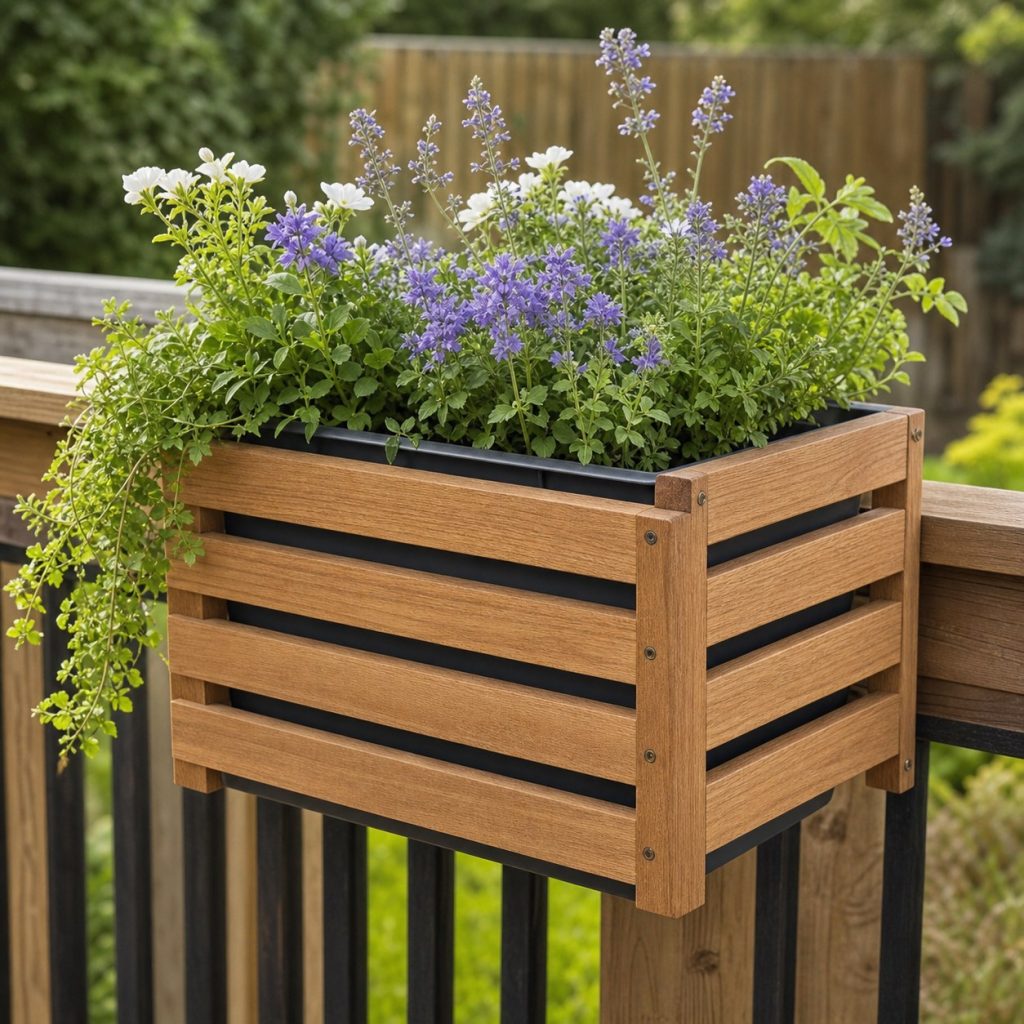
A ventilated sleeve provides the woodworking appearance while the inner container manages wet soil and drainage.
Narrow Balcony Planter
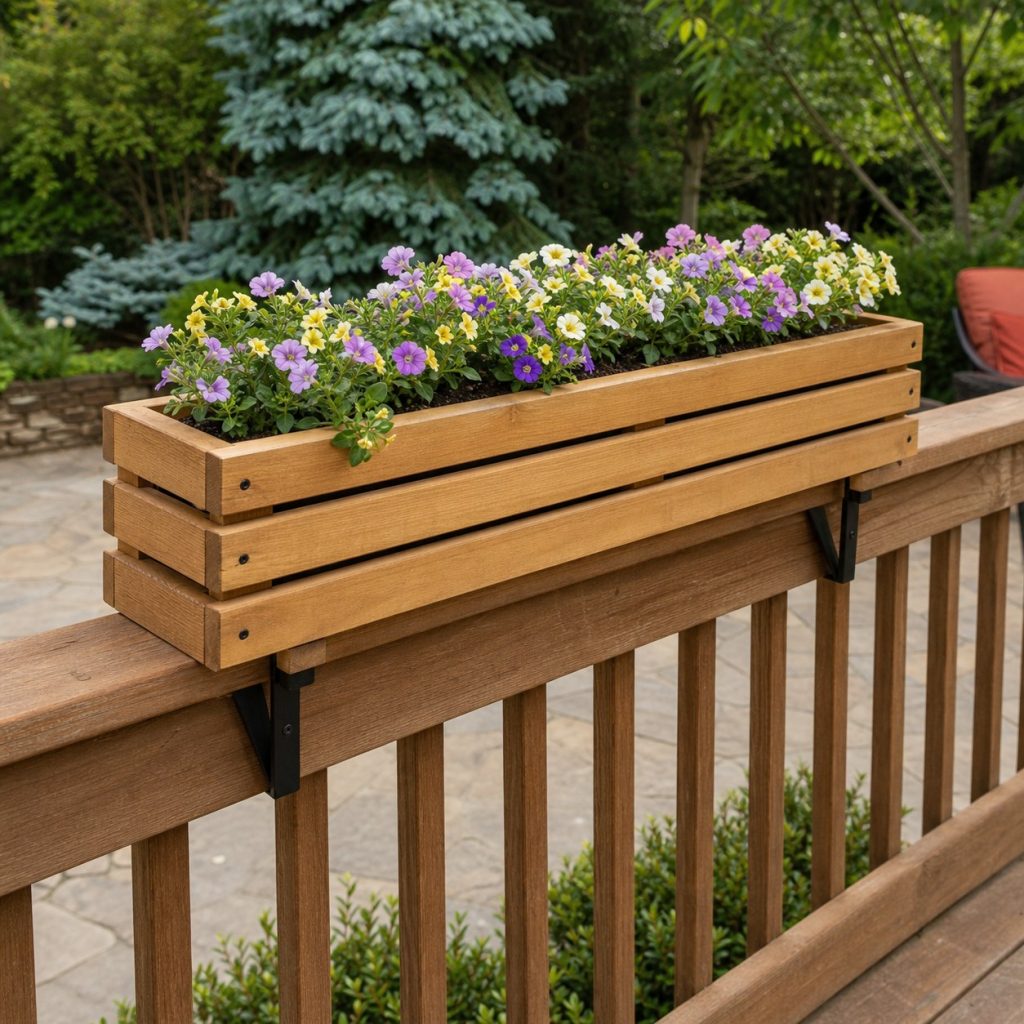
Narrow proportions reduce soil volume but still require wind restraint, safe drainage, and local approval.
Bracket, Liner, and Drainage Details
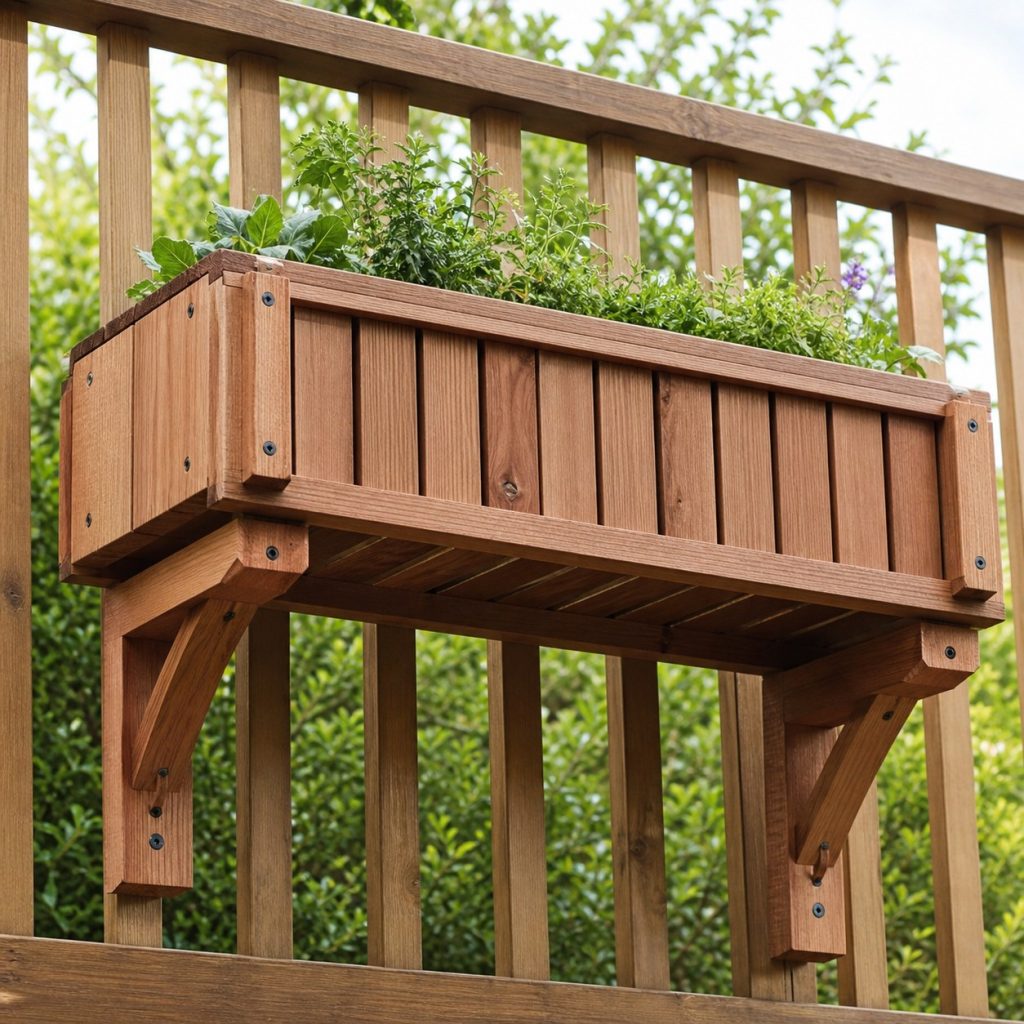
Keeping hardware visible and water away from railing joints supports inspection and maintenance.
Planning checklist
- Verify railing, guard, and attachment capacity professionally.
- Calculate saturated soil, plant, and container weight.
- Use a removable inner pot or liner with controlled drainage.
- Provide positive wind and lift restraint.
- Preserve guard height, openings, grasping, and child safety.
These woodworking concepts and generated images are planning inspiration, not measured drawings, cut lists, tested furniture plans, load ratings, engineered structures, accessibility designs, playground certifications, or utility instructions. Verify dimensions, ergonomics, lumber grade and treatment, grain direction, joint design, fastener and preservative compatibility, structural and wind loads, stability, sharp and pinch hazards, finish labels, equipment instructions, accessibility, permits, and local requirements for the actual project. Use appropriate personal protective equipment and qualified engineers, electricians, plumbers, accessibility specialists, and other licensed professionals where the work or hazards require them.
Frequently asked questions
Can I screw a planter directly to deck balusters?
Do not assume balusters can carry the load or leverage. Use an approved support method based on the actual railing design.
Where should drainage water go?
Route it without staining or decaying the deck, wetting people below, creating ice, or discharging where prohibited.
What plants keep weight lower?
Use compact species and a container system suited to the site, but calculate the fully saturated total rather than relying on dry weight.