Project planning guide
Before you build
Use the reference image and planning notes as a starting point. Confirm dimensions, loads, materials, local codes, and site conditions before purchasing or cutting.
- Garden Projects
- 8 reference images
- Print-friendly guide
A wooden tomato cage is a light garden woodworking project that can be sized to the cultivar and raised bed. Unlike thin disposable supports, a well-braced frame can be repaired, folded, nested, or reused when its joints stay accessible and the wood dries between seasons.
Square Four-Post Cage
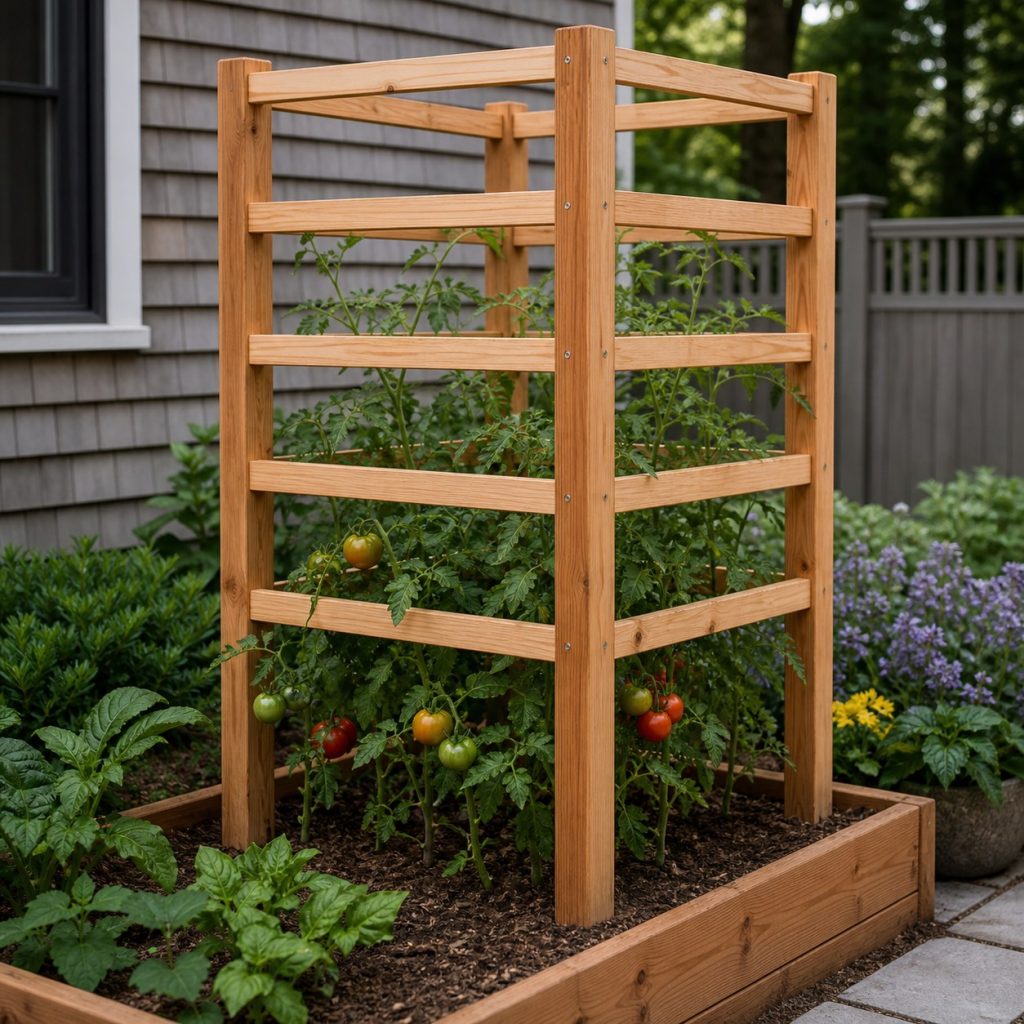
Repeated spacer blocks keep the rails level while diagonal corner fastening resists racking. Confirm plant spacing and disease-management practices with local extension guidance; keep stakes clear of irrigation and utilities, avoid treated-material conflicts, and never force a weak frame around a mature plant.
Tapered Obelisk Cage
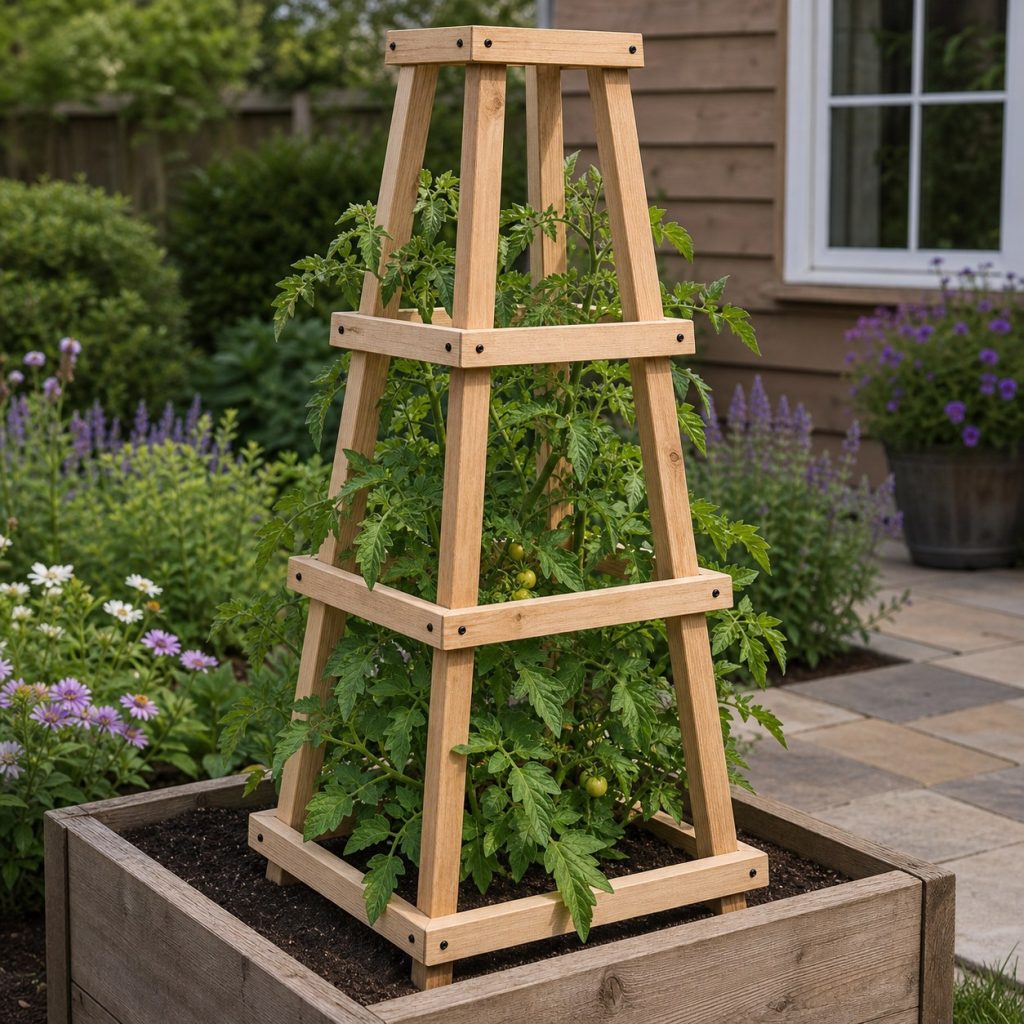
A controlled taper provides upper support without narrowing so abruptly that stems become trapped.
Folding A-Frame Support
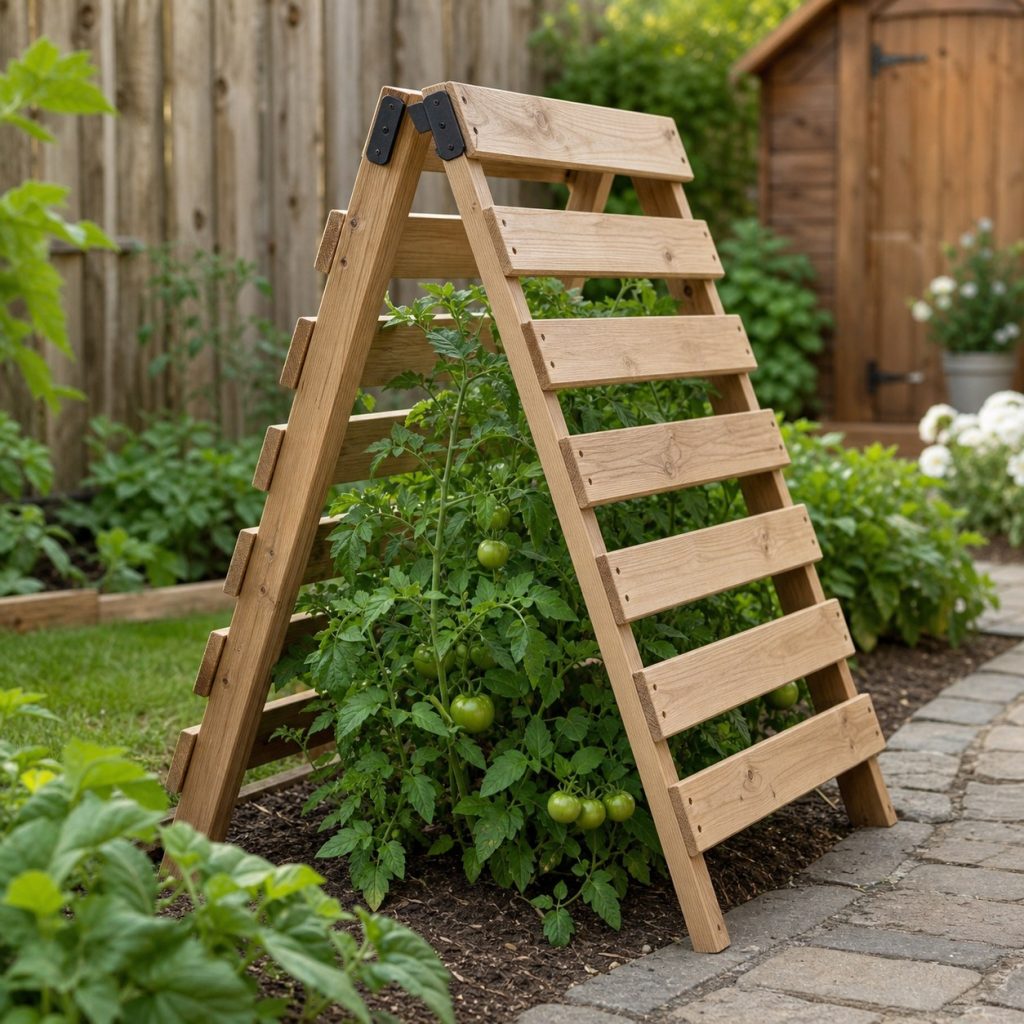
Exterior hinges and positive spread stops allow folding while limiting collapse and finger pinch points.
Ladder-Panel Tomato Cage
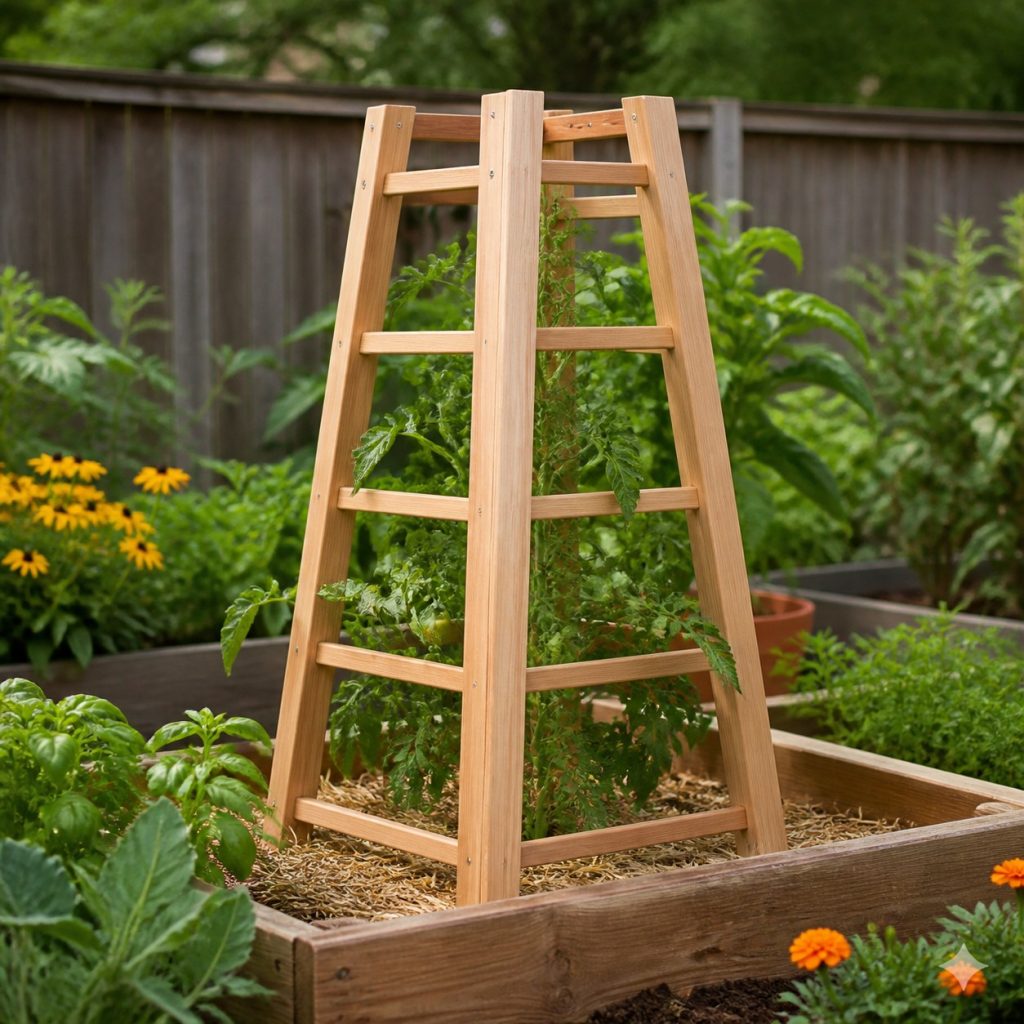
Separate ladder panels can be repaired individually and connected with removable corrosion-resistant hardware.
Raised-Bed Tomato Grid
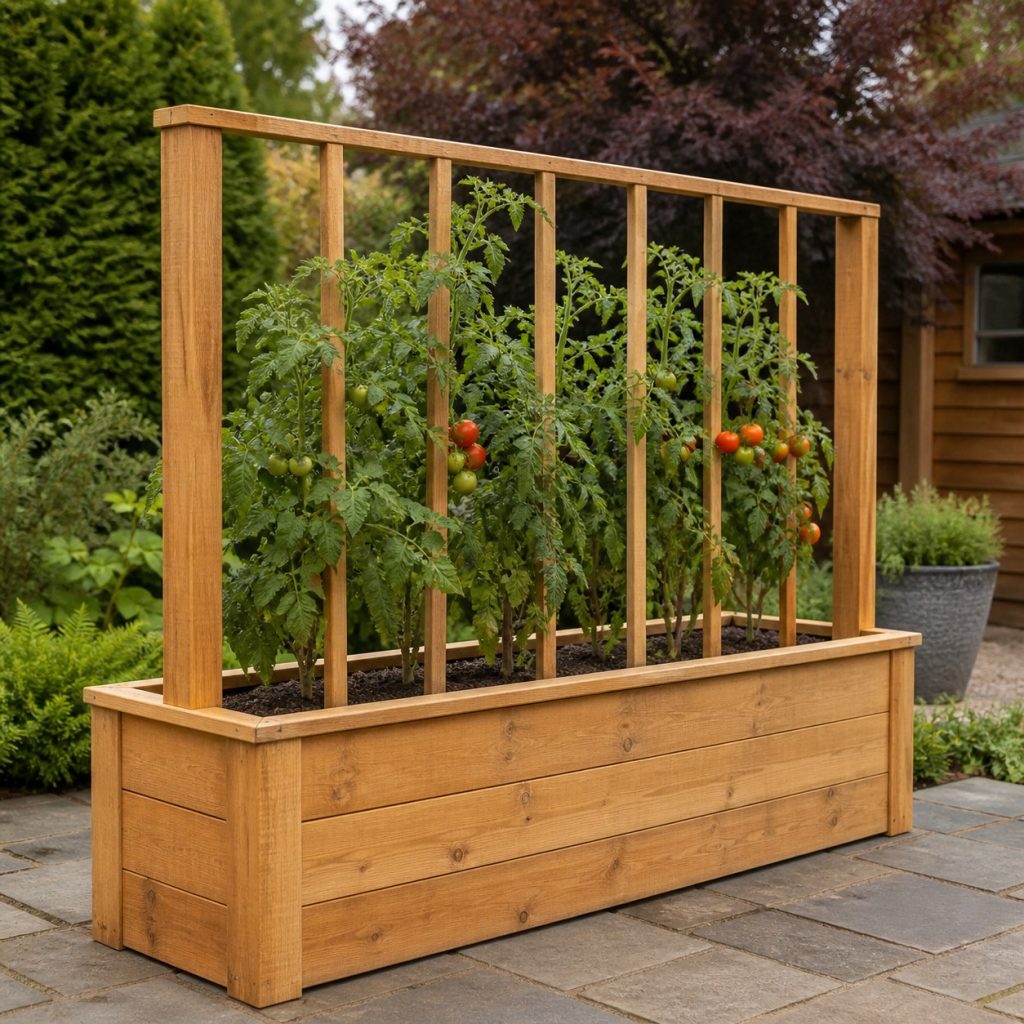
A shared top frame needs posts and bracing sized for the combined plant and wind load.
Stackable Modular Cage
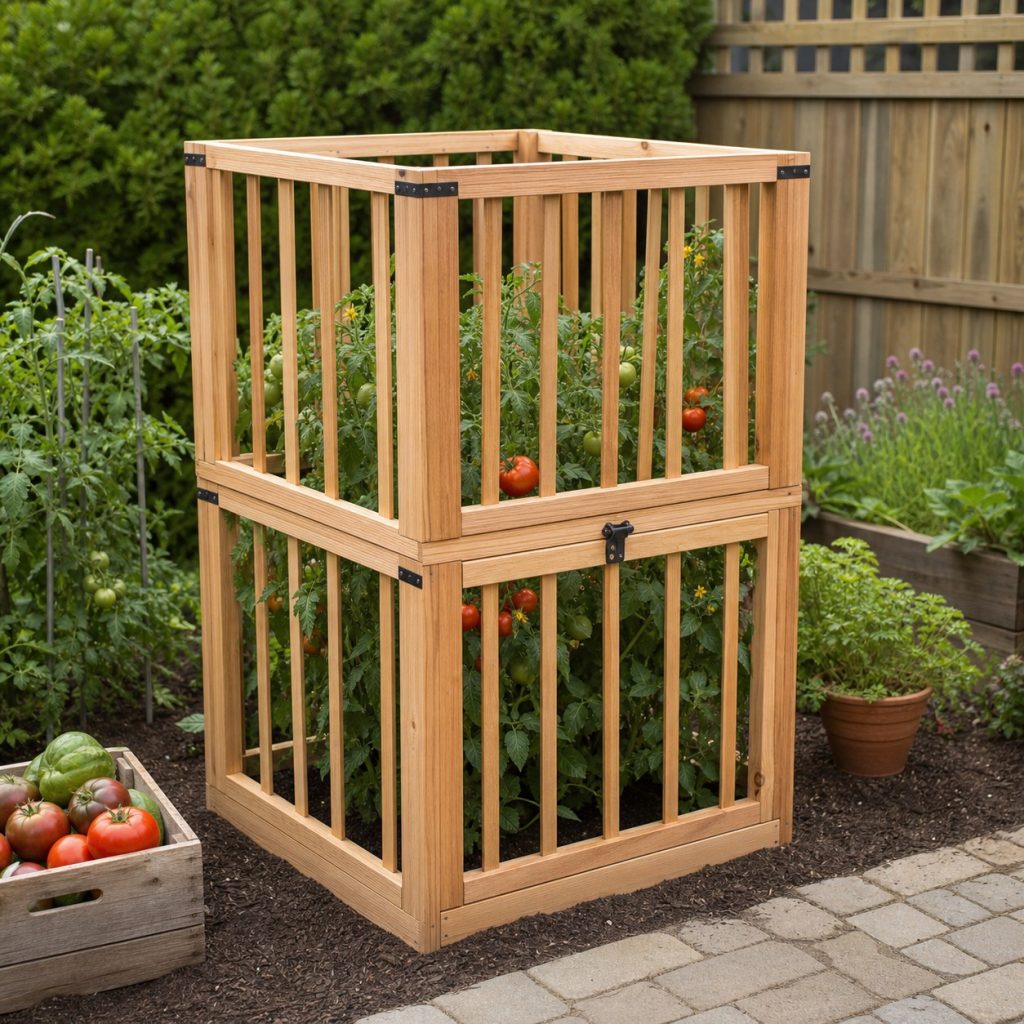
Positive alignment blocks and secure connectors keep stacked modules from twisting or separating.
Wall-Side Tomato Trellis Cage
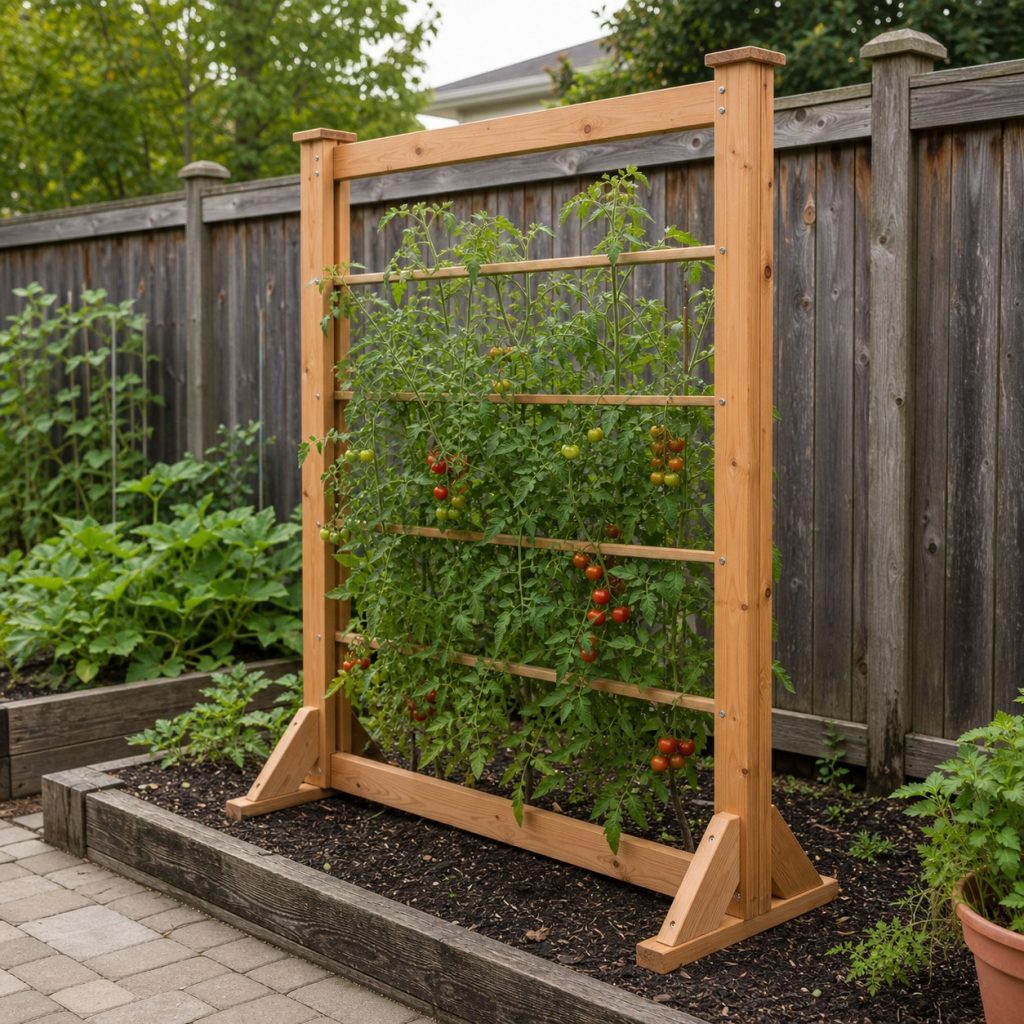
An independently braced frame protects the fence and preserves airflow and access behind the plants.
Joinery, Ties, and Storage Details
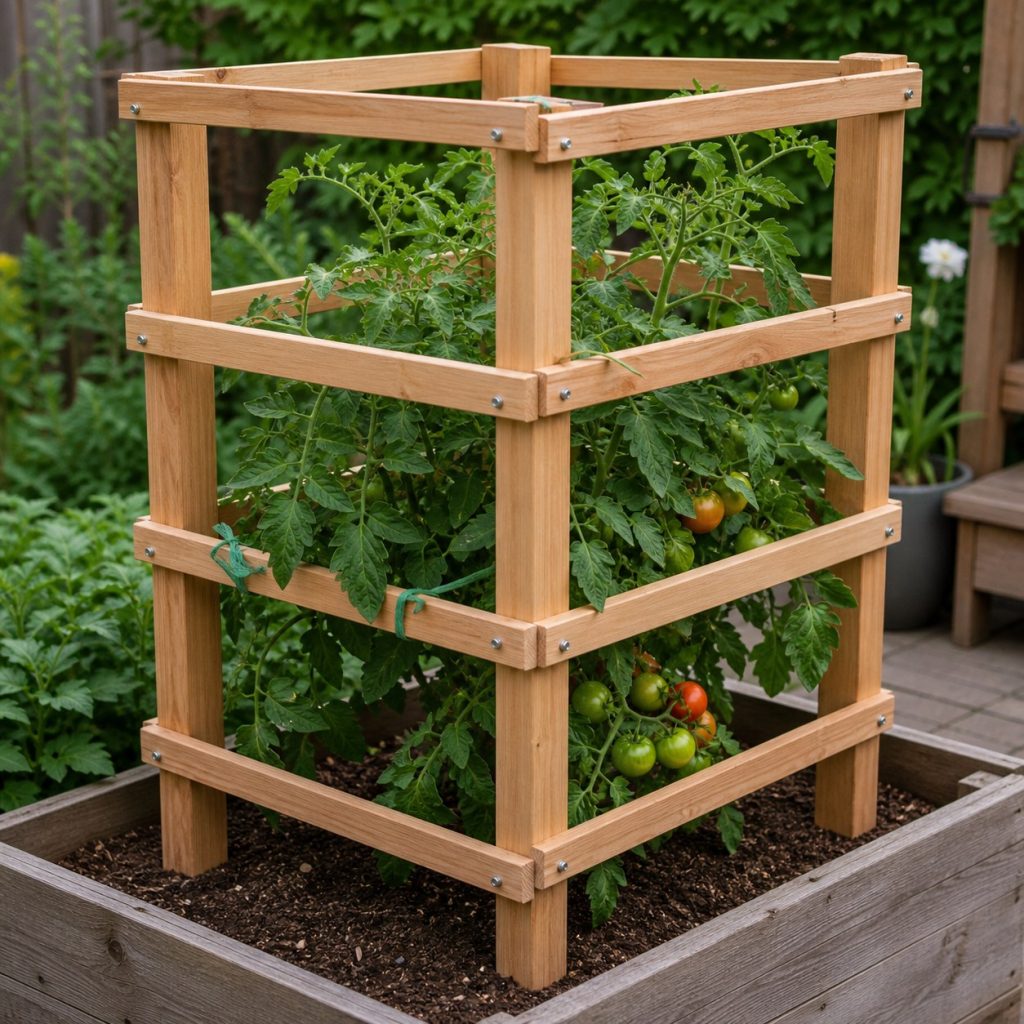
Replaceable rails, rounded contact points, soft ties, and removable connectors improve maintenance between seasons.
Planning checklist
- Match cage height and width to the mature tomato variety.
- Use straight lightweight exterior-suitable wood with smooth edges.
- Brace frames against racking and anchor them for local wind.
- Provide reachable plant ties without sharp wire or pinch points.
- Clean, dry, inspect, and store supports between seasons.
These woodworking concepts and generated images are planning inspiration, not measured drawings, cut lists, tested furniture plans, load ratings, engineered structures, accessibility designs, playground certifications, or utility instructions. Verify dimensions, ergonomics, lumber grade and treatment, grain direction, joint design, fastener and preservative compatibility, structural and wind loads, stability, sharp and pinch hazards, finish labels, equipment instructions, accessibility, permits, and local requirements for the actual project. Use appropriate personal protective equipment and qualified engineers, electricians, plumbers, accessibility specialists, and other licensed professionals where the work or hazards require them.
Frequently asked questions
How tall should a wooden tomato cage be?
Choose height from the tomato's growth habit, pruning method, raised-bed height, and safe harvesting reach rather than copying an image.
Can the cage fold for storage?
Yes. Use exterior-suitable hinges or removable bolts with positive open-position restraints and controlled finger clearances.
Should tomato stems be tied tightly to the wood?
No. Use soft broad plant ties with room for growth, inspect them often, and reposition them before they constrict stems.